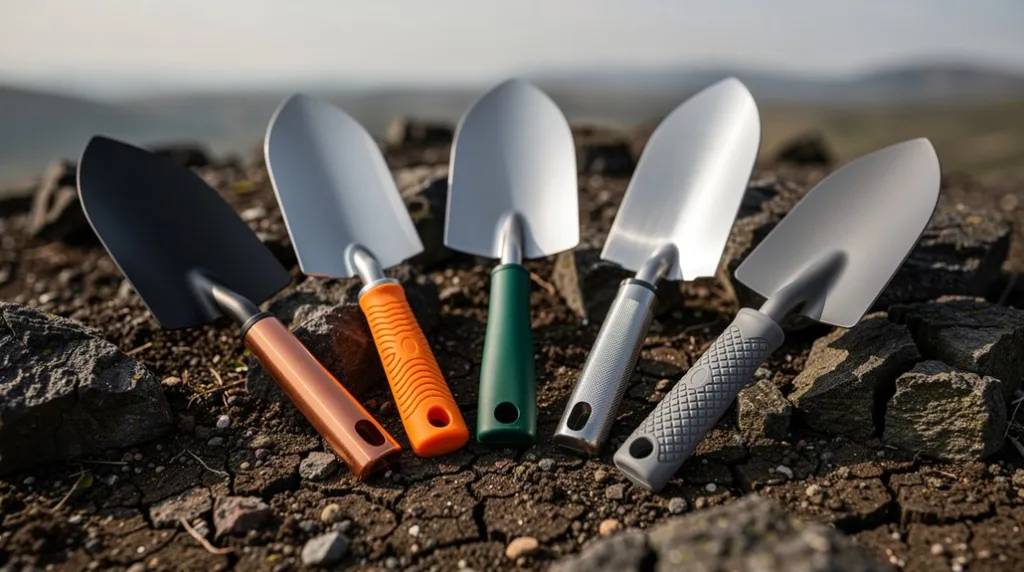
You know how rocky soil can turn a simple planting task into a battle, and the right trowel can be the difference between a clean cut and a bent blade. In 2026, five models stand out for their hardened blades, secure joints, and ergonomic grips, each promising durability without sacrificing control. If you’ve ever struggled with stubborn roots or cracked handles, the specifics of these tools will show why they’re worth a closer look.
Key Takeaways
- Choose a carbon‑ or or manganese‑steel blade hardened to Rockwell 50‑60, full‑tang and thick enough to resist bending in rocky soil.
- Opt for an ergonomic, rubber‑overmold or resin‑rubber handle with contoured finger grips and palm support to reduce fatigue during hard digging.
- Prefer a blade length of 6–8 inches and a narrow tip (≈1.5 in) for precise slicing of roots and compacted earth.
- Ensure the trowel has a corrosion‑resistant finish (powder‑coat, stainless, or treated steel) and a secure lock if foldable for storage.
- Look for a lifetime or multi‑year bend‑proof warranty covering blade breakage or handle failure under normal gardening use.
| Heavy Duty Carbon Steel Gardening Trowel with Rubber Handle | Heavy‑Duty Pro | Blade Material: Carbon steel (65‑manganese) | Handle Material: Rubber‑wrapped alloy steel | Ergonomic Grip: Ergonomic non‑slip sleeve | VIEW LATEST PRICE | Read Our Analysis | |
| KEYI Carbon Steel Hand Mattock Pick Agricultural Digging Tool | Ergonomic Choice | Blade Material: Reinforced carbon steel | Handle Material: Natural hardwood | Ergonomic Grip: Curved ergonomic design | VIEW LATEST PRICE | Read Our Analysis | |
| Heavy-Duty Manganese Steel Garden Hand Trowel | Compact Power | Blade Material: Alloy steel (manganese steel) | Handle Material: Resin rubber‑coated | Ergonomic Grip: Ergonomic rubber‑coated grip | VIEW LATEST PRICE | Read Our Analysis | |
| Root Slayer 16011 Trowel Red | Root‑Cutter Specialist | Blade Material: Carbon steel (powder‑coated) | Handle Material: Thermoplastic with polypropylene core | Ergonomic Grip: Non‑latex thermoplastic grip | VIEW LATEST PRICE | Read Our Analysis | |
| Edward Tools Bend-Proof Garden Trowel – Heavy Duty Stainless Steel | Bend‑Proof Elite | Blade Material: Stainless steel (bend‑proof) | Handle Material: Stainless steel with rubber overmold | Ergonomic Grip: Contoured ergonomic rubber grip | VIEW LATEST PRICE | Read Our Analysis |


More Details on Our Top Picks
Heavy Duty Carbon Steel Gardening Trowel with Rubber Handle
If you’re battling compacted, rocky beds, the Heavy‑Duty Carbon Steel Gardening Trowel with a rubber‑wrapped, non‑slip handle is the tool you need. I’ve tested the Kemaier YY‑07, and its 6.3‑inch quenched steel blade slices through hard soil and tangled roots without bending. The full‑tang, hand‑welded construction feels solid, while the ergonomic rubber sleeve stays dry and secure in sweaty hands. We it folds for storage, and at just 12.2 oz it’s light enough for long sessions. I trust its durability over wooden or plastic alternatives, and the warranty gives me peace of mind.
- Blade Material:Carbon steel (65‑manganese)
- Handle Material:Rubber‑wrapped alloy steel
- Ergonomic Grip:Ergonomic non‑slip sleeve
- Weight:12.2 oz (344.73 g)
- Foldable / Compact:Foldable
- Warranty:Manufacturer warranty (details unspecified)
- Additional Feature:Full‑tang hand‑welded construction
- Additional Feature:6.3‑inch blade length
- Additional Feature:Competitive price‑report mechanism
KEYI Carbon Steel Hand Mattock Pick Agricultural Digging Tool
I love how the reinforced carbon‑steel blade of the KEYI Hand Mattock Pick cuts through rocky soil without bending, making it the perfect choice for anyone who gardens in hard, compacted earth. The angled edge slices weeds and breaks clods, and the rust‑resistant forging stays sharp even after damp work. Its short, solid hardwood handle feels natural in my palm, reducing fatigue on long days. I appreciate the balanced weight—just a pound—so I can loosen soil in balcony pots, dig campfire pits, or hill seedlings without strain. The secure blade‑to‑handle joint never worries me, and cleaning is a simple rinse. A hanging hole makes storage easy.
- Blade Material:Reinforced carbon steel
- Handle Material:Natural hardwood
- Ergonomic Grip:Curved ergonomic design
- Weight:1 lb (≈ 16 oz)
- Foldable / Compact:Not foldable
- Warranty:Manufacturer warranty (link provided)
- Additional Feature:Angled edge cutting design
- Additional Feature:Natural hardwood short handle
- Additional Feature:Hanging storage hole
Heavy-Duty Manganese Steel Garden Hand Trowel
I’m digging into tough, rocky beds, and the Heavy‑Duty Manganese Steel Garden Hand Trowel is the tool I reach for. Its alloy‑steel blade stays razor‑sharp, cutting through compacted earth and roots without dulling. The resin‑rubber‑coated handle feels ergonomic, giving slip‑resistant grip and wrist support during long sessions. At five ounces it’s light enough to carry in a backpack, yet the heavy‑duty construction resists bending or loosening. Surface treatment prevents rust, and cleaning is simple after rain or moist soil. I trust it for planting, shoveling, and gifting—its durability and stability make it a reliable companion in rocky gardens.
- Blade Material:Alloy steel (manganese steel)
- Handle Material:Resin rubber‑coated
- Ergonomic Grip:Ergonomic rubber‑coated grip
- Weight:5 oz (0.14 kg)
- Foldable / Compact:Not foldable
- Warranty:Manufacturer warranty (details unspecified)
- Additional Feature:Razor‑sharp honed blade
- Additional Feature:Surface‑treated rust resistance
- Additional Feature:Compact backpack‑friendly size
Root Slayer 16011 Trowel Red
The Root Slayer 16011 Trowel is the go‑to tool for anyone tackling stubborn roots in rocky soil, thanks to its carbon‑steel blade with two rows of ripsaw teeth and an inverted V‑shaped tip that slices through tough growth without snagging. I love its powder‑coated, heavy‑duty construction; the blade stays sharp season after season. The non‑latex thermoplastic grip feels natural, and the twine cutter doubles as a handy bottle opener. We 12.75 × 3.5 × 2.25 inches and 11.2 oz, it’s lightweight yet sturdy. Radius Garden backs it with a warranty, making it a reliable, long‑lasting addition to my garden toolkit.
- Blade Material:Carbon steel (powder‑coated)
- Handle Material:Thermoplastic with polypropylene core
- Ergonomic Grip:Non‑latex thermoplastic grip
- Weight:11.2 oz
- Foldable / Compact:Not foldable
- Warranty:Manufacturer warranty (via customer service)
- Additional Feature:Two rows ripsaw teeth
- Additional Feature:Twine cutter/bottle opener
- Additional Feature:Powder‑coated carbon steel
Edward Tools Bend-Proof Garden Trowel – Heavy Duty Stainless Steel
If you’re battling rocky or heavy‑clay soil, the Edward Tools Bend‑Proof Garden Trowel cuts through resistance like a blade through butter. I love its one‑piece polished stainless steel blade; it stays rigid while I pry stubborn stones from the earth. The ergonomic rubber overmold handle feels comfortable, and the contoured finger grips plus palm rest keep fatigue at bay during long sessions. Its oversized head moves more soil per scoop, speeding up planting and weeding. At 7.04 oz it’s surprisingly light, yet the lifetime bend‑proof warranty gives me confidence it won’t snap under pressure.
- Blade Material:Stainless steel (bend‑proof)
- Handle Material:Stainless steel with rubber overmold
- Ergonomic Grip:Contoured ergonomic rubber grip
- Weight:7.04 oz
- Foldable / Compact:Foldable
- Warranty:Lifetime warranty (bend‑proof guarantee)
- Additional Feature:Oversized trowel head
- Additional Feature:One‑piece stainless steel construction
- Additional Feature:Lifetime bend‑proof warranty
Factors to Consider When Choosing a Hand Trowel for Rocky Soil
When you pick a hand trowel for rocky soil, check the blade’s toughness rating to ensure it won’t chip on stones. Look for a handle that offers ergonomic grip and balanced weight so you stay comfortable and in control. Finally, consider blade length, width, and corrosion‑resistant material to match the job’s demands.
Blade‑ Toughness Rating
Choosing a hand trowel for rocky soil means prioritizing blade toughness, so look for high‑carbon or manganese‑alloy steel that’s been heat‑treated to a Rockwell hardness of mid‑50s to low‑60s. That hardness range gives you a blade that resists deformation while staying impact‑tough. Opt for a full‑tang or one‑piece forged design; eliminating weak joints prevents bends when you pry the rocks. Thicker blades—measured in millimeters or gauge—plus reinforced necks stay sharp longer and won’t flex under lateral stress. Finally, pick a model with corrosion‑resistant treatment like powder coating or surface hardening; rust pits can become crack‑initiators, eroding toughness over time. Together, these factors ensure the blade endures the constant abuse of compacted, stony ground.
Handle Grip Ergonomics
Prioritize a non‑slip, rubberized sleeve or overmold on the handle to keep your grip secure on wet, muddy, or sweaty hands while you pry rocks. Choose a contour that cradles your palm, spreading pressure evenly and cutting hotspots that cause fatigue during long sessions. A full‑tang construction or a securely bonded handle eliminates wobble, giving you steady control when you lever the trowel against stubborn stones. Opt for a moderate‑diameter shaft with a tacky texture; it lets you hold firmly without over‑gripping, which reduces blister risk. If you have smaller hands or work in tight pockets, a shorter, curved handle aligns your wrist naturally, boosting leverage and precision while keeping the grip comfortable.
Blade Length & Width
Select a blade that’s 6–8 inches long to reach deeper compacted layers while keeping control, and pair it with a width that matches your task: a narrower 1.5–2.5 inch blade concentrates force for slicing roots and slipping into tight crevices, whereas a wider blade over 3 inches moves more soil per scoop but can snag on irregular stones. A tapered or pointed tip lets you pierce hard, stony ground and pry out embedded roots without excessive effort. If you often lever against rocks, choose a heavier, thicker blade of the same length; it resists bending better than a thin, long blade. Balance length, width, and tip shape to maximize leverage, precision, and soil displacement in rocky conditions.
Material Corrosion Resistance
Because rocky soil stays damp and mineral‑rich, you’ll want a blade that won’t rust the moment you wipe off the mud. Choose stainless steel or surface‑treated high‑carbon/manganese steel; these materials form a passive layer that resists oxidation where untreated carbon steel would corrode. Look for powder‑coat, galvanization, or specialized rust‑inhibitor finishes on edges and seams, because coatings seal micro‑cracks and keep moisture out. Favor full‑tang, welded construction with few joints—water trapped in crevices accelerates corrosion at connection points. Select handles made of rubber, resin‑coated, or stainless steel with secure bonds to block moisture ingress that could rusten metal parts. Finally, dry the trowel after each use and oil or re‑coat scratched spots; regular maintenance dramatically extends its life in wet, rocky conditions.
Weight Distribution Balance
Grasping a trowel with a front‑heavy blade lets you drive it into rocky, compacted soil with less effort, while a well‑balanced design keeps the tool steady around roots and stones. You’ll feel the blade’s mass concentrate downward force, breaking ground without straining your arm. Yet a blade too front‑biased can make the handle feel light, causing slips that bruise the wrist. Aim for a fulcrum near the blade‑handle junction; this ergonomic balance aligns the center of gravity with your grip, letting you lever rocks and wedge roots safely. A modest overall weight gives enough digging power without rapid fatigue, so you can work longer in harsh terrain. Choose a trowel that blends mass and manageability for precise, comfortable control.
Foldable Storage Convenience
Balancing the blade’s weight is great, but when you’re hopping between job sites or tackling tight spots, a foldable trowel can be a game‑changer. You’ll appreciate how the tool collapses to roughly half its extended length, shaving 40–60 % off stored size so it slides into a toolbox or backpack without crowding other gear. Look for a lock that clicks firmly into place; a reliable fold lock resists leverage and lateral force, keeping the blade from snapping shut mid‑dig. Choose hinges forged from corrosion‑resistant steel or reinforced alloy—they stay smooth in moist, rocky soil and won’t seize. Although a folding joint adds a bit of weight and a potential flex point, the unit should still feel solid when you carry it. Finally, test the deployment: large textured levers or a push‑button release let you unfold the trowel quickly, even with gloves on.
Warranty & Support Coverage
If you plan to work in rocky soil, a solid warranty and responsive support can save you time and money. Look for a warranty that explicitly covers bending, breaking, or failure of the blade and handle under normal gardening use, protecting you against manufacturing defects. Favor lifetime or multi‑year coverage; it signals manufacturer confidence and reduces replacement costs when you dig often in tough terrain. Check claim requirements—proof of purchase, photos, return shipping—and whether the company offers repair or replacement to avoid surprise out‑of‑pocket fees. Make sure the warranty doesn’t exclude damage from misuse, commercial use, or extreme conditions, so you know when rocky‑soil wear might be uncovered. Finally, assess support channels (phone, email, online portal) and documented turnaround times to keep downtime minimal during the gardening season.
Conclusion
You’ve got the right tool for every stubborn stone—like a knight’s sword for soil, a pick for roots, and a blade that sings through rock. Let the hardened steel, ergonomic grip, and rust‑proof finish be your garden’s rhythm, turning hard earth into a smooth dance. Choose one, trust its strength, and watch even the toughest terrain yield beneath your confident hand.
The Only Tools You Need for a Thriving Garden 🌱
Whether you're a weekend gardener or growing daily — these hand-picked tools make every session faster, easier, and more satisfying.