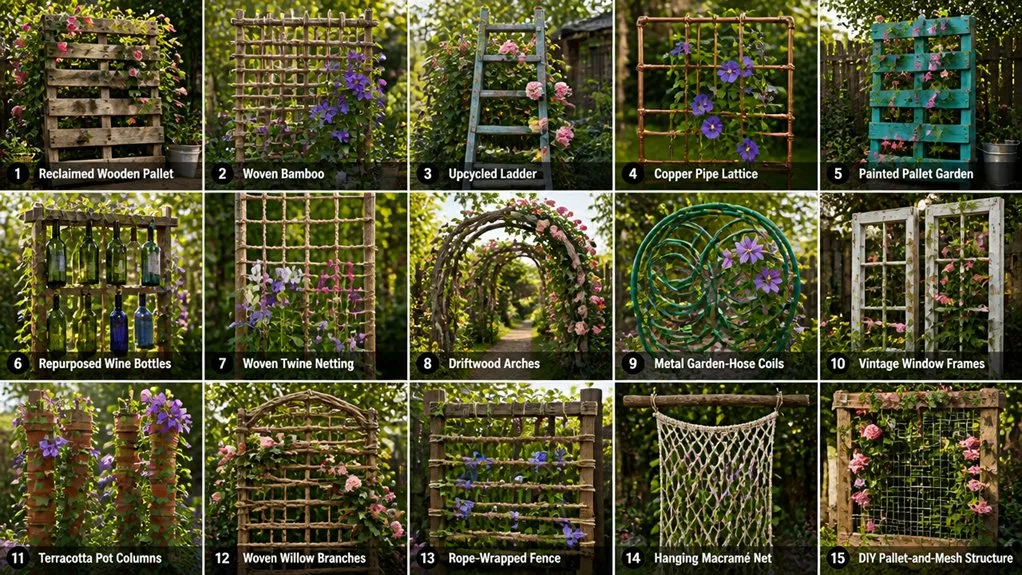
You can build fifteen homemade trellis styles using materials you’ve got on hand—reclaimed pallets, bamboo poles, branches, and scrap metal. Start with a classic wooden lattice for traditional appeal, then try an A-frame design to double your planting area. Consider a tiered ladder trellis for compact spaces or a fan-shaped structure for awkward corners. Willow obelisks and arched arbors add focal points while supporting vigorous climbers. Each design offers distinct advantages for different plants and garden layouts, and you’ll discover which structure best suits your specific growing needs.
Key Takeaways
- Classic wooden lattice trellises using rot-resistant cedar or redwood suit most climbing plants with customizable spacing.
- Reclaimed pallet trellises offer eco-friendly, budget-friendly options secured with galvanized screws and weather-resistant stain.
- Natural material trellises like bamboo poles and living willow provide rustic aesthetics and seasonal growth dynamics.
- Metal and copper frameworks deliver long-lasting durability with rust-resistant coatings, ideal for heavy vines.
- Multi-frame designs including A-frame, tiered ladder, and fan-shaped trellises maximize planting area in various garden spaces.
Classic Wooden Lattice Trellis
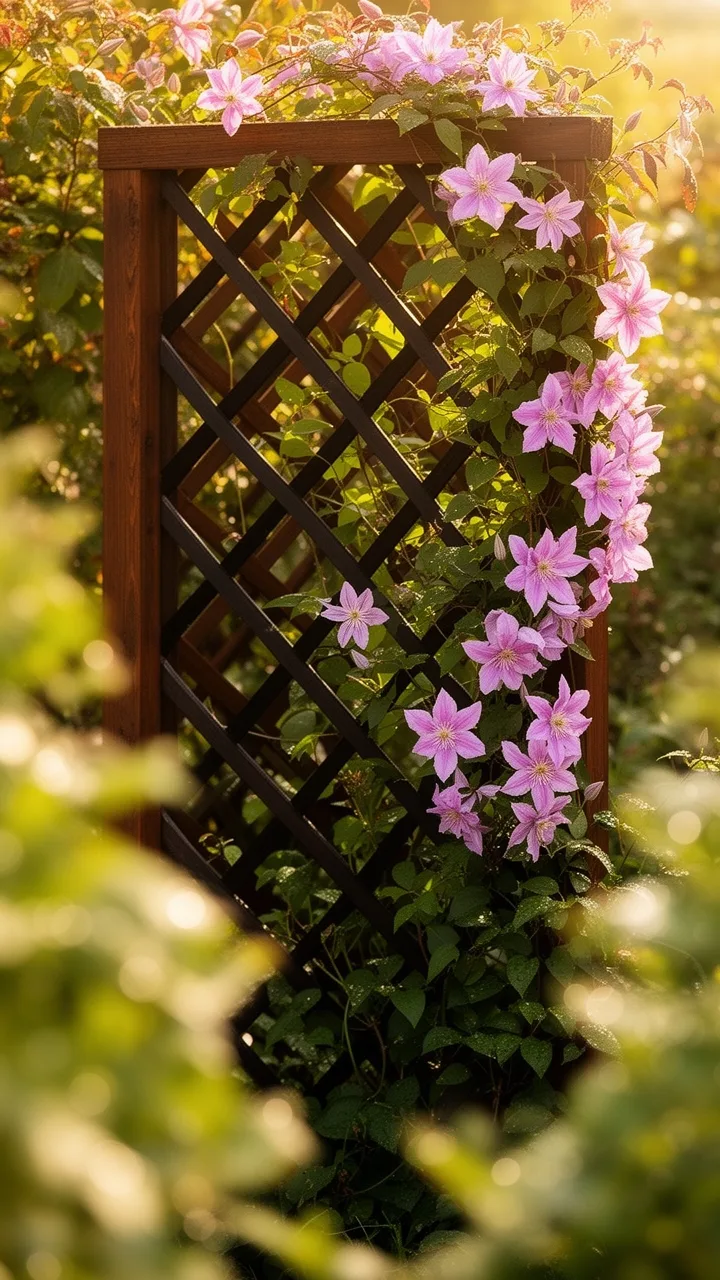
A timeless framework for climbing plants—the classic wooden lattice trellis combines functionality with visual appeal. You’ll start by selecting rot-resistant wood like cedar or redwood, then cut strips to your desired dimensions. Arrange them diagonally, creating a diamond or square pattern, and secure intersections with galvanized screws or nails. You can customize spacing based on your plants’ needs—closer patterns support delicate vines, while wider spacing works for heavier climbers. Sand all surfaces smooth to prevent splinters and weathering. Consider applying exterior wood stain or sealant for durability. Install your trellis securely against walls or as a freestanding structure in garden beds.
Reclaimed Pallet Trellis
Wooden pallets offer you an economical and eco-friendly alternative to building a trellis from scratch. You’ll find free or inexpensive pallets at warehouses, farms, or grocery stores. Start by disassembling the pallet carefully, removing nails and straightening boards. Sand the wood smooth to prevent splinters. Arrange boards vertically or diagonally, creating a grid pattern that suits your climbing plants. Secure intersections with galvanized screws for durability. Treat the wood with weather-resistant stain or sealant to extend its lifespan. Install your trellis against a wall or fence using sturdy brackets. This rustic structure provides excellent support while adding character to your garden.
Rustic Branch and Twig Trellis
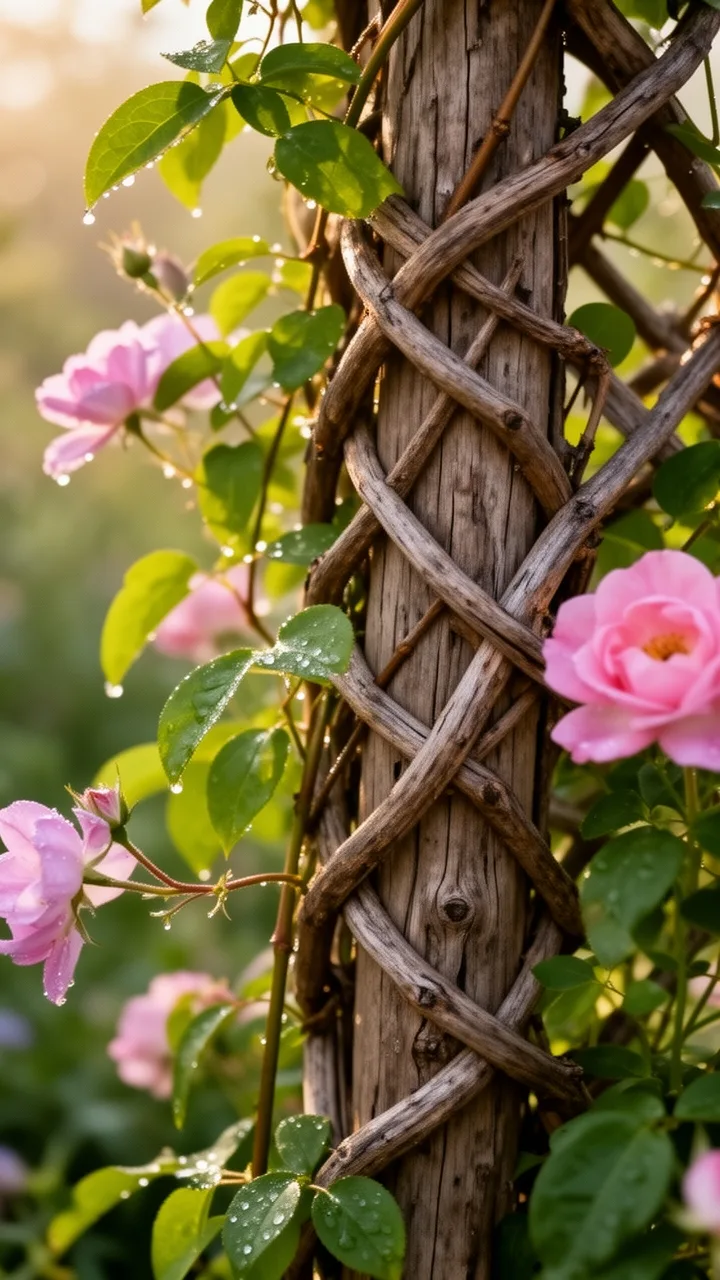
Gathered from your yard or local woods, branches and twigs offer you a completely free and natural material for building a charming trellis.
Select sturdy branches for your frame’s vertical and horizontal supports. Lash them together using twine or wire at intersections. Arrange smaller twigs in a crisscross pattern to create climbing pathways for your plants. Secure everything tightly to prevent shifting as vines grow and add weight.
- Collect fallen branches in varying thicknesses
- Strip bark for a cleaner appearance
- Bind joints with jute or copper wire
- Treat wood with eco-friendly sealant for longevity
This rustic design beautifully complements cottage gardens and natural landscapes.
Bamboo Pole Trellis: Lightweight and Simple
For a trellis that’s quick to assemble and won’t strain your back, bamboo poles are your ideal solution. You’ll gather 4-6 poles, then lash them together using twine or zip ties at intersecting points. Lean them against a fence or stake them directly into garden beds. Bamboo’s natural strength supports heavy vines like clematis and beans without warping. Space poles 12-18 inches apart for optimal plant access. You can customize heights and angles to fit your garden layout. Replace weathered poles annually since bamboo degrades over time. This lightweight design requires no tools and costs minimal money compared to metal alternatives.
Willow Obelisk Trellis

When you’re looking for an elegant, natural structure that’ll add architectural interest to your garden, a willow obelisk trellis delivers both form and function. You’ll weave flexible willow branches into a pyramid shape, securing them with twine at intersections. This creates a stunning focal point while supporting climbing plants beautifully.
- Harvest flexible willow branches during dormancy for easier bending
- Lash four sturdy poles together at the top with wire
- Weave thinner branches horizontally, spacing them six inches apart
- Plant clematis or honeysuckle at the base for year-round coverage
The willow naturally softens as plants climb upward, creating a cohesive garden display.
Living Willow Trellis: Grows With Your Garden
Unlike static trellises, a living willow structure actually grows and evolves alongside your garden, creating a dynamic framework that strengthens each season.
| Step | Timeline |
|---|---|
| Plant willow cuttings | Early spring |
| Weave branches together | Summer (year one) |
| Prune and shape | Fall and winter |
You’ll start by inserting dormant willow rods into moist soil in a circular or obelisk pattern. As shoots emerge, you’ll weave them together, creating an increasingly sturdy structure. This living trellis becomes denser annually. Simply prune excess growth to maintain your desired shape. The willow naturally supports climbing plants while providing organic decomposition that enriches surrounding soil.
Metal Rod Grid Trellis

You’ll create a durable, low-maintenance trellis by arranging metal rods into a grid pattern that provides excellent support for climbing plants. This structure withstands harsh weather and requires minimal upkeep compared to wooden alternatives.
To build your grid trellis:
- Gather galvanized steel rods or rebar to prevent rust
- Weld or bolt horizontal and vertical rods at regular intervals
- Mount the completed frame securely to a wall, fence, or freestanding post
- Paint with rust-resistant coating for extended longevity
The uniform spacing allows vines to weave naturally through openings, creating visual interest while distributing plant weight evenly across the structure.
Copper Pipe Trellis: Elegant and Durable
Offering both aesthetic appeal and structural integrity, a copper pipe trellis combines beauty with longevity in your garden.
You’ll appreciate copper’s natural patina that develops over time, creating an elegant vintage look. Start by sourcing half-inch copper pipes and fittings from your local hardware store. Assemble your frame using solder joints for maximum durability. Install vertical supports at 12-inch intervals, then add horizontal crosspieces every 8 inches.
| Advantage | Consideration |
|---|---|
| Weather-resistant | Higher initial cost |
| Attractive patina | Requires soldering skills |
| 25+ year lifespan | Heavy installation |
| Low maintenance | Conducts heat |
| Supports heavy vines | Oxidizes over time |
Secure your trellis firmly into the ground using concrete footings for stability.
Farm Fencing Trellis: Heavy-Duty Growing

Because farm fencing provides exceptional strength and affordability, it’s an excellent choice for supporting vigorous climbing plants and heavy vegetable yields. You’ll appreciate its durability when growing beans, cucumbers, and hops.
To build your trellis, you’ll need:
- Welded wire fencing panels (4×8 feet) for maximum support capacity
- Wooden or metal posts set 2-3 feet deep for stability
- Heavy-duty staples or clips to secure fencing to posts
- Corner bracing to prevent sagging under weight
Simply anchor posts firmly, attach panels vertically, and train your plants as they grow. This straightforward approach handles demanding crops effortlessly.
Rope and Wooden Frame Trellis
Elegance and simplicity combine in a rope and wooden frame trellis, which offers a lightweight alternative perfect for smaller gardens and ornamental climbing plants. You’ll construct this by building a sturdy wooden frame from 2×2 lumber, then stringing horizontal or diagonal rope lines between the sides. This design accommodates vining plants like clematis, jasmine, or honeysuckle beautifully. You can customize dimensions to fit your space, and the rope weaves naturally with plant growth. The combination provides excellent visual appeal while remaining affordable and easy to install against fences or walls.
PVC Pipe Trellis: Waterproof and Affordable
When you’re seeking a durable, weather-resistant trellis that won’t rot or require maintenance, PVC pipe delivers an excellent solution at a fraction of traditional material costs. You’ll appreciate how easily you can customize designs to fit your garden’s dimensions.
Here’s what you’ll need:
- Schedule 40 PVC pipes in various diameters for structural support
- PVC connectors and elbows to create geometric frames
- PVC cement for permanent joints or hose clamps for adjustability
- Drill with bits for drainage holes and plant tie-offs
You’ll assemble your frame, secure it firmly in soil, and train climbing vines through the openings.
A-Frame Trellis: Double Your Growing Space
An A-frame trellis maximizes your growing space by utilizing both sides of a single structure, essentially doubling your planting area without consuming twice the garden real estate. You’ll construct this by joining two rectangular frames at an angle, creating a stable, tent-like shape. Use sturdy wood or metal for durability. Install horizontal supports or netting on both sides for climbing plants to grip. Position it running north-south to ensure both sides receive adequate sunlight. This design works exceptionally well for beans, peas, cucumbers, and flowering vines. You’ll harvest more efficiently since you can access plants from multiple angles, making maintenance and picking considerably easier.
Tiered Ladder Trellis for Compact Gardens
You’ll find that a tiered ladder trellis offers an elegant solution for gardeners working with limited space, as it grows vertically in distinct horizontal tiers rather than sprawling outward. This design maximizes your planting area while maintaining accessibility for maintenance and harvesting.
To build yours, you’ll need:
- Two sturdy vertical posts anchored securely in soil
- Horizontal rungs spaced 12-18 inches apart for plant support
- Lightweight materials like bamboo or reclaimed wood for affordability
- Cross-bracing to ensure stability against wind and plant weight
You’ll appreciate how this structure supports lightweight climbers, beans, and flowering vines efficiently. The tiered approach prevents overcrowding while creating visual interest in compact gardens.
Fan-Shaped Trellis for Corner Spaces
Corner spaces present unique challenges that the tiered ladder trellis can’t fully address, but a fan-shaped trellis fits these awkward areas perfectly. You’ll maximize vertical space while creating visual interest in underutilized corners.
| Material | Dimensions | Best Plants |
|---|---|---|
| Bamboo stakes | 6-8 feet tall | Clematis |
| Wooden slats | 4-6 feet span | Jasmine |
| Metal rods | 5-7 feet height | Honeysuckle |
| PVC pipes | 4-5 feet radius | Ivy |
| Willow branches | 6 feet tall | Climbing roses |
You’ll arrange materials in a radiating pattern from a central point, securing them firmly at the base. Space stakes 6-8 inches apart for optimal plant support. This design directs climbing vines upward and outward, filling corners completely.
Arched Arbor Trellis for Garden Entries
While corner spaces call for fan-shaped designs, garden entries demand the grandeur of an arched arbor trellis. You’ll create a stunning focal point by constructing a sturdy wooden frame with a curved top. This structure frames your entrance while supporting climbing vines beautifully.
Build yours using these steps:
- Select pressure-treated lumber for durability and weather resistance
- Create two vertical posts anchored firmly in concrete footings
- Construct curved cross-beams using flexible wood or laminated strips
- Add horizontal and diagonal lattice for climbing plant support
Your arched arbor transforms ordinary entries into welcoming garden features while providing structural support for vigorous climbing plants.
Conclusion
You’ll find that building your own trellis isn’t just a wallet-friendly choice—it’s your ticket to a garden that blooms with personality. Whether you’re weaving branches or stacking palms, you’re essentially writing your garden’s story with your own hands. Start simple with materials you’ve got lying around, then graduate to more complex designs. Your climbing plants don’t care how fancy the structure is; they just need sturdy support and your dedication. Get building today.
The Only Tools You Need for a Thriving Garden 🌱
Whether you're a weekend gardener or growing daily — these hand-picked tools make every session faster, easier, and more satisfying.