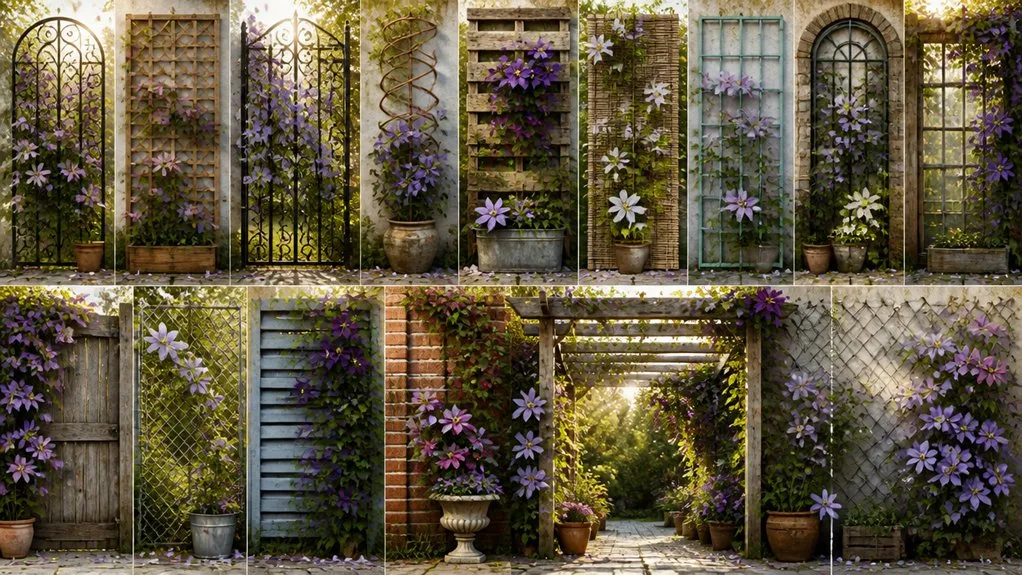
You’ll transform your garden wall into a romantic focal point by selecting the right clematis trellis. Choose classic wooden lattices for timeless elegance, modern metal arches for contemporary style, or spiral structures that double as living sculptures. Consider fan-shaped designs for tight spaces, corner trellises for problem spots, and hybrid wood-and-metal combinations for modern cottage aesthetics. Install your structure at least six inches from walls to ensure proper airflow and disease prevention. Discover how to match specific clematis varieties with trellis types for maximum visual impact.
Key Takeaways
- Wrought iron trellises forged using traditional techniques provide romance and withstand decades of weather exposure without deteriorating.
- Install lattices at least six inches from walls to ensure proper airflow and reduce disease in clematis vines.
- Fan-shaped trellises maximize vertical growth against walls while providing timeless elegance suitable for romantic garden aesthetics.
- Large-flowered clematis varieties require sturdy structures like lattice panels or fan trellises for optimal support and blooming.
- Position trellises to receive six-plus hours of daily sunlight while ensuring secure anchoring for mature vine weight.
Choose Your Clematis Trellis: A Decision Framework
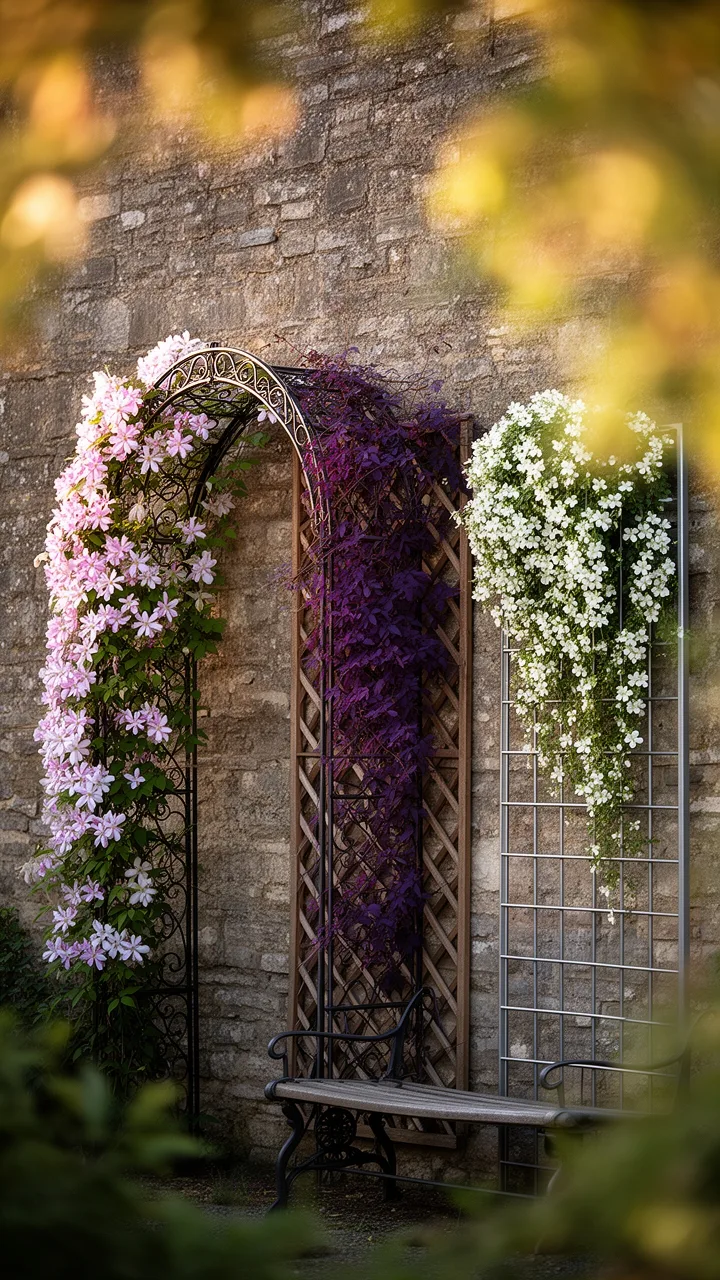
Selecting the right trellis for your clematis hinges on three key factors: the vine’s mature size, growth habit, and your garden’s aesthetic. Large-flowered varieties need sturdy structures—lattice panels or fan trellises work well. Smaller clematis cultivars thrive on wire pyramids or obelisks. Consider your vine’s climbing method: twining types need thin supports to grip, while those with leaf-stalk tendrils manage thicker frameworks. Evaluate your wall’s exposure and weight capacity; heavy mature vines demand robust installation. Choose materials matching your garden style—wrought iron for romantic appeal, wood for cottage gardens, or modern metal for contemporary spaces. Proper trellis selection ensures vigorous growth and stunning blooms.
Classic Wooden Lattices for Timeless Elegance
Wooden lattices stand as the go-to choice for gardeners seeking timeless elegance and proven reliability. You’ll appreciate their natural aesthetic that complements any garden style while providing sturdy support for climbing clematis vines. Cedar and redwood resist rot naturally, reducing maintenance demands. Their open diamond or square patterns allow excellent air circulation, minimizing disease risk. You can customize dimensions and finishes to match your existing landscape architecture. Install lattices at least six inches from walls to enable proper airflow behind vines. Treating wood with UV-protective sealant extends durability significantly. These structures age gracefully, developing character while maintaining structural integrity for decades.
Modern Metal Arches That Define Garden Spaces
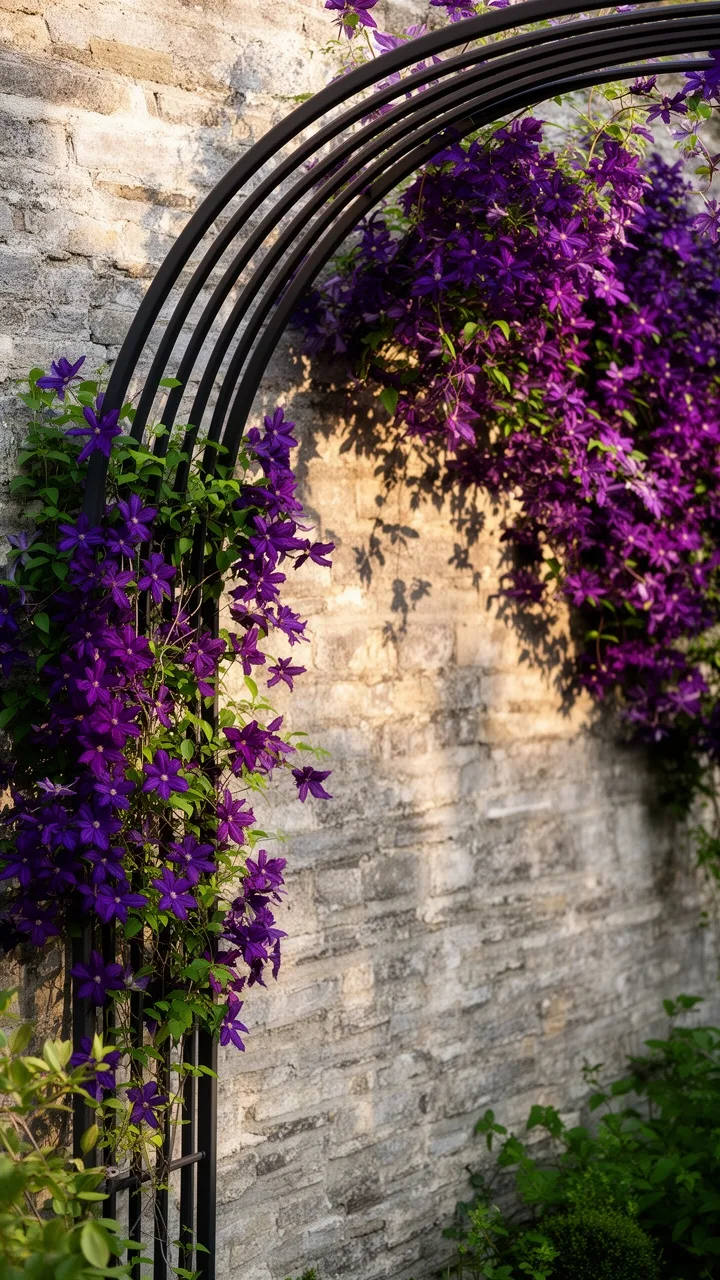
While wooden lattices offer timeless charm, metal arches provide architectural definition that transforms your garden into distinct zones. You’ll find steel and wrought iron arches create bold focal points that frame clematis beautifully. These structures withstand harsh weather better than wood, requiring minimal maintenance. You can position metal arches to establish pathways, separate planting areas, or highlight garden entrances. Their clean lines complement modern landscapes while supporting vigorous clematis varieties. You’ll appreciate the durability and sculptural quality metal brings. Consider powder-coated finishes in black, bronze, or copper to coordinate with your garden’s palette and ensure long-lasting performance.
Fan-Shaped Clematis Trellises for Tight Spaces
For narrow garden areas where traditional arches won’t fit, fan-shaped trellises offer an efficient vertical solution that maximizes your growing space. These structured frames spread outward from a central base, distributing clematis stems evenly across a compact footprint. You’ll appreciate their space-saving design against fences, walls, or between garden beds. The geometric pattern guides vine growth upward while maintaining visual interest. Fan trellises work exceptionally well for smaller cultivars like Clematis ‘Nelly Moser’ and dwarf varieties. Install them firmly into soil or secure them to existing structures, ensuring adequate sunlight reaches all angles. This configuration transforms constrained areas into flourishing vertical gardens.
Pergola Trellises for Overhead Canopies

Once you’ve mastered vertical clematis training on compact structures, you’re ready to tackle larger garden zones where pergolas deliver dramatic overhead coverage. Install sturdy posts at least eight feet apart, ensuring structural integrity for mature vines’ weight. Plant clematis specimens fifteen inches from posts, allowing roots adequate space. Train vigorous varieties like Clematis montana along horizontal beams using soft ties. Prune established vines annually, removing dead wood and thinning crowded growth. Space plants eighteen to twenty-four inches apart for full canopy development. Water deeply during establishment, then maintain consistent moisture levels throughout growing seasons.
Obelisk Trellises: Growing Clematis Upward
Transform compact garden spaces by installing obelisk trellises that guide clematis vines skyward in elegant spirals. You’ll maximize vertical growth while maintaining accessibility for pruning and maintenance. These structures typically measure 6-8 feet tall, offering substantial support for vigorous varieties.
| Feature | Benefit | Best For |
|---|---|---|
| Narrow footprint | Space-efficient design | Small gardens |
| Tapered shape | Natural vine guidance | Spiral training |
| Open framework | Air circulation | Disease prevention |
You’ll train young shoots horizontally around the base, encouraging lateral branching and fuller blooms. Obelisks work exceptionally well with compact clematis varieties, creating focal points without overwhelming surrounding plantings.
Rustic Bamboo Trellises With Natural Appeal
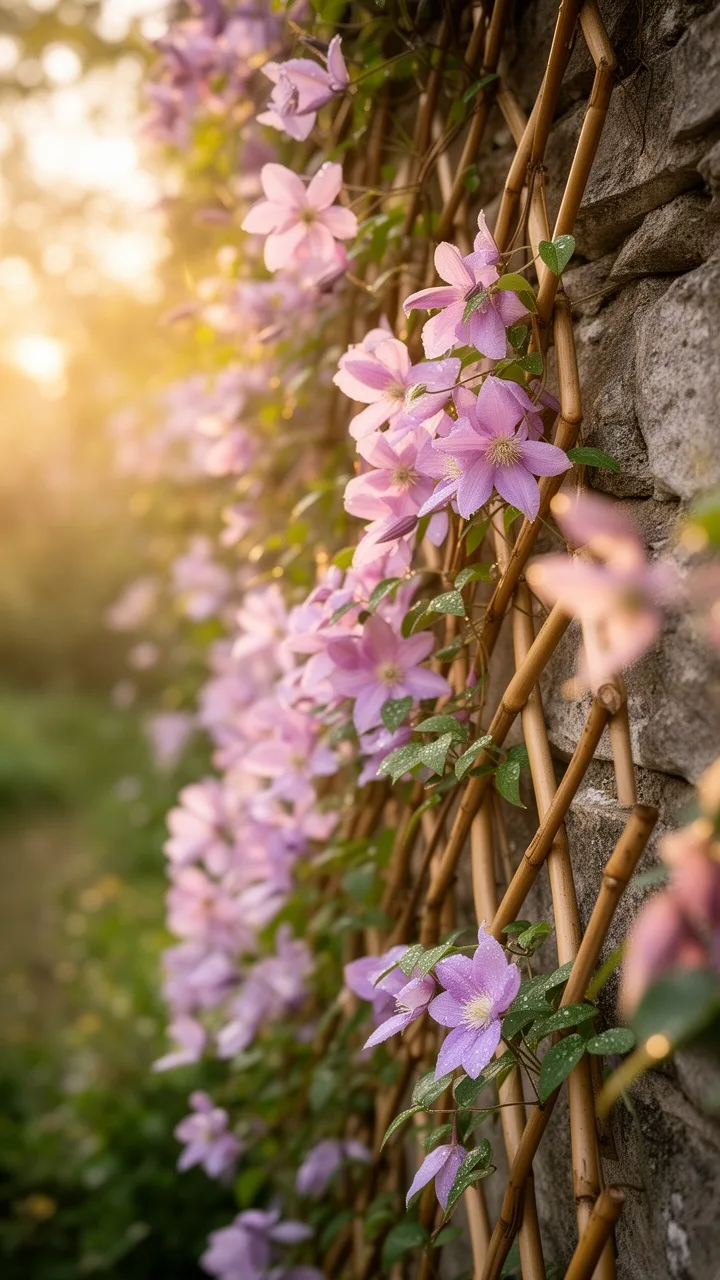
Bamboo trellises bring organic warmth to garden settings while offering practical structural support for climbing clematis. You’ll appreciate their natural aesthetics and affordability compared to metal alternatives. When selecting bamboo, choose treated varieties that resist rot and weathering. Arrange poles in geometric patterns—diamond, square, or triangular configurations—to maximize climbing surface area. Secure joints with jute twine or stainless steel clips for durability. Position your trellis where clematis receives six-plus hours of sunlight daily. The bamboo’s natural finish complements cottage and Asian garden styles beautifully. Plan regular maintenance, inspecting for damage and reapplying protective finishes every two years to extend longevity.
Copper Trellises That Age Into Beauty
Copper trellises offer a striking alternative that evolves with time, developing a protective patina that deepens from bright rose-gold to rich verdigris green. You’ll appreciate how this natural oxidation process requires minimal maintenance while enhancing aesthetic appeal. The metal’s malleability allows artisans to craft intricate designs that complement clematis vines beautifully. Copper’s antimicrobial properties also benefit plant health by reducing fungal issues.
| Feature | Benefit | Timeline |
|---|---|---|
| Patina Formation | Natural weathering protection | 3-5 years |
| Malleability | Custom design possibilities | N/A |
| Antimicrobial | Reduced plant diseases | Immediate |
| Durability | Long-term investment | 20+ years |
Installation requires secure anchoring to withstand vine weight and wind stress.
Wire Grid Clematis Trellises for Minimalist Gardens
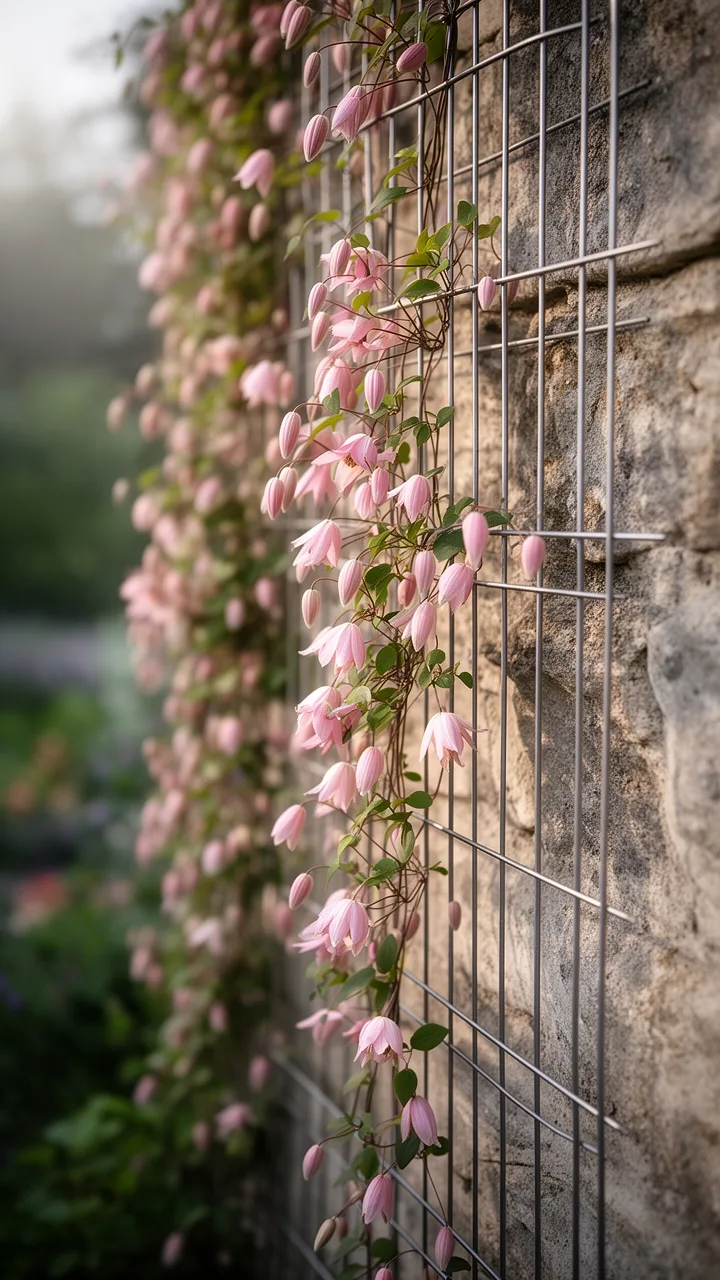
Wire grid trellises offer a clean, unobstructed framework that won’t compete visually with your clematis blooms. You’ll appreciate their geometric simplicity, which complements minimalist garden designs perfectly. These structures typically feature evenly spaced horizontal and vertical wires, creating uniform squares or rectangles that guide vine growth systematically.
Install your grid vertically against walls or fences for maximum visual impact. The open design allows excellent air circulation, reducing disease risk while maintaining your garden’s streamlined aesthetic. You can easily adjust plant training along the wires, and the minimal material presence keeps focus on your clematis flowers rather than the support structure itself.
Tiered Tower Trellises for Staggered Blooms
While wire grids prioritize visual restraint, tiered tower trellises take a different approach—they’ll transform your garden’s vertical dimension into a dynamic flowering display. These structures feature staggered horizontal platforms that support clematis vines at varying heights. You’ll achieve sequential blooming by planting different cultivars on each tier, creating continuous color throughout the season. The tiered design maximizes sunlight exposure to lower levels, preventing shade competition. Position towers as focal points or along borders. You can construct them from wood, metal, or composite materials. This architectural approach combines structural appeal with horticultural function, delivering both aesthetic impact and practical cultivation benefits.
Budget-Friendly Repurposed Ladder Trellises
If you’re seeking an economical alternative to custom structures, repurposed ladders offer exceptional value as clematis trellises. You’ll find wooden or metal ladders at thrift stores, garage sales, or your garage. Simply lean them against walls or secure them horizontally for horizontal training. The rungs naturally support climbing vines while allowing air circulation. You can paint ladders to match your garden aesthetic or leave them weathered for rustic appeal. This approach eliminates construction costs while providing sturdy support. Clematis cultivars climb efficiently through ladder openings, creating layered blooms across multiple horizontal planes throughout the growing season.
Corner and Lean-To Trellises for Problem Spots
Many gardeners overlook difficult spaces where standard trellises won’t fit or function properly. Corner trellises solve this challenge by utilizing two perpendicular walls, creating maximum growing space in confined areas. You’ll construct these using lightweight materials like PVC or metal frames angled at ninety degrees, securing clematis vines along both surfaces.
Lean-to designs work excellently against single walls, particularly in shaded or wind-exposed spots. You’ll angle the structure away from the wall at forty-five degrees, promoting air circulation and reducing disease. This configuration also directs rain runoff effectively while supporting vigorous clematis growth in otherwise problematic locations.
Spiral Clematis Trellises as Living Sculptures
You’ll create stunning vertical focal points by training clematis vines around spiral-structured trellises that function as living sculptures. These architectural elements transform ordinary gardens into dynamic displays of color and texture.
- Spiral design maximizes blooming surface area by distributing vines evenly along the structure
- Select appropriate clematis varieties that match your trellis height and desired flowering timeline
- Install sturdy metal or wooden spirals with 12-18 inch diameters for optimal support
- Train vines systematically by gently weaving stems around the spiral as they grow
- Prune strategically to maintain the sculptural form while encouraging dense flowering
This approach transforms your garden into an artistic landscape feature.
Hybrid Wood-and-Metal Trellises for Modern Cottage Style
Blending rustic charm with contemporary durability, hybrid wood-and-metal trellises combine the warmth of timber with steel’s structural integrity to create garden structures that won’t compromise on style or longevity. You’ll appreciate how the metal framework—typically powder-coated steel or aluminum—provides reliable support for heavy clematis vines while wooden slats or crossbeams add organic visual interest. This combination resists rot and rust effectively when properly maintained. You can customize dimensions and finishes to match your home’s aesthetic. The metal elements handle weight distribution efficiently, while wood softens the industrial appearance, making these trellises ideal for modern cottages seeking balanced sophistication.
Wrought Iron Trellises: Romantic Garden Anchors
Forged from solid iron and shaped through traditional metalworking techniques, wrought iron trellises deliver unmatched elegance and permanence to your garden.
These structures withstand decades of weather exposure without deteriorating. You’ll appreciate their ability to support heavy clematis vines as they mature and produce abundant blooms. The ornamental scrollwork and decorative finials create visual interest even during dormant seasons.
Consider these advantages:
- Exceptional durability lasting 50+ years with minimal maintenance
- Superior weight capacity for mature, flowering vines
- Customizable designs matching your garden’s aesthetic
- Rust patina develops character over time
- Anchors climbing plants securely in wind
Install wrought iron trellises against walls or as garden focal points.
Conclusion
You’ve explored nine transformative trellis styles, but here’s what you’re really wondering: which one’ll truly transform your garden into the romantic sanctuary you’ve envisioned? The answer isn’t in the design itself—it’s in how you’ll commit to nurturing those climbing clematis vines season after season. You’ll discover that the right trellis isn’t just structure; it’s the foundation where your garden’s most breathtaking moments unfold, waiting for you to plant the first seed and witness the magic.
The Only Tools You Need for a Thriving Garden 🌱
Whether you're a weekend gardener or growing daily — these hand-picked tools make every session faster, easier, and more satisfying.