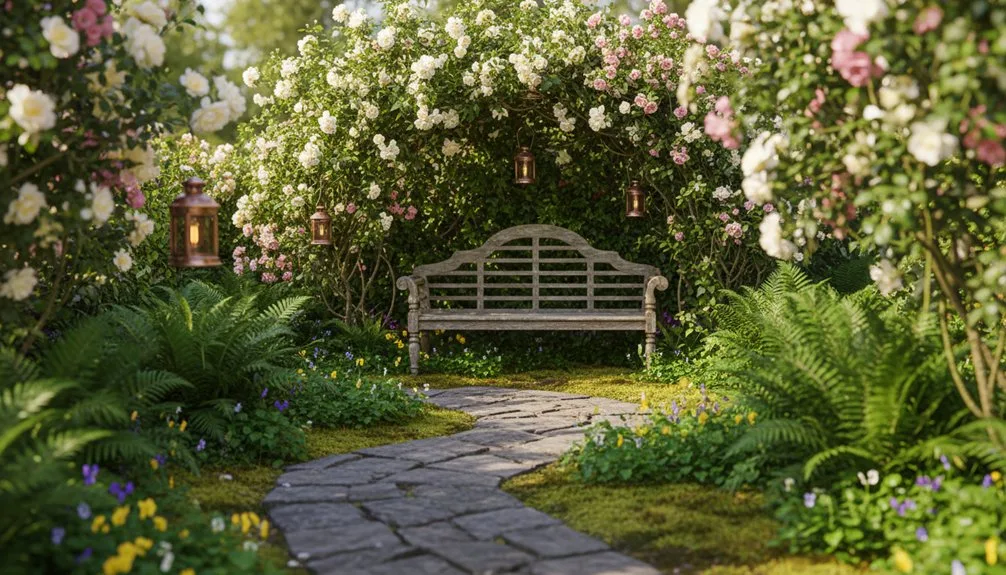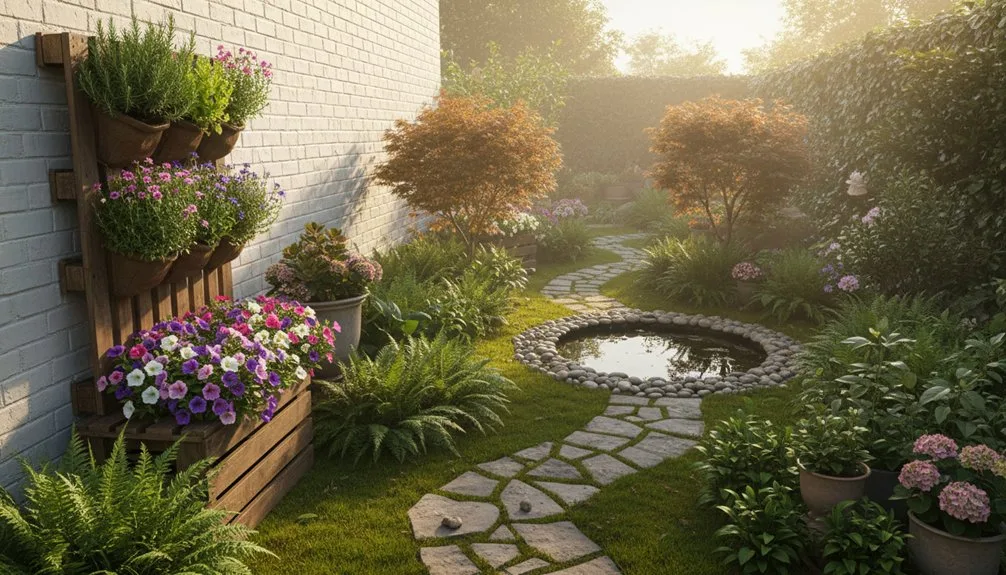
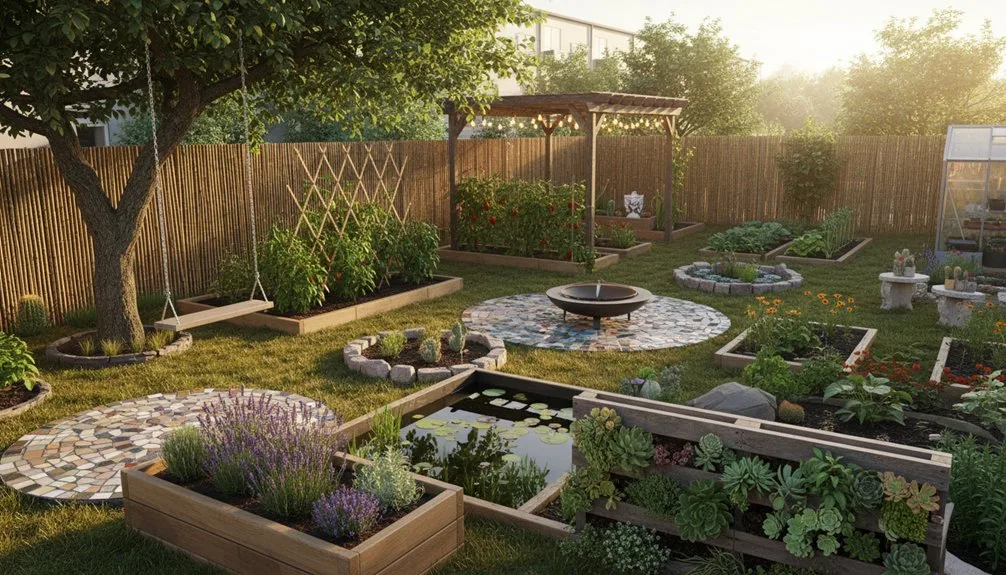
You can transform your tiny backyard into an intimate gathering space by strategically layering vertical planters, installing permeable pavers for smart drainage, and choosing stackable, multi-functional furniture that adapts to your layout. Curved designs and zoned sections—herb gardens, seating areas, and vertical walls—make cramped spaces feel sophisticated and twice their size. Built-in banquettes, steel terraces, and climbing vines add personality while maximizing every square inch. Discover how to implement these strategies specific to your space’s unique challenges and opportunities.
Key Takeaways
- Curved garden designs with central focal points create visual perception of larger, more sophisticated spaces while encouraging guest engagement.
- Vertical steel planter systems and living walls maximize growing space without consuming ground area in compact backyards.
- Multi-functional furniture—storage ottomans, modular sofas, stackable chairs—combine seating, storage, and surfaces to optimize limited square footage.
- Botanical Bento Method partitions backyards into distinct herb, pollinator, seating, and vertical zones using low dividers and natural boundaries.
- Permeable pavers with drainage capacity prevent pooling while grid options filled with grass or gravel enhance aesthetics and erosion control.
Maximize Small Patios With Smart Seating Solutions
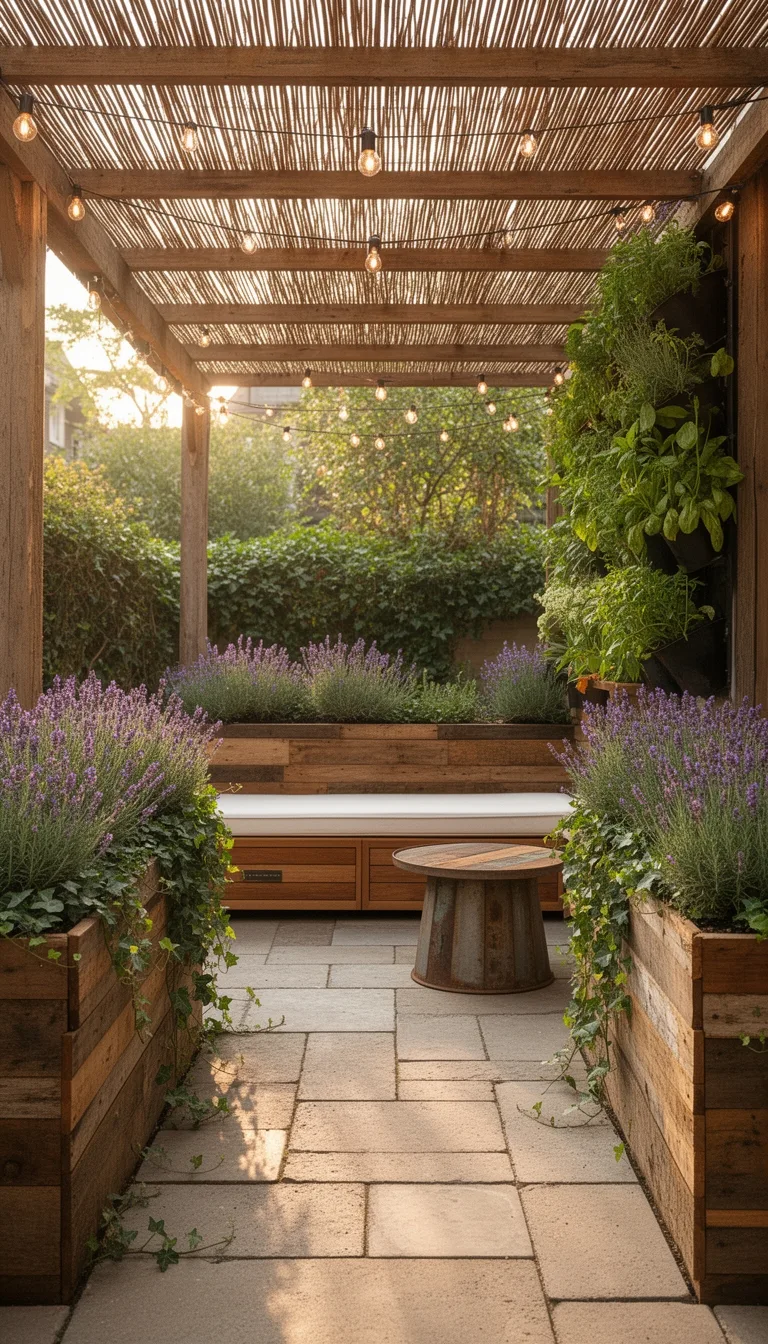
Smart seating transforms cramped outdoor spaces into functional gathering areas. You’ll maximize your patio by choosing foldable furniture made from lightweight aluminum or plastic—pieces like the IKEA SUNDSÖ table and chairs store easily during winter months. Stackable options enable quick rearrangement and effortless storage when you’re not entertaining.
Consider armless chairs that provide extra inches on each side, improving traffic flow in tight quarters. Benches and small-scale loveseats seat multiple people without consuming excessive square footage.
You can also strategically place bistro tables against walls or rails, freeing narrow areas for movement. Backless counter stools tuck neatly under tables, while angled seating utilizes corners effectively. Multi-functional pieces like round tea tables serve dual purposes as both seating and surfaces.
Design a Circular Layout to Foster Intimate Conversations

A circular garden layout naturally draws people together, transforming your backyard into an intimate gathering space that encourages conversation and connection.
The curved design creates a natural focal point at the center, pulling guests inward rather than spreading them across a linear space.
You’ll find that the symmetrical arrangement fosters balance and cohesion, making the area feel intentionally designed and inviting.
Position taller plants around the perimeter to establish privacy and frame the gathering space.
Add a central small tree or seating area to anchor the design and enhance usability.
The efficient tending motion from the center strengthens social interaction, while curves make even modest backyards feel larger and more sophisticated—whether your style’s contemporary or traditional.
Choose Multi-Functional Furniture to Save Space
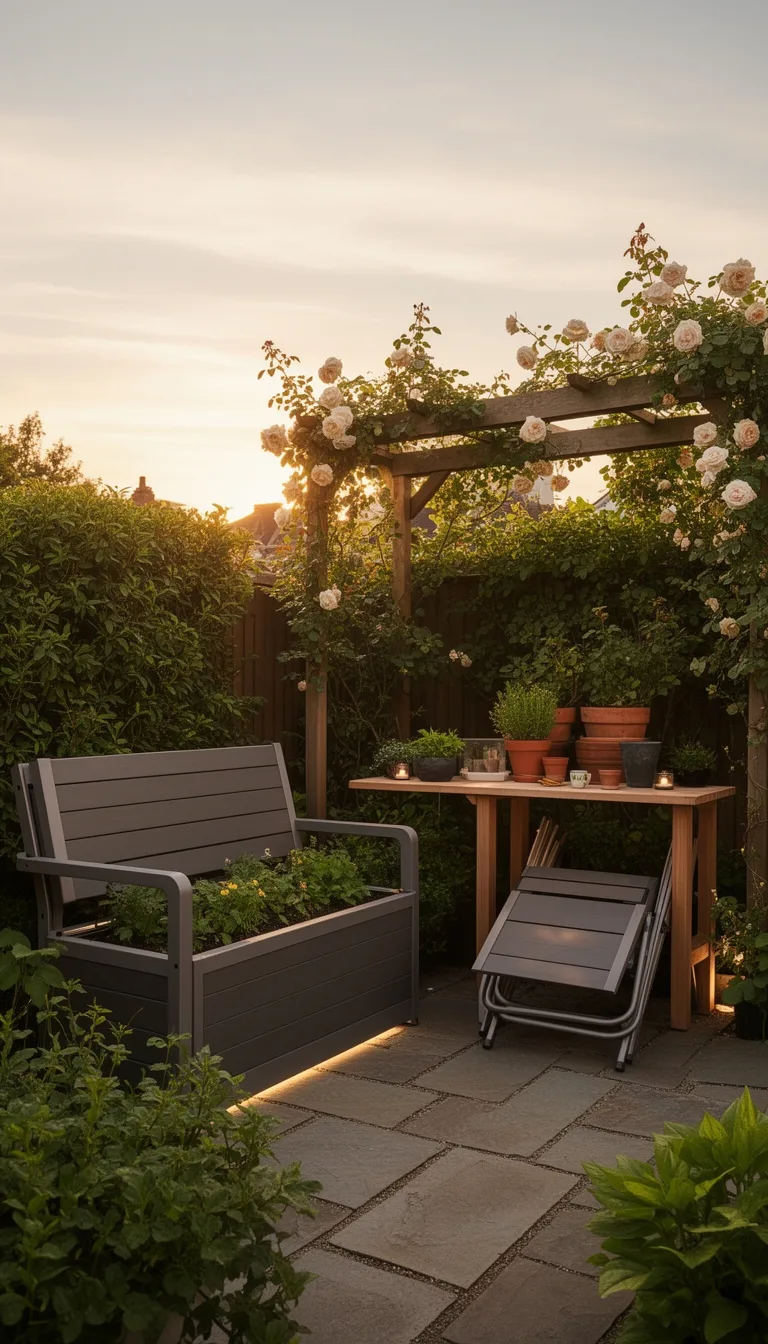
In tight backyards, every square foot counts, and furniture that serves multiple purposes becomes your greatest asset. Storage ottomans hide clutter while doubling as seating, footrests, or coffee tables. Nestable tables with chic black tops and golden edges rearrange effortlessly for different activities. Modular sofas like IKEA KIVIK feature interchangeable components and built-in storage, transforming your space instantly.
| Furniture Type | Primary Function | Space-Saving Benefit |
|---|---|---|
| Storage Ottomans | Seating/Storage | Eliminates clutter organizer need |
| Nestable Tables | Dining/Display | Stacks compactly when unused |
| Modular Sofas | Lounging/Sleeping | Reconfigures for any layout |
Stackable chairs and folding options provide flexible seating without permanent footprints. You’ll maximize usability while maintaining your garden’s openness, creating an inviting outdoor sanctuary that adapts seamlessly to your lifestyle.
Build Vertical Depth With Clustered Steel Planters
When you’re working with limited square footage, clustered steel planters transform your backyard by drawing the eye upward instead of outward.
You’ll maximize your planting volume by arranging three different heights together, creating layered vertical effects that add depth and visual interest.
Position your clusters strategically near doors or railings as focal points that guide circulation.
Rectangular steel planters work best against walls, while stainless steel, corten, or galvanized options offer durability and distinct aesthetics.
Mix varying plant sizes within each cluster for sculptural composition.
This approach eliminates the need for sprawling ground-level gardens.
You’ll free up precious floor space while establishing privacy screens and spatial rhythm.
Steel’s resistance to moisture, temperature swings, and pests means your investment lasts for years with minimal maintenance.
Create Living Walls Using Vertical Planter Boxes
How can you transform a bare wall into a thriving green display? Vertical planter boxes create living walls that maximize small spaces while adding visual depth and character.
Start by selecting a location with 4–6 hours of direct sunlight, or choose shade-tolerant plants for partial shade areas.
Ensure your wall structure supports the weight of planters, soil, and mature plants.
Install boxes using sturdy brackets, spacing them evenly for a clean grid layout or staggering them for organic appeal.
Mix planter sizes to create layered interest—smaller containers dry faster and need frequent watering, so group plants with similar water needs together.
Incorporate trailing plants like pothos and ivy alongside upright varieties for dynamic texture.
Include drainage holes to prevent waterlogging and position boxes accessibly for easy maintenance and watering.
Transform Narrow Patios With Linear Steel Elements
Narrow patios don’t have to feel cramped or underutilized—linear steel elements offer a sophisticated solution that maximizes functionality while maintaining clean visual lines.
You’ll appreciate how straight lines and folded edges create modern outdoor seating and tables perfectly scaled for tight spaces.
Steel benches with built-in storage divide lounging and dining zones efficiently, while weather-resistant materials ensure durability year-round.
Half-circular intersections provide structural strength without unnecessary bulk, keeping your patio visually open.
Consider pairing these elements with horizontal wood screens for contemporary contrast.
Low-profile furniture makes your narrow space appear taller, and portable lighting complements the streamlined aesthetic.
Steel’s versatility lets you customize your layout while maintaining the sophisticated, uncluttered design that transforms constrained patios into functional retreats.
Zone Your Garden Using the Botanical Bento Method
Why settle for a chaotic mix of plants when you can organize your small garden into purposeful compartments?
The Botanical Bento Method divides your space into distinct functional zones—similar to a Japanese lunchbox—maximizing every square foot under 20m².
You’ll create separate areas for herbs, pollinators, seating, and vertical elements, each serving a specific purpose without visual clutter.
Start by defining zones with low dividers, hedges, or fencing.
Group plants deliberately by function and mood, using structural elements like clipped shrubs or bamboo for clear boundaries.
Incorporate vertical screening with climbers to save ground space while adding privacy.
This compartmentalized approach simplifies maintenance, enhances aesthetics, and boosts yields.
You’ll transform your compact patio into an organized, Instagram-worthy garden that performs multiple roles effortlessly.
Install a Focal Point With Metal Archways and Lanterns
After dividing your garden into purposeful zones, you’ll want to anchor it visually with a striking focal point. Metal archways create instant dimension and elegance while supporting climbing plants like roses and clematis. Unlike timber alternatives, galvanised steel resists weathering, rot, and warping year-round with minimal maintenance.
| Feature | Benefit | Best For |
|---|---|---|
| Ground spikes | Easy installation without concrete | Soft soil areas |
| Powder coating | 10+ year durability | British weather |
| Lightweight design | Simpler handling and placement | Small spaces |
| Custom spans | Unique pattern options | Statement pieces |
| Plant support | Lush climbing canopies | Garden enhancement |
Position your archway to frame entrances or divide sections. The sturdy construction handles plant weight effortlessly while the contemporary or classic designs complement any garden style. You’ll transform ordinary backyards into sophisticated outdoor rooms instantly.
Divide Small Patios Into Garden Rooms With Steel Planters
How do you transform a cramped patio into distinct garden zones without overwhelming the space?
Steel planters create natural divisions that organize your garden into functional rooms.
Their geometric shapes add visual hierarchy and three-dimensionality, making compact areas feel larger and more intentional.
You’ll appreciate how modular steel components link efficiently without complex tools, letting you customize layouts for your specific patio dimensions.
Pair planters with benches to establish functional zones—a dining area here, a relaxation spot there.
The stylish contrast between metal edges and vibrant plants enhances visual depth while the rust patina complements rustic or modern landscapes seamlessly.
This strategic placement maximizes your usable space while creating the illusion of a garden room, transforming your small patio into a thoughtfully designed outdoor retreat.
Build Privacy Screens With Tall Planters and Trellises
While steel planters organize your garden into distinct zones, privacy screens tackle another common challenge in small yards: blocking unwanted views and creating intimate outdoor spaces.
You can build effective screens by combining tall planters with attached trellises. Stack multiple planter-trellis units together to form complete barriers, then train vines and climbing flowers upward for layered coverage. For faster results, position planters beneath lattice panels or arched arbors reaching 7.5 feet high.
| Material | Durability | Maintenance |
|---|---|---|
| Western Red Cedar | Moderate | Staining Required |
| PVC Vinyl | High | Minimal |
| Wrought Iron | High | Low |
Consider wheeled lattice screens for flexible repositioning. You’ll enjoy the dual benefit: natural screening plus expanded growing space for your small yard’s vertical dimension.
Transition Spaces With Micro Decks and Gravel Pathways
Small backyards thrive when you connect different zones seamlessly, and micro decks paired with gravel pathways accomplish exactly that.
You’ll create natural transitions between your house, deck, and garden without closing off areas or overwhelming limited space.
Position platform decks near gravel features like fire pits or planting beds, then link them with winding pathways that guide foot traffic naturally.
Tiered decks stepping down to gravel provide safer navigation while defining distinct purposes—sitting zones, cooking areas, or lounging spots.
Choose wood decks combined with stone patios to expand functionality and visual interest.
Island decks with concealed fasteners blend beautifully into gravel yards without requiring visible footings.
This integrated approach maximizes your small backyard’s potential while maintaining an open, flowing aesthetic that feels larger than it actually is.
Select Native Plants for Your Climate Zone
Native plants thrive in your backyard when you’ve matched them to your specific ecoregion, which is defined by soil type, climate patterns, and existing wildlife.
Start by identifying your EPA ecoregion using online maps or local extension resources, considering factors like rainfall, temperature range, and elevation.
For Eastern Forests, select layered plantings like Eastern Redbud and Flowering Dogwood for spring color, plus shade-tolerant groundcovers like Wild Ginger.
Plains areas demand deep-rooted species such as Little Bluestem and Purple Coneflower that handle drought and wind.
Desert regions require widely-spaced succulents like Barrel Cactus and Creosote Bush, needing just 4–16 inches of water annually.
Consult the USDA PLANTS Database and state flora guides to verify native ranges for your exact location, ensuring optimal establishment and minimal maintenance.
Amplify Tranquility With Strategic Hedge Placement
How can you transform your backyard into a sanctuary of peace?
Strategic hedge placement creates natural barriers that dampen road noise and external sounds, giving you a genuinely quieter outdoor space.
Position dense evergreen varieties along property lines to maintain year-round screening without hard structures.
They’ll block unsightly views while providing elegant privacy for patios and decks.
Hedges also function as effective windbreaks, protecting delicate plants and garden areas from harsh gusts.
Their soft, natural boundaries feel more inviting than rigid fences.
Consider thorny types for added security while disguising problem areas.
Root systems stabilize soil and prevent erosion on sloped terrain.
You’ll experience reduced runoff and improved drainage.
Combined with noise reduction and privacy benefits, strategic hedges transform compact spaces into tranquil garden rooms that feel substantially larger.
Use Stepped Steel Terraces on Sloped Yards
Sloped yards don’t have to sit unused—you can transform them into functional, beautiful spaces with stepped steel terraces.
Weathering steel (Corten) arrives flat and black, bending to fit your slope’s contours perfectly.
You’ll shape panels incrementally, building one step per weekend as you progress upward. This approach manages steep grades—even 33% slopes—without requiring massive retaining walls or railings.
Here’s what you’ll gain:
- Multiple level platforms for patios, kitchens, and gardens that maximize usable space
- Natural drainage systems with French drains behind terraces, reducing erosion significantly
- Organic aesthetic appeal through curved, non-straight steel edges that hug your landscape
Fill terrace pockets with succulents, vegetables, or trailing plants.
Within six years, you’ll have transformed an unusable quarter-acre into distinct pocket gardens offering views, privacy, and entertainment zones.
Line Pathways With Lush Foliage for Zoned Depth
What’s the quickest way to make your small backyard feel larger?
Line your pathways with lush foliage to create zoned depth that draws the eye forward.
Plant drifts of shade-tolerant plants like Hostas, Astilbe, and Ferns along gravel or stepping stone paths.
These layered plantings establish visual boundaries that make spaces feel deeper and more expansive.
Use ground covers like Liriope muscari or creeping thyme between pavers to soften hard edges while maintaining walkability.
Consider mixed borders featuring flowering perennials—Oriental Poppies, Salvia, and Ladies Mantle—positioned to frame your path.
This strategic placement guides visitors through your garden while establishing distinct zones.
The combination of varied foliage textures and seasonal blooms creates visual interest that keeps your compact yard feeling dynamic and intentional throughout the year.
Layer Shade Sources to Protect Uncovered Patios
Since unprotected patios can become uncomfortably hot during peak sun hours, layering multiple shade solutions lets you customize coverage while maintaining the open-air feel you want.
Combine different systems to maximize comfort and flexibility:
- Install shade sails positioned outside your patio perimeter with varied anchor heights, creating hyperbolic shapes that reduce wind flapping while providing substantial coverage.
- Add adjustable elements like retractable canopies or Roman shades mounted on pergola beams, allowing you to control shaded areas based on sun position and preferences.
- Incorporate wraparound curtains on canopy edges or overhanging structures for lateral protection against afternoon sun and enhanced privacy.
This layered approach distributes tensioning forces efficiently, reduces permanent footings needed, and adapts to seasonal changes.
You’ll enjoy your patio year-round without sacrificing its open aesthetic.
Anchor Covered Patios With Built-In Banquette Seating
Once you’ve layered your shade solutions overhead, anchor your covered patio with built-in banquette seating that maximizes every square inch. These permanent fixtures transform tight spaces into intimate gathering areas, eliminating the need for individual chair clearance.
| Feature | Benefit |
|---|---|
| L-shaped and U-shaped designs | Adapts to corner layouts efficiently |
| Underseat storage compartments | Stores cushions and supplies on-site |
| Curved configurations | Encourages conversation by facing groups inward |
| Weather-resistant materials | Withstands outdoor conditions long-term |
| Skirted or upholstered styles | Matches your aesthetic preferences seamlessly |
Built-in banquettes pair seamlessly with pergola structures, creating cozy outdoor living rooms. You’ll increase entertaining capacity on narrow terraces while maintaining a cohesive design. Whether you choose concrete, timber, or upholstered finishes, these anchoring pieces elevate your covered patio into functional, stylish space.
Maximize Elevation With Corner Planters
By introducing tiered planters into corner spaces, you’ll instantly transform overlooked garden areas into dynamic focal points. These elevated setups accomplish multiple goals simultaneously:
- Improve drainage and soil quality while protecting plants from ground pests and compaction
- Create visual height that makes small areas appear significantly larger
- Optimize sunlight access for understory plants without expanding your footprint
You can choose from brick-edged raised beds, tiered metal stands, or wooden structures depending on your needs. Plants like Carex ‘Ice Dance’ and Heuchera ‘Plum Pudding’ thrive in raised corners, while succulents demand minimal maintenance in elevated pots.
The beauty of tiered corner planters lies in their flexibility—they’re movable for seasonal adjustments, cost-effective with recycled materials, and perfect for balconies or patios. This approach opens compacted areas for gardening while directing foot traffic naturally through your space.
Install Permeable Pavers for Drainage and Irrigation
While corner planters address vertical space limitations, permeable pavers tackle a fundamental challenge in compact gardens: water management.
You can install these innovative pavers on driveways, patios, and walkways to eliminate standing water and reduce runoff.
They drain up to 38.5 inches per square foot hourly, preventing pooling during heavy storms.
The flexible plastic or concrete options filter rainwater through sand-filled joints into underlying soil, replenishing groundwater supplies naturally.
You’ll also enjoy practical benefits: improved traction, reduced slip hazards, and less ice formation in winter.
Grid pavers filled with grass or gravel enhance aesthetics while providing erosion control.
Add a Greenhouse That Grows Food and Functionality
How can you maximize your small backyard’s potential while extending your growing season year-round?
A greenhouse transforms your 8×12 space into a productive food-growing hub.
You’ll construct a level deck foundation using concrete blocks and pressure-treated framing, then cover it with twin-wall polycarbonate sheets for insulation and light transmission.
- Build integrated raised garden beds with direct ground access through your pea gravel base, enabling tomatoes, greens, and root vegetables to thrive
- Customize your interior layout with container or in‑ground beds that suit off‑grid food production in compact spaces
- Optimize year‑round growing conditions using polycarbonate roofing that regulates temperature while maintaining proper drainage
The 30‑inch door provides convenient access, while the modular wood frame allows aesthetic customization.
This functional structure supports homesteading ambitions without sacrificing yard space.
Conclusion
You’ve now got the tools to transform your cramped backyard into a thriving oasis. By combining vertical gardens, smart furniture choices, and permeable surfaces, you’ll maximize every inch of space. Your small patio becomes a multifunctional retreat where you can cultivate fresh produce and entertain guests—all while maintaining the organized efficiency of a medieval monastery garden plan. These practical strategies ensure you’re not just creating a pretty space; you’re engineering functionality that actually works for your lifestyle.
The Only Tools You Need for a Thriving Garden 🌱
Whether you're a weekend gardener or growing daily — these hand-picked tools make every session faster, easier, and more satisfying.