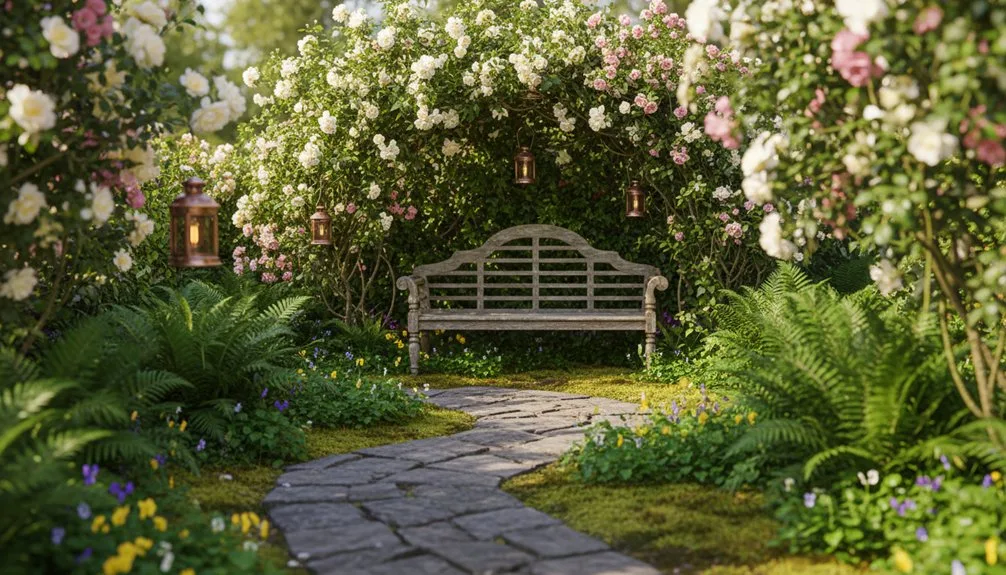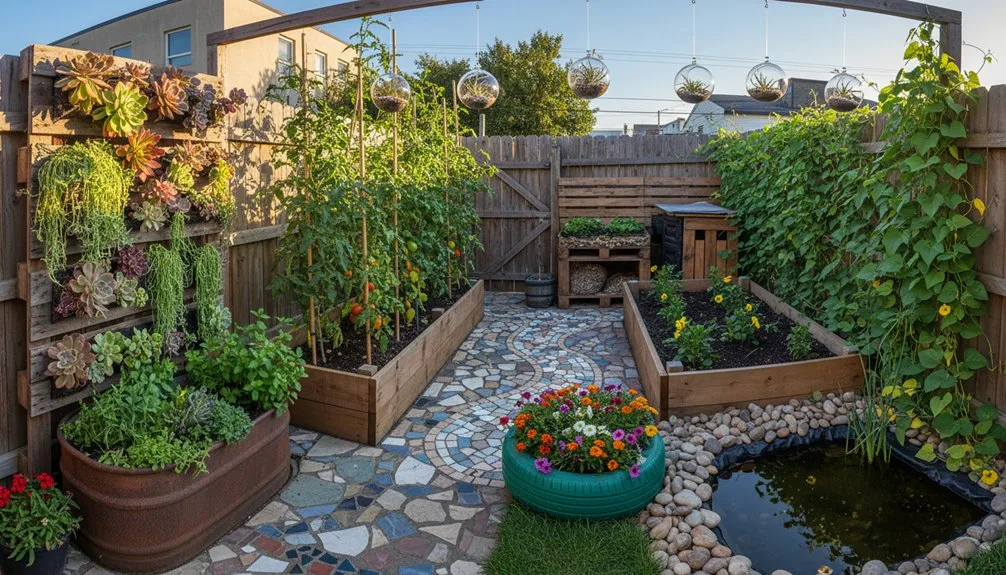
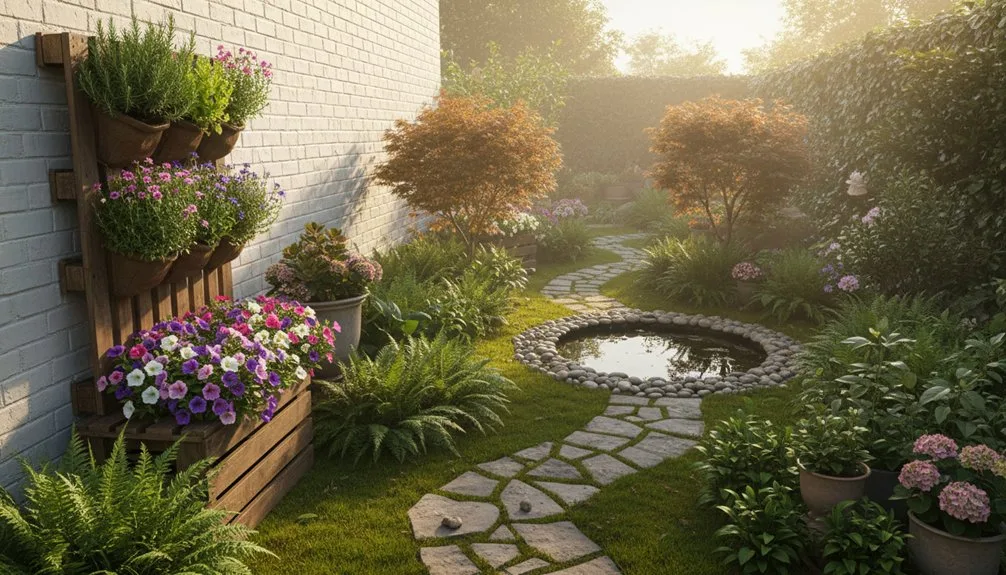
You’ll transform your cramped backyard by zoning distinct areas—dining, relaxation, kitchen garden—using decking and gravel to separate spaces. Build upward with vertical trellises on walls and fences to yield 70–80× more per square foot. Layer plants strategically: tall shrubs back, medium plants mid-section, groundcovers front. Select drought-tolerant species like catmint and ornamental grasses for continuous structure with minimal maintenance. Position warm colors forward, cool tones back. Raised beds and containers maximize yield in tight quarters while creating depth perception. Discover how these layered techniques compound to create genuine abundance.
Key Takeaways
- Divide your backyard into distinct zones using decking, paving, and gravel to maximize perceived space and avoid visual clutter.
- Build upward with vertical gardens and trellises on walls and fences to increase planting area without consuming ground space.
- Layer plants strategically: tall trees back, medium mid-section, groundcovers front to create depth and fullness in tight spaces.
- Choose drought-tolerant, low-maintenance plants like catmint, ornamental grasses, and succulents that establish quickly and require minimal care.
- Use raised beds with closer plant spacing and warm-colored plants forward to enhance visual abundance and create a lush appearance.
Zone Your Space First

Before you plant a single seed or lay a single stone, divide your backyard into distinct zones with dedicated purposes—dining areas, relaxation spaces, children’s play zones, kitchen gardens, and meditation gardens.
This strategic division maximizes your space’s functionality and prevents it from feeling cluttered or underdevelentiated.
Small gardens particularly benefit from this approach.
Rather than cramming everything into one area, you’ll create practical spaces that incorporate your desired functions without overwhelming the landscape.
Each zone needs a clear destination to guide your design decisions and reinforce the zoning concept.
Use hard landscaping—decking, paving, gravel, and lawn—to physically separate zones and create visual distinction.
Paths and borders then direct foot traffic while connecting spaces harmoniously.
This foundational step transforms how you experience and utilize your outdoor garden throughout the seasons.
Grow Upward With Vertical Gardens and Trellises
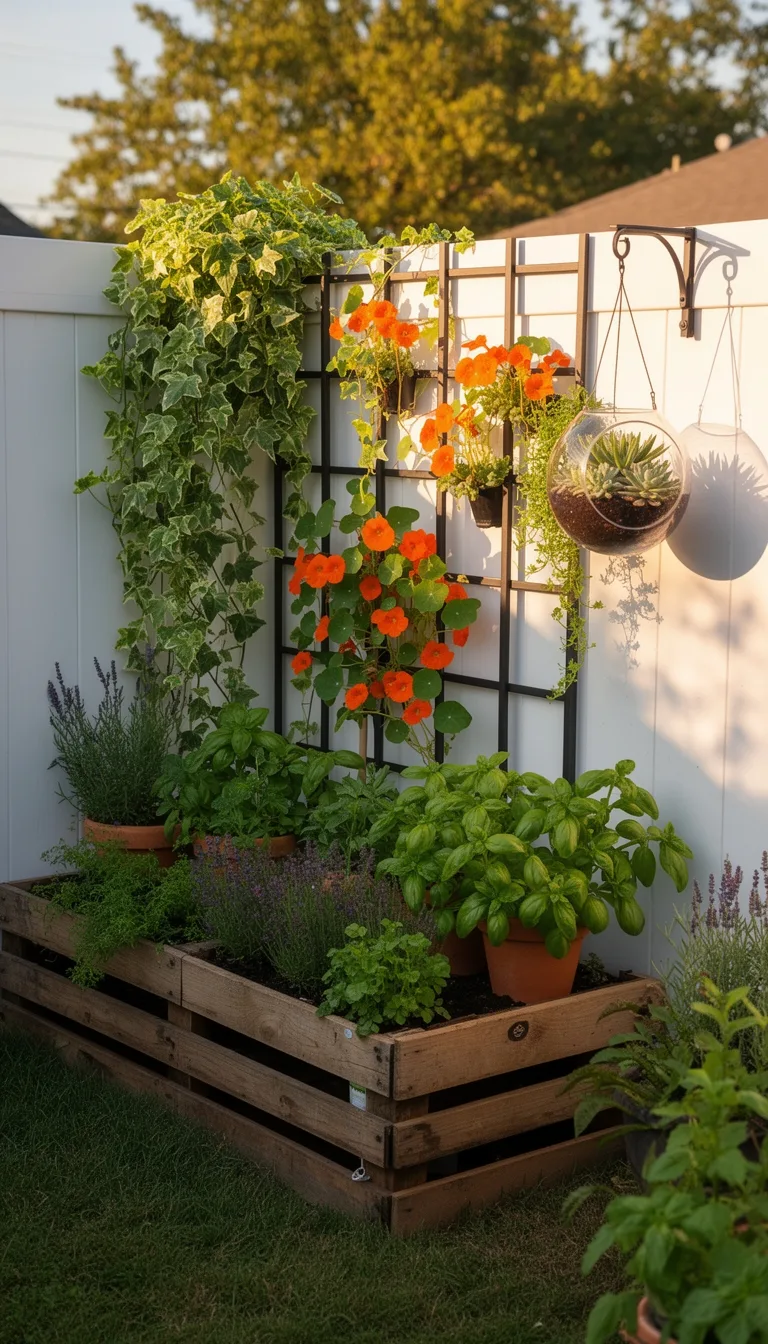
Once you’ve mapped out your zones, you’re ready to expand your planting capacity by building upward—vertical gardens and trellises transform underutilized wall space, fences, and facades into productive growing areas.
You’ll maximize light exposure and airflow by alternating heights and angling panels strategically.
Select fibrous-rooted plants like ferns and trailing varieties that thrive in confined spaces.
Install bamboo, wood, or steel structures as support, ensuring your wall can handle the weight before construction.
Integrate drip irrigation directly into your system to maintain consistent moisture without waterlogging.
Pair lightweight textile pockets with seasonal plantings to adapt your garden year-round.
This vertical approach produces 70–80 times more per square foot than traditional beds while conserving water and space.
Create Depth With Layered Plants and Hardscaping

As you build upward with vertical structures, you’ll want to simultaneously develop horizontal depth by layering plants at varying heights and integrating hardscape elements that anchor your design.
Position taller trees and shrubs toward the back, medium plantings in the middle, and groundcovers in front to create natural progression.
Use retaining walls and terracing with stone or wood to establish elevation changes that combat flat yards and define distinct zones.
Select hardscape materials strategically: flagstone offers durability at $30–$50 per square foot, while concrete pavers provide affordable alternatives at $8–$15.
Install proper drainage with compacted gravel bases and polymeric sand between pavers.
Soften these structural elements by lining walkways with low-growing plants and cascading vines over edges.
This layering technique maximizes your space’s perceived size while ensuring year-round visual interest.
Choose Low-Maintenance Plants That Maximize Impact
Why settle for high-maintenance specimens when you can cultivate a garden that practically thrives on neglect?
You’ll maximize visual impact by selecting drought-tolerant plants engineered for minimal intervention.
Yarrow and Black-eyed Susan deliver season-long blooms while tolerating heat and poor soil.
Catmint spans zones 3-9, flowering from late spring through fall with virtually no fussing.
For structure, incorporate Calamagrostis ‘Karl Foerster’ or Stipa tenuissima—ornamental grasses that provide architectural interest without disease susceptibility.
Low-care shrubs like Glow Girl Spiraea and Tortuga Juniperus establish quickly and require minimal pruning.
Layer in succulents such as Agave ‘Blue Glow’ for striking foliage requiring only occasional water.
This strategic plant selection creates a lush, visually sophisticated garden demanding far less labor.
Try Raised Beds and Containers
Raised beds and containers transform your low‑maintenance plant selection into a highly productive growing system that you’ll control completely.
You’ll pack plants closer together—peas at 3‑5 inches apart versus seed packet spacing—maximizing yields in minimal space.
Gravity‑aided drainage prevents root rot while keeping soil moist, not waterlogged.
Customize soil depth for your crops: deeper for tomatoes, shallower for lettuces.
Spring soil warms 3‑4 inches faster, letting you plant late February in cold climates.
Position beds strategically for precise sun exposure in tight yards.
Rotate crops seasonally and add compost spring and fall to maintain soil health.
Containers complement raised beds for modular flexibility, protecting plants from foot traffic while enhancing your garden’s aesthetic appeal.
Add Strategic Color and Light
Once you’ve established your raised beds and containers, you’ll want to orchestrate color and light to transform your garden into a cohesive visual space.
Strategic color selection maximizes perceived depth in compact areas.
Consider these approaches:
- Monochromatic schemes using lavender through deep purple create unity and expansiveness while texture variations maintain visual interest
- Complementary pairings like yellow roses with purple alliums form vibrant focal points without overwhelming
- Neutrals and pastels including silver foliage, white blooms, and soft tints bridge temperature zones and provide visual rest
Position warm-colored plants forward to advance them visually, while cool tones recede toward bed edges, enhancing depth perception.
Stagger plantings front to back in deep containers.
Layer blooms for sequential color throughout growing seasons, ensuring your compact garden sustains visual impact year-round.
Conclusion
You’re building a living narrative where each zone becomes a chapter. Your vertical layers mirror growth itself—reaching upward despite constraints. As seasons shift, you’ll discover that a small garden isn’t about square footage; it’s about cultivating depth. Your raised beds and containers become vessels of potential. You’re not fighting limitations; you’re composing them into abundance. Strategic color and light illuminate what you’ve learned: constraints breed creativity, and thoughtful cultivation transforms any space into sanctuary.
The Only Tools You Need for a Thriving Garden 🌱
Whether you're a weekend gardener or growing daily — these hand-picked tools make every session faster, easier, and more satisfying.