You’ll transform your small backyard into a thriving garden for $1,000–$3,000 by combining budget-friendly hardscaping, strategic plant selection, and DIY techniques. Start with affordable vertical planters using recycled buckets, add a fire pit for $200–$500, and create a barrel pond for under $300. Layer mulch to reduce watering by 70%, choose native plants requiring minimal maintenance, and use gravel pathways for definition. Strategic cost allocation—30% hardscape, 40% plants, 30% labor savings—maximizes your investment. The specific designs and step-by-step installation methods ahead reveal exactly how to execute each element.
Key Takeaways
- Start small with 50–250 sq ft raised beds or container gardens to minimize soil, equipment, and maintenance costs while staying manageable.
- Allocate budget as 30% hardscape, 40% plants, 30% DIY labor savings; complete garden designs range $1,000–$3,000 total.
- Use free or cheap sources: Freecycle plants, tree-service wood chips, discarded concrete walkways, and reclaimed bricks for edging.
- DIY fire pits ($200–$500), barrel ponds ($100–$300), and gravel pathways ($1–$3/ft²) provide affordable hardscape features requiring minimal expertise.
- Choose drought-resistant succulents, native plants, vertical herb planters, and organic mulch to reduce watering needs by up to 70%.
Know Your Budget and Space Before You Plan
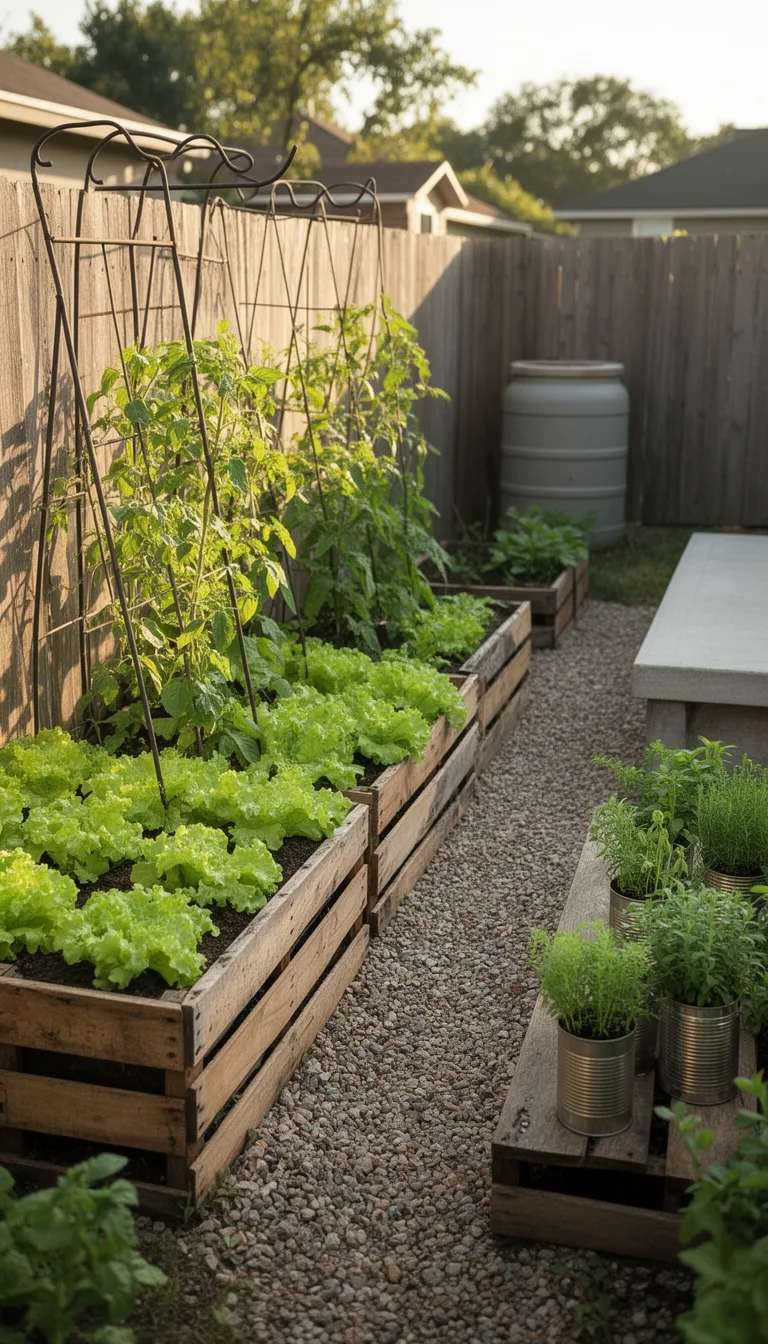
Before you break ground on your backyard garden, you’ll need to honestly assess both your available space and financial resources—because these two factors will determine everything from what you can grow to how much time you’ll actually spend maintaining your plot.
Start by measuring your available space.
Beginning gardeners should aim for 100-200 square feet, requiring just 30 minutes to an hour weekly.
Intermediate gardeners can manage 200-400 square feet sustainably.
Next, evaluate your budget.
Small gardens (50-250 sq ft) minimize equipment and soil costs, while raised beds offer cost-effective optimization at 50-100 square feet per setup.
Match your garden size to realistic time availability—misalignment between ambition and capacity causes burnout and failure.
Build Your First DIY Fire Pit ($200–$500)

Once you’ve finalized your garden’s layout and budget, adding a fire pit transforms your outdoor space into a functional gathering area without breaking the bank.
You’ll find concrete blocks and metal fire rings cost under $200, while cinder block designs start around $150 for 36-inch diameters.
Metal fire pit bowls range from $75–$300 and require minimal installation expertise.
Prefabricated kits simplify DIY assembly for beginners, eliminating specialized masonry knowledge.
For your base, gravel provides affordable, permeable groundcover requiring just $50–$150 in site preparation.
Wood-burning models prove most economical, needing only basic metal bowls without complex fuel line installations.
Add safety screens and covers ($100–$500) to protect your investment while completing your weekend project affordably.
Stack Budget Vertical Planters for Small Spaces

Why let limited square footage stop you from growing what you want?
You can build stunning vertical planters using upcycled metal containers that maximize your space and minimize costs.
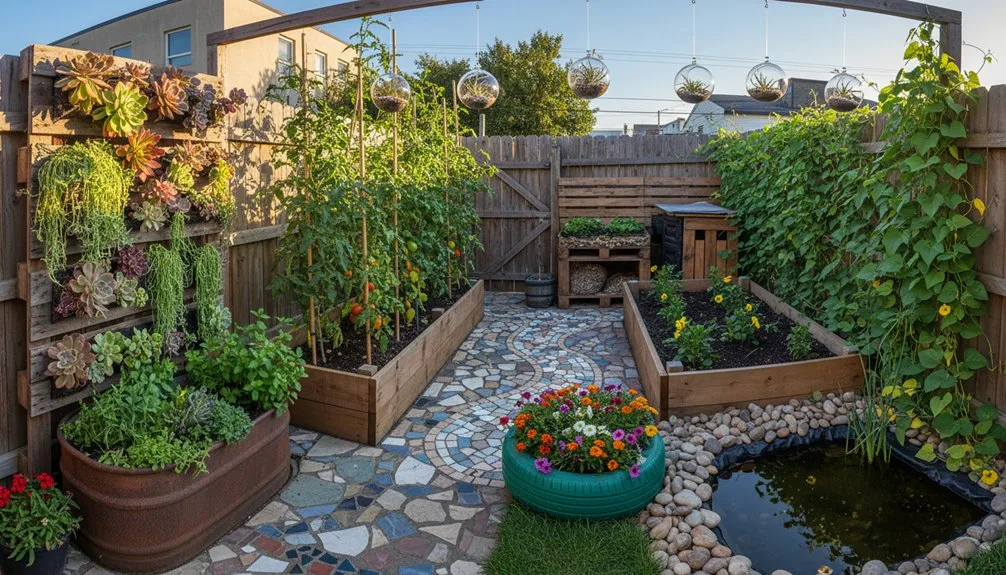
Start by gathering old galvanized buckets from yard sales, then drill drainage holes and stack them three-high using plastic pots or bricks as supports.
Mount your stacks to welded wire frames with self-tapping screws, positioning them centered or against walls depending on your layout.
- Harvest at comfortable reach height, eliminating kneeling and digging
- Ensures proper sunlight access and airflow between containers
- Fits balconies, patios, and small backyards seamlessly
Plant strawberries, herbs, salad greens, or seasonal flowers across levels.
This budget-friendly approach costs a fraction of traditional planters while delivering year-round growing potential in confined spaces.
Create a Barrel Pond on a Shoestring ($100–$300)
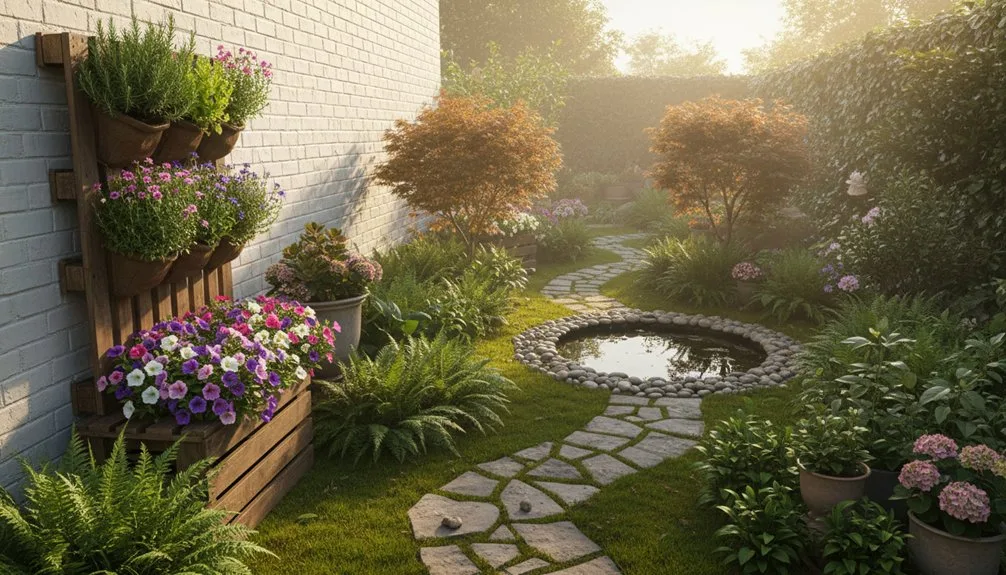
You can transform an old barrel into a thriving pond ecosystem for under $300. Start by sourcing a recycled whiskey, wine, or oak half-barrel ($50–$100). Test watertightness by filling it; the timber expands when wet to seal gaps. Choose a location balancing sunlight and shade, then add an optional plastic pond liner to block wood chemicals. Fill with rainwater to avoid contaminants. Stack bricks at varying heights for plant platforms, then add aquatic plants like iris and oxygenators. Install a solar-powered floating fountain for ambiance without electricity costs. Consider adding a bog filter and small fish like White Cloud Mountain minnows to complete your ecosystem.
| Component | Cost | Details |
|---|---|---|
| Half-barrel | $50–$100 | Recycled, 26-gallon capacity |
| Pond liner | $20–$40 | Optional, blocks wood chemicals |
| Plants | $15–$30 | Emergent, marginal varieties |
| Fountain | $30–$60 | Solar-powered, eco-friendly |
| Fish & accessories | $20–$70 | Minnows, gravel, baskets |
Layer Mulch and Flower Beds for Instant Color
While your barrel pond creates a focal point for wildlife, layering mulch and flower beds around it’ll establish the garden’s backbone with color and structure.
Start by clearing existing weeds and edging beds for defined shapes.
Apply 2-3 inches of organic mulch like bark or wood chips—dark colors create striking contrast that highlights blooms. Position perennials strategically for maximum visual pop.
Key steps for success:
- Combine mulch with weed barrier fabric for enhanced suppression
- Water soil lightly after application to help it settle
- Refresh annually to maintain appearance and effectiveness
Fresh mulch transforms bare spaces into polished landscapes while reducing watering by up to 70%. This budget-friendly approach uses affordable local resources, giving you professional-looking beds that frame your pond beautifully.
Build a Rock Garden: Low-Maintenance Beauty
Designing a rock garden transforms overlooked spaces into striking, care-free landscapes that thrive on neglect.
You’ll start by selecting sloped terrain with well-drained soil, then define boundaries using rocks as edging.
Layer river rocks in blue-gray shades with contrasting lava rocks, positioning boulders as focal points that anchor your design.
Plant succulents and ice plants that flourish in drought conditions, adding low-growing wild thyme for aromatic ground cover.
Incorporate stepping stones through the arrangement to invite exploration while maintaining visual interest.
For minimal upkeep, you’ll use gravel or raked sand between plantings, eliminating watering schedules entirely.
Durable lava rocks resist wear, and California native plants naturally withstand dry periods.
This approach requires virtually no maintenance while delivering year-round beauty and texture to your compact space.
Versus: Zen Gardens for Stress and Meditation
Where rock gardens prioritize drought-resistant plants and minimal intervention, Zen gardens demand intentional design rooted in Buddhist philosophy and meditative practice.
You’ll create a contemplative space that invites stillness and spiritual reflection rather than simple aesthetic appeal.
Zen gardens require:
- Symbolic elements: raked sand simulating water, carefully placed rocks representing mountains, creating visual metaphors for nature
- Regular mindful maintenance: weekly raking patterns and periodic weeding transform upkeep into meditative practice itself
- Careful restraint: asymmetrical layouts and sparse plantings that embody austerity and subtlety over decorative abundance
You’ll invest more thought into every placement, as each component carries meaning.
While rock gardens suit passive enjoyment, Zen gardens actively engage you in contemplation.
Your budget stretches further since you’re using fewer materials, but you’re purchasing intention alongside sand and stone.
Turn Salvage Into Planters: Stumps, Barrels, and Carts
Why discard garden waste when you can transform it into functional planters?
Tree stumps offer multiple options: hollow out the center, leaving a 3-inch border, and fill with potting soil for succulents.
Alternatively, attach galvanized wire baskets to stumps, line them with sphagnum moss, and plant thriller-filler-spiller combinations.
For minimal effort, simply arrange potted plants atop the stump as a natural display.
Barrels and carts provide additional salvage opportunities.
Drill drainage holes in wooden barrels and position old carts on level ground filled with soil.
You’ll create mobile planters perfect for small spaces.
Stack these containers on stumps for tiered effects.
Combine branches with barrels for rustic accents.
These budget-friendly solutions repurpose materials while maximizing your garden’s visual impact and functionality.
Lay Gravel Pathways to Define Garden Zones
Once you’ve established your salvaged planters, gravel pathways become the natural next step to tie your garden together and create distinct zones without expensive hardscaping.
You can install gravel pathways in a weekend using basic tools like a wheelbarrow and rake. Beyond affordability, gravel offers practical advantages:
- Drainage control: Permeable surfaces reduce runoff and muddy footprints while supporting healthier soil microbes
- Low maintenance: Routine raking redistributes displaced stones, eliminating costly resurfacing compared to rigid pavers that crack over time
- Design flexibility: You’ll reshape curves easily, allowing trial layouts before committing to permanent zones
Gravel’s natural aesthetic complements any garden style, from cottage gardens to minimalist landscapes.
The satisfying crunch underfoot and earth tones create organic pathways that guide visitors while letting adjacent plants thrive in optimal moisture conditions.
Edge Your Beds With Stone or Recycled Materials
Defining your garden beds with edging creates clean lines while preventing soil erosion and grass encroachment—and you’ve got plenty of budget-friendly options.
Plastic edging costs just $1–$3.50 per linear foot and installs easily with stakes.
Rubber edging ($1.50–$4) works well near children’s play areas.
For natural aesthetics, wood runs $2.50–$7, while brick edges cost $2.50–$6.50 per foot.
Stone edging ranges from $12–$70 depending on type, but you can source free materials onsite—old rocks, recycled bottles, or reclaimed bricks.
DIY installation requires digging a 4–6 inch trench, leveling with sand, then securing materials with stakes.
You’ll spend $200–$500 on tools but save significantly on labor costs.
Grow Herbs in Vertical Wall Gardens Year-Round
How can you maximize your herb harvest in a compact space?
Vertical wall gardens offer an efficient solution for year-round herb cultivation.
You’ll want to select herbs that thrive in vertical systems:
- Thyme, parsley, oregano, and chives stay compact for wall growing
- Prostrate rosemary and mint cascade effectively downward
- Basil and thyme optimize in vertical arrangements
Secure your containers using VELCRO® Brand HANGables® indoors or Extreme Outdoor Fasteners for exterior surfaces.
Ensure drainage holes prevent water damage, and line planter boxes with landscape fabric to retain soil.
Position your garden in sunny locations and trim regularly with Miracle-Gro® feeding.
Dedicate lower tiers to aggressive spreaders like mint.
You’ll harvest fresh herbs continuously without consuming valuable ground space.
Where to Find Free or Cheap Landscaping Materials
Why spend hundreds on landscaping materials when your community offers abundant free and discounted options?
You can source plants affordably through Freecycle, Facebook swap groups, and nurseries discounting unsold stock by up to 75%.
Tree service companies and landscapers frequently provide free rejected plants from projects.
For walkways, concrete contractors offer discarded sidewalk pieces free, while gravel pits charge minimal fees.
Construction sites yield free rubble and gravel.
Mulch costs nothing when you collect wood chips from tree trimming companies or use ChipDrop to connect with arborists needing disposal.
Municipal facilities provide free compost from yard waste.
Edging materials come free from concrete chunks, cut logs, and pallets.
Coffee shops supply grounds for your compost, and stable owners offer animal manure for soil enrichment.
Choose Drought-Resistant Succulents for Xeriscaping
Once you’ve sourced affordable materials, it’s time to fill your backyard with plants that won’t drain your water bill.
Drought-resistant succulents are your budget-friendly solution for xeriscaping.
Consider these excellent options:
- Agave Attenuata grows 2-3 feet tall, thrives in full sun with minimal water, and produces yellow-green flowers
- Crassula Ovata (Jade Plant) requires little water and fertilizer, making it ideal for xeriscaping with striking green foliage
- Senecio Mandraliscae (Blue Chalk Sticks) spreads as ground cover, reaching only 12 inches tall with powdery blue leaves
These plants need watering just once weekly and tolerate poor soil conditions.
They’re pest-resistant, require minimal pruning, and handle heat exceptionally well.
Echeveria varieties offer additional low-maintenance options with colorful, compact foliage.
Build Raised Beds Without Breaking the Bank
Ready to expand your garden without breaking the bank?
You’ll find cedar boards at $3.28 each offer excellent value.
An 8×4 foot bed costs just $36.58 with boards, screws, and balusters included.
For smaller spaces, an 8×2 foot bed runs $33.30.
Skip the premium 4×4 beds—they’re pricey.
Instead, opt for the 6-inch deep variant at $50 using half materials.
Pine provides a cheaper alternative, though it lasts one-tenth as long as cedar.
You don’t need power tools.
Request store cuts on cedar boards to eliminate sawing.
Use galvanized screws and zinc hardware—they’re food-safe and won’t leach chemicals into soil.
Line your bed’s bottom with newspaper or weed fabric.
Budget $25-$50 per square foot for DIY construction.
Add Vines and Climbing Plants for Vertical Interest
Now that you’ve got your raised beds in place, it’s time to think upward.
Vertical gardening transforms cramped spaces into lush, productive zones while maximizing your budget.
Consider these fast-growing options:
- Passion Fruit Vine reaches maturity in 2 years, climbs mature trees, and yields edible fruit without consuming ground space
- Trumpet Vine attracts hummingbirds, tolerates heat and drought, and disguises boundaries affordably with vibrant orange-red blooms
- Clematis produces vigorous growth to 20+ feet with purple, pink, white, or blue cascading flowers
Install sturdy support structures like trellises, pergolas, or lattice frameworks to guide your vines upward.
Train young vines early, weaving tendrils through supports. Regular pruning maintains airflow and healthy growth. You’ll enjoy quick coverage, pollinator attraction, and summer shade—all without breaking the bank.
Pick Native Plants That Thrive in Your Climate
Why exhaust yourself battling your backyard’s natural conditions when native plants are already adapted to thrive there?
Native plants evolved for your region’s rainfall, temperature swings, and soil types, so they’ll flourish without extra inputs.
You’ll spend less on fertilizer, pesticides, and water once they establish themselves.
Their deep root systems prevent erosion, improve soil structure, and enhance groundwater recharge.
Native plants also naturally crowd out weeds, dramatically reducing maintenance demands.
Beyond practicality, they support local pollinators and beneficial insects while preserving your area’s ecological character.
Sample Budgets: Three Complete Garden Designs ($1,000–$3,000)
Three distinct garden designs offer you flexible options across different budget ranges, each tailored to specific aesthetic preferences and spatial needs.
The Minimalist Style ($650) focuses your investment on statement pieces like flowering cherry trees and hydrangea focal points, complemented by soft‑touch hollies and red twig dogwoods for winter color.
You’ll carve strategic bed spaces away from your house to maximize visual impact.
The Formal Traditional ($950) incorporates purple fuchsia azaleas, arborvitae, and dwarf spruces for structured elegance.
Spanish lavender in whites and purples creates wispy flow while boulders extend beds for visual depth.
The Flowy Privacy ($850) connects front and side yards with interconnected beds:
- Ornamental grasses anchor corners for neighbor separation
- Spanish lavender breakup around grasses
- Blue spruce and nandina along driveways for red winter interest
Each design delivers distinct character without exceeding modest budgets.
Combine Hard and Soft Elements: Cost-Effective Ratios
How you balance plants, structures, and open space determines whether your backyard garden feels inviting or cluttered—and dramatically impacts your budget.
Aim for 20% stuff and 80% open space to create an airy feel while spending less on materials.
Scale your hardscape—paths, patios, and structures—proportionally to your garden size; undersized features look cheap, while oversized ones overwhelm small spaces.
Sync hard elements with your house style using natural textures like stone or wood for visual harmony.
Align plant mass and form with hardscape placement to organize space efficiently.
Balance asymmetrical sides by grouping medium shrubs against one large tree or structure, creating comparable visual weight without excessive purchasing.
Conclusion
You’ve got all the tools to transform your outdoor space into a personal sanctuary without breaking the bank. By blending budget-conscious choices with strategic planning, you’ll create an inviting retreat that enriches your lifestyle. Start small, layer your investments wisely, and watch your garden flourish into something truly special. Your backyard’s potential is just waiting for you to unlock it.
The Only Tools You Need for a Thriving Garden 🌱
Whether you're a weekend gardener or growing daily — these hand-picked tools make every session faster, easier, and more satisfying.