

You’ll maximize returns growing zinnias, sunflowers, and cosmos on tight layouts—they’re proven workhorses yielding $325k gross per acre-equivalent from 1,600 sq ft. Zinnias deliver 4–5 marketable stems weekly; sunflowers command premium prices with compact pollenless varieties; cosmos produce 96 stems per plant with minimal input. Succession plant every two weeks for continuous harvests. Layer in celosia and ageratum for texture. Direct-sow bachelor buttons and baby’s breath to reclaim propagation space. The real profit multiplier emerges when you strategically combine crop selection with timing.
Key Takeaways
- Zinnias yield 4–5 marketable stems per square foot weekly, providing consistent foundation crop revenue at $0.60/sq ft/week wholesale.
- Sunflowers in tunnels produce 5 stems per plant over 90 days; pollenless varieties reduce labor while maximizing compact space efficiency.
- Cosmos generate ~96 stems per plant seasonally with minimal input; white varieties command premium prices year-round in small operations.
- Direct-sowing bachelor buttons and annual baby’s breath eliminates nursery costs, freeing greenhouse beds for continuous succession planting cycles.
- Succession planting every two weeks replaces spent plants at peak production, ensuring steady harvests without expanding infrastructure or land footprint.
Why Small-Space Cut Flower Farming Works

How can you generate $325,000 per acre equivalent from just 1,600 square feet?
You’ll leverage intensive cultivation techniques that maximize every square inch of growing space.
Your startup costs drop significantly on micro-scale farms under one-fifth acre, while standardized spacings like 6×6 inches simplify crop planning.
You’ll manage less overall time compared to larger operations, reducing seasonal scheduling complexity and succession plantings.
Space maximization through closer planting—such as two seeds per 4×4-inch square—and narrower paths prioritizes yield over aesthetics.
You’ll achieve net profits of 50-60% of gross sales through targeted production methods that reduce resource waste. By focusing on cut-and-come-again varieties, you can harvest multiple times from the same planting, dramatically increasing your returns per square foot without expanding your growing footprint.
This profitability model pays for itself quickly, making small-space cut flower farming financially viable without vast land requirements.
Zinnias: The Foundation Crop for Beginners

Why should zinnias become your foundation crop for small-space cut flower farming?
They’re incredibly efficient.
Small varieties like “Ruffles Mix” generate 4-5 marketable stems weekly per square foot, while large varieties produce 2 stems.
You’ll achieve gross income potential of $0.60 per square foot per week at standard wholesale pricing.
Zinnias require minimal time investment.
Transplants need 4 weeks growing, then 4 additional weeks until first harvest.
Your typical harvest window spans 6-10 weeks with adequate light.
Cultivars like ‘Benary’s Giant Deep Red’ and ‘Sun Red’ consistently outperform others, producing 34+ stems per plant. Research from a two-year Midwest trial demonstrated that variety selection significantly impacts stem count and bloom characteristics for regional conditions.
Strategic spacing maximizes yields—closer spacing generates more stems per square foot without sacrificing quality.
Sequential plantings ensure continuous supply throughout your season, eliminating single-harvest limitations.
Sunflowers: High-Impact Blooms With Minimal Fuss
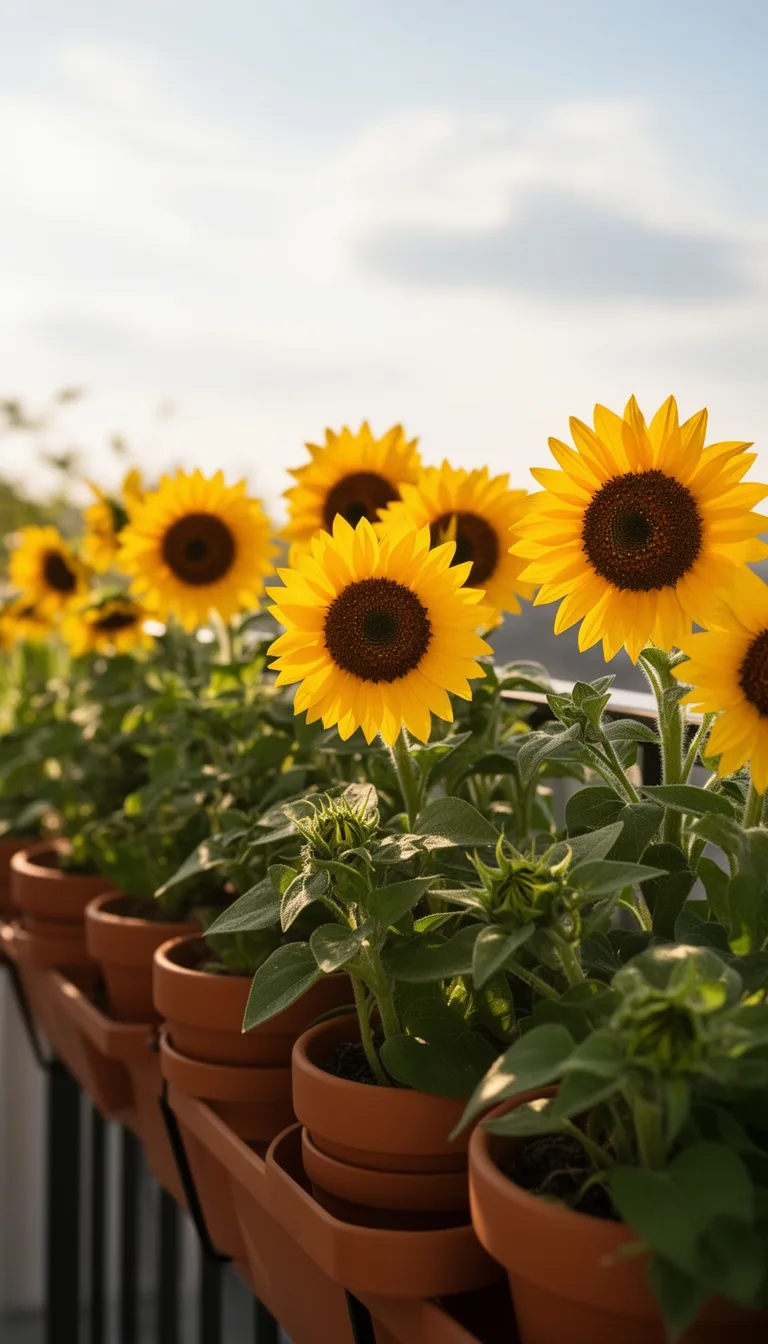
While zinnias excel at consistent weekly harvests, sunflowers deliver the visual impact that commands premium prices—and they’re surprisingly manageable in small spaces.
You’ll find sunflowers ideal for compact operations.
Select pollenless varieties like ‘Happy Face’ (90cm) or ‘Dafna’ (under 125cm) to minimize labor and space demands.
Sequential sowings every 1–4 weeks from late spring through early winter ensure continuous supply.
Key production advantages:
- Optimal growth occurs at 18–24°C with a 90-day growing season
- Harvest 5 stems per plant, yielding 103,000+ stems over 27 weeks on modest acreage
- Tunnels produce higher-quality, more compact plants than outdoor cultivation
- Small growers saw 24.4% sales increases in 2023
- Cooler northern climates naturally reduce pest pressure
- Sunflowers rank among the highest producer counts with 173 operations nationwide, reflecting their viability for small-scale growers entering the market.
You’ll maximize yield consistency through transplanting, which maintains uniform stem lengths despite variable weather conditions.
Cosmos: Airy Elegance With Zero Maintenance
If you’re seeking a crop that demands virtually nothing while delivering consistent yields, cosmos outperforms sunflowers in pure ease of cultivation.
You’ll harvest approximately 96 stems per plant from June through October by cutting every 1 to 3 days.
Timing matters—pick blooms in early morning or late evening when they’re not fully open, with one flower head open and fresh yellow center.
Cut hard to encourage longer, more abundant stems, then bunch ten per group.
Apply raw mulch to boost yield by 32 stems per plant while conserving 5% additional soil moisture.
Classic single white varieties like ‘Afternoon White’ and ‘Purity’ command premium market prices.
This warm-season annual thrives in full sun with minimal intervention, making it ideal for small-space operations where maximizing productivity per bed-foot directly impacts overall farm profitability and yield efficiency.
Celosia and Strawflowers: Texture and Drama
How can you maximize productivity from a single plant genus while capturing multiple market segments? Celosia delivers exceptional versatility for small-space operations.
This heat-loving annual thrives in full sun with minimal intervention, making it ideal for resource-limited farms.
You’ll harvest fresh flowers with 7-10 day vase life, or dry them for everlasting sales and potpourri applications.
Optimize your space through strategic spacing:
- Crested types: 18-inch centers for dramatic comb-shaped heads
- Plume varieties: 24-inch spacing for feathery textures
- Wheat types: 24-36 inch rows, though they shatter when dried
- 6-inch centers produce smaller heads for niche markets
- Basal-branching varieties eliminate pinching requirements
Harvest in early morning when stems are turgid, cutting to leave 2-3 leaves for water uptake. To extend your harvest window, implement sequential plantings every 2–4 weeks for approximately 8 weeks of continuous bloom from midsummer to fall.
As a cut-and-come-again crop, increased harvesting stimulates more blooms, maximizing yield per square foot while maintaining consistent color ranges from reds through golds.
Ageratum and Filler Flowers: Stretching Your Square Footage
Where Celosia commands dramatic focal points, ageratum quietly maximizes your productivity through efficient space utilization and dependable filler production.
You’ll achieve 12 plants per square foot at 10×10 cm spacing, transforming limited acreage into substantial yields.
Varieties like Blue Horizon and Blue Planet deliver 8.5+ stems per plant after pinching, creating branched stems ideal for bouquet filler. Blue Bouquet demonstrates superior market performance with a 4.0 rating and later season preference from professional cutters over competing selections.
Your crop timeline compresses to 11-14 weeks for finished cut flowers.
Position plants in full sun with well-drained media at pH-balanced levels, maintaining 0.9-1.3 mmhos/cm EC during finishing.
Extend winter photoperiods to 16 hours for optimal stem length—averaging 18.9 inches—and quality.
Harvest well-colored blooms at peak maturity, removing first flowers to trigger flush cycles that maximize your returns per square foot.
Heat-Tolerant Crops for Small-Space Success
While ageratum and celosia establish your productivity baseline, heat-tolerant annuals unlock year-round growing opportunities that’ll maximize your returns during challenging seasons.
You’ll find that strategic crop selection extends your harvest window significantly.
Consider these heat-loving performers:
- Zinnias: Abundant stems from frequent cutting; heights vary by cultivar for flexible spacing
- Sunflowers: Branching varieties yield multiple stems per plant, maximizing compact garden output
- Lisianthus: Heat-resilient despite delicate appearance; separates into multiple thin stems for design flexibility
- Cosmos: Airy blooms add visual lightness while thriving in intense temperatures
- Marigolds: Mexican natives withstand extreme heat better than comparable crops
You’ll leverage these annuals during peak summer months when cooler-season crops struggle.
Their minimal maintenance requirements and prolific production make them essential for small-space profitability.
Succession planting ensures continuous supply throughout hot periods.
Pack More Into Fewer Beds: Your Spacing Blueprint
Why you’ll maximize productivity depends entirely on understanding how spacing transforms your small-space beds from adequate to exceptional.
Your spacing choice directly impacts yield, disease prevention, and workflow efficiency.
For tight, high-density planting, use 6×6 inch spacing for single-bloom varieties like lisianthus, or 9×9 inches for dianthus and snapdragons.
Medium spacing of 12×12 inches suits zinnias and celosia, providing crucial airflow in humid conditions.
Larger varieties like cosmos and sunflowers demand 18×18 inch spacing to accommodate bushy growth and multiple stems.
Before scaling your beds, identify your flower varieties and their specific requirements.
Consider your irrigation method and local humidity levels—these factors determine whether you’ll prioritize airflow or maximize density.
Uniform spacing simplifies planning and maintenance, making your small operation run efficiently.
Establish a straight reference line using string, stakes, or a laser level to ensure your spacing remains consistent across all rows and beds.
Direct-Sow Flowers: Reclaim Garden Space
How can you reclaim precious garden real estate while producing hundreds of blooms?
Direct sowing eliminates indoor seed trays and potting operations that consume valuable space. You’ll skip transplanting entirely, freeing your beds for continuous production cycles.
This method works exceptionally well for high-volume crops:
- Bachelor buttons thrive when direct sown at scale
- Annual baby’s breath produces bulk blooms reliably
- Small zinnias germinate quickly, blooming in 65-90 days
- Branching sunflowers succeed with direct sowing techniques
- Heat-loving annuals maximize your frost-free window
Start sowing after your last frost date when soil warms.
Water gently 1-3 times daily during germination. You’ll produce thousands of plants without hand-seeding individual trays, dramatically simplifying your workflow during peak spring periods while maximizing every square foot. Frost cloth overlay after sowing retains moisture and adds warmth for faster establishment.
Plant Every Two Weeks and Never Run Out of Blooms
The key to eliminating flower shortages on your small farm lies in staggering plantings every two weeks, which ensures you’ll harvest continuously throughout the growing season.
You’ll strategically plant succession crops of zinnias, sunflowers, and direct-sown varieties at regular intervals, creating a reliable pipeline of blooms.
ProCut Gold zinnias mature quickly, providing uniform, pollen-free stems ideal for arrangements.
Pro Cut Gold Lite sunflowers deliver consistent golden-yellow harvests when planted sequentially.
This two-week rotation maximizes your limited space by replacing spent plants with fresh seedlings at their peak production phase.
You’ll maintain steady yields without overwhelming your small plot, allowing you to meet consistent customer demand while minimizing waste from unpredictable flowering patterns. Double-flowered cosmos varieties offer petal durability and visual impact that extends the longevity of your cut arrangements.
Outsource Cosmos and Filler: When Buying Saves Time
When should you stop growing cosmos and start buying them instead?
If you’re operating a small-space farm, outsourcing cosmos and filler crops frees up valuable square footage for higher-margin focal flowers.
You’ll eliminate propagation, substrate, and greenhouse costs while bypassing labor-intensive pinching and harvesting cycles.
Consider buying when:
- Your space is under 1,000 square feet
- You lack consistent second-flush yields
- Local suppliers offer same-day delivery
- Inventory holding periods compromise vase life (4–6 days)
- Design demand exceeds production capacity mid-season
Purchasing pre-grown cosmos or cut stems preserves your limited acreage for specialty varieties that command premium pricing.
This strategy maintains consistent filler availability without supply gaps, ensuring you never compromise bouquet quality due to underplanting.
Launch Checklist: 7 Steps to Your First Season
Ready to transform your small-space farm from concept to harvest? You’ll need to systematically address seven critical areas before planting your first seeds.
| Area | Action | Timeline |
|---|---|---|
| Education | Complete internships and research best practices | Pre-launch |
| Business Plan | Develop detailed crop strategy and financial projections | Pre-launch |
| Infrastructure | Secure land, water, greenhouse, and storage | 1-2 months |
| Equipment | Acquire tools, irrigation, harvest supplies, and packaging | 1-2 months |
| Crop Selection | Choose 10 reliable varieties suited to your market | Pre-planting |
| Soil Preparation | Amend with organic matter and establish beds | 1 month |
| Succession Planning | Design planting schedule for continuous production | Pre-planting |
This checklist ensures you’ve eliminated guesswork and established the operational foundation your farm demands for sustainable success.
Conclusion
You’re positioned to plant prolifically by prioritizing proven performers like zinnias, sunflowers, and cosmos. You’ll cultivate continuous color through consistent, calculated two-week plantings. You’ve got the technical tools—direct-sowing strategies, strategic outsourcing, and space-saving techniques—to succeed substantially. You’ll streamline scheduling by selectively sourcing fillers while focusing your finite space on high-yield, high-value blooms. You’re ready to register revenue from your remarkably resourceful small-space cut flower farm.
The Only Tools You Need for a Thriving Garden 🌱
Whether you're a weekend gardener or growing daily — these hand-picked tools make every session faster, easier, and more satisfying.