Don’t let a compact yard limit your vision. You can transform it into a lush, productive retreat by thinking vertically and choosing multi-purpose elements. The real secret lies in a focused layout and selecting the right plants for your space. Let’s explore how a simple plan and a few clever strategies can turn your biggest constraint into your greatest advantage.
Key Takeaways
- Use vertical structures like trellises and hanging planters to maximize growing area.
- Choose compact plant varieties and dwarf fruit trees suited for containers and small beds.
- Incorporate dual-purpose furniture like planter benches to add seating and planting space.
- Implement square-foot gardening in a raised bed to organize and intensify planting.
- Layer lighting and create defined areas to transform the space into an intimate retreat.
Why a Small Yard Is Your Biggest Garden Opportunity
While a sprawling estate might seem ideal, your compact space is actually a gardener’s secret weapon because it forces creativity and focus. You can’t waste effort on filler plants, so you’ll curate a collection you truly love. A small yard is also more affordable to transform with quality soil, hardscape, and premium plants.
Maintenance becomes a pleasure, not a chore; you can tend everything in minutes, noticing small changes and preventing big problems. This intimacy creates a powerful connection to your garden. You’re building a complete, immersive retreat, not just a patch of lawn.
See the boundaries not as limits, but as the cozy walls of your outdoor room. Your biggest opportunity lies in this concentrated canvas.
Start With a Simple Small Garden Floor Plan
Now that you’ve embraced the potential of your compact space, it’s time to sketch out your plan. Grab a tape measure and mark your boundaries. This isn’t about complex landscaping; it’s a functional layout for planting and paths.
Prioritize your essentials—maybe a seating spot, a veggie patch, and a sunny border. Draw a simple grid on paper, noting where sunlight falls and where shadows linger.
Your plan should leave enough room to move between beds comfortably. Start with just two or three key areas. Don’t overcrowd it; a clear, open flow makes a tiny garden feel larger.
This basic floor plan becomes your roadmap, ensuring every square foot serves a purpose before you dig the first hole.
Build a Vertical Garden on a Wall or Fence
To maximize your limited ground space, consider building a vertical garden on a wall or fence. This approach turns unused vertical surfaces into productive, beautiful spaces.
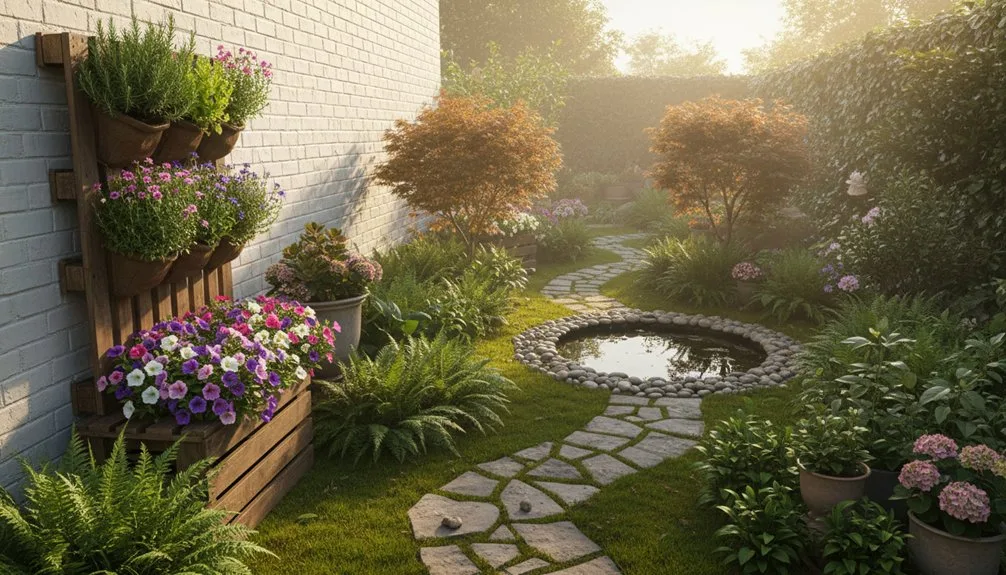
You’ll need a sturdy structure; a sunny fence or a blank wall is ideal. Mount pre-made planter panels or build your own using recycled pallets, hanging pockets, or a series of stacked pots.
Choose plants suited for vertical life: herbs like thyme and oregano, trailing nasturtiums, compact lettuces, or succulents work perfectly.
Ensure your irrigation is efficient; a drip system or soaker hose attached to the top simplifies watering. Regularly check that supports remain secure and that plants aren’t overcrowded as they grow.
Create a Container Garden Oasis on a Deck or Patio
Take advantage of your deck or patio by creating a lush container garden that turns a paved area into a personal oasis. You’ll maximize every inch without a traditional plot.
Start with large pots for visual impact and better soil moisture. Use a “thriller, filler, spiller” design for dynamic arrangements, combining upright plants, bushy types, and trailing vines. Group pots in odd numbers and vary their heights to create depth and interest.
- Choose multi-purpose pots that provide drainage and complement your outdoor decor.
- Mix ornamental and edible plants like herbs and lettuces with flowers for beauty and function.
- Implement a simple watering system, like grouped pots or self-watering containers, to save time.
- Add comfortable seating nearby to fully immerse yourself in the green retreat you’ve built.
Select the Best Vegetables for Compact Spaces
Focus your efforts on vegetables that naturally thrive when their roots are confined, turning your limited square footage into a surprisingly productive plot. Choose bush or dwarf varieties over sprawling ones; compact ‘Patio Princess’ tomatoes and determinate beans are perfect.
Leafy greens like lettuces, spinach, and kale grow quickly and you can harvest outer leaves repeatedly. Radishes and carrots, especially shorter ‘Parisian’ types, grow well in deep containers.
For vertical interest, try climbing peas or cucumbers on a small trellis. Herbs such as basil, thyme, and chives are excellent space-fillers.
Always check seed packets for words like “bush,” “compact,” or “container-suited.” You’ll maximize yield by matching plant habits to your available space.
Grow More Food With the Square Foot Gardening Method
Once you’ve chosen your compact vegetable varieties, you can organize them with the square foot gardening method to increase your harvest.
It’s a precise system where you divide a raised bed into one-foot squares. You then plant a specific number of seeds or seedlings in each square according to the plant’s size.
This eliminates wasted space and simplifies maintenance. You’ll maximize every inch, get higher yields from a small footprint, and reduce weeding and water use.
- Build a 4×4-foot raised bed and mark a grid of sixteen squares using string or thin wood strips.
- Follow spacing guidelines—plant 1 tomato, 4 lettuces, 9 bush beans, or 16 radishes per square.
- Use perfect soil mix of 1/3 peat moss, 1/3 vermiculite, and 1/3 compost for optimal growth.
- Practice succession planting by harvesting a square and immediately replanting it with a new crop.
Install a Space-Saving Tiered Herb Garden
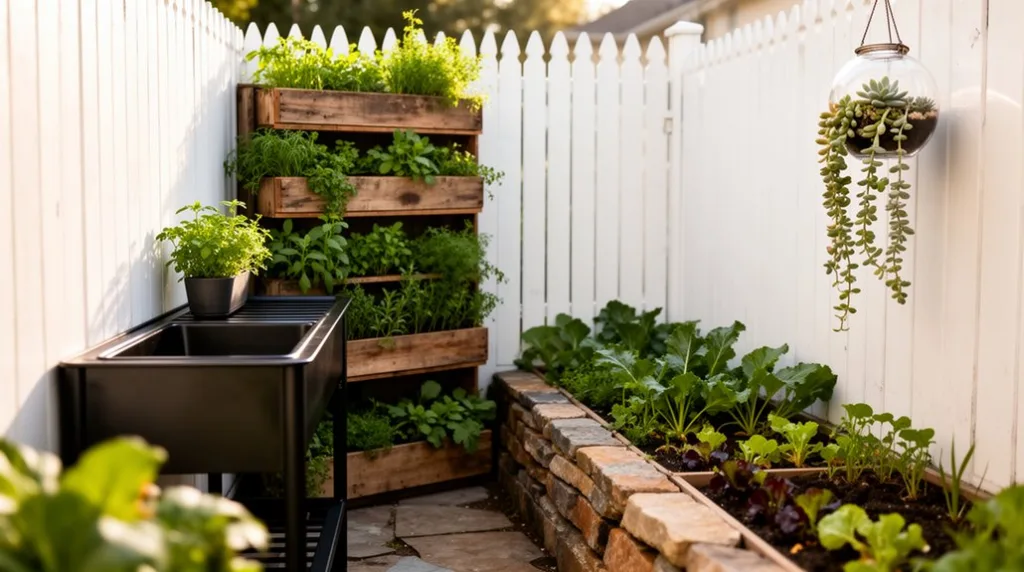
Creating a tiered herb garden adds valuable planting space to a small yard by growing vertically. You’ll stack several planting containers, like terra-cotta pots or wooden planters, on top of each other. This design lets you cultivate many herbs in the footprint of just one pot.
Place sun-loving varieties like rosemary and thyme on the top tier, and shade-tolerant herbs like mint or parsley on the lower levels. You can build a simple stand from scrap wood or purchase a ready-made kit. Ensure each pot has proper drainage holes.
Position your tiered garden near your kitchen door for easy harvesting. You’ll maximize your yield and keep your cooking fresh with minimal ground space.
Add Vertical Flower Beds With Trellises and Arbors
Beyond stacking pots, you can also grow flowers upwards using trellises and arbors. These structures turn blank walls and fences into vibrant, living tapestries, dramatically increasing your planting space without consuming precious square footage.
You’ll get more blooms in your view and improve air circulation, which helps keep plants healthy. Choose climbing varieties like clematis, morning glories, or sweet peas that naturally reach for the sky.
- Anchor structures securely into the ground or against a sturdy wall to support mature plant weight.
- Train young vines gently with soft ties, guiding them onto their support.
- Mix quick-growing annuals with perennial climbers for continuous color.
- Place arbors over pathways to create beautiful, fragrant garden gateways.
Grow Dwarf and Patio Fruit Trees in Small Gardens
For a surprisingly bountiful harvest in a compact space, you can grow dwarf and patio fruit trees. These cultivars are bred to stay small, often maturing between five and eight feet tall.
You’ll find reliable varieties like apples, peaches, cherries, and citrus perfect for containers on a sunny patio or balcony. Choose a large pot with excellent drainage, and use a high-quality potting mix.
Full sun—at least six hours daily—is non-negotiable for good fruit production. You must water them regularly, as container trees dry out faster than in-ground plants.
Don’t forget to fertilize with a balanced formula during the growing season. With proper care, you’ll enjoy fresh, homegrown fruit from your own miniature orchard.
Create a Pollinator Garden in Just a Few Square Feet
Even a few square feet can become a haven for bees, butterflies, and other beneficial insects. You’ll boost pollination for your other plants while supporting local ecosystems.
Focus on planting a dense mix of native, nectar-rich flowers that bloom from spring through fall. This provides a consistent food source.
Choose vibrant colors and varied flower shapes to attract a wide range of pollinators.
- Select a Sunny Spot: Most pollinator-friendly plants thrive in full sun, requiring at least six hours daily.
- Prioritize Native Plants: Species like milkweed, coneflower, and aster are adapted to your region and are highly attractive.
- Include Host Plants: Plant species like parsley or dill to provide food for butterfly caterpillars.
- Provide a Water Source: A shallow dish with stones and fresh water offers essential hydration.
The Right Soil Mix for Your Small Backyard Garden
Since healthy plants depend on it, you should start your small garden by focusing on its foundation: the soil mix.
Don’t just use the existing dirt; it’s often compacted and nutrient-poor.
For most vegetables and flowers, you’ll want a light, fluffy, well-draining mix.
You can buy a high-quality, all-purpose potting soil, which is sterile and ready to use.
To improve it further, blend in about one-third compost. This adds vital nutrients and beneficial microbes.
For raised beds, a common recipe is equal parts topsoil, compost, and a coarse material like peat moss or coconut coir for aeration.
This creates the perfect environment for strong root growth, which is essential in a confined space.
Water Your Small Garden Efficiently and Easily
Watering your small backyard garden efficiently isn’t just about saving water; it’s about encouraging deep, resilient roots. Frequent, shallow sprinkling promotes weak surface roots.
Instead, water deeply but less often to train roots downward, which builds drought tolerance and healthier plants. Focus your efforts with these simple methods.
- Install a drip irrigation system using a basic kit; it delivers water directly to the root zone, minimizing waste and evaporation.
- Water early in the morning so moisture soaks in before the midday sun can steal it away.
- Use a watering can or a hose-end bubbler for precise, gentle application that prevents soil erosion in tight spaces.
- Add a layer of mulch around your plants; it’s a game-changer for retaining soil moisture and suppressing weeds.
Combine Flowers and Vegetables to Save Space
Mixing flowers and vegetables in your small garden, a practice often called interplanting, is a brilliant strategy for maximizing every square inch. You’ll create a more productive and beautiful space.
Plant quick-growing lettuce around the base of slower-growing tomatoes. Tuck fragrant marigolds or calendula among your vegetable rows; they’ll deter pests naturally. Use vertical structures like trellises for climbing beans and pair them with colorful nasturtiums, which are also edible.
This approach confuses pests, attracts essential pollinators, and improves soil health. You’re essentially getting two harvests from one spot. Just ensure all plants in a grouping share similar needs for sun, water, and soil.
Your garden becomes both a pantry and a pollinator paradise.
Choose Plants for a Natural Privacy Screen
Forget building a fence—you can cultivate a natural privacy screen that transforms your garden’s edges into beautiful, living walls. This approach adds lush greenery, attracts wildlife, and saves you money.
You’ll want plants that grow densely and suit your light conditions. For quick results, consider fast-growing shrubs, while ornamental grasses add sound-dampening texture. Place tall plants in strategic spots to block sightlines without overwhelming your space.
- Evergreen shrubs like arborvitae or boxwood provide year-round coverage and structure.
- Bamboo (use clumping varieties to control spread) creates a rapid, modern screen.
- Tall ornamental grasses, such as miscanthus, offer graceful, sound-softening movement.
- Espaliered fruit trees on a trellis give you privacy, beauty, and a harvest.
Build a Simple, Space-Saving Garden Shed
Organizing your garden tools efficiently can enhance your outdoor space. A compact shed solves clutter and protects your essentials.
You’ll want a basic lean-to design, attaching it to a fence or wall to save footprint. Use durable, weather-resistant materials like pressure-treated lumber and corrugated metal roofing.
Focus on interior organization; install wall-mounted racks for tools and shelving for pots and supplies. Keep the door wide enough for a wheelbarrow but the overall structure narrow.
You can build it yourself over a weekend, ensuring you anchor it properly to withstand wind. This dedicated storage area frees up valuable planting space and keeps your backyard tidy and functional year-round.
Furniture That Doubles as Planters
Through your garden, consider furniture that works twice as hard by integrating planters. You’ll gain valuable planting space while furnishing your outdoor area, effectively layering your greenery and living space.
This multifunctional approach is perfect for patios, decks, or tight corners. You can source these pieces or build your own with simple modifications to existing benches or tables.
- Planter Benches: Install long, narrow troughs along the seat back or under the seating ledge for herbs and trailing plants.
- Tabletop Gardens: Convert a coffee or side table’s surface into a shallow bed for succulents or aromatic thyme.
- Vertical Planter Screens: Use a freestanding trellis or room divider with built-in pots for privacy and climbing vines.
- Stool Planters: Employ hollow stools or ottomans filled with soil as movable pedestals for bold, flowering annuals.
Keep Your Garden Productive All Year With Seasonal Swaps
To maintain that lush, furnished look year-round, your plant choices should shift with the calendar. Don’t let beds sit empty. As summer annuals like petunias fade, swap in cool-season pansies or ornamental kale for vibrant fall and winter color.
In your edible plot, replace spent tomatoes with quick-growing lettuces or hardy spinach. Use versatile containers for these easy transitions.
Planning is key. Research plants suited to your local climate for each season and stagger your planting times. This succession planting ensures a continuous harvest and visual interest, maximizing every square inch.
You’ll always have something thriving, whether it’s spring bulbs, summer herbs, or evergreen structural plants that anchor the space during dormancy.
Daily Routines for a Tidy Small Garden
A quick daily walk-through keeps a small garden tidy.
Spend just five minutes each morning checking your plants. This consistent habit prevents minor issues from becoming major chores.
You’ll spot spent blooms, wayward growth, and thirsty containers before they detract from your space’s appeal.
Keep a small bucket and hand pruners by the door to make tasks effortless as you move through your beds.
- Deadhead spent flowers immediately to encourage more blooms and maintain a neat appearance.
- Pinch back leggy stems on herbs and annuals to promote bushier, more compact growth.
- Check container moisture by feeling the soil; small pots dry out fast and need frequent watering.
- Remove any fallen debris like leaves or petals to keep surfaces clean and discourage slugs.
Solve Common Small Garden Pests and Problems
While a daily tidy-up keeps things looking good, tackling pests and other common problems protects your garden’s health.
First, inspect your plants closely and regularly—many pests hide under leaves. For aphids or mites, try a simple spray of water or insecticidal soap. Slugs and snails often appear at night; hand-pick them or use copper tape around pots.
Fungal issues like mildew thrive in damp, crowded conditions, so improve air circulation and avoid overwatering. You can also use physical barriers like row covers.
Find the Best Containers for a Small Backyard Garden
Just as managing pests keeps your garden healthy, choosing the right containers gives your plants a strong foundation. Your container’s material, size, and drainage directly impact plant health and your space. Prioritize pots with adequate drainage holes to prevent root rot. For small spaces, think vertically with hanging baskets, wall planters, or tiered stands to maximize your growing area without sacrificing floor space.
- Material Matters: Lightweight resin or fabric pots are easy to move, while terra cotta offers breathability but dries out faster.
- Size It Right: Match the container’s depth and width to the plant’s mature root size; too small stresses the plant.
- Maximize Vertical Space: Use stackable pots, railing planters, or a trellis in a large pot for vining crops.
- Repurpose Creatively: Utilize old buckets, colanders, or wooden crates for unique, cost-effective planters with added drainage.
Maintain Your Garden With a 10-Minute Daily Routine
Regularly dedicating just ten minutes each day transforms garden maintenance from a daunting chore into a simple, sustainable habit. You can achieve far more than you think in that short time.
Start with a quick walk-through. Check soil moisture with your finger—don’t just water on a schedule. Pinch off any spent flowers or yellowing leaves you spot; this deadheading encourages new blooms.
Scan for pests like aphids and remove them by hand immediately. Tidy up by pulling a few stray weeds before they take root.
You’ll also notice issues like wilting or disease early, when they’re easiest to fix. This daily micro-session keeps your small space immaculate and productive without ever feeling overwhelming.
Illuminate Your Garden for Evening Enjoyment
Even if your gardening day ends at dusk, you can still savor your small backyard by adding lighting that extends its enjoyment into the evening. Strategically placed fixtures create ambiance and highlight key features without needing a complex system.
Your goal is to layer light for both function and beauty, transforming your space into a nighttime retreat.
- Use uplighting against a wall or tree to cast dramatic shadows.
- String solar-powered fairy lights along a fence or through plants.
- Install a simple path light to safely navigate your space.
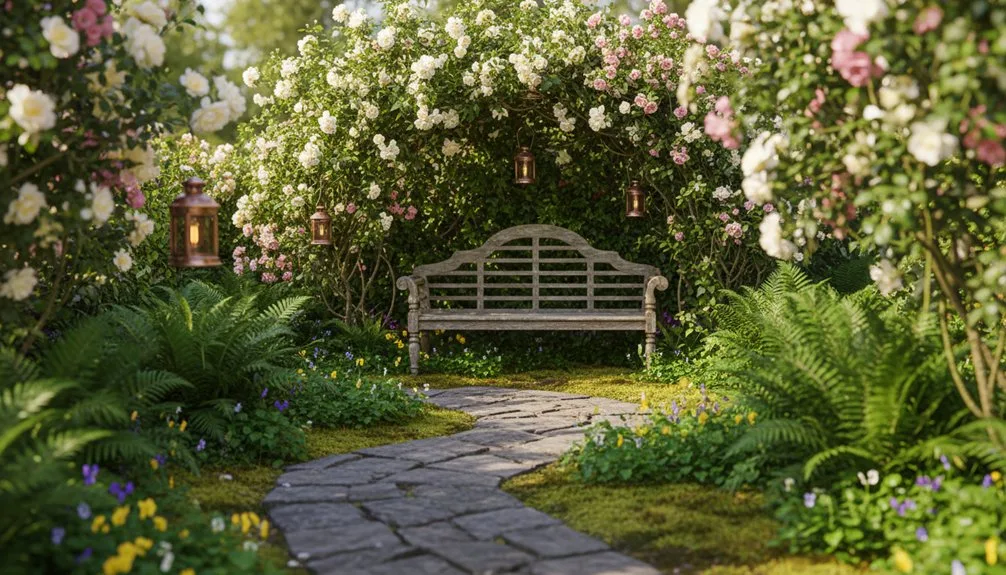
- Place a few lanterns on a table or step for a cozy focal point.
Focus on low-voltage or solar options for easy installation, and always aim to illuminate, not overwhelm, your intimate garden.
Frequently Asked Questions
What Should I Do About Poor Drainage in Containers?
Drill extra holes in your container’s bottom. Use a fast-draining potting mix, not garden soil. Add a layer of coarse gravel or broken pottery pieces at the base before you add your soil.
How Do I Store My Small Garden Tools Compactly?
You can hang them on a wall-mounted rack or use a small bucket with a handle. Keep everything off the ground and you’ll find your tools easily.
Can I Reuse Potting Soil From Last Season?
Yes, you can reuse it. First, remove old roots and debris. Then, refresh it by mixing in new compost and a slow-release fertilizer to replenish nutrients before planting anything new in it.
What if My Patio Gets No Direct Sunlight?
You’ll need shade-tolerant plants. Try ferns, hostas, or coleus. Use bright containers and consider a vertical garden to maximize light. Reflective mulch can help bounce any available light onto your plants.
Are There Any Small Garden Ideas for Renters?
Use pots and vertical planters. Try herbs in window boxes. Choose annuals you can leave behind. You can build a movable trellis for beans or peas. Portable setups let you take your garden with you.
Conclusion
Your small garden is now a thriving, clever space. You’ve mastered vertical layers and multi-use features, making every inch work. Keep up your brief daily check—it prevents big problems. Your focused choices of herbs, flowers, and compact veggies will reward you all season. Enjoy your cozy, productive retreat morning and night. It proves that a limited area can be your greatest gardening asset.
The Only Tools You Need for a Thriving Garden 🌱
Whether you're a weekend gardener or growing daily — these hand-picked tools make every session faster, easier, and more satisfying.