
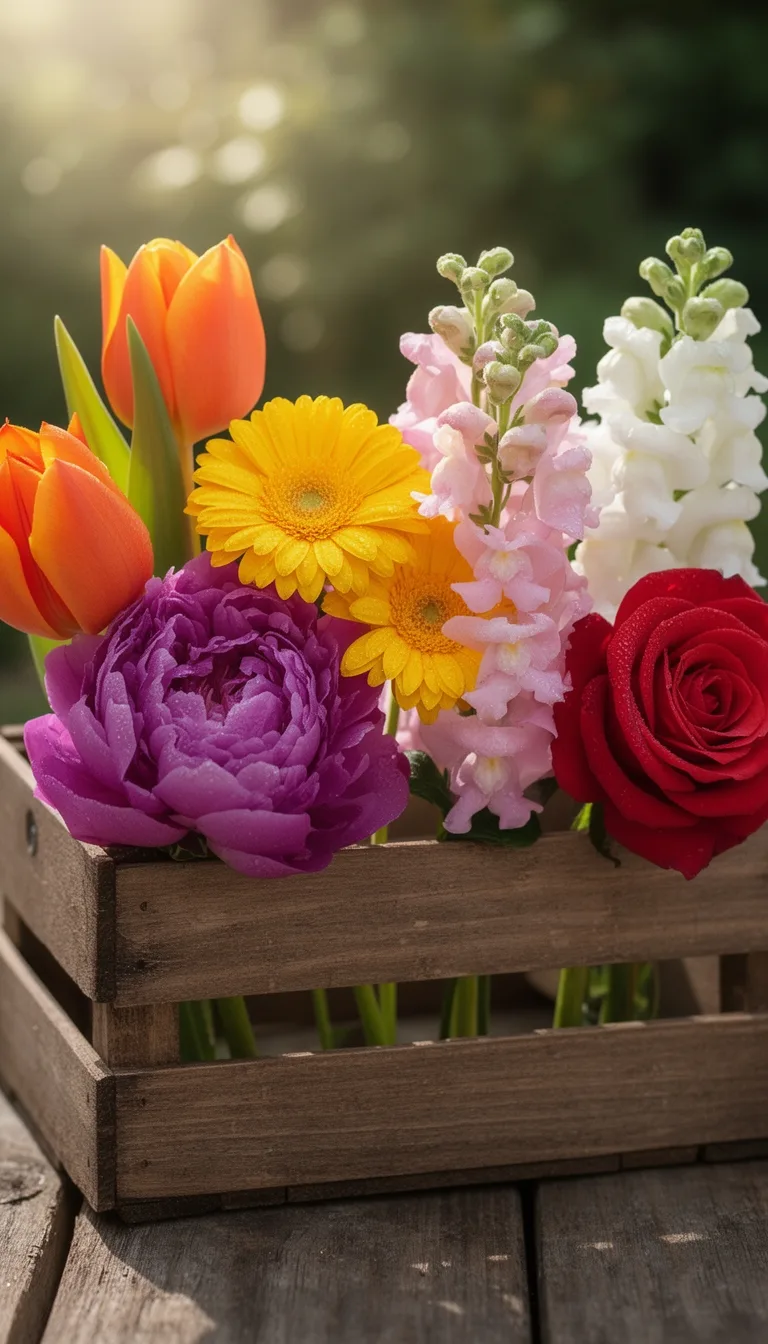
You’ll maximize your acre’s $25–30K annual potential by growing a diversified mix: dahlias and peonies for premium pricing, zinnias and cosmos for volume, sunflowers for visual impact, snapdragons for spring/fall revenue, tulips for post-winter sales, lisianthus for specialty markets, and rudbeckia, yarrow, and delphiniums for zone-specific appeal. Add hydrangeas, calla lilies, orchids, and roses for sophisticated arrangements. Stack plantings every two to three weeks to ensure continuous harvests. The specifics of timing, soil prep, and post-harvest conditioning determine whether you’ll actually hit those profit targets.
Key Takeaways
- Dahlias deliver 10–30 stems per plant at $5–7 per stem with strong florist demand year-round.
- Peonies command premium $6 per stem pricing and dominate the market-leading specialty cut-flower segment globally.
- Zinnias offer multiple harvests, broad appeal, excellent vase life, and wholesale viability at $0.25–$0.50 per stem.
- Sunflowers generate $20K per acre revenue with high visual impact and controlled-environment forcing capabilities.
- Snapdragons provide spring and fall harvests with 3-foot stems yielding $7.18 per stem to florists.
Six Profitable Flowers Every Small-Scale Grower Should Know
Whether you’re starting your cut flower farm or expanding your current operation, selecting the right varieties can make the difference between modest returns and genuine profitability.
You’ll want to prioritize crops that balance growing demands with market value.
Lisianthus commands premium prices despite its five-month growing cycle and finicky seed germination.
Dahlias deliver heavy blooms from mid-August through frost, generating consistent $5-7 stem sales.
Peonies require three-year establishment but yield loads of perfect stems at $6 each.
Zinnias offer tier-one status with broad appeal and excellent vase life. As heavy bloomers, zinnias enable multiple harvests throughout the season without frequent replanting.
Tulips sell quickly post-winter at $3 per stem.
Strategically mixing these varieties lets you optimize your growing space, manage labor efficiently, and capture seasonal market opportunities throughout the year.
Sunflowers: Season-Long Revenue and Visual Impact
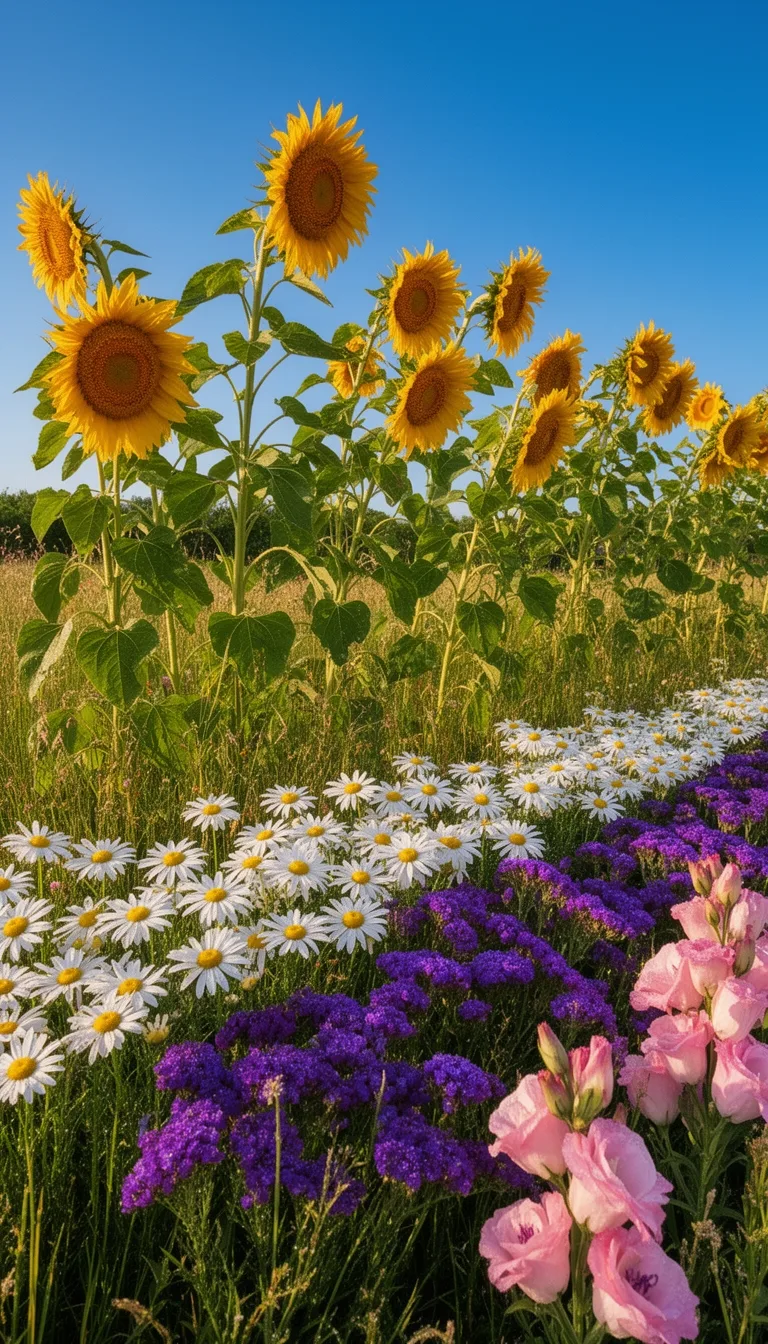
Among the six profitable varieties, sunflowers stand apart for their ability to generate consistent revenue from early summer through fall frost.
You’ll find that sunflowers deliver season-long farmgate price stabilization, making them one of the most profitable cut flower options available.
With potential revenue reaching USD 20,000 per acre in Texas markets, they’re economically compelling.
Their high visual impact captures consumer attention immediately—a critical advantage in retail displays where impulse purchases drive sales.
You can leverage controlled-environment forcing to maintain uniform quality for export standards, while cold-resistant cultivars let you extend production into temperate zones.
Combined with vacuum cooling and IoT monitoring technology that preserves freshness from farm to consumer, sunflowers position your operation for consistent profitability across multiple sales channels. As protected greenhouse systems account for 62.5% of the global cut flower market share, integrating sunflower production into climate-controlled environments maximizes yield consistency and reduces post-harvest losses.
Zinnias: Heat-Tolerant Bloomers for Every Season
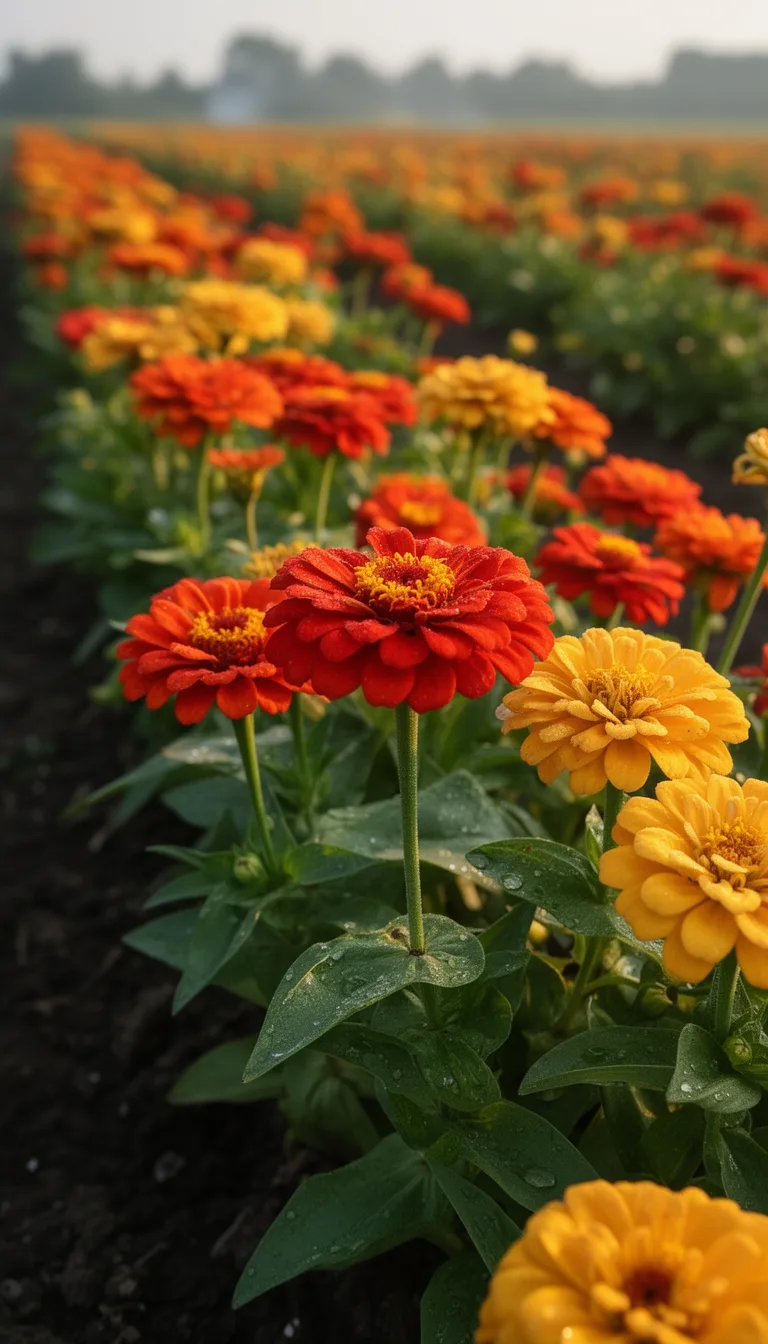
How can you maintain consistent cut flower production through summer’s peak heat and into fall? Zinnias are your answer. These heat‑tolerant bloomers thrive when other crops struggle, producing from early‑to‑mid summer through first frost.
You’ll choose between transplanted and direct‑seeded production. Transplants offer quicker harvests—expect flowers four weeks after transplanting, with peak yields 6‑10 weeks later. Direct‑seeding in mid‑to‑late May delivers season‑long production at lower transplant costs, though with higher fixed expenses.
Select high‑performing varieties strategically. Oklahoma Ivory maximizes stem count, while Benary’s Giant Purple delivers larger blooms and longer stems. State Fair series offers impressive yields with minimal culls. Research from a two‑year trial in eastern South Dakota evaluated four zinnia varieties under Midwest conditions to guide your variety selection.
You’ll harvest when half to two‑thirds of florets open, storing at 4 °C. With wholesale prices ranging 25‑50 cents per stem, zinnias provide reliable revenue during peak‑heat periods when customer demand peaks.
Dahlias: Premium Blooms That Command Top Prices
Why do dahlias consistently outperform other cut flowers in wholesale markets? You’ll find they deliver superior profitability through premium pricing and exceptional yields.
Here’s what makes them essential for your operation:
- High production capacity: You can harvest 10-30 stems per plant under optimal conditions, with top cultivars like ‘Face of Summer’ and ‘Baron Katie’ commanding strong customer appreciation and repeat orders.
- Market demand: Florists and event spaces account for 75% of wholesale purchasing, creating consistent revenue streams at wholesale bunch pricing. The survey data confirms that peonies, lisianthus, tulips, dahlias, and ranunculus are the high-demand varieties most requested by Intermountain West wholesalers.
- Strategic timing opportunities: Seasonal fluctuations in regional availability let you optimize pricing throughout the year.
You’ll achieve 90%+ plant viability with proper cultivar selection and growing conditions. Stem lengths averaging 18 inches meet bouquet specifications, positioning dahlias as your most profitable specialty crop.
Snapdragons: Spring and Fall Revenue Generators
When you’re looking to maximize revenue during spring and fall, snapdragons offer a proven strategy that’s hard to beat.
You’ll find that Group II and Group III cultivars align perfectly with spring flowering, while field-grown production generates early summer profits.
The Chantilly group commands top prices in pink, light pink, bronze, and light salmon varieties.
You can harvest stems up to three feet long with 15 closely-spaced florets per spike.
Cut when the lower third opens for optimal vase life of one to two weeks.
Store stems upright immediately after harvest to prevent bending.
With open-field flower acreage expanding 33% since 2017, snapdragons represent an increasingly viable option for farms diversifying their outdoor cultivation alongside greenhouse operations.
Last season’s data proves the model: six thousand plants yielded fully sellable stems at $7.18 per stem.
You’re looking at rapid profitability with minimal waste.
Cosmos: Low-Maintenance High-Profit Flowers
What if you could grow a cut flower that thrives on neglect while delivering 1,000–3,000 stems per 100-foot row? Cosmos offers exactly that advantage for your operation.
This warm-season annual demands minimal intervention once established.
You’ll appreciate these key benefits:
- Drought tolerance and upright growth eliminate staking needs and reduce watering schedules significantly
- Pest resistance and disease prevention through proper air circulation keep chemical inputs minimal
- Self-seeding habits lower your replanting costs season after season
Direct sow or start indoors for continuous blooms from midsummer through frost.
The prolific stem production suits wedding and event markets perfectly. As weddings and corporate events continue to boost fresh-cut flower consumption globally, cosmos positions your farm to capture this growing demand while maintaining operational efficiency.
With low input costs, drought resilience, and reliable yields, cosmos complements your revenue strategy while fitting the specialty cut flower market’s 4.9% growth trajectory.
Peonies: Why Growers Plant for Long-Term Returns
Peonies demand a different mindset than cosmos—you’re planting for decade-long harvests rather than seasonal yields. You’ll invest years before seeing substantial returns, but the payoff justifies the patience.
Paeonia Lactiflora dominates 85% of the market, valued for its extended vase life, color range, and availability. The business segment generates $400 million annually, driven by wedding and event demand where peonies command premium prices. The global peony cut-flower market is projected at $5.77 B in 2025, with steady expansion anticipated through the coming decade.
You’ll face cultivation challenges: short natural blooming seasons and pest susceptibility. However, controlled environment agriculture enables off-season production, extending your revenue window.
Modern techniques—improved irrigation, pest management, and new hybrid development—enhance productivity and freshness. E-commerce platforms amplify your market reach. While your initial investment’s substantial, peonies’ profitability and market growth projections at 6‑9% CAGR make them a strategic long-term crop.
Containers That Build Stronger Roots and Higher Yields
Because container selection directly impacts root development and flowering productivity, you’ll want to match pot size and material to your specific crop needs.
You’ll achieve optimal results by implementing these strategic practices:
- Select appropriate container sizes — Use smaller pots for herbs and larger vessels for tall flowers like cosmos, ensuring they reach 1.5x container height for structural balance.
- Prioritize drainage materials — Choose terra cotta, wooden baskets, or vintage buckets with drainage holes; drill holes in galvanized tubs and add rocks or cardboard beneath soil to reduce costs while improving water movement.
- Prepare quality soil — Fill containers with high-quality potting soil mixed with organic compost, maintaining 6–8 inches depth for annuals and applying mulch to retain moisture effectively.
Position your containers near your house for convenient watering and weather protection, maximizing both yields and bloom quality. Incorporating slow-release fertilizer into your potting mix ensures consistent nutrient availability throughout the growing season.
Map Your Planting Calendar: Harvest Through Thanksgiving
Once you’ve established containers that’ll support robust root systems, your next priority is plotting out when you’ll sow and harvest throughout the season.
Work backward from your target harvest date—Thanksgiving, for instance—to determine optimal planting windows for cool‑weather varieties like larkspur, which require extended cool periods before flowering.
For continuous blooms through fall, stagger plantings every two to three weeks starting in early September.
Cool‑weather flowers planted through January thrive in zone 9 regions, with seedlings surviving short December and January freezes without protection. A comprehensive planting calendar tailored to your local climate ensures you’re selecting species proven to perform in your specific growing conditions throughout the year.
Map succession intervals for your primary crops: zinnias and cosmos need 2‑3 plantings at 14‑day intervals; sunflowers benefit from 7‑day plantings.
Document which varieties you’re starting from seed versus direct sowing, accounting for their specific germination requirements and maturity timelines.
Which Flowers Pair Well Together in Mixed Bouquets?
What makes a mixed bouquet visually compelling? You’ll want to combine flowers that create balance through color, texture, and shape contrast. Here’s what you should consider:
- Classic pairings: Red roses with white lilies or orchids create striking romantic arrangements, while pink roses paired with white lilies express elegance and appreciation.
- Seasonal combinations: Spring bouquets benefit from tulips and lilies, which offer complementary color harmony and visual interest through contrasting shapes—delicate cups against bold trumpets.
- Sophisticated selections: Orchids and calla lilies blend exotic allure with refined elegance. Calla lilies’ graceful curves and varied color palette complement orchids’ intricate structures perfectly. When treating your bouquet as a painting with petals, strategic color pairing enhances the overall visual appeal and ensures balanced composition.
You’ll also find success pairing peonies and hydrangeas for lush, romantic arrangements. Their large blooms require just five to seven stems each for impact. Consider your farm’s growing capacity and seasonal availability when selecting combinations.
Regional Growing Challenges: Adapting Your Lineup by Climate
Your climate zone fundamentally determines which flowers you can reliably grow and when they’ll produce harvestable stems.
In zones 3-5, you’ll focus on cold-hardy perennials like yarrow, delphiniums, and Siberian irises, planning for spring and fall harvests.
Zones 6-7 expand your options significantly—roses, rudbeckia, and heat-resistant hebes become viable, offering summer-through-fall production.
For zones 8-11, perennial lilies, calla lilies, and year-round sunflowers thrive.
Short seasons require strategic timing: start lisianthus in December, pre-sprout ranunculus, and leverage cool-season crops.
Hot climates demand heat-loving workhorses like gaura, marigolds, and sunflowers, prioritizing drought tolerance over hardiness zones.
Temperature variance within regions matters too—Dallas summers run 20°F hotter than zone 8 Oregon—so adjust cultivar selection accordingly for reliable production.
Cut and Condition: Extending Vase Life From Field to Retail
The moment you cut a stem, you’ve started a race against deterioration—and you’ll win or lose it in the first few hours.
Your conditioning protocol determines vase life dramatically. You’ll need to:
- Cut underwater at a 45-degree angle using clean, sharp tools to prevent air embolism
- Strip foliage from the bottom two-thirds immediately, leaving only 2-3 leaf sets at the base
- Hydrate in cool water with preservative solution: 1 tablespoon vinegar, 1 teaspoon sugar, and 2 drops bleach per liter
Change water every other day and recut stems when water changes occur.
Remove fading leaves promptly to prevent bacterial spread.
Keep flowers away from direct sun and heat sources.
You’ll maximize vase life by maintaining clean containers and monitoring calcium levels throughout the conditioning phase.
Year-Round Cash Flow: Selling Cut Flowers Every Month
How do you maintain consistent revenue when your most profitable crops—peonies and dahlias—have limited harvest windows?
You’ll succession plant annuals like zinnias and sunflowers monthly, ensuring continuous harvests year-round.
Lisianthus bridges seasonal gaps, stretching from June through September at $5/stem.
During winter, forced tulips and specialty varieties generate early income before spring transitions.
Stack perennials like yarrow and eucalyptus ($4/stem) underneath—they increase yield annually after establishment.
Your strategic mix balances high-investment perennials with low-investment annuals that comprise 95% of production revenue.
Protected spaces extend lisianthus and eucalyptus seasons, protecting against frost damage.
This diversified approach generates $25,000–$30,000/acre across all seasons, stabilizing cash flow despite individual crop seasonality.
Start Now: Your First-Season Flower Farm Action Plan
Building that year-round revenue stream starts with a realistic first season—you’ll need to set sales goals, choose manageable crops, design your field layout, budget for real expenses, and create a planting timeline that matches your local climate.
Start by establishing your top-line sales target based on farm stands or florists, then break weekly goals by customer channel. This guides your crop selection and narrows your focus.
- Select 5-10 primary crops emphasizing high-value focal flowers like bearded iris alongside beginner-friendly succession-plantables like zinnias and sunflowers
- Plan a 1/8 acre field as your testing ground, maximizing beds with consistent color palettes and multi-cut varieties
- Budget comprehensively—seeds, irrigation, tools, market rent—then order seeds in phases for spring and summer starts aligned to your region’s bloom windows
Common Mistakes Small Growers Make (and How to Avoid Them)
Even with careful planning, small growers often stumble in ways that directly tank their yields and profits.
You’ll maximize success by avoiding these critical errors: plant at least 20 perennials or 48‑96 annuals per variety to supply weekly bouquets.
Install support netting early for tall flowers like zinnias—waiting until they’ve grown tall causes damage.
Space annuals at 6‑9 inches apart for long, harvestable stems.
Pinch branching varieties to develop straight cuts.
Harvest before pollination hits peak bloom, using sharp scissors for clean cuts, not crushes.
Remove 1‑2 inches of stem and cut underwater to prevent air blockages.
Use filtered water, not chlorinated tap water.
These practices directly translate to stronger stems, longer vase life, and repeat customers.
Conclusion
You’re absolutely going to revolutionize your farm’s profitability by implementing these flower-growing strategies. You’ll dramatically increase your vase life through proper conditioning techniques, you’ll absolutely dominate your local market with year-round blooms, and you’ll catapult your revenue by avoiding those catastrophically common beginner mistakes. You’ve got the roadmap now—sunflowers, zinnias, dahlias, and snapdragons are your golden tickets. You’re ready to launch your first season and watch your cut flower operation skyrocket into serious profitability.
The Only Tools You Need for a Thriving Garden 🌱
Whether you're a weekend gardener or growing daily — these hand-picked tools make every session faster, easier, and more satisfying.