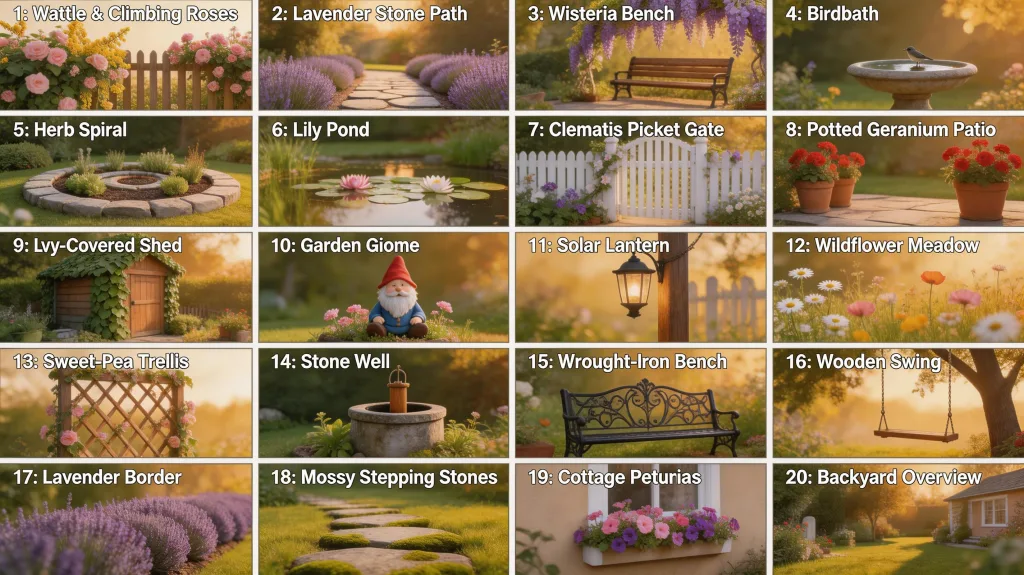
You might imagine building your cottage garden around a meandering brick path, but the real magic comes from the plants. Focus on layering perennials like foxgloves with spillers of thyme to create depth and texture. I’ll show you how to combine these elements to craft a space that feels timeless, yet is surprisingly practical to maintain. Your journey to that charming, relaxed backyard begins with a few key decisions.
Key Takeaways
- Create meandering paths with old bricks to reveal hidden garden corners and framed views.
- Layer plant heights from tall foxgloves to ground-cover thyme for lush, informal texture.
- Mix perennials with self-seeding annuals like poppies for continuous color and pollinator support.
- Add a rustic bench as a focal point nestled among climbing roses or fragrant shrubs.
- Use reclaimed wood or stone for natural edging and structures to blend with plantings.
Embrace the Charm of a Meandering Path
Don’t just think of a path as a way to get from one point to another; let it become part of the garden’s story.
You’ll curve it gently, creating hidden corners that invite exploration. Allow plants to soften the edges; let billowing catmint or lady’s mantle spill onto the walkway. Choose materials like old bricks or stepping stones, settling them a little unevenly.
This isn’t about a straight line—it’s about the journey. You’ll find yourself slowing down, noticing the scent of thyme underfoot or the way light filters through tall hollyhocks.
Your path frames views and leads your eye toward a favorite bench or a surprise cluster of foxgloves, weaving the planting into the experience of moving through the space.
Start With a Loose Cottage Garden Layout
While the meandering path creates the story, the plants themselves will write the chapters when you start with a loose, informal layout. Forget rigid lines and perfect symmetry. Instead, let your plantings flow naturally from one area to another.
You’ll want to group several of the same perennial together, but allow their forms to intermingle at the edges. This approach feels more generous and established. It also gives plants room to self-seed, creating those happy surprises that define the cottage garden look.
You’re not building a wall but cultivating a living tapestry. This foundation of relaxed structure is key; it provides the canvas upon which you’ll paint with color and texture, ensuring the garden feels full yet never stiff or over-designed.
Layer Plants for Depth and Textural Beauty
With your loose layout as a canvas, bring it to life by stacking plants in tiers from back to front. Think of building texture and volume rather than just filling space. You’ll create immersive, sensory layers that make a small garden feel vast and a large one feel intimate.
- Anchor with Architectural Spires: Start with tall, vertical elements like delphiniums or foxgloves at the very back.
- Build a Middle Story: Fill the central area with bushy perennials such as peonies, phlox, or hardy geraniums.
- Edge with Spillers and Fillers: Let plants like catmint, lady’s mantle, or nepeta cascade over path edges.
- Weave in Ground-Level Interest: Tuck low-growing thyme, violas, or ajuga into any gaps at the front.
Choose a Palette of Soft, Romantic Colors

For a true cottage garden feel, you’ll want a color scheme that feels effortlessly blended and dreamy, not stark or contrived. Think of soft pinks, lavenders, creamy whites, and buttery yellows. These hues create a serene and romantic atmosphere. You’ll rely on flower color to set this tone.
Incorporate silvery foliage from plants like lavender or artemisia; it acts as a neutral buffer, gracefully tying brighter blooms together. Let colors gently intermingle. A splash of soft blue from catmint or a pale peach rose can beautifully accent the primary palette without jarring the eye.
Plant a Delightful Mix of Perennials and Annuals

A successful cottage garden thrives on the layered, season-long interest you get from mixing perennials and annuals. Your perennials form the garden’s dependable backbone, returning bigger each year, while annuals fill gaps with instant, vibrant color.
This combination prevents lulls in bloom and lets you experiment with new hues and textures every season.
- Start with perennial structure: Plant core groups like foxgloves, delphiniums, and peonies that reliably surge back each spring.
- Interplant with annual filler: Sow seeds of cosmos, nicotiana, and love-in-a-mist around your perennials to cover bare stems and earth.
- Use annuals for quick impact: Tuck in nursery-grown zinnias, marigolds, or petunias where you need a burst of color fast.
- Embrace self-seeders: Allow annuals like calendula and forget-me-nots to drop seeds, creating delightful, unexpected volunteers for next year.
Welcome Pollinators With Insect-Friendly Blooms

Cottage gardens naturally attract pollinators when you include flowers that provide nectar and pollen throughout the growing season. You’ll want to select blooms with simple, open forms that insects can easily access. Classic cottage favorites like single-flowered dahlias, cosmos, and lavender are perfect, while modern hybrids with complex petals often lack usable resources.
Plant in generous clusters so pollinators can find their targets; a large patch of echinacea is far more effective than a single plant. Remember to include early, mid-season, and late bloomers. You might start with crocus and violets in spring, shift to coreopsis and phlox for summer, and finish with asters and sedum in autumn. This continuous buffet keeps bees, butterflies, and beneficial flies visiting your garden all year.
Let Climbers and Ramblers Add Vertical Romance

While flowers draw in pollinators from the air, you can also use that vertical space for growth by adding climbers and ramblers. They’ll transform bare walls, fences, and arches into living tapestries of scent and color.
Choose plants that suit your structure and light, and you’ll gain height and romance without sacrificing ground space.
- Train scented roses like ‘Zéphirine Drouhin’ up an archway for a fragrant entrance.
- Let clematis weave through shrubs for sequential blooms from spring to fall.
- Cover a sunny wall with a vigorous honeysuckle for evening fragrance.
- Use annual climbers like sweet peas on obelisks for quick, cuttable color.
Provide sturdy support at planting, and you’ll watch your garden reach charming new heights.
Design a Charming Kitchen Garden for Herbs
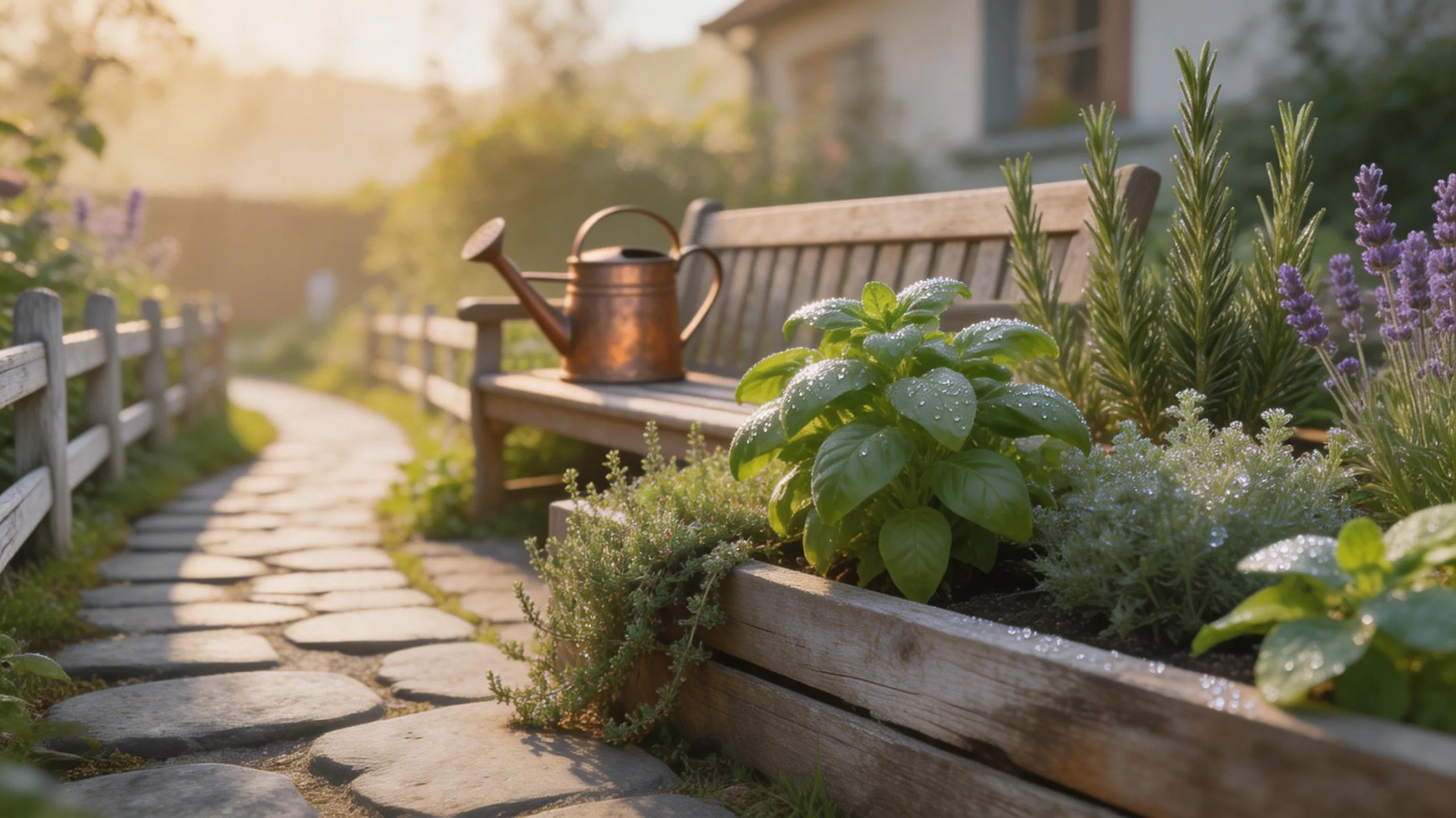
Your kitchen garden can be both beautiful and practical, blending fragrant herbs with edible flowers in a compact, accessible space.
Plant rosemary and lavender for structure, placing them toward the back of a border. Tuck thyme and oregano along edges where they’ll sprawl over paths. Keep vigorous mint in its own pot to control its spread. Intersperse nasturtiums and calendula; you can snip their peppery petals for salads.
Position this garden near your kitchen door for easy harvesting. Regular snipping encourages bushy growth, so don’t be shy.
You’ll find the mingled scents of basil, lemon balm, and sage delightful as you brush past them, turning a simple chore into a sensory pleasure.
Use Natural Materials for Borders and Edging

Since you can draw inspiration from nature itself, look for stones, reclaimed wood, or woven willow to define your garden beds. These materials blend seamlessly and allow your plants to spill over gracefully. You’ll find a low stone wall makes a perfect backdrop for sprawling lavender, while woven willow hurdles gently contain your frothy nepeta.
Using reclaimed timber creates a rustic frame that lets your herbs tumble naturally. This approach keeps the focus on your plant combinations, not on stark, artificial lines.
- Local Stone: Use flat fieldstones to create a durable, low border that complements mossy thyme and creeping sedum.
- Reclaimed Logs: Half-buried logs or rustic sleeper edges provide a woody habitat for beneficial insects.
- Woven Willow: Hazel hurdles offer a soft, living edge that supports tall foxgloves and hollyhocks.
- Brick or Cobble: Old bricks laid in simple patterns ground bold plantings like roses and peonies.
Build Your Garden Around a Central Feature

Once you’ve established soft, natural edges for your beds, consider drawing everything together with a central garden feature. This creates a focal point that organizes your plantings visually. An old-fashioned birdbath or a simple sundial works beautifully.
Choose plants that complement your feature. For a stone urn, you might let creeping thyme spill over its base and surround it with frothy clouds of baby’s breath and lavender. A rustic bench can be nestled within billowing shrubs of mock orange or roses. Your feature grounds the entire design; all your meandering paths and overflowing borders will feel intentionally arranged around this charming heart of the garden.
Create a Cozy Cottage Garden Seating Nook
Tuck a weathered bench or a pair of simple chairs beneath a canopy of climbing roses or clematis to carve out a secluded retreat. Choose plants that engage the senses. This nook’s success depends on their immersive embrace.
- Frame with fragrance. Plant old-fashioned sweet peas or star jasmine to scramble up nearby supports, scenting the air.
- Edge with softness. Allow lady’s mantle or catmint to spill over the path, blurring the edges with their gentle forms.
- Add sound and movement. Include ornamental grasses like *Stipa tenuissima*; their whispery rustle is wonderfully calming.
- Anchor with foliage. Use a small, sculptural hydrangea or a frothy hardy geranium as a lush, living backdrop.
Add Vintage or Handcrafted Garden Furniture
While you’re cultivating that layered, sensory-rich atmosphere, consider introducing furniture that feels equally organic and storied. Don’t choose generic patio sets. Instead, scout for a weathered wooden bench or a hand-wrought iron bistro table.
Place your vintage find where its aged patina can be accented by foliage, perhaps letting clematis climb a chair leg or moss soften a table’s edge. You’ll find these pieces don’t dominate the space; they settle into it, becoming part of the garden’s texture.
Each piece tells a story, enhancing the sense of a space that’s been lovingly curated over time. This approach grounds your seating nook, making it a more immersive and authentic part of your cottage garden experience.
String Up Lights for Evening Charm
Twinkling lights can transform your garden into an enchanting evening retreat. They extend your time among the flowers, letting you enjoy nocturnal blooms like evening primrose and moonflower. You’ll see your garden in a new, magical light.
- Drape fairy lights through the branches of a small tree or shrub to create a glowing canopy.
- Weave globe lights along a fence or trellis covered in climbing roses or clematis.
- Hang lantern-style strings from shepherd’s hooks nestled within your flower borders.
- Use solar-powered options to avoid cords; place the panel where it gets full sun.
Always secure lights loosely to avoid damaging stems. The soft glow will highlight foliage textures and flower forms, making your cottage garden feel truly alive at night.
Use Containers for Spots of Portable Color
Bring in portable color with containers to brighten up any corner of your cottage garden. You’ll love moving pots around to fill gaps after spring bulbs fade or to boost a dull spot. Choose classic terracotta, weathered stone, or a painted tin bucket for character.
Focus on long-blooming, cascading plants. For a sunny spot, you can’t beat trailing petunias, calibrachoa, or sweet alyssum. In shade, mix fibrous begonias with ivy and coleus. Remember to plant thickly for an instant, lush look.
You’ll need to water container plants more often, especially in summer heat, but the effort’s worth it. A vibrant pot by your gate or on a step always lifts the spirit and perfects the scene.
Add a Touch of Magic With a Birdhouse or Feeder
Even after you’ve filled your garden with flowers, you can deepen its charm by inviting birds to visit with a simple feeder or a quaint birdhouse.
You’ll watch the garden come alive as they flit between your sunflowers and bathing in a shallow dish.
Consider these practical placements to support both birds and your plants:
- Tuck a feeder near berry-producing shrubs like elderberry or serviceberry to offer a natural buffet and encourage nesting.
- Mount a house on a sturdy post amidst tall perennials like hollyhocks or delphiniums for shelter from predators.
- Hang a simple seed feeder from a flowering tree branch, where falling shells are hidden by groundcover.
- Place a shallow water basin on a pedestal surrounded by low, soft plants like lady’s mantle to prevent muddy splashes.
Personalize Your Space With Found and Folk Art
Letting your garden reflect your personality can be as simple as incorporating found objects or handmade folk art alongside your plants.
Use weathered terracotta pots or old enamelware as unique containers for herbs like mint or chives, letting their practicality blend with rustic charm.
You might hang a colorful, hand-painted tin sign on a fence post beside a climbing clematis, creating a cheerful focal point.
Nestle a small carved wooden figure among the foliage of low-growing sedum or thyme, where it adds a whimsical touch without overwhelming the greenery.
These personal items tell a story and integrate seamlessly with your plantings, making the garden feel uniquely yours.
Incorporate Fragrant Flowers for Sensory Appeal
Awaken your garden’s potential by weaving fragrant flowers into its design for a truly immersive sensory experience. Their perfume transforms a simple visual display into a dynamic atmosphere you can feel, enriching every moment spent outdoors. Focus on plants renowned for their scent and place them where you’ll most appreciate them.
- Plant night-scented stocks by seating areas; their sweet fragrance intensifies in the evening air.
- Train a climbing rose like ‘Zéphirine Drouhin’ over an archway to release its perfume as you brush past.
- Edge a sunny path with lavender; the heated stems will release their calming scent underfoot.
- Tuck sweet alyssum between paving stones; its honeyed scent rises with every step you take.
What Makes a Cottage Garden Different?
A cottage garden’s charm is a deliberate escape from rigid order. You won’t find symmetrical beds or single-species blocks here. Instead, you’ll mix ornamental flowers with practical herbs, fruits, and vegetables.
Think of planting fragrant roses alongside your rosemary and letting lettuce nestle near your lupines. This style prioritizes abundance and variety over meticulous design.
You choose plants primarily for their old-fashioned charm, fragrance, and ability to attract pollinators, not just for color coordination. The structure comes from repeating a few favorite plants and using traditional materials like rustic wood or stone for paths and edges.
It’s a living, productive space that feels personal and established, as if it’s been thriving for generations.
Allow for a Little ‘Happy Chaos’ in Planting
Embrace the delightful disarray by tossing out the grid and planting in relaxed, intermingling drifts. You’re not just filling a space; you’re cultivating a living tapestry where plants self-seed and mingle freely.
This approach feels more natural and dramatically boosts your garden’s charm.
- Sow annual seeds like love-in-a-mist or poppies directly among perennials; they’ll pop up in surprising, perfect spots.
- Let taller plants like foxgloves or hollyhocks rise from within clumps of shorter ones, not just from the back.
- Combine textures freely, allowing the feathery plumes of astilbe to weave through the broad leaves of hosta.
- Permit some self-seeding. Welcome volunteer columbines or forget-me-nots where they appear to add spontaneity.
Prune and Deadhead for Continued Blooms
While that tapestry of self-seeded flowers is growing, you can shape its performance. You aren’t controlling it, but gently guiding it.
Regularly deadhead your spent blooms. Snip off the faded flower just above the first set of healthy leaves. This simple act tells the plant to produce more blossoms instead of setting seed, giving you waves of color all season.
For sprawling plants like nepeta or hardy geraniums, give them a hard shearing back by one-third after their first major flush has faded. They’ll reward you with fresh foliage and another round of flowers.
A light pruning keeps leggy plants full and prevents them from overpowering their gentler neighbors. Your secateurs are your best tool for long-lasting display.
Frequently Asked Questions
How Do I Keep Pests Away Naturally?
Stop pests by planting marigolds and garlic. You can handpick bugs or spray soapy water. Welcome birds with a bath—they’ll eat insects. Healthy, well-spaced plants resist infestation best, so keep your soil rich.
What Are the Best Plants for Shady Corners?
For shady corners, choose hostas for lush foliage, astilbes for feathery plumes, and hardy ferns. You’ll love their texture, and they’ll thrive with little sun. Remember, they’ll need good soil and consistent moisture.
How Much Does a Cottage Garden Cost to Start?
Start for under $100. Focus on seeds, divisions from friends, and a few nursery-grown perennials. Your soil prep is the biggest investment. You’ll save money by propagating plants yourself as your garden grows.
Can I Create a Cottage Garden in a Small Space?
You absolutely can! You’ll focus on layering plants vertically. You’ll tuck climbers like clematis behind compact shrubs and use pots of fragrant herbs. This creates that lush, overflowing feel even in your tiny corner.
How Often Should I Water a Cottage Garden?
You’ll likely water weekly, but you must check the soil first. Stick your finger an inch deep; if it’s dry, give your plants a good soak, adjusting for rainfall and summer heat.
Conclusion
Your cottage garden’s beauty will deepen each season. Don’t be afraid to let plants self-sow and mingle freely. Spend time there, deadheading and pruning to encourage more flowers, and you’ll see the magic unfold. You’re not just gardening; you’re curating a living, buzzing sanctuary that feels timeless and utterly your own.
The Only Tools You Need for a Thriving Garden 🌱
Whether you're a weekend gardener or growing daily — these hand-picked tools make every session faster, easier, and more satisfying.