You’ve got a garden that could use a fresh look, and the right flower‑bed style can transform it without a total overhaul. From sleek minimalist rows that let white lavender breathe, to layered cottage borders bursting with perennials, each idea offers a practical way to add texture, color, and seasonal interest. Choosing the right approach means matching your space, light, and maintenance level, then applying simple planting techniques. The next step shows how a few strategic decisions can make any garden feel intentional and vibrant.
Key Takeaways
- Choose a layout (row, tiered, color‑block, or meadow) that matches the site’s size, sun exposure, and maintenance level.
- Use a four‑season layering strategy: early‑spring bulbs, summer perennials, autumn foliage, and evergreen/grass for year‑round interest.
- Incorporate contrasting textures and heights—compact evergreens, ornamental grasses, and taller flowering shrubs—to create depth and visual flow.
- Apply color‑block or gradient schemes (cool hues at the back, warm hues at the front) for striking, organized palettes.
- Install proper edging, drainage, and irrigation (drip lines, raised beds) to keep plants healthy and maintain clean, defined beds.
How to Choose the Right Flower‑Bed Style for Your Space

When you assess your garden’s size, sunlight, and soil, you’ll quickly see which flower‑bed style fits best. Start by measuring the area; a small plot works well with a single‑row or container bed, while a larger space can handle a formal, free‑form, or tiered design.
Observe sun exposure: full‑sun spots suit heat‑loving roses or lavender, whereas shade‑tolerant hostas thrive under trees. Test soil texture and pH; amend heavy clay with compost if you plan a dense planting, or choose drought‑resistant succulents for sandy soil.
Consider maintenance: a low‑maintenance meadow look needs occasional mowing, while a structured box garden demands regular pruning. Finally, match the style to your aesthetic—minimalist lines, cottage charm, or modern geometry—to ensure the bed complements your overall landscape.
Create a Modern Minimalist Flower‑Bed Row With White‑Flora Accents

If you want a sleek, modern look, start by laying a single, straight row of low‑maintenance foliage and intersperse it with white‑flowering plants such as white lavender, peonies, or snowdrops.
Choose a compact, evergreen filler like dwarf boxwood or ornamental grasses to keep the line crisp.
Space plants evenly, about 12‑18 inches apart, to allow each bloom to stand out without crowding.
Amend the soil with coarse sand and compost for good drainage, then water once after planting and weekly during dry spells.
Mulch lightly with fine gravel or white stone to reinforce the minimalist aesthetic and suppress weeds.
Trim foliage regularly to maintain a clean edge, and replace any faded stems promptly to preserve the row’s uniform, contemporary vibe.
Build a Cottage‑Style Flower‑Bed Border Using Mixed Perennials
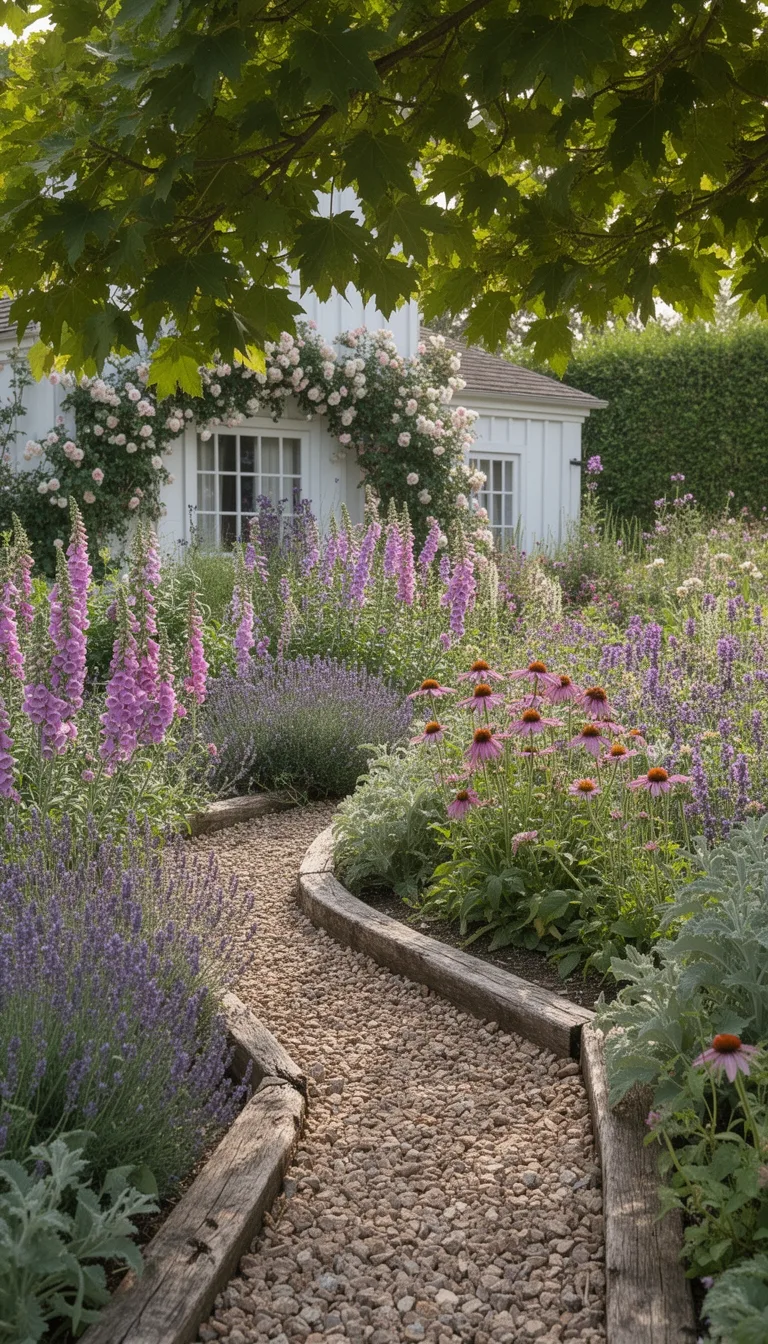
Swap the stark, linear edge for a soft, overflowing border by planting a mix of perennials that bloom at different times. Choose species with varied heights, textures, and colors to keep the edge lively all season. Space plants 12‑18 inches apart, group similar foliage together, and stagger planting dates so you never lose visual interest. Water deeply at planting, mulch to retain moisture, and deadhead regularly for tidy growth.
| Perennial | Height | Bloom Time |
|---|---|---|
| Daylily | 12‑18 in | Early Summer |
| Coneflower | 18‑24 in | Mid‑Summer |
| Shasta Daisy | 18‑24 in | Late Summer |
| Hellebore | 8‑12 in | Late Winter |
How to Plant a Vertical Tiered Flower‑Bed in Small Spaces
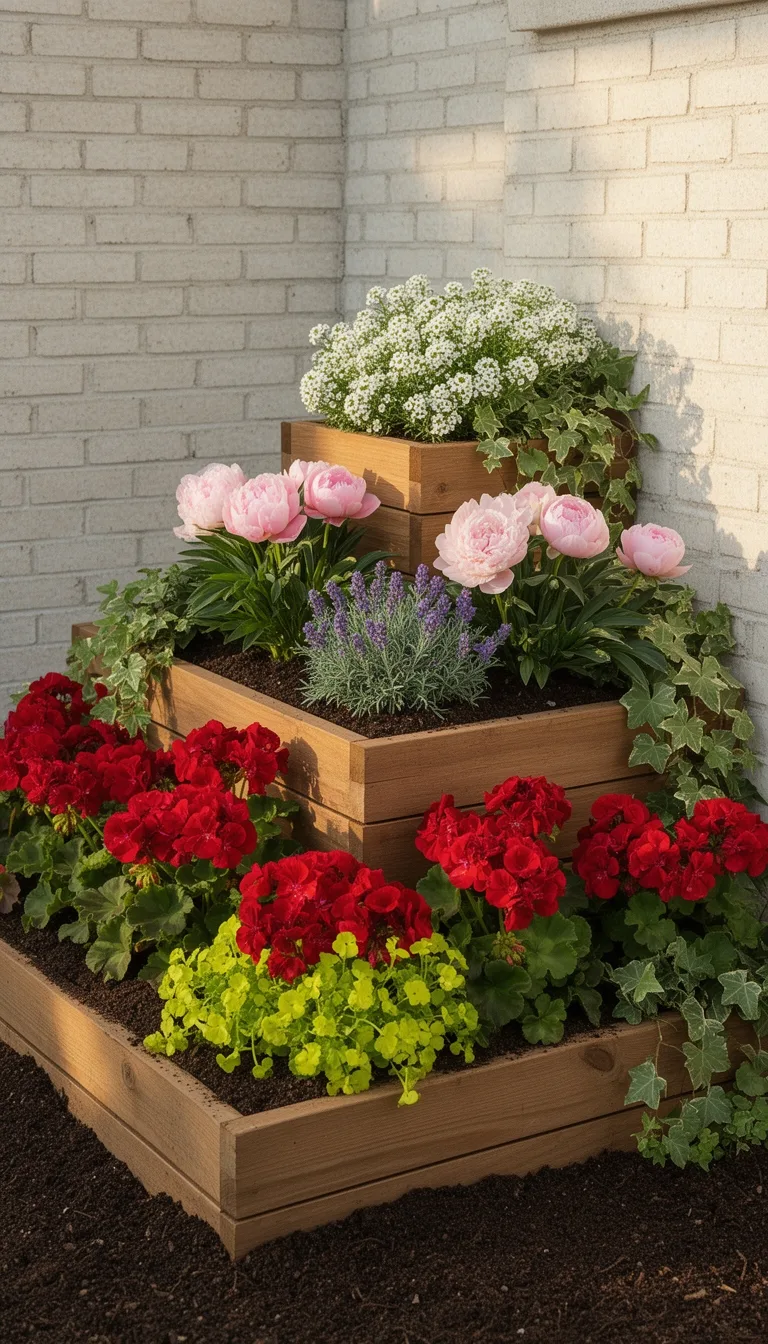
Since space is limited, start by choosing a sturdy, tiered planter or a series of stacked containers that can hold soil and drainage layers.
Fill each level with a lightweight potting mix, then select compact, shallow‑rooted plants that thrive in vertical arrangements.
Water consistently, but avoid over‑watering by adding a drip tray beneath the lowest tier.
Position the unit where it receives the right amount of sunlight for your chosen species.
- Choose containers with built‑in drainage holes.
- Add a layer of gravel or broken pottery for drainage.
- Fill with a well‑draining, lightweight mix.
- Plant progressively taller varieties on higher tiers for a cascading effect.
Maintain by pruning and feeding regularly to keep the tiered bed tidy and vibrant.
Create a Cool‑to‑Warm Color‑Block Flower‑Bed for Summer Impact

After mastering tiered planting, you can shift focus to a bold, color‑block design that pumps summer energy into any garden. Pick three cool hues (e.g., lavender, sky‑blue, mint) for the left side and three warm hues (e.g., coral, amber, ruby) for the right. Plant in blocks of equal width, keeping heights consistent within each block to maintain clean lines. Space plants 12‑18 in. apart, mulch, and water deeply. Use a low‑border or edging to sharpen the division and prevent color bleed.
| Cool Block | Transition | Warm Block |
|---|---|---|
| Lavender | White | Coral |
| Sky‑blue | Light gray | Amber |
| Mint | Pale yellow | Ruby |
Add a Low‑Mound Herb‑Bed for Easy Cooking & Color
Creating a low‑mound herb bed right beside your flower blocks gives you fresh flavors and a splash of green without crowding the main display.
Choose compact, aromatic herbs that thrive in partial shade and keep the mound low enough to stay in sight.
Plant in a shallow, well‑draining mix and mulch to retain moisture.
Harvest regularly to encourage new growth and maintain a tidy look.
- Basil – bright leaves, perfect for summer sauces.
- Thyme – low‑spreading, aromatic, great for roasts.
- Mint – contained in a pot to prevent spreading, adds zest to drinks.
- Chives – slender green stalks, easy to snip for salads.
Keep the bed moisture a few inches from the flower edge, water consistently, and prune after each harvest to preserve shape and color contrast.
Craft a Wildflower‑Meadow‑Inspired Flower‑Bed for Natural Beauty
If you want a flower bed that feels like a natural meadow, start by mixing a variety of native wildflowers with differing heights, bloom times, and textures. Choose species that attract pollinators and tolerate your climate, then sow them in irregular drifts rather than neat rows. Prepare the soil with compost, water thoroughly, and mulch lightly to retain moisture. Keep the bed weed‑free during the first few weeks, then let it self‑seed for a dynamic, evolving display.
| Height | Bloom Season | Texture |
|---|---|---|
| Short | Spring | Fine |
| Medium | Summer | Soft |
| Tall | Fall | Coarse |
Maintain a modest watering schedule, and you’ll enjoy a low‑maintenance, meadow‑like masterpiece that changes throughout the year.
Add a Curved‑Pathway Flower‑Bed With Contrasting Foliage
Mixing native wildflowers gave you a meadow‑like base; now frame it with a gentle, curved pathway and plant contrasting foliage along the edge.
Choose a low‑maintenance, draping plant such as ornamental grasses or Japanese forest grass to soften the border. Pair them with bold, textured foliage like dwarf hostas, heuchera, or lavender for color contrast.
Keep the curve wide enough for a comfortable walk, then mulch the path for stability and weed control.
- Lay a flexible edging material to define the curve.
- Fill the interior with a mix of perennials and annuals for seasonal interest.
- Plant contrasting foliage in staggered groups along the edge.
- Add stepping stones or gravel for a defined walking surface.
Install a Raised Flower‑Bed With Seasonal Bloom Rotation
Elevate your garden by building a raised flower‑bed that lets you swap in seasonal plants year after year, ensuring continuous color and interest. Choose a sturdy frame, fill it with well‑draining soil, and line the bottom with mulch to retain moisture. Divide the bed into sections so each season has its own zone. Plant early‑spring bulbs, summer annuals, autumn perennials, and winter hardy shrubs. When a season ends, lift the plants, refresh the soil, and replace them with the next batch. This rotation keeps the bed tidy, reduces weeds, and maximizes visual impact.
| Season | Ideal Plants | Maintenance Tips |
|---|---|---|
| Spring | Tulips, Daffodils, Pansies | Water lightly, deadhead |
| Summer | Marigolds, Zinnias, Petunias | Stake tall stems, fertilize |
| Autumn | Asters, Chrysanthemums, Sedum | Cut back spent blooms |
| Winter | Hellebore, Snowdrops, Evergreen | Mulch heavily, protect roots |
| Transition | Perennial mix, annuals | Rotate soil, adjust pH |
Add a Night‑Bloom Flower‑Bed for Evening Magic
After swapping seasonal plants in your raised bed, you can boost evening appeal by adding night‑bloom varieties that open after dark. Choose species that thrive in your zone, like moonflower, evening primrose, night phlox, or four‑ o’clock. Plant them in staggered rows so you’ll see continuous fragrance and color as the sun sets.
Keep soil moist but well‑drained, and mulch to retain humidity. A simple lighting scheme—soft amber LEDs—will highlight the blossoms without overwhelming the night sky.
- Moonflower vines drape over trellises, unfurling white, fragrant blooms.
- Evening primrose spreads low, offering bright pink flowers that open at dusk.
- Night phlox creates clusters of deep purple, attracting moths.
- Four‑o’clock delivers orange‑red blossoms that open exactly at 4 p.m.
Enjoy a garden that comes alive after dark.
Add a Moisture‑Loving Flower‑Bed Edge With a Small Water Feature
If you want the edge of your flower bed to stay lush and inviting, install a modest water feature that continuously supplies moisture to the surrounding plants. Choose a low‑profile fountain or a recirculating trough that blends with the garden’s aesthetic.
Position it just inside the border so water drips onto the soil, keeping the root zone consistently damp. Connect the pump to a timer, delivering water for 15‑20 minutes each morning and evening; this reduces evaporation and prevents over‑watering.
Select moisture‑loving perennials—hostas, ferns, and astilbes—to thrive at the wet edge. Use a liner or gravel base to prevent soil erosion and keep the feature stable.
Regularly clean the pump and refill the reservoir to maintain steady flow and avoid algae buildup.
Create a Rock‑Inspired Flower‑Bed With Alpine Blooms
When you blend rocks with alpine blooms, you’ll get a low‑maintenance, high‑impact flower bed that mimics mountain terrain.
Start by selecting a mix of flat stones, boulders, and gravel to form a natural base. Plant hardy alpine species that thrive in well‑drained soil and full sun. Keep the design simple, letting the rocks define the structure and the flowers add color splashes.
- Choose a variety of stone sizes – from pea‑sized pebbles to medium boulders, to create depth.
- Use a gritty, well‑draining substrate – mix sand, coarse compost, and a pinch of limestone.
- Select alpine perennials – such as dwarf saxifraga, alpine bellflower, and creeping thyme.
- Arrange plants in clusters – mimic natural alpine patches, leaving gaps for stone placement.
Follow these steps, and you’ll have a rugged, eye‑catching bed that requires minimal watering and upkeep.
Design a Cool‑to‑Warm Color‑Gradient Flower‑Bed
Start by mapping out a smooth transition from cool blues and purples at the back of the bed to warm reds, oranges, and yellows toward the front, letting the eye glide naturally across the spectrum.
Choose hardy, low‑maintenance varieties that thrive in each zone: Delphinium or Russian sage for the cool back, then gradually introduce lavender, coneflower, and marigold as you move forward.
Space plants 12‑18 inches apart to allow airflow and prevent crowding.
Use a drip‑irrigation line to deliver water evenly, adjusting flow for sun‑exposed front rows that dry faster.
Mulch with shredded bark to retain moisture and suppress weeds.
Finally, stake taller stems early, keeping the gradient tidy and visually cohesive throughout the growing season.
Mix Textures: Ornamental Grasses & Shrubs in One Flower‑Bed
Mixing ornamental grasses with shrubs adds depth and movement to a flower‑bed, letting the fine, feathery foliage of grasses contrast with the solid, leafy forms of shrubs.
You can create a dynamic texture palette by pairing tall, sway‑in‑the‑wind grasses with low, compact shrubs that anchor the design. Choose plants with complementary growth habits, then arrange them in layers that catch light and wind from different angles. Keep spacing tight enough to form a cohesive mass but loose enough for air flow, preventing disease.
- Plant a clump of feather reed grass (Calamagrostis) behind a dwarf boxwood hedge.
- Position blue fescue (Festuca glauca) at the front edge of a rosemary (Rosmarinus) border.
- Use Japanese forest grass (Hakonechloa) to soften the base of a dwarf hydrangea (Hydrangea macrophylla).
- Intermix golden oat grass (Avena fatua) among low‑lying lavender (Lavandula) for seasonal color contrast.
Plant a Fragrant Flower‑Bed of Scented Blooms for Sensory Delight
Creating a fragrant flower‑bed begins with selecting a mix of scent‑strong perennials, annuals, and shrubs that bloom at different times, ensuring continuous aroma throughout the season.
Choose lavender, rosemary, and catmint for summer fragrance; add hyacinth or sweet peas for early spring, and night‑blooming jasmine for evenings.
Plant taller, upright varieties at the back, mid‑height herbs in the middle, and low‑growing scented groundcovers at the front to create layers that release scent at varying heights.
Space plants 12‑18 inches apart, allowing airflow for healthy growth.
Amend soil with compost, water consistently, and mulch to retain moisture.
Trim spent blooms regularly to encourage rebloom and keep the scent fresh.
Adjust planting dates to match your climate, ensuring each species peaks when others fade.
Establish a Pollinator‑Friendly Flower‑Bed With Bee‑Attracting Blooms
While fragrant blooms please your senses, adding bee‑attracting flowers turns your bed into a pollinator hotspot. Choose native species, space them for easy access, and provide a steady nectar flow throughout the season.
Plant a mix that blooms at different times so bees always have food. Keep the soil moist and avoid pesticides; a healthy bed invites more visitors.
- Early‑season – Salvia, Lupine, and Crocus give a bright start.
- Mid‑season – Coneflower, Bee Balm, and Black-eyed Susan sustain activity.
- Late‑season – Aster, Goldenrod, and Sedum extend the for.
- Continuous – Lavender and Catmint fill gaps, offering scent and shelter.
Create a Low‑Light Shade Flower‑Bed for Under‑Tree Areas
If you have a shady spot under a tree, start by selecting shade‑tolerant perennials that thrive in low light and moist soil. Choose hostas, astilbes, and ferns for foliage texture, and add bleeding hearts or lily of the valley for subtle blooms.
Prepare the bed by loosening compacted earth, mixing in organic compost, and ensuring good drainage to prevent waterlogging. Mulch with shredded bark or leaf mold to retain moisture and suppress weeds.
Space plants according to their mature spread, allowing room for air flow and root growth. Water deeply after planting, then keep the soil evenly damp during the first weeks. Prune dead foliage in early spring to encourage fresh shoots and maintain a tidy appearance.
Try a Formal Symmetrical Boxwood Topiary Flower‑Bed
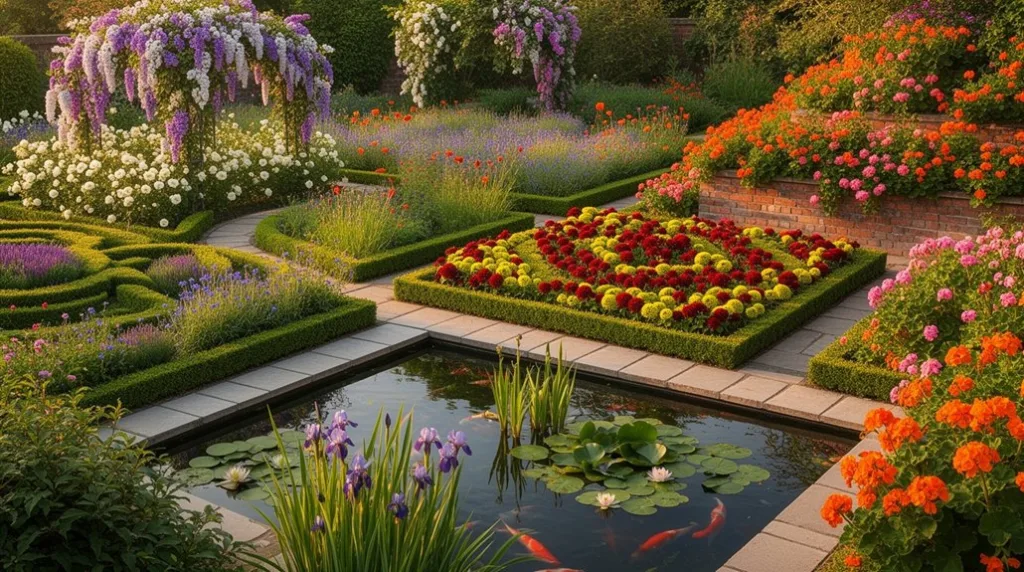
After shaping a shady‑tree bed, you can bring a crisp, formal look to a sunnier spot by planting a symmetrical boxwood topiary flower‑bed. Start by marking a rectangular outline with stakes, then space boxwood cuttings evenly along the perimeter. Trim each cutting into a tight sphere or cone, keeping the tops low enough to showcase the surrounding perennials. Choose low‑maintenance, sun‑loving blooms that contrast the deep green foliage.
- Lay a weed‑blocking fabric, then fill with a well‑draining mix.
- Plant boxwood cuttings 18‑24 in apart.
- Insert border roses or lavender between the topiaries.
- Mulch to retain moisture and suppress weeds.
Maintain shape with quarterly pruning, and enjoy a clean, structured garden focal point.
Build a Rustic Prairie‑Style Flower‑Bed With Native Grasses
Creating a rustic prairie‑style flower bed starts with choosing a sunny, well‑drained spot and selecting native grasses that thrive in your region.
Clear the area of weeds, loosen the soil, and amend with compost to improve texture.
Plant tall grasses like little bluestem or big bluestem in the back, medium‑height species such as switchgrass in the middle, and low‑growth varieties like prairie dropseed at the front.
Space each plant according to its mature spread to avoid crowding.
Mulch with coarse bark or straw to retain moisture and suppress weeds.
Water deeply after planting, then let rainfall maintain the bed; native grasses need minimal irrigation.
Trim back dead foliage in early spring to keep the design tidy and encourage fresh growth.
Create a Year‑Round Four‑Season Flower‑Bed With Continuous Interest
While the rustic prairie bed offers a striking summer display, you can extend visual interest year‑round by layering plants that bloom, foliage, or seed heads across all four seasons. Choose a mix that provides texture, color, and structure at each stage.
Start with early spring bulbs for a burst of color, add summer perennials for height, insert autumn foliage plants for rich tones, and finish with winter‑hardy evergreens and ornamental grasses for shape and seed heads.
- Early spring – tulips, crocus, and hellebores.
- Summer – coneflower, black-eyed Susan, and ornamental grasses.
- Autumn – asters, sedum, and Japanese maple.
- Winter – Hellebore, evergreen heuchera, and ornamental millet.
This layered plan keeps the bed lively and cohesive all year.
Conclusion
Pick the style that fits your space, plant with purpose, and keep maintenance simple. Mix textures, colors, and heights to create visual interest year‑round. Use native grasses for drought‑tolerant drama, dwarf boxwood for clean lines, and tiered containers for small‑area impact. Add soil amendments and proper edging to protect beds. With thoughtful design and low‑maintenance choices, your garden will stay stunning through every season.
The Only Tools You Need for a Thriving Garden 🌱
Whether you're a weekend gardener or growing daily — these hand-picked tools make every session faster, easier, and more satisfying.