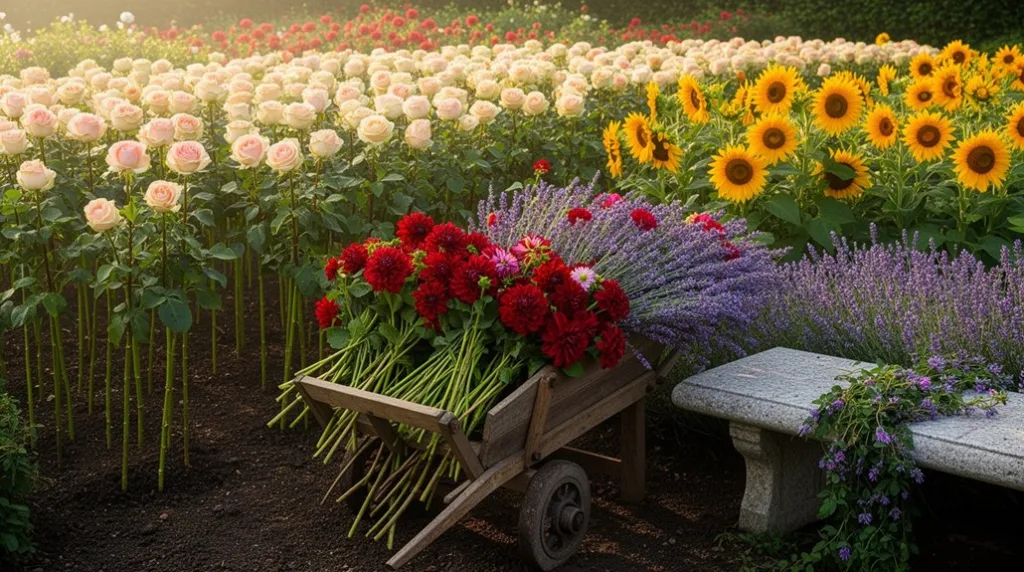
Imagine stepping outside to a garden you’ve designed for beauty and abundance. You’ll start by picking a sunny spot and building rich, healthy soil—the essential foundation. But the real secret lies in choosing the right plants and knowing when to cut them. This simple shift in gardening focus can transform your yard and your home with fresh bouquets from spring through fall.
Key Takeaways
- Choose a sunny, well-drained site with easy water access and wind protection.
- Prepare soil deeply with compost to ensure fertility and good drainage.
- Select a succession of bloom times from spring bulbs to hardy winter varieties.
- Harvest flowers in the morning with sharp pruners and immediately place in water.
- Arrange by first recutting stems underwater and removing foliage below the waterline.
Choose the Perfect Spot for Your Cut Flower Garden
Choosing the perfect spot for your cut flower garden sets the stage for all the beauty to come, and you’ll want to find a location with at least six hours of full sun each day. Sun fuels strong stems and vivid blooms.
Walk your yard at different times to map the sunlight; don’t rely on guesswork. You’ll also need shelter from strong winds that can snap precious stems, so note any natural windbreaks.
Easy access to a water source is non-negotiable. You’ll be hauling watering cans often.
Prioritize a spot you see daily from a window or path. This constant connection fuels your care and lets you spot the perfect moment to cut each bloom, filling your home with color.
Prepare Your Garden Soil for Healthy, Vibrant Flowers
With your garden’s location settled, your attention now turns to what lies beneath: the soil itself. Healthy, vibrant flowers start with rich, well-drained earth. First, remove any weeds and debris. Then, test your soil’s pH and nutrient levels; most flowers thrive in slightly acidic to neutral soil.
Amend it generously with several inches of aged compost or well-rotted manure. This boosts fertility and improves texture. For heavy clay, mix in coarse sand or gypsum to enhance drainage. For sandy soil, extra compost helps retain moisture and nutrients. Till or fork these amendments into the top 8-12 inches. This creates a loose, welcoming bed for strong roots. Remember, investing time here pays off in spectacular blooms.
Pick Your Blooms for Continuous Color and Variety
You can ensure a vibrant, ever-changing display by thoughtfully selecting a mix of flowers that bloom in succession across the seasons. Start with early spring stalwarts like tulips and daffodils.
Transition into summer’s glory with zinnias, cosmos, and sunflowers that thrive in heat. Incorporate mid-season favorites like lilies and dahlias for bold structure.
Don’t forget late-season performers; asters and chrysanthemums will carry your garden into autumn. Always include reliable “workhorses” like snapdragons and sweet peas which offer long blooming periods.
Seek variety in form—spiky delphiniums, rounded marigolds, airy gillyflowers—to create dynamic arrangements. Choose colors that complement each other, planting both cool and warm tones.
This strategic selection guarantees you’ll never face a vase without a fresh, beautiful bloom.
Design Your Garden for Easy Access and Harvest
Once you’ve selected your flowers, a thoughtfully laid-out garden makes cutting and caring for them a daily joy rather than a chore. Prioritize accessibility by creating clear, gentle paths wide enough for you and a basket. Arrange your beds so you can reach the center from either side, eliminating awkward stretching. Group flowers by their harvesting needs—place prolific cut-and-come-again varieties like zinnias together for efficient picking. This intentional design turns maintenance into a pleasant ritual.
| Design Principle | Practical Benefit |
|---|---|
| Wide, defined paths | Prevents soil compaction and eases movement |
| Reachable bed width | Allows you to harvest every stem without stepping in |
| Grouping by harvest type | Streamlines your cutting routine |
| Ample spacing between plants | Promotes air circulation and healthier blooms |
Start Flowers From Seed or Buy Starter Plants
After arranging a garden for easy cutting, deciding how to begin your plants is the next step.
Starting from seed is wonderfully economical and offers immense variety. You’ll sow seeds indoors under lights for a head start or directly outdoors after frost. It requires patience and attention to moisture and light.
Buying starter plants from a nursery gives you instant gratification and a quicker path to blooms, which is perfect for beginners or perennials. It’s more expensive but bypasses the fragile seedling stage.
I often do both: sow easy annuals like zinnias directly and invest in celosia or lisianthus plugs. Choose based on your budget, timeline, and how much nurturing you want to provide from the very beginning.
Plan Your Planting for Flowers All Season Long
Planning for continuous blooms transforms your cut flower garden into a dependable source of color and stems, ensuring you’re never without a fresh bouquet from spring to fall. You’ll achieve this by understanding plant life cycles.
Start with cool-season annuals like snapdragons and larkspur for spring. Then, layer in summer’s stars: heat-loving zinnias, cosmos, and sunflowers.
Incorporate perennials like echinacea and rudbeckia that return yearly with reliable mid-to-late season color. Crucially, practice succession planting.
Sow fast-growing seeds like calendula every few weeks for a non-stop harvest. Always read seed packets, noting “days to maturity” to stagger your plantings.
This intentional calendar is your blueprint for a vibrant, ever-productive cutting garden.
Essential Care for Your Cut Flower Garden
You must consistently provide your garden with attentive, routine care to transform its blooming potential into an abundant harvest of flawless stems.
Water deeply at the roots in the morning, avoiding the foliage to prevent disease. Apply a balanced, water-soluble fertilizer every two weeks to fuel vigorous growth and prolific blooms.
You’ll need to stake tall or top-heavy varieties like dahlias and delphiniums early, using bamboo stakes and soft ties.
Practice “deadheading” religiously; snipping off spent flowers just above a leaf node encourages the plant to produce more blooms instead of setting seed.
Harvest stems in the cool morning or evening, using sharp, clean shears and immediately placing them in a bucket of tepid water.
Troubleshoot Common Cut Flower Garden Problems
Even when you’re dedicated to consistent care, your cut flower garden can sometimes face setbacks, but you can tackle most common issues with a few simple, proactive steps. Your first line of defense is vigilant observation. Catch problems early by inspecting stems and leaves regularly for discoloration, spots, or unwanted visitors.
- For pests like aphids: Blast them off with a strong spray of water or apply insecticidal soap, ensuring you coat the undersides of leaves.
- For fungal diseases like powdery mildew: Improve air circulation by thinning plants and water at the soil level, not the foliage.
- For weak stems or poor blooms: Ensure they’re getting full sun (at least 6 hours) and amend the soil with compost for better nutrition. A little attention goes a long way in keeping your blooms vibrant.
The Best Time and Method to Cut Your Flowers
While early mornings are often ideal, the perfect moment to cut your flowers hinges more on their hydration than the clock.
Cut when they’re plump with water, typically after the dew dries but before the midday sun wilts them.
Always use sharp, clean bypass pruners or floral snips.
Make your cut at a sharp angle, about an inch above a leaf node or bud on the main stem; this prevents waterlogging and encourages new growth.
Immediately plunge each stem into a bucket of lukewarm water you’ve brought to the garden.
Never let your freshly cut stems see the air; they start sealing the moment they’re severed.
This simple, vital step captures their peak vitality for your vase.
Condition Your Flowers for Maximum Vase Life
Getting those stems into water was just the first step; now it’s time to prepare them for their indoor debut. Conditioning is your secret weapon for longevity. Immediately strip all leaves that’ll sit below the waterline to prevent bacterial rot. Then, give each stem a fresh, sharp, angled cut—about an inch up—while it’s submerged in a bucket of warm water. This prevents air bubbles from blocking their water uptake.
Let your bouquet drink deeply in a cool, dark spot for several hours, or ideally overnight. This crucial hydration period, called hardening off, allows the flowers to fully hydrate and recover from the stress of being cut before they face the warm, dry air of your home.
- Strip submerged foliage to keep vase water clean and clear.
- Recut stems underwater with a sharp blade for an open vascular system.
- Harden off overnight in a cool, dark place for ultimate hydration.
Which Tools Make Cut Flower Gardening Easier?
Arm yourself with a few essential tools, and you’ll transform the work of your cut flower garden from a chore into a pure joy.
Invest in a sharp, dedicated pair of bypass pruners; they make clean, angled cuts that help stems drink better.
You’ll also need a sturdy trowel for planting, a hori-hori knife for dividing perennials, and durable garden gloves to protect your hands.
Don’t forget a large, lightweight bucket filled with lukewarm water. Carry it right into the garden with you! Immediately plunging your fresh-cut stems into water prevents airlocks and keeps them hydrated.
A kneeler pad saves your knees during long sessions of weeding and harvesting, making the entire process more comfortable and sustainable.
Arrange Your Harvest Into Beautiful Bouquets
Now you have a bucket of freshly harvested stems; the real magic happens as you arrange them. Begin by re-cutting each stem underwater and stripping any foliage that’ll sit below the vase’s waterline.
Choose a clean vessel and create a structural base with your tallest, straightest stems as anchors. Work in a spiral, adding stems at an angle to build a self-supporting dome. Don’t just think about color—play with texture, shape, and scale for captivating depth.
- Build Structure First: Anchor your bouquet with sturdy greens or branching flowers to create a supporting framework.
- Employ the Spiral Technique: Add each new stem at a 45-degree angle, turning the bouquet as you go for even distribution and stability.
- Embrace Imperfection: Include buds, seed pods, or curling vines for dynamic movement and a natural, garden-gathered feel.
Extend Your Season With Fall and Winter Flowers
Extending your floral display beyond summer’s peak is rewarding; you can capture autumn’s rich hues and winter’s delicate textures by planting hardy, season-specific blooms. Focus on varieties that thrive in cool weather and even withstand light frosts. You’ll enjoy prolonged color and unique forms long after other gardens have faded.
| Flower | Season | Key Characteristic |
|---|---|---|
| Ornamental Kale | Fall/Winter | Vibrant, frilly foliage |
| Pansies | Fall/Spring | Cheerful, cold-tolerant faces |
| Snapdragons | Fall | Tall spikes, cool-weather vigor |
| Hellebores | Winter | Nodding blooms, evergreen foliage |
| Witch Hazel | Late Winter | Fragrant, spidery blossoms |
Sow seeds in late summer for fall blooms, and plant perennials in early autumn. These resilient choices ensure your vases stay filled with beauty through the colder months.
Save Seeds From This Year’s Cut Flower Garden
Harvesting seeds from your flourishing cut flowers lets you preserve your favorite varieties and ensures a bounty of blooms for next season. It’s a deeply rewarding cycle, saving you money and connecting you intimately to your garden’s life.
You must let a few spent blooms remain on the plant, maturing fully until the seed pods or heads dry and change color. Carefully collect them on a dry day, then process them by removing any chaff.
Store your clean, dry seeds in labeled envelopes in a cool, dark place. This simple practice captures the essence of your garden’s beauty for future seasons.
- Let Flowers Fully Senesce: Never harvest seeds from immature blooms; you need those dry, brown pods or heads.
- Process Thoroughly: Clean seeds by separating them from dried petals and debris to prevent mold during storage.
- Store Correctly: Use airtight containers in a cool, dark spot; proper storage is critical for viability.
Frequently Asked Questions
Can I Sell My Cut Flowers From My Garden?
Yes, you can sell your cut flowers! You’ll need to check your local regulations and maybe get a permit. Then, focus on growing unique, high-demand varieties. Sell them at farmers markets, roadside stands, or through a CSA.
How Do I Keep My Cat From Digging in the Flower Beds?
Place citrus peels or pinecones in your beds; cats dislike those textures. You can also lay chicken wire flat beneath the mulch, which stops digging but lets plants grow through it unimpeded.
Are There Any Flowers That Repel Pests or Mosquitoes?
Yes, you can plant pest-repelling flowers. Marigolds repel beetles, and lavender discourages mosquitoes. However, don’t rely solely on them; you’ll need integrated pest management for effective, beautiful blooms in your garden.
What Should I Do With the Stems and Trimmings?
You can compost healthy stems and trimmings, enriching your soil. Consider making leaf mold from soft foliage, or dry woody stems for kindling. Always discard diseased material to protect your garden.
Are Cut Flowers From My Garden Safe for Pets?
Not all are safe. You’ll need to check each species since lilies, tulips, and daffodils are toxic. Always verify a plant’s safety with the ASPCA list before bringing cuttings indoors with your pets.
Conclusion
Now you’ve got all the basics down! Remember, your garden thrives with deep, infrequent watering, sharp tools for clean cuts, and always harvesting in the cool morning. Keep saving seeds and practicing succession planting for nonstop blooms. Most importantly, cut often and enjoy those bouquets. You’re not just growing flowers—you’re cultivating joy, one stunning stem at a time.
The Only Tools You Need for a Thriving Garden 🌱
Whether you're a weekend gardener or growing daily — these hand-picked tools make every session faster, easier, and more satisfying.