
Crafting a stunning flower garden starts with understanding your site’s sun exposure. You’ll group plants with similar water and soil needs first. Then, consider your design’s structure by planting in strategic layers for depth. A cohesive color palette creates harmony, while planned bloom sequences ensure interest. Your choices in pathways, focal points, and even container selections will ultimately shape the space.
Key Takeaways
- Start with a layered structure using tall plants in back and groundcovers in front for depth.
- Choose a cohesive, limited color palette with plants that bloom in different seasons.
- Define your garden style, like a loose cottage garden or a geometric modern layout.
- Use pathways and edging materials to create clean shapes and guide movement.
- Maximize impact in small spaces with container groupings and vertical planters.
What Makes a Great Flower Garden Layout?
While you can plant flowers anywhere, a truly great layout starts by understanding your plants’ needs and your garden’s unique conditions.
First, observe your space. You’ll need to know how much sun each area gets—full sun, partial shade, or full shade—and match your plants accordingly. You also must consider their mature height and spread. You shouldn’t place a tall sunflower where it’ll shade out low-growing petunias. Group plants with similar water and soil requirements together; this creates healthier plant communities and makes your watering more efficient.
Think about the bloom times, too. You can aim for a succession of flowers so something’s always in color from spring to fall. It’s about designing for the plants’ success.
The Golden Rules of Color in Your Garden Design
Understanding your plants’ needs for sun and water sets the stage for considering another powerful design tool: color.
Use a limited palette for cohesion, like pairing purple salvia with white phlox and silver artemisia.
Remember color temperature; cool blues and purples from catmint recede, creating depth, while warm reds and oranges from daylilies advance, drawing attention.
Contrast is key for impact. A yellow coreopsis dramatically pops against dark green foliage.
Consider bloom times so your color scheme evolves, not vanishes.
Always view colors in your garden’s light—a red rose looks different in morning sun versus afternoon shade.
Finally, don’t forget foliage; a burgundy heuchera provides lasting color long after flowers fade.
Plant in Layers for Year-Round Visual Interest

Building up from the ground, start by placing trees and shrubs as your garden’s backbone, then fill in with perennials, and finally weave in annuals and bulbs for seasonal highlights.
Your tall canopy trees like maples form the top layer. Underplant them with mid-sized flowering shrubs such as hydrangeas or viburnums.
Next, add structural perennials like ornamental grasses and Russian sage. The lowest tier hosts groundcovers like creeping thyme.
For continuous color, interplant spring-flowering bulbs such as tulips between your perennials. In summer, tuck in annuals like zinnias or petunias where gaps appear.
This layered approach ensures your garden has texture and form even in winter, with the enduring silhouettes of your trees and shrubs.
Create a Cozy Cottage Garden Layout

For a charmingly abundant feel, you’ll want to design your cottage garden with an informal mix of billowing perennials, fragrant herbs, and climbing roses.
Start by planting tall foxgloves and delphiniums toward the back. Layer mid-height plants like phlox and lavender in front, then let low-growing thyme and nepeta spill over path edges. Let your roses scramble up arbors or fences.
You’ll encourage self-seeding annuals like cosmos and nigella to fill gaps naturally. Avoid rigid lines; instead, allow clumps of plants to intermingle.
Focus on texture and scent by combining feathery astilbe with robust sage. Your goal is a relaxed, overflowing look where blooms appear to have settled by happy accident.
Design a Modern and Minimalist Flower Bed

While the cottage garden embraces abundance, a modern minimalist flower bed focuses on curated restraint through a limited plant palette and intentional spacing. You’ll select just two or three key plant varieties, repeating them in bold groupings for visual impact.
Choose plants with strong architectural forms, like ornamental grasses like panicum or stipa, paired with structurally bold perennials like agapanthus or echinacea. You’ll arrange these in geometric blocks rather than scattered placements, allowing each group’s texture and color to stand alone.
Maintain ample open space between plant masses, using gravel, mulch, or simply bare, tidy soil as a quiet backdrop. This approach highlights the inherent beauty of each plant through simplicity and clean, deliberate design.
Use Pathways and Shapes to Define Your Garden
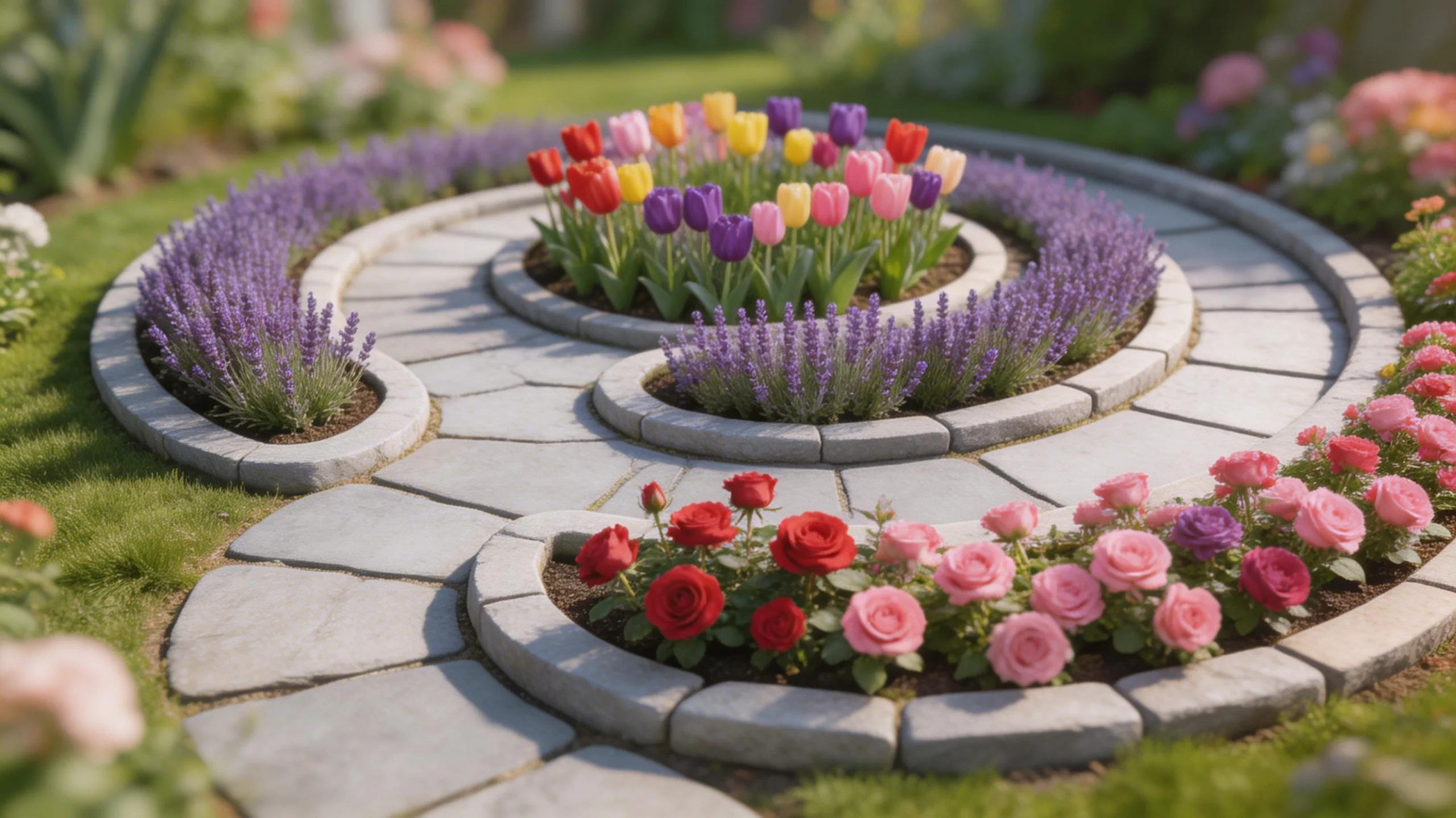
Once you’ve established your plant groupings, shaping the space around them with pathways and defined beds can make your garden feel more intentional and navigable. Install simple gravel or mulch paths between your beds.
Use geometric shapes like rectangles for formal areas with structured plants like boxwood hedges and uniform tulip drifts. For a cottage feel, design gently curving beds to soften lines and guide visitors past billowing phlox and lavender.
Edge your beds with bricks or low-growing herbs like thyme to maintain clean lines. This structure highlights your plant choices, ensuring clumps of coneflowers or daylilies are displayed as deliberate compositions rather than accidental clusters, making maintenance easier by providing clear access.
Plan for Continuous Blooms All Season Long
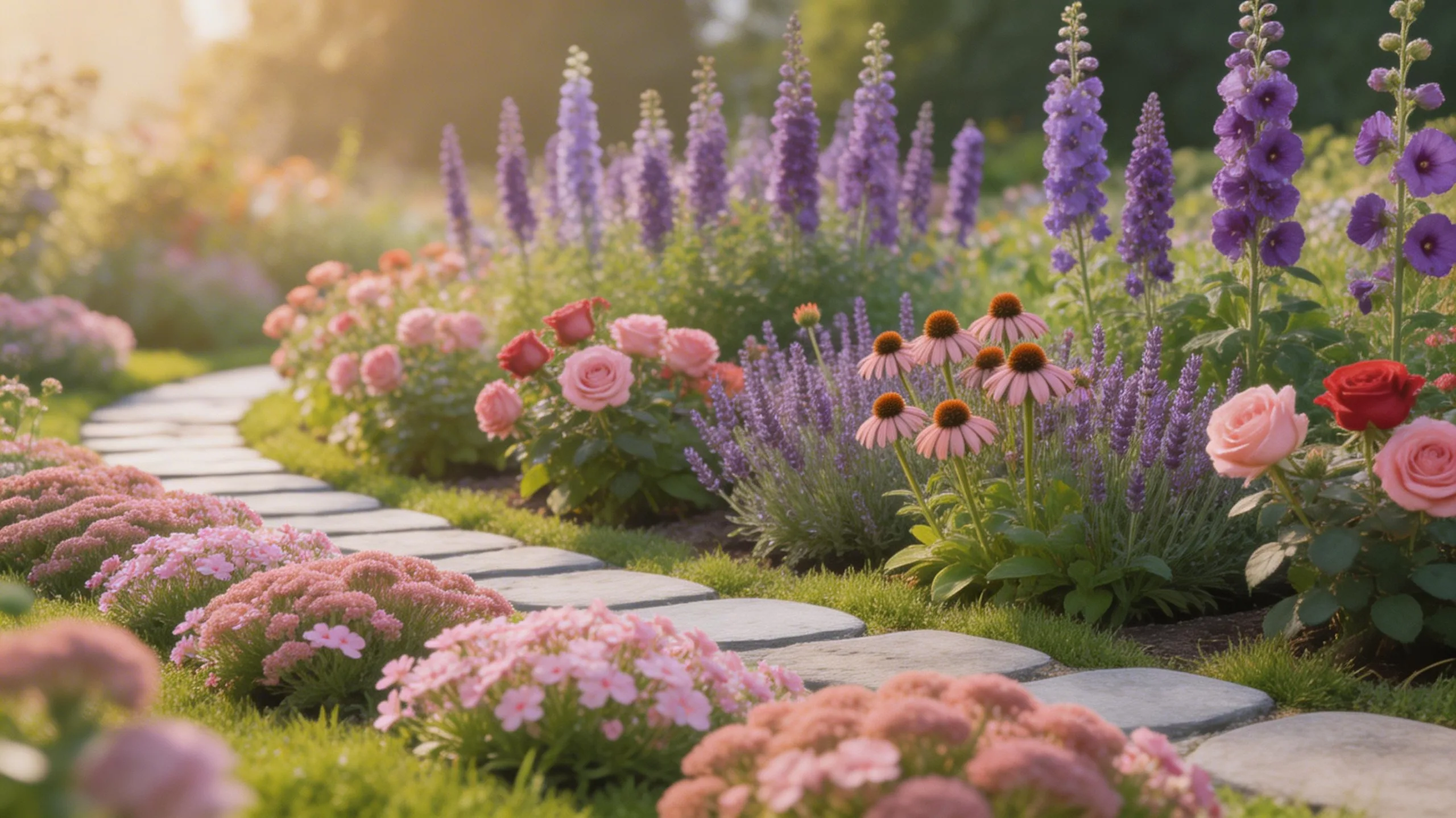
To enjoy a garden that offers new color and interest from spring to fall, you’ll need to plan your plant selections for sequential flowering. Start by researching each plant’s bloom period.
Interplant early-season bulbs like tulips with mid-season perennials like peonies. As those fade, your late-summer stars like phlox and dahlias will take center stage.
Incorporate long-blooming annuals like marigolds or zinnias to fill gaps. You’ll also want repeat-blooming shrubs, such as certain hydrangeas or roses, for reliable structure.
Keep a simple calendar noting each plant’s flowering window to ensure you’ve covered every month. This foresight prevents bare patches and creates a dynamic display where something is always coming into bloom.
Select the Right Plants for Sun and Shade

Consider your garden’s light patterns before you choose a single plant. You must map the sun. Observe which areas receive full sun (six-plus hours), partial sun (three to six), or full shade (less than three). This dictates everything.
For bright, sunny spots, plant sun-worshippers like coneflowers, salvia, and coreopsis. They’ll thrive and bloom profusely.
In partly shaded areas, select flexible performers such as astilbe, bleeding heart, or hardy geraniums. These handle dappled light beautifully.
For deep shade, rely on foliage champions like hostas, ferns, and hellebores, which provide texture and color without direct sun. Group plants with similar light needs together. Always check plant tags for the specific “light requirements” to ensure you’re matching the plant to your garden’s conditions perfectly.
Incorporate Structure With Shrubs and Edging
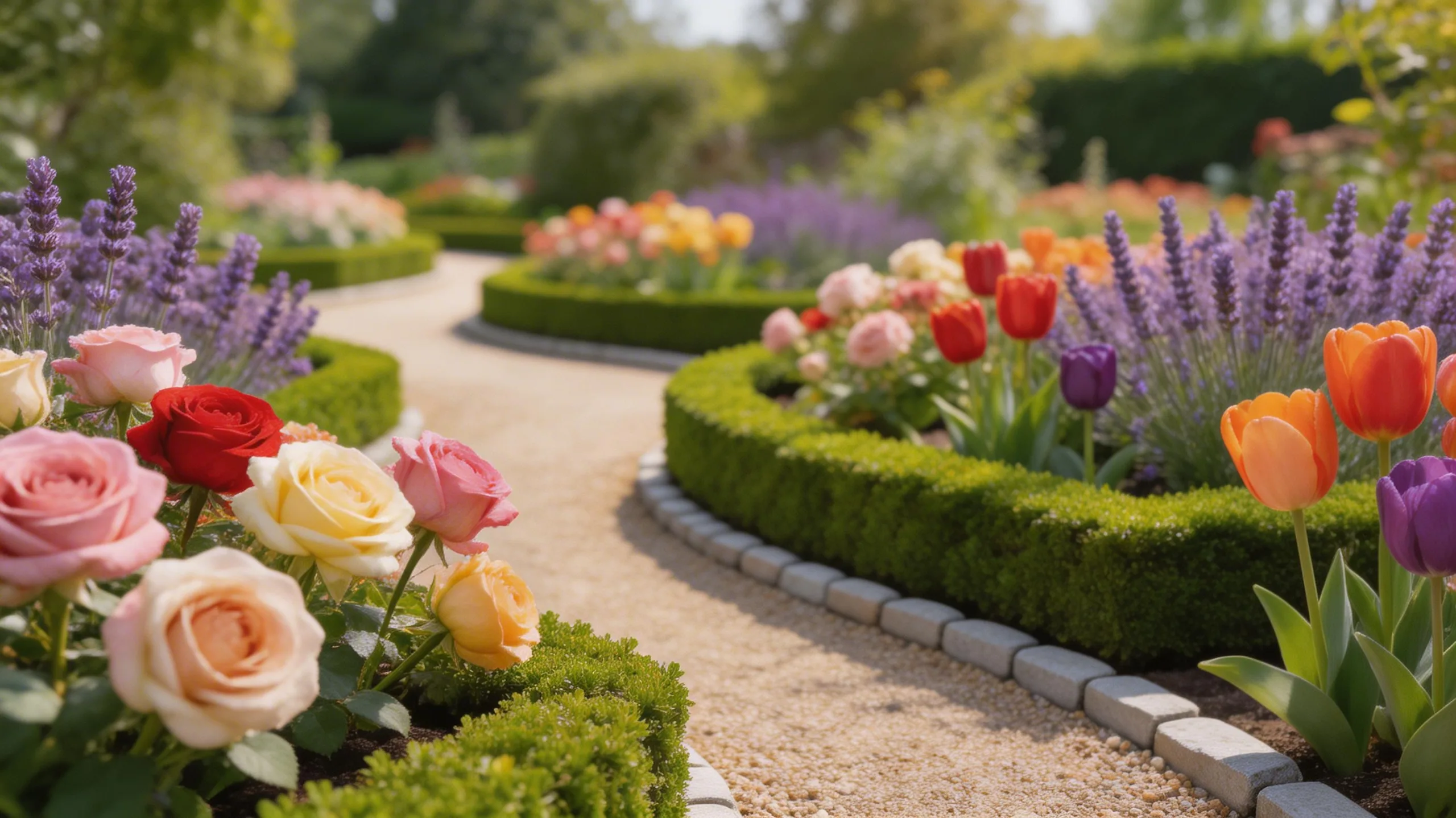
Layering shrubs and defining edges transforms your garden from a collection of plants into a cohesive, designed space.
Start by placing taller, evergreen shrubs like boxwood or holly at the back of beds or as corner anchors. These provide a permanent, year-round framework.
In front, use mid-sized flowering shrubs, such as hydrangeas or spirea, for seasonal color and fullness.
Finally, position your perennial and annual flowers in front of these layers. For crisp definition, install a physical edge using bricks, metal, or stone.
You can also create a living edge by planting a low, dense groundcover like dwarf mondo grass or ajuga along a cut border. This combination of vertical layering and clear boundaries organizes the entire display.
Adapt Your Layout for Small Spaces and Containers

You can maximize limited square footage by scaling down the layering principle to focus on plant size, form, and container choice. Select one tall focal plant like a compact Coleus or a slender Verbena bonariensis.
Surround it with medium-fillers such as calibrachoa or geraniums. Finish with low, trailing plants like creeping Jenny or ivy for the container’s edge.
Choose pots with significant depth and width to support root growth. Utilize vertical space with wall-mounted planters for climbing nasturtiums or hanging baskets for fuschia.
Group several containers together to create a lush vignette, ensuring each pot has a complementary color palette. This layered approach in confined areas delivers visual impact without overcrowding.
Frequently Asked Questions
How Do I Protect My Flowers From Pests?
You can use strong blasts of water or insecticidal soaps first. Check plants regularly for early signs, and consider planting pest-repelling companion flowers like marigolds near your more vulnerable blooms to deter invaders.
What Is the Best Watering Schedule?
Water deeply once or twice weekly; soak the root zone early in the morning. Adjust for rain, heat, and your soil type—sandy soil needs water more often than clay.
How Much Should I Budget for Plants?
Start with $10-$20 per plant. Prioritize perennials over annuals to save long-term. Invest in high-quality soil amendments first; they’re more crucial for your plants’ success than any individual flower’s initial cost.
Can I Use Mulch to Prevent Weeds?
Yes, you can use mulch to prevent weeds. Apply a two- to three-inch layer around plants. It’ll block sunlight, suppress weeds, and help retain soil moisture, which benefits your plants’ roots.
When Should I Fertilize My Flowers?
Begin fertilizing in early spring when you see new growth. Apply a balanced, slow-release feed and repeat monthly for annuals. Fertilize perennials after their first bloom cycle; always water thoroughly to avoid root burn.
Conclusion
Now you’ve designed a stunning garden. By focusing on layering and grouping plants by their specific needs, you’ve built a resilient, low-maintenance foundation. You’ll see a parade of color from spring’s first bulbs to autumn’s towering rudbeckia. Remember, a great garden evolves; don’t hesitate to edit plants that aren’t thriving and make space for new favorites you discover along the way.
The Only Tools You Need for a Thriving Garden 🌱
Whether you're a weekend gardener or growing daily — these hand-picked tools make every session faster, easier, and more satisfying.