
You’re looking to turn a plain yard into a year‑round showcase without spending endless hours on upkeep. Imagine mixing drought‑tolerant perennials that layer in height, pairing bold color‑blocking combos with fragrant pathway plantings, and slipping in a rain‑garden for those soggy spots. With smart spacing, mulch, and drip irrigation, you’ll get a low‑maintenance landscape that still dazzles pollinators and neighbors alike. The next step shows how each of the 18 ideas fits together for a cohesive, vibrant garden.
Key Takeaways
- Combine drought‑tolerant perennials (lavender, Russian sage, yarrow) with a drip‑irrigation system for low‑maintenance, water‑wise beds.
- Use color‑blocking with tall, vibrant focal plants (Echinacea, Salvia) and contrasting cool fillers (lavender, Nepeta) for striking visual impact.
- Integrate evergreen shrubs and seasonal bulbs to create year‑round structure and continuous bloom cycles.
- Design rain‑garden zones in low‑lying spots, planting moisture‑loving species (cardinal flower, swamp milkweed) to manage runoff and add texture.
- Install vertical modular panels with edible‑ornamental herbs (basil, thyme, rosemary) for space‑saving, fragrant, and pollinator‑friendly displays.
Low‑Maintenance Drought‑Tolerant Flower‑Bed Ideas

Often you’ll find that a low‑maintenance, drought‑tolerant flower bed not only saves water but also reduces the time you spend we. Start by grouping plants with similar moisture needs; this lets you water once a week at most. Choose varieties like lavender, Russian sage, and yarrow, which thrive on minimal irrigation.
Arrange taller stems at the back for visual depth, and place compact, spreading species forward to fill gaps naturally. Mulch with coarse bark or gravel to suppress weeds and retain soil moisture.
Install a drip‑irrigation line with a timer, set to early morning, to deliver precise amounts without runoff. By combining smart plant selection, strategic layout, and efficient watering, you’ll enjoy a vibrant, low‑effort garden year‑round.
Prepare Soil and Choose Drought‑Tolerant Plants

Preparing the soil and selecting drought‑tolerant plants are the foundation of a resilient flower bed.
First, test the pH and texture; aim for a slightly acidic to neutral range (6.0–7.0) and a loamy structure that drains well. Amend heavy clay with coarse sand and organic compost to improve aeration and water retention. Till the top 8‑10 inches, then level the surface with a rake.
Next, choose plants that thrive on minimal irrigation—lavender, sage, yarrow, and penstemon are excellent options. Group species with similar water needs together, and space them according to mature size to reduce competition. Mulch with a 2‑3‑inch layer of shredded bark or gravel to suppress weeds, conserve moisture, and keep soil temperature stable.
Color‑Blocking Flower‑Bed Ideas With Contrasting Perennials

| Block | Primary Perennial | Height |
|---|---|---|
| Red | Echinacea purpurea | 30‑36″ |
| Blue | Salvia nemorosa | 24‑30″ |
| Yellow | Coreopsis verticillata | 12‑18″ |
| Neutral | Nepeta faassenii | 10‑12″ |
Layer Heights With Tall Grasses and Short Groundcovers
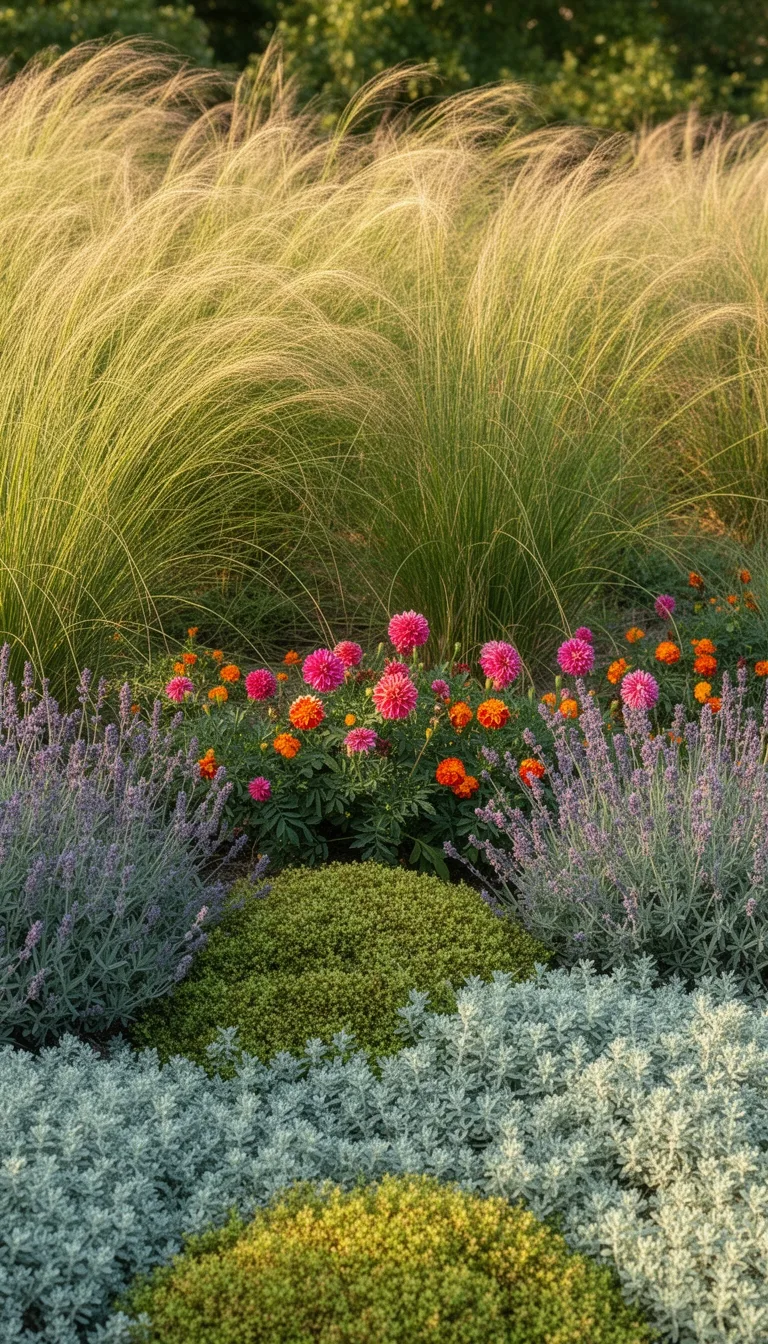
Elevate your garden’s visual rhythm by pairing towering grasses—like Miscanthus or Pampas—at 4‑6 feet with low‑lying groundcovers such as creeping thyme or dwarf mondo grass that stay under 12 inches. This contrast creates depth and guides the eye across the bed.
Choose grasses with airy plumes for movement, and groundcovers that spread densely to mute weeds. Keep the transition smooth; avoid gaps that break the flow.
- Plant grasses in the back, spacing 3‑4 feet apart for mature spread.
- Edge with groundcovers, staggering rows to fill voids.
- Mulch lightly to retain moisture without smothering the low plants.
Scented Pathway Flower‑Bed Ideas for Pollinators

After pairing tall grasses with low groundcovers, turn your attention to fragrance‑rich plantings that guide pollinators along a scented corridor.
Choose a mix of early‑season bloomers like lavender (Lavandula angustifolia) and sweet alyssum (Lobularia maritima) to attract bees and butterflies from March onward.
Plant mid‑season scents such as honeysuckle (Lonicera periclymenum) and bee balm (Monarda didyma) to sustain activity through July.
Finish with late‑season aromatics like scented geraniums (Pelargonium spp.) and night‑blooming jasmine (Jasminum officinale) for dusk pollinators.
Space plants 12–18 inches apart, stagger heights 2–3 ft, and mulch with fine bark to retain moisture.
Install low, permeable stepping stones to keep foot traffic off roots while preserving the fragrant pathway.
Seasonal “Pop‑of‑Color” Annual‑Bed Ideas
Creating a vivid, season‑long color display starts with planning a succession of blooming annuals that fill gaps as each wave fades. You’ll want to map out bloom times, match soil preferences, and stagger plantings so the bed never looks dull.
Pick hardy varieties that thrive in your climate, and group them by height for visual flow. Here’s a quick roadmap:
- Early‑spring burst – Plant pansies, sweet peas, and snapdragons. They pop up in cool weather, delivering purples and pinks while the soil warms.
- Mid‑summer heat – Swap in marigolds, petunias, and zinnias. Their bright oranges and reds tolerate heat and attract butterflies.
- Fall fade‑out – Finish with cosmos, ornamental kale, and calendula. Their buttery yellows and deep burgundies linger as days shorten, keeping the garden lively through the season.
Evergreen Shrub Flower‑Bed Ideas for Year‑Round Structure
When you blend evergreen shrubs with seasonal perennials, you give your flower bed a solid backbone that stays vibrant all year while the surrounding plants change color.
Choose low‑maintenance evergreens like dwarf boxwood, Japanese holly, or dwarf spruce for a tidy, year‑round silhouette. Plant them in groups of three, spacing them 2‑3 feet apart to create a dense hedge that frames the bed.
Pair each shrub with spring‑blooming tulips, summer asters, and autumn mums to add texture and color without obscuring the structural form.
Use a mulch layer of shredded bark to retain moisture and suppress weeds.
Trim shrubs lightly after frost to maintain shape, and fertilize in early spring for healthy foliage.
This combination delivers continuous visual interest and a sturdy framework for any garden design.
Rain‑Garden Flower‑Bed Ideas for Wet Spots
If you have a low‑lying area that stays soggy after rain, turn it into a rain‑garden by selecting moisture‑loving plants and shaping a shallow basin that directs runoff.
First, assess the slope and soil texture; a gentle 2–5% grade helps water flow into the basin while preventing pooling.
Next, choose a mix of perennials, grasses, and shrubs that tolerate wet roots, such as cardinal flower, swamp milkweed, and fountain grass.
Finally, arrange plants in height zones—low groundcovers at the bottom, medium‑height herbs in the middle, and taller ornamental grasses at the rim—to create visual interest and efficient water absorption.
- Cardinal flower (Lobelia cardinalis) – bright red spikes, thrives in standing water.
- Swamp milkweed (Asclepias incarnata) – attracts pollinators, tolerates saturated soil.
- Fountain grass (Pennisetum alopecuroides) – airy plumes, excellent drainage aid.
Maintain a Rain‑Garden: Mulching & Water Management
Even after your rain‑garden is established, regular upkeep is essential to keep water moving efficiently and plants thriving. First, check the mulch depth each spring; aim for 2–3 inches of shredded hardwood or bark. If it’s compacted, rake it loose and add fresh material to maintain porosity.
Next, inspect the basin’s low‑point after a storm. If water pools longer than 24 hours, re‑grade the soil or add a shallow trench to guide excess toward the outlet. Clean debris from the overflow pipe quarterly to prevent blockages.
Monitor soil moisture with a probe; soggy spots indicate drainage issues, while dry patches suggest insufficient water retention. Adjust irrigation by adding a drip line or rain barrel as needed, ensuring consistent hydration without overwatering.
Companion Plants That Repel Pests in Flower Beds
Mixing pest‑repelling companions into your flower bed not only boosts biodiversity but also cuts down on chemical sprays.
You can choose plants that emit scents or oils that confuse insects, and you’ll see healthier blooms with fewer interventions.
Pairing these allies strategically creates a natural barrier, reduces pest pressure, and supports pollinators.
- Marigold – releases thiophenes that deter nematodes and aphids; plant them around the perimeter for a protective ring.
- Basil – emits aromatic oils that repel flies and mosquitoes; interplant with tomatoes or roses for added defense.
- Lavender – scents deter moths and beetles; its low, spreading habit fills gaps and attracts beneficial bees.
Vertical Living‑Wall Flower‑Bed Ideas for Small Spaces
After harnessing pest‑repelling companions, you can maximize limited floor space by turning walls into thriving flower beds. Choose a modular panel system with built‑in irrigation; it lets you swap out containers without tearing the wall.
Mount lightweight, waterproof fabric pockets on a sturdy frame, then fill each pocket with a mix of trailing and upright varieties—like petunias, dwarf lavender, and ornamental peppers—to create depth. Install a drip line at the top, using a timer to deliver steady moisture and reduce runoff.
Anchor the structure to studs or brick with stainless‑steel brackets, ensuring it can bear the weight of soil and plants. Keep the soil light, using peat‑lite or coconut coir, and fertilize monthly with a balanced liquid feed.
Trim regularly to prevent overcrowding and maintain airflow. This vertical garden adds color, scent, and fresh produce without sacrificing precious garden square footage.
Butterfly‑Attracting Flower‑Bed Ideas With Native Wildflowers
A handful of native wildflowers can turn any modest flower bed into a butterfly magnet, boosting pollinator health while requiring minimal upkeep. Choose species that bloom at different times to keep butterflies fed all season. Plant in groups of three to five for visual impact and easier maintenance. Use well‑drained soil, mulch for moisture retention, and water early to reduce fungal risk.
- Echinacea purpurea – tall, pink cones attract large butterflies; sow in early spring for midsummer bloom.
- Asclepias tuberosa – bright orange milkweed thrives in full sun; supports monarch caterpillars and adult butterflies.
- Liatris spicata – slender purple spikes draw long‑tongued species; tolerates drought once established.
Space plants 12‑18 inches apart, fertilize lightly once, and deadhead spent flowers to prolong display. This low‑maintenance palette ensures a thriving, colorful habitat.
Edible‑Ornamental Flower‑Bed Ideas for Kitchen Gardens
If you want a garden that feeds both your palate and your eyes, blend edible herbs and ornamental blossoms in a single, well‑planned flower bed.
Choose a compact layout: place low‑growing basil and thyme along the front edge, interspersed with bright nasturtium for a peppery snack and vivid color.
In the middle tier, plant bushy rosemary and ornamental lavender, which add fragrant foliage and attract pollinators.
Finish with taller stems of chives and ornamental cosmos, providing vertical interest and a mild onion flavor.
Space each plant 12‑18 inches apart, use a loamy, well‑draining soil mix, and mulch lightly to retain moisture.
Water consistently, prune regularly to prevent legginess, and harvest leaves or flowers as they mature for fresh kitchen use.
Install a Raised Mulched Bed for Easy Care
Start by building a raised bed about 12‑18 inches high and line it with a breathable landscape fabric before filling it with a mix of compost, coarse sand, and peat‑free organic matter.
This structure improves drainage, reduces soil compaction, and lets you tend plants without bending.
Add a thick layer of mulch to lock in moisture, suppress weeds, and keep soil temperature stable.
- Choose a mulch that’s organic and crumbly, like shredded bark or leaf mold, for slow nutrient release.
- Apply 2‑3 inches, then water thoroughly to settle the material.
- Refresh the mulch annually, topping up where it thins.
Moon‑Garden Flower‑Bed Ideas With Night‑Bloomers
Creating a moon‑garden starts with selecting night‑blooming plants that thrive in low‑light conditions and choosing reflective, moon‑friendly elements that enhance their glow.
Pick moonflower, evening primrose, and night phlox for fragrant, glowing blooms; intersperse silver‑leaf hostas and lavender for foliage contrast.
Arrange plants in a gentle, sweeping curve to guide the eye toward a central water feature, then line the perimeter with low‑height, matte‑black edging to absorb stray light.
Install shallow, white gravel or river stones to bounce moonlight onto blossoms, and add a few polished copper or glass accents for sparkle.
Water early evening, allowing soil to settle before nightfall, and prune after each bloom cycle to maintain vigor and prevent overcrowding.
This layout maximizes nocturnal visual impact while staying low‑maintenance.
Formal Symmetrical Flower‑Bed Ideas Using Boxwood Hedges
Tracing clean, symmetrical lines with boxwood hedges instantly lends a garden a formal elegance that’s both timeless and easy to maintain.
You’ll start by mapping a central axis, then plant hedges in parallel rows that frame each flower bed. Keep the hedges trimmed to a uniform height—about 12‑18 in—to preserve crisp geometry. Choose low‑maintenance perennials that bloom in coordinated color blocks, allowing the boxwood to dominate the visual structure.
- Boxwood border – Plant a 3‑ft wide hedge on each side, spacing plants 18‑in apart for dense foliage.
- Central pathway – Lay a gravel or stone strip 2‑ft wide along the axis, guiding eyes toward focal points.
- Color‑block beds – Fill each compartment with matching groups of roses, lavender, or hydrangeas for striking contrast.
Maintain sharp edges with quarterly pruning, and you’ll achieve a garden that feels both orderly and inviting.
Textured Foliage‑Heavy Flower‑Bed Ideas for Visual Depth
When you layer foliage‑rich perennials with varying leaf textures, you instantly add visual depth to a flower bed.
Choose plants with contrasting surfaces—soft, feathery foliage like *Hosta*’s, paired with the glossy, lance‑shaped leaves of *Heuchera*.
Add structural interest with *Ferns* that cascade, and *Salvia*’s velvety leaves that catch light.
Plant taller, upright species such as *Echinacea* behind lower, spreading groundcovers like *Ajuga* to create a tiered effect.
Use evergreen grasses, for example *Pennisetum* ‘Hameln’, to maintain texture year‑round.
Space plants loosely enough for each texture to breathe, yet dense enough to form a seamless backdrop.
Trim sparingly, preserving natural leaf edges to enhance the layered, three‑dimensional look.
Warm‑and‑Cool Color‑Theory Pairings for Flower Beds
If you balance warm reds, oranges, and yellows with cool blues, purples, and greens, you’ll instantly give a flower bed depth and visual interest. Use color theory to create zones that feel both vibrant and calm.
Choose a dominant hue, then add complementary shades for contrast without chaos. Keep the palette limited to three groups so the eye moves smoothly across the bed.
- Warm focal point – Plant marigolds, zinnias, and orange coneflowers in a cluster to draw attention.
- Cool filler – Sprinkle lavender, blue salvia, and green foliage around the focal point for balance.
- Transition trim – Add soft yellow asters or pink dianthus at the edges to bridge warm and cool zones.
These steps ensure a cohesive, eye‑catching design that stays organized and easy to maintain.
Conclusion
By mixing drought‑tolerant perennials, layered heights, and seasonal color blocks, you’ll get a garden that’s beautiful, low‑maintenance, and wildlife‑friendly. Use evergreen hedges for structure, fragrant plants along paths for pollinators, and night‑bloomers for moonlit interest. Incorporate vertical panels or raised beds to squeeze in edibles, and protect everything with mulch and drip irrigation. Thoughtful spacing, texture contrasts, and color theory will keep your garden vibrant year‑round with minimal effort.
The Only Tools You Need for a Thriving Garden 🌱
Whether you're a weekend gardener or growing daily — these hand-picked tools make every session faster, easier, and more satisfying.