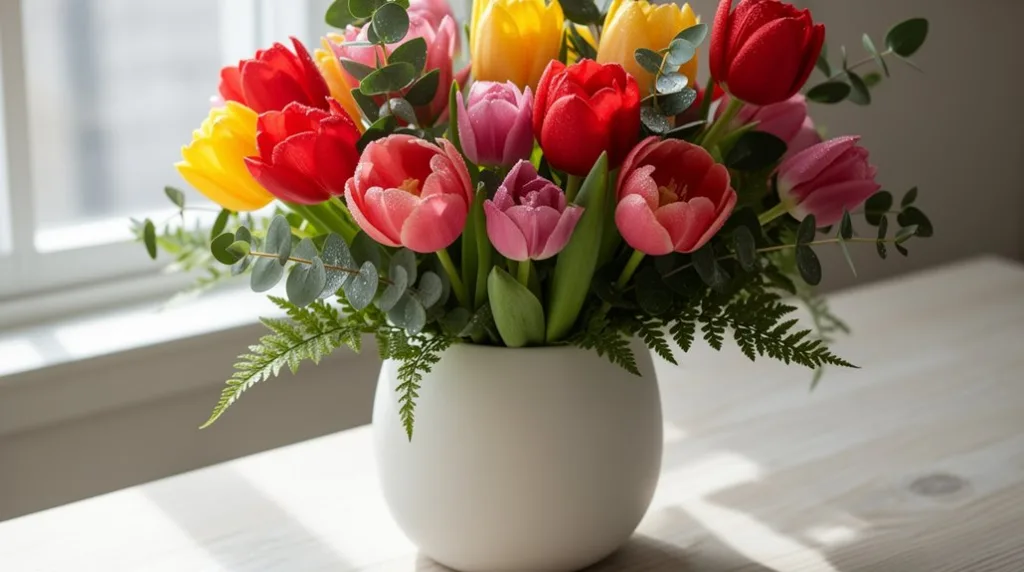
You can maximize your tulip arrangement’s longevity by choosing long-lasting varieties like Darwin hybrids. Always condition their stems overnight and refresh the water every two days to keep them vibrant. A clear cylindrical vase showcases their elegant curves, while a shallow bowl with floral foam creates a lush, low centerpiece. Let’s explore how to combine textures and colors to set the perfect spring mood.
Key Takeaways
- Select Darwin or single-late tulips for longevity and parrot tulips for immediate, textural displays.
- Use a tall clear vase to support phototropic stems and showcase their elegant curves.
- Build a colorful spiral arrangement with contrasting varieties and twisted stems for dynamic impact.
- Create modern displays with single stems in geometric vases or whimsical miniatures in teacups.
- Pair tulips with greenery like ferns or pair with hyacinths for structured, layered spring bouquets.
Choosing Tulips for Long-Lasting Arrangements
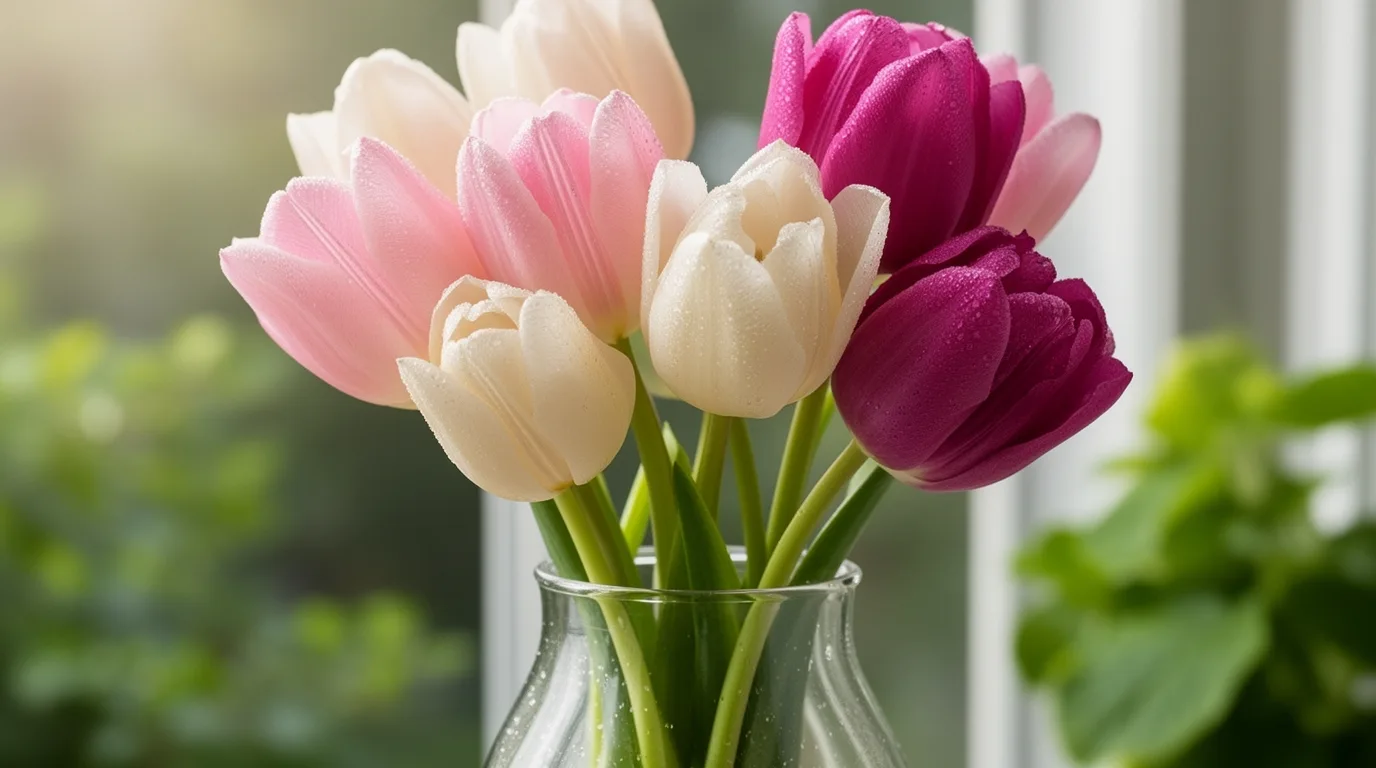
Start by picking tulip varieties known for their staying power, like single-late or Darwin hybrids; these stems often have stronger, sturdier genetics for extended vase life.
You’ll always want to choose the freshest flowers from your vendor or garden. Look for buds that are closed yet show a hint of their mature color; tight, green foliage is a good sign. Avoid any tulips with overly soft stems, yellowing leaves, or fully opened, translucent petals.
Remember that parrot and fringed tulips, while stunning, are generally more delicate and ephemeral. Their display time is shorter, so prioritize them for arrangements you’ll enjoy immediately.
Your focus is on buds that are just beginning to crack open.
Cut and Condition Tulips for Maximum Longevity
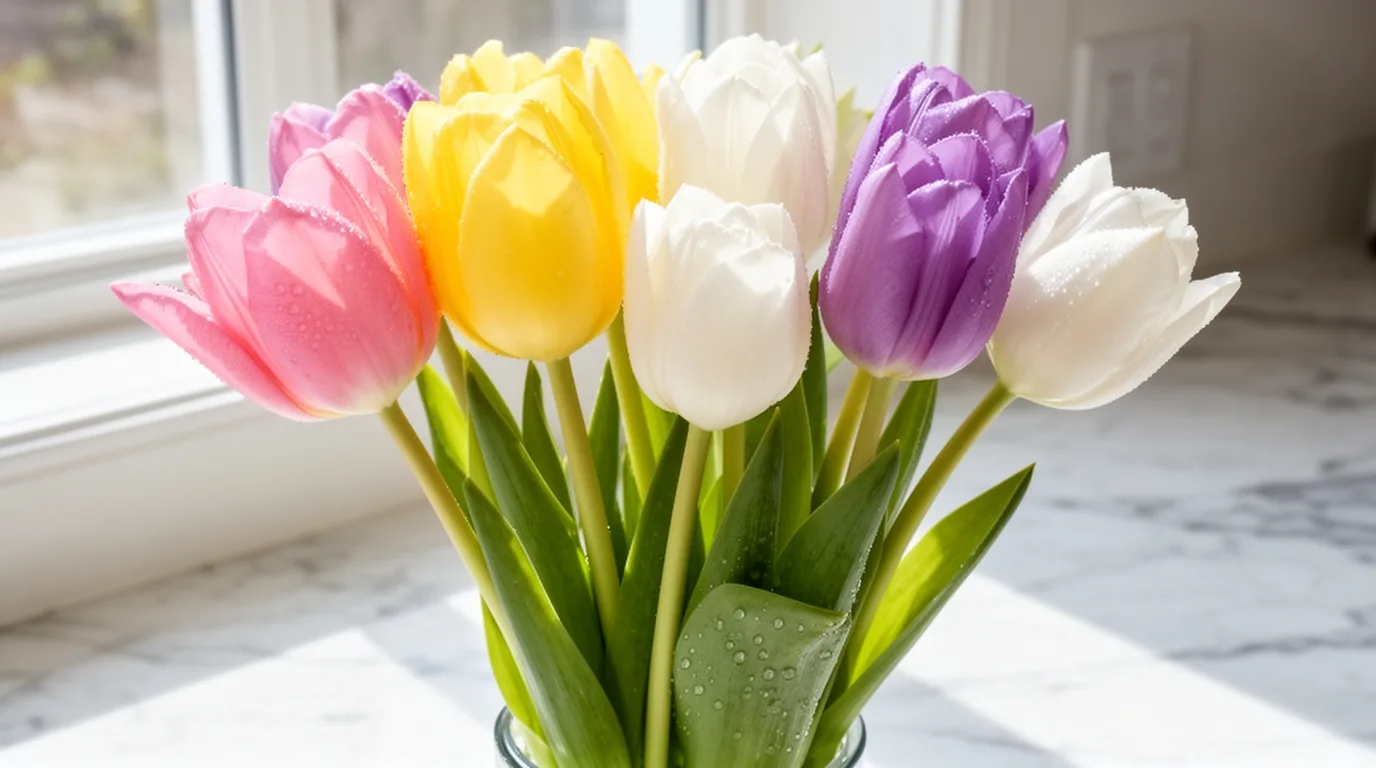
You’ll dramatically increase your tulips’ vase life by cutting and hydrating them properly.
Use a sharp, clean blade to make a slanted cut on each stem. This creates a larger surface area for water uptake.
Immediately place the stems into a bucket of cool water.
Remove any leaves that would fall below your vase’s waterline to prevent bacterial growth.
Let the tulips hydrate in a cool, dark spot for several hours or overnight; this process is called conditioning. It allows them to drink deeply and become turgid before arranging.
You’ll notice the stems straighten and the blooms become more vibrant, ensuring your display starts at its absolute best.
Pick the Perfect Vase for Your Style
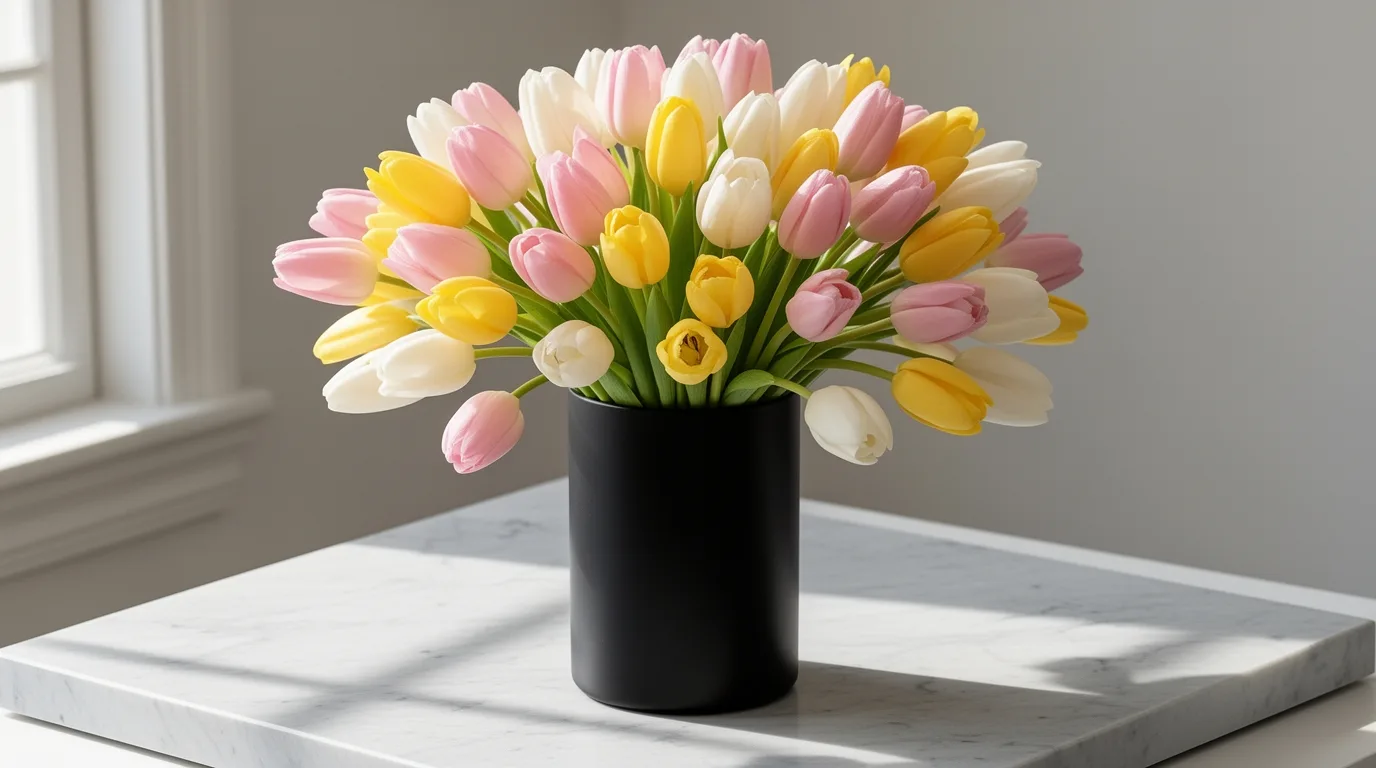
Since your tulips are now conditioned and ready, choosing the right vessel lets you highlight their elegant stems and vibrant blooms.
For single-variety bunches, a cylindrical vase supports stems and showcases their graceful curves. If you’re mixing cultivars, a wider-mouthed container gives each bloom space to open without crowding.
Remember, tulip stems continue growing and can bend dramatically toward light; a taller vase provides essential support for this phototropic movement.
Clear glass displays clean water and healthy stems, while colored or ceramic pots complement your decor. Always ensure your vase is impeccably clean to prevent bacterial growth.
Your choice ultimately frames the display, so select a vessel that complements your tulips’ natural posture and your personal aesthetic.
Set the Mood With Tulip Color Psychology
While you’re selecting stems, remember that the colors you pick can deeply influence a room’s atmosphere. Consider your tulips’ psychology before creating a display. Warm reds or oranges radiate energy, ideal for gathering spaces. Cool blues or purples offer a serene, calming vibe, perfect for a bedside table. Crisp whites bring an airy, modern elegance to any surface. Use variegated parrot tulips as a vibrant focal point. Mix analogous hues from the color wheel for a harmonious monochromatic arrangement.
| Color Group | Common Mood | Best For Displays |
|---|---|---|
| Reds & Oranges | Energetic, Warm | Dining table centerpieces |
| Blues & Purples | Calm, Serene | Bedroom or bathroom accents |
| Whites & Pastels | Fresh, Elegant | Console tables or mantels |
Master the Basic Spiral for a Full Bouquet
Begin by gathering an odd number of tulip stems, holding the first one firmly in your dominant hand. Add each subsequent stem, crossing it over the previous one and rotating the entire bunch slightly. This spiral technique creates a self-supporting structure that allows every bloom to face outward.
Trim stems uniformly so your bouquet stands balanced in the vase. The spiral distributes weight evenly, preventing gaps and giving you a lush, full display.
- The satisfying click of stems locking into place.
- The vibrant gradient of color unfolding as you rotate.
- The sturdy confidence of a self-supported structure.
- The elegant reveal of every petal to the viewer.
- The effortless fullness achieved without cramming.
Craft a Simple, Elegant Monochromatic Display
Now, let’s shift focus from a full spiral bouquet to a clean, single-color arrangement. Select one vibrant tulip variety, like a pure ‘White Triumphator’ or deep ‘Queen of Night’. Use at least fifteen stems of uniform length for visual impact. Strip all foliage to highlight the pristine stems and flawless blooms. Choose a clear cylindrical vase; its simplicity complements the monochromatic theme. Arrange the tulips loosely, letting them arch naturally. You’ll achieve elegance through repetition and form, not complexity. This display spotlights subtle variations in petal texture and bloom stage. Position it where light can pass through the stems, creating delicate shadows that enhance the minimalist aesthetic.
Build a Wildly Colorful Mixed Tulip Arrangement
Dive into a vibrant mix by selecting at least five contrasting tulip varieties, such as fiery ‘Flaming Parrot’, sunny ‘Yellow Pomponette’, rich ‘Purple Prince’, bright ‘Red Impression’, and soft ‘Apricot Beauty’. Source stems with varied bloom forms—parrot, double, and single—to add textural drama. Re-cut all stems and hydrate them before arranging. Use a clear vase to showcase the colorful, twisted stems as part of the display. For maximum impact, don’t cluster colors; instead, distribute them evenly to create a lively, confetti-like effect.
- Revel in the bold brushstrokes of the fringed ‘Flaming Parrot’ petals.
- Bask in the cheerful, pom-pom fullness of ‘Yellow Pomponette’.
- Feel the deep, velvety richness of a ‘Purple Prince’ bloom.
- Catch the vibrant, classic glow of ‘Red Impression’.
- Savor the gentle, warm blush of ‘Apricot Beauty’.
Add Greenery for a Garden-Fresh Look
| Foliage Type | Key Characteristic | Display Tip |
|---|---|---|
| Myrtle | Glossy, oval leaves | Adds structure as a base. |
| Salal | Large, leathery leaves | Creates a lush backdrop. |
| Asparagus Fern | Feathery, light texture | Provides soft, airy filler. |
| Variegated Pittosporum | Cream-edged leaves | Offers subtle color contrast. |
Create a Rustic Arrangement in a Basket or Pitcher
Transform your tulips by placing them in a rustic basket or pitcher, a choice that naturally evokes a charming, casual feel.
You’ll achieve this by using simple, sturdy vessels like a woven willow basket or an enamelware pitcher.
Select tulip varieties with a soft, romantic character, such as peony-flowered ‘Angelique’ or ruffled ‘Ice Cream’.
Insert them directly into the container without intricate structuring for a natural, gathered-from-the-garden appearance.
- Nestle stems casually to mimic a hand-picked bouquet.
- Embrace nodding blooms and varied stem heights for dynamic charm.
- Choose warm-toned cultivars like apricot ‘Candy Prince’ for cozy warmth.
- Add a few forked branches or weathered twigs as organic texture.
- Allow some tulips to gracefully cascade over the vessel’s edge.
Design a Modern, Architectural Tulip Sculpture
To craft a modern, architectural display, you’ll need a geometric vase and tulip varieties with strong, clean lines, like lily-flowered ‘Ballerina’ or the pointed petals of ‘Marilyn’. Focus on height and structure.
Arrange stems singly or in tight, uniform groups, emphasizing negative space between them. You can train tulips to stand erect by placing them in a tall, narrow container.
Select cultivars with architectural traits; consider the angular form of a parrot tulip ‘Black Parrot’ or the crisp edges of a fringed ‘Swan Wings’. Trim foliage minimally to highlight the stem’s silhouette.
View the arrangement as a sculpture, playing with linearity and form. Align the vase’s angles with the tulips’ directional growth for a cohesive, striking statement.
Assemble a Low, Lush Tulip Centerpiece
While architectural displays celebrate structure, a low centerpiece embraces abundance and softness. You’ll create a generous, garden-like mound that invites intimate conversation.
Choose a shallow, wide bowl and use floral foam or a heavy-duty pin frog for secure placement. For maximum impact, select a single, vibrant tulip variety or a harmonious blend of two. Cut stems to varying short lengths to build a dome-shaped form.
Pack blooms densely, twisting each stem as you insert it; this allows the elegant, lanceolate leaves to curl naturally and fill gaps. Your goal is a textural, overflowing display where the tulips’ graceful posture is the star.
- Nestle parrot tulips with their ruffled petals among simpler Darwin hybrids for captivating texture.
- Let the silky, closed buds of some blooms peek through the fully open, cup-shaped flowers of others.
- Intertwine their own sleek, blue-green leaves throughout to create a seamless, naturalistic base.
- Imagine the soft rustle of petals as guests lean in for a closer look.
- Feel the joyful, almost decadent embrace of spring contained on your table.
Arrange Tulips in Unique Non-Vase Containers
Because vases aren’t your only option, consider how unconventional vessels can highlight tulips’ sculptural stems and bold blooms. Select sturdy containers that provide stable support and ample water.
Use a single cluster of blooms in a rustic ceramic pitcher to emphasize their form. For modern displays, arrange stems in a geometric glass terrarium.
You’ll often need to trim stems to fit the vessel’s height. Always ensure the water level adequately covers the bulb end of each stem.
Pair tulips with vessels that complement their color; a monochromatic group in a metallic trough creates a sleek statement. The container’s shape should frame the tulips, turning the entire arrangement into a cohesive display piece.
Achieve the Casual, Just-Picked Look
Stepping away from structured containers, you can capture the effortless charm of tulips freshly gathered from the garden. Embrace their natural movement by allowing stems of varying heights to arch and bend. Use a simple pitcher or a rustic ceramic bowl to enhance the informal feel. Keep your color palette relaxed, perhaps mixing a few related hues. Focus on these display techniques for an authentic presentation.
- Let stems cross and lean naturally for an unstudied, dynamic silhouette.
- Include a few tulip leaves with gentle curves to mimic a garden cluster.
- Choose single late tulips or lily-flowered varieties for their elegant, relaxed forms.
- Trim stems at different lengths to create depth and a sense of casual abundance.
- Use a clear glass vessel to showcase the organic lines of every stem and leaf.
Combine Tulips With Other Spring Blooms
Pair tulips with other spring blooms to build more complex and texturally rich arrangements. Consider pairing ‘Darwin Hybrid’ tulips with fragrant, clustered hyacinths for a bold, structured display. Use delicate, nodding narcissus to soften the strong lines of ‘French’ tulips. Interlace ranunculus with parrot tulips for intricate layers of petals. Always choose companions that have similar hydration needs and vase life.
| Tulip Variety | Complementary Bloom | Visual Effect |
|---|---|---|
| Darwin Hybrid | Hyacinth | Bold, structured clusters |
| French Tulip | Narcissus | Softened vertical lines |
| Parrot Tulip | Ranunculus | Layered, intricate texture |
| Species Tulip | Forget-me-not | Informal, garden-like |
| Double Tulip | Camellia | Luxurious, full bouquet |
Make a Mini Tulip Arrangement for Small Spaces
Start by choosing a short-stemmed tulip variety like ‘Red Riding Hood’ or a petite species tulip for your mini arrangement. Select a tiny container—a vintage teacup, a small bud vase, or even a ramekin works perfectly. Use floral adhesive or a frog to secure a few stems, creating an intimate, elevated display for a windowsill or desk. Focus on a tight color palette for maximum impact.
- Cherish the delicate charm of a single, perfect bloom in a crystal votive.
- Create a jewel-toned cluster with deep purple ‘Queen of Night’ and maroon parrot tulips.
- Evoke a whimsical fairy garden by tucking miniature varieties into moss-lined containers.
- Celebrate simplicity with a trio of pure white tulips against a dark vase.
- Capture spring sunlight using a yellow species tulip in a clear glass bottle.
Keep Your Tulips Looking Fresh Longer
Now that you’ve styled your tulips, keeping them vibrant involves a few specific care steps. Always use a clean vase with cool water and add commercial flower food.
Recut the stems diagonally underwater with a sharp knife to prevent air embolisms from blocking water uptake. Remove any foliage below the waterline to deter bacterial growth.
Place your arrangement away from direct sun, heat sources, and ripening fruit, which emits ethylene gas. Tulips are phototropic and will bend toward light; rotate the vase daily for even display growth.
Refresh water every two days, re-cutting stems each time. With this care, you’ll extend their vase life and maintain that perfect spring look.
Frequently Asked Questions
What Tulip Varieties Are Most Fragrant?
You’ll find fragrant tulip varieties like scented Fosteriana hybrids and Darwin hybrids. Add ‘Generaal de Wet’ or ‘Prinses Irene’ to your displays for their sweet, fruity, or spicy aromas; they’ll perfume your entire room.
Are Tulips Toxic to Pets in the Home?
Yes, tulips are toxic, especially their bulbs. You’ll want to place arrangements where pets can’t dig in the soil or chew the plants. Keeping them on high, secure surfaces ensures your displays stay safe and beautiful.
Can I Replant Tulips From My Arrangement After?
You likely can’t. Forced bulbs often lack energy. But if yours have healthy bulbs and foliage, plant them in well-draining soil after frost for potential blooms next season.
Why Do Tulips Sometimes Droop Dramatically?
They droop as they hydrate; their stems grow quickly, sometimes bending. To prevent this, recut stems, wrap them in paper for an hour, then place them in cold water.
How Do Tulips Symbolize Different Meanings?
Tulips symbolically convey feelings through their colors. Choose red for perfect love, yellow for cheerful thoughts, or purple for royalty. You can pair variegated types, like Rembrandt, with solid hues to visually articulate layered messages.
Conclusion
Keep your tulips perky by refreshing their water every two days and keeping them cool. Recut their stems if they soften. For striking displays, mix heights and textures, pairing parrot tulips with simpler varieties. Use a spiral technique in your vase for fullness or let stems fall naturally for a casual look. Remember, tulips continue to grow after cutting, so account for that extra inch in your arrangement.
The Only Tools You Need for a Thriving Garden 🌱
Whether you're a weekend gardener or growing daily — these hand-picked tools make every session faster, easier, and more satisfying.