
Ready to refresh your space with spring blooms? Start by gathering bright tulips and fragrant lilacs. Match your vase to the stem type, and always cut stems at an angle. You’ll find combining textures with branches or unexpected colors creates a dynamic look. But one key step determines whether your arrangement lasts a few days or over a week.
Key Takeaways
- Use a narrow-necked vase for delicate blooms and a wide one for branching stems like lilacs or cherry blossoms.
- Start arrangements with tall flowering branches for height, then add focal flowers and filler blooms.
- Create a casual wildflower bouquet by hand-tying seasonal tulips, daffodils, and ranunculus for an unstructured look.
- Incorporate vibrant, unexpected color pairings like magenta and lime-green, balanced with neutral eucalyptus greenery.
- Extend vase life by recutting stems daily at an angle and using cool, clean water with flower food.
Gather Your Spring Flowers and Essential Supplies
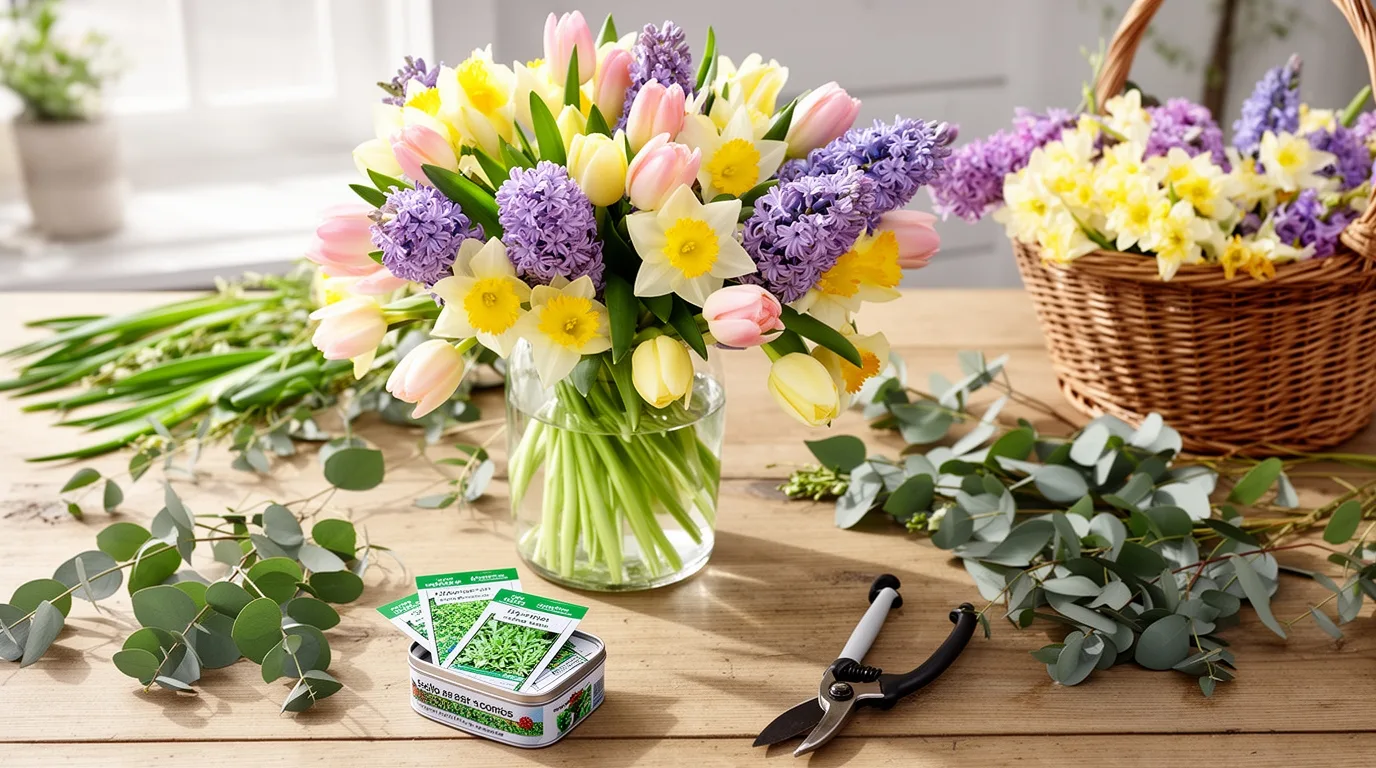
Your first step is gathering the flowers and tools you’ll need. Focus on quintessential spring blooms like tulips, daffodils, ranunculus, and blossoming branches.
You’ll want a sharp pair of floral shears or a knife for clean cuts, which help stems drink water. Have floral tape or a frog handy to secure stems in your container.
Don’t forget a clean bucket of water to condition your flowers immediately after cutting or purchasing. Recut each stem at a 45-degree angle before placing it in water; this simple act dramatically extends vase life.
Choose flowers at various stages—some tight buds, some open—to ensure your arrangement evolves beautifully over several days.
This preparation sets the foundation for everything that follows.
Match Your Vase to Your Flower Varieties
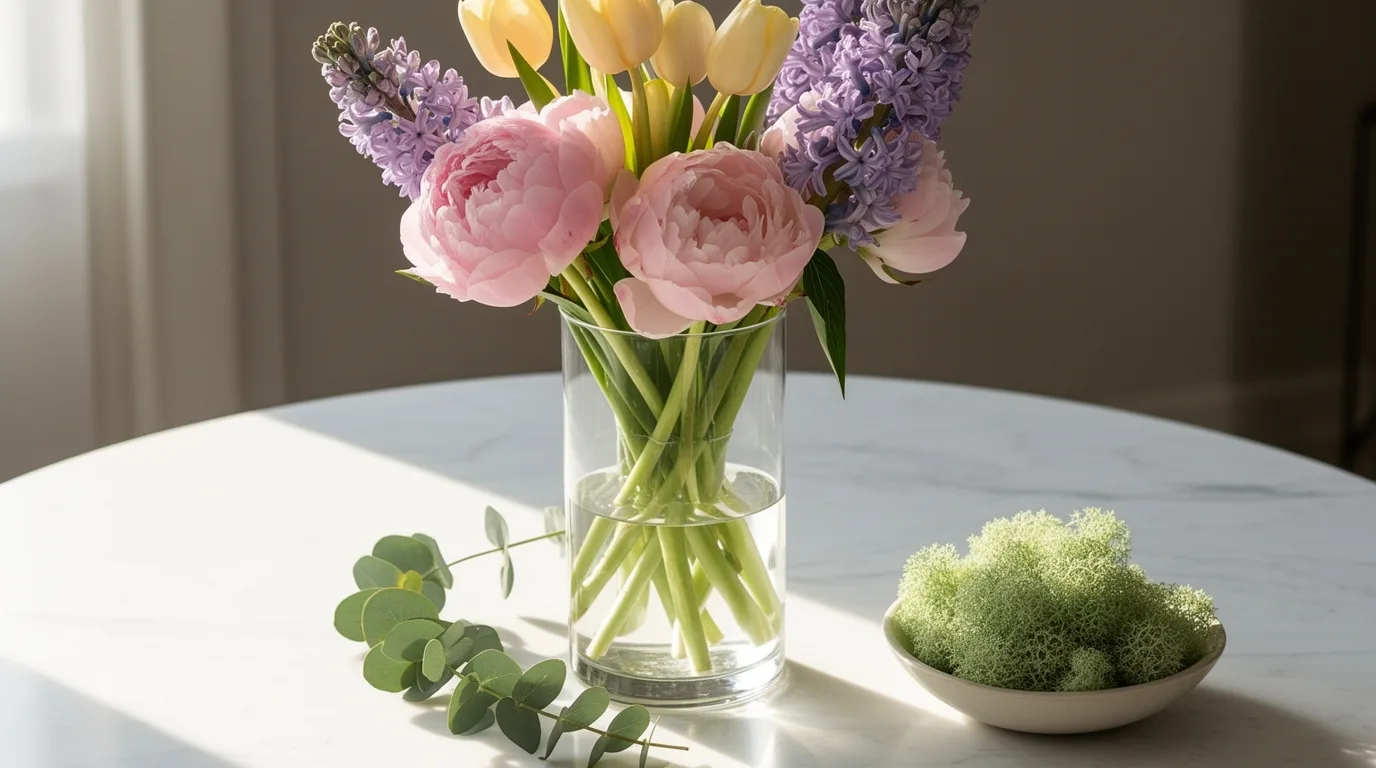
While arranging stems from your spring harvest, it’s crucial to consider your vase as a supporting partner to your blooms. The right vessel showcases their shape and prevents drooping.
Start by evaluating your flower’s stem strength and natural growth habit to choose a complementary vase. This practical match ensures your arrangement looks intentional and lasts longer.
- For delicate stems like sweet peas or poppies, use a narrow-necked vase to provide essential clustering support.
- For sturdy, upright blooms like tulips or daffodils, a cylindrical vase helps maintain their vertical structure.
- For branching varieties like lilacs or flowering cherry, select a vase with a wide opening to accommodate their spread.
- For mixed spring bouquets, a classic pitcher or urn offers the needed space and balance for varied textures.
Select the Best Spring Blooms for Longevity
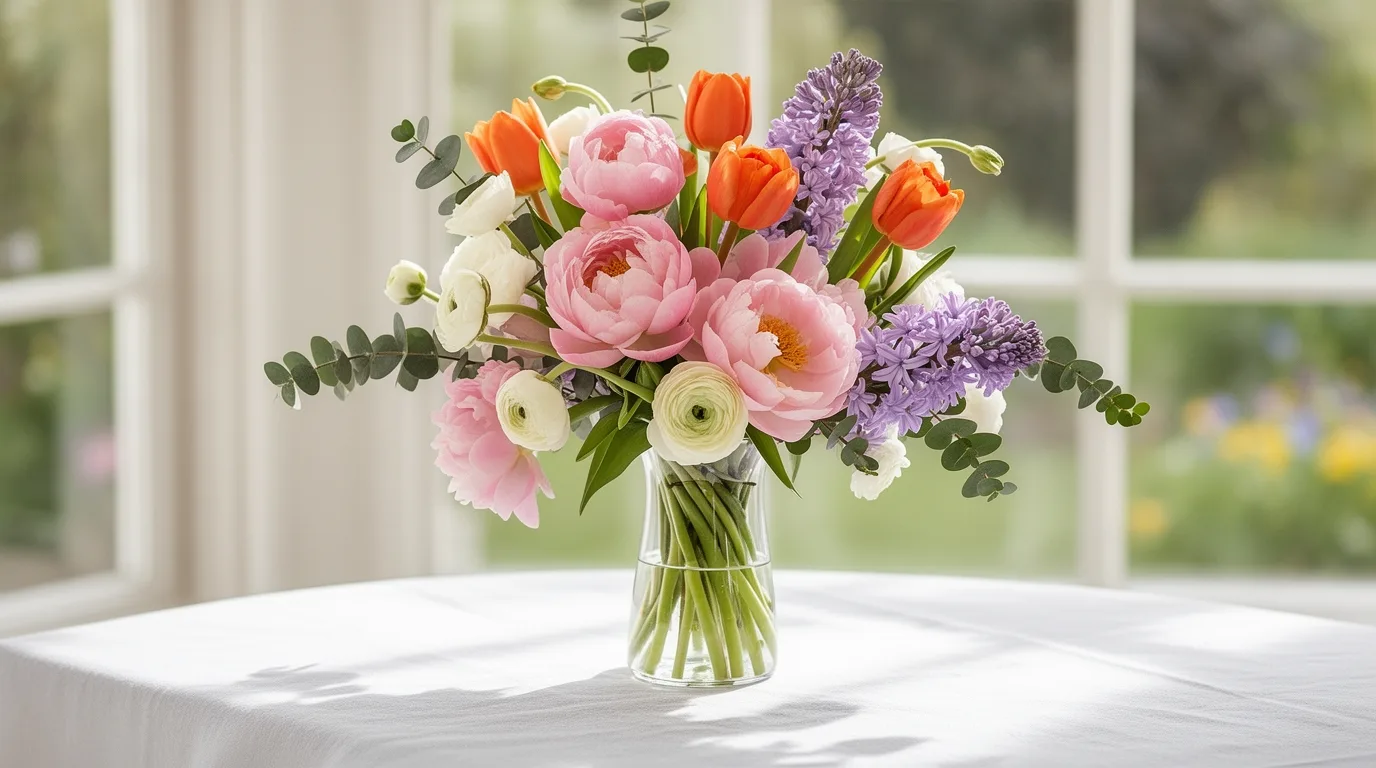
After choosing the right vase, extending the life of your arrangement comes down to picking flowers known for their staying power.
You’ll want to focus on hardy seasonal blooms. Opt for tulips; they’re classic and can last over a week if you keep them cool.
Daffodils are another robust choice, and they’ll naturally resist wilting.
Don’t overlook lilacs for their fragrance and durability in cooler spring temperatures.
Always select flowers with firm petals and tight buds, as they’ll open slowly and last longer.
Avoid fully opened, delicate blooms like some poppies; they’re beautiful but fleeting.
This selective approach ensures your spring decor remains vibrant for as long as possible.
Build a Casual Wildflower Bouquet From Your Backyard
Building a casual wildflower bouquet starts right outside your door. Grab a pair of shears and a simple container, then take a relaxed walk through your garden or a nearby meadow. Look for a variety of shapes, heights, and textures to create visual interest. Focus on seasonal blooms like daisies, poppies, and flowering herbs that are readily available. You’ll assemble your bouquet directly in your hand, which gives it a wonderfully natural, unstructured feel.
- Start with a focal flower as your center, adding a few stems to establish the shape.
- Incorporate taller, airy elements like grasses or sprigs of mint to add height and movement.
- Weave in smaller filler blooms and buds around the base to create fullness.
- Rotate the bouquet as you work, adding stems at an angle to build a balanced, rounded form.
Once you’re happy with the shape, trim the stems evenly and place them in water immediately.
Design an Elegant Tulip Centerpiece in a Vintage Vase
Choose a vintage vase with character to elevate a simple tulip arrangement into a striking centerpiece. Look for one with an interesting shape, color, or texture. Start with a clean vase and fill it with cool water. Select a single color of tulips or mix two harmonious spring shades like pink and white. You’ll want about fifteen to twenty stems for a full look. Remove any lower leaves that would sit below the waterline. Trim the stems at an angle so they can drink properly. Arrange the tulips loosely in the vase, letting them lean and curve naturally. Their elegant forms and the vase’s charm will create a sophisticated focal point for your spring table.
Incorporate Branches for Height and Dramatic Impact
While tulips offer elegant simplicity, you can add dramatic scale by incorporating flowering spring branches into your arrangements.
They instantly create height and architectural interest, making a bold focal point. Select sturdy branches like forsythia, cherry blossom, or pussy willow. Trim them at an angle and place the tallest branches in your vase first, letting them arc naturally.
Then, weave in your tulips and other blooms around the base to ground the design. This technique brings the fresh, vertical energy of the season indoors.
Remember to:
- Choose flexible branches you can bend to control their shape within the vase.
- Strip leaves from the bottom portion of each stem to keep the water clean.
- Position the tallest branch first to establish your arrangement’s height and line.
- Secure your base by crisscrossing a few bare stems at the vase’s mouth to support others.
Combine Unexpected Colors for a Modern Spring Look
Moving beyond structure, consider refreshing your palette with surprising color combinations. Spring’s typical pastels are lovely, but you can create a modern, vibrant look by pairing unexpected hues. Think magenta tulips with lime-green alstroemeria, or deep plum hellebores with tangerine ranunculus.
You’ll start by choosing one dominant seasonal bloom in a bold color. Then, select one or two supporting flowers or foliages in a contrasting shade. Don’t be afraid to mix warm and cool tones; this contrast creates energy. Finally, tie the arrangement together with neutral greenery like eucalyptus or olive branches to balance the intensity.
This deliberate clash feels fresh and contemporary, moving your decor beyond predictable pink-and-yellow schemes.
Keep Your Spring Arrangements Fresh for a Week
After you’ve created your vibrant arrangement, you’ll want those blooms to last. With a few simple steps, you can enjoy your spring display for a full week.
- Change the water daily. Use cool, clean water every morning to prevent bacterial growth and keep stems hydrated.
- Recut the stems. Each time you change the water, trim about an inch off the stems at a sharp angle to maximize water uptake.
- Use flower food. Always add the provided packet to the vase; it provides essential nutrients that fight decay.
- Choose the right location. Keep your arrangement away from direct sunlight, heating vents, and ripening fruit, as heat and ethylene gas accelerate wilting.
Consistent care is the key to longevity for your seasonal florals.
Troubleshoot Common Flower Arranging Issues
You’ll likely run into a few hiccups when arranging spring flowers, but you can troubleshoot most issues quickly with some practical fixes.
If blooms wilt prematurely, recut stems underwater and place them in warm water for an hour.
For a top-heavy bouquet that won’t stay upright, use floral tape to create a grid over your vase opening. It’ll support delicate tulip and ranunculus stems.
If colors look dull, incorporate vibrant spring foliage like lemon leaf for contrast.
To prevent a sparse appearance, add filler such as baby’s breath or flowering branches.
Finally, always keep your arrangement away from direct sunlight and ripening fruit, as both shorten the life of your seasonal display.
Frequently Asked Questions
How Do I Arrange Flowers Without Floral Foam?
Try a crisscross grid of tape over your vase’s opening. You can also use hollow spring branches like forsythia as a natural structure. Just cut your stems at an angle and change the water daily.
What Are Pet-Safe Spring Flowers for Homes With Pets?
You can use safe spring blooms like roses, sunflowers, and snapdragons. Always check the ASPCA list. You must avoid lilies and tulips as they’re highly toxic if your pets ingest them.
Where Can I Take a Local Spring Flower Arranging Workshop?
Search local florists, garden centers, and community colleges. You can also check craft stores like Michaels or browse online platforms like Eventbrite for workshops focused on using fresh, seasonal blooms available now.
How Do I Make a Spring Arrangement as a Gift?
Gather seasonal stems like tulips and daffodils. Choose a vase, cut stems at an angle, and build your shape. Include greens for texture. It’s personal, fresh, and a lovely spring gift to share.
Can I Preserve My Spring Bouquet to Last Longer Than a Week?
Yes, you can preserve it. Start with fresh, cool water and a clean vase. Trim stems and remove submerged leaves. Use flower food and avoid direct sun or heat. You’ll keep it vibrant.
Conclusion
Put your spring blooms to work. Keep arrangements bright by changing the water daily and giving stems a fresh angled cut. Don’t be afraid to mix bold colors with soft textures for a modern look. With just a little care, your seasonal decor will stay fresh and lively all week long. Enjoy the vibrant energy these flowers bring into your home.
The Only Tools You Need for a Thriving Garden 🌱
Whether you're a weekend gardener or growing daily — these hand-picked tools make every session faster, easier, and more satisfying.