You’ll fail if you skip mapping your actual costs and chase year-round production instead of owning one bloom season. Stop competing on price—build reputation through quality and local story. Track stem-level profitability by sales channel, not just revenue. Plan for seasonal cash gaps before they hit. Scale deliberately by size and labor capacity, not ambition. Relationship-building with retailers pre-season matters more than planting timing. Use cut-and-come-again varieties to smooth revenue dips. Set up analytics systems before expanding. The farms thriving today started with these foundations in place.
Key Takeaways
- Break-even requires 447+ bouquets at $20 each; map pre-harvest expenses against projected revenue before scaling.
- Successful farms track germination rates, yield per row, and seasonal performance data to guide expansion decisions.
- Continuous-harvest varieties like zinnias generate $500–$2,000 weekly; eliminate revenue gaps through succession planting, not acreage alone.
- Retailers buy on aesthetics and niche fit; research florists’ social media, deliver curated samples, follow up within one week.
- Quality, chemical-free story, and custom offerings outcompete big-box retailers; post 2–4 times weekly with educational farm narrative content.
Count Your Costs Before Counting Bunches

How much’ll you really need to get a cut flower farm off the ground?
That depends on your ambitions.
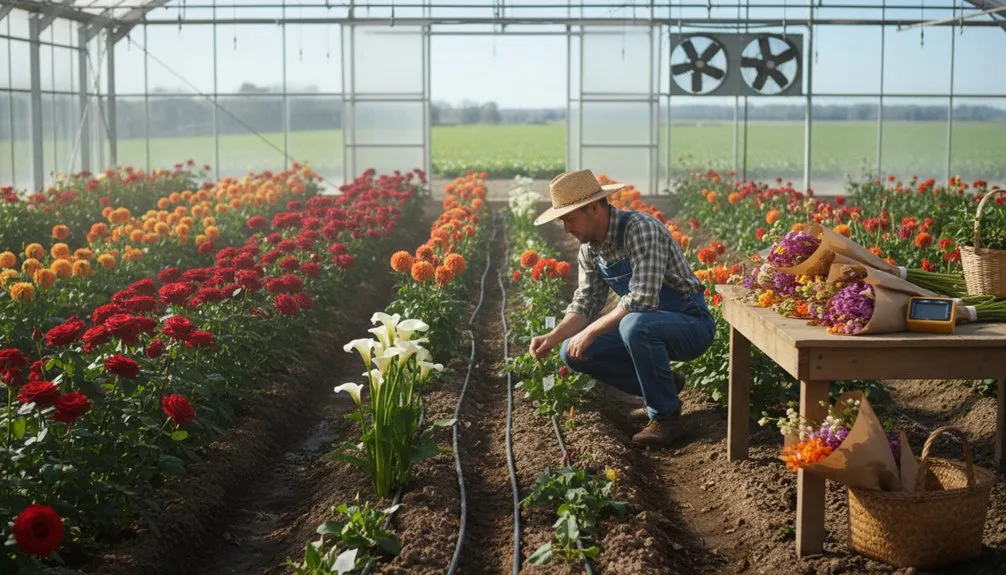
You can start small for under $600 with direct-sow seeds and basic tools.
A modest operation runs $10,000+, while serious setups with greenhouses and irrigation systems reach $19,250.
Your biggest expenses fall into five categories.
Land and infrastructure—renting, greenhouses, water systems—demand $700-$6,300 monthly or upfront.
Seeds, soil, and plants cost $1,200-$2,196.
Tools and equipment run $800-$2,300.
Business setup and marketing require $1,000-$1,800.
Don’t overlook weekly farmer’s market fees and gas.
Most successful farms reinforce early profits back into ergonomic infrastructure rather than taking debt, which accelerates long-term sustainability and reduces operational strain.
Calculate every line item before investing.
Track where money actually goes.
This clarity separates profitable farms from struggling ones.
Own One Crop Season Instead of Chasing Year-Round Production

Why do so many small-scale growers exhaust themselves chasing blooms across every season when they could dominate a single one instead?
You’ll find your operation runs smoother when you focus intensively on one season’s dominance rather than stretching thin across year-round production.
This strategy simplifies your planning, streamlines crop rotations, and lets you build momentum with customers expecting consistent supply. Seasonal focus also aligns with pollinator lifecycles, since continuous summer bloom from diverse flowering periods naturally supports bumblebees and honey bees that depend on reliable pollen and nectar sources.
Here’s what focusing seasonally achieves:
- Reduced complexity: You’re managing fewer succession plantings and avoiding multi-season logistics that drain small operations
- Predictable supply: CSAs and pop-up markets get reliable weekly harvests during your peak window
- Strategic transitions: You time summer plantings before spring blooms end, eliminating costly gaps that kill sales momentum
You’ll maximize your 1,600 square feet by growing what performs best when conditions favor it, not fighting nature across every month.
Stop Competing on Price: Build Your Farm’s Reputation
When you’re competing against big box retailers stocked with imported blooms, undercutting their prices won’t save your farm—it’ll bankrupt it.
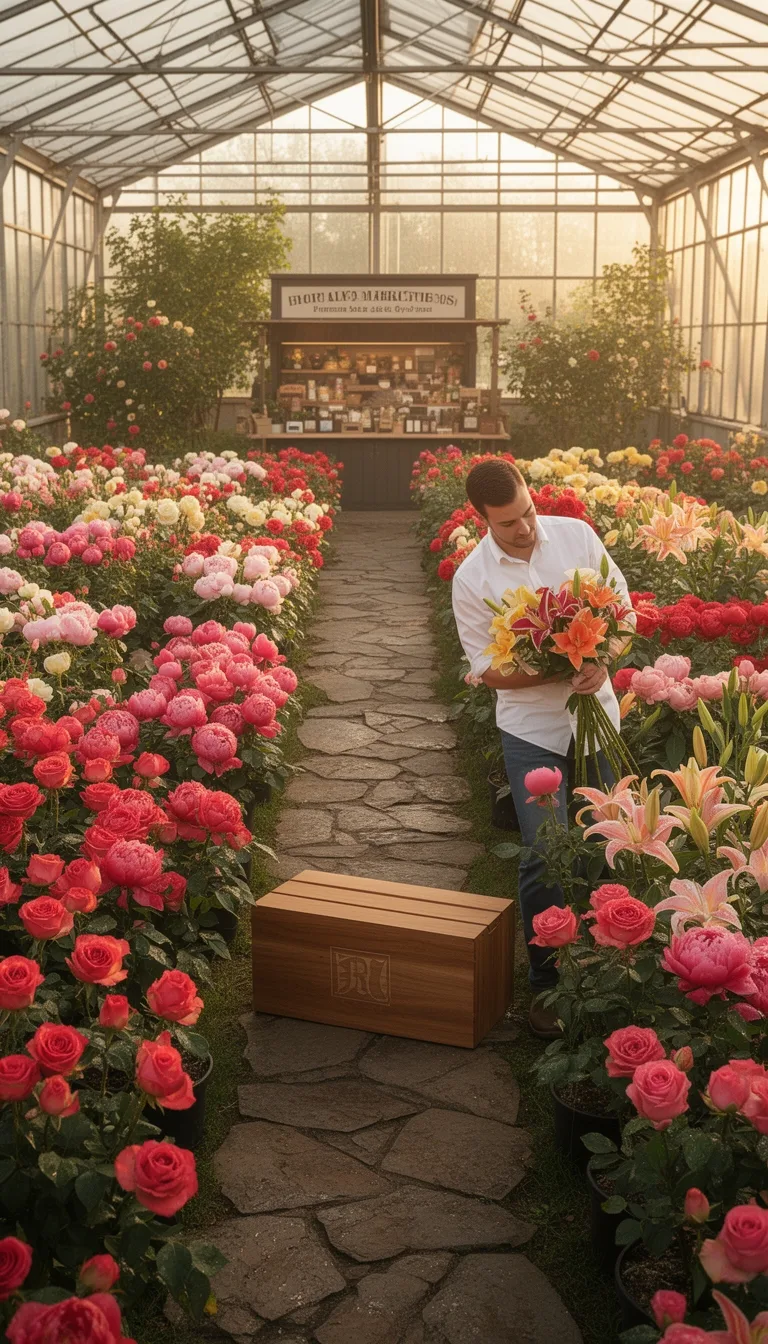
Instead, build reputation through quality and storytelling. You’ll attract environmentally conscious buyers who value locally grown, chemical-free flowers over commodity alternatives.
Share your mission, growing practices, and daily operations on social media. Post 2-4 times weekly with educational content, not just pretty pictures. Consistent social presence drives repeat customers who specifically seek you out at farmer’s markets and direct sales channels.
Offer artisan bouquets customers can’t find elsewhere, allowing custom creations. Implement pay-it-forward programs nominating community members for free arrangements—generosity exposes people to your quality and builds trust.
Request feedback and reviews. Return customers spend significantly more once they trust you. Your reputation becomes your competitive advantage.
Analyze Your Real Profit Centers Using Stem-Level Data
You’ve built your reputation and attracted loyal customers—now it’s time to discover which flowers actually pay your bills.
Most growers operate blind, unaware of their true profit margins per stem.
You need stem-level data to identify your real money-makers.
Track these essentials:
- Pre-harvest costs: materials, labor, utilities divided by yield equals cost per stem
- Post-harvest expenses: packaging, sleeves, handling labor added to baseline costs
- Sales channel margins: compare farm stand (2x cost), wholesale, and wedding profits
Calculate profit per bunch by subtracting total costs from your average selling price.
Compare zinnias against peonies using identical analysis.
This granular approach reveals which crops and sales outlets generate genuine profit, guiding strategic decisions that strengthen your farm’s financial foundation. The OSU Know Your Cost To Grow program has helped farms across the country train themselves to analyze this data systematically.
Plan for Seasonal Gaps Before They Kill Your Cash Flow
How many growers watch their cash evaporate between February and May, only to panic when seed catalogs arrive and invoices pile up? You need a winter planning session that maps your largest expenses against anticipated revenue.
Start by calculating what you’ll spend before harvest arrives—seeds, soil blocks, compost, irrigation supplies, and land rent create serious cash drains. Then determine your break-even point. If your total costs hit $8,941 including labor, you’ll need 447 bouquets sold at $20 each to survive the season.
Build three cash buckets: operating accounts for daily needs, a money market for mid-season expenses, and liquid reserves for emergencies. Separate account segregation enhances visibility into which funds remain available for immediate planting costs versus those earmarked for the peak spring expense cycle.
Track last year’s numbers ruthlessly. Review enterprise budgets listing variable costs, fixed costs, and income projections. This framework prevents the seasonal squeeze from blindsiding you.
Learn From Your Neighbors’ Numbers, Not National Averages
National averages lie to cut flower growers.
You’ll find California dominates national statistics, but that data won’t help you scale your Utah, Colorado, or New Mexico operation.
Instead, study your neighbors’ actual numbers:
- Local pricing: Your Intermountain florists pay 5-10% premiums over wholesale—not the national 10% benchmark
- Volume demands: 58% of regional florists need 10 or fewer bunches weekly per variety, requiring different production than national models suggest
- Farm economics: Utah growers average $64,000 per acre, but well-managed direct-sales operations hit $25,000-$30,000 per acre
Your region’s florists prefer quality and unique varieties over inventory volume. Nearly half of local florists have over 10 years in business, giving them established networks and proven sourcing preferences you should learn from directly.
Track what your neighbors actually source, what they’ll pay, and when they need product.
That hyperlocal data drives profitable decisions your national averages never will.
Find Your Ideal Farm Size (Most Growers Scale Too Fast)
Most cut flower growers expand before they’re ready, and it costs them.
You’ll find that a quarter-acre launches your operation successfully, but you’ll likely need a half-acre by year two as demand grows.
Here’s what matters: one to two full-time workers manage a half-acre efficiently.
Push beyond that without adequate labor, and you’ll face overproduction waste.
Start smaller if you’re solo—one-third acre keeps you manageable.
When you expand to 1.5 acres, you’ll need six employees handling the workload.
Don’t let an 80-by-60-foot field overwhelm you like it did other growers.
Scale deliberately, matching your labor capacity to production volume. Implement succession planting to maintain continuous harvests and eliminate production gaps across your expanding acreage.
Revenue averages $64,000 per acre, but only when operations run smoothly.
Build Relationships With Retailers Before Planting Season
You’ve sized your operation wisely, but now comes the real work: no farm succeeds without buyers waiting for your product. Start by identifying a handful of local florists and wholesale buyers to focus on intensely rather than spreading yourself thin across numerous contacts.
Research their specific needs thoroughly:
- Study their websites and social media to understand their aesthetic and clientele
- Determine whether they’re wedding florists, daily retailers, or event designers
- Note which flower varieties and colors align with their existing offerings
Visit with thoughtfully curated samples that demonstrate you’ve done your homework. Follow up within a week with specific questions about stem length, movement, and color preferences. Document their feedback carefully so you can adjust future offerings to match their evolving preferences and seasonal demands.
Send handwritten thank-you notes and engage with their social media. Patience and personalization transform initial meetings into lasting partnerships before planting even begins.
Use Cut-and-Come-Again Flowers to Smooth Revenue Dips
How do successful growers maintain steady income when spring bulbs fade and summer heat slows production? You’ll plant cut-and-come-again varieties like zinnias, cosmos, and gomphrena that yield 1,000 to 4,000 stems per 100-foot row throughout the season without replanting.
This strategy bridges revenue gaps—especially the notorious June lull—ensuring consistent cash flow for your subscription model and farmers’ market booths.
A single zinnia row generates thousands of stems, keeping your weekly $15–$25 bouquet subscriptions fulfilled and your market stand stocked at $500–$2,000 weekly earnings.
You’re not just smoothing income dips; you’re building customer loyalty. Regular deliveries expose subscribers to reliable favorites alongside exciting new varieties, strengthening relationships while you maintain profitability across unpredictable seasons. By layering social media visibility through Instagram and Pinterest, you can transform overlooked zinnia and cosmos varieties into must-have products that command premium pricing beyond traditional wholesale channels.
Set Up Analytics Systems Before You Expand Acres
Before you add another acre to your operation, you’ll want solid data on what’s actually happening in the rows you’ve got now.
Your analytics system should track:
- Basic crop metrics: sowing dates, germination rates, transplant timing, and harvest yields using tally marks for bunches rather than individual stems
- Weekly performance updates: actual versus estimated dates, pest pressure, weather impacts, and yield adjustments to refine future plantings
- Year-over-year comparisons: historical germination data, transplant success rates, and seasonal trends that reveal which varieties thrive under your specific conditions
Platforms like Rooted Farmers generate sales analytics automatically during order processing, showing top-performing colors and flowers by grower. Incorporate color-coded status cues into your spreadsheet to flag on-track plantings, delayed crops, and critical alerts at a glance.
This real data prevents costly expansion mistakes.
You’ll project yields accurately, identify bottlenecks, and scale strategically rather than gambling on untested assumptions.
Conclusion
You’ve walked through the garden of sustainable growth. Rather than chasing every blooming opportunity, you’ll nurture what you’ve carefully planted. By respecting your soil—both financial and literal—you’re letting your operation breathe naturally. You’re not racing toward the finish line; you’re building something that flowers season after season. Your farm’s roots run deeper now, anchored in data and relationships that’ll weather any storm.
The Only Tools You Need for a Thriving Garden 🌱
Whether you're a weekend gardener or growing daily — these hand-picked tools make every session faster, easier, and more satisfying.