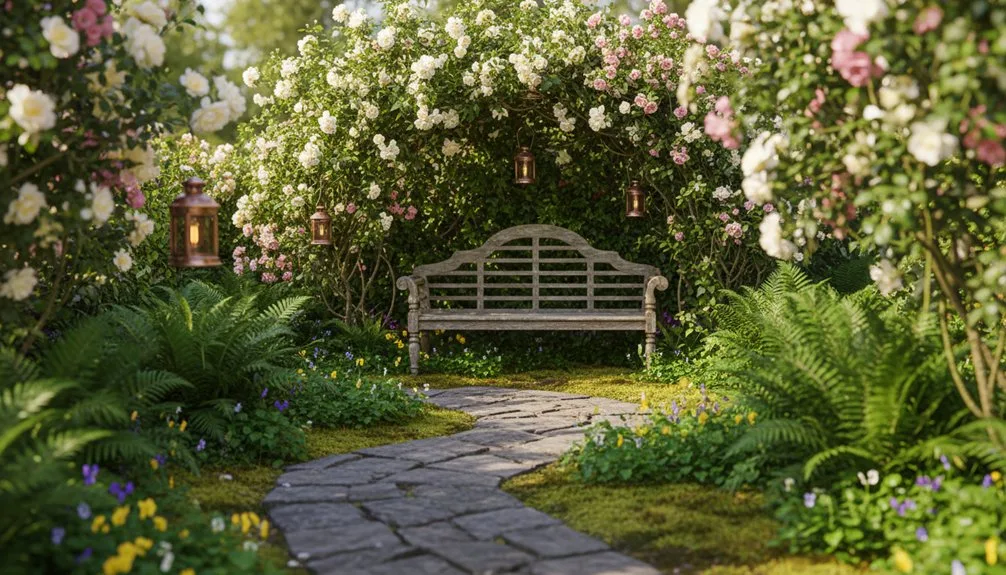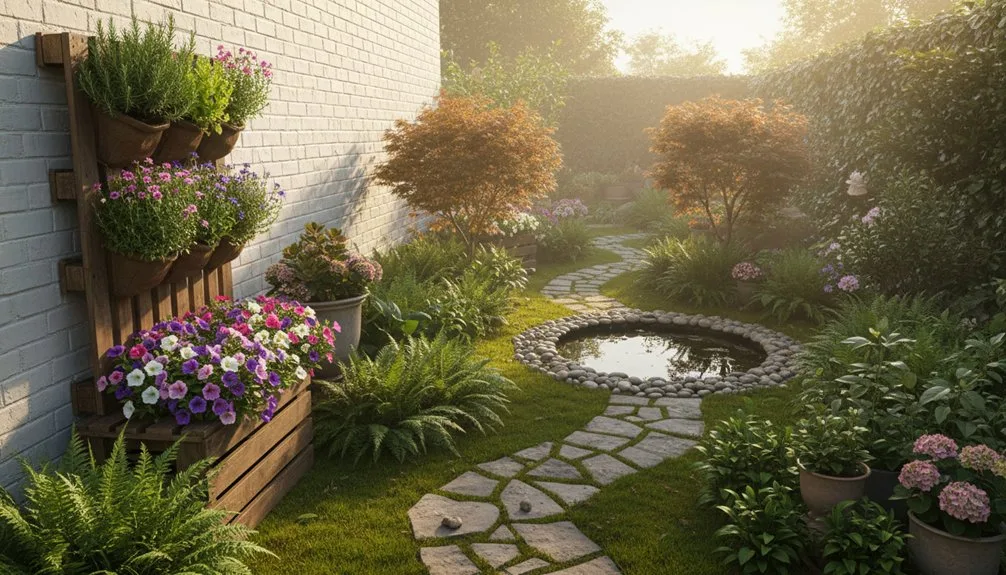

Picture your patio transformed into a lush, layered sanctuary. You can blend plush seating with vibrant plants and ambient lighting to craft a seamless outdoor room. These ideas move beyond simple decor to create a true extension of your home. Discover how to build a space that invites you to unwind and entertain, blending beauty with practical durability for a retreat that evolves with the seasons.
Key Takeaways
- Arrange cushioned seating around a fire pit for conversation and relaxation.
- Create intimate nooks with a weather-resistant chair, side table, and anchored rug.
- Install a pergola with climbing vines to define space and add living texture.
- Build raised beds or herb containers near the door for accessible homegrown produce.
- Use movable pots and vertical planters for flexible, space-saving greenery and color.
Start With Comfortable, Weather-Resistant Seating
Your patio garden should be a place you can’t wait to spend time in, and that all begins with choosing the right seats. Prioritize deep, cushioned chairs with generous armrests, because you’re building a sanctuary, not just a look.
Test materials relentlessly; all-weather wicker resists fading, while powder-coated aluminum won’t rust. Ensure cushions have quick-dry foam and removable, machine-washable covers—you’ll thank yourself after a sudden shower.
Don’t forget a sturdy, matching table for your drink. Arrange your seating to encourage conversation and capture the best views or afternoon sun.
This investment in comfort and durability means your outdoor room welcomes you instantly, season after season, making every moment spent there a genuine pleasure.
Anchor Your Furniture With Outdoor Rugs
Once you’ve chosen seating that invites you to linger, define that space and make it feel complete with an outdoor rug. It’s the anchor that pulls your furniture grouping together visually, creating an instant, cohesive living area under the open sky.
Don’t shy away from color or pattern; a vibrant rug injects personality and frames your seating beautifully. Choose a durable, weather-resistant material like polypropylene or polyester that can handle sun and rain.
Make sure it’s large enough for all your furniture legs to rest comfortably on it—a skimpy rug will make the whole arrangement feel adrift. This simple layer adds warmth underfoot and a profound sense of intention, transforming a collection of chairs into your personal outdoor room.
Define Your Space With a Privacy Screen or Pergola
Beyond simply furnishing your patio, you can architect its atmosphere by introducing structure and seclusion with a privacy screen or pergola. A solid wood or lattice screen instantly carves out your sanctuary, blocking unwanted views and framing your garden.
For more elegant definition, build or install a pergola. Its open-beam roof creates a powerful architectural anchor without fully enclosing you, letting light and air flow freely. You’ll train climbing vines like jasmine or clematis up its posts, weaving living texture into the structure. This deliberate framework transforms a flat expanse into a distinct, intimate room. It’s a practical move that pays dividends in comfort, making your patio feel purposefully designed and truly yours.
Build a Simple Raised Bed for Vegetables

Elevate your edible garden—literally and horticulturally—by constructing a straightforward raised bed, a project that puts fresh produce within easy reach while improving soil drainage and structure.
Choose durable, untreated wood like cedar or redwood and cut planks for a rectangular frame; a 4-foot by 8-foot size is manageable and accessible. Simply screw the corners together and place the frame in a sunny patio spot.
You’ll fill it with a high-quality blend of topsoil, compost, and other organic matter—this superior soil is your garden’s foundation. It warms faster in spring, retains nutrients, and deters weeds.
You’re now ready to sow seeds or transplant seedlings for a season of abundant, homegrown harvests just steps from your door.
Design a Fragrant Herb Corner for Cooking

To transform a sunny patio nook into a culinary resource, concentrate your favorite aromatic herbs into a dedicated corner. Select versatile performers like rosemary, thyme, sage, and oregano for their resilience and robust flavors.
Plant them in a well-drained, fertile soil mix within a handsome container or a tiered planter to elevate your display. Prioritize proximity; place this fragrant corner steps from your kitchen door for spontaneous harvesting.
You’ll pinch fragrant leaves directly into simmering sauces or snip whole stems for roasting. Regular, gentle harvesting keeps plants bushy and productive.
This living pantry not only saves grocery trips but infuses your cooking with the vibrant, immediate taste of homegrown ingredients, deepening your connection to every meal you create.
Create a Vertical Garden on a Blank Wall

Turning a blank wall into a lush tapestry of greenery is a space-saving masterpiece that brings life and color right up to your patio’s edge.
You’ll need a vertical planter system, which you can attach directly to the wall or hang from sturdy hooks. Select your plants based on the wall’s sun exposure.
- Choose the Right Framework: Use modular pocket planters, a trellis for climbers, or repurposed items like a pallet or hanging shoe organizer.
- Prioritize Lightweight Soil: Fill your planters with a premium potting mix; it’s lighter than garden soil and drains better.
- Plant for Visual Impact: Combine trailing ivy or ferns with colorful flowering annuals like petunias for dramatic texture.
- Implement a Simple Watering Routine: Water slowly from the top and check soil moisture daily, as vertical gardens dry out faster.
Grow Shade Plants Under a Covered Area

Don’t have a sunny wall? Your covered patio’s dappled light is perfect for lush shade gardens. Embrace these sheltered spots to cultivate cool, calming greenery where sun-lovers won’t thrive. You’ll create a serene retreat by choosing plants that adore filtered light. Focus on foliage texture and color, layering different leaf shapes for visual drama. A simple glazed pot elevates a single striking hosta into a sculptural piece.
| Plant Choice | Key Benefit |
|---|---|
| Hostas | Bold, architectural foliage in many sizes |
| Ferns | Delicate, feathery fronds add softness |
| Heucheras | Vibrant, colorful leaves for pops of color |
| Coral Bells | Graceful flower spikes above mounded leaves |
| Japanese Forest Grass | Cascading golden blades for movement |
You just need well-draining soil and consistent moisture. Group pots at varying heights for a dynamic, layered effect that maximizes your limited light.
Train Climbers to Soften Walls and Structures

Transform your patio’s bare vertical spaces into lush tapestries by training climbing plants. You’ll add texture, color, and a sense of serene enclosure.
Start by choosing the right climber for your conditions—sun-loving clematis or shade-tolerant ivy—and provide a supportive structure like a trellis, wire grid, or series of eyehooks.
- Install supports early: Attach trellises or wires to walls before planting to avoid damaging roots later and guide growth from the start.
- Use gentle ties: Secure new stems with soft plant ties or twine, checking and loosening them as the stems thicken to prevent constriction.
- Prune for direction: Regularly pinch back wayward shoots and prune strategically to encourage dense coverage exactly where you want it.
- Mix and match varieties: Combine different climbers, like a flowering jasmine with a fragrant honeysuckle, for multi-season interest and layered beauty.
Use Pots and Planters for Flexible Gardening

While training climbers creates a permanent vertical landscape, you can also shape your patio’s personality with movable, ever-changeable pots and planters. This is gardening at its most dynamic and creative. You’re not stuck with a single design. You can shift the entire mood with the seasons, moving sunny flower displays to follow the light or bringing tender herbs indoors when frost threatens.
Use a variety of heights to build visual layers—place tall, structural plants like ornamental grasses in the back and cascade bright annuals like lobelia over the rims in front. Your container choices define this flexibility; lightweight resin pots are easy to rearrange, while substantial glazed ceramics provide a stable anchor for small trees.
Mix Textures With Your Pots and Planters
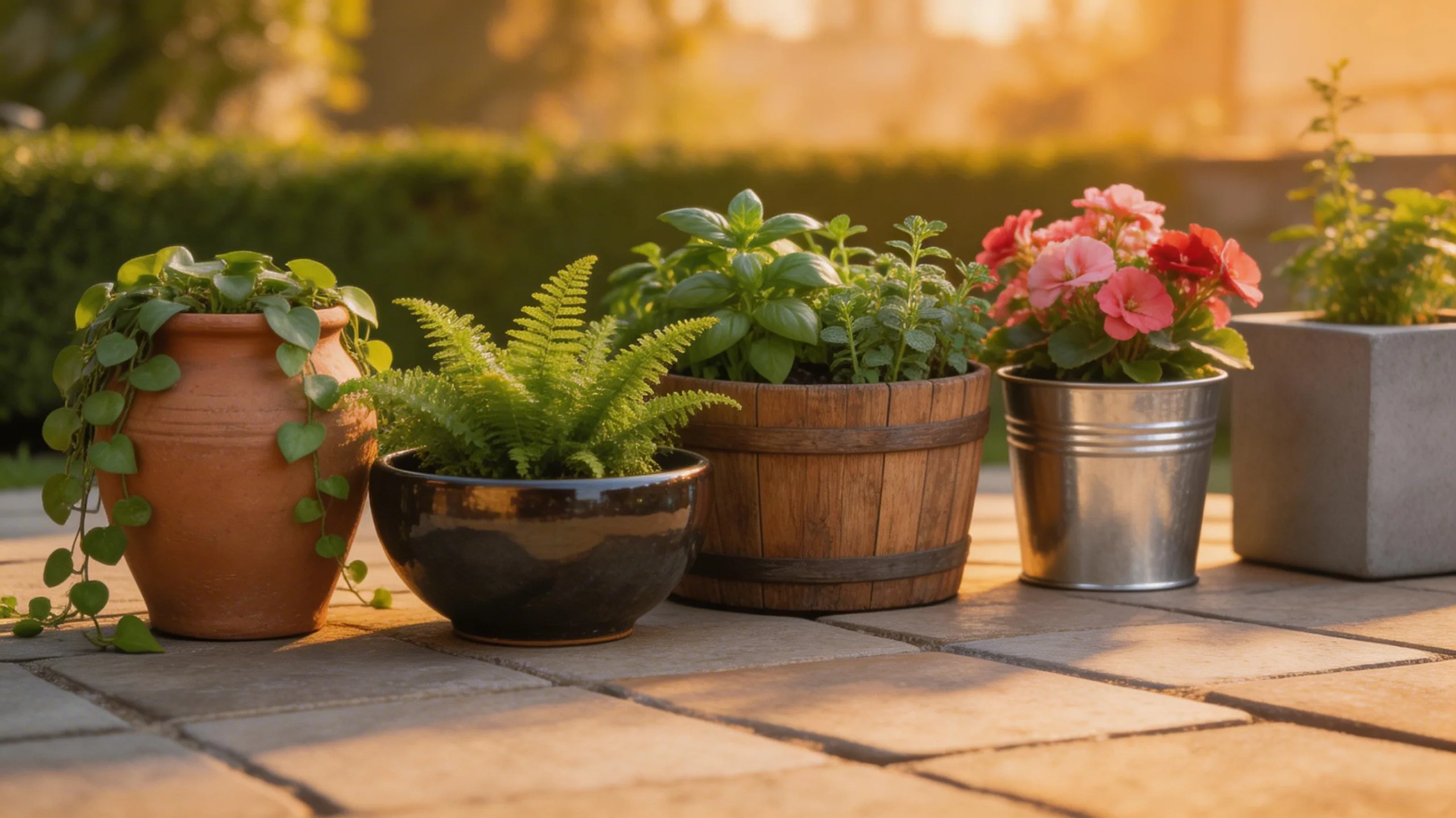
Beyond the plants themselves, the materials you choose for your pots and planters become a fundamental part of your patio’s aesthetic. Don’t settle for uniformity; embrace a curated mix of textures to create depth and visual intrigue. A collection of smooth glazed ceramics, rough-hewn terracotta, woven seagrass, and sleek corten steel feels infinitely more dynamic than a row of identical plastic pots.
This tactile variety makes your space feel collected over time and adds a layer of richness that plants alone can’t provide.
- Contrast smooth and rough: Pair a glossy ceramic planter with a matte, textured concrete one for immediate impact.
- Incorporate natural fibers: Use a woven rattan basket as a cache pot to soften the hard lines of other containers.
- Play with metallic finishes: Introduce a weathered zinc or copper planter for a touch of rustic elegance.
- Combine old and new: Place a modern fiberglass pot next to a vintage, chipped stone urn to tell a story.
Pick a Color Palette to Tie Your Look Together
After you’ve layered textures with your pots, your next step is weaving them together with a unifying color scheme. Think of your palette as your garden’s signature, creating harmony and a sense of intentional design.
Start with your favorite hues—perhaps soft blues and greens for a coastal vibe, or vibrant reds and yellows for a lively feel. Limit yourself to three main colors to avoid visual clutter, then apply them across your pots, cushions, and even plant selections.
Repetition is your secret weapon; echo that cerulean pot with a matching throw pillow and a cluster of blue hydrangeas. This deliberate repetition transforms a collection of disparate items into a cohesive, visually soothing retreat.
Add Ambiance With Strategic Outdoor Lighting
As dusk settles over your patio, you can extend its charm well into the evening by layering strategic outdoor lighting. You’re not just illuminating a space; you’re crafting an atmosphere. Think of light as your paintbrush, highlighting architectural features, casting dramatic shadows, and creating intimate pockets for conversation.
Ditch the harsh, single overhead fixture and instead embrace a mix of sources to add depth and warmth. Your goal is a soft, inviting glow that makes the garden feel like a natural extension of your home.
- String fairy lights through overhead beams or in nearby trees for a magical, starry canopy.
- Place solar-powered path lights along walkways to safely guide guests and accentuate planting beds.
- Install discreet LED uplights at the base of a beautiful tree or large shrub to showcase its form.
- Use flameless candles or lanterns on tables for a flickering, intimate glow that’s safe and wind-resistant.
Incorporate a Small Water Feature for Serenity
While the soft glow of lights sets the mood, you can deepen that sense of peace by adding the gentle sound of moving water. A simple, recirculating fountain is surprisingly simple to install; you just need a nearby power outlet. Look for a compact bowl fountain or a wall-mounted spout that fits your space without overwhelming it.
The constant, soft babble creates a natural soundtrack that masks neighborhood noise, instantly making your patio feel like a secluded retreat. You’ll find yourself drawn outside just to listen. Remember to use distilled water to minimize mineral deposits, and clean the pump’s filter monthly to keep the flow smooth and quiet. This one addition transforms the atmosphere completely.
Add a Fire Pit for Warmth and Gatherings
Branching out from serene water features, you can also dial up the warmth and social energy on your patio by adding a fire pit. It becomes a magnetic focal point, extending your outdoor season and creating unforgettable evenings. You’ll love gathering friends for conversation under the stars or enjoying a quiet night wrapped in its cozy glow.
When choosing your pit, consider these practical and atmospheric details:
- Select your fuel: Opt for a clean-burning propane or natural gas model for instant ignition, or choose a wood-burning pit for that classic crackling sound and mesmerizing scent.
- Prioritize safe placement: Always position your fire pit on a non-flammable, level surface, well away from overhead branches, structures, and patio furniture.
- Define the space: Arrange durable, weather-resistant seating in a circular formation around the pit to foster intimacy and easy conversation.
- Accessorize for function: Keep a stack of dry firewood or a hidden propane tank handy, and have a fireproof blanket or extinguisher nearby for absolute safety.
Create a Patio Nook for Your Morning Coffee
Claiming a small, dedicated corner for your morning coffee turns a simple ritual into a cherished daily escape.
Start by positioning a comfortable, weather-resistant chair and a small side table where you’ll catch the best morning light. You’ll want a surface just big enough for your mug and a book. Add instant coziness with outdoor pillows and a soft throw blanket for cooler dawns.
Anchor your nook with a durable indoor-outdoor rug to define the space and cushion your feet. Consider a tall potted plant or a sleek privacy screen to create a gentle, enveloping boundary.
This intimate setup becomes your personal sanctuary, a perfect spot to slowly welcome the day before the world awakens.
Keep It Thriving With Low-Maintenance Plant Choices
Choosing plants for your patio is about embracing beauty without the burden, so prioritize resilient varieties that flourish with minimal fuss. You’ll spend more time enjoying your space than maintaining it.
Focus on drought-tolerant perennials, architectural succulents, and hardy evergreens that can handle your local climate. Container gardening is your best friend here; it simplifies care and allows you to control soil conditions perfectly. Embrace these powerhouse performers:
- Sedums and Succulents: Their fleshy leaves store water, making them incredibly forgiving if you forget a watering or two.
- Ornamental Grasses: They add graceful movement and texture, thriving on neglect and requiring only an annual trim.
- Lavender: This fragrant superstar loves sun and well-drained soil, offering blooms and scent with very little extra effort.
- Boxwood: For reliable evergreen structure, you can’t beat it; a simple shaping once a year keeps it looking pristine.
Enjoy Your Personal Outdoor Oasis
With your resilient plants established, your patio transforms into a sanctuary ready for your personal touch. Now’s the moment to claim this space as your own. Slip into your favorite chair with a morning coffee and feel the sun’s warmth. String soft, solar-powered lights overhead for enchanting evenings. Add a small water feature; its gentle trickle will mask city noise and soothe your spirit.
This is your retreat for reading, dining, or simply breathing deeply. You’ve built a resilient, beautiful ecosystem. Let it work for you. Your patio isn’t just a garden; it’s your personal prescription for peace, a daily invitation to disconnect and recharge amidst the greenery you’ve nurtured.
Frequently Asked Questions
How Can I Make a Small Patio Feel More Private?
You can hang outdoor curtains, install a lattice panel with climbing vines, or add tall potted plants. You’ll create secluded zones that visually block neighbors and make your compact space feel like a secret garden.
What Plants Thrive in Shady Patio Corners?
You’d find hostas, ferns, and impatiens thrive there. They’ll love low light. You can add vibrant heuchera for color and sweet woodruff as a fragrant, flowering ground cover to brighten those shady spots.
How Do I Prevent Outdoor Furniture From Fading?
You can protect your outdoor furniture by applying UV-protectant sealants and using covers. Store cushions inside when you’re not using them and choose fade-resistant fabrics for replacements to keep colors vibrant longer.
What Herbs Are Best for Beginner Gardeners?
Start with basil, mint, or parsley. They’re forgiving and you’ll enjoy quick success. You can grow them easily in pots with good sunlight and regular water. You’ll love using your own fresh herbs in cooking.
What Type of Fire Pit Is Safest for a Small Patio?
A gas or propane model’s your safest bet. You’ll control the flame instantly, and it won’t spark or produce flying embers, which makes it a much safer choice for your small, cozy patio space.
Conclusion
Transform your patio into a sanctuary you’ll adore. With your cozy seating, fragrant vines, and flickering fire pit, you’ve crafted a space that’s both beautiful and resilient. This is your personal retreat—a place to unwind, connect, and savor the seasons. Now, just step outside, breathe deeply, and relish every moment in your own thriving oasis.
The Only Tools You Need for a Thriving Garden 🌱
Whether you're a weekend gardener or growing daily — these hand-picked tools make every session faster, easier, and more satisfying.