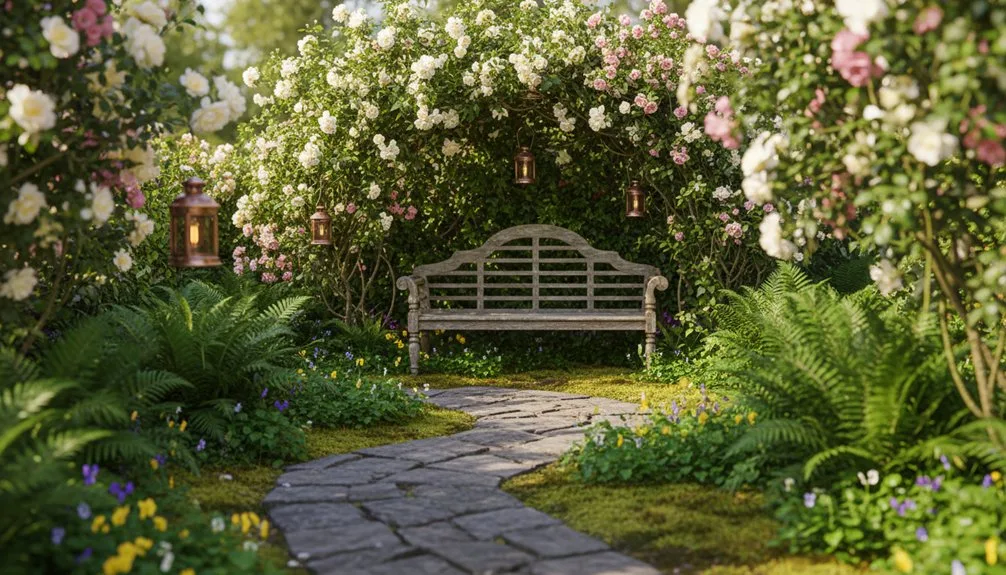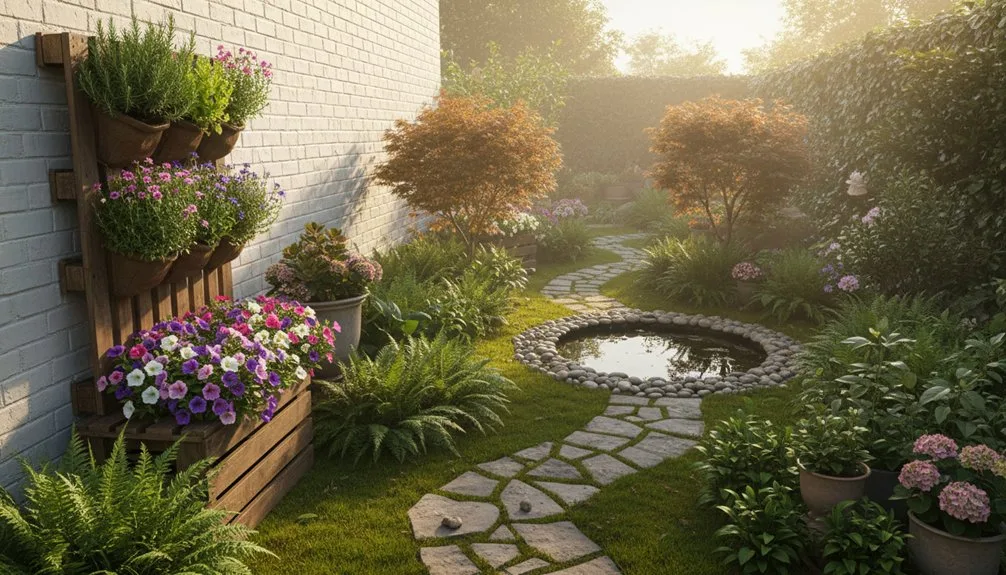
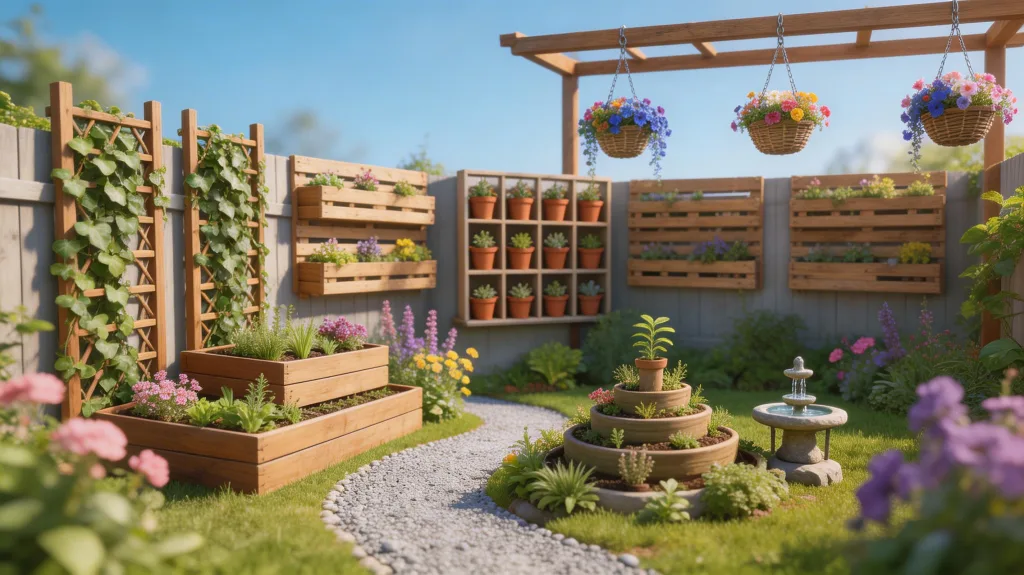
You might feel your small backyard limits your gardening dreams, but it actually opens up creative possibilities. We’ve compiled twenty-two clever ideas to maximize every square inch, from vertical living walls to space-saving fold-down shelves. These strategies turn tight spaces into lush, productive gardens. Discover how simple techniques can dramatically expand your growing area and transform your outdoor experience. Let’s explore the first few concepts to get you started.
Key Takeaways
- Maximize vertical space with living walls, trellises, and hanging baskets for climbers.
- Use compact raised beds and square-foot gardening for intensive planting.
- Grow dwarf fruit trees or espalier fruit trees against walls to save ground space.
- Employ tiered containers, stacked crates, and multi-level planters on patios.
- Opt for shallow, accessible salad tables or herb boxes for easy harvesting.
Start a Small-Space Vertical Garden on Your Fence
Unlock your fence’s potential by transforming it into a vertical garden that maximizes every inch of your small yard. You don’t need a lot of ground space to grow your own herbs, vegetables, or flowers. Instead, you can look upward and use sturdy hooks or a trellis system attached directly to your fence. You’ll easily hang lightweight pots, repurposed containers, or fabric planters. Just ensure your fence can handle the weight, especially when the soil is wet.
Choose sun-loving plants like cherry tomatoes, nasturtiums, or strawberries for a sunny spot, or opt for shade-tolerant ferns or mint in a darker corner. This approach instantly adds layers of life and color.
Create a Living Wall With Pocket Planters
Building on the idea of vertical gardening, you can craft a lush living wall using fabric pocket planters. Mount them on a fence or blank wall to grow herbs, flowers, and trailing greens without using any floor space. These felt pockets are affordable, easy to install, and provide excellent drainage. You’ll love the instant, vibrant impact!
Choose a mix of plants for visual interest and function. Just remember to water consistently, as vertical plantings can dry out faster.
| Plant Selection | Visual Effect | Your Reward |
|---|---|---|
| Succulents & Sedums | Textured Tapestry | Low-Maintenance Joy |
| Fragrant Herbs | Aromatic & Flowing | Fresh Culinary Magic |
| Colorful Annuals | Burst of Cheer | Instant Summer Mood |
| Trailing Ivy | Soft, Cascading Greenery | A Soothing Backdrop |
| Strawberries & Lettuce | Edible Abundance | Homegrown Snacks |
Grow Upwards With a Trellis or Obelisk
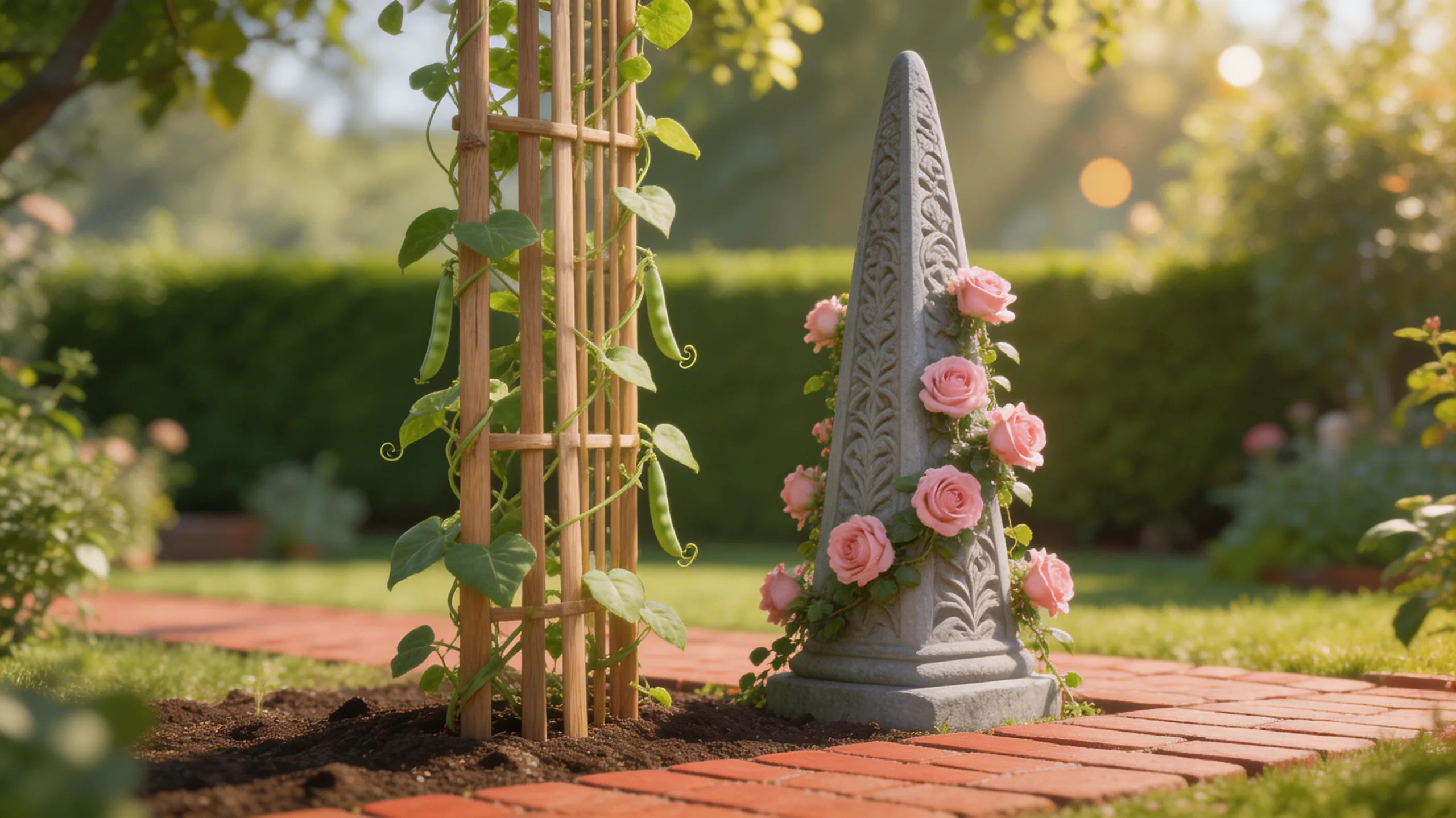
For even greater vertical impact, train your plants to climb a trellis or obelisk. These simple structures add architectural interest and let you harvest more from a tiny footprint. You’ll find them in metal, wood, or bamboo to match your style.
Use them for classic climbers like beans, peas, and cucumbers to free up valuable ground space. You can even train small squash or melons upward with supportive slings.
Install the structure securely at planting time to avoid damaging roots later. Gently tie new growth to the frame with soft twine, encouraging the vines to reach for the sun. This method improves air circulation, reduces disease, and makes picking a breeze.
Hang Plants From Your Eaves or Pergola
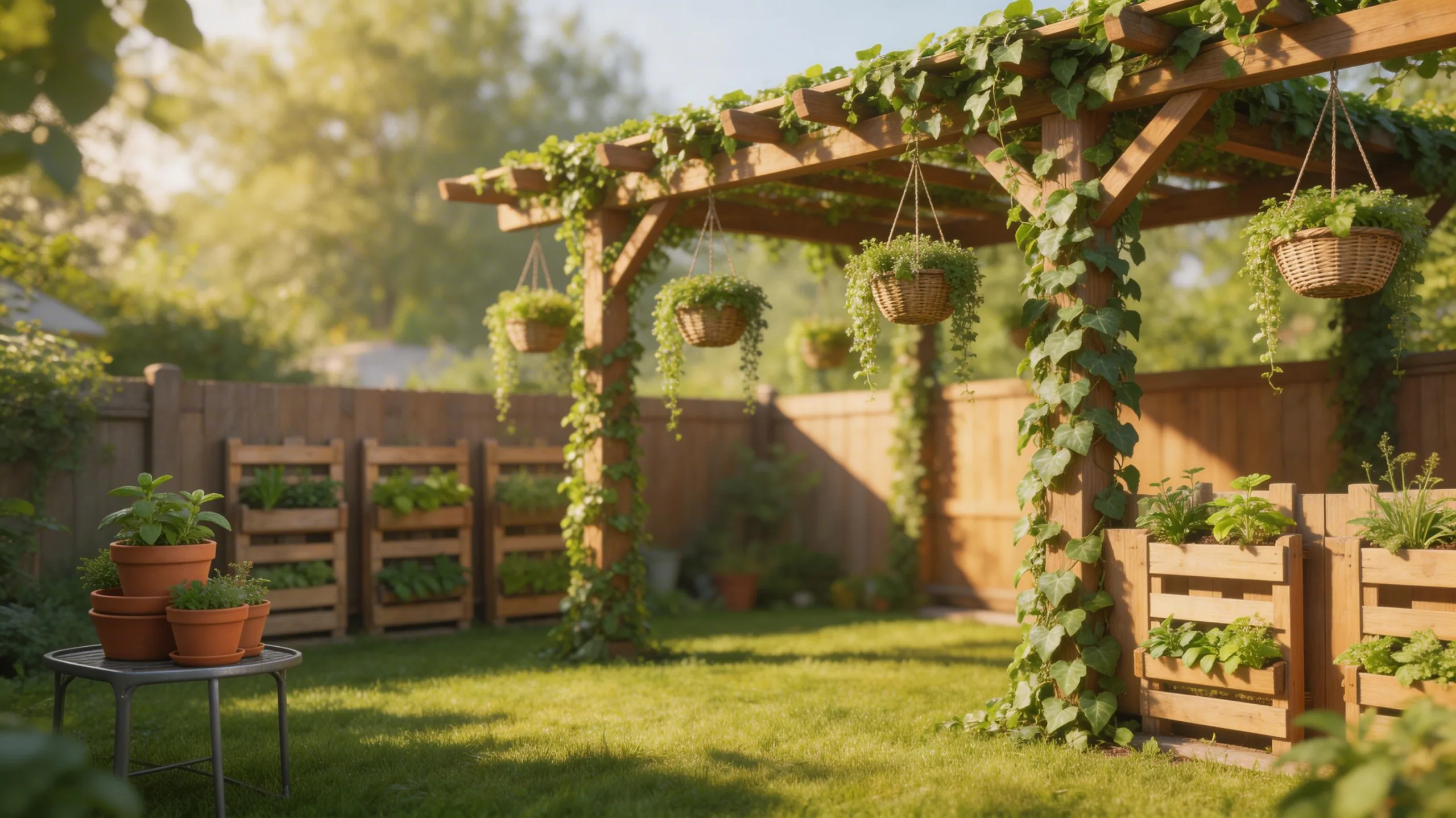
Tucking pots and baskets into the overhead spaces of your eaves or pergola lets you add layers of greenery without using any floor space. You instantly elevate your garden, literally and visually. Use sturdy hooks or brackets designed for the weight, and ensure your structure can support them.
You’ll want lightweight, well-draining containers to avoid excess stress. This method is perfect for creating a lush, cascading canopy of foliage and flowers. Think about sun exposure; south-facing spots get more intense light.
Remember to check your watering routine, as hanging plants often dry out faster than their grounded counterparts. It’s a simple trick that maximizes your vertical real estate with fantastic, space-saving flair.
Pick the Best Plants for Vertical Growth
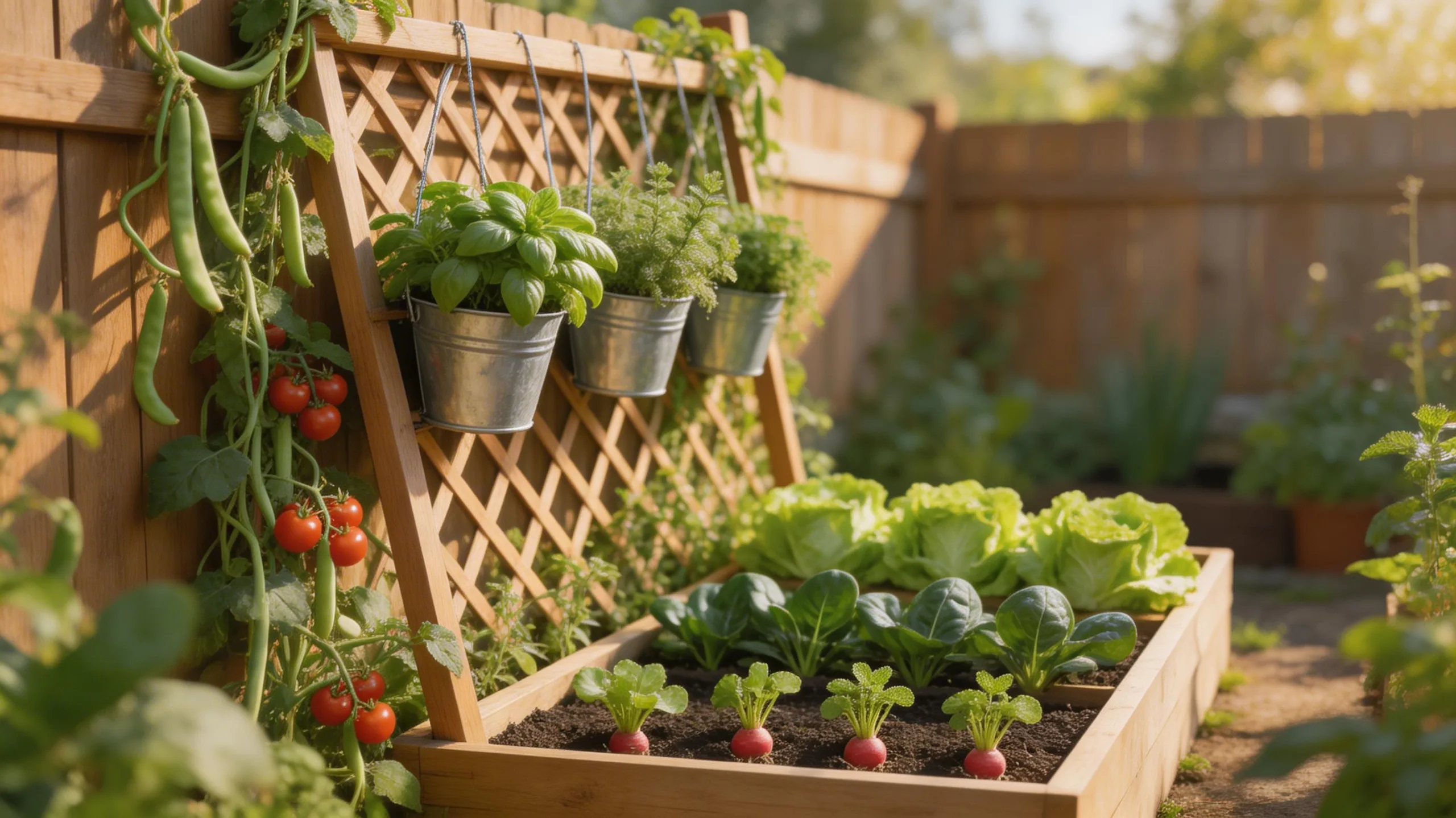
Choose climbing plants like clematis or pole beans that naturally reach upwards, or train vines such as ivy or morning glory to cover trellises and walls. You’ll maximize every inch! Focus on varieties that thrive vertically.
For quick, edible results, grow peas, cucumbers, or tomatoes using cages. For lush greenery, consider flowering jasmine or fast-growing hops.
Always match the plant to its support’s strength and your sunlight conditions. Remember, you’re not just planting; you’re building a living wall.
This approach instantly adds depth and privacy to your compact area. It turns bland fences into vibrant features. You get a bigger harvest and a more beautiful garden without needing more ground space.
Try a Tiered Strawberry Pot or Herb Tower
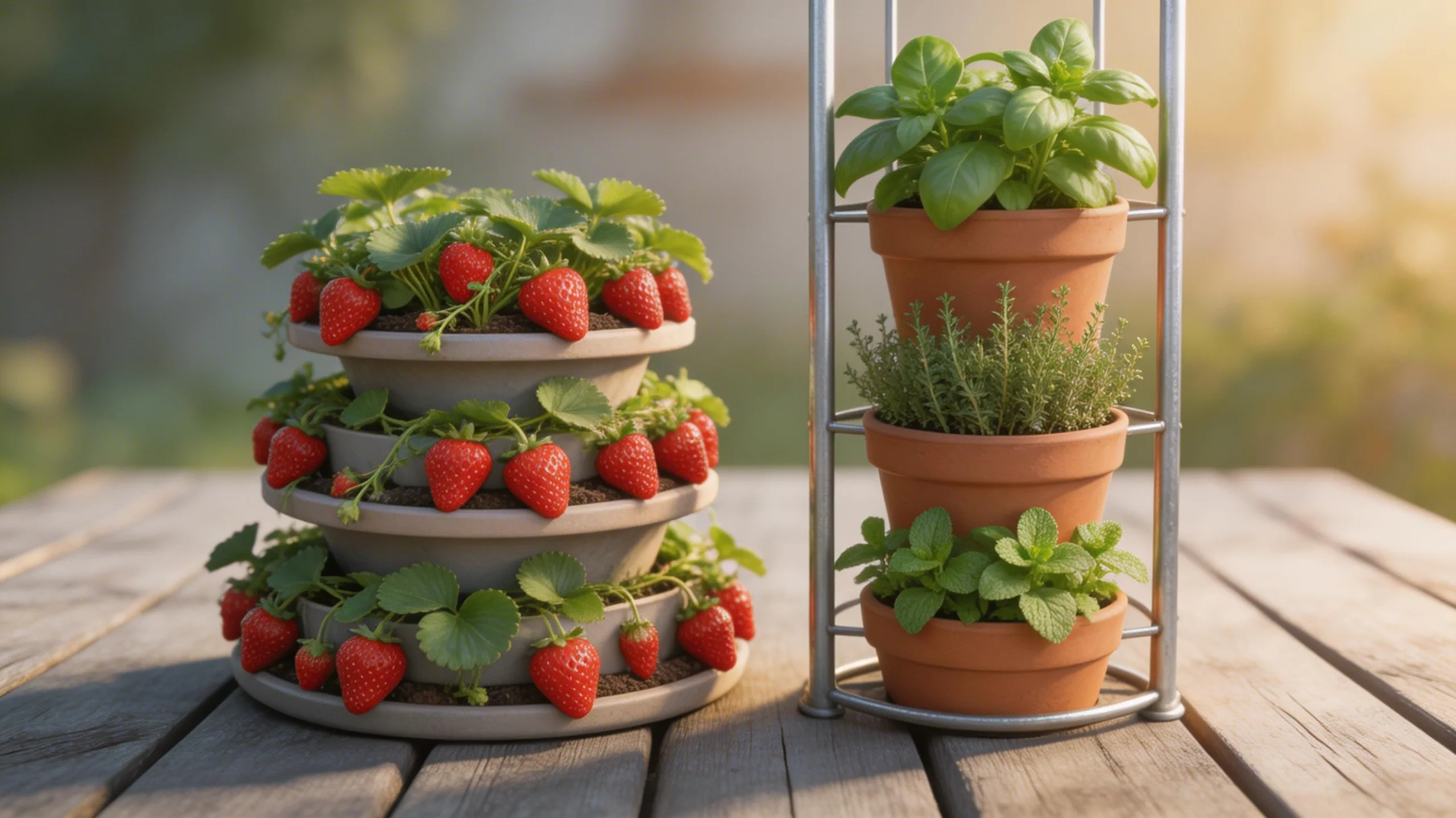
While vertical planting makes the most of walls and fences, a tiered strawberry pot or herb tower lets you stack plants directly in the main garden area. You can place it on a patio, deck, or right in a flower bed. These clever containers have multiple planting pockets circling a central column, letting you grow a dozen herbs or strawberries in the footprint of one pot. You’ll maximize yield without sprawling.
Just ensure you choose cascading plants like thyme or trailing strawberries that naturally spill over the edges. When planting, start from the bottom and work upwards, filling each pocket as you go. Water thoroughly through the top, and the moisture will trickle down to nourish every level.
Build a Compact, Multi-Level Raised Bed
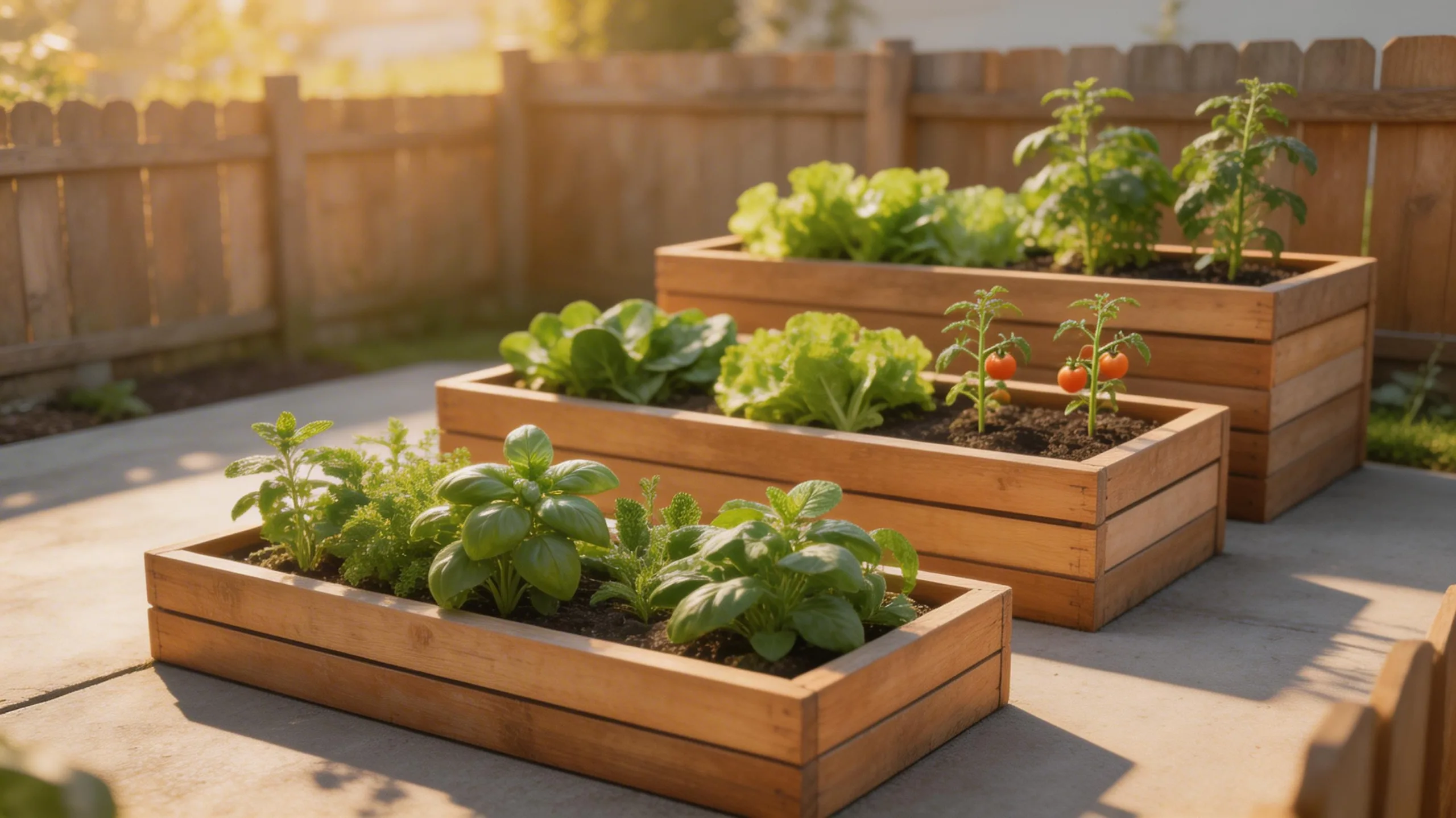
Elevate your gardening game by constructing a compact, multi-level raised bed that turns a flat patch into a dynamic, productive space. You’ll maximize planting area without spreading out, creating visual depth and easier access for tending.
Use rot-resistant wood or composite boards, building a tall bottom tier and a smaller, offset upper level. Fill them with quality soil and plant strategically.
- Imagine a cascading display where deep-rooted tomatoes thrive below and trailing nasturtiums spill over the edge.
- Picture aromatic herbs like rosemary and thyme basking in the sun on the top tier.
- See yourself harvesting salad greens from the middle level without needing to bend over.
- Visualize the entire structure as a lush, living centerpiece for your patio or corner.
Run a Narrow Garden Bed Along a Walkway
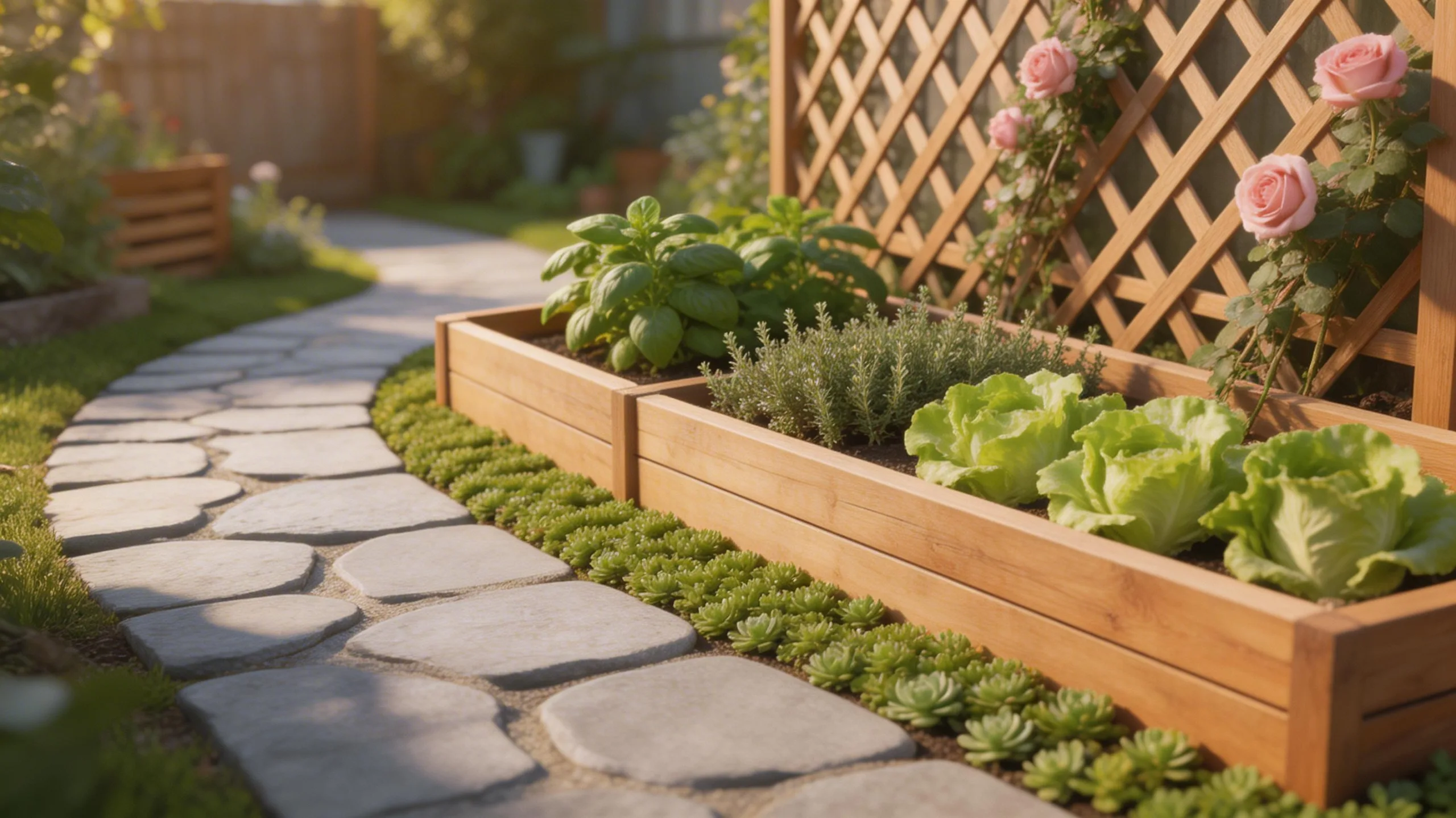
After making the most of vertical space with a raised bed, you can also expand your garden’s footprint horizontally by lining a walkway with a narrow bed. This approach transforms a simple path into a lush border, adding color and utility without needing a dedicated plot. You’ll create a beautiful, functional edge that makes every trip through your yard more enjoyable.
Choose plants that thrive in confined spaces and match your path’s conditions.
| Sunny Side | Shady Side | Universal Edgers |
|---|---|---|
| Creeping thyme | Ferns | Dwarf boxwood |
| Lavender | Hostas | Sweet alyssum |
| Sedum | Bleeding heart | Herbs like chives |
| Marigolds | Astilbe | Compact rosemary |
Just ensure your bed’s width doesn’t obstruct the walkway, keeping passage easy.
Utilize Every Inch With a Corner Garden
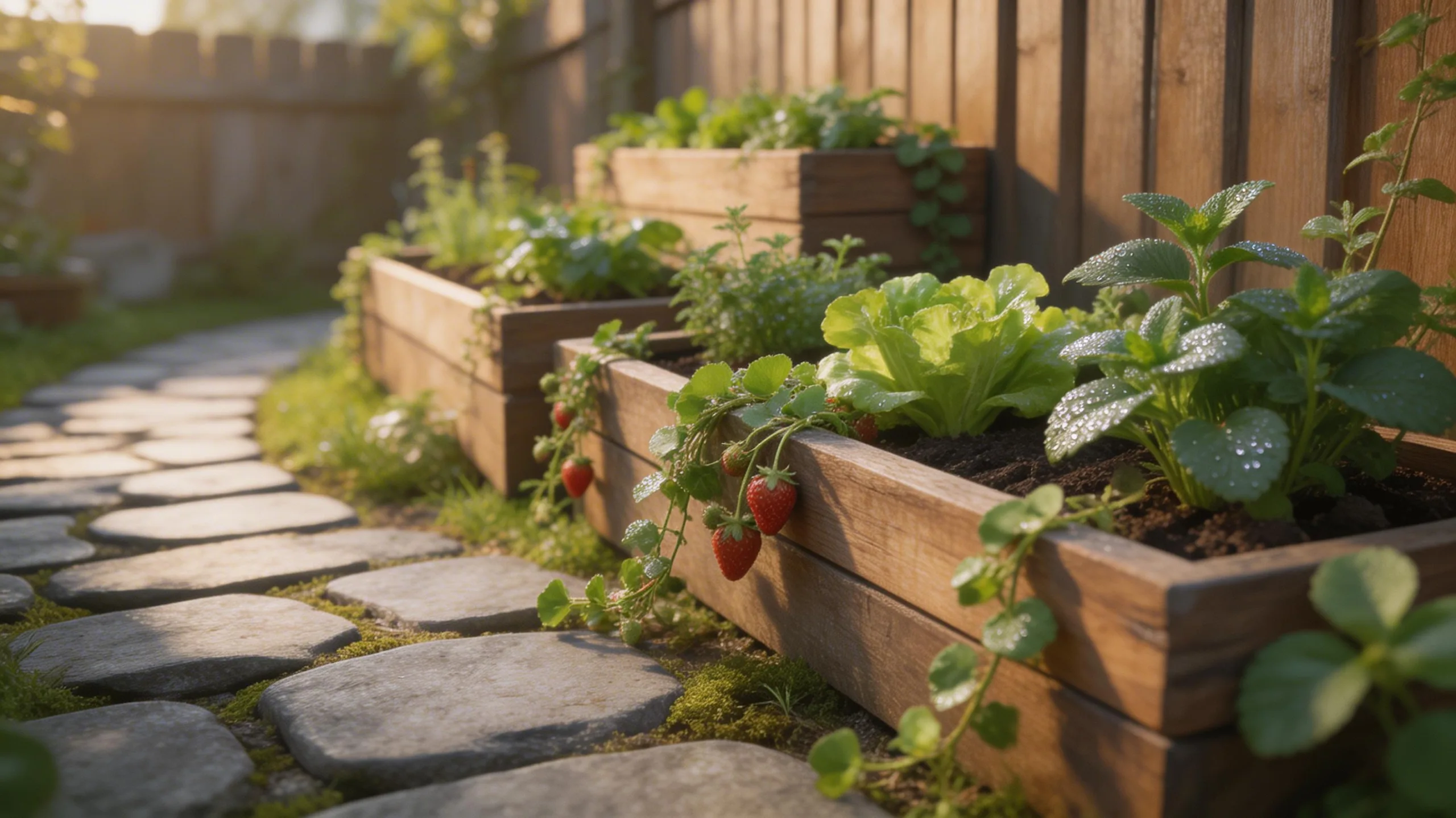
If you’re looking to maximize every bit of your outdoor space, consider tucking a vibrant garden into an unused corner. These spots often go forgotten but they’re perfect for a concentrated burst of color and life.
You’ll turn a dull, overlooked area into a focal point. Choose plants that thrive in the specific light conditions of your corner and use vertical elements like a small trellis to add height.
A triangular or curved bed design makes the most of the awkward shape.
- Tiered pots spilling with herbs and cascading flowers on a corner shelf.
- A tall, slender obelisk draped with sweet peas or morning glories.
- A curved stone border filled with shade-loving hostas and ferns.
- A small corner bench nestled beside a cluster of colorful annuals.
You’re not just filling a corner; you’re creating a charming retreat.
Plant a Space-Saving Square Foot Garden
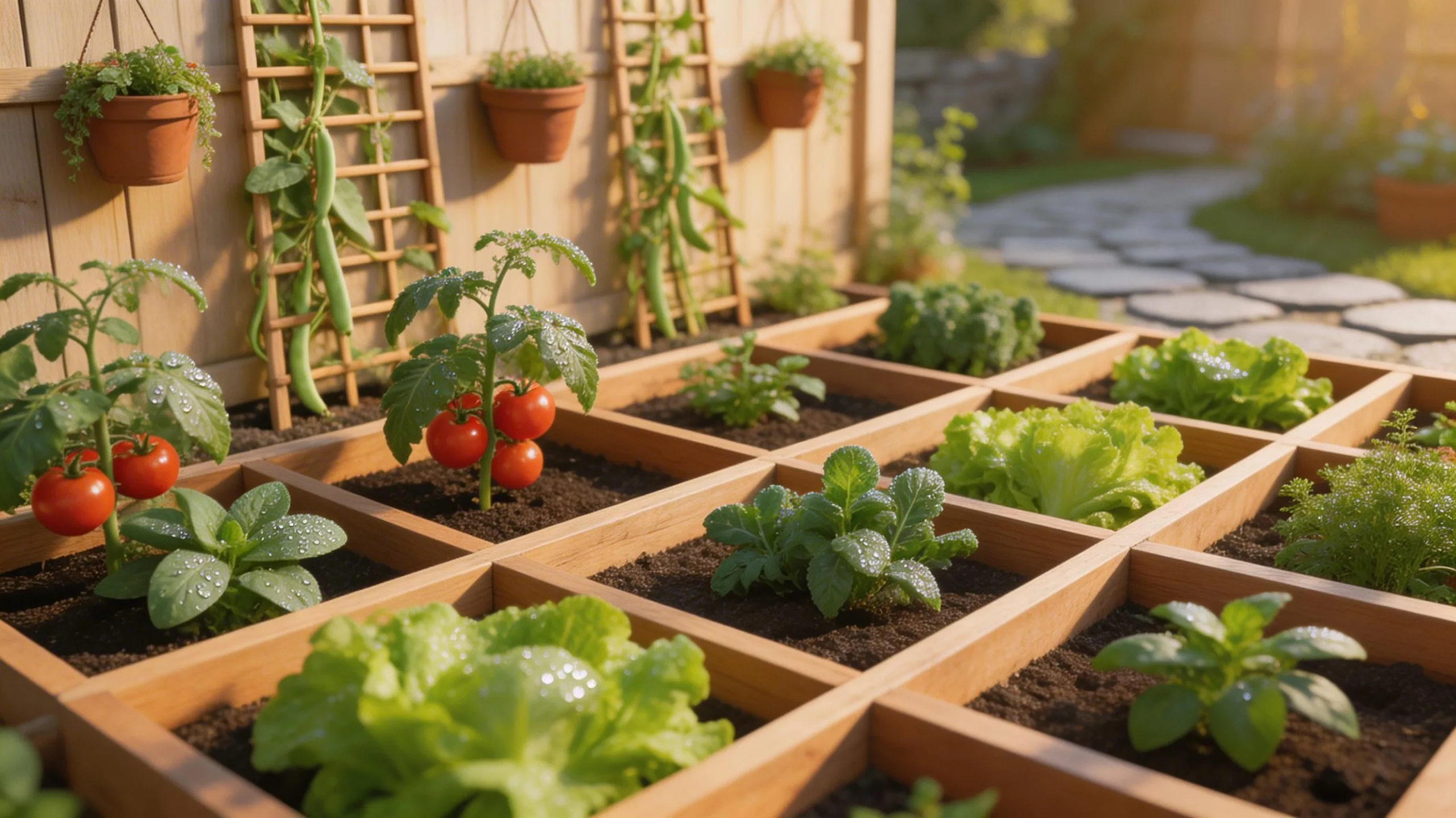
Forget complicated rows and wasted space—a square foot garden brings organization and high yields to even the tiniest plots.
You’ll start by building a raised bed and dividing it into clear one-foot squares using string or thin wood. This simple grid tells you exactly what to plant and where.
In each square, you’ll sow a specific number of seeds—like one tomato plant, nine bush beans, or sixteen radishes. It’s a brilliantly efficient system that stops you from overplanting and wasting seeds. You’ll maximize every single inch.
Because plants are grown so close together, they also form a living mulch, suppressing weeds and conserving water. It’s a perfect method for growing a huge variety in a compact area.
Build an Accessible Salad Table
Elevate your salads and your gardening by building an accessible salad table. This waist-high planter lets you grow lettuce, spinach, and radishes without bending, making it perfect for small patios or gardeners with limited mobility. You’ll assemble a simple, bottomless wooden frame on legs and fill it with a lightweight soil mix. Position it in a spot that gets at least six hours of sun.
- Picture a tidy, 4-foot-long cedar box resting securely on sturdy wooden legs.
- Imagine a lush carpet of butterhead lettuce and peppery arugula leaves nearly at your fingertips.
- Visualize harvesting crisp greens with simple snips from your standing position.
- See the shallow roots thriving in the well-draining potting mix within the contained frame.
You’ll enjoy fresh, continuous harvests right outside your door.
Tuck a Spiral Herb Garden Into a Sunny Spot
Tucked into a forgotten corner of your yard, a spiral herb garden maximizes your sunny space with a beautiful and practical design. Its winding form increases planting surface and creates microclimates—sun-loving thyme thrives on the peak, while shade-tolerant mint nestles in the lower, cooler coils.
You can build one easily with stacked stones, bricks, or even repurposed logs. Fill it with rich soil and plant your favorite culinary herbs.
The spiral’s compact footprint fits anywhere, turning a bare spot into a productive, fragrant focal point. You’ll harvest fresh flavors right outside your door, and the structure itself becomes a charming garden feature.
It’s a clever solution that combines artistry with utility, making the most of every inch.
Cram Plants Into a Container Collection
If you lack garden beds, a vibrant container collection makes any patio or balcony productive. Cramming plants into pots maximizes every inch. You’ll create a lush, layered effect by mixing plant types, heights, and textures.
- Place a tall tomato cage in the center of a deep pot, letting beans climb it.
- Surround that centerpiece with leafy lettuces and compact pepper plants.
- Tuck cascading herbs like oregano or nasturtiums over the pot’s edge.
- Slide shallow bowls of radishes or green onions underneath the larger containers.
Remember to use a quality potting mix and ensure each pot has drainage holes. Group your containers together based on their sunlight and watering needs for an easy-care, high-impact garden.
Use Stacked or Hanging Crates and Pallets
Stacked and hanging crates and pallets transform cramped spaces into vertical growing powerhouses. You’ll maximize every inch by turning walls and fences into productive gardens. Start with sturdy, untreated wood pallets; secure them vertically and fill the slats with soil for herbs or lettuces.
Stack wooden crates to create tiered planters, ensuring each layer drains properly. Hang smaller crates with strong ropes or chains for trailing plants like strawberries. This method drastically increases your planting area without spreading out.
It’s a budget-friendly project using repurposed materials. You’ll enjoy easier harvesting and a stunning visual display. Just remember to check stability and use quality potting mix to keep your vertical garden thriving all season.
Plant a Hanging Basket With Trailing Tomatoes
Hanging baskets aren’t just for flowers; they’re perfect for growing delicious trailing tomatoes right outside your door. You’ll save precious ground space and enjoy easy harvesting.
Choose a large, sturdy basket with coco liners and fill it with a quality potting mix blended with compost. Select a single “Tumbling Tom” or “Sweet Million” variety per basket for best results. Hang it in a spot that gets at least six hours of sun.
- Picture a woven basket brimming with lush green vines cascading over the edges.
- Imagine clusters of tiny, bright red or yellow cherry tomatoes glowing in the sunlight.
- Envision simply reaching up to pluck a few sun-warmed fruits for your salad.
- See yourself watering effortlessly with a long-spouted can directly at the soil.
Create a Windowsill or Balcony Herb Box
Even when you’re short on ground space, you can cultivate a chef’s supply of fresh flavors with a compact herb box on your windowsill or balcony. Choose a sunny spot that gets at least six hours of light daily. Plant a mix of your favorite culinary herbs in a container with good drainage. You’ll snip fresh basil for caprese, thyme for roasting, and mint for tea. Water when the soil feels dry to the touch. This setup turns a tiny footprint into a vibrant, aromatic garden that’s steps from your kitchen.
| Herb Choice | Quick Growing Tip |
|---|---|
| Basil | Pinch flowers to promote leafy growth. |
| Mint | Plant in its own pot; it’s invasive. |
| Rosemary | Prefers drier soil; don’t overwater. |
| Thyme | Thrives in full sun and well-drained soil. |
| Chives | Harvest by snipping leaves at the base. |
Select Dwarf or Patio-Sized Fruit Trees
Imagine harvesting lemons, apples, or peaches from your own patio or balcony. Dwarf and patio-sized fruit trees are bred specifically to stay compact while yielding full-sized, delicious fruit. You can grow them directly in containers, giving you incredible flexibility to arrange your small space. Just ensure you select a large pot with excellent drainage and use high-quality potting mix.
These little trees still need full sun—aim for at least six hours daily—and consistent watering. You’ll enjoy a bountiful, space-saving harvest for years.
- A compact ‘Meyer’ lemon tree in a glazed pot, its branches heavy with fragrant blossoms and yellow fruit.
- A columnar apple tree on a balcony, its vertical form draped with crisp, red apples.
- A petite peach tree in a half-barrel, offering up sun-warmed, fuzzy peaches.
- A trio of berry bushes in large containers, creating a mini orchard on a paved patio.
Train Espalier Fruit Trees Against a Wall
Transform a blank wall or fence into a living work of art and a source of fresh fruit by training an espalier. This ancient technique trains fruit trees like apples, pears, or figs to grow flat against a support.
You’ll save tremendous horizontal space while creating a beautiful, productive feature.
Start with a young, supple tree and a sturdy support system of wires. Prune and tie the branches regularly to guide their growth into your chosen pattern—a simple horizontal cordon, a classic fan, or an elegant candelabra.
This hands-on process is incredibly rewarding. You’ll get easier harvesting, better sun exposure for ripening fruit, and a stunning garden focal point that yields delicious rewards for years.
Integrate Edibles Into Your Flower Borders
Now, think of your flower borders as more than just decorative. You can integrate edible plants seamlessly, boosting your garden’s productivity and beauty without needing extra plots. Choose edibles that complement your flowers in height, color, and texture. This clever approach gives you a harvest right from your ornamental spaces.
- Let ruby-red leaf lettuce curl around the base of your purple salvias.
- Plant frilly parsley to fill gaps between bright pink geraniums.
- Mix vibrant nasturtiums, with their peppery blooms, among your marigolds.
- Train compact cherry tomato vines to climb behind a row of sunflowers.
You’ll enjoy fresh salads and herbs while your garden looks stunning. It’s a brilliantly efficient way to grow more in your small backyard.
Save Space With a Fold-Down Shelf for Pots
You can reclaim vertical wall space with a fold-down shelf designed specifically for pots. Mount it on a sunny fence or a blank wall, and you’ll instantly create a new planting tier. When you need the floor space for entertaining or play, just lift the shelf and secure it flat against the wall—your pots stay put!
It’s a brilliant solution for renters or anyone with a tiny patio. You can build one using sturdy hinges and a plank, or buy a ready-made version. Use it to display herbs, succulents, or seasonal annuals right at eye level. This clever hack maximizes your growing area without cluttering your precious square footage.
Reflect More Light With a Mirrored Backdrop
Another way to make the most of tight spaces is by bouncing extra sunlight into your garden using a mirrored backdrop. It’s a clever trick that visually expands your area and gives light-loving plants an extra boost.
You can lean a large, sturdy mirror against a fence or mount safety-backed acrylic panels. Just angle them to catch and throw morning or afternoon rays into shadier corners. You’ll see your space instantly brighten and feel larger.
- Sunlight glinting off a sleek panel mounted on your back fence.
- A lush, green fern in a once-dim corner now bathed in reflected golden hour glow.
- A compact patio feeling airy and open, its boundaries seemingly pushed back.
- Vibrant blooms on your tomatoes or peppers, thriving with the added daily light dose.
Mount Tools to Free Up Floor Space
Get those shovels, rakes, and hoses off the ground by mounting them on walls or fences. You’ll instantly reclaim valuable floor space and make your small garden feel larger.
Install heavy-duty hooks, pegboards, or slatwall panels on any sturdy vertical surface. Hang long-handled tools vertically to keep them organized and easy to grab. Use a wall-mounted hose reel to eliminate tripping hazards and prevent kinks. You can even mount shelves for potted herbs or seed packets.
This simple strategy clears your pathways, protects your gear from dirt and damage, and boosts efficiency. Every minute saved hunting for a trowel is another minute you can spend enjoying your beautiful, clutter-free garden oasis.
Frequently Asked Questions
How Do I Protect Vertical Plants From Wind?
Secure them to a sturdy trellis, anchor it deeply, and choose wind-tolerant plants. Use mesh or fabric as a windbreak on their exposed side and prune them to keep a streamlined shape that resists gusts.
What Is the Best Soil Mix for Stacked Containers?
Use a lightweight potting mix with perlite for drainage. Add compost to retain moisture and nutrients in those stacked pots. You’ll keep everything healthy without overloading your structure. Don’t use heavy garden soil.
How Often Should I Water a Pocket Planter Wall?
Check your pocket planter’s soil daily. You’ll likely water small pockets often, maybe every day in hot sun. Since they dry fast, stick your finger in; if it’s dry, give them a drink.
Can I Use Regular Fertilizer for Dwarf Fruit Trees?
Yes, you can, but choose a balanced, slow-release type. Apply it correctly in spring, following package instructions based on your tree’s size. Over-fertilizing harms them, so don’t overdo it.
How Do I Prevent Pests in a Dense Square Foot Garden?
Mix companion plants like marigolds into your beds to deter insects. You’ll encourage beneficial predators with diverse flowers. Inspect plants often and manually remove pests you find. Rotate crops each season to break pest life cycles.
Conclusion
Now you’ve got the plan to turn your compact backyard into a lush, productive oasis. Mix these clever ideas, pick the right plants, and get creative with your walls and fences. You’ll maximize every inch, enjoy fresh harvests, and love your new outdoor retreat. So grab your tools and start building your dream garden today—it’s completely within your reach
The Only Tools You Need for a Thriving Garden 🌱
Whether you're a weekend gardener or growing daily — these hand-picked tools make every session faster, easier, and more satisfying.