You might feel your small garden lacks space, but you’re likely overlooking its vertical potential. Clever, stylish solutions can transform even the tiniest balcony or patio into a lush, functional retreat. Imagine maximizing your planting area while adding depth and instant charm. The real secret lies in a few key strategies that completely redefine how you use every inch.
Key Takeaways
- Utilize vertical space with wall-mounted herb gardens or hanging gutter planters.
- Implement fold-away trellises or tiered shelves to maximize planting area.
- Create privacy with living screens like ornamental grasses or clumping bamboo.
- Choose statement plants like Japanese maples as focal points for impact.
- Layer plants by height and group pots to create visual depth and flow.
Go Vertical With a Wall-Mounted Herb Garden

By maximizing your vertical space with a wall-mounted herb garden, you instantly gain fresh flavors without sacrificing precious ground. You’re taking advantage of often-wasted sun-drenched walls.
Mounting a simple tiered planter or a recycled pallet on a sunny exterior wall is your easiest entry point. You’ll want to position it where you get at least six hours of sunlight daily for robust growth.
Choose a soil mix designed for containers to ensure proper drainage and prevent root rot. For a kitchen-side harvest, install a slim, self-watering system indoors.
You can snip fresh basil or thyme while cooking, transforming ordinary meals. It’s a living piece of functional art that elevates your space and your dishes effortlessly.
Try Cascading Pots for a Multi-Level Effect

Take your vertical gardening to another dimension by stacking pots in a cascading arrangement. You can use a dedicated multi-pot planter or simply place smaller pots inside larger ones, ensuring you’ve got drainage for each.
This creates a stunning, multi-level effect that adds height and draws the eye upward. It’s perfect for trailing plants like ivy, petunias, or creeping thyme, which will spill over the edges and soften the structure.
You’re not just saving space; you’re crafting a living sculpture. Place your cascade in a sunny corner or hang it on a sturdy bracket to transform a blank wall.
This dynamic approach maximizes your planting area and introduces captivating texture to your tiny garden.
Install Tiered Shelves to Create a Green Staircase

Install tiered shelves to build a living staircase of plants in your small garden. This vertical solution maximizes your footprint by stacking greenery, adding dynamic height and depth. You can repurpose wooden ladders, install simple wall-mounted brackets, or use ready-made plant stands. Choose plants with varying textures and colors for each level to create a stunning, layered display. Herbs, succulents, and trailing vines work beautifully. This approach isn’t just decorative; it’s a smart, accessible way to cultivate more in less space.
- A rustic wooden ladder with terracotta pots on every step
- Cascading ivy softening the edges of each shelf
- Vibrant red geraniums on the top tier catching the sun
- Fragrant rosemary and thyme on the middle level for easy harvesting
- Mossy green succulents nestled on the bottom shelf
Grow Upwards With a Hanging Gutter Garden
Another clever vertical solution is a hanging gutter garden, which repurposes basic rain gutters into elevated planters. You’ll mount these lightweight channels on a sunny wall or fence using brackets and strong rope or chain. Drill drainage holes in the bottom first to prevent soggy roots.
This system is perfect for shallow-rooted herbs like basil and thyme, leafy lettuces, or vibrant strawberries. You’re creating a lush, living curtain that maximizes every inch. It’s a wonderfully thrifty project that recycles materials and instantly adds a unique, productive feature to your space.
Seeing your plants thrive in this unexpected planter brings a special sense of accomplishment and transforms a bare vertical surface into a feast for the eyes.
Build a Fold-Away Trellis for Climbing Plants
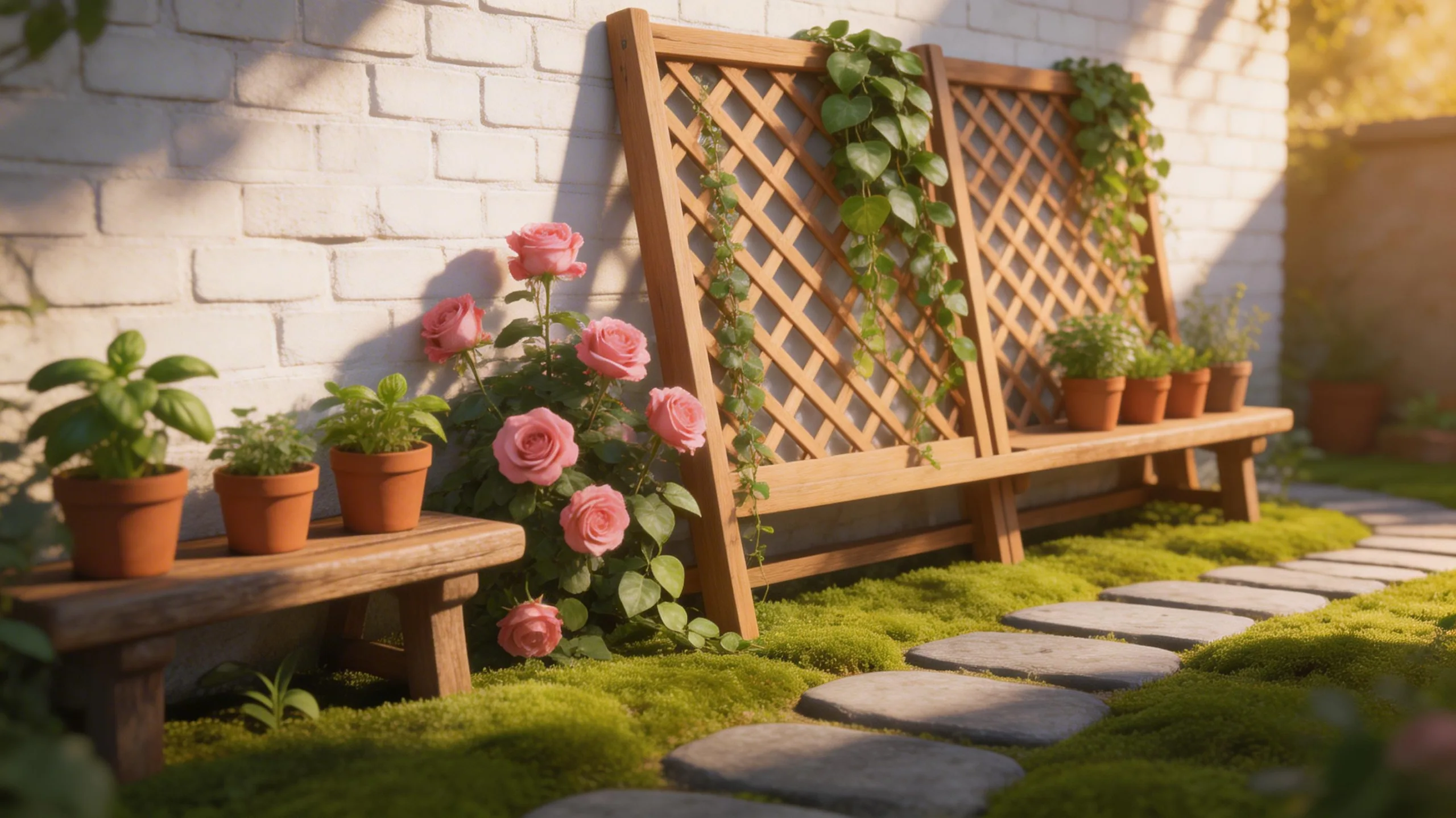
If you’re tight on space but dream of growing climbing plants like beans or cucumbers, a fold-away trellis offers you a brilliant, adaptable solution.
It’s a vertical garden you can put away after the season, freeing up precious ground area.
You’ll need a simple wooden frame with sturdy wire or nylon mesh.
Attach it securely to a wall or fence using strong hinges and add a hook-and-eye latch for stability.
- Imagine a compact wooden rectangle neatly secured against your sunny fence.
- Picture lush cucumber vines weaving through the open wire grid.
- See the entire structure, heavy with beans, easily folding flat against the wall.
- Visualize storing the empty trellis in your shed over winter.
- Envision rotating its position next season for a new crop.
This project maximizes your yield without sacrificing your patio space.
Choose a Statement Plant for Instant Impact

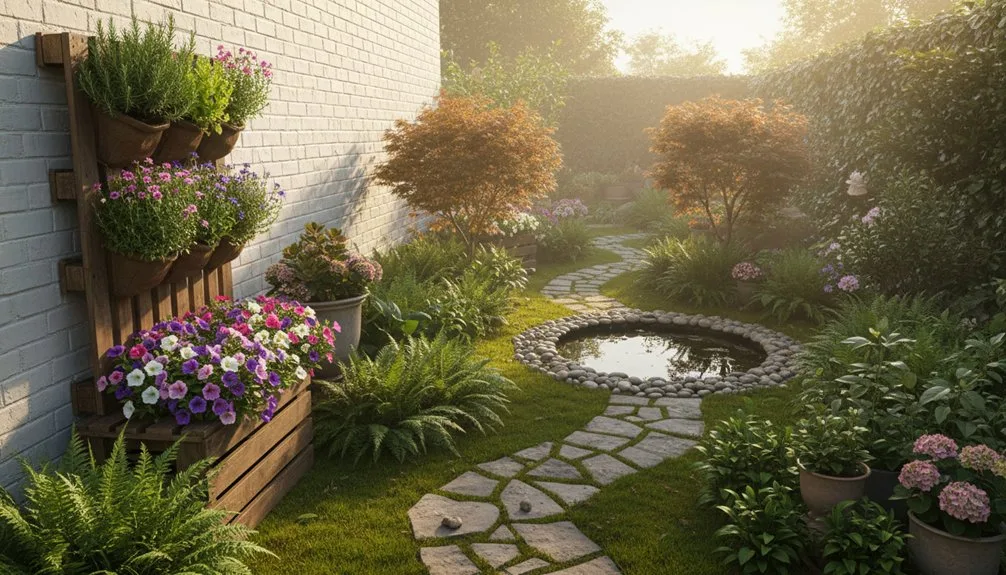
Draw attention with a single bold specimen strategically placed. You don’t need many plants; a striking architectural form or vibrant foliage instantly anchors your space.
Look for a dramatic Japanese maple, a sculptural phormium, or a textural weeping dwarf conifer. This focal point gives your garden immediate structure and personality.
Place it where you’ll see it most, perhaps beside a path or framed by a window. Its presence makes the surrounding area feel curated rather than cluttered.
You’ll find that even the smallest plot gains a sense of depth and purpose from this one powerful choice. A statement plant isn’t just decoration; it’s the heart of your design, transforming a tiny garden into a memorable retreat.
Select the Best Plants for Tight Spaces

Once you’ve established a focal point, you’ll want to fill the remaining areas with plants that thrive in close quarters. Prioritize those with vertical growth, interesting textures, or compact habits to maximize every inch. You’re not just filling space; you’re crafting a lush, layered look. Your best choices are often slow-growing, drought-tolerant, or naturally petite varieties that won’t outgrow their welcome.
- The spiky, architectural form of a dwarf aloe vera in a terracotta pot.
- A cascade of silvery-green String of Pearls spilling from a hanging basket.
- The sleek, upright blades of a snake plant standing sentinel in a corner.
- A compact Japanese maple with fiery red foliage, pruned to perfection.
- A fragrant herb tower brimming with thyme, oregano, and chives.
Selecting these thoughtful companions turns limitations into a curated collection.
Create a Mini Meadow With Potted Wildflowers

For a burst of untamed color and life, transform a collection of pots into a mini meadow with native wildflowers.
Choose a vibrant mix of seeds suited to your region; these plants are naturally hardy and support local pollinators like bees and butterflies.
Use deep containers with excellent drainage, and fill them with a well-draining soil mix.
Scatter seeds lightly, cover them with a thin soil layer, and keep the surface moist for germination.
Group your pots closely on a balcony or patio to mimic a natural, flowing display.
You’ll create a dynamic, low-maintenance habitat that changes daily as different flowers bloom and fade, bringing a joyful piece of wilderness to your doorstep.
Plant a Succulent Tabletop Garden for Low Maintenance
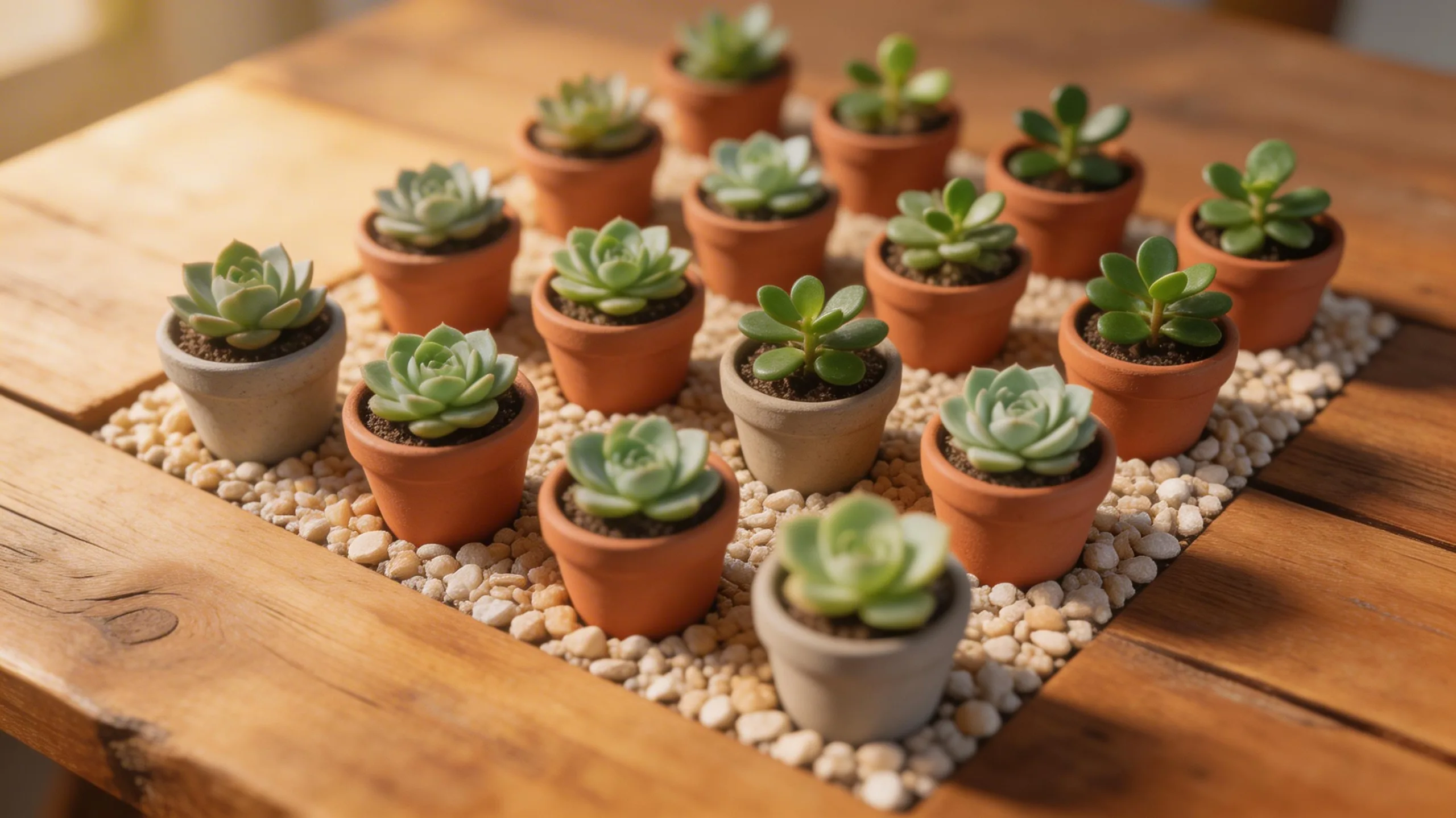
You can craft a stunning, resilient centerpiece by planting a succulent tabletop garden. These plants thrive on neglect, needing only bright, indirect light and infrequent watering. Choose a wide, shallow container with a drainage hole, then fill it with a gritty, cactus-specific soil mix. Their sculptural forms and diverse colors create living art that’s perfectly scaled for a tiny balcony, sunny windowsill, or coffee table.
- A shallow ceramic bowl brimming with rosettes of green and violet echeveria.
- The architectural spike of a blue chalk sticks succulent rising from the arrangement.
- A trailing string of pearls delicately cascading over the container’s edge.
- Textured, stone-like lithops nestled amongst the larger plants.
- Sunlight highlighting the delicate, fuzzy hairs on a panda plant’s leaves.
Arrange Plants by Height to Add Depth
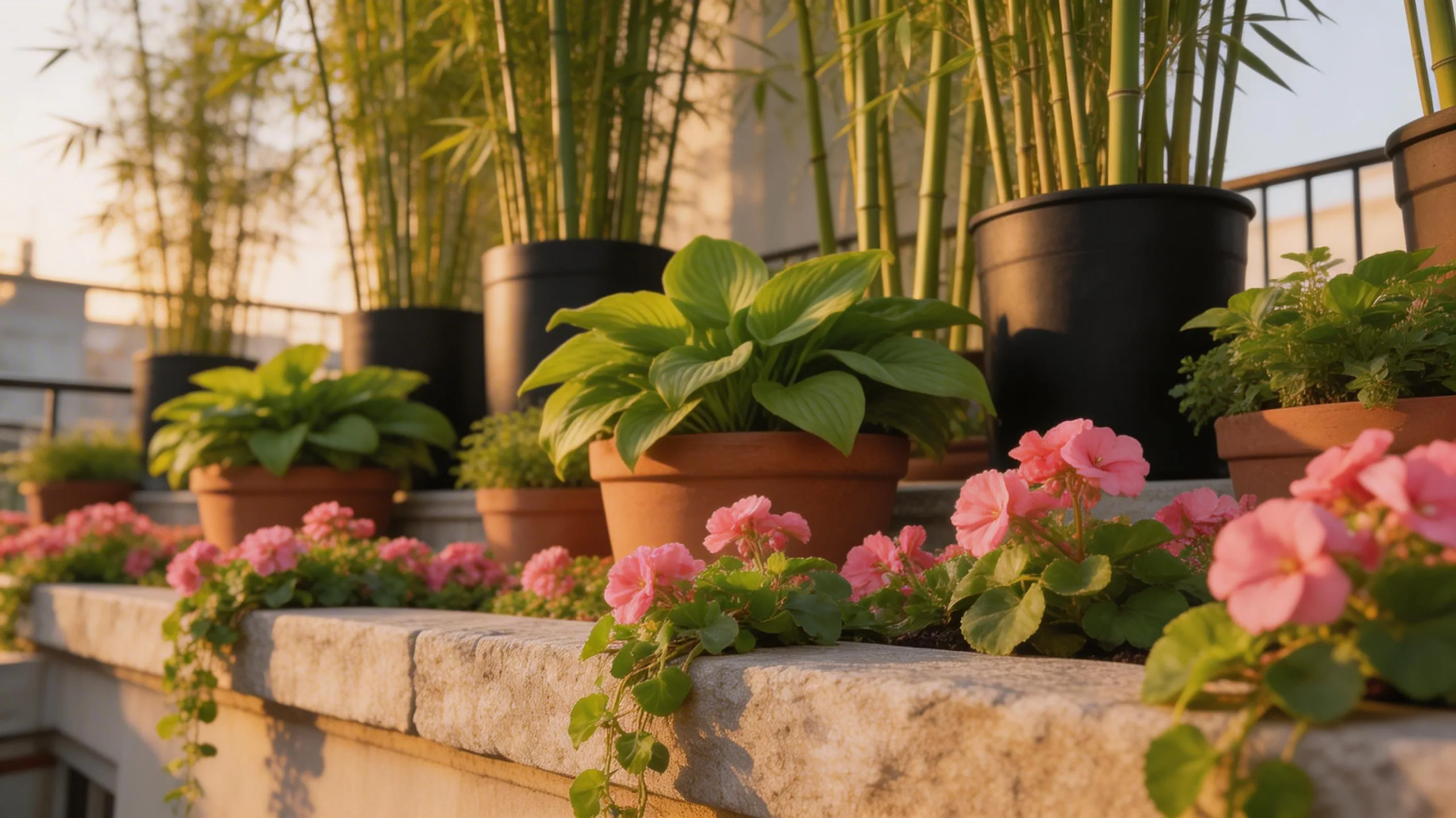
Create a sense of lush abundance and visual intrigue in your small garden by deliberately arranging plants according to their height. You’ll instantly add depth and dimension, making your space feel larger. Start with taller “thriller” plants at the back or center, use mid-height “filler” plants to create body, and edge your beds with low-growing “spillers” that cascade over borders. Think of it as building a living tapestry. This layering technique guides the eye through the garden, creating pockets of discovery rather than a single, flat view. It’s a simple, powerful design principle that maximizes impact in minimal square footage.
| Layer | Role | Example Plants |
|---|---|---|
| Back/Tall | Thriller | Ornamental Grasses, Foxglove |
| Middle | Filler | Salvia, Heuchera |
| Front/Low | Spiller | Creeping Thyme, Alyssum |
Create Privacy With a Screen of Bamboo or Grasses
Another way to maximize a small garden’s potential is by establishing a living privacy screen using bamboo or tall grasses. You’ll gain seclusion without building a solid fence, which can make a space feel smaller.
Opt for clumping bamboo varieties to prevent invasive spread, or choose elegant ornamental grasses like miscanthus or pampas grass. Plant them in a row along your boundary or in large, sleek containers to define a cozy corner. You’re not just building a wall; you’re introducing movement, sound, and texture.
- The gentle rustle of tall feathery plumes in a summer breeze.
- A dense, green wall that filters sunlight into soft dappled patterns.
- Golden stems catching the low light of a winter afternoon.
- The elegant, arching form of bamboo creating a natural backdrop.
- A sheltered nook created solely by this living architecture.
Use Mirrors to Visually Double Your Space
Consider opening up your garden by strategically placing mirrors to create an illusion of depth. Position them to reflect your best features—like a stunning plant or a beautiful pot—to instantly double their presence.
Tuck a large mirror against a boundary wall to make it vanish, or angle one to bounce light into a dim corner. Always use weatherproof, safety-backed mirrors designed for outdoor use to prevent any risk.
You’ll find this simple trick transforms a cramped area, making it feel expansive and full of light. It’s a clever optical illusion that adds mystery and a sense of discovery, turning your tiny plot into a magical, seemingly endless retreat.
Paint a Focal Wall to Define Your Garden Zone
A bold splash of color on a focal wall instantly carves out a distinct area in your garden, giving it purpose and personality. You’re not just decorating; you’re architecting zones for dining, lounging, or potting without physical barriers.
Choose a weather-resistant masonry paint in a hue that complements your plant palette. A deep emerald wall makes a lush backdrop for ferns, while a terracotta shade warms up a seating nook.
This single act of paint transforms a forgotten boundary into your garden’s most dynamic feature, making the entire space feel intentionally designed and larger than its footprint.
- A vibrant cobalt blue wall making white-painted furniture and pots truly pop.
- Soft sage green creating a serene, enveloping feel for a meditative corner.
- A wall of warm ochre mimicking sunset light throughout the day.
- Crisp, clean white reflecting light and making greenery appear more vivid.
- Charcoal gray providing a dramatic, modern stage for sculptural plants and bright blooms.
Hang a Canopy of Fairy Lights for Evening Magic
Drape your garden in a canopy of fairy lights to transform it into a twinkling retreat as dusk settles. This simple addition extends your enjoyment of the space into the evening, creating instant ambiance. You can string them overhead between posts, fences, or walls. Choose warm white bulbs for a classic glow or soft colors for a playful vibe. Solar-powered options make installation a breeze, eliminating the need for outdoor plugs. Just ensure they’re rated for outdoor use to withstand the elements. Suddenly, your intimate garden becomes a magical haven perfect for relaxation or entertaining under the stars.
| Support Method | Light Style | Best For |
|---|---|---|
| Overhead Wires | Edison Bulbs | A Rustic, Industrial Feel |
| Along Fence Lines | Mini LEDs | Defining Borders Clearly |
| In Tree Branches | Globe Lights | Creating Dappled Patterns |
| On a Pergola | Cafe/String Lights | Cozy Dining Areas |
| Against a Wall | Curtain Lights | A Dramatic Backdrop |
Install a Slim Water Feature for Sound and Movement
Transform your small garden with a slim water feature to introduce the soothing sounds of flowing water without taking up much space. You’ll find it adds a dynamic focal point, masking unwanted noise with its gentle trickle.
Opt for a self-contained, wall-mounted unit or a narrow, freestanding column that tucks neatly into a corner. It’s an easy, impactful upgrade you can DIY or buy ready-made.
The constant movement and sound create an instant sense of tranquility, making your tiny plot feel like a secluded retreat.
- A sleek copper spout pouring a thin sheet of water into a pebble-filled basin.
- A contemporary wall panel where water cascades silently down a textured slate surface.
- A slender bamboo spout (shishi-odoshi) rhythmically tipping to fill your space with its peaceful clack.
- A modern, tall cylinder where a bubbling stream emerges from a minimalist opening.
- A narrow trough with a quiet, recirculating pump sending a gentle ripple across the surface.
Pick Multipurpose Furniture With Built-In Storage
Make the most of your limited square footage by choosing furniture that works twice as hard, offering a comfortable place to sit while cleverly concealing gardening tools, cushions, or outdoor supplies within its structure.
Look for a weather-resistant bench with a hinged top that lifts to reveal a deep, dry storage compartment. An ottoman with a hollow interior can stow throws or games, and a compact side table might hide a removable cooler.
This strategy instantly declutters your space, keeping essentials close but out of sight, which makes your garden feel larger and more serene. You’re not just buying a seat; you’re investing in smart, seamless organization that maximizes every single inch for both beauty and function.
Build a Corner Bench That Holds Your Plants
Carve out extra seating and more greenery by building a corner bench with built-in planters. This ingenious DIY solution tucks neatly into an unused corner, instantly adding function and life to your tiny garden.
Use weather-resistant wood like cedar and include drainage holes in the planter boxes to keep plants healthy. You’ll create a charming, multi-purpose nook perfect for morning coffee or evening relaxation.
- A sturdy wooden L-shape anchored against two walls.
- Two deep, square planters integrated into the bench’s base.
- A trailing ivy spilling gracefully over a planter’s edge.
- Bright, colorful annuals filling the second box with vibrant pops.
- A comfortable, cushion-topped seat inviting you to sit and enjoy the blooms.
Use Stackable Planters to Maximize Surface Area
Another way to make the most of your limited footprint is by stacking your pots. Stackable planters let you grow upwards, not just outwards, instantly multiplying your growing area. You’ll create a lush, vertical tapestry that draws the eye upward, making the space feel larger. Look for tiered, modular systems specifically designed for secure stacking. You can mix herbs, flowers, and trailing strawberries in a single column.
This method isn’t just efficient; it’s also visually dynamic. You’re building a living sculpture that changes with the seasons. It’s a brilliant solution for balconies, patios, or narrow side yards where every square inch counts. You’ll be amazed at the bounty you can cultivate in such a compact, beautiful form.
Lay Modular Decking Tiles for a Quick Floor Update
Transform an outdoor surface by simply snapping together modular decking tiles. They’re a renter-friendly, weekend project that instantly elevates a drab concrete patio or uneven ground. You don’t need special tools or skills—just interlock the panels over your existing base.
Choose from wood-look, composite, or stone-effect styles to create a cohesive floor that defines your seating or dining zone. This quick update adds texture and warmth, making your small garden feel like a deliberate outdoor room.
- Clicking square, wood-grain tiles together over gray concrete.
- Creating a clean, level platform for your bistro set.
- Feeling the textured, slip-resistant surface underfoot.
- Outlining a geometric pattern with darker accent tiles.
- Bordering the new deck with your stacked planters.
Add Color With Weather-Resistant Outdoor Rugs
An easy outdoor rug can add a bold focal point to your small garden. Look for weather-resistant polypropylene rugs; they’re durable, quick-drying, and perfect for patios, decks, or even grass.
Choose a vibrant pattern or solid color to define your seating area and make the space feel intentional. You’ll instantly boost its style. Just unroll it under your bistro set or lounge chairs.
This simple layer adds texture and comfort underfoot, making your garden more inviting for relaxing or entertaining. Since these rugs are easy to clean with a hose, you won’t worry about maintenance.
It’s a quick, high-impact update that proves you don’t need a lot of square footage to create a stunning outdoor room.
Frequently Asked Questions
How Do I Keep My Herbs Watered Vertically?
Use a drip irrigation kit or self-watering vertical planter. You can also repurpose containers with built-in reservoirs. Check soil moisture daily; it’ll dry faster. Group thirsty herbs together to simplify your watering routine.
What’s the Best Soil Mix for Vertical Planters?
Use a lightweight, well-draining mix. Combine potting soil with perlite and coconut coir. You’ll give roots excellent aeration and moisture retention, which is essential because dense soil can cause waterlogging in a vertical planter.
How Do I Anchor Shelves Securely on Walls?
First, find your wall’s studs for the strongest hold. Use the right anchors—toggle bolts for drywall or masonry anchors for brick. You’ll secure those shelves for a perfectly organized, inspiring garden display.
Can Gutter Gardens Handle Heavy Rain?
Yes, they can! You’ll just need to ensure your gutters have adequate drainage holes and you’re using a lightweight, fast-draining soil mix to prevent waterlogging your plants during a downpour.
How Do I Keep a Trellis From Damaging Walls?
Use wall anchors or standoffs to create an air gap, so you’re not attaching the trellis directly to the siding. This prevents moisture buildup and lets your climbing plants thrive without harming your walls.
Conclusion
You’ve got the power to transform your small space. By thinking vertically, stacking smartly, and choosing multifunctional pieces, you’ll create a garden that feels both lush and perfectly organized. Remember, it’s about layering charm and function. So embrace these ideas, get creative with your layout, and watch your tiny oasis thrive.
The Only Tools You Need for a Thriving Garden 🌱
Whether you're a weekend gardener or growing daily — these hand-picked tools make every session faster, easier, and more satisfying.