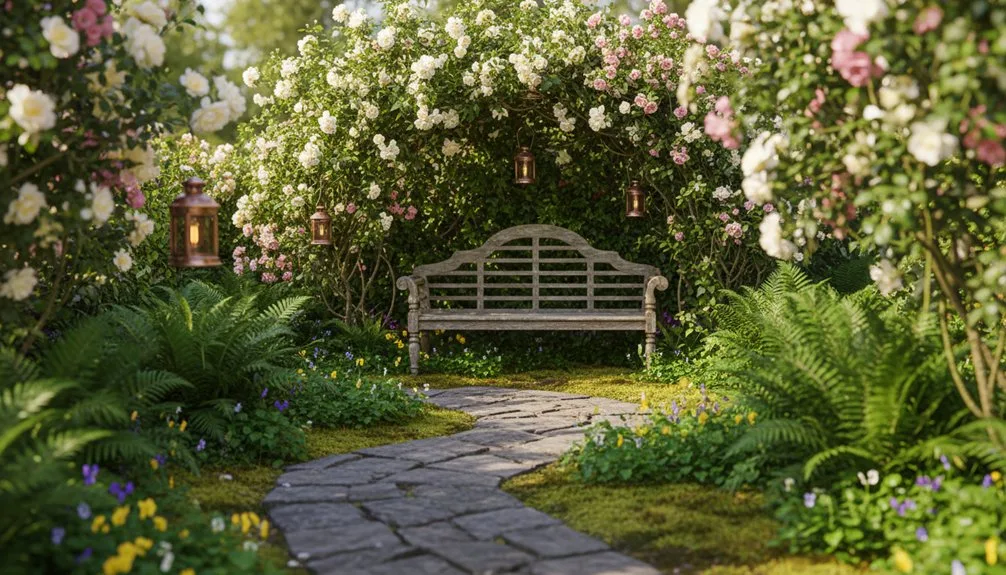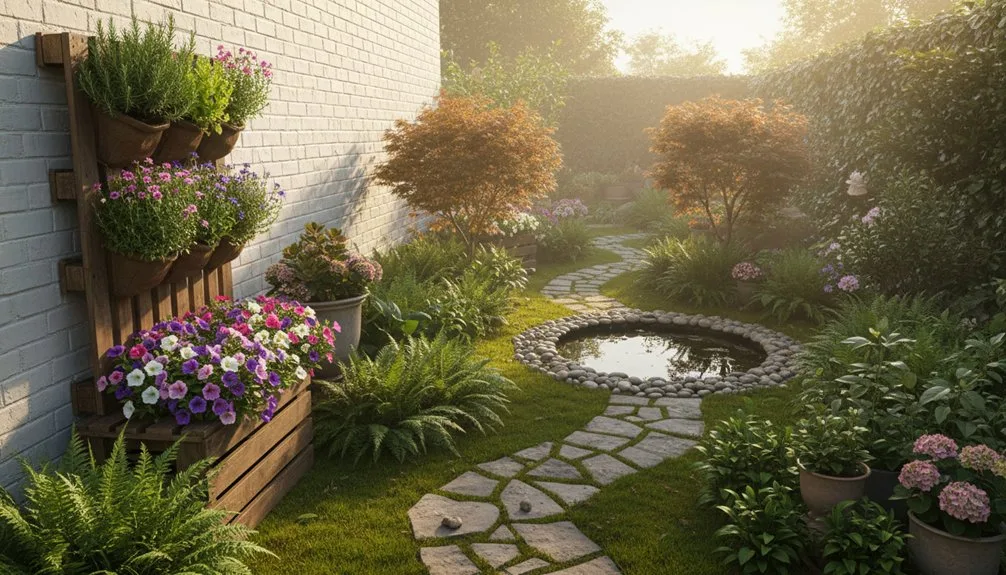

You might assume your small balcony can’t host a real garden, but with smart container choices and vertical solutions, you’ll prove yourself wrong. Selecting the right plants and arrangements requires you to assess microclimates, drainage, and exposure first. Discover how to transform that limited space into a lush, productive retreat by applying a few key principles.
Key Takeaways
- Install tiered shelves or rail planters to maximize vertical space and light exposure.
- Choose lightweight containers with good drainage to prevent root rot.
- Select compact vegetable cultivars and herbs suited for pots and balcony conditions.
- Use vertical wall planters and foldable furniture for adaptable, space-saving layouts.
- Water deeply and feed regularly to maintain healthy growth in limited soil volume.
Assess Your Balcony’s Sun and Space
Before you buy a single plant, take a day to observe exactly how the sun moves across your balcony space, because this will determine everything you can successfully grow. You’ll need to figure out if you’ve got full sun (6+ hours), partial sun (3-6 hours), or full shade.
Pay attention to how structures or walls cast shadows. Then, measure your floor and railing space precisely. You’re not just counting square feet; you’re planning for plant height, spread, and weight.
A sprawling tomato needs a different spot than a compact herb. This botanical assessment is critical—a sun-loving lavender will fail in deep shade, while a hosta will scorch in direct afternoon light. Get this right and your plants will thrive.
Select the Best Containers for Balcony Gardening
Choosing your containers wisely unlocks the potential of your small space, as material, size, and drainage are as vital for plant health as sun and soil.
You’ll want lightweight, frost-resistant resin or fiberglass for most needs, reserving breathable terra cotta for drought-tolerant herbs like rosemary.
Always ensure pots have multiple drainage holes to prevent root rot.
Match container depth to root systems; use shallow bowls for succulents but deep planters for tomatoes.
Consider vertical space with stackable pots or railing planters to maximize your square footage.
Remember, a larger soil volume retains moisture longer, reducing watering frequency.
Your selections directly impact plant vigor and your balcony’s overall aesthetic and function.
Install the Right Soil for Your Container Plants
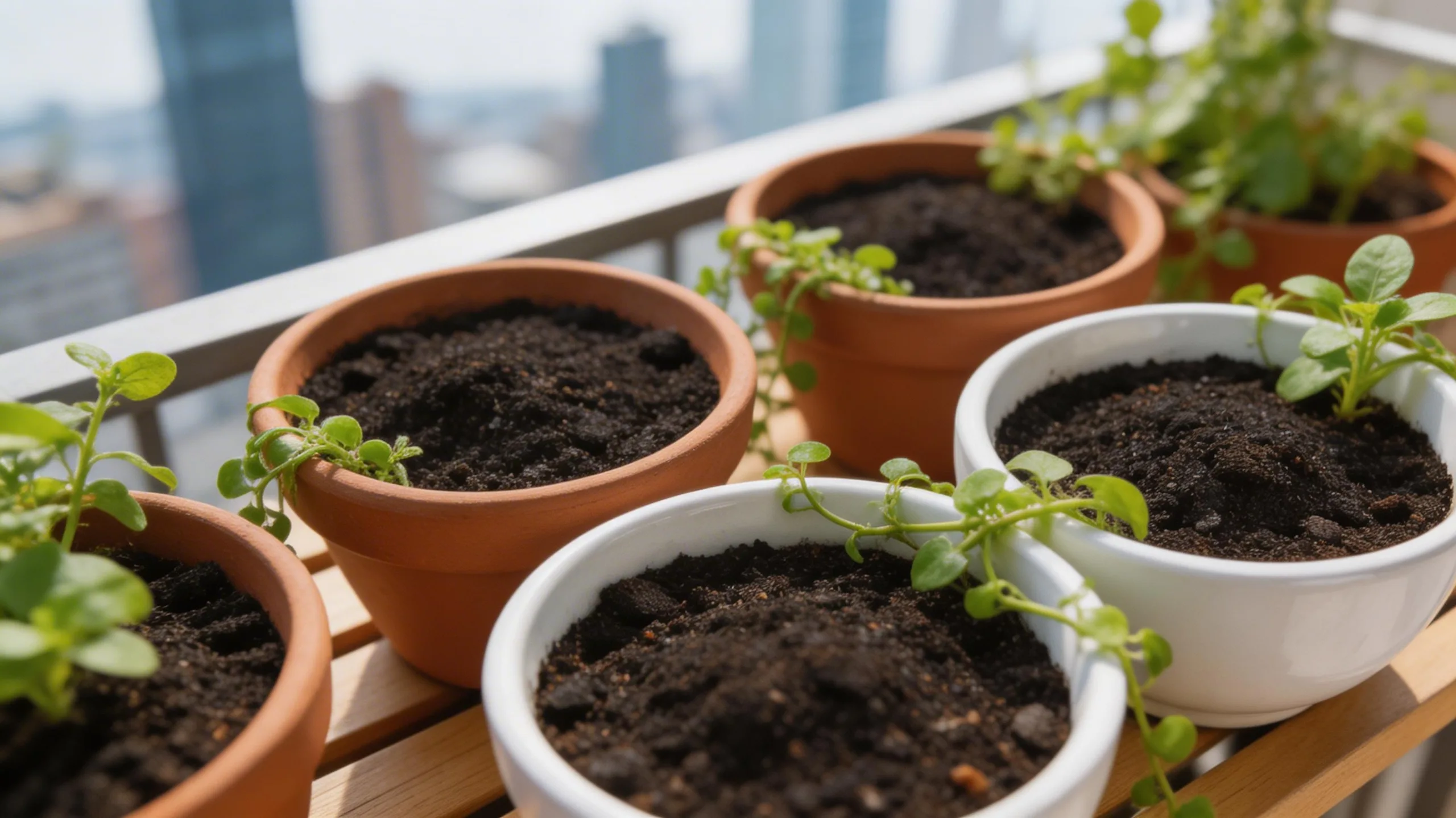
Once you’ve selected your containers, the soil you fill them with becomes the primary source of nutrients and support for your plants. Never use garden soil, as it compacts in pots and hinders drainage. You must install a high-quality, lightweight potting mix specifically formulated for containers. These mixes contain ingredients like peat moss, coir, perlite, and vermiculite, which create the ideal airy, well-draining structure.
You should also consider the needs of specific plants. For example, many herbs and vegetables thrive in a standard mix, while succulents require a gritty, fast-draining blend amended with sand. Always ensure your mix is fresh and sterile to avoid introducing pests or diseases. Fill your container nearly to the top, leaving just a bit of room for watering.
Protect Plants From Wind and Extreme Sun

Even though your balcony garden is a contained space, it’s exposed to the same harsh weather conditions as any outdoor area, so protecting your plants from wind and intense sun becomes crucial.
You can strategically place taller, sturdier plants, like ornamental grasses or small shrubs, to create a living windbreak for more delicate specimens.
For sun protection, consider installing a lightweight shade cloth that filters intense afternoon rays, preventing leaf scorch.
Observe your balcony’s specific microclimate; full-sun plants tolerate at least six hours of direct light, while partial-shade varieties need respite.
Always ensure your plant choices match the light and exposure they’ll actually receive in your unique space to avoid stress and promote healthy growth.
Choose Between Pots, Planters, and Boxes
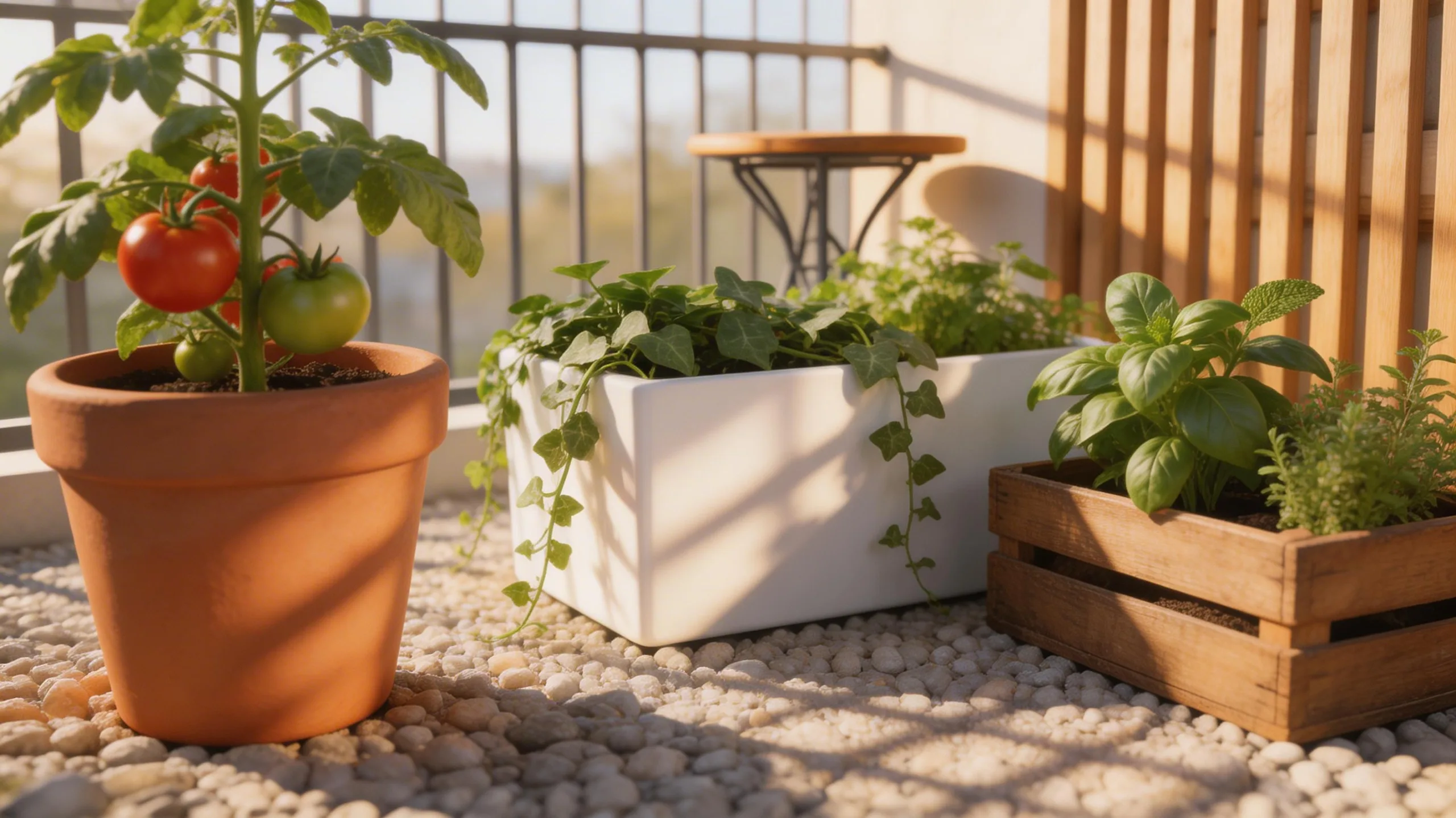
Now, let’s consider the vessels for your plants, as your choice between pots, planters, and boxes directly impacts soil volume, root health, and your garden’s overall design.
Pots are individual containers, ideal for single specimens like a dwarf citrus tree or a deep-rooted herb. They offer precise control over each plant’s soil and water needs.
Planters are typically longer and shallower, perfect for creating mixed arrangements of shallow-rooted annuals or succulents.
Boxes, often wooden, provide the greatest soil volume and stability for larger vegetables or a series of perennials. Always ensure your chosen vessel has adequate drainage holes. Match the container’s depth to your plant’s root system; deep roots require deep pots to prevent circling and stunting.
Maximize Space With Vertical Wall Planters

You can reclaim valuable floor and railing space by gardening vertically on your walls or balcony partitions. Install modular felt pockets, wooden trellis systems, or tiered hanging planters.
Select plants suited to the light exposure; for shaded walls, consider ferns like maidenhair or bird’s nest, while sun-drenched surfaces support succulents such as sedums and echeverias. Ensure your planters have adequate drainage to prevent root rot.
Use a lightweight, well-aerated potting mix, and incorporate water-retaining crystals if your setup dries quickly. Water vertically mounted plants slowly and thoroughly, as water tends to run straight through. Regular feeding with a diluted liquid fertilizer will keep your vertical garden lush.
Add a Rail Planter for Privacy and Greenery

Mounting a rail planter instantly transforms your balcony’s edge into a lush, living screen that provides privacy and visual interest.
You’ll attach these long, narrow containers directly to your railing’s top or side, maximizing every inch of your space.
Choose plants that thrive in your specific sun exposure. For full sun, opt for cascading petunias, geraniums, or fragrant herbs like rosemary.
In shadier spots, plant trailing ivy, ferns, or impatiens for a softer look.
Ensure the planter has proper drainage holes and use a lightweight potting mix to avoid overburdening the rail.
Water regularly, as rail planters dry out faster than ground-level pots.
This simple addition creates a vibrant, green barrier between you and the world outside.
Create Layers With a Tiered Plant Shelf

Building vertical space through a tiered plant shelf lets you cultivate a dense, multi-level garden in a compact footprint.
You’ll maximize your area by placing sun-loving, upright plants like rosemary or snake plants on the top tier.
Utilize the middle shelf for medium-light foliage such as ferns or pothos.
Reserve the shaded bottom for low-light species like peace lilies.
Choose materials like pressure-treated wood or powder-coated metal for durability against the elements.
Ensure each shelf has proper drainage by using pots with holes and saucers.
This structured layering creates a rich tapestry of textures and forms, turning a simple stand into a living, botanical sculpture that enhances your small balcony’s visual depth.
Grow Herbs in a Compact Kitchen Garden

A vertical garden isn’t the only way to maximize a tiny space; you can also cultivate fresh flavors right outside your door. Dedicate a single, shallow planter or a cluster of small pots to essential culinary herbs like rosemary, thyme, basil, and parsley.
Group plants with similar sun and water needs together; Mediterranean herbs like oregano demand full sun and well-draining soil, while mint thrives in partial shade and consistently moist mix. Snip leaves regularly from the top to encourage bushy growth. You’ll transform even a sunny windowsill or a narrow balcony ledge into a productive kitchen garden.
- Snip fragrant basil for a caprese salad moments before serving.
- Crush homegrown rosemary between your fingers to release its potent, piney aroma.
- Garnish a finished dish with the bright, fresh taste of your own parsley.
- Enjoy mint tea made from leaves you nurtured from seedling to harvest.
Start a Mini Vegetable Patch in Pots

Your small balcony still has room for vegetables if you choose the right varieties and containers. Select compact, fast-growing cultivars like ‘Patio Princess’ tomatoes, ‘Spacemaster’ cucumbers, or ‘Little Finger’ carrots.
You’ll need pots at least 12 inches deep and wide with excellent drainage holes. Use a high-quality, lightweight potting mix, not garden soil, to ensure proper aeration and moisture retention.
Place your pots where they’ll receive a minimum of six hours of direct sunlight daily. Implement consistent watering, checking soil moisture by inserting your finger an inch deep; water when it feels dry.
For optimal growth, apply a balanced, water-soluble organic fertilizer every two to three weeks according to package instructions.
Plant Fragrant Flowers for a Balcony Retreat
To create a balcony retreat, prioritize fragrant flowers that thrive in containers and elevate your space with scent. Select compact, repeat-blooming varieties suited to your light conditions.
For full sun, consider dwarf gardenias or sweet alyssum, whose honeyed scent intensifies in warmth. In partial shade, opt for nicotiana or heliotrope, releasing their perfume in the evening.
Use well-draining potting mix and ensure containers have adequate drainage holes. Group pots to create a microclimate that holds humidity, enhancing fragrance dispersal.
Water consistently, as stressed plants produce less scent, and apply a balanced, slow-release fertilizer to support continuous blooming.
- Inhale the intoxicating, lemony sweetness of night-blooming jasmine as dusk settles.
- Brush against a pot of lavender and release its calming, herbal aroma into the air.
- Let the rich, vanilla-like fragrance of heliotrope transport you to a serene garden.
- Watch honeybees dance around the delicate, honey-scented clusters of sweet alyssum.
Pick the Easiest Low-Maintenance Plants
Often, the most successful small-space gardens feature plants that ask for little but give a lot. Start with succulents like echeveria and sedum; their fleshy leaves store water, making them drought-tolerant.
Herbs such as rosemary, thyme, and oregano thrive in full sun with infrequent watering. For foliage, consider snake plants or ZZ plants, which tolerate low light and irregular care.
Choose compact, bushy varieties of geraniums or marigolds for reliable, season-long color without deadheading. Always select plants suited to your balcony’s light conditions—full sun, partial shade, or shade.
These botanical choices prioritize resilience, requiring minimal fertilization and pruning, so you can enjoy a lush, green haven with maximum ease.
Keep Plants Watered With a DIY Drip System
Set up a simple DIY drip system to deliver consistent moisture directly to your plants’ roots, which is especially helpful during hot spells or if you’re away.
You’ll need a reservoir like a large water bottle, some plastic tubing, and drip emitters.
Connect the tubing to the reservoir, run it to each container, and use an emitter to control the flow at each plant.
This mimics a slow, deep watering, encouraging strong root development and preventing wasteful runoff.
It’s a botanical boon for thirsty container vegetables and flowering annuals.
- Feel the relief of knowing your plants are hydrated while you’re on vacation.
- Experience the quiet satisfaction of a resourceful, self-made solution.
- Watch your plants thrive with unwavering, consistent care.
- Reclaim your time from daily watering chores for pure enjoyment.
Use a Rolling Caddy to Chase the Sunlight
Roll your plants into optimal light with a caddy on wheels, maximizing photosynthesis for compact balcony crops that crave several hours of direct sun.
You’ll find a simple, multi-tiered metal cart perfectly serves this purpose.
Assess your balcony’s sun pattern; track how shadows move throughout the day.
Position sun-loving herbs like basil or fruiting tomatoes on the top tier, while leafy greens with modest needs occupy lower levels.
Gently rotate the caddy every few hours to ensure each plant’s foliage receives uniform exposure.
This prevents leggy growth and promotes sturdy stems.
You’re not just moving pots; you’re actively managing light intensity, a key environmental factor for robust vegetable production and prolific flowering in confined spaces.
Incorporate a Foldable Table as a Plant Stand
Transform a foldable table into a versatile plant stand, instantly creating a dedicated gardening surface on your balcony. You’ll elevate your plants for better air circulation and drainage, which is crucial for preventing root rot in species like succulents and herbs. Choose a sturdy, weather-resistant table to support the weight of terracotta pots and soil.
Position it to maximize morning sun for your light-loving pelargoniums or provide afternoon shade for delicate ferns. Its foldable nature lets you easily reconfigure your space for cleaning or entertaining.
- Feel the satisfaction of creating a lush, tiered display from a single, simple piece.
- Embrace the flexibility to quickly shelter tender seedlings from a sudden downpour.
- Experience the joy of having a dedicated, waist-high station for repotting and pruning.
- Watch your compact garden thrive with the improved light and airflow you’ve provided.
Add Ambiance With Lighting and Decor
You’ll truly elevate your balcony garden when you thoughtfully layer lighting and decor to create atmosphere after sunset. Choose solar-powered or battery-operated string lights, as they’re safe and eliminate cords. Drape them along railings or weave through trellises supporting climbing jasmine or ivy.
Add focused light with LED stake lights to spotlight a prized fern or sculptural succulent. For decor, select pieces that complement your plants. Use a small, weather-resistant side table to hold a decorative pot with aromatic herbs like lavender or rosemary. Incorporate textured elements like a woven rattan lantern or a smooth stone amongst your foliage. These layers of light and texture will make your garden a true extension of your living space.
Troubleshoot Common Balcony Garden Problems
Even a beautifully designed balcony garden can encounter issues like poor drainage, inadequate light, or pest infestations. Diagnose these quickly to protect your plants. For poor drainage, ensure all containers have unobstructed holes; add a layer of gravel to the pot’s base. If light is insufficient, relocate sun-loving plants to the brightest spot or consider a small grow light. Identify pests early—isolate affected plants and treat with insecticidal soap or neem oil. Regularly inspect leaf undersides. For nutrient deficiencies causing yellow leaves, apply a balanced, water-soluble fertilizer.
- The heartbreak of watching a cherished plant wilt from root rot.
- The frustration of blooms failing because your balcony is too shaded.
- The dismay of discovering aphids have colonized your prized roses.
- The anxiety of pale, weak growth signaling hungry, malnourished plants.
Maintain Your Balcony Garden With a Weekly Routine
Consistently maintaining your balcony garden with a weekly routine prevents minor issues from escalating and keeps your plants thriving. Dedicate a specific day for a systematic check.
First, inspect leaves for pests, discoloration, or damage, removing any affected foliage immediately. Then, water thoroughly, checking soil moisture with your finger—most plants need watering when the top inch feels dry.
Next, apply a diluted liquid fertilizer to container plants weekly during the growing season to replenish nutrients. Pinch back leggy stems and deadhead spent flowers to encourage bushier growth and more blooms.
Finally, gently rotate your pots to ensure all sides receive even sunlight, preventing lopsided growth. This proactive habit ensures a healthy, productive space.
Frequently Asked Questions
What to Do With Balcony Plants in Winter?
Bring your frost-sensitive plants indoors before the first freeze. You’ll harden off hardy perennials, but reduce watering and halt fertilizing. For all plants, ensure they receive ample light and have proper drainage.
Can I Garden on a Balcony Without Drilling?
Yes, you can garden without drilling. Use freestanding planters, railing boxes with brackets, or large floor pots. You’ll also find adhesive hooks for lightweight containers and fabric grow bags that drape over railings.
How Much Weight Can My Balcony Hold?
Consult your building’s structural plans or ask your landlord. You’ll typically need a safety factor, so avoid exceeding 50 pounds per square foot with your pots, soil, and furniture combined for secure gardening.
Are There Any Balcony Gardening Restrictions?
You should check your lease first, as many apartments prohibit certain plants. Also consider local fire codes that often restrict flammable materials. Finally, your building may have rules about drainage and overflow.
Is Balcony Gardening Safe for Pets?
Yes, but you must carefully research plant toxicity. Keep pets away from harmful varieties like lilies, oleander, and certain sago palms. Consider secure barriers to separate them from your container plants entirely.
Conclusion
Your balcony garden thrives on consistent care. You’ll check soil moisture daily, water deeply but less often to encourage strong roots, and rotate pots weekly for even light. Prune spent blooms and yellowing leaves to redirect energy. Watch for pests, using a gentle spray first. This regular rhythm, tailored to your microclimate, is what sustains your lush, productive retreat season after season.
The Only Tools You Need for a Thriving Garden 🌱
Whether you're a weekend gardener or growing daily — these hand-picked tools make every session faster, easier, and more satisfying.