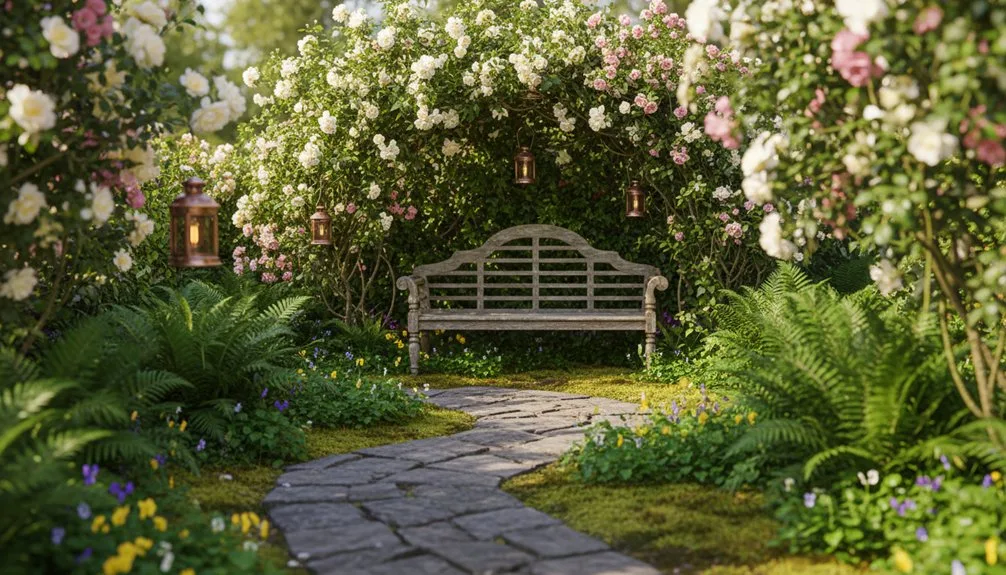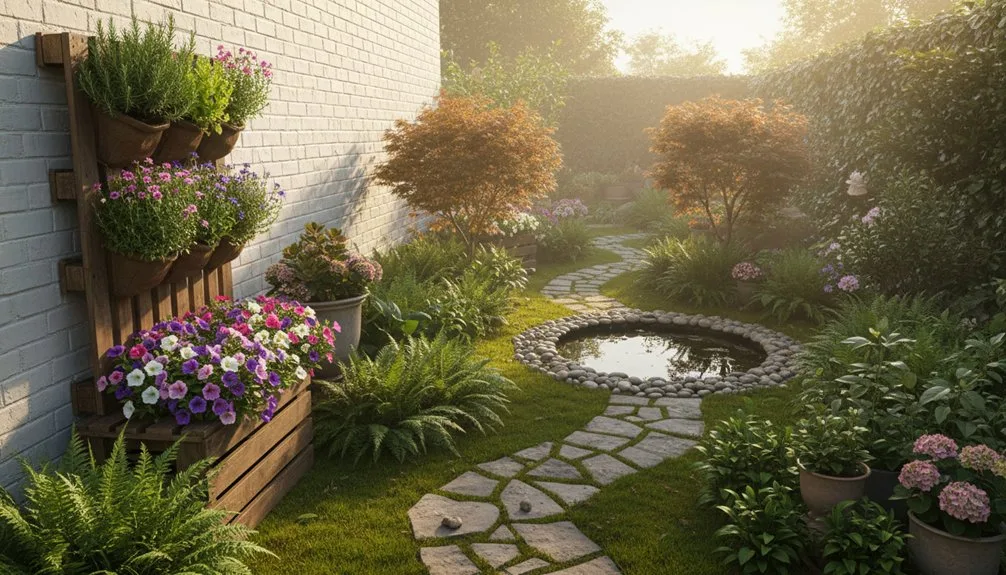
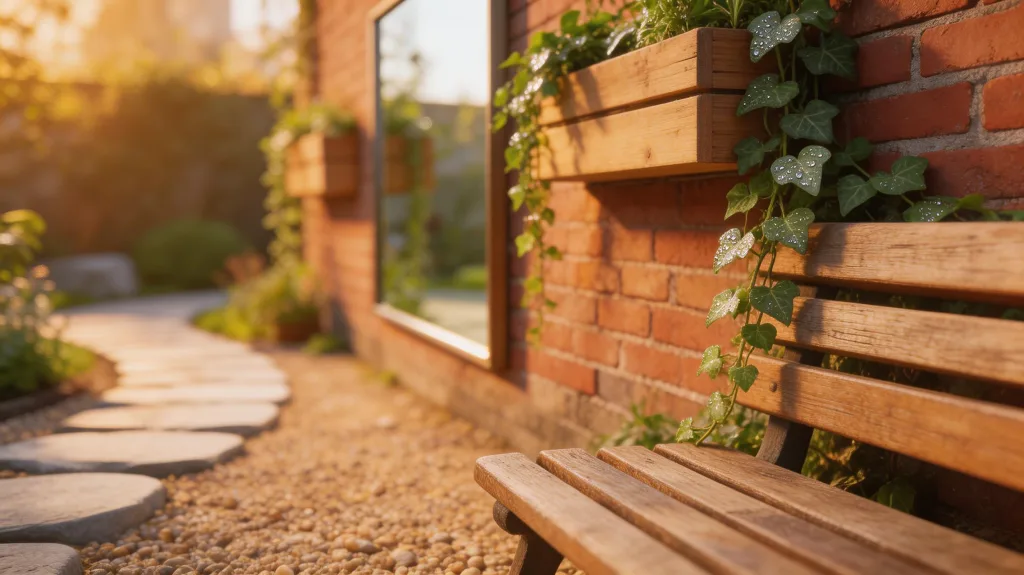
You might think a small garden is limiting, but clever design can transform it. You can trick the eye into seeing more space with a few strategic choices. It starts with a clean, geometric foundation and a single bold feature. Then, you can layer in curves, reflections, and vertical elements to create depth and interest. Discover how these practical techniques work together to make your compact plot feel surprisingly expansive.
Key Takeaways
- Use a single geometric lawn shape as a strong visual anchor with crisp edges.
- Introduce a strong focal point to anchor the design and provide visual depth.
- Create curved pathways with flanking plants to slow movement and suggest more space.
- Employ layered planting and vertical elements to add lush texture and depth.
- Place mirrors strategically to double the perceived depth of a planting bed.
Lay the Foundation With a Simple, Geometric Lawn
Start by defining your lawn’s shape with clean, straight lines or gentle curves to create a strong visual anchor.
A crisp rectangle or a perfect circle of grass acts like a neat rug, instantly organizing your space.
You’ll want to edge it meticulously against your borders or paving; a sharp spade or a half-moon edger gives you that professional finish.
This geometric form becomes your garden’s primary plane, making the area feel intentional and larger.
Resist complex shapes that chop up the view.
You’re laying a calm, green foundation that everything else will relate to.
Keep the lawn itself tight and well-maintained, as ragged edges will undermine the clean geometry you’ve worked to establish.
Start Your Small Garden With a Strong Focal Point
With your geometric lawn acting as a calm foundation, direct the eye by introducing a single, striking element. This focal point becomes the anchor for your entire design. You’ll choose one standout feature, like a sculptural tree, a bold water feature, or a vibrant piece of garden art.
Place it deliberately; you might center it against a plain wall or let it punctuate the end of a path. Its purpose is to stop the gaze and create a memorable visual hook, making the garden feel intentionally composed rather than just a collection of plants. This strong central feature provides a sense of order and depth, drawing you in and making the space seem more substantial.
- A single, beautifully pruned Japanese maple in a decorative pot.
- A contemporary, rust-colored steel sculpture or obelisk.
- A small, bubbling stone fountain or a simple birdbath with a reflective basin.
- A cluster of tall, ornamental grasses in a contrasting color, like black mondo grass.
Create Curved Pathways to Suggest More Space
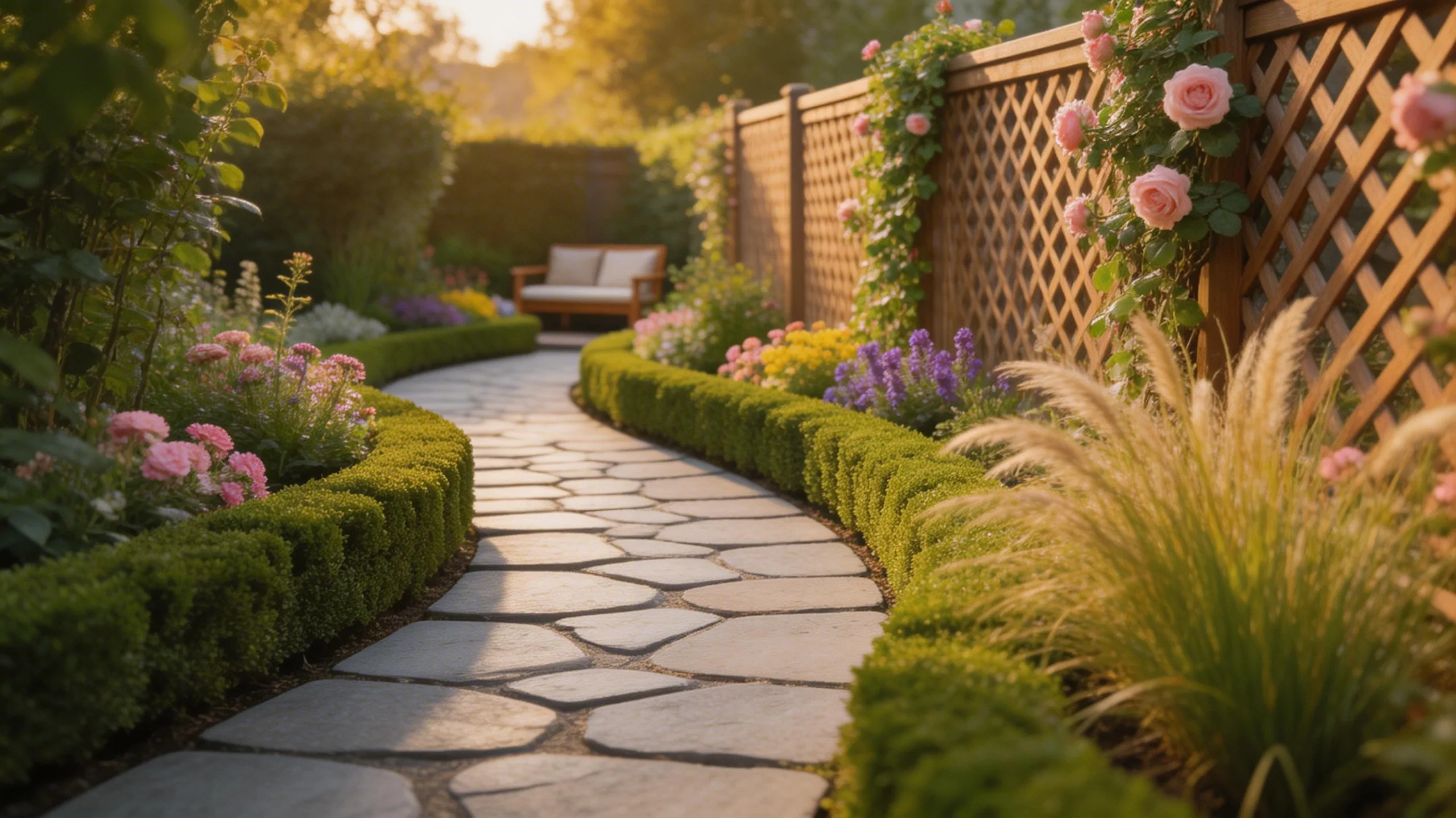
Because a straight path reveals a garden’s boundaries too quickly, you can use curves to slow the journey and create a sense of mystery. A winding gravel or stepping-stone path invites exploration, making the space feel larger as each bend hides what’s ahead. You’ll naturally walk slower, noticing more detail. Keep the width between 18 to 24 inches to maintain proper scale and flank it with low plants like lavender or ornamental grasses that softly encroach, blurring the hard edges.
| Path Material | Best For | Pro Tip |
|---|---|---|
| Decomposed Granite | Dry climates | Edge with steel strips to contain it. |
| Irregular Flagstones | Cottage style | Space stones closely for easy walking. |
| Bark Mulch | Shady, woodland areas | Install a 3-inch deep layer over landscape fabric. |
Plant Your Small Garden in Lush, Textured Layers
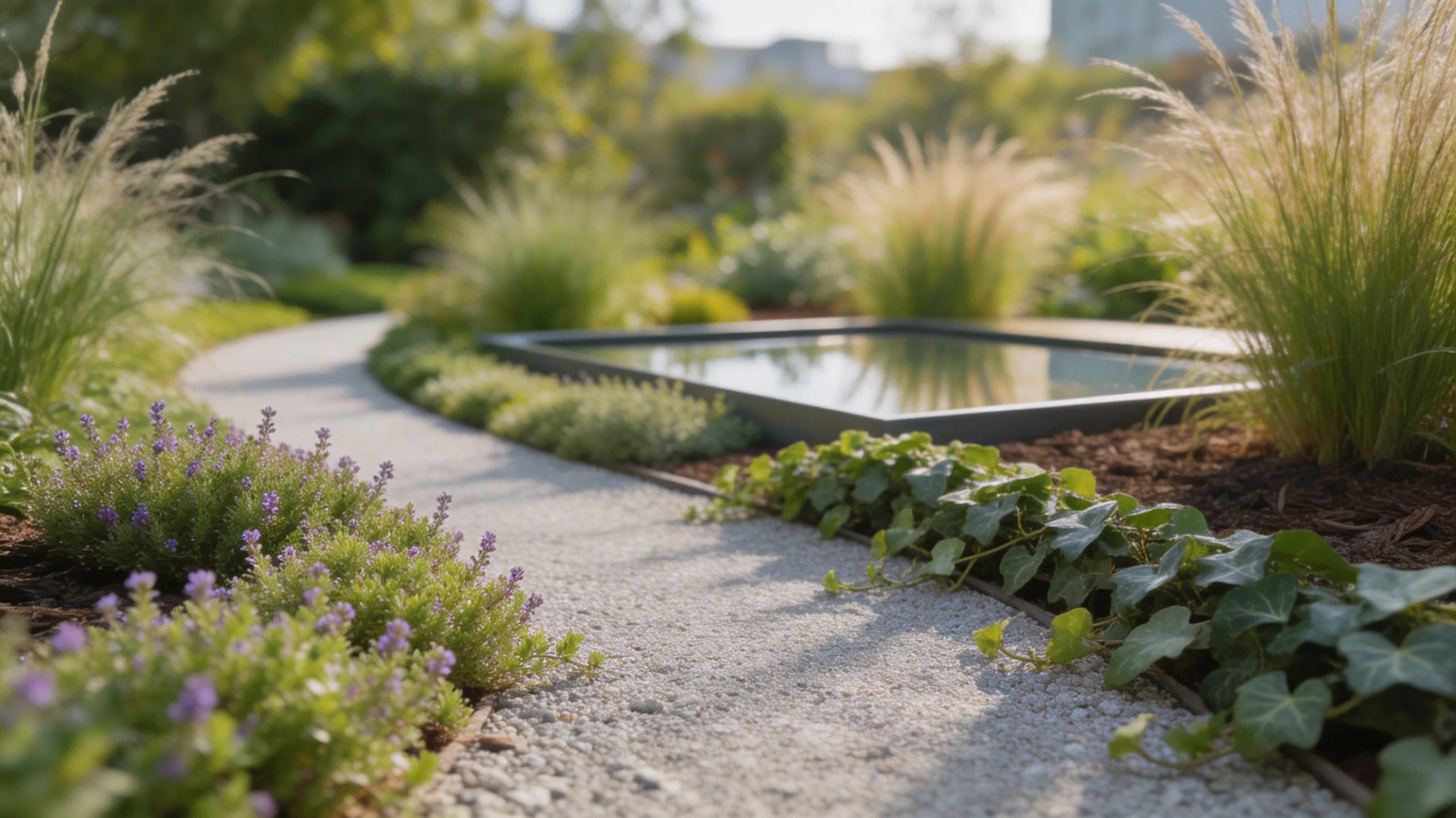
A winding path leads you through the garden, and now its curves guide you into planting areas designed for depth. You’ll create lush, textured layers that make your small space feel expansive.
Start with a framework of small trees or shrubs in the back. Layer in mid-height perennials, and then spill lower plants forward over path edges. This graduated height tricks the eye into perceiving more space.
Employ these four specific tactics to add visual depth:
- Mix foliage textures, like pairing spiky iris leaves with soft lamb’s ear.
- Use deep-hued plants (burgundy heuchera) at the back to create receding shadows.
- Repeat a color or plant form in staggered layers to pull the view along.
- Interplant fine grasses among bolder hostas to add a see-through middle layer.
Use Vertical Gardening to Maximize Small Garden Space
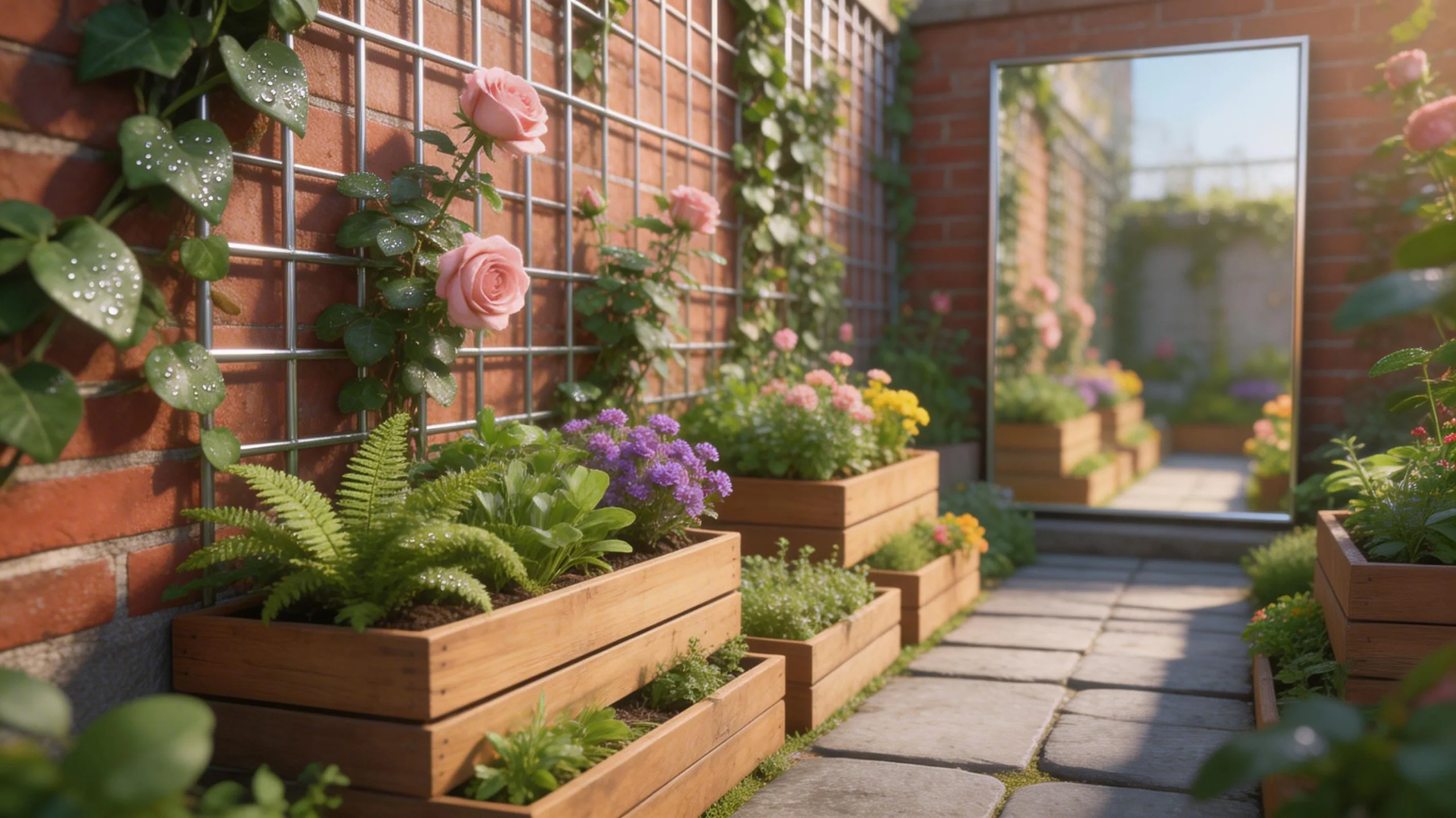
Turn your small garden’s walls, fences, and even airspace into productive planting surfaces with vertical gardening.
You can attach wall-mounted planters or repurpose wooden pallets to create an instant herb wall.
Install a freestanding trellis or a simple wire grid for climbing plants like beans, cucumbers, or clematis; they’ll grow upward instead of sprawling across precious ground.
For leafy greens or strawberries, try a tiered, stacking planter system.
Even hanging baskets can host trailing tomatoes or vibrant flowers, drawing the eye upward.
This approach not only boosts your yield but also adds depth and dimension, making your entire garden feel larger and more immersive.
Stick to a Cohesive Small Garden Color Palette
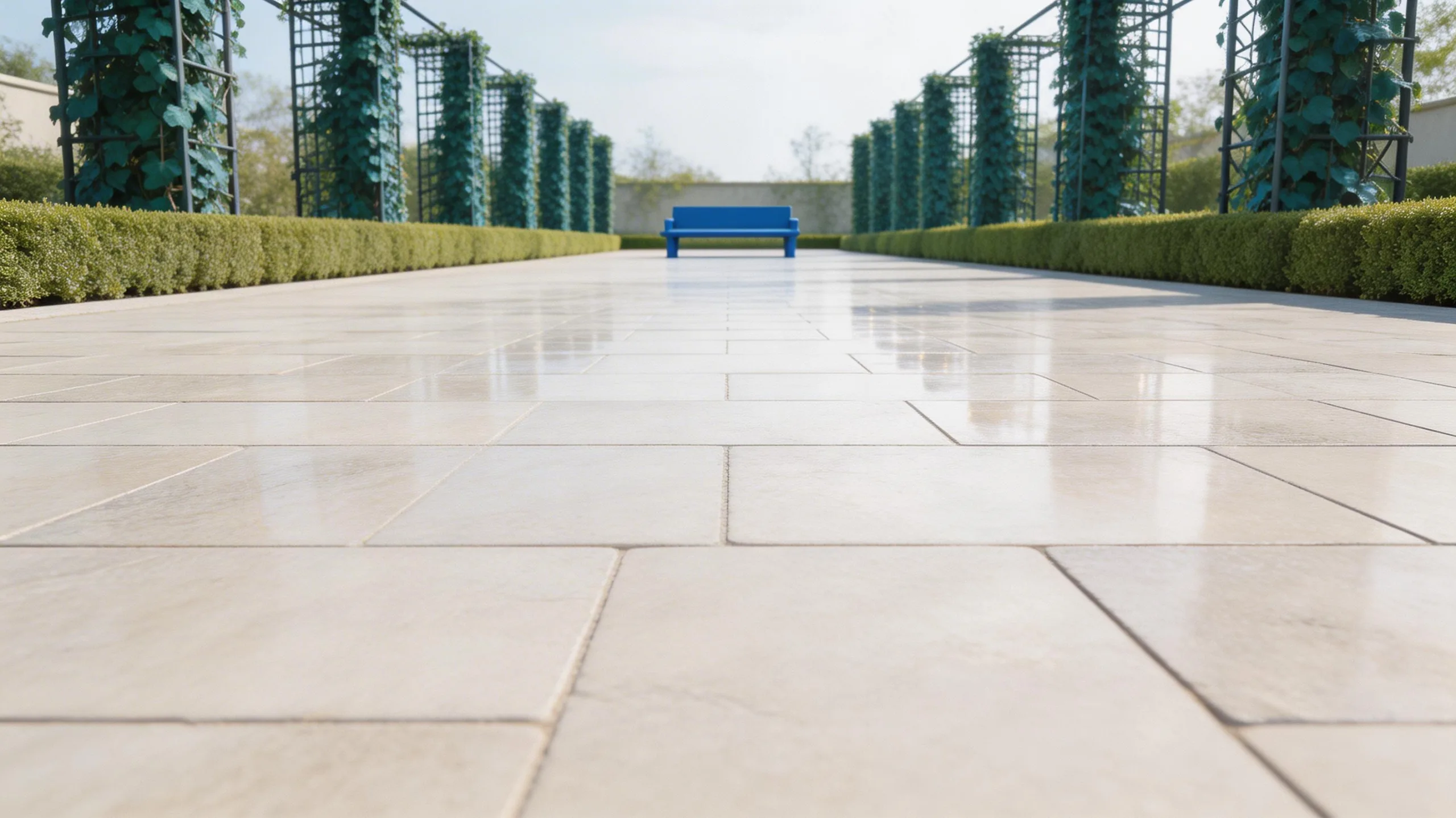
Color cohesion transforms a cramped plot into a unified retreat by deliberately limiting your plant and decor choices. A restrained palette makes the space feel more intentional and expansive, preventing visual chaos.
Focus on two or three main colors, selecting plants, containers, and furniture that work within this scheme. For example, a calm combination of greens, whites, and soft blues can create a serene, airy atmosphere.
- Choose a dominant color family, like cool purples and blues, which naturally recede to make boundaries feel farther away.
- Layer different tones and textures within your chosen palette using foliage; chartreuse, silver, and deep green leaves add interest without clutter.
- Use hardscape and decor like pots, cushions, or a bench to reinforce your colors, creating a seamless flow from plants to furniture.
- Repeat key flowering plants in drifts rather than single specimens to strengthen the color theme and lead the eye smoothly through the garden.
Place Tall, Slim Plants at the Back of Beds
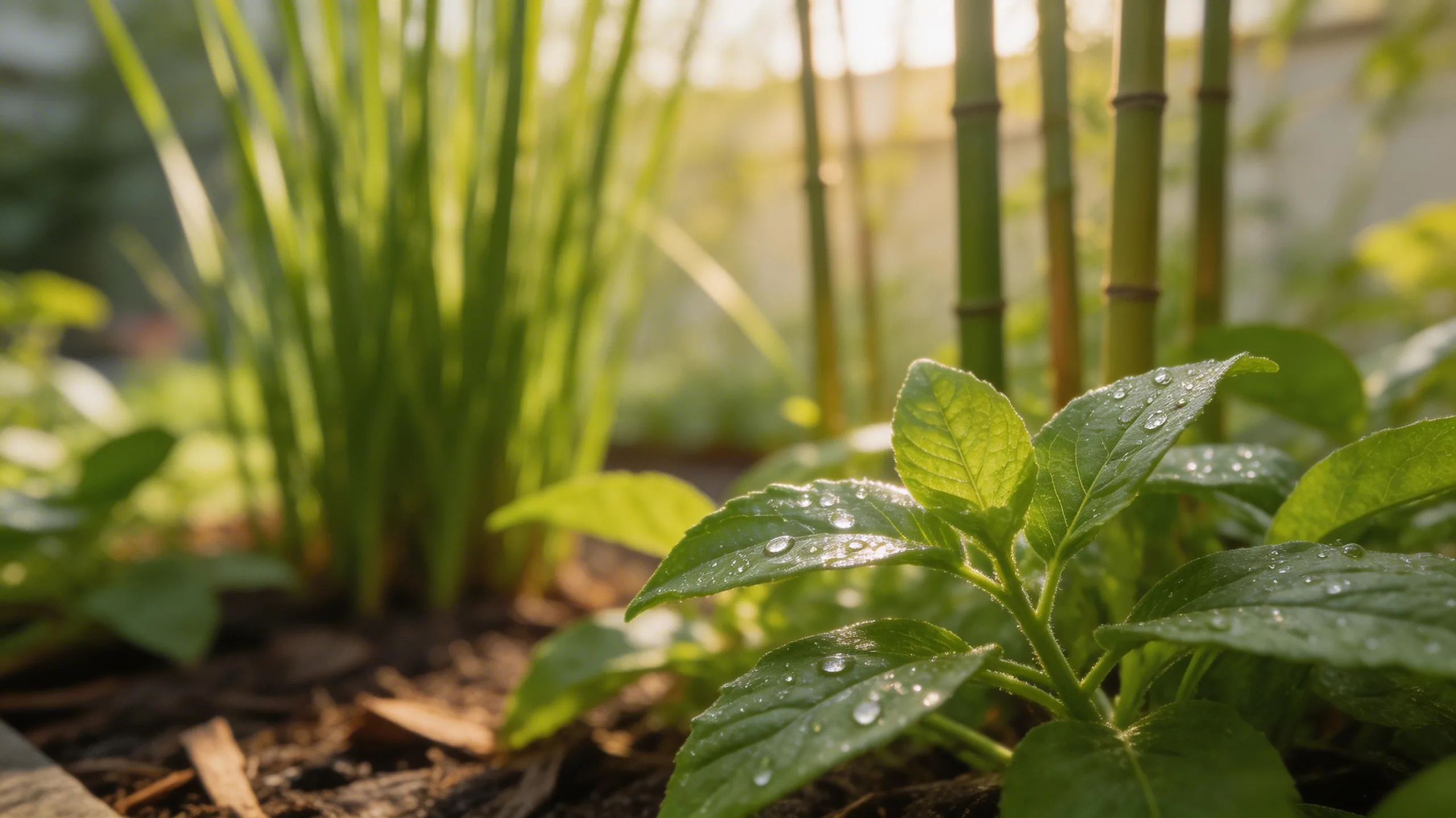
Building on your cohesive color palette, placing tall, slim plants at the rear of your beds creates a structured backdrop that enhances depth. This classic “thriller” element lifts the eye upward and makes the garden’s boundary feel farther away.
You’ll achieve this best with columnar evergreens like ‘Sky Pencil’ holly or fastigiate shrubs. Grasses such as calamagrostis or tall, slender perennials like verbena bonariensis also work perfectly.
Ensure you plant them directly at the back, spacing them evenly to avoid a cluttered look. Their vertical lines act like visual exclamation points, drawing your gaze through the space and creating a layered effect that tricks the eye into perceiving more length.
Repeat Key Plants for a Unified Small Garden Feel
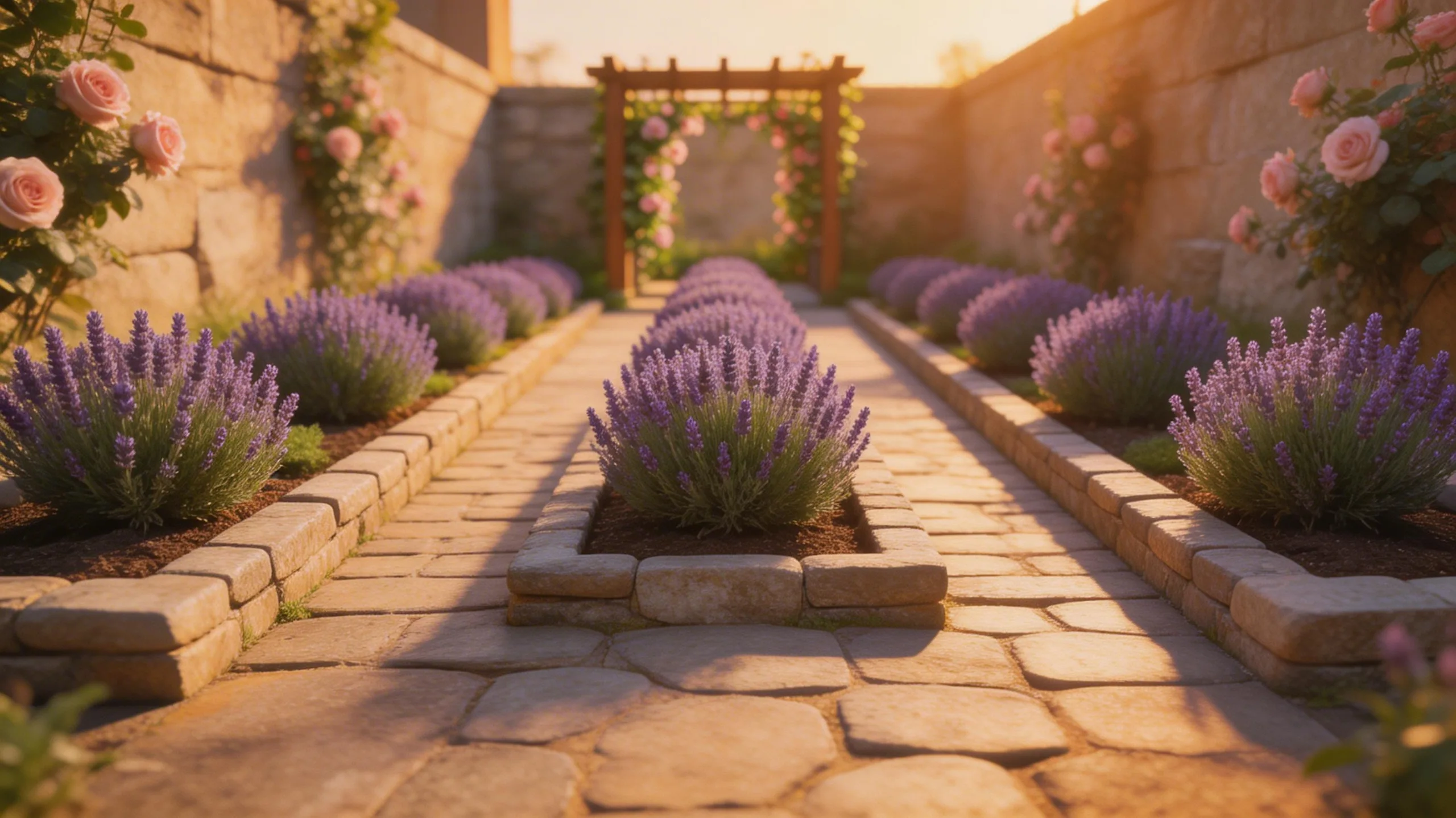
Repeating a few key plants throughout your garden creates rhythm and connects different areas into a cohesive whole.
You avoid a chaotic, patchwork look and instead craft a deliberate, harmonious design. Choose two or three versatile favorites—like boxwood, lavender, or a specific ornamental grass—and use them in multiple spots.
This repetition guides the eye smoothly from one section to another, making the entire space feel intentionally planned and larger. It’s a simple but powerful unifying principle.
- Select Multi-Purpose Performers: Pick plants that offer structure, color, or texture, like ‘Stella d’Oro’ daylilies for blooms and grassy foliage.
- Establish Visual Rhythm: Place your key plants at regular intervals, such as at each corner of a patio or between distinct planting beds.
- Use for Layering: Employ repeats in the foreground, middle-ground, and background to create depth without clutter.
- Simplify Maintenance: Having several clusters of the same plant reduces the need to learn varied care routines.
Limit Your Small Garden’s Hardscape Materials
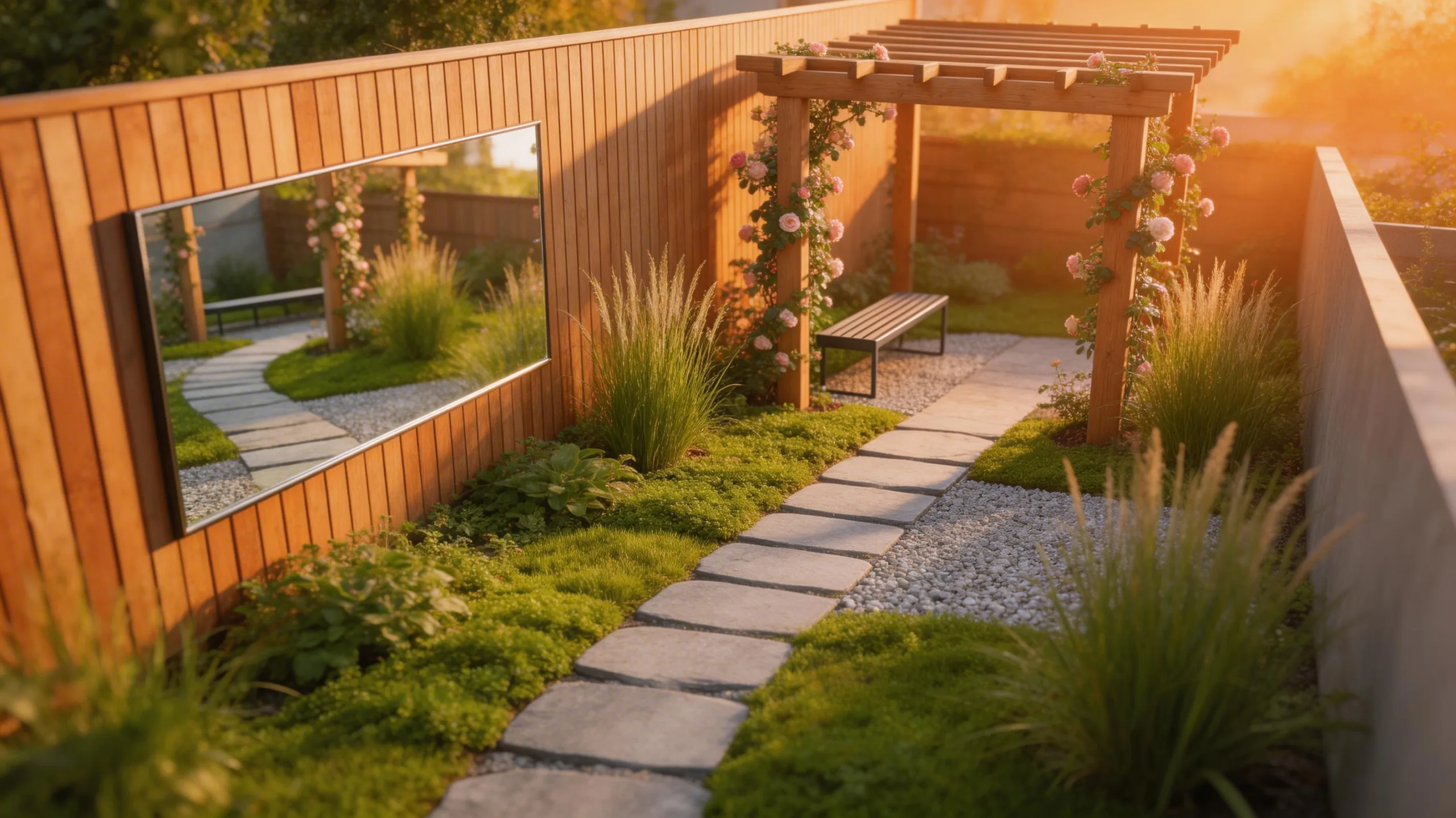
When you’re working with a compact space, it’s wise to limit your selection of hardscape materials—like paving stone types, wood finishes, or gravel colors—to just one or two complementary choices. Multiple textures and hues chop up the visual plane, making the area feel cluttered and smaller.
For instance, use a single type of rectangular bluestone for all your paving and edging. Choose a decking stain that closely matches that stone’s grey tones. This creates a cohesive ‘floor’ that visually expands.
If you add a second material, ensure it’s a subtle contrast, like using a coordinating pea gravel for a small pathway off your main patio. Consistency in your hardscape acts as a unifying anchor, tricking the eye into perceiving more continuous space.
Borrow Landscape to Make Your Small Garden Feel Bigger
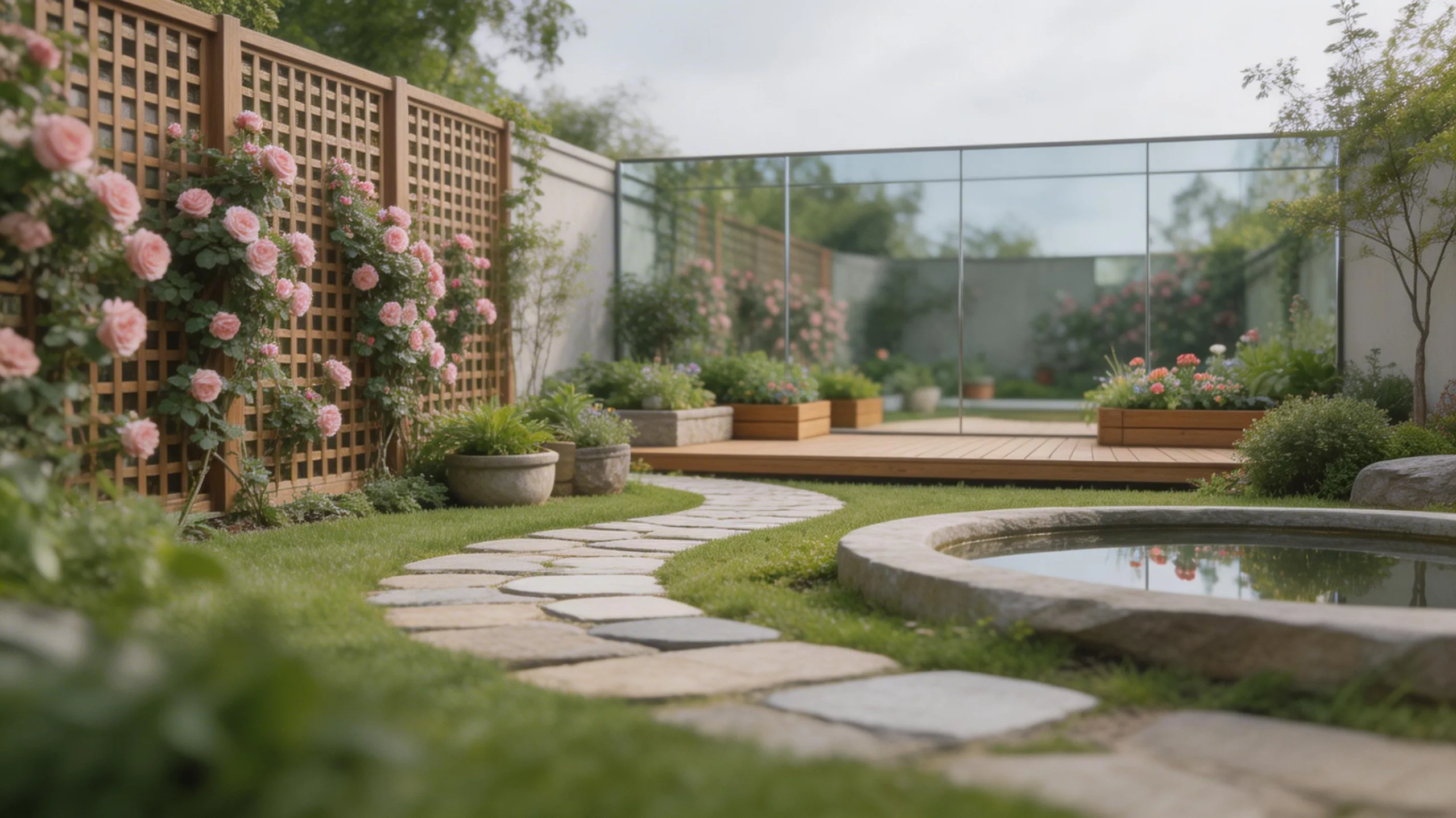
Although your small garden is confined within its own boundaries, you can make it feel expansive by “borrowing” the surrounding landscape. This design principle draws the eye outward, integrating views beyond your fence to eliminate a sense of enclosure. You’ll first need to identify your best borrowed vistas. Look for attractive elements like a neighbor’s mature tree, a distant hill, or even an interesting rooftop. Then, strategically edit your own garden’s layout to frame those views and seamlessly connect to them.
- Prune or remove boundary foliage that blocks desirable outside views, opening up sightlines to that borrowed tree or skyline.
- Align a garden path or seating area so it directly faces the borrowed scenery, making it a focal destination.
- Plant complementary colors and textures inside your border that echo the distant landscape, creating a visual link.
- Use a low, open fence or a trellis with gaps instead of a solid wall, maintaining a physical connection to the world beyond.
Add a Mirror to Create a Small Garden Illusion
Mirrors can trick the eye into seeing more space than actually exists in your garden. Place one against a fence or wall to double the perceived depth of a planting bed. You’ll need to secure it firmly and angle it slightly to avoid a flat, obvious reflection. Choose a style that complements your garden’s aesthetic, like a weathered frame for a rustic look.
It’s crucial to position it so it reflects something beautiful, like a focal point plant or a lush green area, not a bare patch or your potting shed. This reflection creates an immediate and convincing illusion of another garden zone, making your space feel instantly larger and more layered.
Incorporate Other Reflective Surfaces for Light
Beyond mirrors, a few well-placed metallic or glass surfaces can bounce light into shadowy corners of your small garden.
Strategically positioning these reflective elements amplifies natural light and creates a brighter, more expansive feel.
Focus on materials that catch and scatter daylight without creating harsh glare.
- Hang a polished stainless steel gazing ball on a pedestal to act as a wide-angle lens, reflecting a distorted panorama of your space.
- Install glass mosaic tiles on a plain garden wall; their faceted surfaces will sparkle and shimmer with movement.
- Use galvanized steel planters or a sleek water feature with a dark, still surface to double your planting.
- Place a small, decorative silver tray under a pot; it’ll cast unexpected light upwards onto foliage.
Choose Furniture That Folds Away in a Small Garden
Maximize every inch of your small garden by selecting furniture that folds, stacks, or tucks neatly out of sight.
You can opt for a lightweight aluminum bistro set that folds into a slim profile for storage against a wall or inside a shed. Consider stackable resin chairs; when you’re not using them, you simply stack them and slide them into a corner. A folding teak bench is another excellent choice—it provides seating when needed but folds flat to hang on a fence or wall.
Prioritize pieces designed for compact outdoor living; their ability to disappear quickly makes your garden feel more spacious and open, giving you flexible use of the area without permanent clutter.
Keep Small Garden Borders Clean and Defined
In your compact garden, crisply defined borders instantly create a sense of order and make the space feel intentionally designed.
You’ll visually expand the area by preventing planting beds from sprawling chaotically into your lawn or patio. Use physical edging materials for a lasting, neat finish.
- Install metal or composite lawn edging in a clean, straight line to create a sharp, modern division.
- Sink brick or pavers flush with the soil level for a traditional, mower-friendly border.
- Keep border plants tight and contained; prune perennials like lavender and boxwood into geometric shapes.
- Maintain a clear mulch or gravel strip between your border edge and lawn to stop grass from invading.
Frequently Asked Questions
What Tools Are Needed for These Projects?
You’ll need basic tools: a measuring tape, shovel, and shears. For vertical elements, have a drill, level, and sturdy planters. For decking or mirrors, get a saw, hammer, and hanging hardware.
How Much Does a Small Garden Redesign Cost?
Costs vary widely, from $500 DIY to $10k professional. Your price depends on materials like paving, plants, and lighting, plus labor if you hire someone. Prioritize key features to control your budget.
What Are the Easiest Plants for Beginners?
Start with succulents or herbs like rosemary. You can’t kill spider plants, and marigolds thrive with neglect. Choose sun or shade varieties that match your space, and you’ll find growing’s rewarding.
How Do I Maintain a Vertical Garden?
To maintain your vertical garden, you’ll water it thoroughly but don’t overwater. Regularly check for pests and prune dead foliage. You should also fertilize lightly every few weeks to keep plants healthy and vibrant.
Can These Ideas Work on a Balcony?
Yes, they can. Use tall planters to draw the eye up, pick light-colored furniture, and hang a mirror. You’ll create depth. Stick to a simple color scheme and avoid clutter to keep the space feeling open.
Conclusion
Start with a crisp, geometric lawn as your anchor. Add one bold focal point, like a sculptural pot, to draw the eye. Use curved paths and a mirror to create depth. Layer your plantings with texture and a limited color palette. Choose foldaway furniture and keep your borders neat. These specific, strategic choices will unclutter your space and make your small garden feel instantly more expansive and serene.
The Only Tools You Need for a Thriving Garden 🌱
Whether you're a weekend gardener or growing daily — these hand-picked tools make every session faster, easier, and more satisfying.