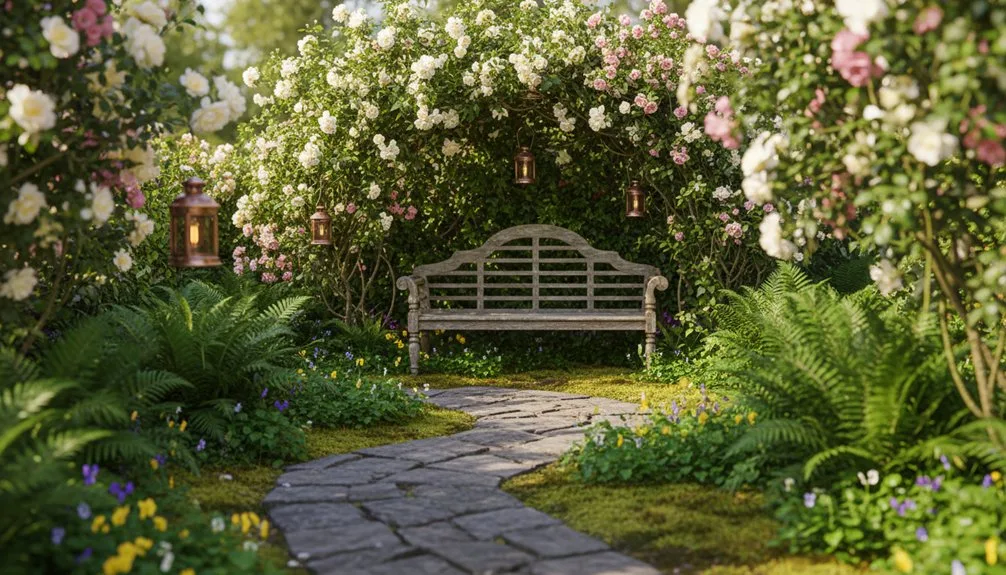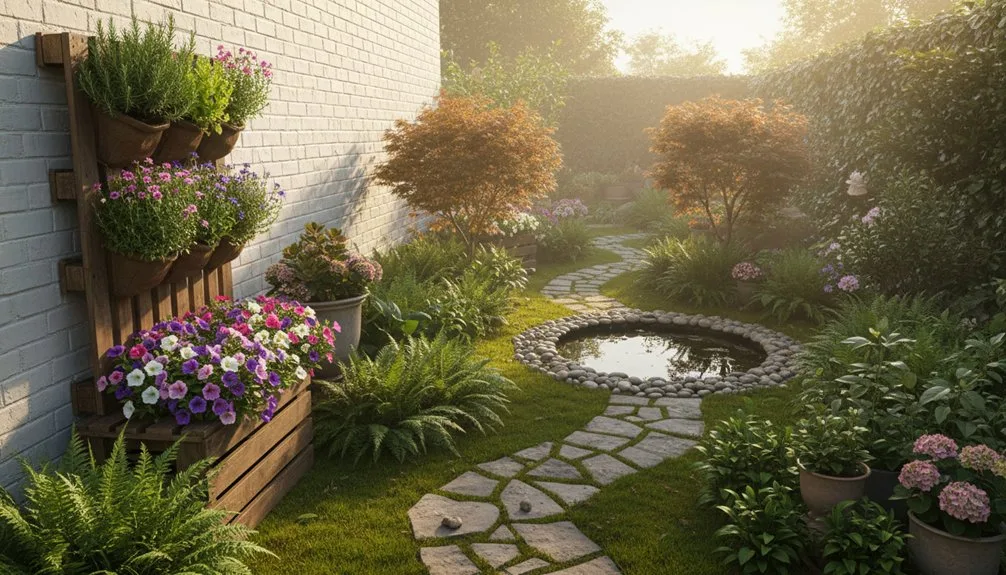
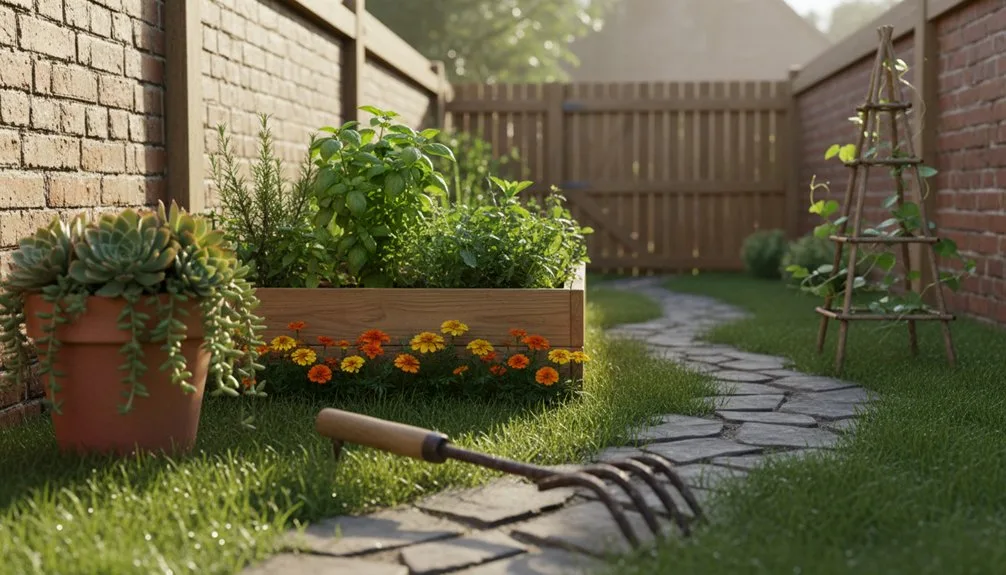
You’ll transform your small backyard by growing upward with vertical systems and stacked shelving to maximize space. Organize distinct functional zones—like a dining area and planting section—using pathways and natural dividers. Anchor your design around one statement piece, whether it’s a fire pit or ornamental tree, to create visual cohesion. Start with raised beds filled with quality soil, then incorporate native plants that attract pollinators while reducing maintenance demands. These strategies work together to unlock your garden’s full potential.
Key Takeaways
- Start with a single statement piece like a container or small pergola to anchor your garden design and minimize visual clutter.
- Build raised beds with cardboard, 75% topsoil, and 25% compost to improve soil quality without extensive ground preparation.
- Choose native plants requiring less water and maintenance while supporting local butterflies, birds, and beneficial insects naturally.
- Install vertical gardening structures using shelves or pallets to maximize growing space in small yards with better light access.
- Create functional zones with stepping stones and multifunctional elements like bench-storage to organize movement and improve space efficiency.
Start With Vertical Gardening
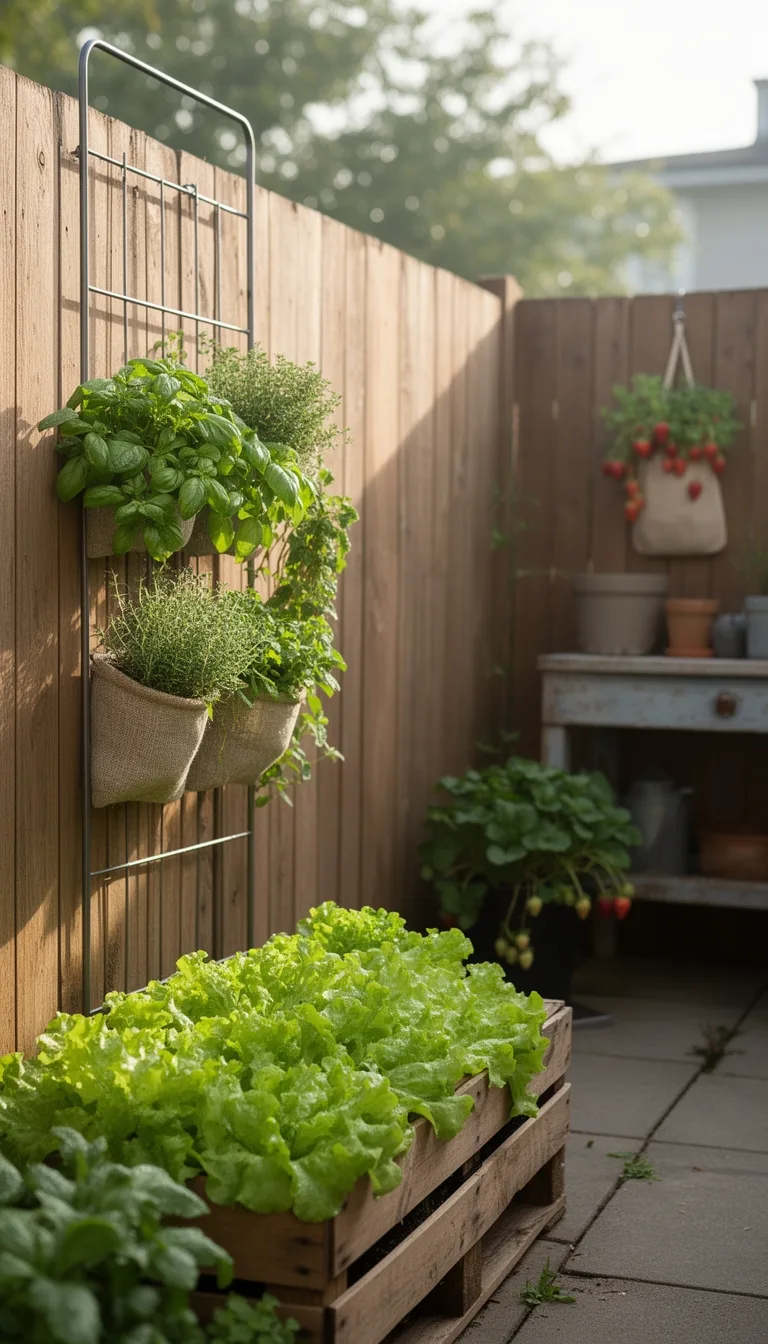
If you’re working with limited backyard space, vertical gardening transforms what you’ve got into a productive growing zone.
You’ll maximize your plot by stacking plants upward rather than spreading them outward, making efficient use of every square foot.
This approach offers substantial benefits: you’ll reduce water consumption, enjoy year-round growth with proper lighting, and experience improved airflow around your plants.
Plus, harvesting becomes easier since you won’t need to bend or kneel constantly.
Start by selecting a location receiving at least six hours of sunlight daily, or install LED grow lights.
Build your structure using stacked shelving, DIY pallets, or modular systems.
Arrange plants in vertical layers, ensuring adequate light penetration and air circulation.
Use well-draining soil or hydroponic systems with drip irrigation for consistent moisture management.
Create Three Functional Zones in Your Backyard

While vertical gardening maximizes your growing space, thoughtfully dividing your entire backyard into functional zones ensures you’re not just growing plants—you’re creating distinct areas for dining, lounging, gardening, and play that work harmoniously together.
Start by identifying your household’s priorities: Do you need a kids’ play area or outdoor kitchen?
Next, establish clear pathways using stepping stones or deck transitions that guide movement without blocking sightlines.
Use natural dividers like planters, hedges, or different flooring materials to subtly separate zones while maintaining visual connection.
Incorporate multifunctional elements—benches that store tools, tables doubling as planters—to maximize usability.
Finally, ensure each zone includes appropriate shade, lighting, and weather protection for year-round comfort and extended usability.
Focus on One Statement Piece

Rather than scattering decorative elements throughout your backyard, you’ll create far more visual impact by anchoring your space with one commanding statement piece that draws the eye and organizes everything around it.
Choose a focal point that suits your garden’s scale and purpose.
A single large container on your patio, a fire pit surrounded by seating, or a striking water feature works beautifully.
Alternatively, plant one ornamental tree or install a pergola draped with climbing jasmine.
Your statement piece should reflect your design aesthetic while serving a function.
It naturally organizes your layout, eliminates visual clutter, and makes small spaces feel intentional rather than cramped.
This focused approach ensures every element you add afterward complements your anchor piece, creating cohesion throughout your garden.
Prepare Your Soil and Plan Raised Beds
Before you plant anything, you’ve got to understand what you’re working with—and that means testing your soil.
A soil test reveals your pH level and nutrient content, guiding amendments like garden lime.
pH adjustments can take up to a year, so plan ahead.
Ideal soil contains equal parts sand, silt, and clay—called loam.
If yours is too clay-heavy or sandy, add a 2-3 inch compost layer to improve structure.
Work it in at least a month before planting using a rototiller or garden fork.
For raised beds, skip extensive ground prep by laying cardboard over grass first.
Fill with 75% topsoil and 25% compost.
Loosen the top 8-12 inches of soil to let roots expand.
Mulch pathways between beds to suppress weeds throughout the season.
Select Native Plants for Less Work and More Wildlife
Why exhaust yourself fighting against nature when you can work with it instead?
Native plants thrive in your local climate without demanding extra watering, fertilizers, or pesticides—saving you time and money while requiring minimal maintenance once established.
Beyond convenience, native plants transform your garden into a wildlife sanctuary.
They support 15 times more caterpillar species than non-natives, attracting butterflies, hummingbirds, songbirds, and bees.
Native plants provide essential food and shelter as natural habitats shrink, with seeds and fruits feeding amphibians, reptiles, and small mammals.
When you incorporate 50-70% native plants, you’ll notice specialist bird species appearing alongside common visitors.
Your garden becomes part of a vital food web—97% of terrestrial birds feed their young insects from native plant foliage, making your yard genuinely matter for local wildlife.
Mix Materials to Save Money and Build Character
Once you’ve established your native plant beds, you’ll want hardscaping that complements them without draining your budget.
Combine affordable materials strategically to create visual interest while keeping costs low.
Layer landscape fabric beneath gravel or mulch to suppress weeds and retain moisture—you’ll spend just $0.50–$1 per square foot on fabric.
Mix pea gravel pathways with recycled brick chips for rustic texture and warmth.
For raised beds, repurpose pallets at $5 each, filling them with amended soil and compost.
Use crushed stone as a stable base under concrete pavers in high-traffic areas.
Blend decomposed granite with standard gravel for durable, textured driveways.
These hybrid applications reduce maintenance while building character through contrasting materials and natural layering.
Connect Your Zones With Simple Pathways
Pathways aren’t just functional—they’re the skeleton of your garden layout, guiding visitors through different areas while creating visual flow.
You’ll want to consider your space’s dimensions when selecting a design shape:
- Curved pathways create intrigue and encourage exploration throughout your garden zones
- Zigzag paths visually expand small backyards, making them feel larger than they actually are
- Circular designs efficiently organize multiple functional sections within compact spaces
Combining materials amplifies functionality without requiring extensive installation.
Pair pavers with gravel for defined walkways, or use stepping stones set in bark for rustic appeal on uneven terrain.
Concrete stepping stones paired with mulch offer practical functionality with minimal effort.
These strategic combinations help you maximize your small garden’s potential while maintaining clear connections between distinct areas.
Grow More With Companion Planting
When you’re working with limited backyard space, companion planting—strategically positioning different crops together—lets you maximize yields while improving soil health and pest management.
Plant smaller cool-season crops like spinach and lettuce between slow-growing tomatoes or peppers.
As your smaller plants mature, the larger canopies shade remaining vegetation, extending growing seasons.
Try the “Three Sisters” method: corn grows tall, squash sprawls below, and beans climb the corn stalks.
This combination maximizes compact spaces efficiently.
Companion plants also suppress weeds through dense foliage that shades soil and prevents seed germination.
Meanwhile, legumes fix nitrogen naturally, enriching your soil.
Pairing vegetables with pollen-rich flowers like borage and calendula attracts beneficial pollinators and pest-eating insects, reducing chemical interventions while boosting productivity.
Conclusion
You’ve got everything you need to transform your small backyard into a thriving garden. Here’s what’ll resonate: studies show gardeners report 47% less stress than non-gardeners. By implementing these strategies—vertical growing, native plants, and companion planting—you’re not just creating beauty. You’re building a personal sanctuary that’ll boost your wellbeing while supporting local ecosystems. Start small, stay consistent, and you’ll harvest both food and peace of mind.
The Only Tools You Need for a Thriving Garden 🌱
Whether you're a weekend gardener or growing daily — these hand-picked tools make every session faster, easier, and more satisfying.