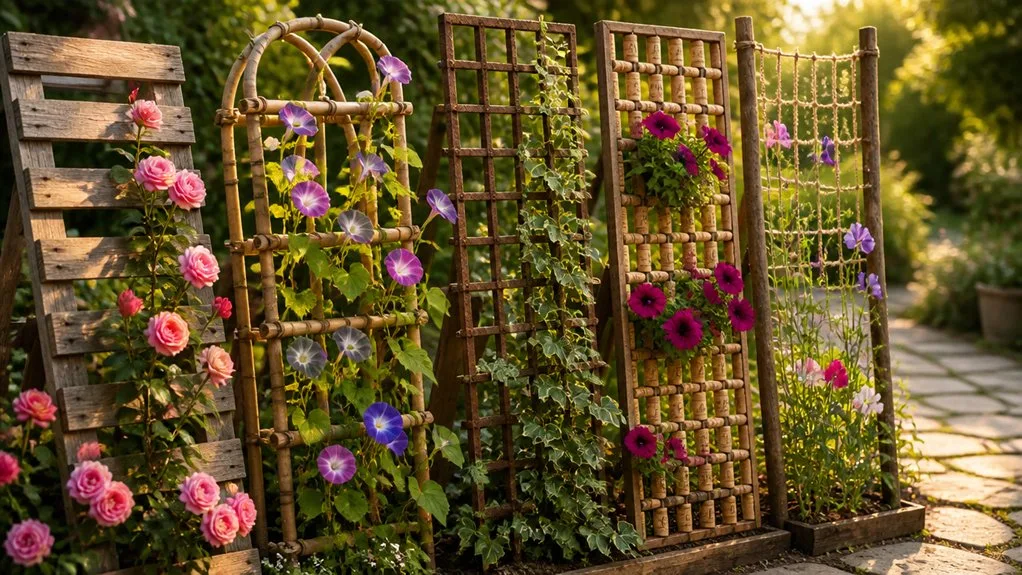
You can build stunning garden trellises for under $30 using materials you’ve got on hand or can source affordably. Repurposed pallets, old ladders, bamboo stakes, and wire create versatile support structures. Cattle panels, PVC pipes, and rebar grids offer budget-friendly durability for heavier plants. Jute twine webs and rope designs add elegance while remaining economical. Matching your trellis type to specific plants—delicate clematis on lightweight structures, heavy tomatoes on sturdy frames—ensures both aesthetic appeal and practical support. Each design option brings distinct advantages worth exploring further.
Key Takeaways
- Repurposed wooden pallets, old ladders, and yard branches create free or cheap trellis structures with minimal modification needed.
- Bamboo stakes lashed together into A-frames, teepees, or grids offer lightweight, weather-resistant support at budget-friendly prices.
- Cattle panels ($20-40) and PVC pipe frames provide heavy-duty, weatherproof support for climbing vegetables without rusting or rotting.
- Wire and twine grids cost $15-29 total, with biodegradable twine creating lattice patterns that develop natural patina over time.
- Rebar grids and hoop trellises offer industrial aesthetics while supporting heavy climbing plants like clematis, beans, and cucumbers economically.
Choose Your Trellis: Budget, Materials, and Plant Type

Before you buy or build a trellis, you’ll want to assess three key factors: what you can spend, what materials suit your climate and aesthetic, and what plants you’re growing. Budget determines whether you’re repurposing scrap wood or purchasing prefabricated options. Consider durability—cedar outlasts pine but costs more. Climate matters: metal rusts in humid regions; vinyl withstands coastal salt spray. Match your structure to plant needs: lightweight annuals need minimal support, while heavy clematis or grape vines require sturdy construction. Determine mature plant weight and growth habit before selecting your framework to ensure adequate structural integrity.
Pallet Trellis: Free or Cheap Wood in Minutes
Since wooden pallets are readily available from retailers, warehouses, and loading docks, they’re an excellent source of free or nearly-free trellis material. You’ll need to disassemble the pallet carefully, removing nails and inspecting boards for damage or chemical treatments. Sand the wood smooth to prevent splinters. Arrange the slats vertically, horizontally, or diagonally, then secure them with galvanized screws. Paint or stain the structure for weather protection and aesthetic appeal. This DIY approach takes minutes to assemble and costs virtually nothing while supporting climbing vines, beans, and peas effectively throughout your growing season.
Bamboo Stick Trellis: Simple, Natural, and Sturdy
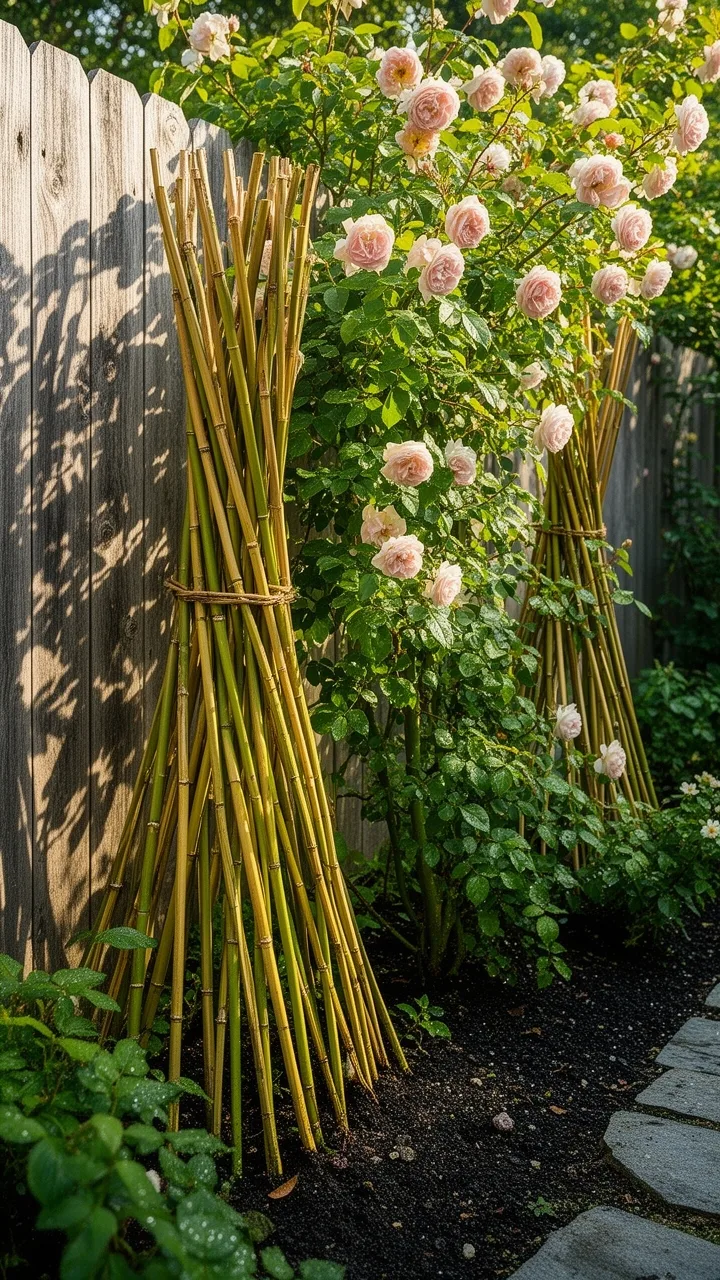
As an alternative to reclaimed wood, bamboo stakes offer you a lightweight, naturally weather-resistant option that’s both affordable and widely available. You’ll find bamboo at garden centers, hardware stores, or online retailers at minimal cost. To construct your trellis, gather stakes in varying heights—typically four to eight feet work well—and lash them together using twine, zip ties, or wire. Create geometric patterns like A-frames, teepees, or grids depending on your plants’ climbing habits. Bamboo’s hollow structure makes it easy to manipulate, and its natural durability means you’ll enjoy seasons of reliable support without expensive treatments or maintenance.
Upcycled Ladder Trellis: Transform Old Ladders Into Garden Art
Old ladders make excellent trellis structures because they’re sturdy, readily available, and require minimal modification. You’ll find wooden or metal ladders at thrift stores, estate sales, or your garage for virtually nothing.
Transform your ladder by:
- Positioning it vertically or at an angle against a garden bed
- Securing it firmly with stakes or brackets to prevent tipping
- Training climbing vines like clematis or beans along the rungs
- Painting it weatherproof colors to enhance garden aesthetics
Simply lean it against a fence for extra support. The horizontal rungs naturally guide plant growth upward, maximizing vertical space while creating functional garden art that costs nothing.
Wire and Twine Grid: Minimal Materials, Maximum Impact
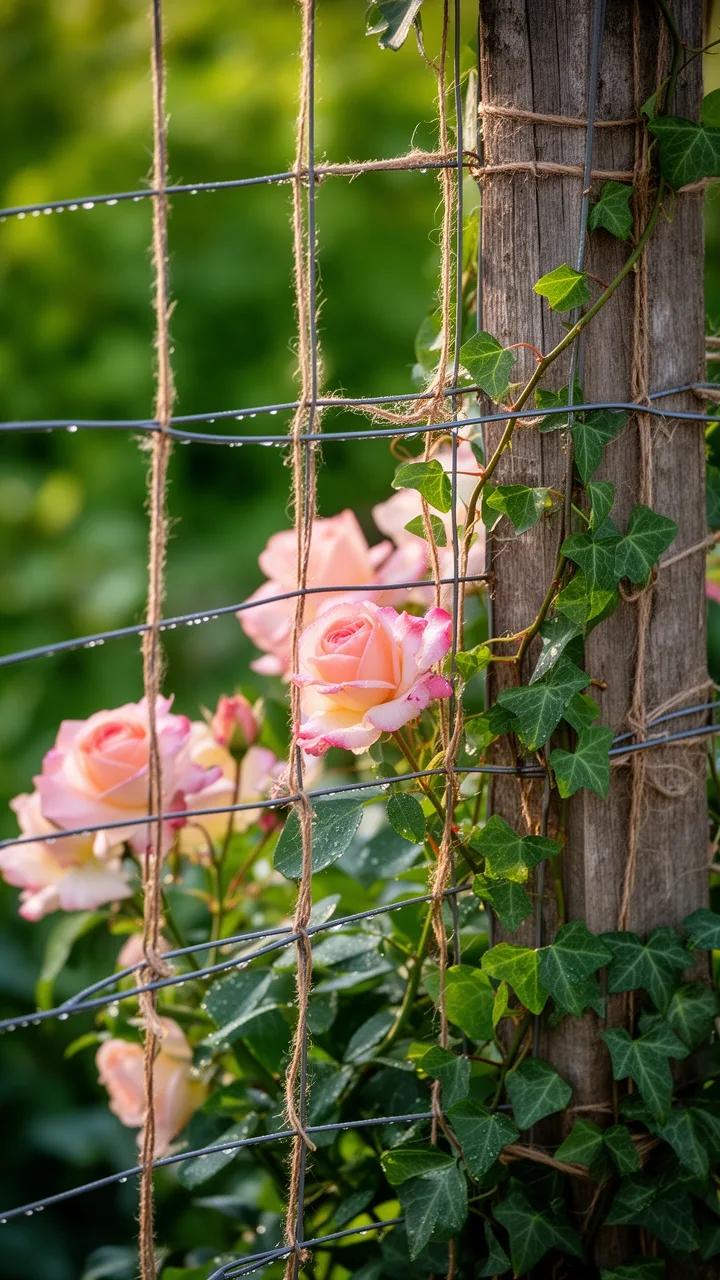
While you’re searching for budget-friendly trellis options, a wire and twine grid offers one of the cheapest solutions available. You’ll stretch horizontal and vertical wire lines between two posts, then weave biodegradable twine through the intersections. This creates a sturdy lattice that guides climbing vines effectively.
| Material | Cost | Durability |
|---|---|---|
| Wire | $5-10 | 3-5 years |
| Twine | $2-4 | 1-2 years |
| Posts | $8-15 | 5+ years |
You’ll appreciate the minimal expense and customizable grid spacing. The twine decomposes naturally, requiring periodic replacement while the wire framework remains intact for seasons.
Branch and Stick Trellis: Gather Free Materials From Your Yard
If you’d rather skip purchasing materials altogether, you can fashion a sturdy trellis from branches and sticks you’ll find scattered throughout your yard. This approach costs nothing while providing excellent support for climbing plants.
- Collect sturdy branches of uniform diameter for structural integrity
- Lash intersecting pieces together using twine or natural fiber cordage
- Arrange in a diamond or grid pattern for climbing vine access
- Secure the base firmly into soil or containers
Position your trellis where it’ll receive adequate sunlight. The organic aesthetic complements cottage gardens beautifully while supporting beans, clematis, or honeysuckle effectively. Replace weathered sections annually for durability.
Cattle Panel Trellis: Heavy-Duty Support on a Budget

Cattle panels—those sturdy wire grids originally designed for livestock fencing—make excellent heavy-duty trellises that won’t break the bank. You’ll find them at farm supply stores for $20-40 each, significantly cheaper than traditional trellises. Their robust construction supports heavy vining crops like beans, peas, and cucumbers without sagging. Installation’s straightforward: secure panels vertically using T-posts or wooden stakes driven into the ground. The open grid design promotes excellent air circulation, reducing disease risk. You can arrange multiple panels in rows or lean them at angles for artistic configurations. Their durability means you’ll reuse them season after season, maximizing your investment.
PVC Pipe Frame: Lightweight and Weatherproof Structure
PVC pipe frames offer an affordable alternative to traditional trellises, combining lightweight construction with exceptional weather resistance. You’ll appreciate how easily you can assemble these structures without specialized tools or expertise.
Consider these practical applications:
- Vertical gardens – Stack PVC horizontally for herb and vegetable cultivation
- Climbing support – Create sturdy frameworks for beans, peas, and cucumbers
- Shade structures – Design lattice patterns that filter sunlight effectively
- Modular designs – Build expandable systems adapting to your garden’s growth
PVC won’t rot, rust, or deteriorate from moisture exposure. You can paint or leave it natural. Simply connect pieces using fittings, then secure climbing plants with twine or clips for years of reliable garden support.
Rustic Wooden A-Frame: Classic Design Without the Price Tag

A rustic wooden A-frame trellis delivers timeless aesthetic appeal while keeping your budget intact. You’ll need just four wooden stakes, horizontal crosspieces, and basic fasteners. Source reclaimed or untreated wood from salvage yards for minimal cost. Arrange the stakes in an A-shape, securing them with galvanized nails or screws to prevent rust. Space horizontal supports six inches apart, allowing climbing vines like clematis or pole beans adequate grip. You can leave the wood natural for authentic character or apply weatherproof stain. This design supports heavy crops effectively while blending seamlessly into cottage or traditional gardens.
Rope and Post Trellis: Flexible Support for Climbing Vines
While wooden structures offer sturdy permanence, rope and post trellises give you an adaptable alternative that’s equally budget-friendly and surprisingly durable. You’ll secure sturdy posts vertically, then weave natural or synthetic rope horizontally between them, creating diagonal support lines for vines.
This design works exceptionally well for:
- Heavy climbers like clematis and honeysuckle that need flexible give
- Quick installations without tools or complex construction
- Easy adjustments as plants grow and shift
- Seasonal replacements of degraded rope sections
The rope naturally accommodates vine weight distribution while remaining affordable. You’re investing in a system that adapts to your garden’s evolving needs year after year.
Metal Rebar Grid: Industrial Look on a Budget
If you’re seeking an edgy, modern aesthetic without premium pricing, metal rebar grids deliver industrial charm while keeping costs minimal. You’ll purchase straight rebar pieces from construction suppliers, then weld or bolt them into rectangular frames at your desired spacing. This sturdy structure supports heavy climbing plants like clematis and honeysuckle effortlessly. Install your grid vertically against walls or fences, securing it firmly with brackets. The steel’s weathered patina develops naturally over time, enhancing visual appeal. You can paint rebar with rust-inhibiting primer to extend durability and customize colors to match your garden’s design scheme.
Hoop Trellis: Create Height and Drama Affordably
Creating vertical interest in your garden doesn’t require expensive structures—hoop trellises deliver striking height and architectural presence at a fraction of the cost. You’ll find these elegant supports simple to construct and highly versatile for various climbing plants.
Consider these affordable hoop options:
- Bend sturdy wire or rebar into semicircular arches for immediate visual impact
- Stack multiple hoops at varying heights to create dramatic focal points
- Use PVC pipe for lightweight, weather-resistant frameworks
- Combine hoops with tomato cages for enhanced stability and support
These structures anchor climbing vines, beans, and cucumbers while defining garden spaces effectively and economically.
Jute Twine Web: Minimal Cost, Maximum Elegance
Transform your garden trellis budget by stringing jute twine between simple wooden frames or stakes—you’ll achieve an elegant lattice pattern without the expense of manufactured panels. Space your horizontal and vertical lines evenly, typically four to six inches apart, then secure the twine with knots or small nails. This biodegradable material weathers gracefully, developing a natural patina that enhances garden aesthetics. Jute supports climbing vegetables and flowers beautifully while remaining UV-resistant for several seasons. You’ll invest minimal funds while creating a sophisticated, custom structure that complements any garden style perfectly.
Best Trellises for Vegetables: Tomato Cages, Poles, and Panels
Vegetable gardeners can pick from three proven support systems, each suited to different plant types and growing conditions. You’ll find tomato cages work best for determinate varieties, keeping plants compact and accessible. Poles support heavier crops like beans and peas through twining growth. Panels handle sprawling plants such as cucumbers and squash efficiently.
- Tomato cages: Affordable, sturdy, ideal for compact growth patterns
- Wooden poles: Durable, reusable, excellent for climbing vegetables
- Wire panels: Versatile, stackable, perfect for multiple plant types
- Bamboo stakes: Budget-friendly, lightweight, customizable for various heights
Choose based on your vegetables’ natural growth habits for optimal results.
What Plants Thrive on Your Trellis: Matching Plants to Structures
How well your trellis performs depends entirely on pairing it with plants that match its design and your growing conditions. Lightweight trellises suit delicate climbers like clematis and morning glories. Sturdy structures support heavy crops—tomatoes, beans, and cucumbers thrive on robust panels. Consider your climate: perennial vines like ivy establish themselves on permanent structures, while annual vegetables need seasonal setups. Vertical-growing plants maximize space efficiently. Match plant root systems to soil depth and sunlight exposure. Quick-growing varieties fill sparse trellises faster. Your trellis becomes productive when you select species suited to its specific dimensions and load capacity.
Conclusion
You’ve discovered that building a stunning trellis doesn’t require spending big—yet it transforms your garden dramatically. While expensive structures sit in catalogs, you’re constructing living walls from pallets and bamboo. These modest materials don’t compromise on results; instead, they deliver maximum visual impact for minimal investment. Your climbing vegetables and flowers don’t care whether you’ve spent fifty dollars or five hundred. They’ll thrive equally, rewarding your budget-conscious creativity with abundance and beauty.
The Only Tools You Need for a Thriving Garden 🌱
Whether you're a weekend gardener or growing daily — these hand-picked tools make every session faster, easier, and more satisfying.