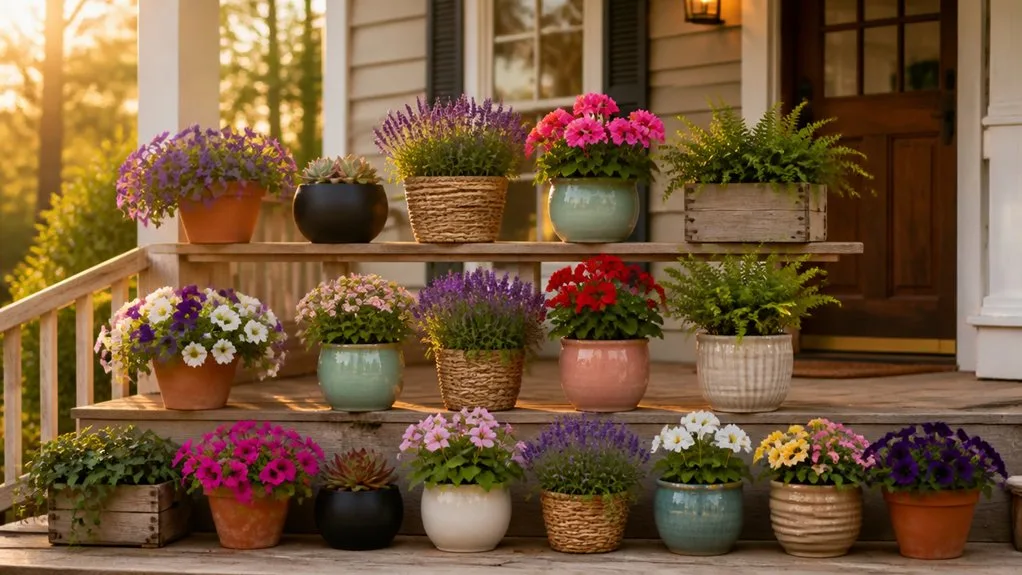
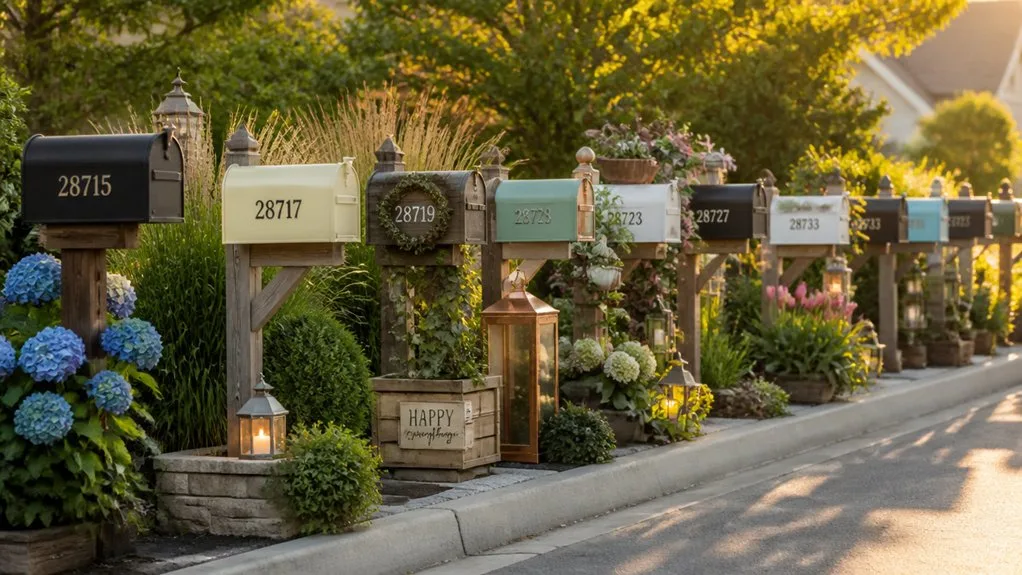
You’ll transform your mailbox into a striking focal point by layering native perennials, ornamental grasses, and seasonal annuals in a thoughtfully designed bed. Start with a well-prepared foundation amended with compost, then group plants by water needs and hardiness zone. Create symmetrical plantings with taller specimens toward the back, graduating to shorter varieties in front. Add climbing vines like clematis around your mailbox post for vertical interest. Incorporate spring bulbs, summer bloomers, and evergreens for year-round appeal. These foundational strategies are just the beginning of your curb transformation.
Key Takeaways
- Assess sunlight, soil type, and hardiness zone to select plants that thrive in your specific mailbox location.
- Layer plants by height with taller specimens in back, graduating to shorter varieties for visual depth and interest.
- Combine native perennials, ornamental grasses, and evergreen shrubs to ensure year-round color and texture appeal.
- Apply 2-3 inches of organic mulch and install landscape fabric to suppress weeds and improve soil drainage.
- Extend your mailbox design to the home’s entry using repeating focal plants and matching color palettes for continuity.
Choose Your Mailbox Landscaping Based on Conditions

Before you select plants for your mailbox garden, you’ll want to assess your site’s specific conditions—sunlight exposure, soil type, moisture retention, and temperature range. Full-sun locations demand heat-tolerant specimens like ornamental grasses, sedums, or coneflowers. Partial-shade areas suit hostas, ferns, or shade-tolerant perennials. Test your soil’s pH and drainage capacity; clay-heavy soil accommodates hydrangeas and astilbes, while sandy soil benefits from drought-resistant plants like Russian sage or lavender. Evaluate winter hardiness zones to ensure perennial survival. Match your selections precisely to these environmental factors, maximizing plant vigor and minimizing maintenance demands throughout seasons.
Start With a Flower Bed Foundation
Once you’ve matched plants to your site’s conditions, you’ll want to establish a proper foundation for your mailbox garden. Begin by edging a circular or rectangular bed around your mailbox’s base, typically 3-4 feet in diameter. Amend your soil with 2-3 inches of compost or aged bark mulch to improve drainage and nutrient content. This preparation creates an ideal growing medium for perennials and annuals. Remove existing grass or weeds completely to eliminate competition. Consider installing landscape fabric beneath mulch to suppress weeds while allowing water penetration. A well-prepared foundation ensures robust plant establishment and long-term garden success.
Layer in Ornamental Grasses for Texture
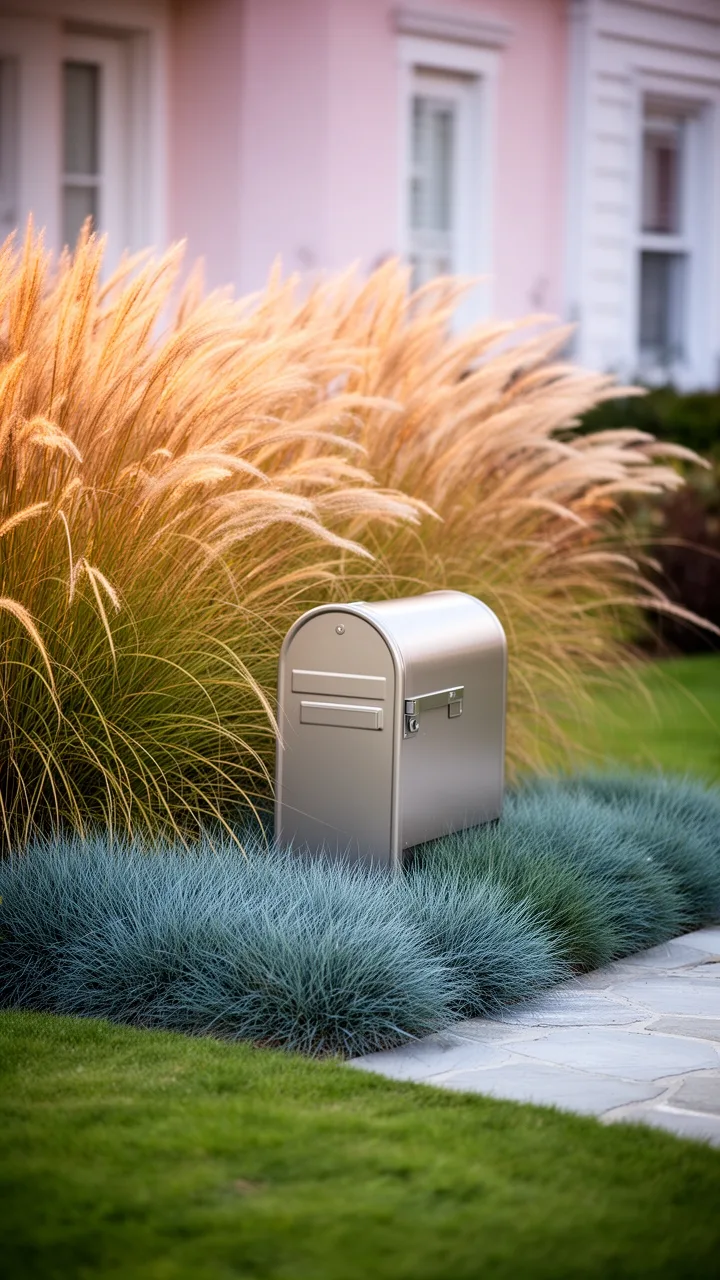
With your foundation established, you’ll want to introduce ornamental grasses to add movement and visual interest to your mailbox garden. Consider these selections:
- Feather Reed Grass – This upright cultivar reaches 4-5 feet, providing vertical structure and feathery plumes that catch light beautifully throughout seasons.
- Blue Fescue – Its compact, silvery-blue foliage creates striking contrast against flowering perennials while requiring minimal maintenance.
- Miscanthus – This architectural grass delivers dramatic height and texture, producing coppery seed heads that persist through winter.
Layer grasses strategically behind shorter blooms to create depth and movement without obscuring your mailbox entirely.
Plant Annual Flowers for Seasonal Color
Annual flowers are the workhorses of seasonal mailbox gardens, offering you vibrant color from spring through frost without the multi-year commitment of perennials. You’ll find that zinnias, marigolds, and petunias deliver consistent blooms with minimal maintenance. Consider calibrachoa for trailing elegance or celosia for dramatic texture. Plant shade-tolerant impatiens if your mailbox area receives dappled light. Deadhead spent flowers regularly to encourage continuous flowering. Choose complementary color combinations—jewel tones with pastels, or monochromatic schemes for sophisticated appeal. Rotate your annual selections yearly to prevent pest and disease buildup while keeping your mailbox garden visually fresh and dynamic.
Design Tiered Planter Boxes for Depth
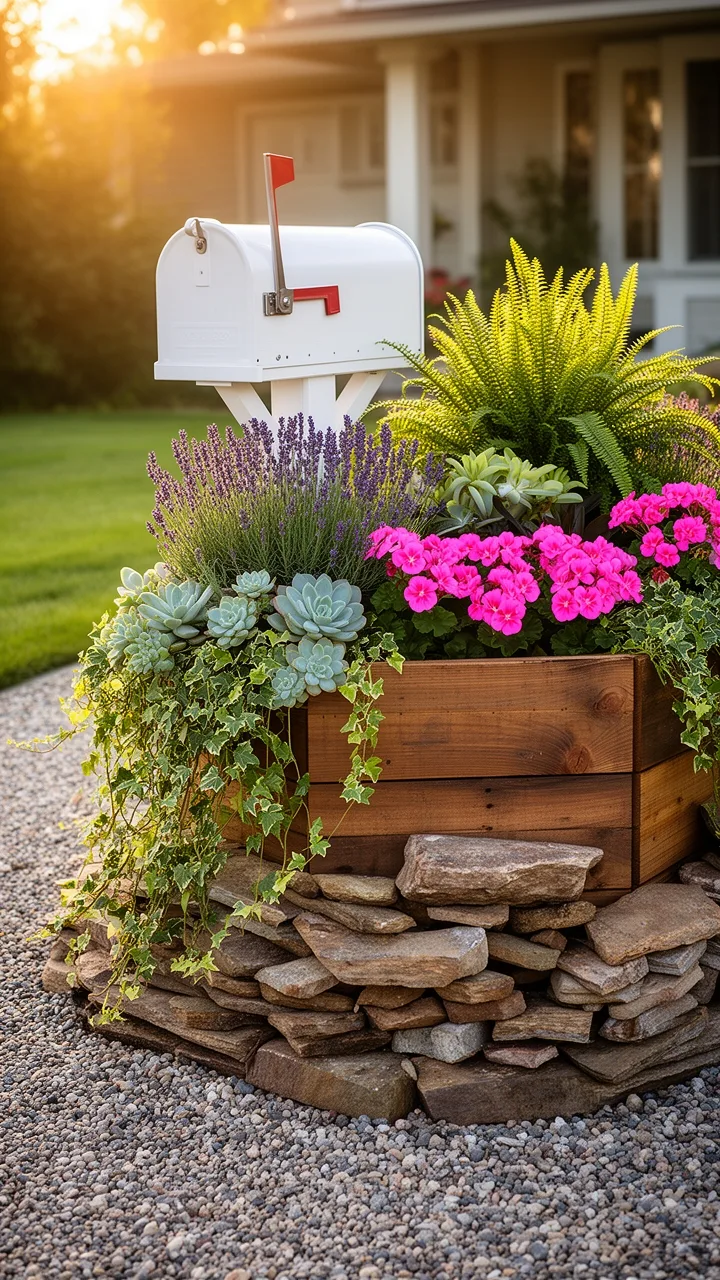
Elevating your mailbox garden’s visual impact requires layering plants at different heights, and tiered planter boxes accomplish this beautifully while maximizing your growing space. You’ll create dynamic dimension that captures attention from the street.
- Position trailing varieties like creeping jenny or sweet potato vine on top tiers, allowing cascading foliage to spill downward gracefully.
- Plant upright specimens such as salvias or ornamental grasses in middle sections for structural interest and height variation.
- Anchor lower tiers with compact, mounding plants like alyssum or calibrachoa for cohesive visual balance.
This tiered arrangement ensures optimal light exposure for each plant while preventing overcrowding and improving air circulation throughout your mailbox display.
Use Mulch and Stone for Definition
Beyond plants themselves, hardscaping materials like mulch and decorative stone’ll sharpen your mailbox garden’s edges and create visual separation between planting zones. Apply 2-3 inches of organic mulch around perennials and shrubs to suppress weeds, regulate soil moisture, and provide a finished appearance. Consider bark chips for informal settings or shredded hardwood for refined aesthetics. Incorporate river rocks or pea gravel around specimen plants to highlight focal points and improve drainage in clay soils. Layer contrasting materials strategically—dark mulch against light stone creates dynamic dimensionality. This differentiation elevates your composition’s sophistication while establishing clean borders that frame your mailbox’s architectural presence effectively.
Add Evergreen Shrubs as Your Backdrop
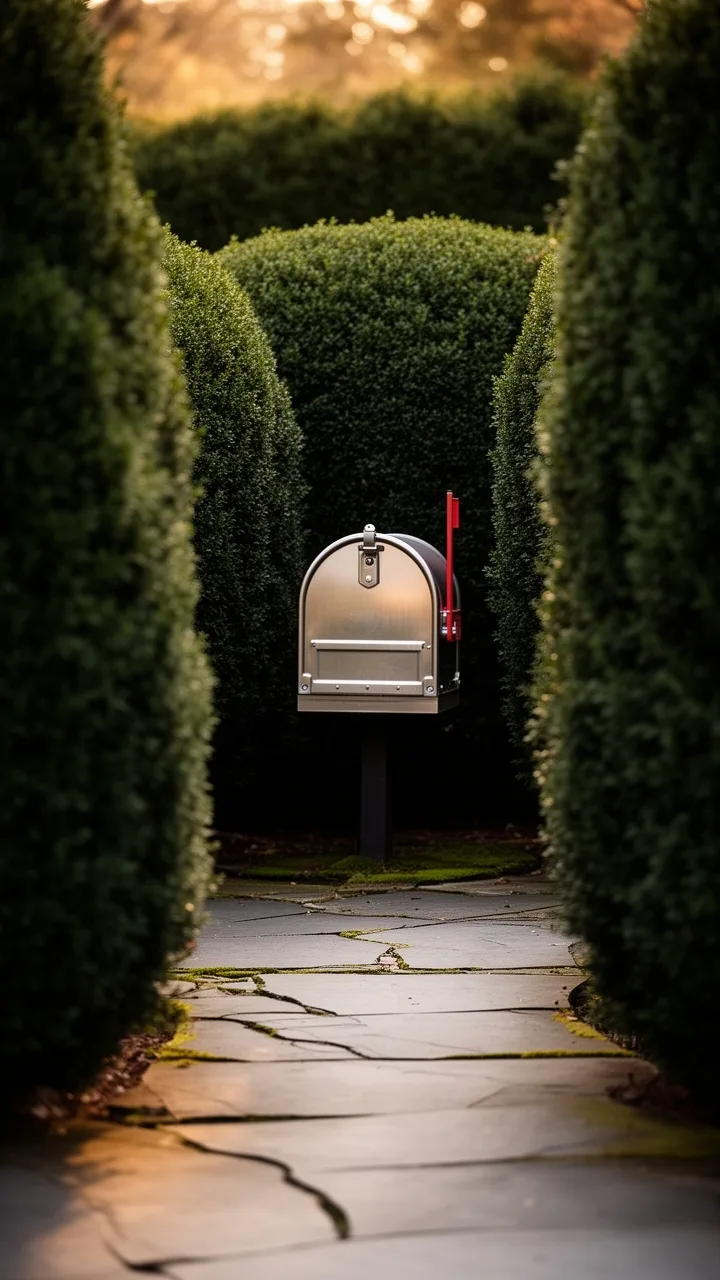
While mulch and stone provide foundational structure, evergreen shrubs establish the architectural framework that anchors your mailbox garden year-round. You’ll want to select species that maintain their foliage through winter months, providing consistent visual interest.
Consider these three options:
- Boxwood – Compact growth habit, dense branching, tolerates frequent pruning for formal shapes
- Dwarf Alberta Spruce – Pyramidal form, fine texture, modest height requirements for tight spaces
- Emerald Green Arborvitae – Columnar silhouette, narrow footprint, vibrant year-round color
You’ll position these shrubs behind flowering perennials, creating layered depth. Their evergreen foliage frames your mailbox while requiring minimal maintenance throughout seasons.
Select Perennials for Lasting Impact
Once you’ve established your evergreen backdrop, perennials become the vibrant focal points that’ll transform your mailbox garden across seasons. Choose varieties matching your USDA hardiness zone for reliable returns. Coreopsis, black-eyed Susans, and daylilies offer extended blooms with minimal maintenance. Pair spring bloomers like tulips and hellebores with summer performers such as coneflowers and salvia. Incorporate autumn interest using sedums and ornamental grasses. Space plants according to mature dimensions, allowing room for growth. Layer heights strategically—taller specimens behind shorter ones—creating visual depth. This tiered approach maximizes your mailbox area’s aesthetic potential while ensuring each plant receives adequate light and air circulation.
Build a Raised Bed Around Your Mailbox
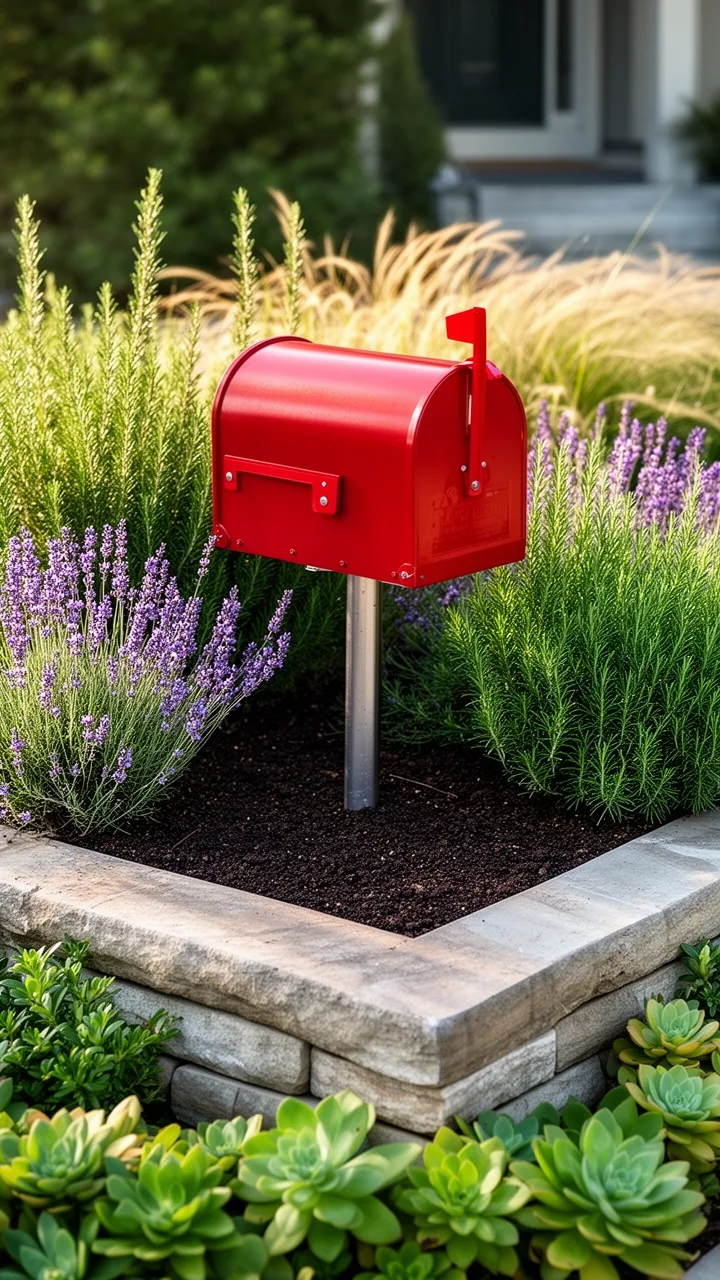
A raised bed’s structural framework provides the ideal growing environment for your perennials and evergreens, offering superior drainage, soil quality control, and easier maintenance than in-ground planting. You’ll construct a bed using cedar, composite, or galvanized materials, ensuring dimensions accommodate your mailbox post while allowing 18-24 inches for plant maturation.
- Fill your bed with amended soil—blend topsoil, compost, and perlite for optimal drainage and nutrient retention
- Select shade or sun-tolerant specimens like coneflowers, sedums, or ornamental grasses based on your mailbox’s exposure
- Space plantings 12-15 inches apart to prevent overcrowding and facilitate air circulation
This approach eliminates soil compaction and simplifies seasonal care.
Light Your Mailbox for Evening Appeal
Strategic lighting transforms your mailbox landscaping from a daytime focal point into an evening showstopper, highlighting the textural qualities of your perennials and evergreens while extending your landscape’s visual appeal after sunset. You’ll want to install low-voltage LED spotlights angled upward to illuminate ornamental grasses and architectural foliage. Position warm-white fixtures to accentuate burgundy Japanese maples or golden conifers. Consider uplighting variegated hostas or silvery artemisia for dramatic contrast. Solar path lights along planting beds define borders subtly. These layered lighting techniques won’t overpower your mailbox design; instead, they’ll showcase your horticultural investments while improving evening navigation and security.
Plant Native Species for Your Zone
While your evening lighting showcases the mailbox’s botanical display, the plants themselves deserve attention rooted in ecological wisdom. You’ll discover that native species thrive with minimal intervention, reducing maintenance demands while supporting local pollinators. Consider these essentials:
- Research your USDA hardiness zone and regional precipitation patterns to select appropriate species.
- Choose natives offering year-round visual interest through varied bloom times, foliage textures, and seasonal color transitions.
- Group plants by water needs, creating efficient microhabitats that establish quickly with established root systems.
Native plantings strengthen your landscape’s resilience while creating authentic curb appeal that reflects your region’s natural character.
Create Symmetrical Plantings on Both Sides
Balanced plantings on either side of your mailbox establish visual harmony while simplifying maintenance routines. You’ll create a polished aesthetic by mirroring plant selections, heights, and spacing. Choose complementary species that thrive in your zone’s conditions—perhaps pairing ornamental grasses with flowering perennials. Position taller specimens toward the back, graduating to shorter varieties at the front for optimal visibility. Ensure equal sunlight exposure on both sides; adjust plant selections accordingly if one side receives more shade. This symmetrical approach frames your mailbox as a focal point, enhancing curb appeal while reducing decision-making during planting season.
Frame Your Mailbox Post With Climbing Vines
Beyond stationary plantings, you can add vertical interest by training climbing vines around your mailbox post, creating a living frame that draws the eye upward. Consider these excellent options:
- Clematis offers delicate flowers and elegant foliage, thriving in partial shade with consistent moisture.
- Climbing hydrangea develops lush, dense coverage with white lacecap blooms, tolerating shade exceptionally well.
- Ivy varieties provide year-round structure and evergreen appeal, adapting to various light conditions.
Install a trellis or wire framework around your post for vine support. Train tendrils regularly to ensure balanced growth. These vertical accents soften architectural lines while maximizing your landscape’s visual impact without consuming additional ground space.
Refresh Your Design With Seasonal Changes
Your mailbox landscape doesn’t have to remain static throughout the year—you can strategically rotate plantings to maintain visual interest and capitalize on each season’s unique offerings. Spring welcomes tulips and daffodils; summer thrives with zinnias and marigolds. Fall calls for ornamental grasses, mums, and sedum. Winter showcases evergreens, boxwood, and holly berries. Plant spring bulbs in autumn for seamless transitions. Swap annuals quarterly to ensure continuous blooms. Consider foliage textures alongside flowers—hostas, coleus, and dusty miller provide dimensional appeal. This rotation strategy keeps your mailbox area visually dynamic, prevents monotony, and maximizes seasonal color while reducing maintenance demands.
Tie Your Mailbox Landscape to Your Entry
While seasonal rotations keep your mailbox planting bed vibrant year-round, extending your design scheme to connect with your home’s entry creates cohesive curb appeal that ties your landscape together. You’ll establish visual continuity by:
- Repeating focal plants—like hydrangeas or ornamental grasses—between your mailbox bed and entryway planters
- Matching color palettes across both zones using complementary perennials and annuals
- Maintaining consistent hardscape materials, such as mulch type or edging styles
This strategic repetition guides visitors’ eyes naturally from curb to door, strengthening your home’s overall aesthetic while simplifying maintenance through unified planting compositions.
Conclusion
You’re investing in your home’s first impression, and here’s why it matters: homes with landscaped mailbox areas sell 5.5% faster than those without. By layering ornamental grasses, perennials, and seasonal annuals around your mailbox post, you’re not just creating visual depth—you’re boosting your property’s market appeal. Your thoughtful plant selection transforms an ordinary utility into a horticultural focal point that welcomes visitors before they even reach your front door.
The Only Tools You Need for a Thriving Garden 🌱
Whether you're a weekend gardener or growing daily — these hand-picked tools make every session faster, easier, and more satisfying.