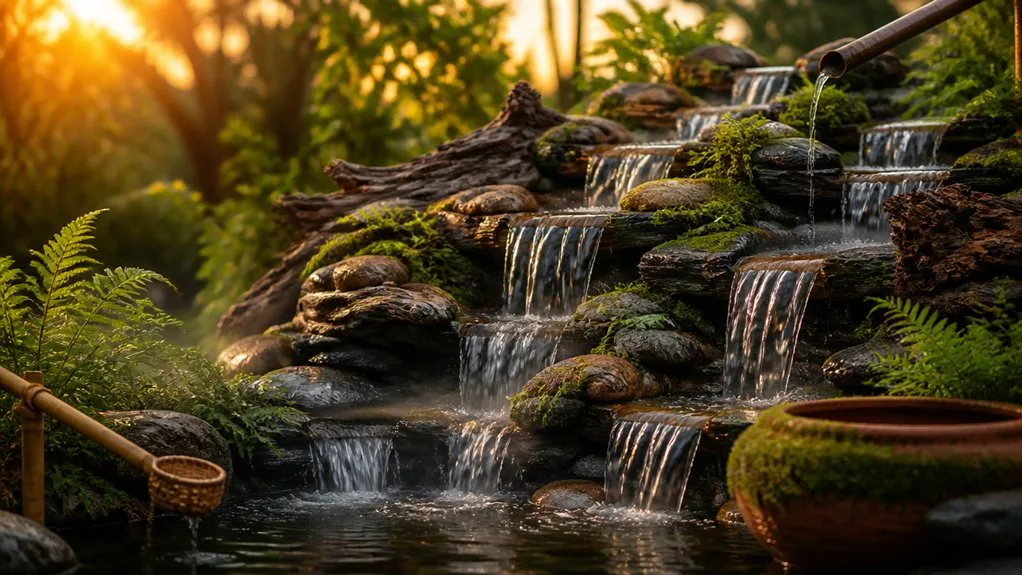
You can build a functional DIY pond waterfall for $30–$50 using rocks, a submersible pump, and pond liner—far cheaper than retail options. Stack stones to create cascades, position your pump at the basin’s base, and run tubing through the tiers to control water flow. Line everything with pond liner to prevent leaks. You’ll get minimal maintenance requirements and soothing water sounds. Explore these twelve designs to discover which setup fits your yard best.
Key Takeaways
- Simple waterfall designs using stacked rocks and submersible pumps cost $30-50 versus hundreds retail.
- Pondless waterfall systems with buried reservoirs suit small yards and tight corners without traditional ponds.
- Variable-speed pumps allow flow adjustment from gentle trickling to vigorous cascades for customized relaxation.
- Backlit LED lights behind falling water create ambiance while minimizing maintenance once properly installed.
- DIY cascades built from upcycled slate, bricks, and stones reduce waste and maximize resourcefulness.
Simple Rock Stack Waterfall
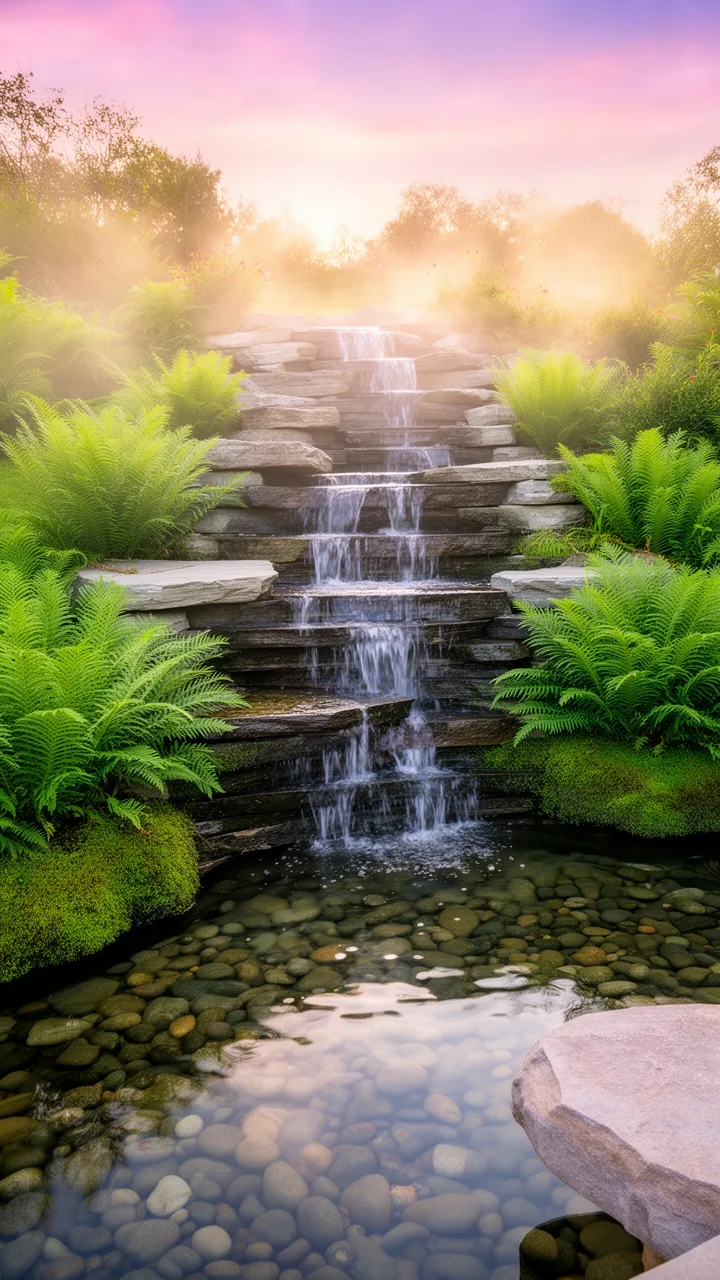
You can create a striking waterfall by stacking rocks of graduated sizes and positioning a submersible pump at the base. Start with your largest stone as the foundation, then layer progressively smaller rocks upward. Drill a hole through the center stones or position tubing alongside the stack to direct water flow. Connect your pump to the tubing, ensuring it reaches the top. Fill your pond, turn on the pump, and adjust water pressure for your desired cascade effect. Use waterproof sealant between rocks to control flow direction. This method works well for small to medium ponds and requires minimal maintenance once properly installed.
Container Waterfall for Decks and Patios
Because you’re working with limited space on a deck or patio, a container waterfall offers an ideal alternative to in-ground pond installations. You’ll need a large basin, a submersible pump, and decorative stones or vessels. Stack your containers to create height, then position the pump in the lowest basin. Run tubing through your stacked containers, concealing it with rocks. Water cascades from the top container, recirculates through the pump, and returns to the basin. You can customize your setup with various container sizes, materials, and stone arrangements. This portable design lets you relocate your waterfall seasonally or rearrange your outdoor space easily.
Pondless Waterfall for Small Spaces
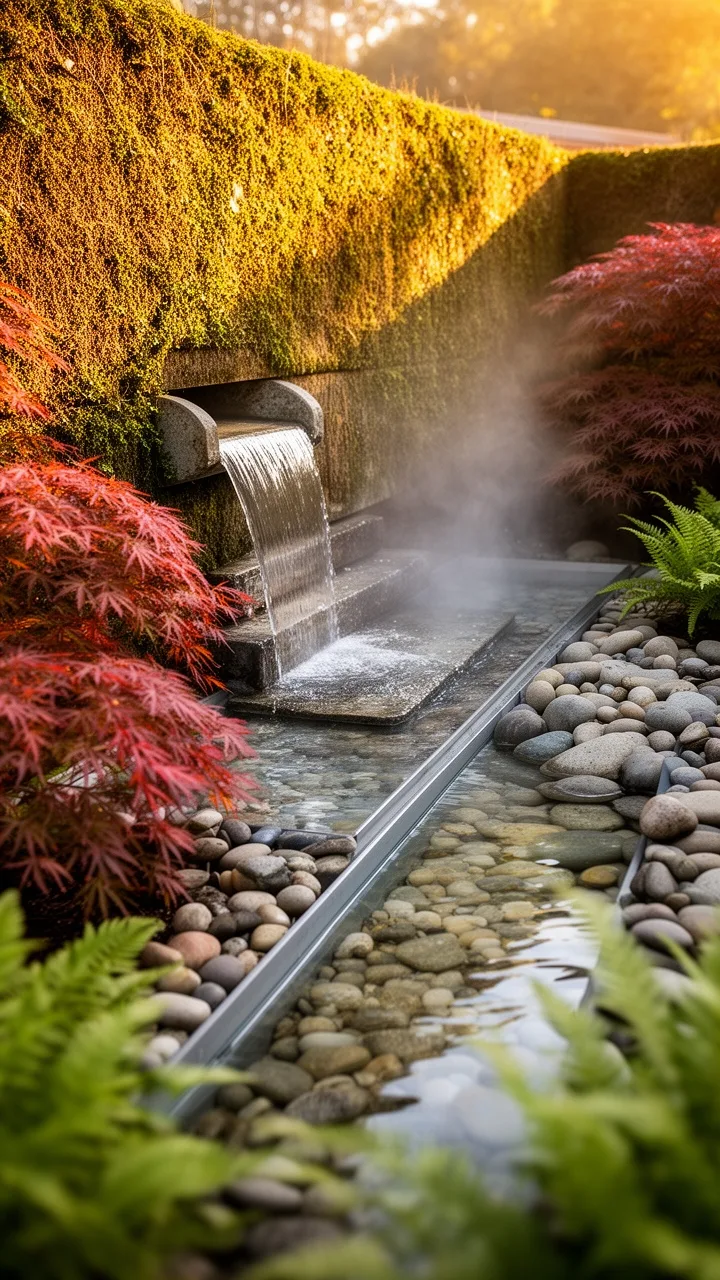
While container waterfalls work well for decks, pondless waterfalls offer an even more compact solution that doesn’t require traditional basin storage. You’ll install a recirculating pump in a buried reservoir beneath landscape fabric, creating an underground water collection system. Stack rocks or stones above the pump outlet to direct water flow. The fabric catches runoff, filtering it back into the reservoir. You’ll need minimal space—just enough for your stone arrangement and buried basin. This setup suits tight corners, narrow pathways, and small yards where traditional ponds aren’t feasible. Maintenance involves regular water level checks and occasional pump cleaning.
Disappearing Waterfall With Basin
A disappearing waterfall with basin combines the aesthetic appeal of flowing water with practical water management by channeling runoff into a visible basin rather than relying solely on underground collection. You’ll install a pump in the basin that recirculates water back to the waterfall’s top. This design minimizes evaporation loss and simplifies maintenance. Stack rocks or stones to create your waterfall structure, then position a catch basin beneath. You can customize the basin’s depth and size based on your water volume and climate conditions. Line it with protective material to prevent soil contamination and ensure optimal pump functionality.
Sheer Descent Waterfall
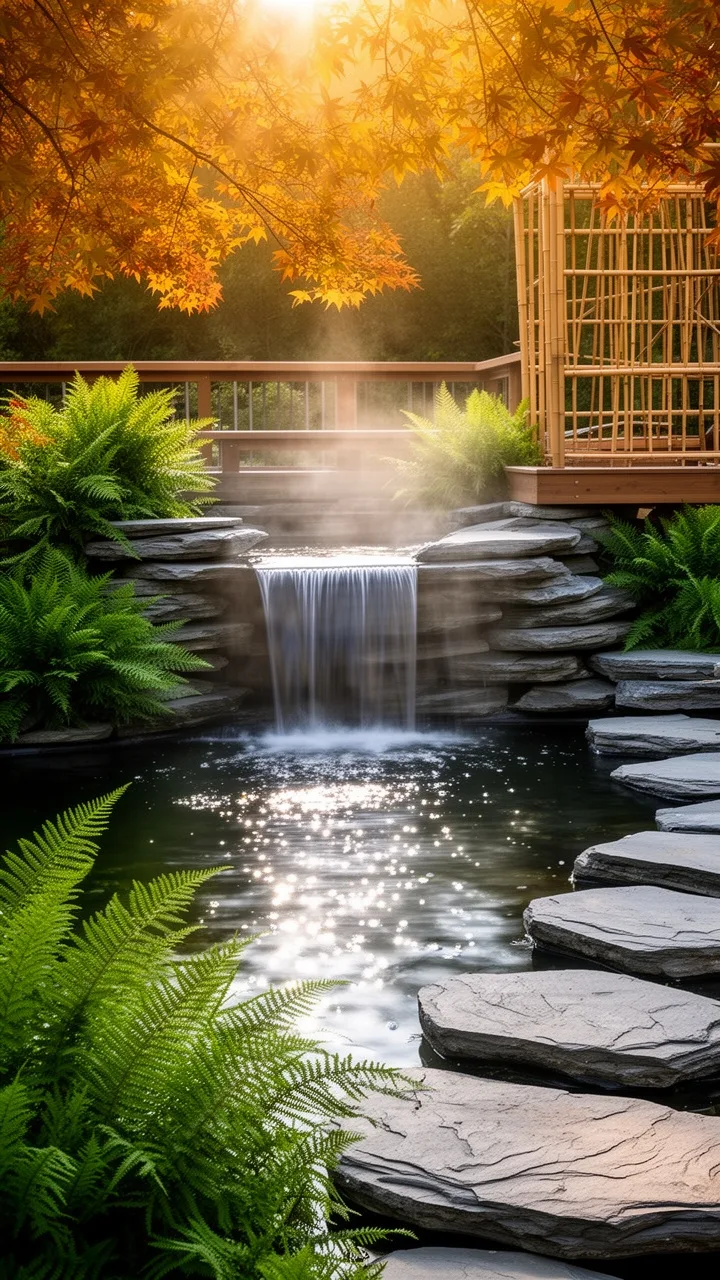
You’ll create a sheer descent waterfall by setting up a straight drop of water from an elevated spillway or weir, where the water falls cleanly away from the rock face without clinging to it.
- Install a weir or lip at your water source’s edge, angled slightly forward to promote water separation
- Position rocks or basin below to catch the falling water and redirect it back to your pump system
- Adjust water flow rate to maintain consistent sheet formation; excessive flow causes splashing, while insufficient flow creates clinging
This design produces dramatic visual impact and soothing sound. You’ll need adequate elevation—typically 2-4 feet—to achieve proper water separation and create that signature sheer curtain effect your pond requires.
Natural Stream-Bed Waterfall
By mimicking natural water flow patterns, you’ll create a stream-bed waterfall that appears organically integrated into your pond landscape. Start by excavating a sloping channel from your pond’s upper edge, angling it 15-30 degrees downward. Layer the streambed with large rocks as anchors, then add smaller stones and pebbles for stability. Install your pump at the channel’s top, directing water through landscape fabric to prevent erosion. Position flat stones strategically to create cascading tiers and gentle pools. This design reduces turbulence, allowing water to meander naturally while maintaining adequate circulation. The result mimics authentic geological formations, blending seamlessly with surrounding terrain.
Tiered Waterfall for Visual Drama

While natural stream-bed designs prioritize organic aesthetics, tiered waterfalls prioritize visual impact through stacked, distinct water drops. You’ll create dramatic cascades by installing multiple levels of platforms or basins, each positioned lower than the last.
To build your tiered waterfall, you’ll need:
- Rigid pond shelves or custom-built stone ledges stacked at varying heights
- A submersible pump sized to push water volume across all tiers consistently
- Spillways or weirs positioned at each tier’s edge to control water flow direction
Position your pump at the basin’s bottom, directing water upward through tubing to your highest tier, allowing it to cascade naturally downward through each subsequent level.
Stacked Stone Cascade for Dramatic Height
To maximize vertical drama, a stacked stone cascade uses individual stones or slabs arranged vertically to create distinct water breaks rather than tiered platforms. You’ll stack stones to your desired height, ensuring each stone slightly overhangs the one below it. This design channels water down multiple narrow falls, creating that striking visual impact you’re after.
Install a small pump at the top, directing water onto the uppermost stone. You’ll need proper structural support and waterproofing between each layer to prevent seepage. This method works exceptionally well in compact spaces where horizontal room is limited but you want impressive vertical presence.
Variable-Flow Waterfall for Customized Water Movement
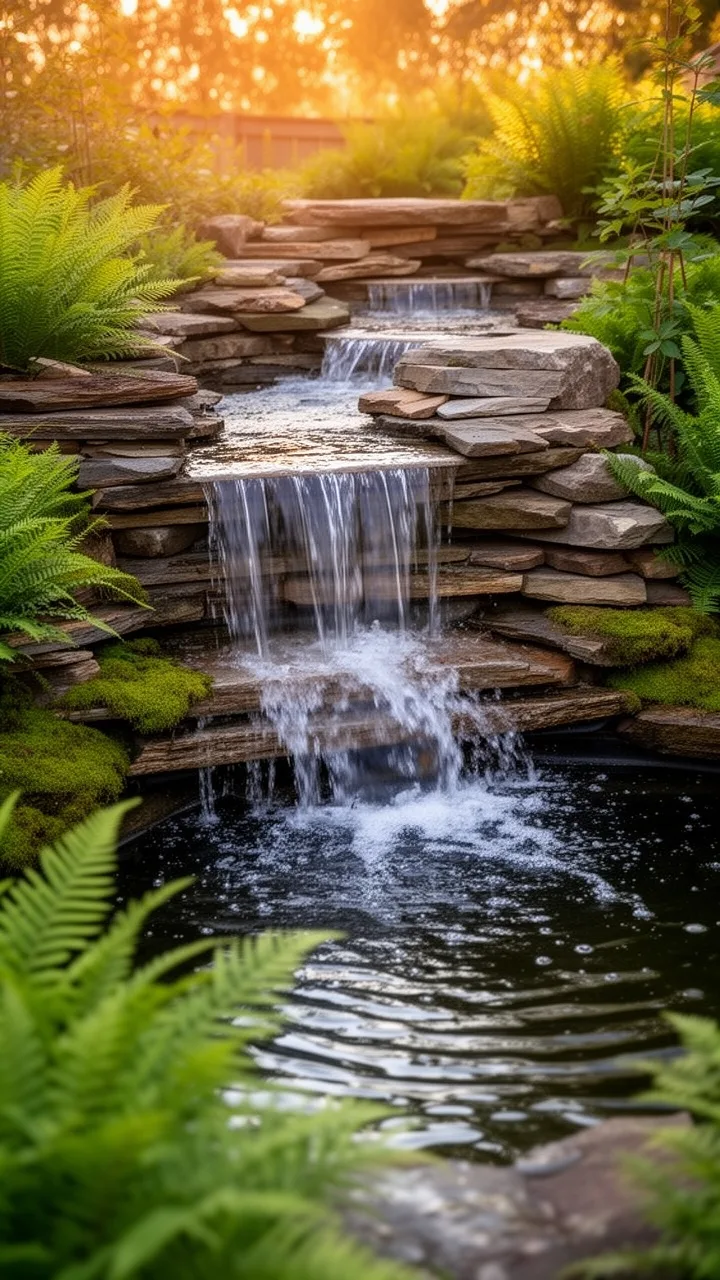
Once you’ve mastered static waterfall designs, controlling water flow opens up dynamic possibilities for your pond. You’ll install an adjustable pump with variable-speed capabilities to customize water movement intensity. This setup lets you modulate the cascade’s appearance based on mood and season.
Key components for your variable-flow system:
- Pump controller with rheostat dial for precise flow adjustment
- Check valve preventing backflow during reduced-speed operation
- Intake filter managing debris without compromising pump efficiency
You’ll achieve gentle trickling during quiet evenings or vigorous cascades for visual impact. This flexibility transforms your waterfall into an adaptable feature responding to your preferences and environmental conditions.
Backlit Waterfall for Evening Ambiance
Illuminating your waterfall from behind transforms it into a stunning focal point after sunset. You’ll want to position waterproof LED lights behind the falling water to create a glowing silhouette effect. Install submersible lights or above-water fixtures depending on your setup’s design. Use cool white or blue LEDs for a calming ambiance, or experiment with color-changing options for versatility. Ensure all electrical connections are weatherproof and properly grounded for safety. Mount lights securely on rocks or use adjustable stands for positioning control. This backlighting technique enhances your pond’s nighttime appeal while maintaining functionality and creating an inviting outdoor environment.
Self-Recirculating Waterfall (Set-and-Forget Option)
A self-recirculating waterfall eliminates the need for constant water source management by continuously pumping water from the basin back to the top. You’ll appreciate the minimal maintenance this system requires once installed.
- Submersible pump placement: Position your pump in the basin’s lowest point, ensuring it draws water efficiently while remaining submerged
- Tubing configuration: Run vinyl tubing from the pump outlet to your waterfall’s top, securing it firmly to prevent disconnection
- Basin capacity: Size your basin large enough to accommodate water loss from evaporation without the pump running dry
This setup runs automatically, requiring only occasional top-offs during hot months.
Upcycled-Materials Waterfall (DIY on a Shoestring)
Why spend hundreds on commercial waterfall kits when you can build a functional cascade from materials you’ve got lying around? Stack stacked slate, bricks, or stones to create tiers. Use a submersible pump from an old fountain or aquarium setup. Position PVC piping or rigid tubing to direct water flow between levels. Line your structure with pond liner to prevent leaks. Add a basin at the bottom to catch and recirculate water. This approach costs thirty to fifty dollars versus hundreds for retail options. You’ll achieve the same soothing water sounds while minimizing waste and maximizing resourcefulness.
Conclusion
You’ve got nine fantastic waterfall options to transform your backyard into a tranquil retreat. Whether you’re working with limited space or a sprawling garden, you’ll find a design that fits your needs and budget. Start with materials you’ve got on hand, test your pump’s flow rate, and don’t hesitate to adjust your setup. Building a waterfall is like composing music—you’ll refine it until it sounds just right.
The Only Tools You Need for a Thriving Garden 🌱
Whether you're a weekend gardener or growing daily — these hand-picked tools make every session faster, easier, and more satisfying.