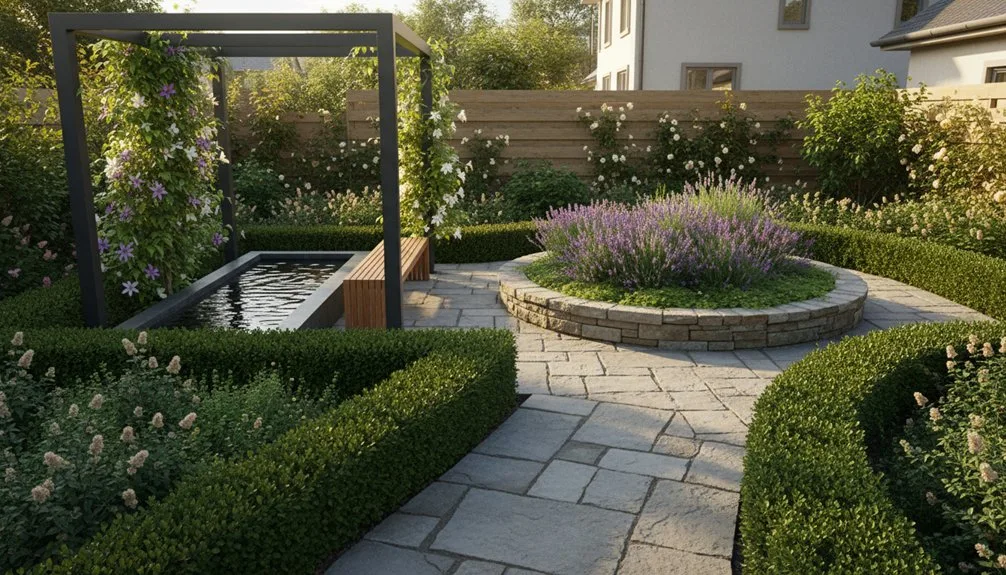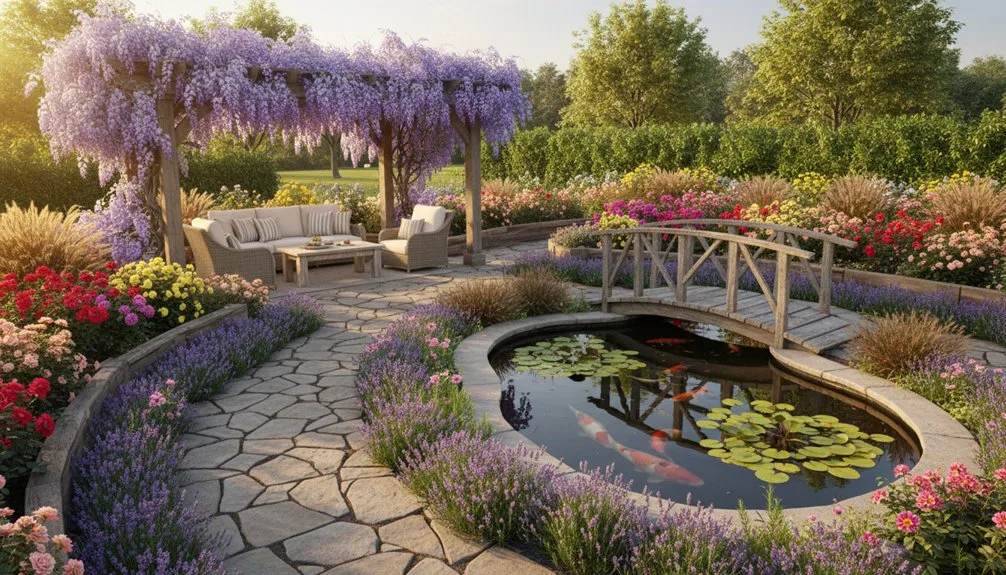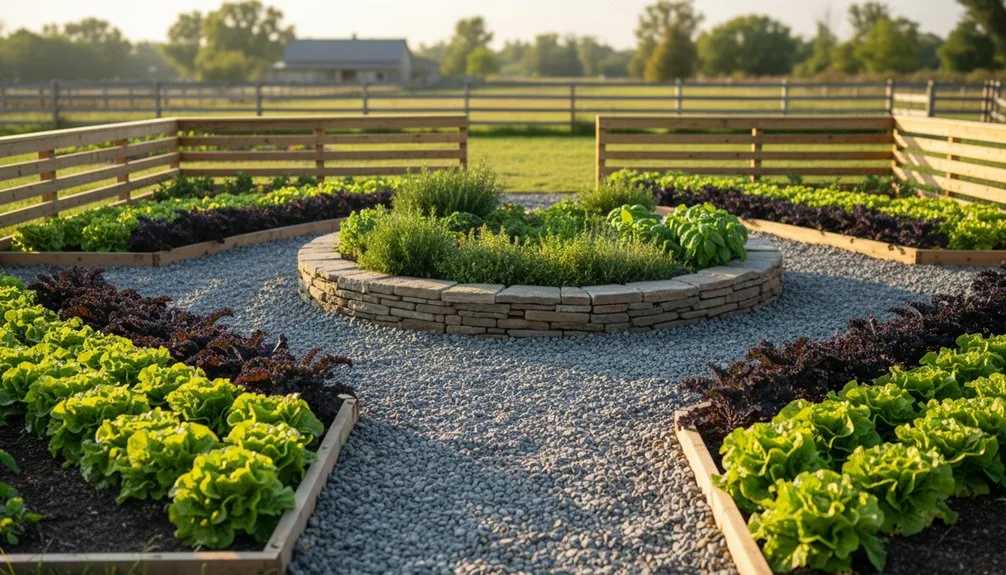

You can build a walkway that is both useful and beautiful. First, define its purpose, whether you need a primary route or a meandering path. Your choice of materials and plants, like creeping thyme between stones, will shape its character. The details of layout, edging, and subtle lighting make the final difference between a simple trail and a garden journey.
Key Takeaways
- Choose materials and layout based on the path’s purpose, such as durable surfaces for utility or fragrant plants for contemplative strolls.
- Select path widths to match use, from 24 inches for a solitary stroll to 48 inches for two people or accessibility.
- Consider permeable materials like gravel or decomposed granite for drainage and to prevent soil compaction around plants.
- Incorporate planting pockets or gaps between pavers for ground covers to soften edges and add beauty.
- Build a stable base with proper edging and drainage to prevent shifting and protect surrounding garden beds.
What Is Your Garden Walkway’s Primary Purpose?
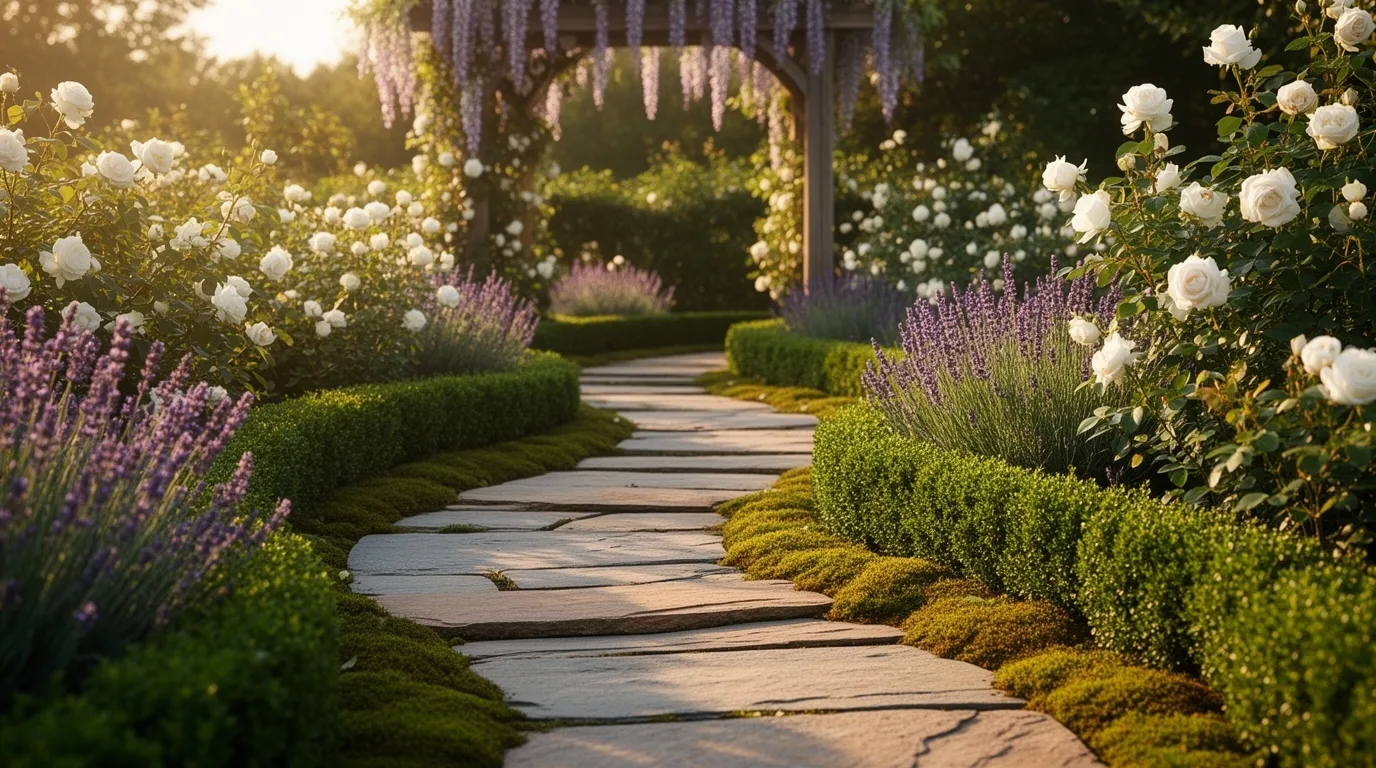
Before you choose materials or plants, you must decide what your walkway needs to do, because its primary purpose dictates every other choice. Is it a utilitarian route from your garage to a vegetable patch? That path needs durable surfacing and minimal, tough edging plants.
Or is it a meandering, decorative stroll through perennial beds? You’ll prioritize gentle curves and planting pockets for fragrant herbs or sprawling groundcovers.
Perhaps it’s a children’s exploration track; you’ll select soft, safe materials and robust shrubs that can handle playful traffic. Your purpose determines the plants you place beside and within it. A high-traffic path demands resilient companions, while a contemplative one invites delicate, sensory foliage you can touch and smell as you pass.
How Do You Plan Your Walkway’s Layout and Width?
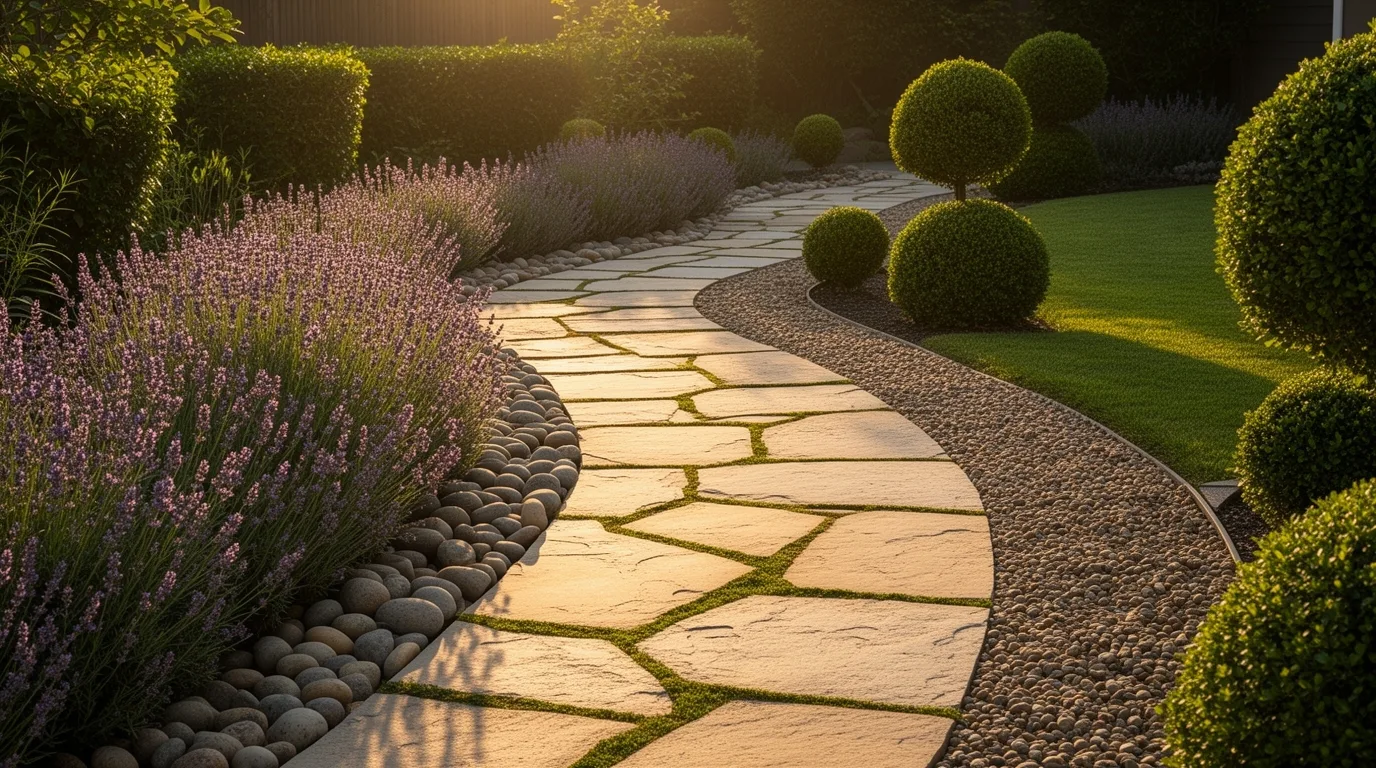
Having decided your walkway’s purpose, next you’ll map its shape and size. Sketch your path, letting it flow naturally past key garden features. You’ll want to accommodate your plants’ mature spread, so ensure its width prevents damage. For a solitary stroll, a width of 24 inches works. For two people to walk side-by-side or for a wheelchair, plan for at least 48 inches. Gently curving lines feel more organic and make a small yard seem larger. Straight lines offer formality and work best directing views toward a focal point. Always align your walkway’s dimensions with its function and the scale of your planting beds.
| Walkway Type | Suggested Width | Best Paired With |
|---|---|---|
| Primary Path | 36 – 48 inches | Tall ornamental grasses, small shrubs |
| Secondary Spur | 24 – 30 inches | Spreading ground covers, low perennials |
| Stepping Stone Path | 18 – 24 inches | Creeping thyme, moss, or lawn |
| Curving Garden Trail | 30 – 36 inches | Layered perennial borders |
| Formal Axis Path | 48+ inches | Clipped hedges, symmetrical planting |
What’s Your Budget and Maintenance Preference?
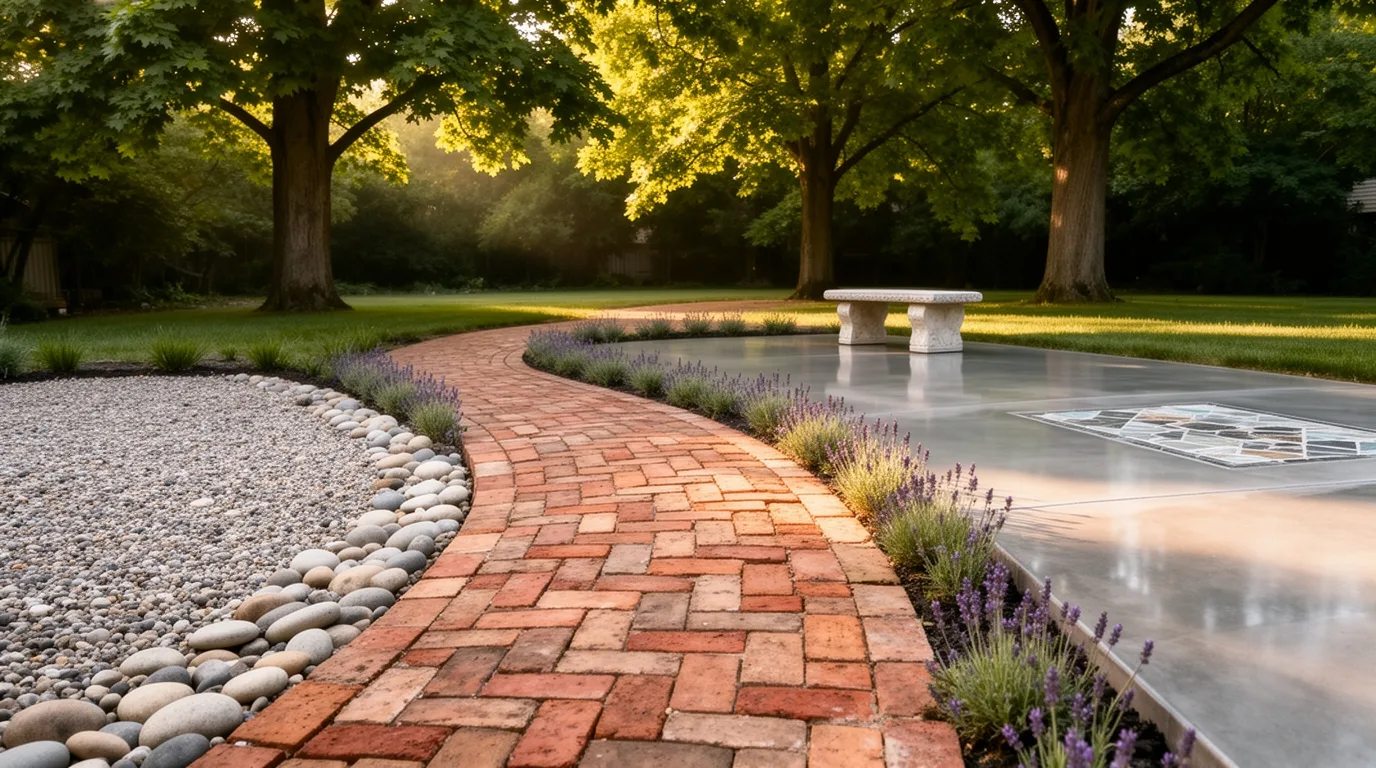
While you’re planning the shape and width, it’s also essential to decide what you can spend and how much time you’ll dedicate to upkeep. Your budget directly affects material choices, which in turn influences long-term plant health by determining drainage and soil conditions.
If you prefer low maintenance, choose materials that won’t shift or crack, as this can damage delicate root systems. Also, consider how much weeding you’re willing to do between pavers or gravel. A path requiring frequent repairs will disrupt surrounding perennials and ground covers. Be realistic about your time; a simpler, well-built path fosters a healthier, more stable garden ecosystem than a complex one you can’t properly care for.
How to Choose the Right Material for Your Path
After establishing your budget and maintenance plans, the next step is selecting a material that supports the plants along your walkway.
Consider permeable options like gravel or decomposed granite, as they allow water to reach nearby roots and prevent runoff.
You’ll want a surface that doesn’t compact soil or hinder plant growth. Smooth, solid pavers can create a hot surface that may stress delicate perennials, so integrate gaps for ground covers like creeping thyme.
For shady areas with moisture-loving plants, choose a material like cedar chips that retains dampness and complements the environment.
Always ensure your path’s foundation and edges don’t compete with your plants’ root systems, giving them space to thrive alongside your footsteps.
Are Flagstone Paths Right for Your Rustic Garden?
Flagstone’s enduring charm might perfectly match the relaxed, natural feel of your rustic garden.
You can lay these irregular stones with generous gaps, planting low-growing, creeping thyme or sedum between them. This softens the path’s edges and releases fragrance when you step.
Moss also thrives in shady flagstone joints, enhancing that aged, woodland aesthetic.
Choose native, sprawling plants that tolerate light foot traffic. Their foliage will spill over the stone, creating a seamless blend with your garden beds.
Can Pavers Create Your Modern Dream Walkway?
For a crisp, modern walkway, you can use precisely cut pavers to define a sleek path.
Choose large-format concrete or porcelain slabs in neutral tones for a minimalist look. You’ll install them with tight, uniform joints, which you can fill with polymeric sand to prevent weed growth and maintain clean lines. This creates a stable, low-maintenance surface that beautifully contrasts with your planting beds.
Frame the path with structural plants like ornamental grasses or low boxwood hedges to enhance its geometric form. You can even integrate planting pockets between pavers for creeping thyme or sedum, softening the hardscape.
Properly spaced lighting along the edges will highlight both the pavers and your foliage at night.
What Are the Pros and Cons of Gravel and Mulch?
Gravel and mulch offer distinct advantages and drawbacks as walkway materials, so consider both their practical effects on your plants and your desired maintenance level.
Gravel provides excellent drainage, which benefits surrounding plants by preventing waterlogged soil, but it can increase soil alkalinity over time, affecting acid-loving species like azaleas.
You’ll need to replenish mulch annually as it decomposes, but this process enriches your soil with organic matter, feeding nearby plant roots.
Gravel stays in place better, while mulch may scatter. Choose gravel for a low-upkeep, defined path, but avoid using it where you’ll frequently push wheelbarrows. Select mulch for a softer, nutrient-contributing surface in less-trafficked garden areas where soil health is a priority.
Does a Brick Path Fit Your Garden’s Character?
How can you tell if a brick path belongs in your garden? First, consider your garden’s style. A formal layout with clipped hedges and symmetrical beds often welcomes brick’s structured, timeless feel. For a cottage garden, aged or reclaimed bricks with moss nestled in the joints can enhance that romantic, settled charm.
Second, look at your plant palette. Brick’s warm, reddish tones beautifully complement green foliage and can make white or purple blooms, like hydrangeas or lavender, truly stand out. It provides a rich backdrop without competing.
However, its solid surface doesn’t allow for seeding plants between pavers like some materials. If you want a path that feels like a natural extension of your planting beds, you might find brick’s formality less adaptable.
How Do You Get Creative With Stepping Stones?
While brick paths offer defined structure, stepping stones invite a lighter, more playful approach. You can weave your path through existing plantings, letting the stones guide your feet without disturbing roots. Use varying shapes and sizes to create visual interest.
Allow plants to soften the edges—let creeping thyme or sedum spill over the stone margins, or nestle your stones between clumps of ornamental grasses. You’re not just building a path; you’re integrating it with your garden’s life.
Place stones generously in flower beds so you can step in to tend plants without compacting soil elsewhere. Their spacing can be irregular, encouraging a meandering journey that feels discovered rather than constructed.
How Do You Build a Stable Base That Lasts?
Begin by digging out the soil to a depth that accommodates both your chosen pavers and a solid foundation of gravel and sand. This trench should be perfectly level and slightly wider than your path. A stable base prevents pavers from shifting, which protects surrounding plant roots from upheaval and ensures a safe, even surface.
For a long-lasting foundation that complements your garden’s health, focus on these five key steps:
- Excavate Deeply: Remove at least six inches of soil to allow for a 4-inch gravel base and 1-2 inches of leveling sand.
- Install Landscape Fabric: Lay this barrier over the compacted subsoil to suppress weeds and separate your base layers.
- Compact the Gravel: Use a plate compactor on the gravel layer to create an unyielding, well-drained foundation that resists frost.
- Add and Screed Sand: Spread coarse sand over the gravel and screed it perfectly level for uniform paver support.
- Ensure Gentle Sloping: Grade the base so it slopes slightly away from garden beds or structures for proper surface drainage.
What’s the Right Way to Lay Your Chosen Material?
Selecting the right layout pattern for your pavers defines the walkway’s character and influences how guests move through your garden spaces. A running bond pattern directs flow quickly, ideal for a path through vegetable beds. A circular or fanning pattern creates a focal point around a specimen tree.
After choosing your pattern, lay the materials onto your prepared base, starting from one corner. Use a rubber mallet to tap each piece firmly into your leveling sand bed, checking for evenness with a spirit level. Maintain consistent joints; you can use spacers for uniform gaps. Keep the path’s surface flush, allowing rainwater to drain toward planted beds, not pool on the walkway.
How Do You Add Edging for a Clean Finish?
Secure your pavers with a rigid border to prevent them from shifting into your garden beds over time. Choose an edging material that complements your plants, like a dark metal strip against silvery lambs ear or rustic cedar next to vibrant daylilies. Install it deeper than your path’s base for stability, securing it with spikes or anchors. This clean line also acts as a root barrier, protecting your walkway from encroaching perennials.
You’ll keep mulch on its side of the border and create a defined space for low-growing thyme or sedum to spill over gracefully, softening the edge without undermining it.
- Opt for steel or aluminum edging for a nearly invisible, modern look that lets plant textures shine.
- Use pressure-treated wood or composite boards for a warmer, natural feel that blends with shrubbery.
- Consider a double-row of bricks or stone set vertically to create a substantial, traditional border.
- Sink your edging at least two inches below the path surface to block gravel or sand from escaping.
- Allow a slight gap between the edging and pavers for drainage and to accommodate slight expansion.
How Can Lighting Enhance Your Path at Night?
To guide visitors safely through your garden after dusk, incorporate subtle lighting that highlights nearby foliage while illuminating the path. Choose low-voltage or solar fixtures to create ambient light without harsh glare. Install down-lights in trees to cast soft, moonlit shadows from your ferns or hostas onto the walkway. Use in-ground well lights to uplight the textured bark of a Japanese maple or the arching fronds of ornamental grasses lining the path. You’re not just lighting a walk; you’re framing your plants’ nighttime beauty and ensuring safe passage.
| Lighting Type | Best Plant Pairing |
|---|---|
| Path Bollards | Low bordering herbs like thyme or lavender |
| Recessed Step Lights | Creeping sedum or moss between pavers |
| Uplights in Beds | Architectural plants like yucca or phormium |
| String Lights Overhead | Canopy from a weeping cherry or wisteria |
| Low Mushroom Lights | Groundcover ferns or ajuga |
Which Plants Soften Your Walkway’s Edges Best?
Softening your walkway’s edges with plants creates a natural, welcoming transition from path to garden. You’ll choose low-growing, spreading species that tolerate foot traffic and soften hard lines.
Creeping thyme offers fragrant foliage, while sedums like ‘Angelina’ provide drought-tolerant color. For shady edges, consider mosses or dwarf mondo grass. These plants blur boundaries without impeding passage.
- Creeping Thyme: Its mat-forming habit and tiny flowers soften edges aromatically.
- Sedum (Stonecrop): Varieties like ‘Blue Spruce’ offer texture and resilience.
- Dwarf Mondo Grass: Forms tidy, dark green clumps ideal for shaded transitions.
- Irish Moss: Creates a velvety, evergreen carpet in moist, shady spots.
- Alpine Strawberries: Add soft foliage, edible fruit, and a cottage-garden feel.
Frequently Asked Questions
How Do I Keep My Walkway Weed-Free?
To keep weeds away, you’ll want to start with a solid barrier. Lay landscape fabric beneath your walkway. Apply mulch or gravel on top because you’re smothering potential growth. You can also spot-treat any sprouts.
What Is the Safest Walkway Surface for Seniors?
You need a smooth, stable, low-maintenance surface. Use large, closely-set flagstones or a solid, textured concrete pour. Ensure joints are tight to prevent tripping and select non-slip materials even when wet.
How Do I Handle Walkway Drainage Issues?
To address drainage, you can gently slope your path and use permeable materials. Consider planting moisture-loving species along the sides to help absorb excess water naturally, preventing pooling.
Can I Install a Walkway Over Tree Roots?
You can install a walkway over roots, but don’t harm the tree. Use a floating, flexible design like gravel or stepping stones. You’ll need to build a raised frame that accommodates root growth without compression.
Do Walkways Affect My Home’s Resale Value?
Yes, a well-built, attractive walkway often boosts your home’s appeal. You’ll increase curb appeal by creating an inviting path that guides visitors and showcases your garden’s best features to potential buyers.
Conclusion
Your walkway is now a functional, plant-rich path. Maintain its beauty by weeding those fragrant thyme pockets and trimming sedum edges. Ensure your gravel or flagstone remains level and that lighting fixtures are clean. Most importantly, use your path. Let it guide your evening strolls and frame your garden’s best views, making the journey through your backyard as rewarding as the destination itself.
The Only Tools You Need for a Thriving Garden 🌱
Whether you're a weekend gardener or growing daily — these hand-picked tools make every session faster, easier, and more satisfying.