
You’ll transform your landscape with sedum ground covers, which require minimal water, fertilizer, and maintenance. These drought-tolerant succulents thrive in poor soil where traditional plants fail. Choose from twelve versatile varieties ranging from low-spreading Dragon’s Blood and Coral Carpet to vibrant Angelina and architectural Voodoo Sedum. Each offers distinct foliage colors—deep burgundy, coral-red, fiery orange—and seasonal blooms attracting pollinators. Plant in well-draining soil with full sun exposure, space 6-12 inches apart, and water sparingly until established. Discover which cultivars suit your specific climate and design goals.
Key Takeaways
- Sedum ground covers are drought-tolerant with shallow roots that suppress weeds and prevent erosion naturally.
- Low-growing varieties like Dragon’s Blood and Coral Carpet form dense mats ideal for pathways and slopes.
- Mid-range sedums such as Angelina and Sunsparkler series provide vibrant seasonal color from summer through fall.
- Well-draining soil and full sun are essential; minimal watering needed once roots establish successfully.
- Voodoo and Tricolor sedums offer striking architectural foliage with seasonal color changes for year-round visual interest.
Why Sedum Ground Covers Beat Traditional Landscaping

While conventional landscaping demands constant maintenance, sedum ground covers offer a drought-tolerant, low-maintenance alternative that thrives in poor soil conditions where traditional plants’d struggle. You’ll experience reduced watering needs since sedums store moisture in their succulent leaves. They require minimal fertilization and eliminate labor-intensive pruning schedules. Their shallow root systems prevent soil erosion while suppressing weeds naturally. You’ll notice faster establishment compared to traditional ground covers, with blooms appearing within weeks. Sedums tolerate temperature fluctuations and adapt to various light conditions. Their dense growth pattern creates effective coverage without chemical herbicides or pesticides, making them environmentally superior while significantly lowering your landscaping costs.
Understanding Sedum Varieties: What to Look For
Selecting the right sedum variety requires understanding three critical factors: height, hardiness zone, and growth rate. You’ll find sedums ranging from creeping types under three inches to upright varieties reaching two feet tall. Consider these key characteristics:
- Foliage color: Choose from green, blue-gray, burgundy, or variegated options depending on your aesthetic goals
- Bloom timing: Select varieties flowering spring through fall for extended visual interest
- Drought tolerance: Verify USDA hardiness ratings and water requirements for your climate
You’re matching plant physiology to your specific landscape conditions, ensuring long-term success without excessive maintenance or interventions.
Sedum Spurium: The Tried-and-True Fast Spreader
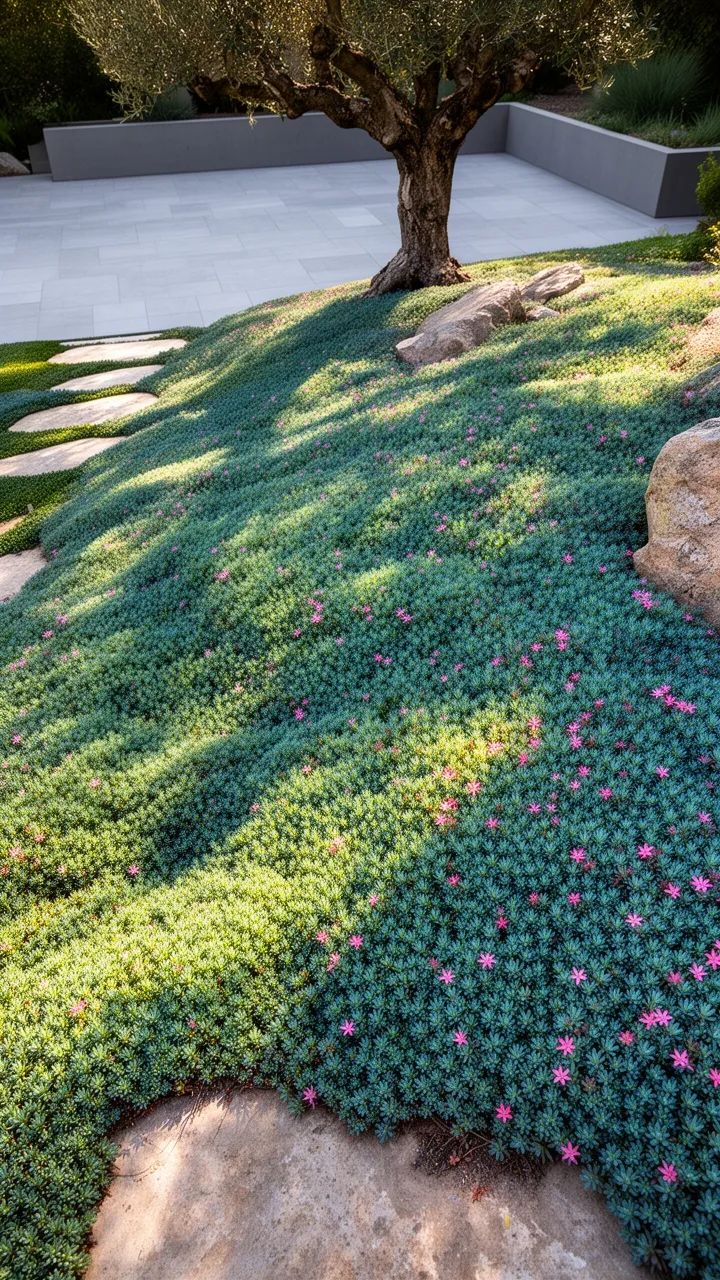
Sedum spurium comes highly recommended among gardeners seeking aggressive ground cover that’ll transform bare patches into lush carpet within a single growing season. You’ll appreciate its drought tolerance and minimal maintenance requirements. The cultivar spreads rapidly via runners, establishing dense mats within months.
| Cultivar | Height | Foliage Color |
|---|---|---|
| Dragon’s Blood | 4-6″ | Deep red |
| Tricolor | 4-6″ | Pink/cream/green |
| Voodoo | 3-4″ | Burgundy |
You should plant spurium in well-draining soil under full sun. It thrives in poor conditions where other plants struggle. Water sparingly once established. This hardy succulent tolerates foot traffic, making it ideal for pathway edging and slope stabilization.
Dragon’s Blood Sedum: Deep Red Fall Intensifier
If you’re seeking a sedum cultivar that delivers dramatic color transformation as temperatures drop, Dragon’s Blood won’t disappoint. This hardy perennial exhibits vibrant crimson foliage during autumn months, creating striking visual interest in your landscape.
Dragon’s Blood thrives with these characteristics:
- Tolerates full sun to partial shade while maintaining intense coloration
- Requires well-draining soil and minimal supplemental watering once established
- Reaches 4-6 inches tall, forming dense mats that suppress weeds effectively
You’ll appreciate its low maintenance demands and exceptional cold hardiness. The plant’s star-shaped pink flowers emerge in summer before the spectacular fall color shift occurs, making it a versatile groundcover choice.
Angelina Sedum: Fiery Orange and Red Summer Color
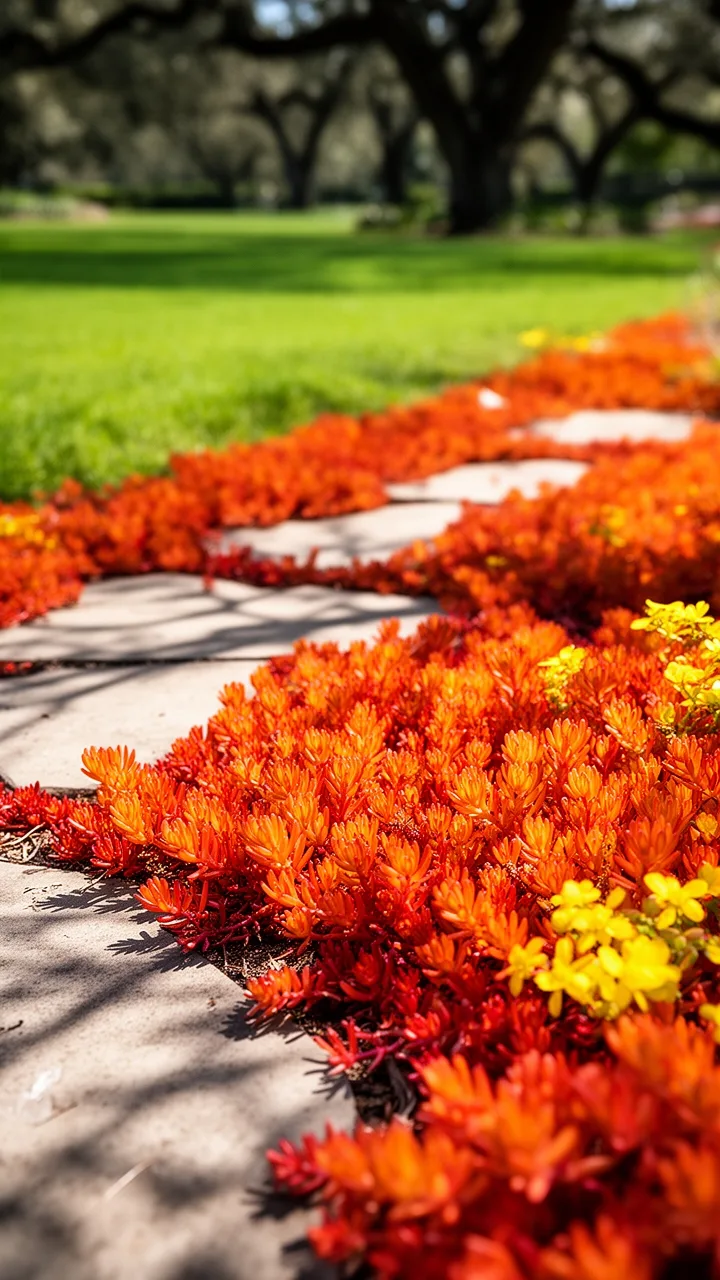
For vibrant warm tones that intensify throughout the growing season, Angelina sedum delivers reliable color performance without the fall-dependent display of Dragon’s Blood. You’ll observe golden-yellow foliage transitioning to fiery orange and deep red hues as temperatures drop. This cultivar thrives in full sun, reaching 6-9 inches tall with a spreading habit ideal for ground coverage. Its fleshy leaves store water efficiently, enabling survival in drought conditions. Plant Angelina in well-draining soil to prevent root rot. The rosette formations create textural interest while requiring minimal maintenance once established. You’ll appreciate its resilience and sustained ornamental appeal throughout multiple seasons.
Autumn Joy: Reliable Height and Seasonal Interest
While Angelina offers continuous color shifts throughout the season, Autumn Joy takes a different approach by delivering substantial height and architectural structure that commands attention in late-season gardens. You’ll appreciate this cultivar’s reliable performance across hardiness zones 3-10.
This sedum reaches 24-30 inches tall, providing vertical interest that groundcovers typically lack. Its late-blooming pink flowers transition to deep burgundy, extending visual appeal through fall and winter.
Key advantages you’ll experience:
- Persistent seed heads offer winter ornamental value and wildlife food sources
- Upright growth habit creates natural layering in mixed plantings
- Extended blooming period (August-November) maximizes seasonal interest
Autumn Joy thrives in full sun with well-draining soil.
Sunsparkler Series: Compact Varieties for Tight Spaces
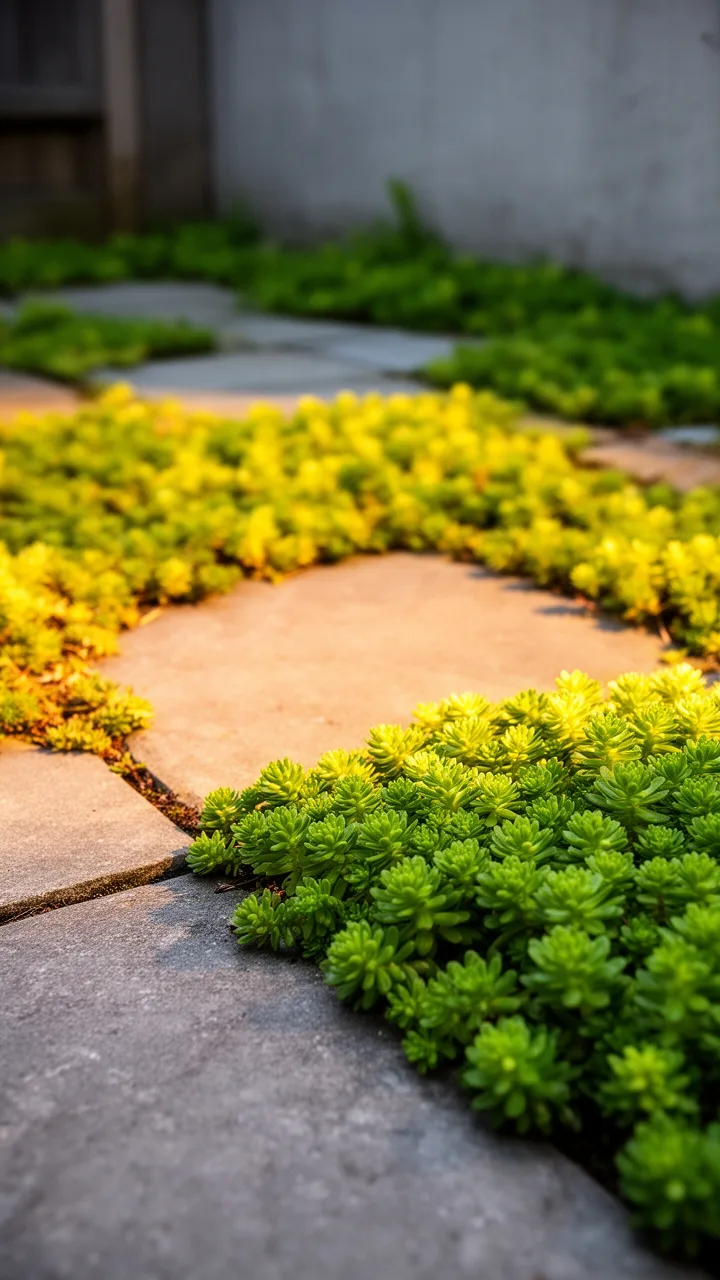
Where garden space is limited, the Sunsparkler series delivers exceptional performance through its naturally compact growth habit and prolific flowering. You’ll appreciate these sedums’ 6-12 inch mature heights, making them ideal for container edges, narrow planting beds, and rock gardens. The series offers vibrant color selections—pink, red, and orange varieties—that bloom from summer through fall. They’re extremely drought-tolerant once established, requiring minimal supplemental watering. Their dense foliage effectively suppresses weeds while providing year-round visual interest. You can propagate them easily from leaf cuttings, allowing economical landscape expansion. Sunsparklers thrive in full sun with well-draining soil, demanding virtually no maintenance beyond occasional deadheading.
Creeping Sedum: Soft Green Spreads for Natural Softening
Beyond the vertical drama of compact upright varieties, creeping sedums offer a horizontal solution that blankets soil with living texture and color. You’ll appreciate how these low-growing cultivars establish dense mats that suppress weeds and reduce maintenance demands. Their trailing growth habit makes them ideal for edging pathways, softening hardscape transitions, and filling gaps between pavers.
Consider these practical applications:
- Plant creeping sedums on slopes to prevent erosion while establishing attractive ground coverage
- Use them in rock gardens where their succulent foliage complements stone aesthetics
- Deploy them as living borders around raised beds for seamless landscape integration
You’ll achieve natural softening effects with minimal intervention.
Coral Carpet Sedum: Low-Growing Pink Blooms and Texture

As one of the most vibrant creeping sedums available, Coral Carpet delivers year-round visual interest through its distinctive color-shifting foliage and delicate pink flowers. You’ll notice the succulent’s foliage transitions from green to brilliant coral-red as temperatures drop, creating dynamic landscape contrast. Growing just 2-3 inches tall, it spreads rapidly across rocky terrain and between pavers. The plant thrives in full sun and well-draining soil, requiring minimal water once established. Its shallow root system makes installation effortless, while its dense growth effectively suppresses weeds. Summer blooms attract pollinators, adding ecological value to your low-maintenance garden design.
Voodoo Sedum: Dark Purple-Black Leaves Year-Round
For dramatic year-round color in your sedum ground cover, Voodoo Sedum delivers unmatched visual impact with its deep purple-black foliage that remains consistent across all seasons. This hardy succulent thrives in full sun to partial shade, reaching 4-6 inches tall.
Key characteristics you’ll appreciate:
- Dense, compact growth habit requiring minimal pruning or maintenance
- Drought tolerance once established, reducing irrigation needs significantly
- Small pink flowers emerging in late summer, contrasting beautifully against dark leaves
You’ll find Voodoo Sedum excellent for rock gardens, borders, and containers. Its architectural foliage provides striking contrast alongside lighter-colored sedums, enhancing overall landscape design appeal.
Tricolor Sedum: Variegated Beauty With Pink Edges
Where Voodoo Sedum commands attention through darkness, Tricolor Sedum captivates with its dynamic three-tone foliage that shifts seasonally from cream and green to pink and red hues. You’ll appreciate its compact growth habit, reaching 6 inches tall, making it ideal for borders and rock gardens. This cultivar thrives in full sun and well-draining soil, displaying peak coloration during cooler months. Its drought tolerance reduces maintenance demands significantly. Plant spacing of 12 inches ensures optimal coverage without overcrowding.
| Feature | Specification |
|---|---|
| Height | 6 inches |
| Sunlight | Full sun |
| Hardiness | USDA zones 3-9 |
How to Plant and Maintain Sedum Ground Covers
Since sedums tolerate poor soil conditions better than most ground covers, you’ll want to prioritize drainage above all else—amend heavy clay or compacted earth with coarse sand, perlite, or gravel to create a loose, well-draining medium. Space plants 6-12 inches apart depending on species maturity. Establish routine care through:
- Watering sparingly until roots establish, then only during extended drought periods
- Applying minimal fertilizer; excessive nutrients promote weak, leggy growth
- Pruning dead or damaged foliage in spring to encourage dense branching
Once established, sedums require negligible intervention. They’ll naturally spread, suppress weeds, and thrive with benign neglect.
Conclusion
You’ll find that sedum ground covers transform your landscape with minimal effort. These hardy succulents thrive in poor soil, require infrequent watering, and eliminate tedious maintenance tasks. Why struggle with traditional landscaping when you can establish a vibrant, self-sustaining garden? Plant your chosen varieties in well-draining soil, space them appropriately for spreading, and watch them flourish through seasons. You’re investing in long-term beauty and sustainability.
The Only Tools You Need for a Thriving Garden 🌱
Whether you're a weekend gardener or growing daily — these hand-picked tools make every session faster, easier, and more satisfying.