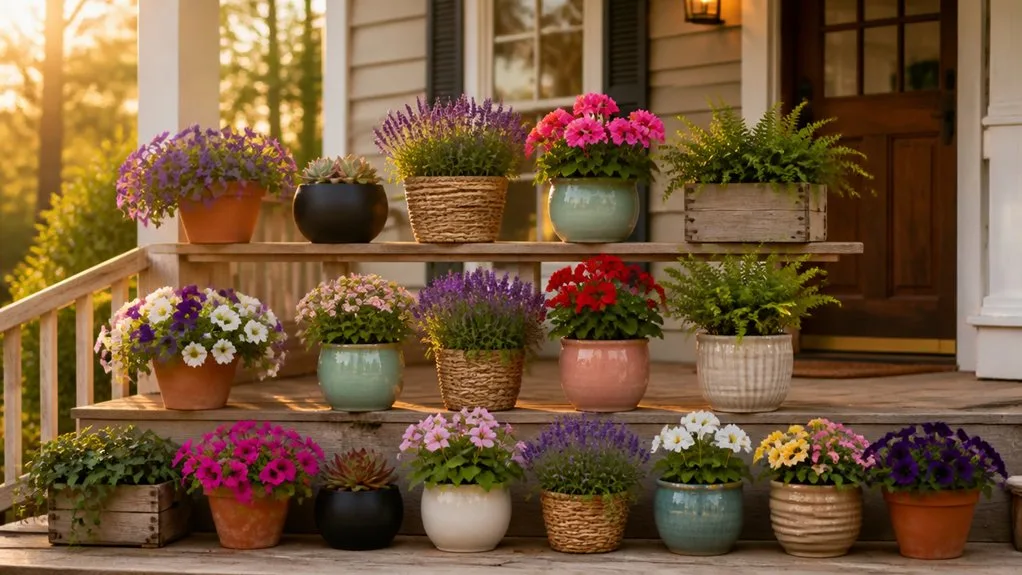
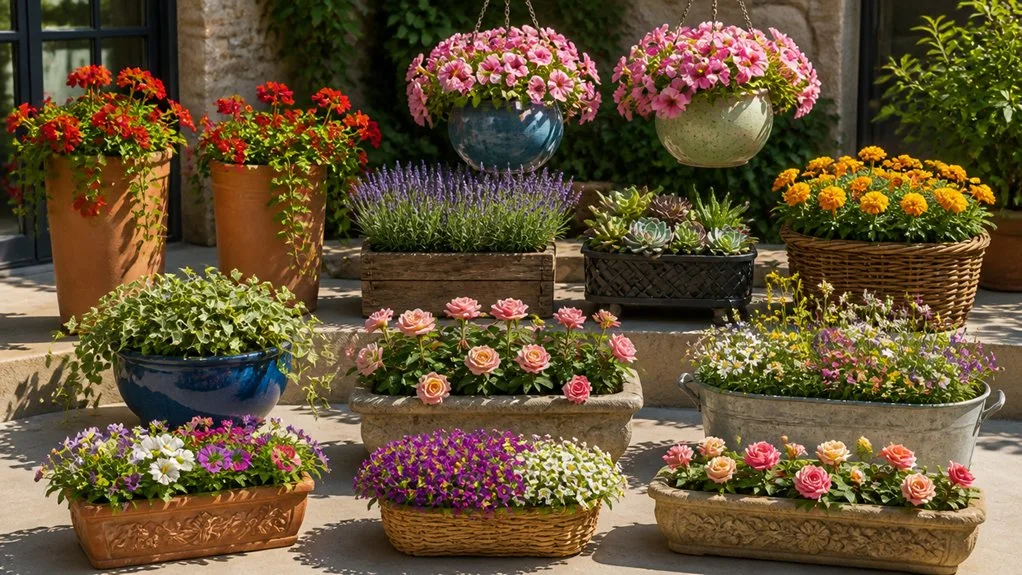
You can transform your outdoor spaces with strategically chosen flower pots that blend function and style. Classic terracotta suits perennials and succulents, while modern geometric planters complement architectural plants. Self-watering containers reduce maintenance on heat-prone patios. Lightweight resin allows easy seasonal rearrangement. You’ll enhance visual depth by mixing materials—pairing weathered terracotta with sleek metal for rustic-modern appeal. Fabric containers promote root aeration with breathable construction. Strategic placement at entrances and pathway intersections creates focal points. Discover how tiered arrangements, grouped clusters, and rotating seasonal plantings maximize your porch, patio, and garden’s potential.
Key Takeaways
- Mix pot materials like terracotta, concrete, ceramic, and metal for visual interest and rustic-modern appeal across outdoor spaces.
- Arrange pots in tiered clusters using odd numbers and varying heights to create dynamic focal points on patios.
- Choose self-watering containers for heat-prone patios to reduce maintenance while ensuring consistent moisture during hot seasons.
- Select glazed pots with jewel tones or bright hues to energize shaded areas and complement surrounding foliage.
- Rotate seasonal plants—spring pansies, summer zinnias, fall mums, winter evergreens—to keep outdoor displays fresh year-round.
Classic Terracotta Pots for Timeless Appeal
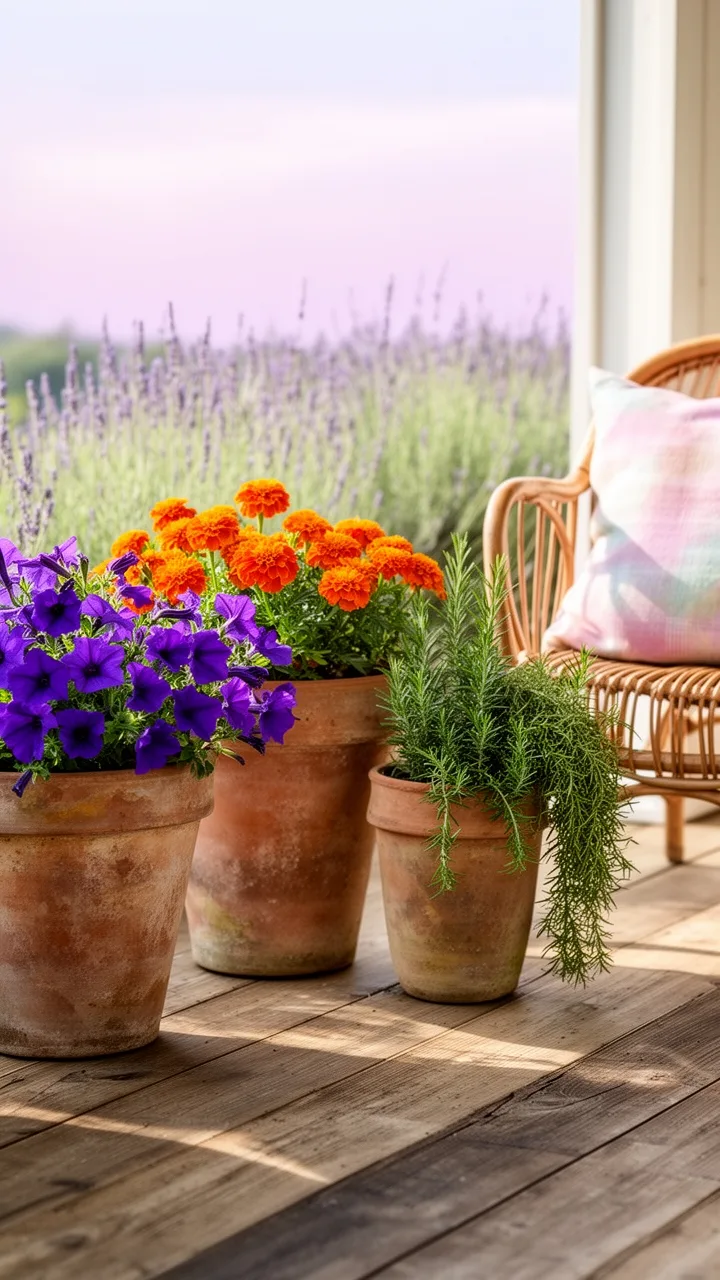
When you’re selecting containers for your outdoor garden, terracotta pots offer unmatched durability and breathability that benefit most plant species. Their porous clay construction allows air and moisture to circulate freely around roots, preventing waterlogging and root rot. You’ll appreciate how terracotta naturally regulates soil temperature, keeping roots cooler during hot summers. These pots develop a beautiful patina over time, enhancing your garden’s aesthetic appeal. They’re available in various sizes, from small herb containers to large planters. Choose terracotta for perennials, succulents, and seasonal displays. Their longevity makes them a cost-effective investment for any outdoor space.
Modern Geometric Planters for Contemporary Spaces
While terracotta brings timeless charm to garden designs, modern geometric planters offer a sleek alternative that complements contemporary landscapes and architectural styles. You’ll find these angular containers in concrete, fiberglass, and metal finishes that elevate your outdoor space’s aesthetic. Their clean lines create visual interest while maintaining minimalist appeal. Choose cube, pyramid, or hexagonal shapes to define garden zones strategically. These planters suit architectural plants like ornamental grasses, structural succulents, and trailing vines beautifully. Their weather-resistant materials ensure durability through seasons. You can arrange multiple geometric pieces at varying heights to establish dynamic focal points across patios and entryways.
Self-Watering Containers for Low-Maintenance Growing
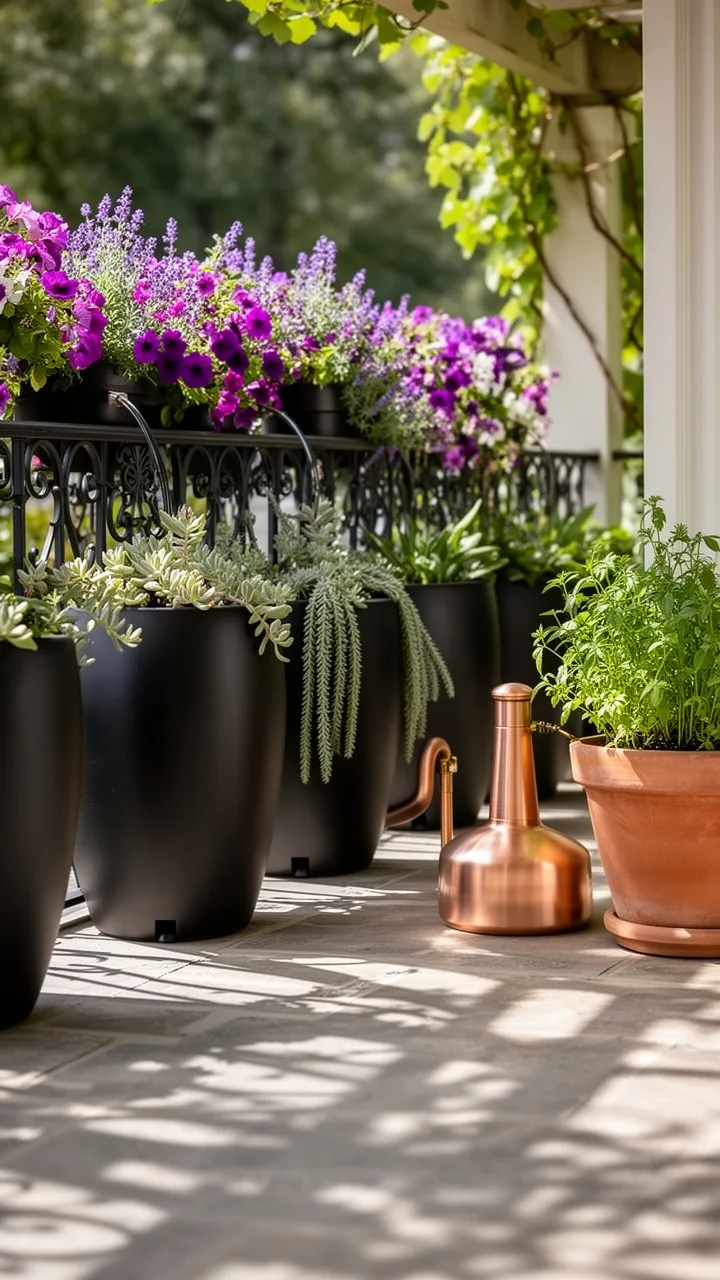
Because you’re managing outdoor plants with varying watering needs, self-watering containers offer a practical solution that maintains consistent soil moisture without daily attention. These innovative systems feature built-in reservoirs that gradually release water as soil dries:
- Double-wall construction creates an internal water chamber beneath the soil layer
- Wicking tubes or capillary systems draw moisture upward based on plant demand
- Fill the reservoir weekly rather than watering daily
- Ideal for heat-prone patios where evaporation accelerates moisture loss
You’ll reduce plant stress from irregular watering cycles while freeing yourself from constant garden maintenance. This technology proves especially valuable during vacations or unpredictable weather patterns affecting your outdoor display.
Repurposed Containers for Budget-Friendly Displays
Creativity and resourcefulness transform everyday household items into functional planters that rival purpose-built containers in both aesthetics and performance. You can repurpose wooden crates, metal buckets, terracotta drainage pipes, and ceramic teapots into distinctive displays. Ensure adequate drainage by drilling holes in solid bottoms. Line containers with landscape fabric to prevent soil loss. Old wooden barrels work wonderfully for specimen plants, while vintage colanders create charming succulents arrangements. Galvanized stock tanks accommodate larger perennials and ornamental grasses. You’ll discover that recycled containers add character while reducing waste and expenses significantly.
Lightweight Resin Planters for Easy Rearrangement
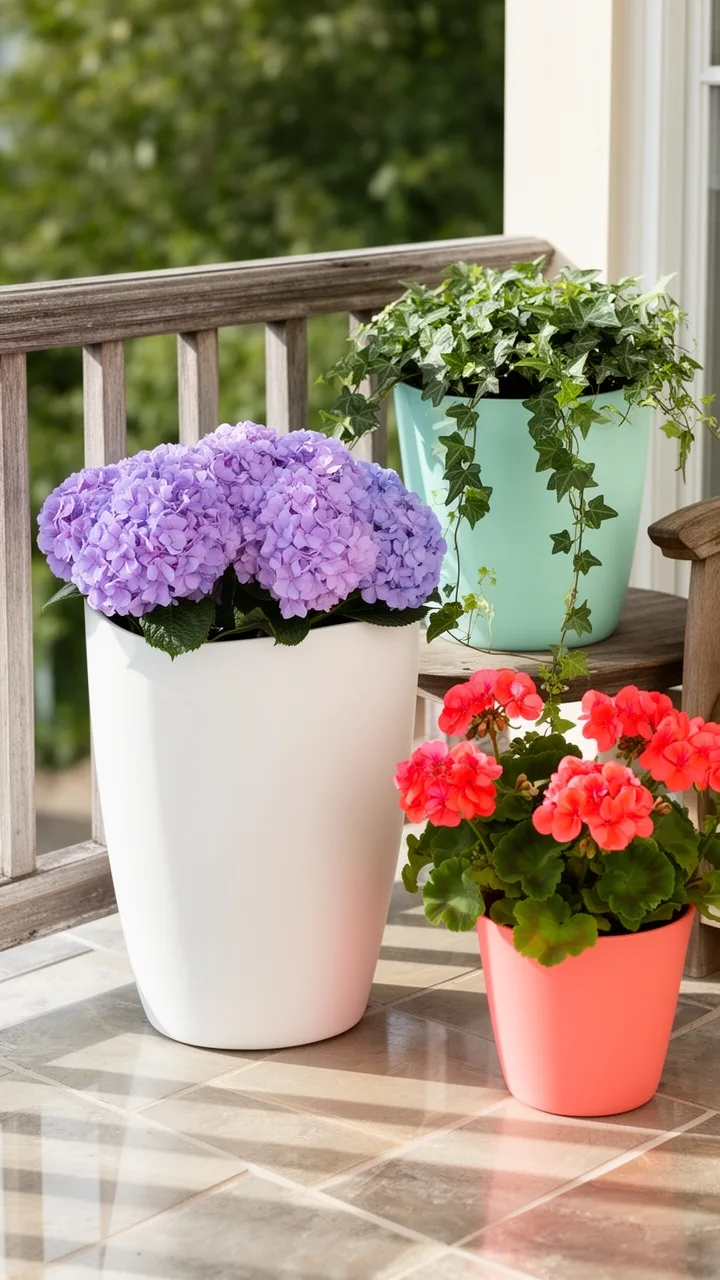
Modern resin planters offer gardeners the flexibility that heavier materials can’t match, allowing you to refresh your outdoor displays without physical strain or permanent placement commitments.
Consider these advantages:
- Weather-resistant construction withstands rain, UV rays, and temperature fluctuations year-round
- Lightweight design enables solo rearrangement and seasonal repositioning without assistance
- Diverse finishes mimic stone, ceramic, or wood aesthetics at fraction of weight
- Excellent drainage options prevent root rot while maintaining moisture control
You’ll appreciate how resin’s durability eliminates frequent replacement cycles. Their neutral colorways complement any botanical palette while supporting healthy root systems. Combine various sizes for dynamic container gardens that you can easily adapt as your landscape evolves.
Hanging Baskets to Maximize Vertical Space
When you’ve optimized your ground-level displays with lightweight planters, hanging baskets unlock another dimension of gardening—one that draws the eye upward while freeing precious square footage below. You’ll appreciate how strategically suspended containers create layered visual interest across your porch or patio.
Choose baskets with adequate drainage holes and quality liners to prevent water spillage. Trailing plants like petunias, ivy, and calibrachoa cascade beautifully, while upright specimens add structure. Position baskets at varying heights for dynamic composition. Ensure sturdy mounting hardware rated for your basket’s weight when saturated. Water thoroughly, as elevated baskets dry faster than ground plantings. This vertical approach transforms cramped spaces into lush, thriving gardens.
Tiered Pot Arrangements for Visual Depth
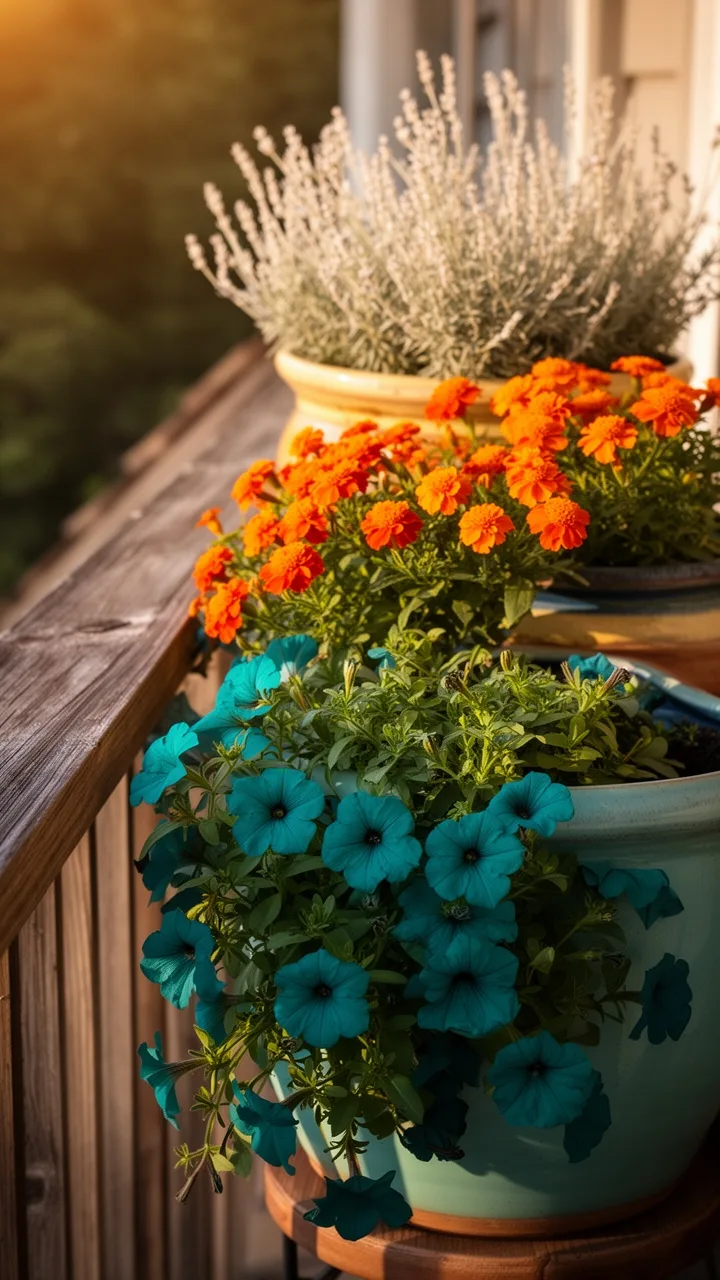
Tiered pot arrangements create architectural interest by positioning containers at graduated heights to guide viewers’ eyes through your garden space. You’ll develop dynamic focal points that transform flat areas into visually engaging landscapes. Consider these strategies:
- Stack pots using upside-down containers as bases for stable elevation
- Vary pot sizes from largest at the base to smallest at the top
- Plant strategically—trailing varieties cascade downward while upright specimens anchor upper tiers
- Ensure drainage by drilling holes in stacked bases to prevent water pooling
This arrangement maximizes your planting area while creating sophisticated depth and movement throughout your outdoor environment.
Grouped Small Pots for Layered Color
By clustering smaller containers together, you’ll create visual richness that rivals large statement pieces while maintaining flexibility in your design. Arrange pots in odd numbers—three, five, or seven—using varying heights and diameters to establish depth. Select complementary foliage colors: silver dusty miller with purple petunias, golden creeping jenny paired with deep burgundy calibrachoa. Stagger plantings so blooms cascade at different levels. Group containers on tiered plant stands or directly on ground surfaces. This approach lets you rearrange compositions seasonally, rotate struggling specimens, and easily deadhead individual plants without disturbing your entire display.
Tall Statement Pots as Garden Focal Points
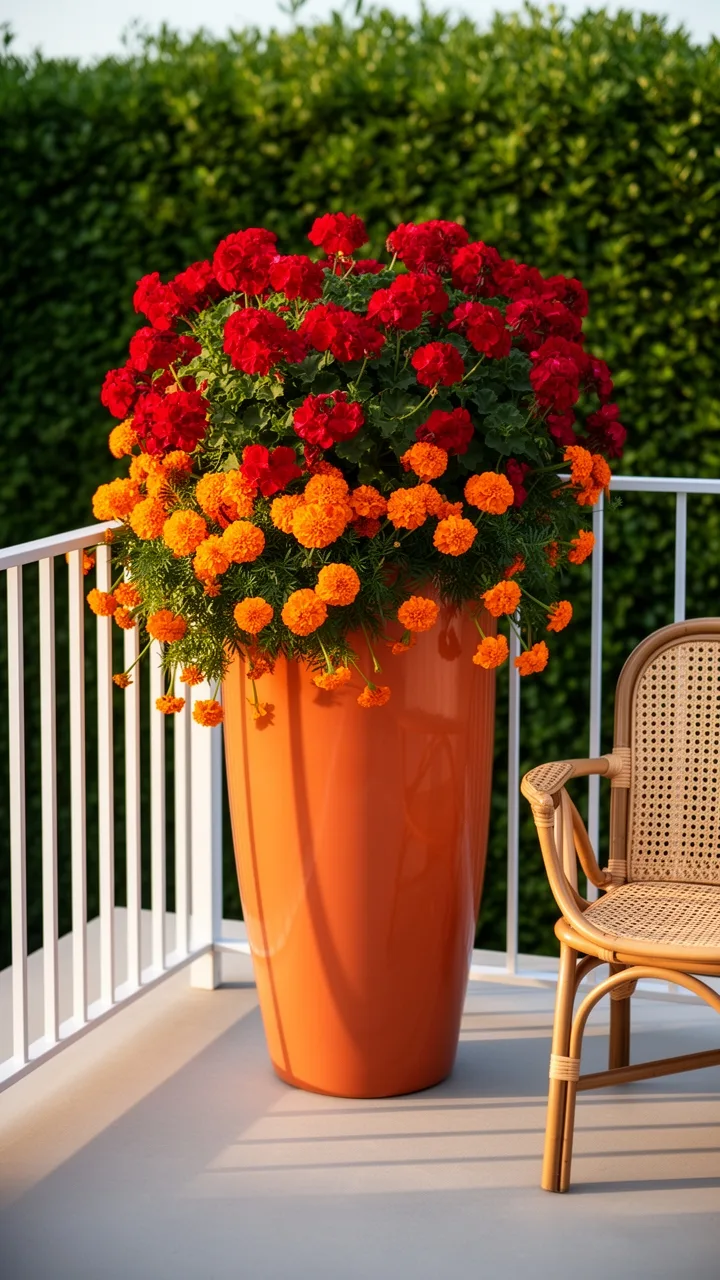
A garden’s focal point demands presence, and tall statement pots deliver it with architectural authority. You’ll transform your outdoor space by strategically placing these commanding containers. Consider these essential elements:
- Height variation between 24-48 inches creates dramatic visual impact
- Neutral colors like charcoal, cream, or terracotta ground bold plantings
- Structural plants—ornamental grasses, architectural shrubs, or tree-form specimens—maximize drama
- Placement at garden entrances, pathway intersections, or corners anchors the design
Position your statement pot where multiple sightlines converge. Fill it with seasonal plantings or year-round specimens. The container’s scale and material quality matter equally as plant selection. You’ll establish visual hierarchy throughout your entire garden landscape effortlessly.
Shallow Troughs for Trailing Plants and Succulents
While tall statement pots command attention through vertical presence, shallow troughs excel at showcasing the delicate cascading forms you’ll find in trailing succulents and groundcovers. You’ll appreciate how these wide, low containers display pendant varieties like string of pearls, burro’s tail, and trailing sedums. Their design maximizes surface area, allowing you to create living tapestries across patios and ledges. Ensure proper drainage through bottom holes, and fill them with well-draining soil amended with coarse sand or perlite. Position troughs where cascading foliage catches morning light, enhancing the architectural beauty these plants naturally provide.
Colorful Glazed Pots to Brighten Dark Corners
When you’re working with shaded areas that lack the vibrant natural light trailing plants need, glazed pots in rich jewel tones and bright hues become your most effective design tool. You’ll reflect ambient light and create visual interest where darkness dominates. Consider these strategic choices:
- Deep emerald and sapphire glazes complement foliage without competing
- Sunny yellows and oranges energize north-facing corners
- Matte glazes absorb light; glossy finishes bounce it around
- Cluster different sizes for layered visual depth
You’re essentially using the pots themselves as light sources, drawing the eye upward and brightening neglected spaces considerably.
Mixed Materials for Texture and Contrast
Beyond the visual impact of glazed finishes, you’ll discover that combining different pot materials—terracotta, concrete, ceramic, and metal—creates dynamic textural layers that amplify your garden’s visual complexity. Pair weathered terracotta with sleek metal accents for rustic-modern appeal. Stack concrete planters beside smooth ceramic vessels to establish visual rhythm. Metal trellises woven through mixed pots direct climbing plants upward, maximizing vertical space. Terracotta’s porous nature suits moisture-loving specimens, while concrete retains water longer for drought-tolerant selections. This strategic material mixing doesn’t merely enhance aesthetics; it functionally supports diverse plant requirements while establishing sophisticated outdoor spaces that reward close observation and seasonal evolution.
Soft-Sided Fabric Containers for Flexible Placement
Fabric containers offer you a departure from rigid ceramic and concrete vessels, providing portability that hard pots simply can’t match. You’ll appreciate their lightweight construction when repositioning plants throughout seasons. Consider these advantages:
- Breathable fabric promotes root aeration and prevents waterlogging
- Collapsible design saves storage space during off-seasons
- Integrated handles facilitate easy relocation for optimal sunlight exposure
- Drainage holes prevent moisture accumulation
You can strategically move shade-sensitive specimens as sun angles shift. Fabric containers accommodate various plant sizes without permanent placement commitment. Their flexibility allows you to experiment with garden layouts, rotate specimens for balanced growth, and adjust positioning based on weather conditions or seasonal needs.
Elevate Your Pots With Decorative Risers
Elevating your outdoor pots with decorative risers transforms both the aesthetic and functional aspects of your garden display. Risers improve drainage, prevent water pooling, and protect patios from moisture damage. You’ll enhance visual interest by creating height variation among plantings, drawing the eye upward through your landscape. Choose materials matching your décor—wood, metal, ceramic, or concrete—to complement existing hardscaping. Risers also increase air circulation around plant roots, reducing disease susceptibility. Position taller specimens on elevated stands to showcase specimens like ornamental grasses or trailing succulents. This strategic layering creates dynamic, professional-looking arrangements while maximizing your available space efficiently.
Refresh Your Display With Seasonal Plant Rotations
Transformation doesn’t require redesigning your entire garden—you can achieve it by swapping plants strategically throughout the year. Seasonal rotations keep your outdoor spaces visually dynamic while maximizing plant health and bloom cycles.
- Spring: Replace winter evergreens with vibrant pansies, tulips, and primrose for fresh color
- Summer: Transition to heat-tolerant annuals like marigolds, zinnias, and petunias for continuous blooms
- Fall: Introduce mums, ornamental grasses, and seasonal foliage for warm tones
- Winter: Feature hardy evergreens, decorative cabbages, and berried plants for structure
This approach ensures your pots remain visually compelling while adapting to seasonal growing conditions and extending your garden’s aesthetic appeal year-round.
Conclusion
You’ve discovered that transforming your outdoor spaces doesn’t require perfection—it demands creativity and intention. Whether you’re stacking terracotta like nature’s architecture or rotating seasonal blooms through geometric planters, you’re composing a living masterpiece. Your porch becomes a canvas where fabric containers dance alongside rigid risers, and self-watering systems quietly nourish thirsty roots. You’re not just displaying flowers; you’re orchestrating growth, texture, and seasonal rhythm into a cohesive botanical symphony that reflects your style.
The Only Tools You Need for a Thriving Garden 🌱
Whether you're a weekend gardener or growing daily — these hand-picked tools make every session faster, easier, and more satisfying.