
You’ll transform your backyard with stamped concrete patterns that mimic natural materials, then polish the surface for a sleek modern finish. Add warm or cool-toned stains for sophistication, and score geometric lines for visual definition. Expose decorative aggregate for texture and slip-resistance. Seal every two to three years to protect your investment. Arrange lightweight furniture along perimeter edges, leaving the center open and breathing. Layer accent lighting—string lights, recessed fixtures, and solar stakes—to create evening ambiance. Soften borders with low-growing plants and clean edging. The specifics of each technique reveal transformative possibilities for your space.
Key Takeaways
- Stamp fresh concrete with brick, slate, or stone patterns and add pigments for customized colors that enhance visual appeal.
- Polish concrete with diamond abrasives to achieve matte, satin, or high-gloss finishes that resist stains and require minimal maintenance.
- Score geometric patterns and linear designs into concrete to control cracking while defining walking paths and creating visual structure.
- Integrate built-in planters, benches, and raised platforms to maximize functionality without cluttering the patio with separate furniture pieces.
- Apply quality concrete sealer every two to three years with acrylic, polyurethane, or epoxy options based on UV protection needs.
Stamped Concrete Patterns for Visual Interest
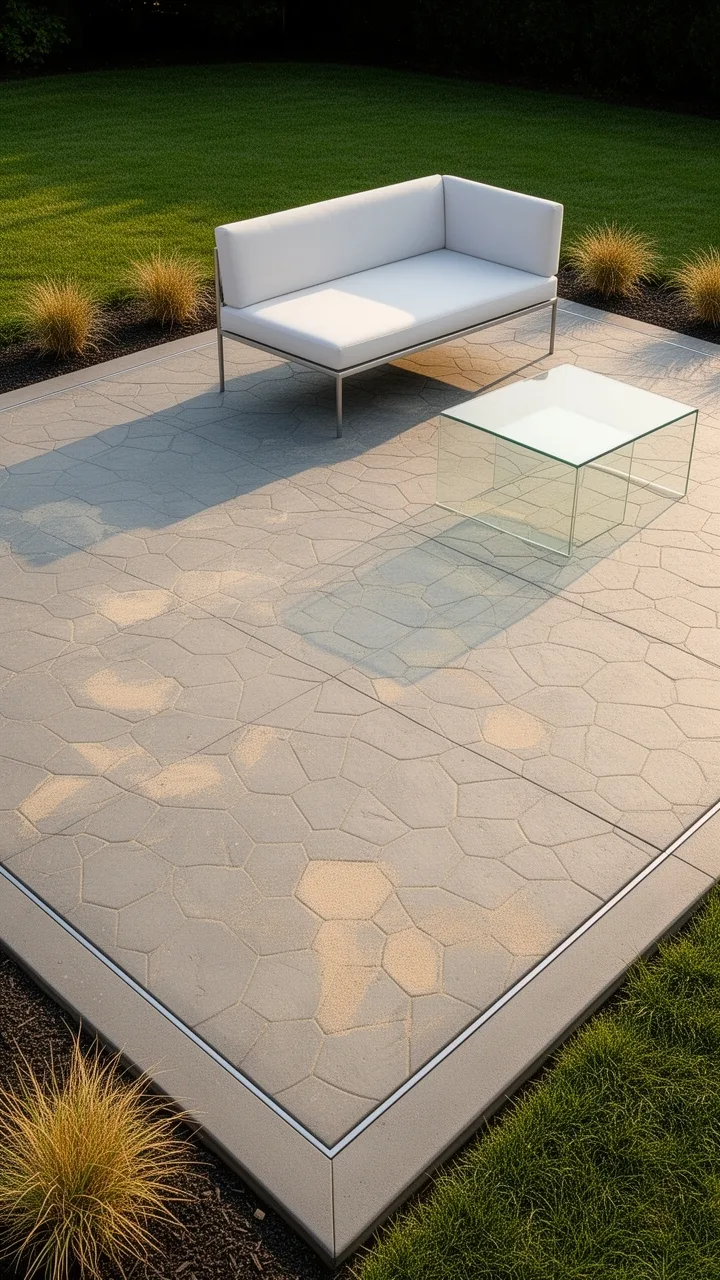
If you’re looking to elevate a plain concrete patio, stamped patterns offer an affordable way to mimic the appearance of brick, slate, stone, or wood without the higher cost or maintenance. You’ll find dozens of stamp designs available that suit different aesthetic preferences. The process involves pressing molds into freshly poured concrete before it hardens completely. You can customize colors by adding pigments to the concrete mix, then apply a release agent before stamping. Sealing your stamped patio every two to three years protects it from weathering and extends its lifespan significantly.
Polished Finishes for a Modern Look
For a sleek, contemporary aesthetic, you’ll want to consider polished concrete as your patio finish. This method transforms your surface into a mirror-like shine that reflects light beautifully, making your space appear larger and more sophisticated.
| Polishing Level | Appearance | Durability |
|---|---|---|
| 400-800 Grit | Matte sheen | Moderate |
| 1500-3000 Grit | Satin finish | High |
| 3000+ Grit | High gloss | Maximum |
| Diamond Polish | Mirror-like | Superior |
You’ll appreciate the low-maintenance benefits—polished concrete resists stains and requires minimal upkeep. The process involves grinding your existing concrete with progressively finer diamond abrasives. You can achieve this look affordably without removing your current patio, making modernization practical and cost-effective for any budget.
Color Stains in Warm and Cool Tones
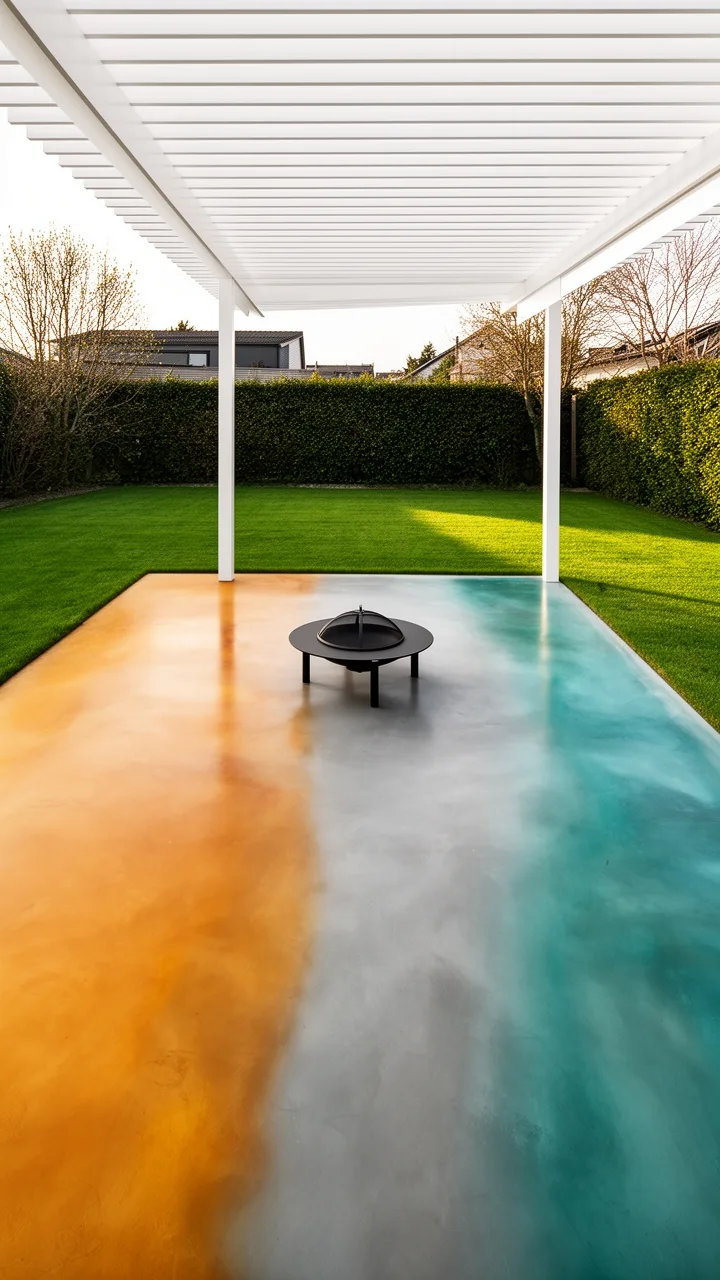
Once you’ve decided on polished concrete, color stains offer you endless customization options that go far beyond the standard gray. You’ll find stains that complement your home’s aesthetic perfectly.
Consider these popular choices:
- Warm tones like terracotta, amber, and rust create inviting, earthy atmospheres
- Cool tones such as slate blue, charcoal, and sage provide modern, sophisticated vibes
- Neutral beiges and taupes work with any design scheme
Acid-based stains penetrate deeply, producing rich, variegated hues with natural-looking depth. Water-based stains offer consistent, uniform coloring with easier application. Both options resist fading when properly sealed, ensuring your patio maintains its beauty for years.
Decorative Scoring and Linear Designs
Beyond color, you’ll find that decorative scoring transforms your concrete patio into a custom work of art. You can create geometric patterns, linear designs, or faux stone effects by cutting grooves into fresh concrete. These scored lines serve dual purposes: they’re visually striking and functionally practical, as they help control cracking and define walking paths. Linear designs add movement and visual interest, guiding the eye across your space. You can keep patterns simple—straight grids or parallel lines—or go bold with intricate designs. Professional installers can execute complex layouts, though DIY enthusiasts can achieve striking results with basic tools and careful planning.
Exposed Aggregate for Texture and Grip

When you’re ready to add genuine texture and slip-resistance to your concrete patio, exposed aggregate delivers both aesthetics and function. This technique involves removing the top concrete layer to reveal decorative stones beneath, creating visual interest while improving safety.
You’ll appreciate these practical benefits:
- Enhanced traction prevents slipping when wet
- Natural stone appearance complements landscaping
- Durability withstands foot traffic and weather
The process requires careful timing during concrete curing. You can choose from various aggregate sizes and colors to match your design preferences. This method costs slightly more than standard concrete but offers lasting performance and distinctive character that elevates your outdoor space.
Concrete Overlay to Refresh Without Replacing
If your existing concrete patio’s worn appearance doesn’t warrant a complete replacement, a concrete overlay offers a cost-effective solution that transforms the surface without the hassle of removal. You’ll apply a thin bonded layer directly over your current concrete, effectively hiding cracks, discoloration, and surface damage. The overlay adheres securely when you properly prepare the existing surface through cleaning and light grinding. You can customize it with various finishes—stamped patterns, colored coatings, or decorative aggregates. Installation takes just days, and you’re back enjoying your patio quickly. This approach costs significantly less than demolition and replacement while delivering a refreshed, polished appearance.
Built-In Planters and Seating
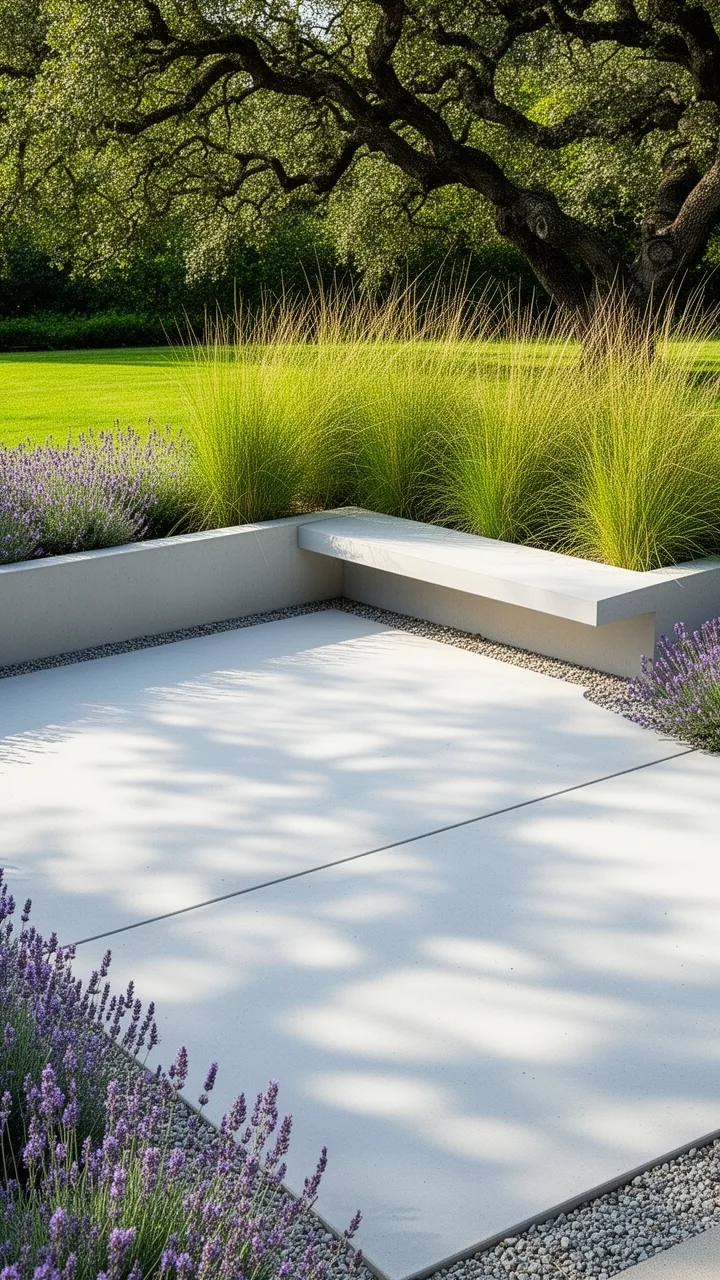
Integrating planters and seating directly into your concrete patio eliminates the need for separate furniture while maximizing your outdoor space’s functionality. You’ll create a cohesive design that saves money and maintenance time.
Consider these built-in options:
- Raised planter boxes along patio edges for vegetables or decorative plants
- Concrete benches molded into corners for additional seating
- Sunken seating areas with integrated backrests for comfortable gathering spaces
You can customize heights, widths, and finishes to match your aesthetic. These permanent fixtures withstand weather conditions better than movable furniture. Installation during initial patio pours proves most cost-effective, though retrofitting existing surfaces remains possible with skilled contractors.
Contrasting Borders for Definition
By adding a contrasting border to your concrete patio, you’ll instantly define its edges and create visual separation from surrounding landscaping or lawn. You can achieve this by pouring a darker or lighter concrete band around your patio’s perimeter, or by incorporating contrasting materials like brick, stone, or pavers. This border frames your space effectively and prevents the patio from appearing to blur into the yard. Choose materials that complement your home’s exterior and landscape design. A well-executed border adds sophistication while serving the practical purpose of delineating your outdoor living area and protecting edges from deterioration.
Permeable Concrete for Eco-Friendly Drainage
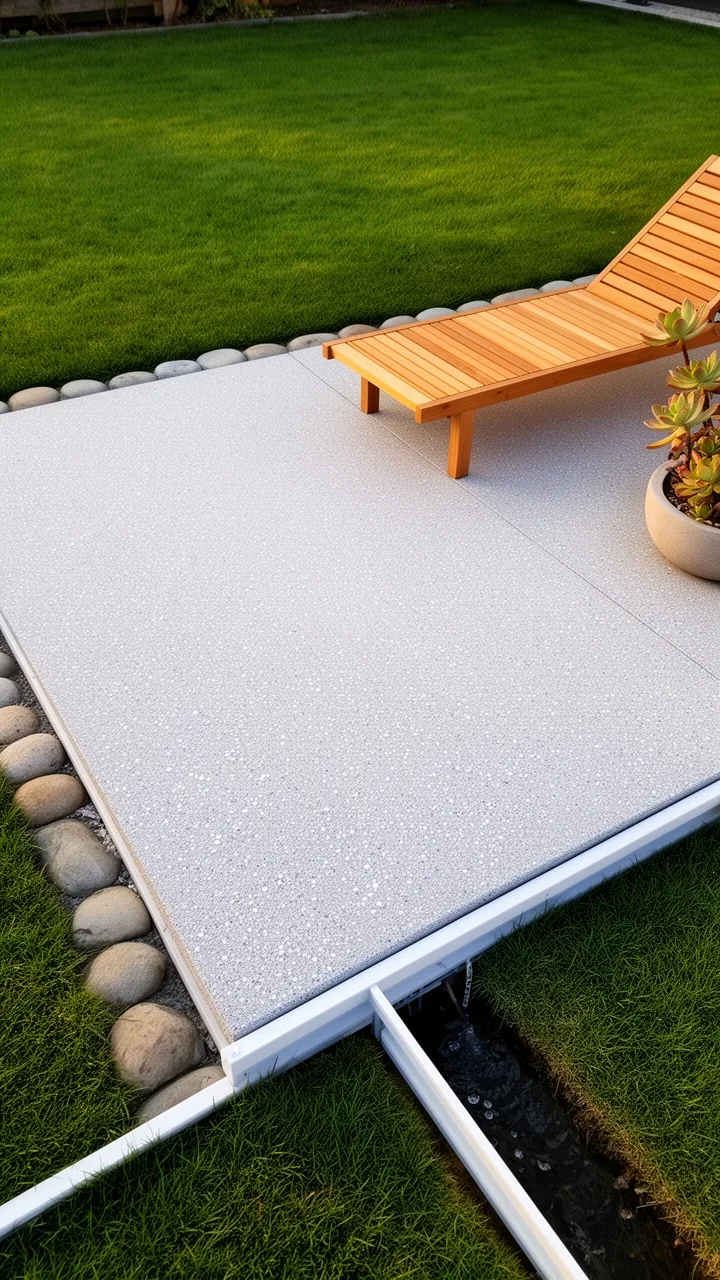
While a well-defined border protects your patio’s structure, the surface itself deserves equal attention—particularly when it comes to water management. Permeable concrete lets water drain through rather than pooling on top, reducing flooding and erosion concerns.
Consider these benefits:
- Reduces standing water and mosquito breeding grounds
- Minimizes runoff pollution entering local waterways
- Allows groundwater recharge in your yard
This eco-friendly option uses open-graded aggregate that creates tiny air pockets throughout. You’ll notice improved drainage immediately during rainfall. The slightly textured surface also provides better traction when wet, making your patio safer year-round.
Blended Color Techniques for Custom Tones
Once you’ve settled on a permeable concrete system, you can customize its appearance through blended color techniques that transform a functional surface into a design statement. You’ll combine integral pigments during mixing to achieve consistent base tones, then layer surface colorants for depth and variation. Consider complementary shades that echo your home’s exterior or landscape features. Apply dyes and stains in strategic patterns—swirls, stripes, or gradients—using brushes or sprayers. This approach lets you create unique, personalized aesthetics while maintaining your patio’s structural integrity and drainage capabilities, giving you both functionality and visual appeal.
Raised Platforms for Multiple Levels
Adding raised platforms to your concrete patio creates visual interest and functional zones without requiring a complete redesign. You’ll define separate areas for dining, lounging, and entertaining by stepping up elevation changes. This approach maximizes your outdoor space’s functionality while adding architectural dimension.
Consider these practical applications:
- Step up a dining platform 6-8 inches to anchor furniture and distinguish the space
- Create a sunken seating area for intimate conversations and visual depth
- Build tiered planters along edges for greenery and natural transitions
You’ll enhance drainage on sloped yards while establishing clear boundaries between activities. Raised platforms transform your patio into layered, intentional zones that feel professionally designed.
Seal Your Patio for Long-Lasting Shine
Sealing your concrete patio is one of the most effective ways you can protect your investment and maintain that fresh, polished appearance. You’ll want to apply a quality sealer every two to three years, depending on foot traffic and weather conditions.
| Sealer Type | Drying Time | UV Protection |
|---|---|---|
| Acrylic | 24-48 hours | Moderate |
| Polyurethane | 48-72 hours | High |
| Epoxy | 72+ hours | Excellent |
Before sealing, you’ll need to clean your patio thoroughly and let it dry completely. Apply the sealer in thin, even coats using a roller or sprayer. This protective layer prevents staining, fading, and weather damage while enhancing your patio’s natural color and texture.
Minimal Furniture Placement to Maximize Space
While you’ve invested time in sealing and protecting your concrete patio, you’ll want to think strategically about how you arrange furniture to make the most of your outdoor space. Purposeful placement keeps your patio feeling open and functional rather than cluttered.
Consider these essentials:
- Position seating along perimeter edges to maintain clear sightlines
- Leave the center open for movement and visual breathing room
- Group pieces into conversation zones rather than spreading them randomly
Choose lightweight, multipurpose furniture you can easily rearrange. This flexibility lets you adapt your layout for different occasions—entertaining guests, relaxing solo, or creating new activity zones. You’ll find your patio serves you better with restraint.
Accent Lighting for Evening Ambiance
As the sun dips below the horizon, your patio transforms—and the right lighting can make all the difference in how you’ll use that space after dark. Consider installing recessed lights along your concrete edges or uplighting to highlight landscaping features. String lights create warmth overhead without overwhelming the space. Solar-powered stake lights offer budget-friendly ambient glow along pathways. Position spotlights strategically to cast shadows that add depth and visual interest. Layer your lighting: combine overhead options with ground-level accents for flexibility. Dimmers let you adjust intensity based on the mood you’re creating, whether you’re entertaining or simply unwinding.
Ground Cover and Landscaping Edges
Framing your concrete patio with thoughtful ground cover and defined edges transforms it from a stark slab into an integrated outdoor space. You’ll want to consider these key approaches:
- Plant low-growing perennials like creeping thyme or sedums that soften borders without encroaching
- Install metal or composite edging to create clean lines between patio and landscaping
- Layer mulch or decorative gravel around plantings for polished definition
Strategic ground cover prevents soil erosion while adding visual warmth. Choose plants that tolerate foot traffic if you’ll walk near edges frequently. Edging materials anchor your design, making maintenance easier and preventing grass creep onto concrete surfaces.
Conclusion
You’ll transform your backyard into a blank canvas where style meets function. By layering stamped patterns with polished finishes, strategic lighting, and thoughtful landscaping, you’re not just pouring concrete—you’re crafting an outdoor sanctuary. These practical techniques won’t demand constant maintenance while delivering that clean, sophisticated aesthetic you’re after. Your patio’ll become the gathering spot where memories naturally unfold.
The Only Tools You Need for a Thriving Garden 🌱
Whether you're a weekend gardener or growing daily — these hand-picked tools make every session faster, easier, and more satisfying.