
You imagine a garden that never sleeps, with blooms from spring thaw to winter’s frost. Creating this isn’t luck; it’s a strategic layering of plants chosen for their peak seasons. You’ll learn to map a bloom calendar, match plants to your site, and combine perennials with bulbs for unstoppable color. Let’s build your four-season masterpiece, starting with the essential plan that ensures something is always putting on a show.
Key Takeaways
- Plan a staggered bloom sequence from spring bulbs to fall perennials for constant color.
- Select plants by matching their sun and soil needs to your garden’s specific conditions.
- Layer plants in groups of three and overlap bloom periods to ensure visual continuity.
- Include structural elements like ornamental grasses for winter interest and year-round appeal.
- Prioritize long-blooming workhorse perennials like Sedum and Geranium to provide reliable seasonal color.
What Does “Year-Round Flowers” Really Mean?
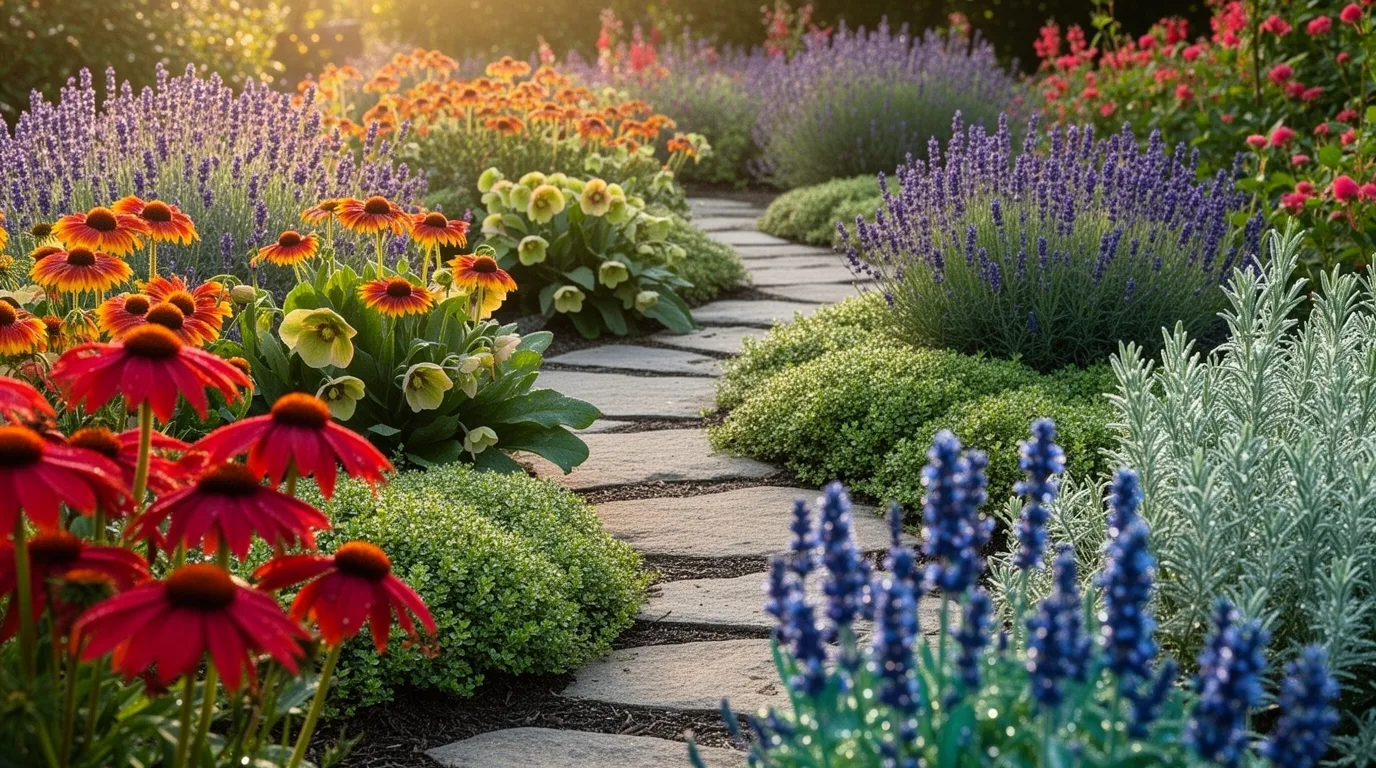
Often, you’ll hear “year-round flowers” and picture a garden in constant, uninterrupted bloom, but that’s not quite what it means for perennials. You’re aiming for a rolling sequence of color, where different plants take center stage each season. Early spring bulbs push through snow, summer’s coneflowers and daylilies bask in the heat, and asters stand tall against autumn’s chill. You’ll even find winter interest in seed heads, ornamental grasses, and evergreen foliage.
The garden never looks exactly the same, but it’s always engaging. Think of it as a relay race, not a marathon; as one plant’s blooms start to fade, another’s are just opening. You achieve continuity through thoughtful succession, not a single, magical, ever-blooming plant.
Start With a Plan: Sketch Your Garden’s Bloom Calendar
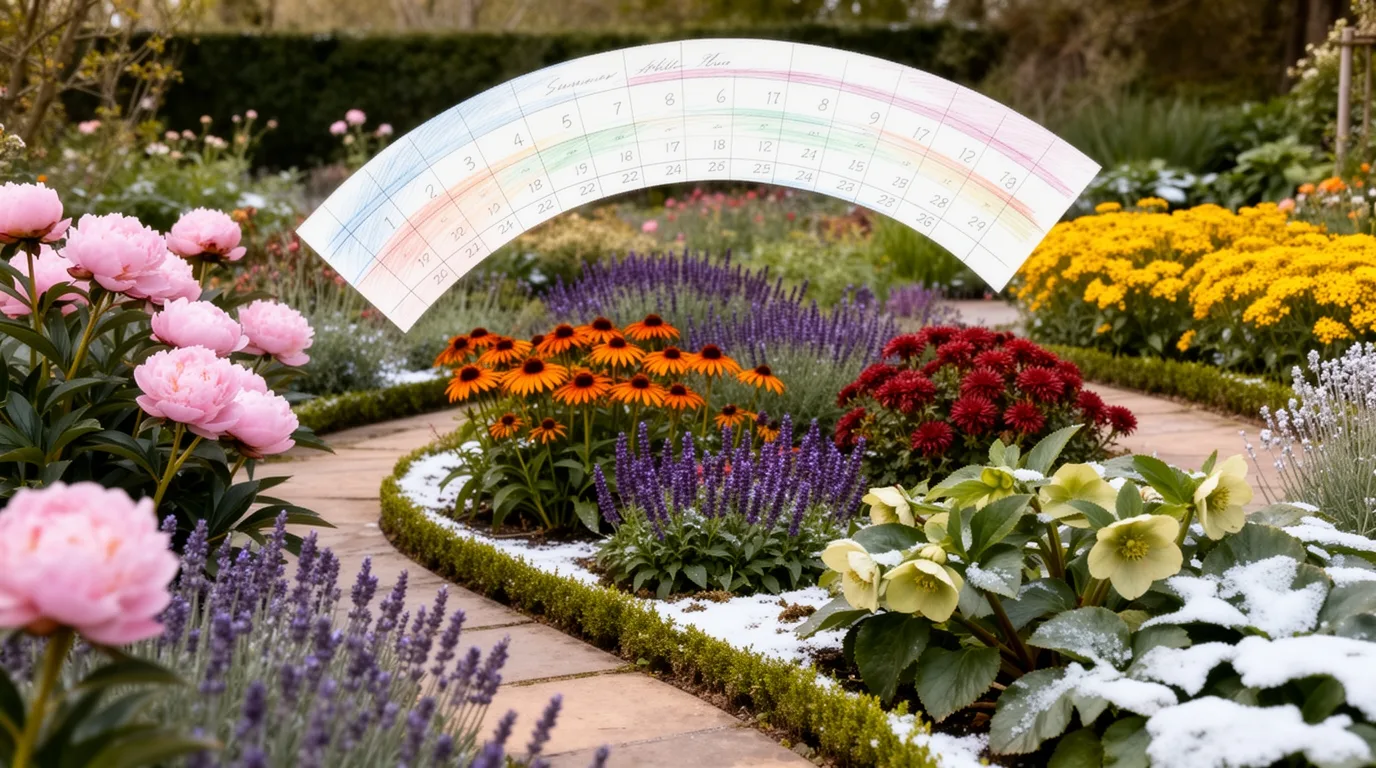
To make that relay race of blooms work, you’ll need a map. Grab a calendar and start listing the bloom times of perennials you love.
You’re not just planting; you’re designing a living timeline. Research each plant’s flowering period, noting early spring bulbs, summer-long showstoppers, and late autumn stalwarts.
Sketch a simple chart with months across the top and garden sections down the side. Fill it in with colored pencils to visualize the sequence.
You’ll quickly spot gaps where color fades. This master plan becomes your shopping list, ensuring you plug those floral holes. It’s the strategic blueprint that transforms random planting into a sustained, passionate performance where something is always taking the stage.
Right Plant, Right Place: Understanding Sun and Soil Needs
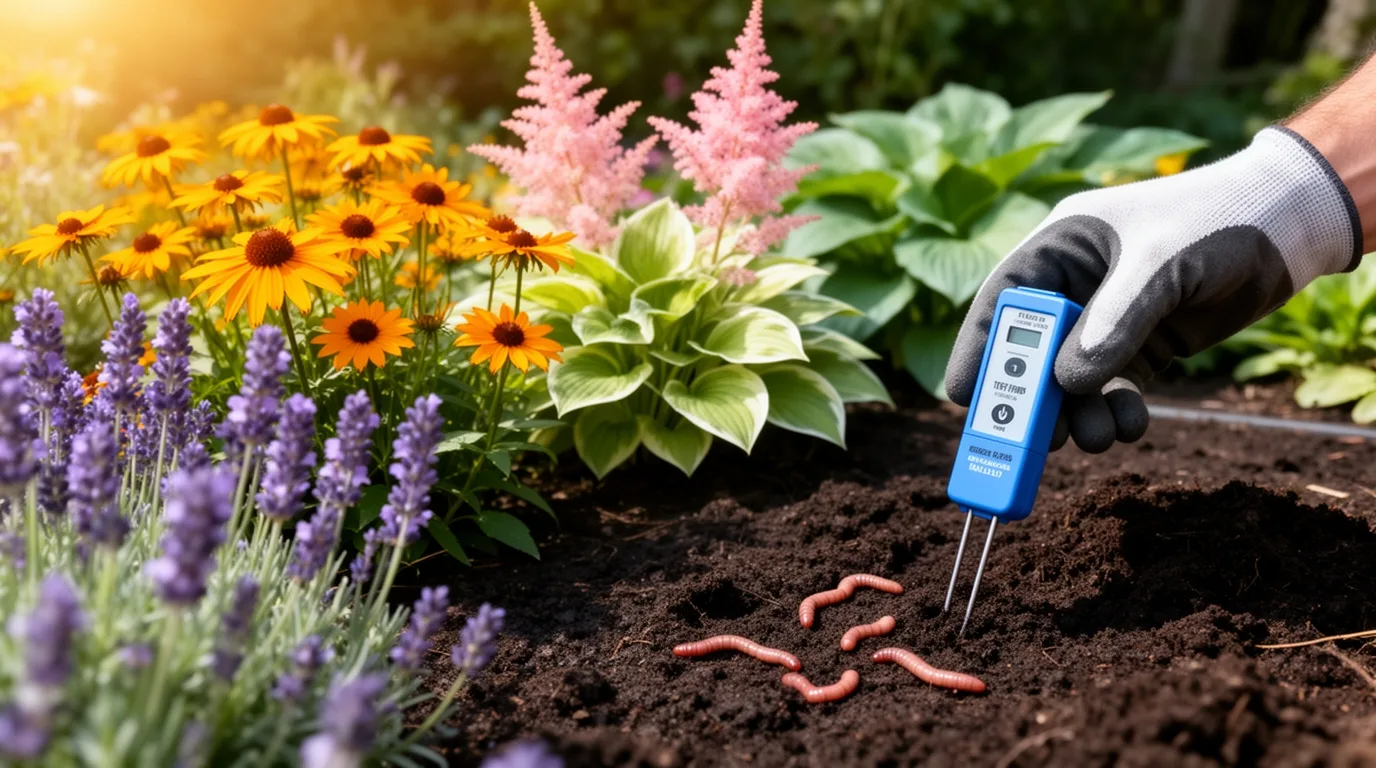
Now, plot your plants on your living timeline according to their essential needs.
First, scrutinize your garden’s sun exposure. Does that bed get full, blazing sun for over six hours or dappled afternoon shade? Match plants precisely; a sun-loving coneflower will languish in deep shadow.
Next, get intimate with your soil. Is it heavy clay that holds water or fast-draining sand? You can amend it, but choosing plants that naturally thrive in your native conditions means less work and healthier growth.
Always check plant tags for “full sun” or “part shade” and “moist, well-drained” soil. Ignoring these core needs is the fastest path to failure, while honoring them builds a resilient, flourishing garden.
How to Layer Plants for Continuous Blooms
Imagine your garden as a living tapestry where flowers unfurl in an unbroken sequence from spring to frost. You achieve this by layering plants with staggered bloom times in each bed. Think vertically and temporally, combining early spring bulbs with mid-season perennials and late-season asters. It’s a deliberate choreography of color and form.
- Chart Bloom Times: Research and list each plant’s peak flowering period, from early spring ephemerals to autumn stalwarts.
- Plant in Trios: Group at least three plants together that bloom in sequence within the same area.
- Use Filler and Framework: Integrate long-blooming “spillers” and structural plants with foliage interest to bridge gaps.
- Overlap Strategically: Ensure the finale of one bloom coincides with the opening act of the next for seamless transitions.
Five Workhorse Perennials for Every Season
Mastering the layering of bloom times shows you how to design for the entire year; to fill that framework, you’ll need reliable plants that deliver across multiple seasons.
Start with Sedum ‘Autumn Joy’, whose summer buds become autumn’s copper-pink domes, then persist through winter. Geranium ‘Rozanne’ provides a stunning cascade of blue-violet flowers from late spring hard into fall.
Heuchera (Coral Bells) dazzles with its perpetually vibrant, colorful foliage from spring’s first thaw to winter’s snow.
Nepeta (Catmint) erupts in lavender-blue spires in early summer, and shearing it back encourages a second flush.
Finally, include Coreopsis, a sun-loving dynamo producing cheerful, daisy-like flowers for months on end. These are your foundational performers.
The Early Risers: Perennials for Spring Color
Where do you look when the garden still feels asleep, yet you crave that first burst of life? You turn to the early-rising perennials. These stalwarts push through cold soil to signal spring’s arrival, offering vital pollen for emerging bees.
Plant them in fall for established roots, and tuck bulbs between them for layered color.
- Hellebores (Lenten Roses): Their elegant, nodding blooms in white, pink, or maroon appear in late winter, lasting for months in shade.
- Creeping Phlox: This ground-hugger forms a vibrant carpet of purple, pink, or white flowers in early spring, perfect for slopes.
- Bleeding Heart (*Dicentra*): Its charming, heart-shaped pink and white flowers dangle from arching stems in dappled light.
- Pasque Flower (*Pulsatilla*): Fuzzy buds open to gorgeous purple cups in early spring, followed by silvery seed heads.
Summer’s Star Performers: Long-Blooming Perennials
Summer reliably arrives, and your garden can truly shine with perennials that bloom for months. Deadheading spent flowers on plants like coneflowers and salvia encourages continuous reblooming, extending the show.
Choose workhorses like daylilies; their resilient, colorful trumpets open in succession for weeks. You can’t go wrong with the classic bee balm; its vibrant, shaggy blooms attract hummingbirds from July onward.
For height and structure, plant Russian sage. Its airy lavender spires and silvery foliage provide months of graceful color with remarkable drought tolerance.
Incorporate coreopsis for a blanket of cheerful yellow or red flowers. These low-maintenance stars thrive in full sun with well-drained soil, creating a vibrant, enduring summer display.
Autumn Fireworks: Perennials for Fall Drama
As the long days of summer recede, your garden’s palette can shift to rich, warming hues. Ignite your autumn landscape with perennials that deliver spectacular color, texture, and drama. You’ll celebrate the season with blazing foliage and architectural seed heads that shine until the frost.
- Japanese Anemone: Tall, graceful stems hold delicate pink or white flowers that dance in the breeze from late summer well into fall.
- Sedum ‘Autumn Joy’: Its broccoli-like flower heads start pink, mature to a deep rusty copper, and attract flocks of butterflies.
- Joe-Pye Weed: A statuesque native, it towers with dusky mauve flower clusters that butterflies find irresistible.
- Switch Grass: Plant it for its upright form and stunning fall foliage in shades of gold, red, and burgundy.
Quiet Winter Beauty: Perennials With Structure and Form
While the vibrant colors of autumn fade, your garden’s interest need not disappear beneath the snow. You can create a captivating winter landscape by selecting perennials with strong structure and architectural form.
Focus on plants like upright, vase-shaped fountain grass, whose feathery plumes and golden stems persist beautifully. Leave seedheads of coneflowers and sedum standing; they’ll catch frost and provide crucial food for birds.
The stark, architectural silhouettes of perennial hibiscus and artemisia add graphic interest, while the evergreen, structural foliage of hellebores and ornamental grasses like miscanthus creates soft texture and movement against a monochromatic backdrop.
Build a Colorful Foundation With Foliage Plants
Though flowers get most of the attention, truly vibrant gardens start with a colorful foundation built by foliage plants. Their leaves provide constant structure and hue, long before blooms appear and after they fade. You’ll create a richly textured tapestry that delights the eye every single day. Think beyond basic green and embrace the dramatic possibilities.
- Chartreuse for light: Use plants like lady’s mantle or golden oregano to brighten shady corners and make neighboring colors pop.
- Purple and bronze for depth: Incorporate heuchera or sedum ‘Purple Emperor’ to add rich, moody contrast.
- Silver and blue for cool elegance: Lavender, Russian sage, and hostas like ‘Halcyon’ soothe and refine plant combinations.
- Variegation for sparkle: Plants with striped or edged leaves, such as variegated iris or laminm, inject energy and intricate detail.
Pair Perennials With Bulbs for Extra Impact
Layer perennial and bulb combinations together to multiply your garden’s seasonal drama.
Plant spring bulbs like tulips or daffodils around your emerging perennials. As the bulbs bloom, they’ll provide early color while the perennials fill in behind them. Once the bulb foliage fades, the expanding perennial leaves will cleverly conceal it.
For summer, nestle lilies among your daylilies or hostas; the perennials’ foliage becomes a perfect support and backdrop for the bold blooms.
In autumn, let colchicums or fall-blooming crocus push through the skirts of low-growing sedums or hardy geraniums.
You’re creating a dynamic tapestry where each plant plays a supporting role for another, ensuring there’s always something captivating to see.
Design Tips for a Cohesive Garden Look
Since you’re aiming for a cohesive garden, focus first on establishing a thoughtful color palette that ties your perennial selections together. Choose two or three main colors, perhaps cool blues and purples or warm yellows and reds, and repeat them throughout your beds. This creates visual harmony.
Next, consider plant forms and textures for added depth.
- Repeat Key Plants: Strategically repeat a few standout perennials, like ornamental grasses or a specific salvia, to lead the eye through the space.
- Layer by Height: Place taller plants at the back of borders and shorter ones in front, ensuring every plant is visible.
- Mass Plantings: Group at least three of the same plant together for a bold, impactful statement rather than creating a spotty “one-of-each” look.
- Define Edges: Use clean, curved borders or low hedges to give your garden a structured, intentional frame.
Essential Maintenance: Watering, Dividing, and Deadheading
A well-maintained perennial garden not only looks beautiful but also grows more vigorous with each passing season, requiring three key practices: consistent watering, timely division, and regular deadheading.
Water deeply and less frequently to encourage strong root growth; early morning is best.
You’ll know it’s time to divide clumps like hostas when their centers die out—do this in early spring or fall.
Deadhead spent flowers by snipping just above a leaf node to trigger more blooms and prevent energy-wasting seed production.
This simple, attentive care is what fuels that magical cycle of growth. Your dedication directly translates into a healthier, more floriferous display year after year.
Your Year-Round Perennial Garden Planting Checklist
Creating a year-round perennial garden you’ll love means moving beyond a single-season plan and adopting a four-season mindset. Your planting checklist is the strategic blueprint for continuous color and texture.
You’ll deliberately select plants for their peak performance across spring, summer, fall, and even winter.
- Chart the Bloom Sequence: Map out bloom times on a calendar. Pair early risers like hellebores with late-season stars like asters to avoid gaps.
- Prioritize Foliage and Form: Integrate plants with striking leaves (heuchera) or structure (ornamental grasses) for interest when flowers fade.
- Embrace Four-Season Stars: Choose versatile perennials, like sedum ‘Autumn Joy’, that offer multiple seasons of appeal.
- Plant in Drifts: Group at least three of the same plant together for visual impact that carries through the year.
Frequently Asked Questions
What Pests Commonly Attack These Perennials?
You’ll likely combat slugs, snails, and aphids. Watch for spider mites in dry heat and powdery mildew on leaves. Check for Japanese beetles, leaf miners, and vine weevils; early detection prevents major damage.
How Much Does a Perennial Garden Cost to Start?
You’ll likely spend $200-$500 for a modest start. Focus on soil and a few key plants. You can cut costs by propagating from divisions or seeds, but investing in good soil pays off for years.
Can I Grow Perennials in Containers Year-Round?
Yes, you can grow many perennials in containers year-round. Choose varieties for your hardiness zone, ensure pots are large enough for root growth, provide winter protection like mulch or moving pots to a sheltered spot.
Do These Plants Attract Bees or Deer?
You’ll attract both bees and deer. Most flowering perennials attract pollinators like bees. Deer browse many perennials too; you’ll need to research specific plants, as some are more resistant than others.
What Are Pet-Safe Perennial Flower Options?
You can grow asters, coreopsis, and roses safely around pets. Avoid lilies, foxglove, and daffodils entirely, as they’re toxic. Choose sturdy perennials like daylilies and salvia that won’t tempt your curious pets to nibble.
Conclusion
Now you’ve got your plan. Grab your sketch and your checklist; it’s time to dig in. You’ll layer those bulbs beneath your perennials, place your drifts of three, and trust those foliage champions. Water deeply, deadhead for more blooms, and let winter’s seedheads shine. Your reward? A living tapestry that shifts beautifully with every season, offering you something wonderful to discover in your garden each and every week of the year.
The Only Tools You Need for a Thriving Garden 🌱
Whether you're a weekend gardener or growing daily — these hand-picked tools make every session faster, easier, and more satisfying.