
You can instantly add warmth with salvaged wood and stone. I built my own planter boxes from old fence boards and filled them with fragrant herbs. The real magic happens when you let materials weather naturally, creating a living space that evolves each season. But choosing the right, low-maintenance plants for your containers is key—let’s explore what truly thrives in that rustic setting.
Key Takeaways
- Use reclaimed wood for weathered pathways and planter boxes.
- Create cozy seating with repurposed benches, stump stools, and warm lighting.
- Incorporate vintage containers like watering cans for charming plant displays.
- Build a rustic fire pit with natural stone for warmth and gatherings.
- Plant fragrant herbs, creeping thyme, and ornamental grasses to soften edges.
Start With Natural Materials to Define Your Rustic Style
Because you’re aiming for a rustic garden, you’ll want to begin by gathering materials like weathered wood, rough stone, and aged terracotta.
You’ll find that these elements introduce a sense of history and texture that’s essential for the look.
Use rough-cut stone for informal borders around your planting beds; it’ll frame your perennials beautifully.
Look for reclaimed wood to build simple planter boxes.
You’ll love how these containers show their age as they weather.
I often nestle aged terracotta pots directly into flower beds; they develop a lovely mossy patina that blends with the plants.
Choose materials with inherent imperfections.
Their worn character means they won’t look out of place among your lavender, salvia, and ornamental grasses.
Lay a Rustic Foundation With a Weathered Wood Pathway
With a natural, weathered wood pathway, you’ll guide visitors through your garden while reinforcing its rustic charm.
I’ve used salvaged railway sleepers or old decking boards for this, laying them directly on leveled soil or a gravel base to prevent rot. Space the planks slightly to allow moss and creeping thyme to nestle between them; this softens the look and smells wonderful when brushed.
You can also edge the path with low, sprawling plants like sedum or ajuga—they’ll spill over the wood beautifully. Don’t worry about perfect symmetry; a meandering path feels more natural.
Over time, the wood silvering in the weather becomes a perfect backdrop for your lush green ferns and flowering perennials.
Create Cozy Rustic Seating From Repurposed Finds
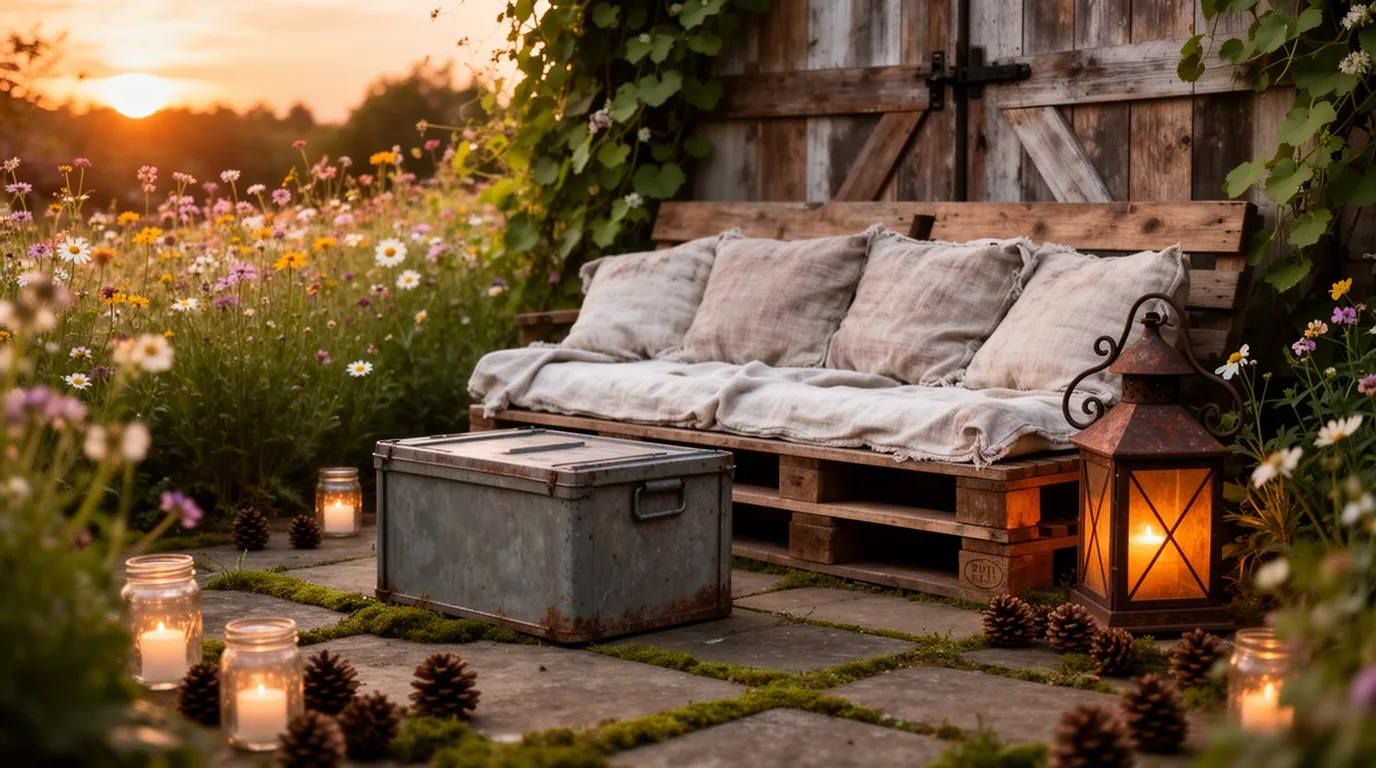
Transform old crates or a weathered bench into cozy rustic seating that invites you to linger in your garden. I’ve found that adding thick cushions in earthy tones and draping a soft, wool blanket over a repurposed church pew creates an instant nook for enjoying the view of your climbing roses.
You can nestle a simple stump stool beside fragrant lavender; its scent will envelop you as you rest. The key is comfort blended with natural materials. Your seating becomes a sanctuary for observing the daily life of your plants, from bees visiting blooms to new seedlings unfurling.
- Sink into a cushion on a salvaged bench, surrounded by the evening hum of your garden.
- Feel the sun-warmed wood of an old apple crate as you watch butterflies dance among zinnias.
- Listen to rustling leaves from a nearby maple while curled up on your converted hay bale seat.
- Share a quiet moment on a log sofa, watching twilight settle over your herb patch.
- Trace the grain of reclaimed timber with your fingers, grounded by the scent of damp earth and nearby thyme.
Illuminate Evenings With Vintage-Style Lighting
Extending your garden’s charm into the evening is simple with vintage-style lighting. You can hang a few weathered lanterns from shepherd’s hooks or low-hanging tree branches.
I often use solar-powered Edison bulbs in mine; they’re practical and cast a lovely, soft glow over nearby ferns and hostas. You’ll find that positioning a light behind a textured plant, like ornamental grass, creates beautiful silhouettes.
Don’t overlook simple mason jar candles placed on a reclaimed wood stump—they’re perfect for illuminating a quiet corner. This gentle lighting won’t disturb nocturnal pollinators but will let you enjoy your blooms long after sunset. It transforms your space into a magical, intimate retreat for relaxing evenings alone or with friends.
Build a Rustic Fire Pit for Year-Round Gatherings
Carve out a cozy gathering spot by building a rustic fire pit, using natural stone or reclaimed bricks for a look that blends seamlessly with your garden’s perennials and shrubs.
I’ve found a simple circle works best, letting you easily surround it with heat-tolerant lavender or low rosemary for fragrance.
Remember to check local regulations first.
You’ll extend your evenings outdoors, enjoying the crackle of a fire from spring through autumn.
- Witness your climbing roses glowing against the twilight backdrop.
- Share whispered stories as the flames dance.
- Feel the warmth thaw a crisp autumn evening.
- Watch moths flutter around the firelight, safe from your nearby herbs.
- Smell wood smoke mingling with your blooming night-scented stock.
Incorporate Practical Charm With Vintage Containers
Adding vintage containers like old watering cans or chipped enamelware gives your garden a layer of character while doing real work. You’ll find these pieces often have better drainage than new pots, and their patina blends perfectly with plants. I use my grandmother’s old zinc bucket for herbs—it’s deep enough for their roots and looks wonderful on the patio. Just ensure you clean them thoroughly and add drainage holes if needed. Match your plant choices to the container’s size and style; shallow bowls suit succulents, while tall cans are ideal for cascading blooms.
| Container Type | Best Plant Pairing | Pro Tip |
|---|---|---|
| Galvanized Watering Can | Trailing Nasturtiums | Let it spill over the spout for a lived-in look. |
| Chipped Enamelware Bowl | Hardy Sedums | The shallow depth is perfect for these drought-tolerant plants. |
| Wooden Crate | Mixed Lettuces | Line it with landscape fabric to extend its life. |
Craft a Focal Point Using Stone and Water
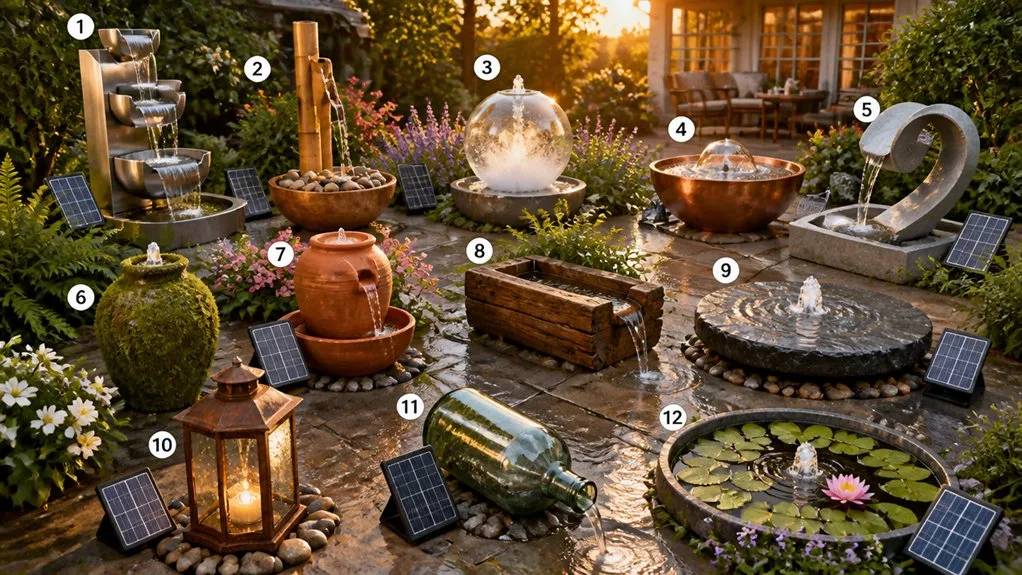
While vintage containers provide charm, a garden often needs a solid anchor, which you can achieve by combining stone and water for a truly captivating focal point.
I built a small, recirculating fountain from stacked fieldstone, and the sound immediately transformed my patio into a retreat.
Nestle moisture-loving plants like ferns, hostas, or astilbes around the stone’s base—they’ll thrive in the microclimate.
You can use a single, mossy boulder as a spill stone or create a simple basin from a large, shallow rock.
The key is letting the materials feel natural and settled.
- The gentle trickle that masks distant street noise, bringing instant calm.
- Watching birds dart in for a quick bath on a summer afternoon.
- The way morning light glistens on wet, textured stone.
- The lush, green growth of plants nourished by the constant moisture.
- A cool, visual anchor that grounds the entire garden design.
Add Character With Handmade and Foraged Decor
If you’re looking to infuse your space with a sense of place, handmade and foraged decor can give your garden a soul that store-bought items often lack.
Build simple structures from found branches, like an obelisk for your climbing beans or a rustic archway. I’ve made charming plant markers by painting smooth stones collected from a nearby creek. You can also fashion unique containers by hollowing out a mossy stump or an interesting piece of driftwood to plant succulents or herbs directly into it.
Foraged elements, such as a collection of pinecones arranged around a pot’s base or dried seed pods tucked into a birdhouse, add organic texture and tell a story of your local landscape, making the garden uniquely yours.
Soften Edges With Climbing Vines and Potted Greenery
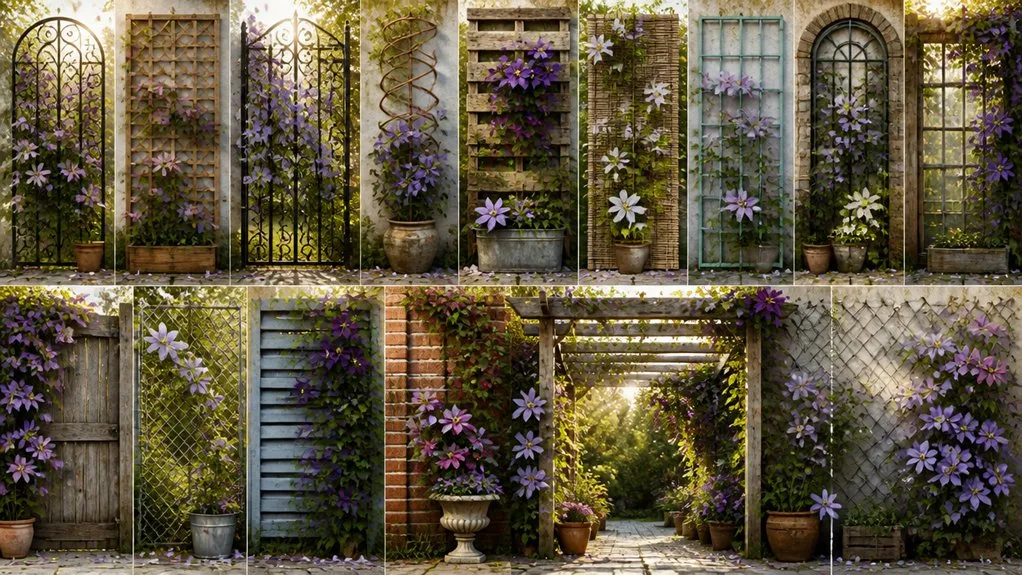
The handmade character you’ve created gets even better when it’s wrapped in living greenery. Vines soften harsh lines on fences and arbors, making everything feel established. I’ve trained clematis up a salvaged ladder, and the blooms hide the wood’s rough edges beautifully. Use pots of herbs and ferns to add layers. Tuck them beside a bench or on old stumps. They’ll thrive if you match the plant to the light. This isn’t about perfection; it’s about creating a feeling of lush, relaxed abundance that makes you want to stay outside just a little longer.
- Watch morning light filter through sweet pea blossoms on a twine trellis.
- Brush against fragrant rosemary spilling from a cracked terracotta pot.
- Discover a hidden frog nestled in the cool shade of a hosta’s leaves.
- Hear the gentle rustle of ivy leaves in a soft afternoon breeze.
- Feel the timeless connection as you weave a new tendril onto its support.
How to Clean and Preserve Weathered Materials
Before those rustic finds become part of your garden, a simple clean can preserve their charm for years.
I start by brushing off loose dirt with a stiff brush. For a deeper clean on wood, you can use a mild soap and water solution; avoid pressure washers as they can strip away the beautiful, weathered patina. For metal, remove any loose rust with a wire brush, then consider a clear outdoor sealant to prevent further corrosion. Always let pieces dry completely in the sun.
I’ve learned that placing a freshly cleaned, untreated wooden plank as a base for a pot of creeping thyme lets the wood age gracefully alongside the plant, blending function with that desired rustic character.
Frequently Asked Questions
Where Can I Buy Authentic Vintage Rustic Pieces?
You can find authentic pieces at estate sales and online auctions. I often source unique items from local salvage yards or antique stores for my plant stands. Don’t overlook flea markets; you’ll discover wonderful old pots.
How Do I Prevent Rust on Metal Decor Outdoors?
Start by cleaning your pieces, then apply a protective spray or paste wax. You can also let a natural patina develop, which I often prefer for its character among my plants.
Are These Ideas Safe for Homes With Small Children?
You’ll find most are safe, but check for sharp edges and unstable structures. Focus on soft, kid-friendly plantings like ornamental grasses instead of thorny roses.
What Plants Are Best for a Low-Maintenance Rustic Garden?
Try lavender, sedum, and ornamental grasses; they’ll thrive with minimal care. You can also plant native shrubs; they’re adapted to your local conditions, requiring less water and upkeep for a naturally rustic look.
Can I Achieve This Look With a Modern Home Exterior?
You can blend a rustic garden with your modern home. Try incorporating weathered wooden planters, native grasses, or a stone-edged path to soften the lines and add natural, plant-focused texture right outside your door.
Conclusion
Your rustic garden will flourish as you nurture it. Let your plants—the fragrant lavender, soft moss, and trailing vines—be the heart of your space. They’ll weave through your weathered wood and stone, adding life and softening edges. Embrace the natural aging of your materials; that patina is your story. Keep it simple, let it grow, and you’ll have a timeless, cozy retreat.
The Only Tools You Need for a Thriving Garden 🌱
Whether you're a weekend gardener or growing daily — these hand-picked tools make every session faster, easier, and more satisfying.