
You know fake flowers often look artificial, but you can fix that. Start by selecting high-quality silk blooms and bending their wired stems into natural curves. You’ll layer them with textural greens and use matte spray to eliminate plastic shine. The real secret lies in asymmetrical, imperfect arranging that mimics a garden’s casual grace. Let’s explore which specific flowers to buy and how to combine them so your arrangement convinces from every angle.
Key Takeaways
- Invest in high-quality silk or latex flowers with natural color gradients.
- Bend wired stems into asymmetrical curves to avoid stiff, artificial postures.
- Build arrangements in layers with staggered heights for garden-like depth.
- Conceal mechanics with filler greenery and vary textures for visual interest.
- Use matte sprays to dull plastic sheen and create a realistic finish.
Fix the Common Flaws That Make Fake Flowers Look Fake
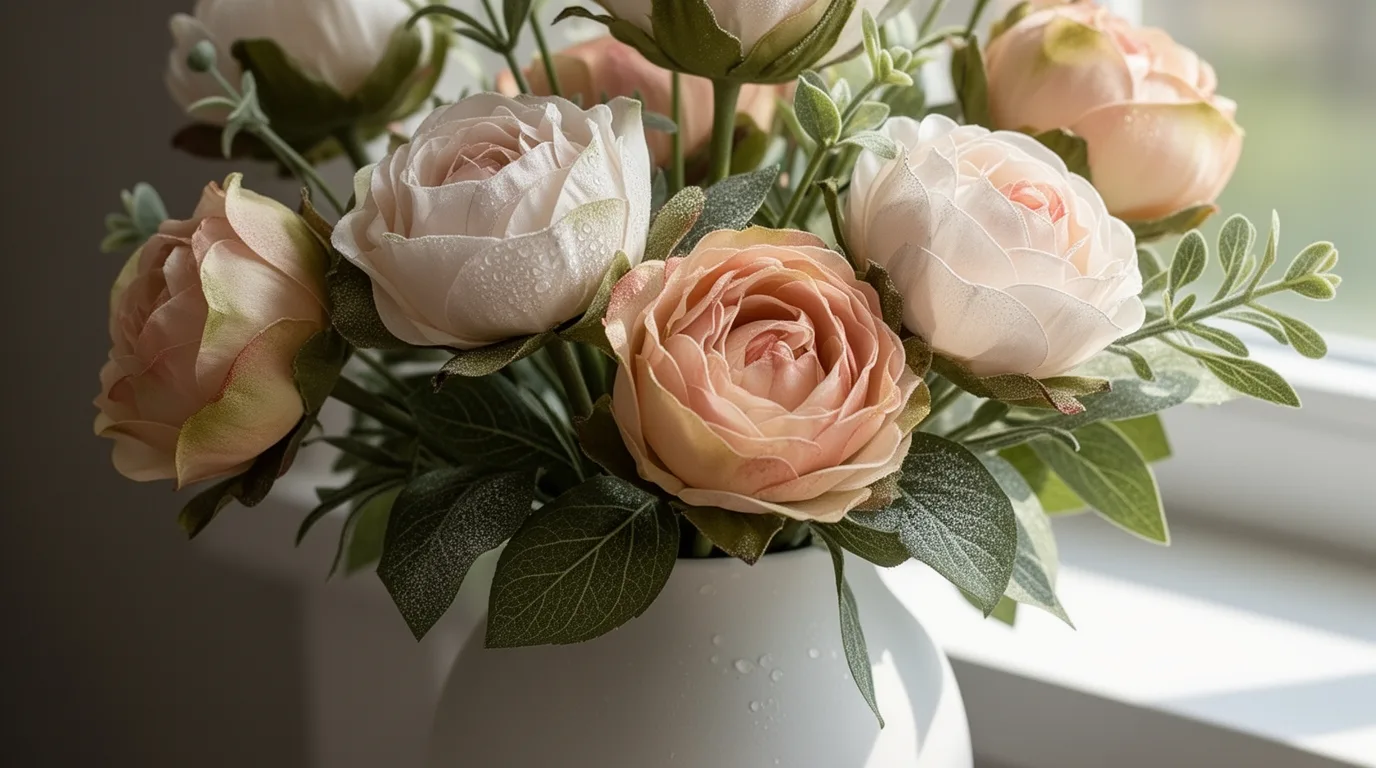
While artificial flowers are designed to mimic nature, you can often spot the flaws that make them look fake. First, address the overly uniform, plastic sheen. You can dull this by lightly misting blooms with a matte sealant spray or even a light dusting of cornstarch.
Next, tackle the stiff, unnatural stems. You’ll want to bend and curve them to mimic natural growth patterns; don’t let them stand perfectly straight.
Then, focus on the foliage. Real leaves aren’t perfectly symmetrical, so gently twist and separate each leaf to create a more organic shape.
Finally, mix in some real elements, like dried branches or eucalyptus, to add authentic texture and break up the artificial uniformity.
Invest in These High-Quality Faux Blooms First
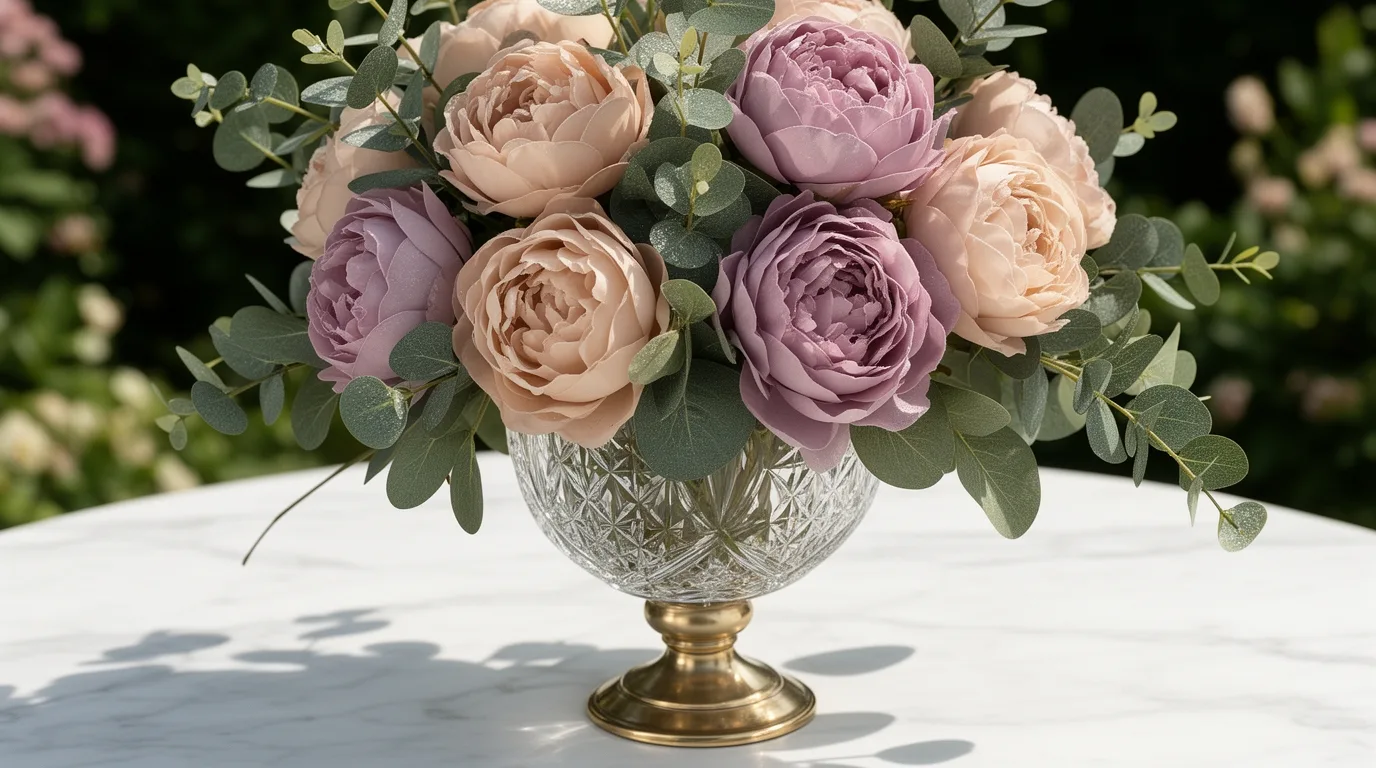
Building a convincing collection starts with selecting a few versatile, high-quality faux blooms. Prioritize silk or latex peonies; their layered petals and natural color variations mimic living tissue effectively.
Invest in several stems of high-grade hydrangeas, which provide substantial volume and a realistic, matte finish on each floret.
Include a bunch of filler greenery like eucalyptus, ensuring the leaves have detailed veining and a mix of green tones.
Opt for blooms with wired stems you can bend for a natural, asymmetrical posture.
Choose colors found in nature, like soft blush or ivory, avoiding overly saturated hues.
These foundational pieces will anchor multiple arrangements, giving you the most aesthetic return on your initial investment.
How to Spot and Buy the Most Realistic Artificial Flowers
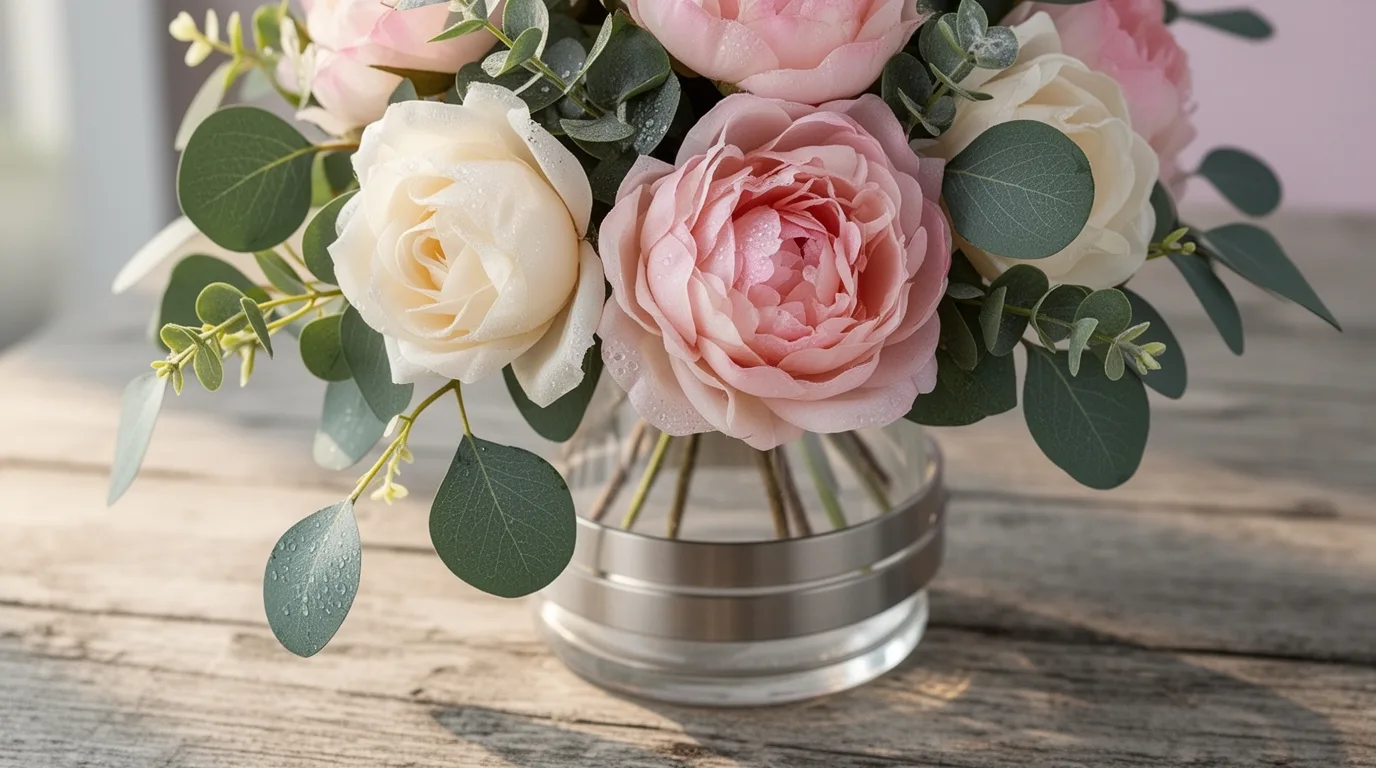
Now that you’re prioritizing quality, you’ll want to develop a discerning eye for spotting the most realistic artificial flowers available. First, examine the materials. High-end stems often use silk, high-grade plastics, or latex for petals, which feel supple, not stiff or waxy.
Check the veining and color gradients; they should be subtle and natural, not painted in solid, flat blocks. Inspect the centers and stamens for fine, intricate detail.
You’ll also want to feel the stem; it should have a weighty, realistic texture, sometimes with a fabric-wrapped wire core. Always check how leaves attach—look for a seamless blend into the stem.
Hold the flower under different lights to ensure it doesn’t have an unnatural plastic sheen.
Avoid These 5 Mistakes With Faux Flower Arrangements
Selecting high-quality stems is only part of creating a convincing display; arranging them thoughtfully matters just as much. First, avoid overly symmetrical placement; nature isn’t perfect, so stagger your blooms and vary stem heights.
Second, don’t overcrowd the vase; leave breathing room between stems for a loose, organic look.
Third, always bend and shape wired stems to create natural arcs and curves; never leave them stiffly straight.
Fourth, mix different flower types and textures, just as you’d in a garden, to add depth and visual interest.
Finally, never skip the foliage; real bouquets have leaves and greenery, so incorporate realistic filler stems to conceal mechanics and complete the arrangement.
The Secret Is Imperfect, Natural Arranging
Although the previous tips help you avoid common mistakes, the true art of artificial arranging lies in embracing deliberate imperfection and naturalistic form. You must study real growth patterns. Stems don’t emerge from a vase at uniform heights or rigid angles. Gently bend and curve wire stems to mimic natural posture, staggering bloom heights. Avoid perfect symmetry; create visual interest by grouping odd numbers of stems and allowing some space between florets. Integrate varied textures from filler greens to add depth and conceal mechanics. Your goal is to replicate the effortless beauty found in a garden, not the precision of factory packaging.
| Technique | Naturalistic Principle | Practical Action |
|---|---|---|
| Stem Variation | No two stems grow identically. | Bend, twist, and cut stems to different lengths. |
| Asymmetry | Nature avoids perfect mirroring. | Place focal flowers off-center and build around them. |
| Negative Space | Air and light exist between blooms. | Don’t overcrowd; allow some stems to stand alone. |
| Texture Layering | Foliage supports and frames flowers. | Insert smaller greens and branching stems at the base. |
Create a Realistic Color Palette for Your Faux Flowers
The most convincing faux arrangements draw their colors directly from nature’s subtle and varied palette. Study real blooms in your garden or a florist’s display.
You’ll notice petals aren’t uniformly colored; they often have gradients, veining, and faded edges. Seek out faux flowers that replicate these nuances. Avoid flat, primary hues. Instead, mix varieties with tonal depth—a pink peony with a blush center, a lavender with deeper purple streaks.
You must also consider foliage; greens range from olive to gray, not just one bright shade. Combine these elements to create harmony. Your goal is a cohesive group where no single color shouts, but all whisper together, mimicking the soft, accidental beauty of a living garden.
Mix Textures to Mimic a Garden’s Variety
Just as you’d feel a mix of velvety petals, waxy leaves, and feathery grasses in a real garden, your faux arrangements need varied tactile surfaces to achieve that layered authenticity. You avoid the flat, plastic look by combining distinct material finishes. Seek out silk blooms with subtle veining, polyethylene leaves with a realistic matte coating, and latex-based stems for flexible, natural movement.
- Layer Material Types: Combine silk, latex, and high-quality plastics within a single arrangement to create visual and tactile depth.
- Integrate Foliage Accents: Add preserved ferns, faux eucalyptus with a powdery finish, or polyester berry stems to break up floral uniformity.
- Manipulate Elements: Gently bend stems, separate clustered blooms, and fluff individual petals to prevent a stiff, manufactured appearance.
Choose the Right Vase for Your Artificial Arrangement
Many vases could work, but selecting one enhances your arrangement’s stability and style; consider height, weight, and neck width.
For a tall, spiky arrangement, use a heavy ceramic or weighted glass vase to prevent toppling. A wide, shallow bowl suits sprawling, garden-style mixes.
Check that the vase’s opening fits your stems’ combined diameter—too wide, and they’ll splay; too narrow, and you’ll overcrowd them.
For a naturalistic look, match the vase’s material to your flowers’ setting; use earthy stoneware for wildflowers or clear glass with a single bloom type.
Securely anchor stems with floral foam, pebbles, or clear gel beads; this provides a realistic base and conceals mechanics.
Master Asymmetry for a Just-Picked Look
While symmetrical arrangements often appear formal, intentionally uneven designs can mimic flowers freshly gathered from a garden. You’ll achieve this by placing taller stems at the back or center and letting shorter ones spill forward.
Avoid perfect rings; cluster blooms in groups of three or five for natural density. Bend and twist stems to create individual movement, as real flowers would. Your technical focus should be on establishing a clear focal point with a dominant flower, then building asymmetry around it.
- Vary Stem Lengths: Cut stems at different heights to break the horizon line of the arrangement.
- Cluster Blooms: Group similar flowers together to replicate how they grow in nature.
- Introduce Angles: Bend stems away from the central axis to suggest organic, untamed growth.
Use Filler Greenery and Grasses for Authenticity
You’ll often find the authenticity of an arrangement hinges on its filler greenery and grasses.
Start by selecting varied textures; combine matte leaf sprays with glossy foliage to mimic a real garden’s complexity.
Pay attention to stem length—cut some filler shorter to nestle at the base, letting others extend naturally among your focal blooms. This creates depth.
Integrate faux grasses with gentle, irregular bends; avoid uniform, plastic-perfect shapes.
Always strip any lower leaves that would logically be submerged in your vessel to maintain a believable waterline.
Use odd numbers of filler sprigs for a more organic feel, and twist stems slightly as you insert them to prevent a rigid, ‘plugged-in’ appearance.
Bend and Shape Stems for a Natural Pose
Because rigid stems betray an artificial composition, you can mimic a living plant’s growth by manually curving each wire core. This technique creates dynamic movement and prevents a stiff, uniform appearance. You’ll need to apply firm, controlled pressure along the stem’s length, avoiding sharp kinks that can damage the exterior coating.
For a sophisticated approach, follow these steps:
- Analyze Natural Growth Patterns: Observe how real flowers curve toward light sources and how stems often have a gentle, irregular bend just below the bloom.
- Create Gradual Arcs: Use your thumbs to introduce slow, sweeping curves into the wire, working from the base upward for the most control.
- Vary Angles and Directions: Position each stem uniquely within the arrangement to avoid parallel lines, ensuring a more organic and collected look.
Add Real-World Elements to Your Faux Arrangements
To elevate your artificial displays beyond mere imitation, incorporate physical elements from the natural world. This method adds authentic textural contrast that’s often missing from faux pieces.
Begin by gathering small, clean stones or polished river rocks and place them in your vase as a base to anchor stems. Introduce a few real, dried elements like curly willow branches, preserved eucalyptus, or birch bark pieces.
You’ll integrate these seamlessly with your artificial blooms, weaving them together to avoid separation. For a final, crucial touch, sprinkle a handful of dried moss or lichen around the base of your arrangement to conceal the mechanics and mimic the organic detritus found in nature.
The Simple Trick of Adding Water to a Glass Vase
A deceptively simple visual upgrade for your artificial arrangements involves adding clear water to a glass vase. This mimics the natural hydration real flowers require, breaking the visual barrier between faux stems and a believable display. You need to ensure the stems are properly sealed to prevent water damage or discoloration over time.
- Technical Precision: Use distilled or purified water to avoid mineral deposits that cloud the glass and diminish clarity.
- Naturalistic Guidance: Fill the vase only to a level that covers the visible portion of the stems, avoiding any submersed joins or faux foliage.
- Practical Tip: For a dynamic touch, add a few clear glass marbles or pebbles to anchor the stems and create refractive light patterns.
How to Dust and Maintain Your Artificial Flowers
Dusting artificial flowers regularly maintains their vibrant, lifelike appearance, and you’ll want a few specialized tools to do it effectively.
Use a soft, clean makeup brush or a small, dry paintbrush for intricate silk blooms; the fine bristles dislodge dust from crevices without damage.
For larger arrangements, employ a microfiber cloth or a can of compressed air held at least six inches away, using short bursts to avoid moisture.
Never use water or liquid cleaners on most faux florals, as this can cause dye bleeding or material degradation.
For stubborn grime on plastic stems, wipe them with a cloth slightly dampened with a mild soap solution, then immediately dry.
Store unused stems in a cool, dark place to prevent fading.
Arrange Lifelike Peonies and Roses for a Luxe Centerpiece
Create a luxe centerpiece by blending lifelike peonies and roses in varied heights, selecting blooms with realistic color gradients and textured petals for authenticity. You’ll anchor your arrangement with a low, wide vessel.
Begin by inserting your tallest stem—a fully opened peony—as a focal point. Use florist’s foam or a weighted base for stability.
Build volume around this apex with clusters of shorter, budding roses, mimicking their natural growth pattern. Curl and bend stems manually to achieve organic angles.
Follow these key steps to enhance realism:
- Establish Depth: Place darker-toned blooms in the center and lighter ones toward the edges to create a dimensional color story.
- Vary Bloom States: Integrate closed buds, semi-open, and fully open flowers to simulate a living plant’s lifecycle.
- Interlace Petals: Gently separate and slightly crumple individual silk petals to break uniformity and introduce natural imperfections.
Create a Realistic Wildflower Meadow in a Basket
Moving from structured peony centerpieces, a wildflower meadow arrangement embraces spontaneity with an assortment of blooms. You’ll select a low, open basket as your base.
Begin by establishing a foundation of preserved moss or artificial grass to mimic earth. Source high-quality faux flowers and filler like Queen Anne’s lace, cornflowers, daisies, and poppies in varying stem lengths and natural color palettes.
Employ a dense, overlapping technique for your cluster of main blooms, ensuring stems crisscross within the basket for stability. Integrate delicate fillers like lavender sprigs last to achieve airy, natural volume.
Tilt some flower heads and bend a few stems asymmetrically to replicate a meadow’s effortless, wind-swept look.
Build a Seasonal Faux Arrangement for Fall or Winter
Embrace the rich, layered textures of the season by gathering faux elements in deep burgundies, burnt oranges, and forest greens. Select premium silk blooms with wired stems, like chrysanthemums and hypericum berries, for easy manipulation.
Anchor your design in a weighted container filled with foam, then build height and width with your largest stems first.
- Create a Foliage Base: Insert faux eucalyptus, maple, or olive branches to establish the arrangement’s natural silhouette and conceal mechanics.
- Add Focal Flowers: Place your primary blooms asymmetrically, bending stems to mimic natural growth angles and varying depths for realism.
- Incorporate Textural Fillers: Integrate elements like dried-looking faux wheat, pine cones, or berry sprigs to add organic detail and seasonal authenticity.
Make an Artificial Flower Wreath That Looks Fresh
Designing a wreath with lifelike artificial flowers starts by choosing a high-quality, densely foliaged base that mimics real greenery. Select a moss, boxwood, or eucalyptus wreath form for texture. Use premium silk or latex blooms with realistic color variation and delicate veining.
Anchor your primary flowers first, inserting their wired stems deeply into the base at varied angles for a natural growth pattern. Integrate secondary filler blooms and foliage, layering them to cover mechanics and create depth.
Remember to include asymmetrical elements and leave some negative space; real gardens aren’t perfectly uniform. Secure all stems firmly with floral wire. Finally, gently bend petals and leaves to mimic natural curves, avoiding stiff, symmetrical positioning.
Craft a Hanging Basket With Faux Trailing Vines
A hanging basket filled with faux trailing vines brings lushness to porches and sunrooms with minimal upkeep. Select a wire basket with a coconut fiber liner and a substantial chain for secure hanging, then fill the base with lightweight foam blocks cut to fit. Choose premium faux ivy, pothos, or philodendron varieties constructed from polyethylene or silk for convincing texture and natural color variation.
- Begin by inserting the central stem of your primary vine directly into the foam, curving its path for a dynamic flow.
- Layer secondary vines, securing their ends with floral pins or hot glue, and intertwine species for a densely grown appearance.
- Manipulate individual leaves by gently bending their wires to face different directions and create realistic light-catching surfaces.
Style a Faux Orchid That Fools Everyone
While it might seem like a challenge, you can style a faux orchid to look convincingly real by focusing on botanical accuracy and manipulating its materials.
Begin by studying a live orchid’s structure. Gently bend the wired stems to create the graceful, arching lines of a Phalaenopsis or the upright spike of a Cymbidium. Separate any fused petals and leaves with your fingers to break that uniform, manufactured look.
Use floral tape to wrap the stem, mimicking the natural gradation from green to brown. Finally, apply a light dusting of matte sealant to remove plastic shine and consider using brown floral putty at the base to simulate potting media, securing the plant naturally in its container.
How to Layer Flowers for a Full, Professional Look
To achieve a full, professional arrangement, you’ll need to build it in distinct layers, starting with a structural foundation of greenery and line flowers.
Next, add focal flowers for visual weight, then fillers to conceal mechanics.
Use varying stem lengths to create depth.
Your technical approach should focus on these three key layers:
- Foundation Layer: Insert longer stems of greenery and linear blooms like faux delphinium to establish height and shape.
- Focal Layer: Place primary flowers, such as roses or lilies, at the arrangement’s visual center using medium-length stems.
- Filler Layer: Finally, tuck shorter stemmed blooms and foliage like baby’s breath into gaps to achieve seamless fullness.
Where to Place Your Faux Arrangements for Best Effect
Now that you’ve crafted a professional-looking arrangement, consider where it will have the most visual impact. Place taller centerpieces on mantels or entryway consoles to establish vertical interest. Use low, sprawling arrangements on dining tables to avoid obstructing conversation. In bathrooms, opt for compact groupings on vanity corners, utilizing mirrors to double their effect.
For bookshelves, integrate small single-stem flowers between book stacks, creating pops of color. Always position arrangements away from direct sunlight to prevent fading, and rotate them seasonally to refresh a room’s focal points. You’ll achieve a naturalistic look by mimicking how real plants grow: solitary statements in dead spaces, clustered life where light naturally pools.
Design a Convincing Faux Succulent and Cacti Display
Because succulents and cacti thrive in arid environments, your faux display should first focus on an appropriate foundation. Use a shallow, wide-mouthed ceramic pot and fill it with a realistic, textured substrate. You’ll layer materials to create a naturalistic base. Start with a foundation of floral foam or pebbles for stability. Cover this completely with your primary substrate to prevent the mechanics from showing.
- Apply a base layer of coarse, light-brown sand or fine gravel to mimic desert soil.
- Add visual interest by strategically placing a few larger, tumbled stones or pieces of slate for rocks.
- Finish with a sprinkling of darker sand or tiny pebbles in crevices to replicate natural sediment patterns and add depth.
Your Final Checklist for a Perfect Faux Arrangement
With your structural base complete, finalizing your faux arrangement requires attention to surface details and spatial balance. First, dust each bloom and leaf with a microfiber cloth to ensure a fresh, matte finish.
Next, assess the overall silhouette; rotate the container and gently bend stems to eliminate any unnatural symmetry or obvious gaps. Introduce subtle imperfections, like a slightly curled leaf or an off-center blossom, to mimic organic growth.
Finally, secure all floral foam and stem connections with hot glue to prevent shifting. Place your arrangement in its intended spot, observing how light interacts with the textures, and make any final tweaks for a convincingly natural presence.
Frequently Asked Questions
Can Artificial Flowers Cause Allergies?
They typically don’t cause pollen allergies, but you may react to dust or mold collecting on them. Regular cleaning with a damp cloth or gentle compressed air prevents allergen buildup.
Are Faux Flowers Safe for Pets?
Most are, but check materials. Some faux plants use dyes or foams pets shouldn’t chew. Avoid arrangements with small, detachable parts. Place them where your pet can’t reach to prevent ingestion.
Can You Clean Artificial Flowers in a Dishwasher?
You shouldn’t clean artificial flowers in a dishwasher. The heat and agitation can damage materials, loosening glue or distorting shapes. You can dust them carefully or gently wash them by hand in cool water.
Do Artificial Flowers Fade in Sunlight?
Some artificial flowers do fade in sunlight. For long-lasting color, look for UV-resistant or silk varieties. You’ll preserve them best by keeping direct sun exposure to a minimum.
Where Should You Not Put Fake Flowers?
Avoid placing fake flowers in direct sunlight; you’ll notice fading. Also, keep them away from high humidity and extreme heat. They’ll degrade faster. You shouldn’t put them in real plant soil either; it looks unnatural.
Conclusion
Now, scrutinize your finished arrangement. Ensure all stems are anchored and mechanics concealed. Bend a few stems again for last‑minute asymmetry. Mist matte spray from a distance to eliminate any final sheen. Finally, place it in soft, natural light—that’s your ultimate test. Realistic faux florals are about the meticulous details you’ve now mastered.
The Only Tools You Need for a Thriving Garden 🌱
Whether you're a weekend gardener or growing daily — these hand-picked tools make every session faster, easier, and more satisfying.