
You can design your own quiet retreat by first claiming a secluded corner. Build layers of privacy with evergreen screens, then plan a winding path that leads to a special focal point. Your plant choices, from groundcovers to ornamental grasses, will establish the garden’s lush texture and year-round interest. Let’s begin by mapping your space and considering the mood you want to cultivate.
Key Takeaways
- Select a secluded backyard spot using natural screens and layered plants for privacy.
- Establish a central focal point like a bench or sculpture to anchor your design.
- Design curving pathways and incorporate hardscaping to define the garden’s mood and purpose.
- Choose comfortable, weather-resistant furniture and add ambient lighting for evening enjoyment.
- Plant for year-round interest with native, low-maintenance plants and support local wildlife.
Find the Perfect Secluded Spot in Your Yard
Since the heart of a secret garden is its seclusion, your first step is to scout your yard for a naturally private area, like behind a shed, beneath a mature tree, or in a corner bordered by fences.
Don’t just glance; walk around at different times to notice how light and shadow play. You’ll want a spot that feels separate from your main patio or lawn. Judge its size by envisioning a small bench or a winding path—you don’t need a huge space.
Check the soil; if it’s too wet or compacted, you’ll know amendments are needed. Listen for noise from neighbors or street, as a quieter location will enhance that feeling of a hidden retreat. This found spot is your foundational canvas.
Create Privacy With Layers and Natural Screens
Now that you have your secluded spot, you can enhance its privacy by building layers.
Start with a foundational screen using tall, fast-growing evergreens like arborvitae or bamboo. Plant them about three to four feet apart for a dense, solid barrier.
In front of this, add a middle layer of deciduous shrubs; their varying heights and textures create visual interest while blocking mid-level sightlines.
Finally, install a foreground layer of ornamental grasses or perennial flowers. These soften the hard edges of the larger plants and complete the enclosure.
You’re not just constructing a wall; you’re crafting a living, textured filter that absorbs sound and movement, making your garden feel truly separate from the outside world.
Determine Your Secret Garden’s Mood and Purpose

Once you’ve established your private sanctuary, consider how you want it to feel and function, as this will guide every other choice you make.
First, identify its core purpose. Is this primarily a tranquil meditation nook, a lively reading lounge, or a space for intimate entertaining?
Next, define the mood. For serene contemplation, you’d favor soothing colors, gentle sounds from a water feature, and soft textures. For whimsical discovery, you might incorporate playful elements like quirky statues and winding plantings.
Your intended activities and desired atmosphere directly inform your plant selections, seating choices, and decorative accents. Write down a few key words, like “peaceful,” “romantic,” or “enchanted,” to keep your vision focused as you proceed.
Design Pathways and Structural Hardscaping
With your garden’s mood and purpose defined, you can now lay the ground—literally and figuratively—by planning its paths and built structures, which give the space its bones and guide movement.
For pathways, use curving lines to create mystery and discovery. Install materials that suit your theme: gravel for rustle and crunch, flagstone for permanence, or stepping stones for a playful feel. Ensure they’re wide enough for comfortable passage.
Integrate hardscaping like an arched wooden arbor to frame an entrance or a low stone wall to define a secluded sitting nook. These structures act as anchors.
Remember to consider drainage and a solid base when installing; a compacted gravel sub-base prevents shifting and weeds.
Select Plants for a Lush, Layered Look
While your pathways provide the framework, it’s the plants that will breathe life and mystery into your space. Aim for a lush, layered look by planting in three distinct tiers. Start with tall trees or shrubs for the background, add mid-height flowering perennials and grasses for the middle, and finish with low-growing ground covers and bulbs at the edges. This creates depth and hides your garden’s boundaries. Mix textures and foliage colors, not just flower hues, for year-round interest. Choose plants suited to your light conditions and soil, and group them in odd-numbered clusters for a natural feel.
| Plant Layer | Example Choices |
|---|---|
| Tall (Back) | Arborvitae, Hydrangea Paniculata |
| Mid-Height | Ornamental Grasses, Coneflowers |
| Low (Front) | Creeping Thyme, Hostas |
| Climbers | Clematis, Climbing Roses |
Establish a Focal Point for Your Sanctuary
Draw the eye and anchor your design by establishing a single, strong focal point within your secret garden. This central feature gives your space purpose and becomes the heart of your retreat. You’ll position other elements around it to create a cohesive layout. Choose something visually compelling that reflects your personal style and draws you deeper into the garden.
- Place a unique piece of garden art, like a weathered statue or a wrought-iron sculpture, on a small pedestal.
- Install a simple, decorative bench and surround it with your favorite flowering plants.
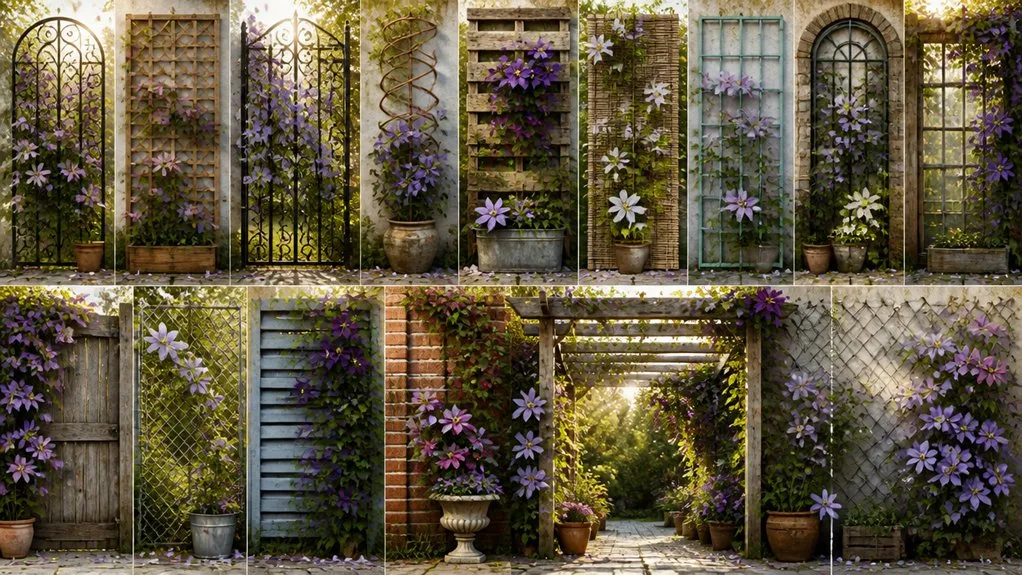
- Build a charming arched trellis and train a climbing rose or clematis over its frame.
- Set a beautifully patterned mosaic stepping stone as a destination point within a path.
- Arrange a cluster of ornamental grasses or a single, striking specimen tree in an open area.
Incorporate Soothing Sounds With a Water Feature
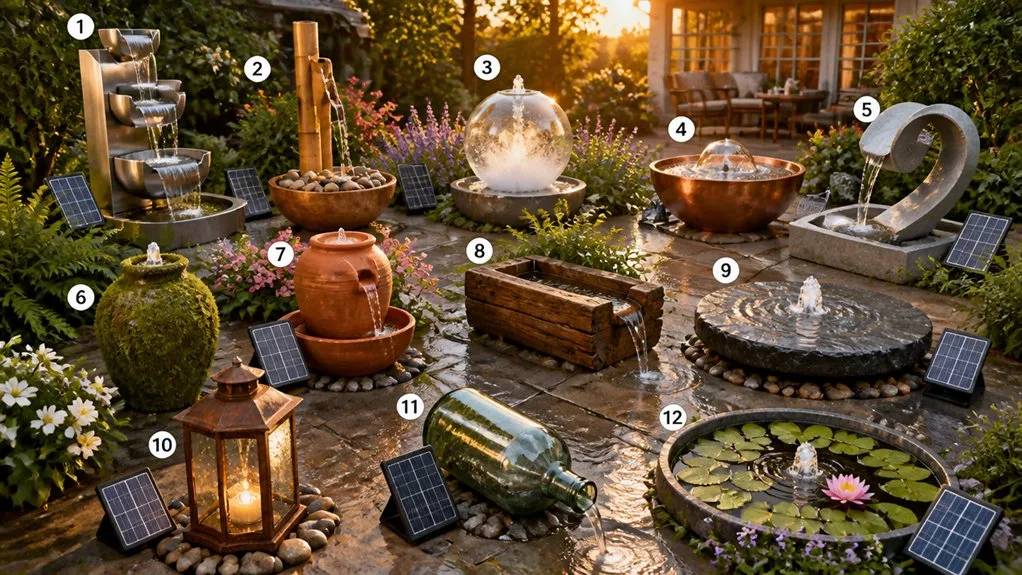
After you’ve anchored your space with a focal point, consider adding the gentle murmur of moving water. A small fountain or a recirculating birdbath instantly masks unwanted neighborhood noise and creates a serene atmosphere.
You don’t need a large pond; a self-contained unit with a submersible pump works perfectly. Place it where you can hear it from your favorite seating spot. Ensure you’re near an outdoor GFCI outlet for safe power, and use a water treatment to prevent algae in the basin.
The sound of trickling water invites relaxation and can even attract wildlife, enhancing your garden’s secret, natural feel. Regular maintenance, like topping off evaporated water and cleaning the pump filter, keeps your feature running smoothly for years.
Choose Comfortable and Weather-Resistant Furniture
Select furniture that feels as comfortable outdoors as your favorite chair indoors, ensuring it’s made from materials like resin wicker, teak, or powder-coated aluminum to withstand sun and rain. Your seating should invite you to linger. Measure your space first to ensure a layout that encourages conversation without crowding your plants.
Add weatherproof cushions with quick-drying foam and removable covers for easy cleaning.
- Opt for deep-seated chairs and loungers that support your back fully.
- Include a sturdy, flat-surfaced table for holding drinks and books.
- Choose a matching storage bench to tuck away cushions during storms.
- Prioritize lightweight, stackable pieces for flexible rearrangement.
- Test the furniture’s stability yourself before purchasing; avoid wobbly frames.
Illuminate Your Garden for Evening Atmosphere
While your comfortable furniture invites you to stay outdoors, the right lighting transforms your garden into a magical evening retreat. You’ll start by outlining pathways with low-voltage LED stake lights for safety and guidance. Next, you’ll focus on accent lighting to highlight key features like a specimen tree or a water feature using adjustable spotlights. String soft, warm-white fairy lights through arbors or along fences to create a cozy canopy. For intimate seating areas, you’ll use dimmable lanterns or candles on tables to provide a gentle, flickering glow without overwhelming the space. Remember, you’re layering light just as you layer plants. This strategic approach ensures your garden remains functional and enchanting after sunset.
| Lighting Layer | Primary Purpose |
|---|---|
| Pathway Lights | Ensure safe navigation and define boundaries. |
| Accent Lights | Dramatically showcase architectural plants or structures. |
| Ambient Lights | Establish a general warm and inviting mood. |
| Task Lights | Provide focused illumination for dining or reading areas. |
Personalize the Space With Decor and Art
Embellish your garden with carefully chosen decor and art to transform it into a true expression of your personality. Select pieces that resonate with you and enhance the secluded feel. Anchor your design with a focal point, like a striking sculpture or a vintage bench, to draw the eye. Incorporate items that add texture and sound, such as a small wind chime or a mosaic stepping stone you’ve crafted yourself. Remember, less is often more in a secret garden; each piece should feel intentional and special.
- Hang a weathered mirror on a fence to visually expand the space and reflect light.
- Place a rustic birdbath among ferns to attract wildlife and add a serene water element.
- Install a simple trellis and train a climbing rose, then hang a lantern from its arch.
- Tuck hand-painted stones along pathways for a whimsical, personal touch.
- Suspend a colorful glass ornament from a tree branch to catch the sunlight.
Opt for Low-Maintenance Plants and Strategies
A secret garden should invite relaxation, not become a source of constant chores. Choose native, drought-tolerant perennials that thrive with minimal watering once established. Group plants with similar sun and water needs together to streamline care.
Apply a three-inch layer of organic mulch, like shredded bark, to suppress weeds and retain soil moisture, reducing your watering frequency. Install a simple drip irrigation system on a timer for efficient, hands-off watering.
Select compact, slow-growing shrub varieties that won’t demand frequent pruning. For ground cover, use spreading plants like creeping thyme to fill spaces and crowd out weeds. These strategic choices let you spend less time maintaining and more time enjoying your secluded retreat.
Invite Birds and Butterflies for Natural Charm
To bring your sanctuary to life with movement and color, you’ll want to attract birds and butterflies with purposeful plantings. Select native flowering plants, as they’ve co-evolved with local wildlife and provide the most reliable nectar and food sources. You’ll create a vibrant habitat by incorporating layers of vegetation—trees, shrubs, and ground cover—to offer shelter and nesting sites.
Include a shallow water feature, like a birdbath with stones for perching, for drinking and bathing.
- Plant in clusters to create bold splashes of color that are easier for pollinators to spot.
- Choose long-blooming perennials like coneflower and bee balm for a consistent food supply.
- Include host plants such as milkweed for monarch caterpillars.
- Add a berry-producing shrub like serviceberry to feed birds through multiple seasons.
- Avoid pesticides, which can harm the very creatures you’re trying to welcome.
Adapt and Enjoy Your Sanctuary Through the Seasons
While your secret garden’s cast of characters changes with the seasons, you can design and tend it for year-round appeal and engagement.
Plan for succession, choosing early spring bulbs, summer perennials, autumn-blooming asters, and plants with winter structure like ornamental grasses or red-twig dogwood.
Leave some seed heads standing in fall; they provide food for birds and create beautiful frost-covered silhouettes.
You’ll also want to ensure seating remains comfortable—add a weatherproof cushion in summer and a cozy throw for chilly mornings.
Adjust your routine to the calendar; focus on pruning in late winter and mulching in spring.
Frequently Asked Questions
How Can I Have a Secret Garden With Children?
Choose a hidden corner, then let your kids build a fort using sticks or tall sunflowers for walls. Add whimsical elements like stepping stones and a small, magical fairy door on a tree trunk.
Is It Okay to Use Artificial Plants or Turf?
Yes, you can use them. Artificial turf simplifies play. Choose safe, durable artificial plants for stability, but remember, they won’t provide the same sensory experience for discovery as real foliage. Prioritize non-toxic materials.
What if My Yard Is Very Small or a Balcony?
Even a tiny space works. Use vertical planters, hanging baskets, and tall, narrow pots. You can choose climbers for walls or railings. Prioritize a few lush plants to create your hidden, green retreat.
How Do I Keep Pets From Damaging the Garden?
Train pets away from plants or set clear boundaries. Use physical barriers like fencing for certain areas. You can add deterrents, such as citrus peels or mulch, to keep curious animals from exploring.
What’s a Budget-Friendly Way to Start?
Start with seeds and divisions from friends’ plants. Use recycled containers like old pots or buckets. Choose fast-growing, inexpensive annuals. You can also forage for native plants, but always get permission first.
Conclusion
Now you can escape into your own private world. Keep your sanctuary thriving by refreshing mulch, pruning for shape, and removing spent blooms. Adjust your seasonal decor and ensure your lighting and water feature function smoothly. Visit often, letting this peaceful corner evolve with your care and become your cherished retreat. Your secret garden is ready to welcome you.
The Only Tools You Need for a Thriving Garden 🌱
Whether you're a weekend gardener or growing daily — these hand-picked tools make every session faster, easier, and more satisfying.