
You might want your backyard to feel less like a curated display and more like a cherished, natural retreat. A rustic garden achieves this by embracing weathered materials, informal planting, and simple structures. Let’s consider how you can establish this relaxed feel, starting with the fundamental layout and the specific materials that create that authentic, lived-in character right from the ground up.
Key Takeaways
- Embrace relaxed, overflowing planting with old-fashioned roses, fragrant herbs, and ornamental grasses.
- Create meandering pathways using materials like irregular flagstone or wood chips to connect garden zones.
- Use reclaimed wood and weathered stone for rustic structures like arbors, trellises, and raised beds.
- Incorporate natural features like dry-stacked stone walls and creeping groundcovers for timeless texture.
- Define the space with a simple, weathered gate and add climbers like roses for vertical interest.
What Exactly Defines a Rustic Garden Style?
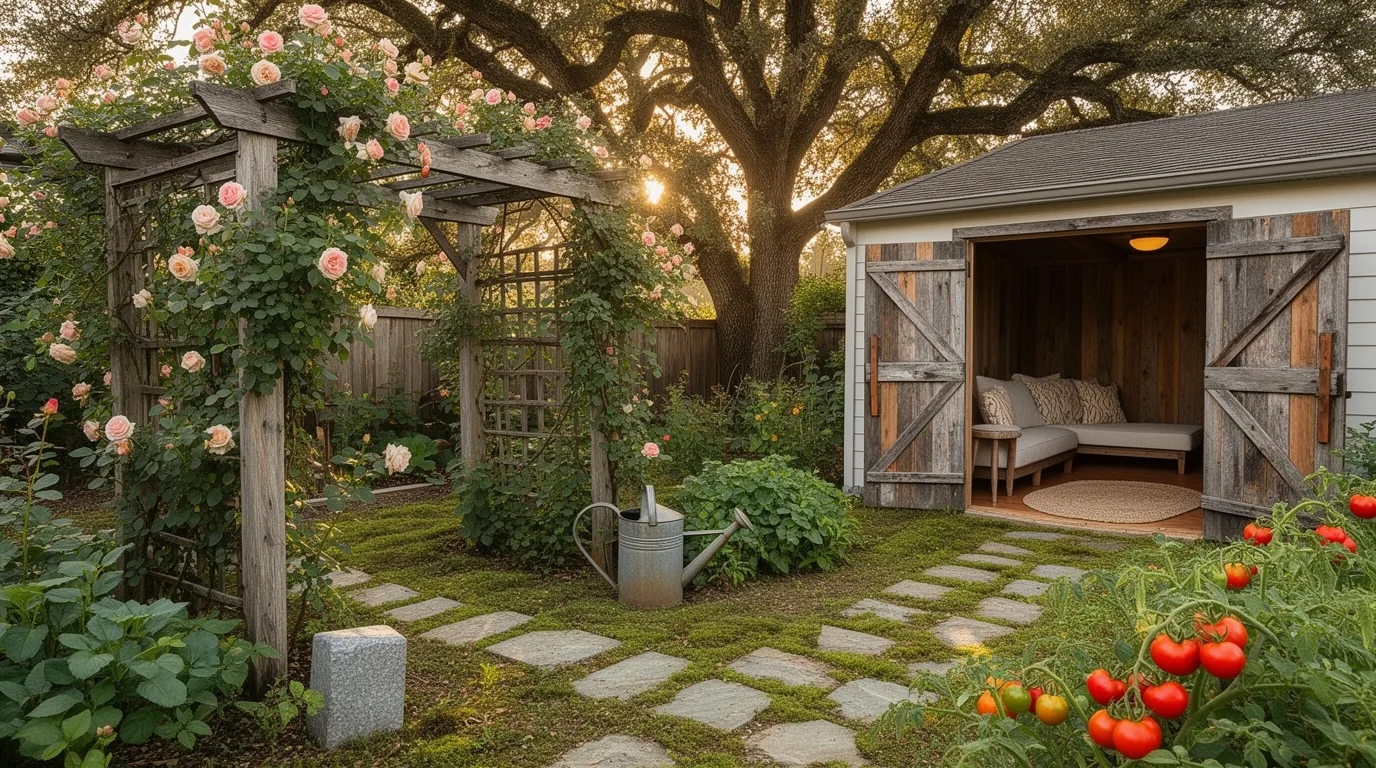
If you’ve ever walked into a garden and immediately felt a relaxed, timeless charm, you’re likely experiencing the core of rustic style, which embraces natural imperfections over manicured perfection. Think less sharp edges and more soft, flowing lines.
You won’t find pristine lawns here. Instead, you’ll notice gravel or mossy paths and plants that spill over borders. It’s about materials that age gracefully, like weathered wood for arbors, rough stone for low walls, and wrought iron with a patina.
You choose plants that look like they belong—think old-fashioned roses, fragrant herbs, and ornamental grasses. It’s a style that feels deeply personal and lived-in, where a little bit of wildness is always welcome.
Plan Your Rustic Garden Layout and Zones
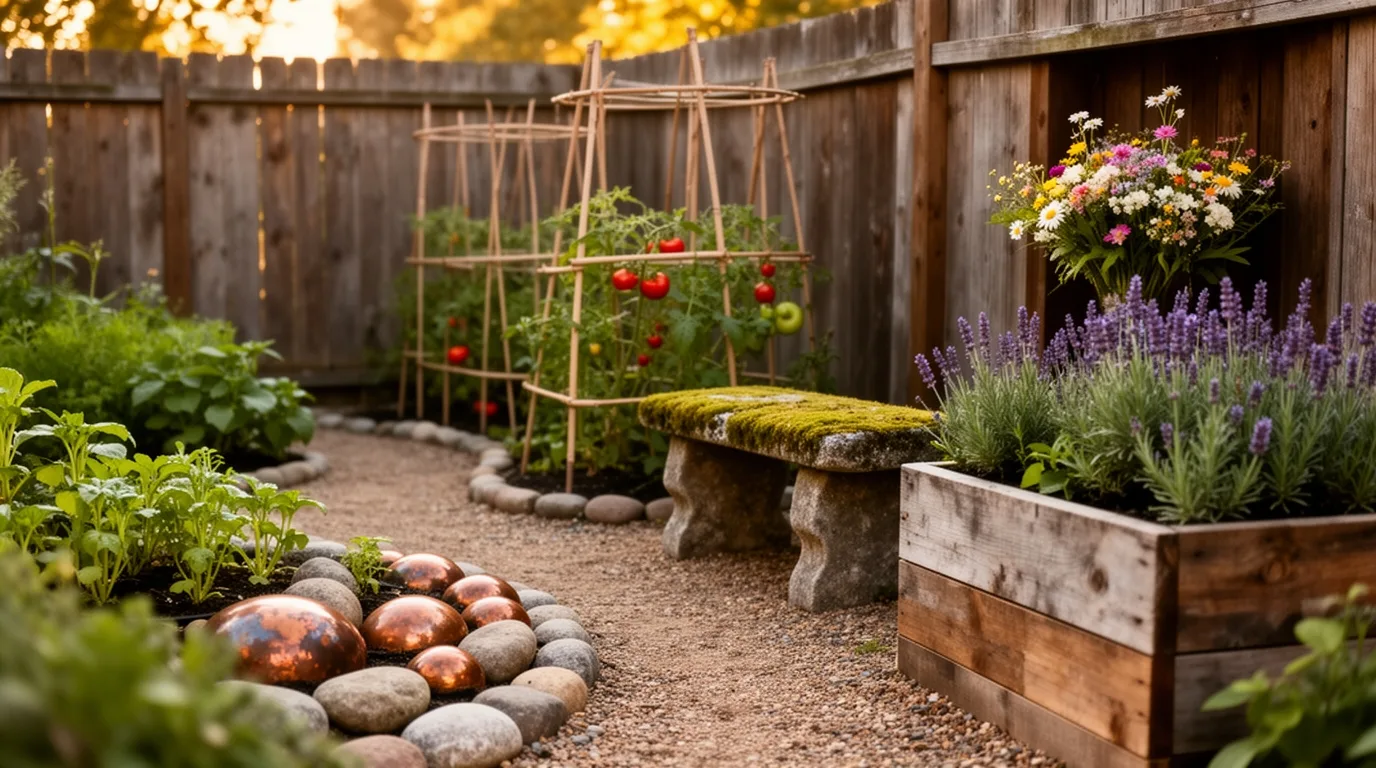
Now that you’ve embraced the spirit of the rustic style, you can begin shaping its form. Start by walking your space to note sunlight patterns, slopes, and existing trees. Divide the garden into functional zones. You might carve out a sunny kitchen garden for herbs and vegetables, framed by woven willow borders.
Create a shaded, secluded sitting nook under a tree canopy, using a reclaimed bench. Let a wildflower meadow zone thrive in a low-traffic area.
Connect these zones with meandering, irregular pathways made from stepping stones or wood chips. This thoughtful zoning creates a journey through your garden, balancing cultivated areas with untouched natural pockets for that authentic, relaxed feel.
Frame Your Space With a Rustic Fence or Gate
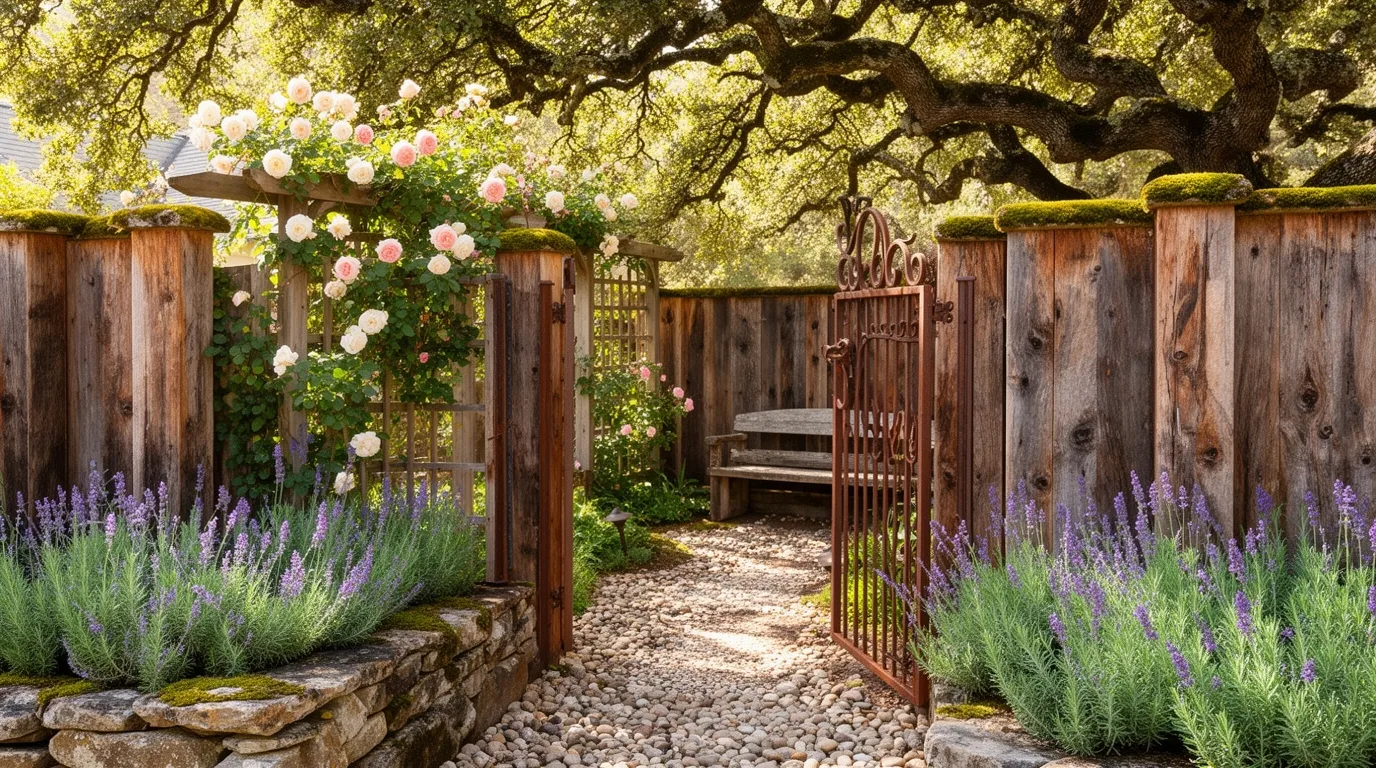
Carve out your garden’s boundaries by putting up a rustic fence or installing a welcoming gate. This instantly defines your space and sets a charming, natural tone.
You’ll find a simple picket fence, built from untreated wood, works wonderfully. Let it weather naturally over time for that authentic look.
For a gate, consider a sturdy, hinged design that swings open with a satisfying creak. You can even craft a simple arbor over the gate’s entrance to support climbing roses or vines.
It’s not just about marking a line; a fence provides a backdrop for your plants, while a gate creates a focal point and a sense of arrival. Think of them as the welcoming bones of your garden structure.
Select Weathered and Reclaimed Materials
To embrace a truly rustic garden, begin by seeking out materials already touched by time and history.
Look for reclaimed barn wood to construct raised beds or a simple bench; its greyed, textured surface tells a story.
Salvage antique bricks for a small patio’s edge, loving their chips and varied hues.
You can find these treasures at architectural salvage yards, farm auctions, or even in your own shed.
Old galvanized buckets and troughs make perfect, character-filled planters.
Don’t worry about perfection; a little moss or a rusty patina adds depth.
Build Natural Pathways With Stone and Gravel
Just as weathered materials give a garden character, the paths that guide you through it should feel grounded and organic. You’ll want materials that settle into the landscape. I prefer using irregular flagstones for stepping pads, spacing them so grass or creeping thyme can grow between. For a looser look, fill the path with crushed gravel or pea stone; it’ll crunch satisfyingly underfoot. First, excavate about four inches of soil, then line the trench with landscape fabric to suppress weeds. Add a base layer of coarse stone dust for drainage before setting your stones or pouring your gravel.
| Material Choice | Best For |
|---|---|
| Irregular Flagstone | Formal vegetable plots or focal points |
| Crushed Granite | High-traffic routes needing drainage |
| River Pebbles | Decorative, low-traffic edging paths |
Create Low Walls and Borders With Stone
Using materials already underfoot, low stone walls and borders are a practical way to define your garden’s spaces while adding timeless structure. You’re not building a fortress, just a few sturdy courses to edge a perennial bed or terrace a slope.
Dry-stacking local fieldstone is the most authentic method, letting you fit pieces together like a puzzle without mortar. This creates instant habitat for beneficial insects and lizards.
Follow these simple steps for success:
- Start with a trench: Dig a shallow, level base about twice the width of your wall and fill it with compacted gravel for drainage.
- Choose your stones: Place your largest, flattest stones as the foundational first course, ensuring they’re stable.
- Build up carefully: Overlap joints as you add each layer, occasionally placing a longer “tie stone” across the width for strength.
- Finish with soil: Once your wall is a foot or two high, backfill with soil and tuck in creeping plants like thyme for softness.
Craft a Rustic Seating Area as a Focal Point
Stone walls frame your garden’s spaces, and a crafted seating area within them invites you to stay awhile. Begin by laying a simple gravel or flagstone base for stability. Arrange a pair of sturdy, unpainted wooden benches or a log slice table with stumps for stools directly on the base, ensuring they’re level. You’ll want to tuck this spot in a partially shaded corner to make it usable throughout the day. Then, soften the space by planting fragrant herbs like lavender or thyme at the edges; they’ll release scent when you brush past. It becomes your private nook for morning coffee or an afternoon book.
| Seating Type | Base Material | Companion Planting |
|---|---|---|
| Wooden Benches | Crushed Gravel | Lavender |
| Log Slice Table | Flagstone | Thyme |
| Tree Stump Stools | Pea Gravel | Mint |
Build a Fire Pit Area for Evening Gatherings
After you’ve settled your morning coffee spot, extend your garden’s charm into the evening by building a rustic fire pit for gathering under the stars.
A simple ring of gathered fieldstones creates an instant, natural focal point. You’ll want to dig a shallow pit, line it with gravel for drainage, and securely stack your stones. Arrange your existing rustic seating around it at a safe, comfortable distance to enjoy the warmth and light.
- Choose Your Base: Clear a 5-foot circle, dig down about a foot, and fill it with compacted gravel for a stable, safe foundation.
- Source Local Stone: Gather flat, dense stones from your property or a local quarry for a truly authentic, grounded look.
- Build the Ring: Dry-stack stones tightly in a circle about 3 feet wide, ensuring the wall is sturdy and level—no mortar needed for a rustic feel.
- Create the Ambiance: Keep a stack of dry firewood nearby and add a few cozy blankets to your seating for those cooler nights.
Add Vertical Structures: Trellises and Pergolas
Your fire pit adds warmth at night, and you can also give your garden height and shade by adding simple trellises or a pergola.
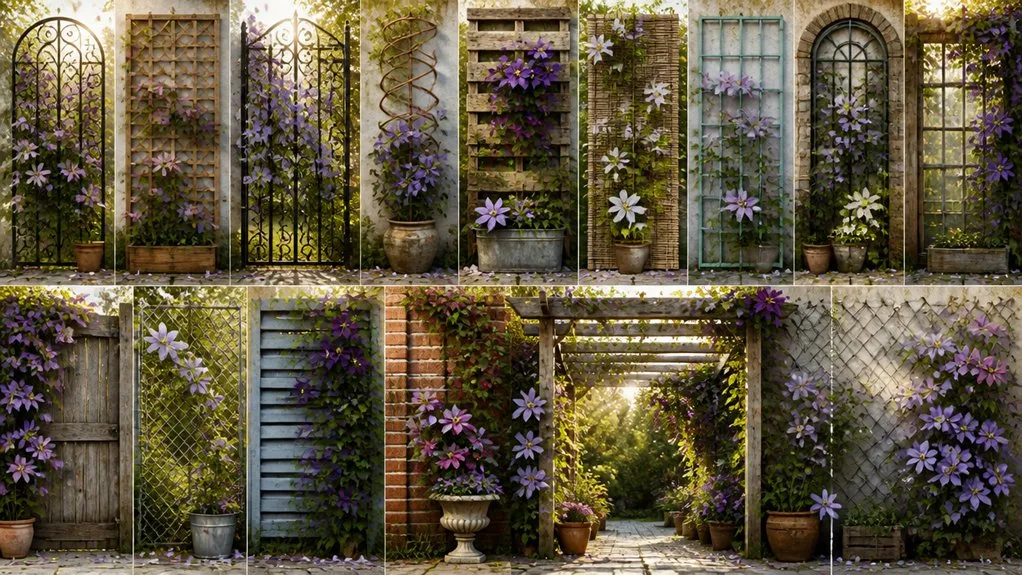
Start with a basic wooden trellis against a fence or wall. Train climbing roses, clematis, or even beans up it for a lush, vertical layer.
For a grander statement, build a rustic pergola using reclaimed timber or rough-hewn logs over a patio or path. You don’t need perfect cuts; uneven edges enhance the charm. Let wisteria or grapevines cascade over the top to create a living ceiling.
This structure defines an outdoor room and offers dappled sunlight for relaxing beneath. It’s a simple framework that supports both plants and your rustic aesthetic.
Incorporate a Rustic Water Feature
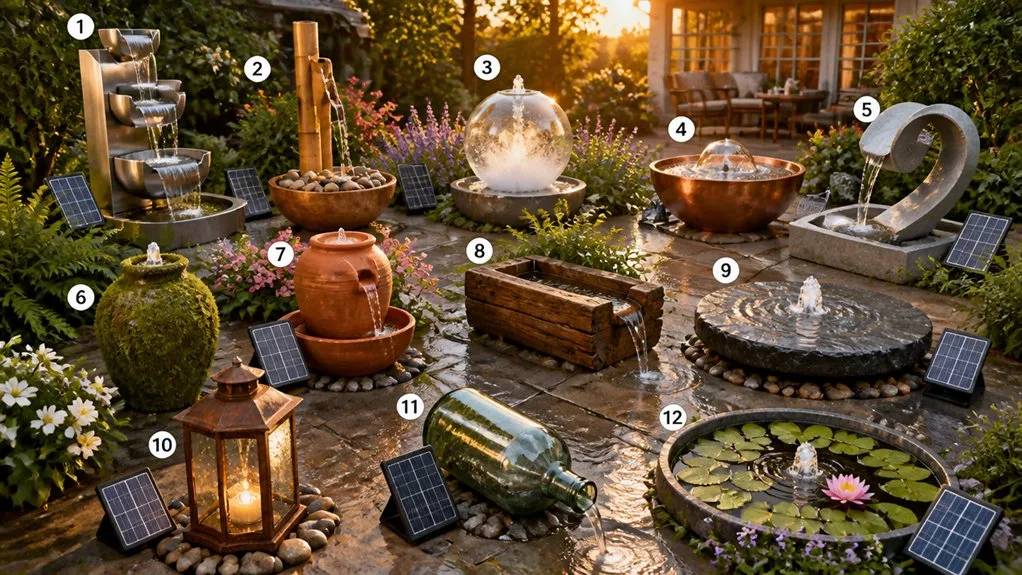
By bringing the gentle sound of moving water into your space, you can introduce a serene, natural focal point. A rustic water feature grounds your garden and attracts wildlife, making it feel truly alive. You don’t need a grand fountain; simple, repurposed materials work beautifully. Focus on creating a self-contained, recirculating system for ease.
- Repurpose a stone trough or old metal bucket as a basin, letting moss and patina add character.
- Use a small, solar-powered pump hidden amongst river stones for a gentle trickle without complex wiring.
- Surround the base with native ferns, mosses, and hostas to help it blend seamlessly into the landscape.
- Add a few smooth, large river rocks at the water’s edge for a natural look and a perch for birds.
Install Rustic Raised Beds for a Kitchen Garden
A rustic water feature can set a calming mood, but a kitchen garden brings utility and flavor right to your doorstep.
You’ll build your raised beds using reclaimed timber or rough-cut logs; their weathered appearance fits the theme perfectly.
Construct rectangular frames about a foot high, ensuring they’re wide enough for easy access but narrow enough to manage from both sides.
Fill them with a rich mix of topsoil, compost, and well-rotted manure to give your plants a fantastic start.
Position these beds conveniently near your kitchen path, grouping them for a cohesive look.
Their defined structure simplifies maintenance, keeps soil quality high, and elevates your edible plants, making them a focal point of productivity and charm.
Choose Plants for a Lush, Rustic Cottage Feel
Planting for a rustic cottage garden feels like weaving a tapestry of textures and hues, so you’ll want to start with a backbone of hardy perennials and rambling climbers. You’ll achieve that relaxed, overflowing charm by letting plants mingle freely.
Forget rigid rows; you’re aiming for gentle chaos that looks effortlessly beautiful year after year.
- Anchor with Structure: Plant tall, airy perennials like hollyhocks and delphiniums at the back, letting them peek through other foliage.
- Fill the Middle: Use billowy plants such as catmint, hardy geraniums, and lavender to create soft mounds of color and scent.
- Edge Softly: Let low-growing herbs like thyme or creeping plants spill over onto pathways to blur the edges.
- Add Vertical Layers: Train fragrant climbers like a classic climbing rose or sweet pea onto fences or an old ladder for height.
Encourage Wildlife With Log Piles and Bee Hotels
Creating a few simple habitats turns your garden into a bustling sanctuary for essential creatures.
Start by stacking some old logs or branches in a shady, quiet corner. This log pile quickly becomes a haven for beetles, centipedes, and toads, all of which help control pests.
Next, build or buy a simple bee hotel. Use a wooden box filled with hollow stems like bamboo or drilled blocks of untreated wood. Hang it in a sunny, sheltered spot facing south or east.
You’ll provide crucial nesting sites for solitary bees, which are phenomenal pollinators. Just remember to clean the bee hotel every couple of years to prevent disease, ensuring these helpful visitors return season after season.
Use the Right Mulch for a Natural Backyard Floor
After creating habitats for wildlife, turn your attention to the ground beneath your feet: your choice of mulch can transform your garden’s soil into a healthier, more vibrant ecosystem. It’s your garden’s living skin. The right mulch suppresses weeds, retains moisture, and enriches the soil as it decomposes, all while giving your space a cohesive, natural look.
Think beyond dyed wood chips and explore materials that feed your soil and complete the rustic aesthetic.
- Shredded Bark or Wood Chips: These are classic for a reason. They break down slowly, improve soil structure, and mimic a forest floor.
- Straw or Hay: A fantastic, lightweight option for vegetable beds; it’s easy to spread and adds organic matter quickly.
- Leaf Mold: Simply let fallen leaves decompose. It’s a free, nutrient-rich mulch that worms adore.
- Pine Needles: Perfect for acid-loving plants like blueberries or rhododendrons, they create a beautiful, fragrant carpet.
Let Your Lawn Go Wild for a Meadow Effect
From the soil’s surface, you can also reconsider the grass itself. Instead of a manicured carpet, let your lawn grow into a loose, flowering meadow.
Start by mowing less frequently, maybe once a month, and set your blade high. You’ll allow native clover, daisies, and self-heal to bloom amidst the grass blades.
Scatter a regional wildflower seed mix over thin or bare patches in early spring or fall; just press them into the soil with your foot. You’ll need to tolerate some “weeds,” but they’re vital for bees and butterflies.
This approach saves you water, fertilizer, and weekly mowing, trading labor for dynamic, swaying beauty. Your garden will hum with life, feeling effortlessly established and wild.
Add Texture With Terracotta Pots and Rustic Planters
Move on from plastic and introduce the warm, earthy texture of terracotta pots and rustic planters. They’ll add instant character and a wonderful, tactile quality to your garden.
You can group them on steps, tuck them into forgotten corners, or use them as focal points. Their porous nature helps plant roots breathe, though you’ll need to water a bit more often. Seek out pots with a bit of age—look for subtle cracks or a weathered patina, as these imperfections add depth.
- Source secondhand. Check flea markets for chipped, mossy pots; their flaws are free charm.
- Vary sizes. Cluster a few large urns with smaller ones for visual interest.
- Mix materials. Pair terracotta with aged concrete or rough-hewn wood planters.
- Let them weather. Don’t clean off every mineral stain; that natural aging tells a story.
Incorporate Vintage Finds for Instant Character
Nothing brings a garden to life quite like an object with a past. Scout flea markets for old watering cans, galvanized buckets, or a weathered wooden wheelbarrow.
You can turn a chipped enamel basin into a unique planter or let a rusty milk jug hold trailing vines. An antique garden gate, even if it’s no longer functional, makes a wonderful focal point leaned against a fence.
Don’t worry about perfection; cracks and fading paint add to the charm. Just ensure any metal items are safe for plants.
Place your finds thoughtfully—that vintage crate stacked with terracotta pots creates a layered, collected-over-time feel. Each piece tells a story, weaving history into your garden’s fabric.
Add Soft Lighting With Lanterns and String Lights
To create a captivating evening atmosphere, introduce soft lighting with lanterns and string lights to extend your garden’s charm into the night. You’ll transform your space into a magical retreat perfect for relaxing after sunset.
Focus on warm, gentle glows rather than bright, harsh beams to keep that rustic, cozy feel.
- Drape fairy lights in your trees or along a fence line; their tiny, sparkling lights mimic fireflies and create a dreamy canopy.
- Place weathered metal lanterns with flickering LED candles on your patio table or along garden steps for stable, atmospheric pools of light.
- Hang a string of Edison bulbs between two sturdy posts or trees; their vintage filament glow is perfect for rustic style.
- Tuck solar-powered lanterns into flower beds or along pathways—they charge by day and automatically illuminate your garden at night.
Blend Your Rustic Garden With Your Home’s Exterior
Since your rustic garden shouldn’t feel separate from your house, consider weaving its natural textures and materials directly into your home’s façade and entryways. You can install wooden window boxes overflowing with herbs or trailing flowers, using reclaimed barn wood to match your garden’s raised beds.
Replace a plain concrete pathway with one made from aged brick or flagstone, extending it right to your front door. Let climbing ivy or wisteria grow on a trellis attached to an exterior wall, softening the architecture.
Even your door mat can reflect the theme—choose one woven from natural fibers like coir. These simple acts create a seamless visual flow, making your garden feel like a natural extension of your living space, not just a separate plot.
Maintain Plants and Materials for a Rustic Look
While a rustic garden celebrates a bit of untamed charm, maintaining that look intentionally keeps it from becoming simply unkempt. You’ll want to prune plants selectively, letting some spill over paths while controlling others to frame views. Preserve your weathered wood and stone by brushing off debris and checking for stability, but don’t scrub away that lovely patina. Your goal is a garden that feels lived-in and gently cared for.
- Prune with purpose: Let climbers like roses ramble, but trim back aggressive vines to prevent them from swallowing structures.
- Preserve patina: Clean moss from walkways for safety, but leave it on shaded stone walls for character.
- Refresh materials: Replace broken fence slats with similar weathered wood, not new lumber.
- Manage ground covers: Encourage spreading thyme between flagstones, but pull it where it smothers other plants.
Create a Cozy Entry With a Rustic Garden Gate
More than just a boundary marker, a well-chosen rustic gate sets the tone for your entire garden, welcoming visitors with a sense of timeless charm.
You’ll want to select a material that weathers beautifully, like reclaimed wood or forged iron with a natural patina.
For a simple DIY project, try using old barn wood and heavy-duty strap hinges.
Install it with sturdy posts and ensure it swings smoothly.
A latch crafted from twisted metal or a piece of driftwood adds a perfect personal touch.
Let climbing roses or jasmine trail over the top, framing the entrance with soft greenery and blooms.
This creates an immediate, inviting focal point that promises discovery within your private retreat.
Design a Simple Rustic Trellis for Climbing Vines
Now that your entryway is charmingly set, you can guide those climbing roses onto a handmade structure. Building a rustic trellis is a rewarding weekend project that adds vertical interest and supports your favorite vines. You’ll need some basic tools and untreated wood to achieve that natural, weathered look. Follow these simple steps to create your own.
- Gather your materials: long, straight branches or reclaimed lumber, a saw, drill, and outdoor wood screws.
- Construct a basic frame by screwing two vertical posts to a horizontal top piece.
- Add the lattice by crisscrossing thinner branches or strips of wood within the frame.
- Secure it by sinking the posts into the ground or attaching it firmly to a wall or fence.
Your vines will soon weave through the gaps, creating a beautiful, living screen.
Build a Rustic Arbor for Natural Shade
Craft a rustic arbor to transform a sunny pathway or seating area into a cool, shaded retreat with natural charm. You’ll need four sturdy posts—cedar or rough-sawn pine work beautifully—set into the ground with concrete for stability. Connect them across the top with a simple framework of beams and cross-pieces, letting the wood’s natural imperfections shine. Don’t worry about perfect cuts; the charm is in the hand-hewn look. Then, plant fast-growing climbers like wisteria, clematis, or climbing roses at each base. In a season or two, you’ll have a living canopy of greenery and blooms that provides dappled shade and a stunning garden focal point.
| Material | Planting Suggestion | Key Benefit |
|---|---|---|
| Cedar Posts | Wisteria | Long-lasting & fragrant blooms |
| Rough-Sawn Pine | Clematis | Quick coverage & variety of colors |
| Reclaimed Beams | Climbing Roses | Classic look & continuous flowers |
Frequently Asked Questions
What’s the Budget for a Rustic Garden Project?
It varies widely. You could start small for under $500, but a full design with hardscaping, mature plants, and rustic structures might run $5,000 to $15,000. You’ll need to define your scope first.
Can I Create a Rustic Garden in a Small Space?
Yes, you absolutely can. Focus on vertical elements like a rustic trellis, use reclaimed containers, and choose a few key plants. You’ll create intimate, layered charm without needing a vast area.
Is a Rustic Garden Suitable for Modern Homes?
Yes, it’s suitable. You can mix modern materials with natural ones. For example, use sleek steel planters filled with wildflowers or frame a clean patio with a rustic, reclaimed wood trellis for contrast.
Does a Rustic Garden Require More Maintenance?
You’ll likely find it requires less maintenance as you use hardy plants and embrace natural growth, but you’ll still need regular pruning and weeding to keep that wild charm looking intentional.
Can Rustic Elements Be Added to an Existing Garden?
Yes, you can absolutely add rustic elements. Start by mixing in natural materials like weathered wood or stone. Try repurposing old tools as decor and let some plants grow a little wild for that relaxed feel.
Conclusion
Your rustic garden is truly your own once you let the layout soften and the materials weather. Embrace that slightly untamed look by letting your roses scramble and your thyme creep over the stones. It’s the reclaimed wood and the buzzing bee hotel that make the space feel lived-in and personal. Now, just relax and enjoy your charming, natural haven.
The Only Tools You Need for a Thriving Garden 🌱
Whether you're a weekend gardener or growing daily — these hand-picked tools make every session faster, easier, and more satisfying.