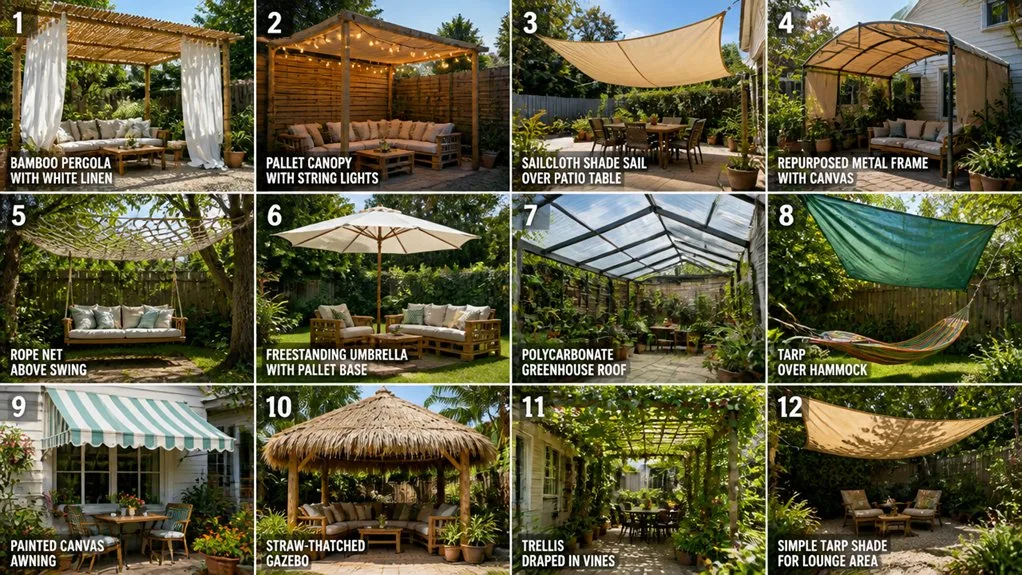
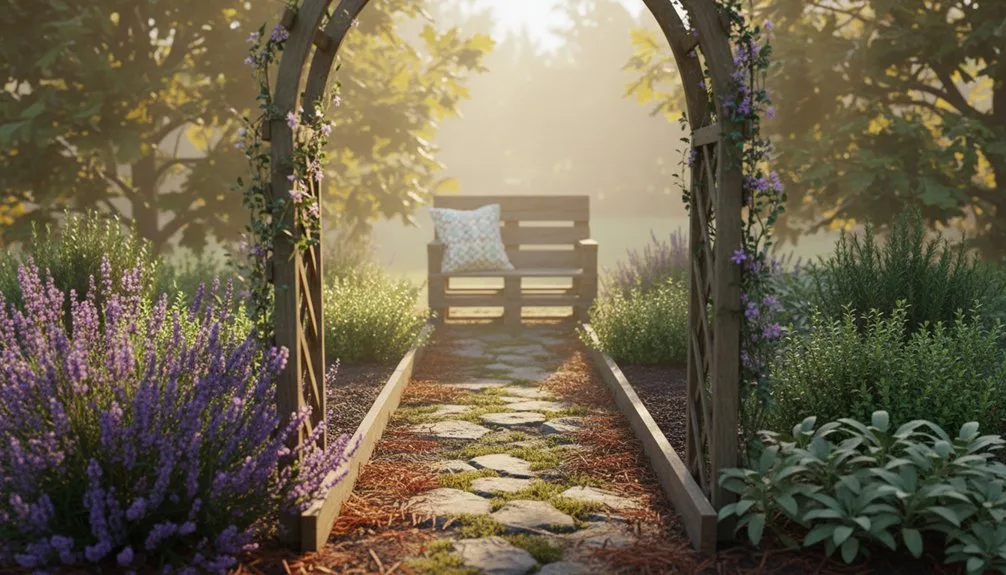
You can build a rustic garden affordably by repurposing reclaimed wood, salvaged metal, and thrift-store finds for structures and planters. Layer low-maintenance herbs like lavender and thyme with fast-growing perennials such as Black-eyed Susans to establish beds quickly. Use a five-month no-dig method with newspaper and compost to prep soil without heavy work. Plant succession crops in containers for year-round harvests. Strategic pathways, focal-point pergolas, and earth-tone benches tie your design together in one growing season, creating a productive, rustic space that’ll surprise you.
Key Takeaways
- Repurpose reclaimed wood, salvaged metal, and thrift-store finds as low-cost rustic focal points and planters.
- Choose drought-tolerant herbs like lavender and thyme plus self-seeding wildflowers requiring minimal maintenance and care.
- Build no-dig beds using layered newspaper, compost, and mulch to create fertile soil without tilling.
- Install self-watering containers and succession plantings for continuous harvests throughout spring, summer, and fall seasons.
- Create structural definition with simple pathways, rustic benches, and climbing vines on hazel-pole arches or trellises.
Start Your Rustic Garden on a Shoestring Budget
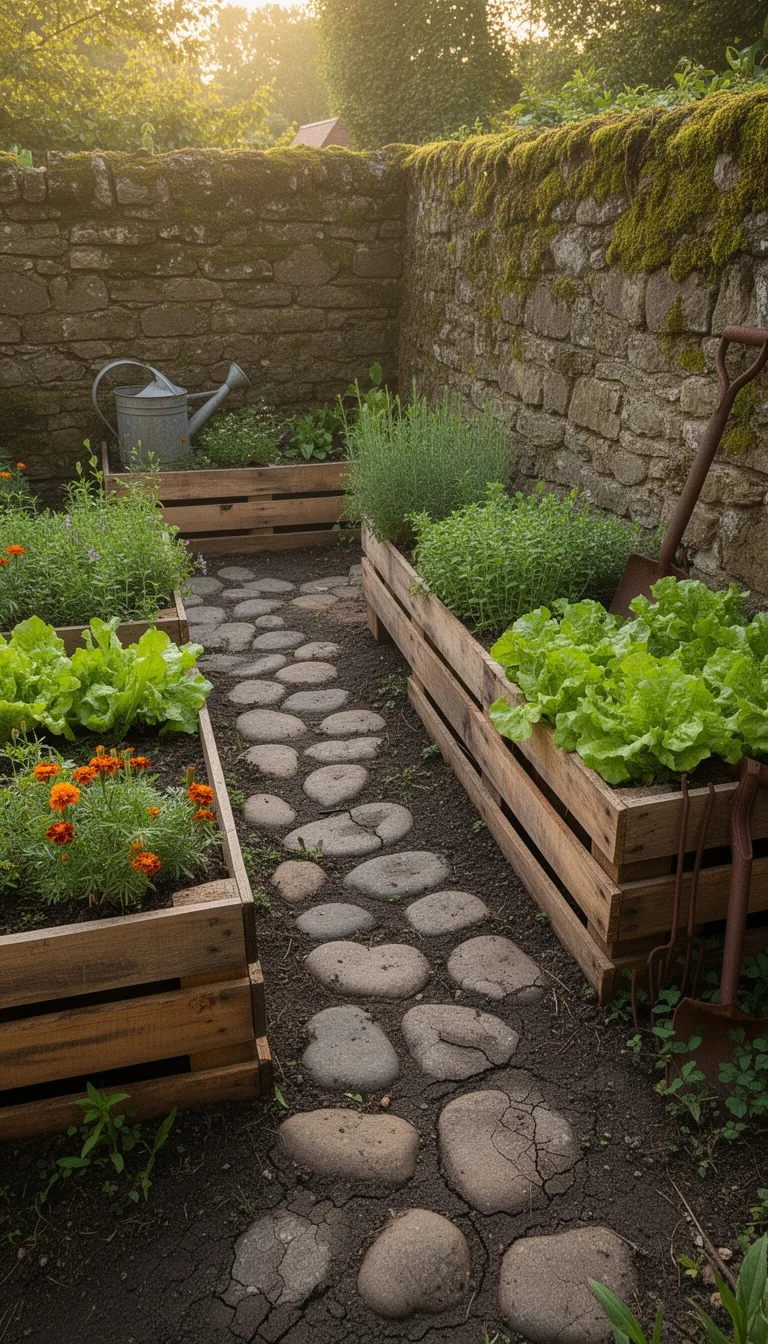
How can you furnish a rustic garden without depleting your wallet?
You’ll find affordable seating and décor at yard sales, car boot fairs, and secondhand sources.
Reclaimed materials like wooden benches, pallet tables, and tree stump stools deliver instant rustic appeal at minimal cost.
Repurpose vintage garden tools, antique lanterns, and rusty wheelbarrows as decorative focal points throughout your space.
Metal frames and old sofa seats transform into trellises for climbing plants.
Galvanized metal tubs, buckets, and watering cans function as authentic‑looking planters.
For hardscaping, replace expensive pavers with grass paths and wood chip seating areas.
Natural stone stepping stones and gravel walkways provide texture and earthy colors.
Hazel poles bent and secured create rustic arches affordably—avoid willow since it roots too easily.
Pick Low-Maintenance Plants: Herbs, Wildflowers, and Edibles
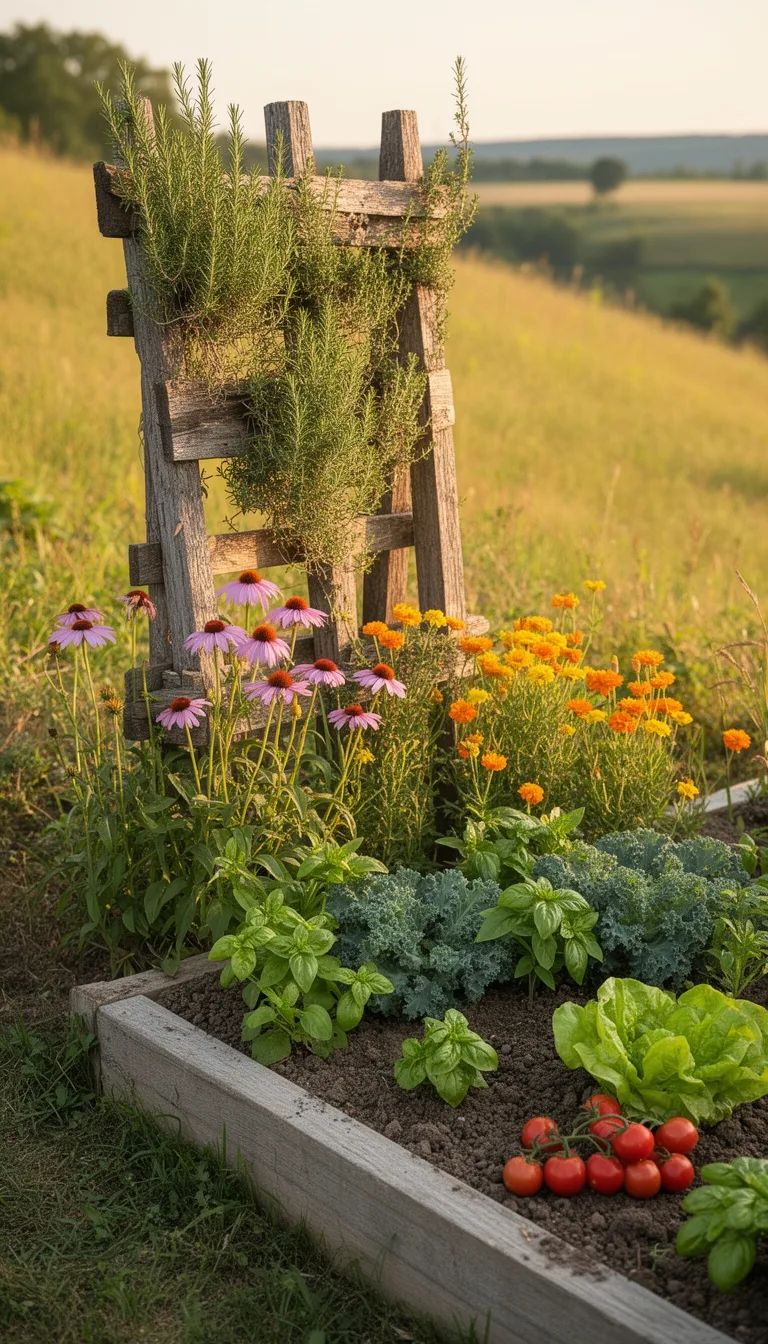
Once you’ve arranged your rustic garden’s bones with reclaimed materials and affordable hardscaping, you’ll want to fill it with plants that won’t demand constant attention or regular feeding.
Focus on three categories that thrive with neglect:
- Herbs like lavender, thyme, and sage tolerate poor soil and drought while delivering aromatic foliage and culinary value.
- Wildflowers such as yarrow and coneflower attract pollinators, spread naturally, and bloom prolifically with minimal deadheading or pruning.
- Edibles including daylilies and globe amaranth combine ornamental appeal with harvestable flowers and foliage, maximizing your garden’s productivity.
These plants establish quickly, suppress weeds through dense growth, and require only occasional seasonal maintenance.
You’ll achieve a full, textured landscape while spending minimal time on upkeep.
Source Budget-Friendly Hardscaping From Salvage and Thrift

Where can you find affordable hardscaping materials?
You’ll discover salvaged wood from railroad ties, reclaimed barn wood, and demolished buildings—perfect for raised beds, fencing, and pergolas.
Broken concrete and recycled brick from job sites work excellently for pathways, edging, and retaining walls.
Stone from farmland offers natural walkway options.
Metal scraps become sculptures, planters, and gabions for borders.
Recycled tires convert into plant containers and durable mulch.
Thrift stores yield terra cotta tiles, architectural elements, and decorative fixtures.
Crushed recycled glass provides drainage and mulch sparkle.
Galvanized steel gabions filled with salvaged materials create functional raised beds.
Contact local haulers, demolition companies, and salvage yards directly.
These sources often provide free or discounted materials, significantly reducing your hardscaping costs while adding character to your rustic garden.
Build Cheap Pathways With Grass, Gravel, and Salvaged Bricks
What’s the most budget-friendly way to define garden routes without breaking the bank?
You’ve got three solid options for creating rustic pathways on a shoestring budget:
- Grass pathways – Leverage existing yard grass by simply mowing defined routes. This costs virtually nothing and blends seamlessly with your landscape, though you’ll need periodic trimming maintenance.
- Gravel pathways – Spread pea gravel ($25-$67 per cubic yard) combined with stepping stones ($8 each) for a durable, DIY-friendly surface that resists breakdown and suppresses weeds.
- Salvaged brick pathways – Source reclaimed bricks to reduce costs while creating customizable patterns. Though installation demands proper technique and takes a weekend, the rustic aesthetic justifies the effort.
Define your path shape first, then edge with affordable plastic edging hidden by plantings.
These approaches deliver functional, attractive garden routes economically.
Prep Soil and Borders Without Digging: Five-Month No-Dig Method
The no-dig method transforms compacted or poor soil into rich growing medium without backbreaking labor—you’re essentially building layers that decompose and settle into productive topsoil over five months.
You’ll lay moist newspaper sheets (10-15 thick, overlapped 10 cm) as a weed barrier, then add a 10-15 cm compost layer using local recycled materials like homemade compost or aged manure.
Top it with 15 cm seed-free mulch.
Water thoroughly throughout.
The layers compress to half their original height by season’s end as soil organisms activate, breaking down materials and creating structure.
Roots penetrate directly into this newly formed topsoil, accessing hydration and minerals without disturbance.
Future years require only minimal 3-5 inch compost additions.
Plant Edibles, Herbs, and Flowers in Integrated Beds
Once you’ve built your raised beds with the no-dig method, you can skip the ornamental-only approach and integrate edibles directly into your design. This strategy maximizes your space while maintaining visual appeal.
- Layer textures and colors: Pair feathery dill with broad Swiss chard leaves, adding nasturtiums for peppery pops. Purple kale and borage flowers create striking contrasts against softer border plants.
- Incorporate productive shrubs: Plant blueberries for spring blooms and fall foliage, or rugosa roses for aromatic petals and edible rosehips. These anchor beds while delivering harvests.
- Match growing conditions: Align light, water, and soil requirements between edibles and ornamentals. Stagger seasons using herbs like Tuscan Blue Rosemary alongside strawberries for continuous productivity.
This integrated approach fills gaps while eliminating the ornamental-only limitation.
Grow Upward: Trellises, Wall Planters, and Container Stacks
By maximizing vertical space, you’ll expand your garden’s productive capacity without consuming precious ground area. Trellises transform sprawling vines into organized columns that improve air circulation and reduce disease pressure. You can build affordable systems using cattle panels, wooden frames, or electrical conduit—most assemblies take under an hour.
| System Type | Cost & Durability |
|---|---|
| Nylon mesh trellis | Under $4; single season |
| Heavy-duty vinyl mesh | $15–30; multiple seasons |
| Cattle panels | $20–40; highly durable |
| Wooden frame | $30–50; weather-dependent |
Support tomatoes, peas, beans, and cucumbers vertically. Install T-posts into soil or secure frames to raised beds with galvanized screws. Position trellises on garden’s northern edge to prevent shade obstruction. Relocate structures easily by removing mounting fasteners—you’ll accomplish repositioning with minimal effort and maximum flexibility.
Repurpose Thrifted Finds Into Structures and Garden Features
Why spend money on new garden structures when thrift stores, salvage yards, and your own shed overflow with materials that’ll work beautifully?
You’ll find versatile components everywhere.
Consider these practical repurposing options:
- Vertical supports: Old bed frames, metal headboards, and screen doors function as trellises for climbing plants. Stack them strategically to maximize growing space.
- Garden edging: Reclaimed bricks, corrugated iron strips, and wine bottles half-buried create defined borders with weathered character while containing soil effectively.
- Pathways: Broken concrete, crushed rubble, and salvaged pavers form functional walkways that develop authentic patina over seasons.
You’ll also repurpose mattress springs as trellis structures and attach pallets to walls for vertical gardens.
Washing machine drums, old wheelbarrows, and metal cages support vining plants efficiently. These materials require minimal modification while delivering substantial visual impact and functionality to your rustic garden design.
Design Focal Points: Fountains, Pergolas, and Seating Areas
Now that you’ve established structure and pathways with repurposed materials, you’ll want to create stopping points that draw the eye and invite lingering.
A simple fountain or small pond positioned near trees creates a multisensory focal point, reflecting light while providing soothing sound.
Wooden pergolas frame views and define zones, especially when paired with seating.
Earth-tone tiled benches placed strategically along pathways anchor gathering spots and integrate naturally with your rustic palette.
Position these elements to align with sight lines—pergola ends leading toward water features or seating overlooking distant garden areas.
Stack containers or boulders beside benches to amplify their presence.
Layer plantings around these focal points; strategic veiling creates discovery moments and strengthens their visual impact throughout your garden.
Grow Year-Round Harvests in Containers and Succession Beds
Container gardening lets you extend your harvest season far beyond what traditional in‑ground beds allow, transforming limited spaces into productive growing zones that work with your rustic garden’s aesthetic.
You’ll maximize yields by implementing these strategies:
- Self-watering containers with wicking systems maintain consistent soil moisture, reducing daily maintenance during peak growing periods when you’d otherwise water twice daily.
- Succession planting in multiple containers staggers your harvests—plant cool-season crops earlier with protective coverings, then transition to warm-weather vegetables like tomatoes and peppers.
- Seasonal soil refreshment each spring with high-quality potting mix and top dressing ensures nutrient availability throughout the growing cycle.
Use the finger test for accurate watering needs, apply diluted liquid fertilizer biweekly, and harvest during cool morning hours.
This approach yields fresh vegetables continuously.
Complete Your Rustic Garden in One Growing Season
Building on your container success, you can establish a complete rustic garden within a single growing season by strategically selecting fast-maturing vegetables, quick-blooming perennials, and climbing structures that work on accelerated timelines.
Plant tomatoes, peppers, and eggplant mid-May for fall production.
Summer squash yields two crops from one planting.
Quick-blooming perennials like Black-eyed Susan ‘Mega Millions’ and Bee Balm ‘Pardon My Rose’ deliver immediate color across zones 3-9.
Layer vines—clematis, honeysuckle, or wisteria—around doorways for vertical structure by season’s end.
Succession plant radishes and beets every two weeks for continuous harvests.
Use annual fillers like Sweet Alyssum ‘Snow Princess’ for rapid ground coverage.
Time fall plantings around early October to transition from warm crops to cool-season greens.
This coordinated approach creates a fully established rustic garden in months.
Conclusion
You’ve built your rustic garden using salvaged materials, low-maintenance plants, and smart soil prep techniques. By following this no-dig method and succession planting, you’re harvesting edibles within months. Your pathways meander through wildflowers, container gardens flourish on patios, and focal points anchor the space. You’re not scrolling through catalogs anymore—you’re outside, tending soil, watching growth happen. You’ve created authentic, budget-conscious beauty that’ll sustain year after year.
The Only Tools You Need for a Thriving Garden 🌱
Whether you're a weekend gardener or growing daily — these hand-picked tools make every session faster, easier, and more satisfying.