
You can build stunning fountains on a budget using stacked terracotta pots, repurposed birdbaths, or arranged stones over a submersible pump—no plumbing skills needed. Stack graduated pots upside-down, thread tubing through center holes, and install a pump in the base reservoir. Ceramic bowls and solar-powered setups work equally well for small spaces. Source affordable materials from thrift stores, salvage yards, and home improvement centers. Selecting the right pump wattage for your fountain’s height ensures proper flow without wasting energy. Discover which budget-friendly designs work best for your specific backyard setup.
Key Takeaways
- Stack terracotta pots upside-down in graduated sizes with a submersible pump for an affordable tiered fountain design.
- Source affordable materials from thrift stores, salvage yards, and home improvement stores to minimize fountain construction costs.
- Repurpose household items like birdbaths or ceramic bowls with basic tubing and pumps for budget-friendly fountains.
- Select pump size based on basin volume and desired water cycle frequency to ensure proper performance.
- Perform monthly filter cleaning, seasonal water replacement, and winterization to maintain fountain longevity and appearance.
Tiered Pot Fountain: Stack and Cascade
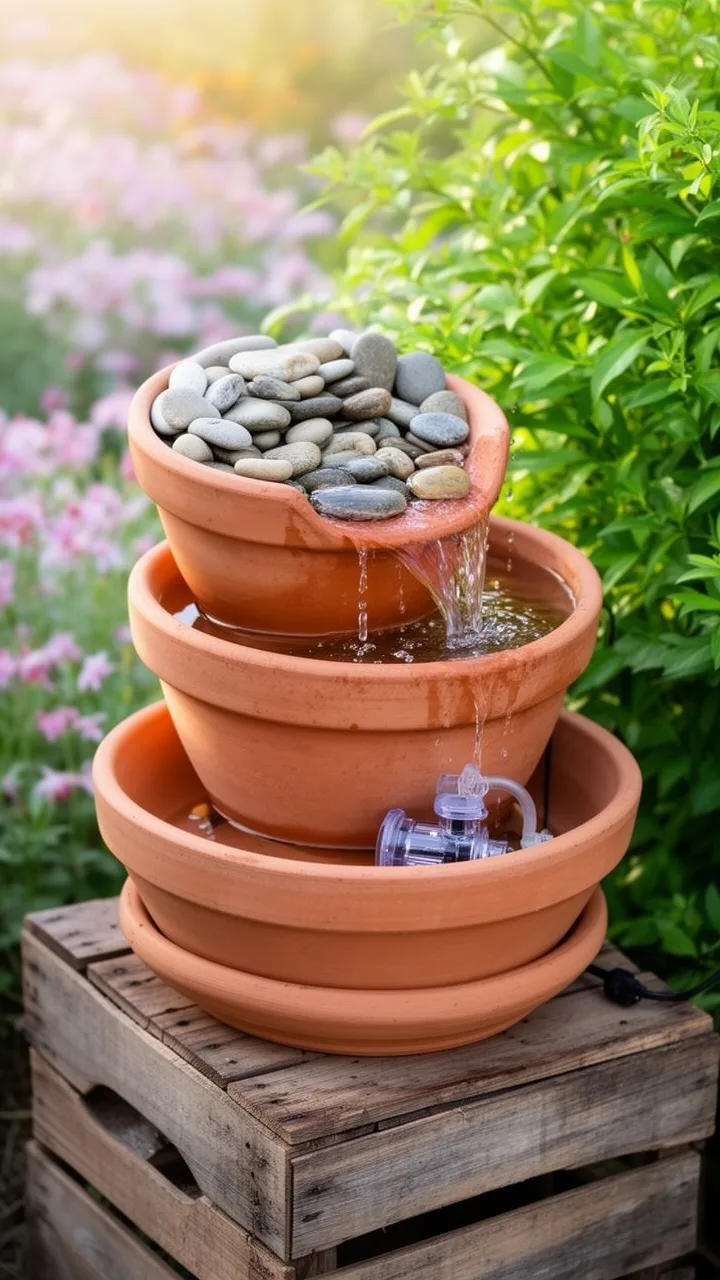
Once you’ve gathered terracotta pots in graduated sizes, you’ll stack them upside-down to create your fountain’s base structure. Drill a hole through the center of each pot, then thread a tube through them. Secure the smallest pot on top with waterproof adhesive. Install a submersible pump in the largest bottom pot, positioning the tube so water cascades from the uppermost tier downward. Fill the bottom reservoir with water, turn on the pump, and adjust the flow rate. The water recirculates continuously, creating an elegant cascading effect. This design works wonderfully in garden beds or patios, and you’ll appreciate its simple construction and timeless appeal.
Solar-Powered Fountain: No Electricity Required
If you’d prefer a fountain that operates without plugging into an electrical outlet, a solar-powered design eliminates the need for power cords and reduces your energy costs. You’ll need a small solar panel, a battery, and a water pump. Position the panel where it receives direct sunlight for optimal charging. The battery stores energy for nighttime operation. Assemble these components using weatherproof connectors and tubing. You can hide the mechanics beneath rocks or plants while the water flows visibly. This setup requires minimal maintenance and provides year-round fountain enjoyment without monthly electricity expenses.
Ceramic Bowl Fountain: Quick Setup for Any Space
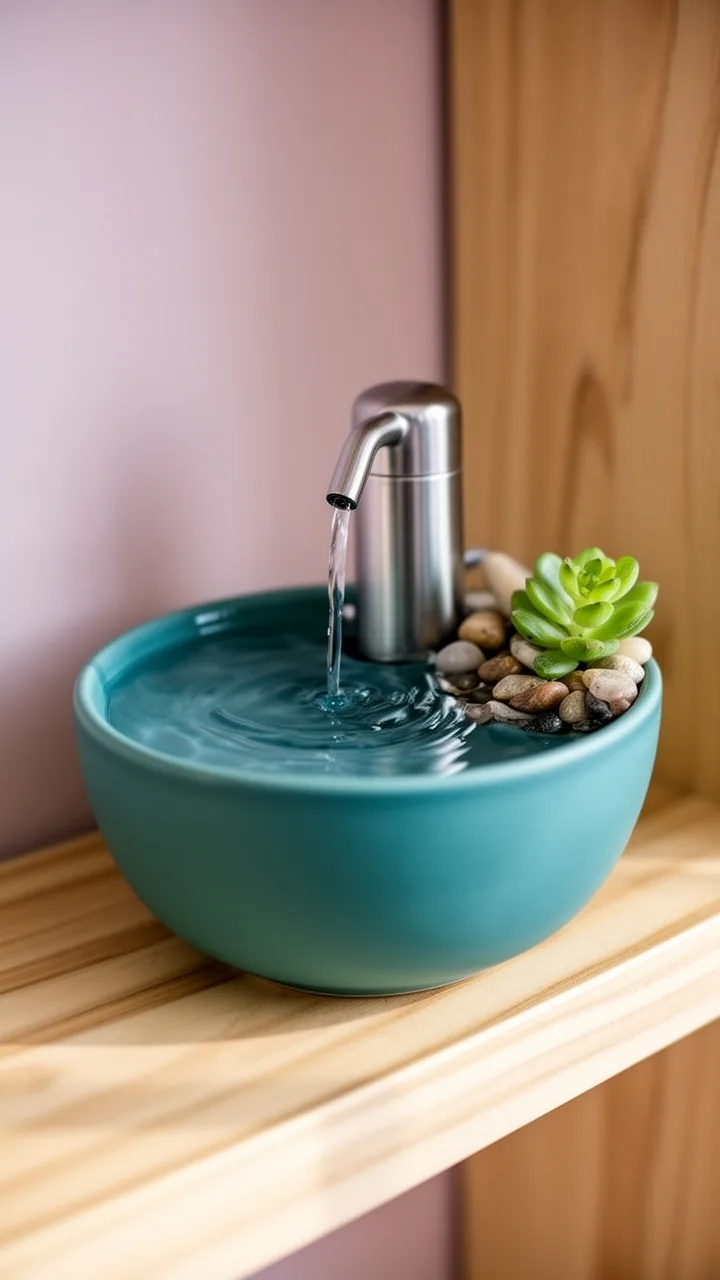
Because you’re looking for an elegant yet straightforward fountain option, a ceramic bowl design delivers both aesthetics and simplicity without requiring extensive installation work. You’ll need a ceramic bowl, a submersible pump, and tubing. Position your pump at the bowl’s bottom, attach tubing to direct water upward, then fill with water. The recirculating system keeps your fountain running continuously. You can nestle decorative stones or plants around the base for visual interest. This setup works on patios, porches, or indoors near windows. Maintenance involves occasional water refilling and pump cleaning to prevent mineral buildup.
Repurposed Birdbath Fountain: Give Old Decor New Life
That old birdbath gathering dust in your garage or shed can become a stunning water feature without breaking the bank. You’ll need a submersible pump, vinyl tubing, and a basin to catch water overflow. Simply place the pump inside the birdbath bowl, attach tubing to direct water upward, and position it in your desired location. Add decorative rocks or plants around the base for visual interest. Connect the pump to an outdoor outlet, fill with water, and adjust flow settings. This transformation takes under an hour and costs roughly thirty to fifty dollars, making it an affordable garden upgrade.
Stone Stacked Fountain: Natural Elegance on a Budget
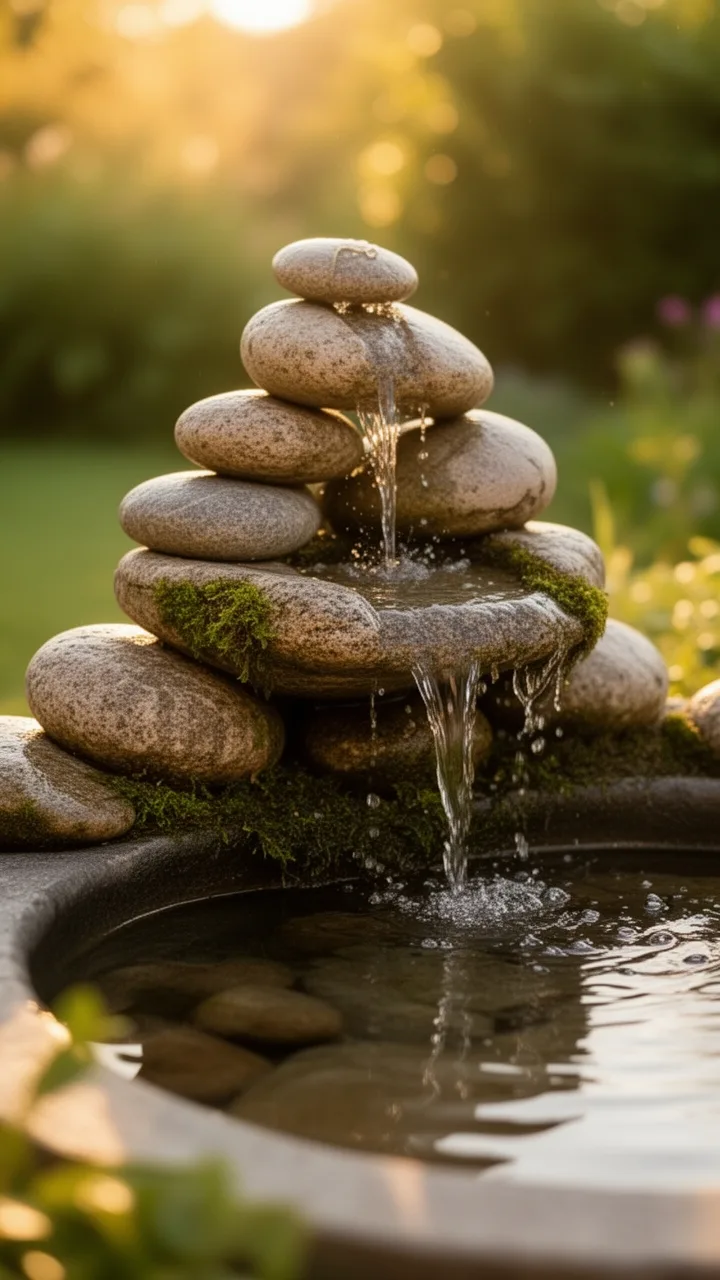
While repurposing existing pieces works wonderfully, you can also build a fountain from scratch using materials you’ll find at any landscape supply store. Stack flat stones in graduated sizes, securing each layer with construction adhesive. Drill a small hole through the center stones for your pump’s tubing. Place your pump in the basin, thread the tube upward, and cap it at the top stone. Water cascades down each tier naturally. This approach costs under fifty dollars and creates stunning visual texture. The stacked design complements any garden style while remaining completely customizable to your space and stone preferences.
Bubble Water Fountain: Simple and Compact
If you’re looking for minimal assembly and maximum impact, a bubble fountain delivers both. You’ll create a stunning focal point without extensive labor or expense.
Here’s what you need:
- A basin or container holding your water supply
- A submersible pump with adjustable flow rate
- Smooth stones or river rocks stacked atop the pump
Stack your rocks directly over the pump outlet, allowing water to cascade naturally down each level. The pump recirculates water continuously through the basin. You can customize height and stone arrangement to match your space. This design requires no plumbing knowledge, fits anywhere, and operates quietly for months.
Bamboo Water Feature: Zen Garden Aesthetic
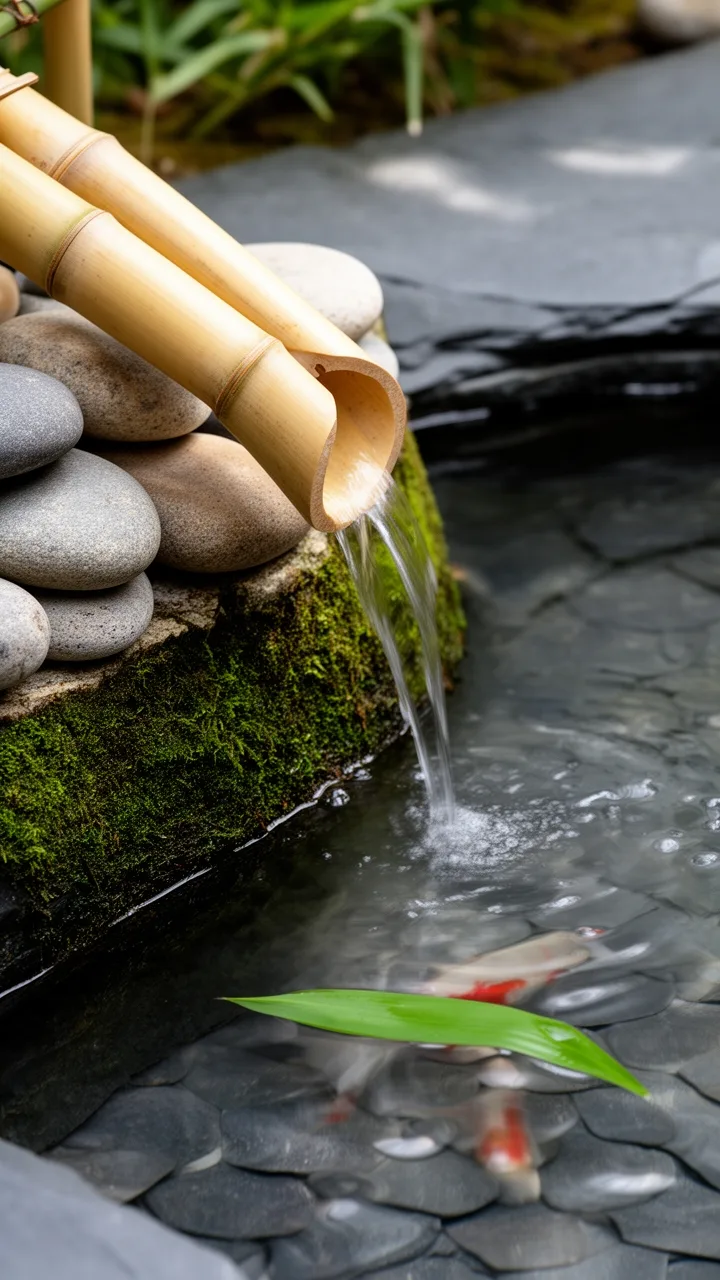
You’ll find that bamboo fountains bring authentic Japanese garden elegance to your outdoor space with surprisingly straightforward construction. Split bamboo segments create natural water channels that guide water downward in cascading tiers. You’ll need bamboo stalks, a submersible pump, and a basin. Arrange bamboo pieces at angles, securing them with bamboo ties or wire. Position the pump intake in your basin, running tubing up through the top segment. Water flows through each section, creating soothing sounds and movement. This design works perfectly in corner gardens or near seating areas, requiring minimal maintenance while delivering maximum aesthetic impact and tranquility.
DIY Rock Garden Fountain: Water Meets Stone
Rock and stone create dramatic focal points in garden fountains, offering durability and natural beauty that complement any landscape design. You’ll find this project surprisingly manageable.
Start by selecting your stones:
- Choose larger base rocks for stability and structure
- Stack medium stones to direct water flow artfully
- Use smaller pebbles to fill gaps and enhance aesthetics
Position your pump at the basin’s bottom, then arrange rocks around it strategically. You’ll route tubing behind stones to hide it completely. Water cascades naturally over each layer, creating soothing sounds. This approach requires minimal maintenance since stone resists weathering beautifully. Your finished fountain becomes an elegant, functional centerpiece requiring only occasional cleaning and water level checks.
Watering Can Fountain: Whimsical and Functional
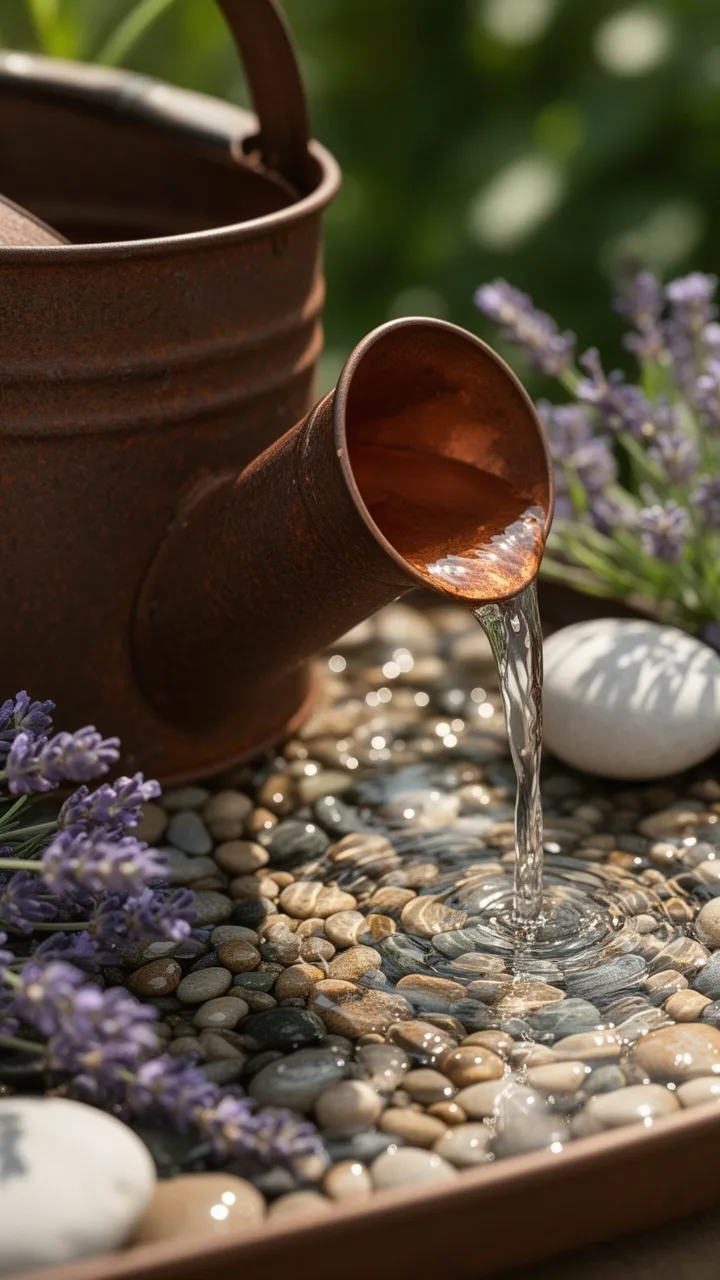
Because watering cans blend practicality with charm, they’re ideal for creating fountains that don’t demand extensive DIY experience. You’ll transform a gallon or two-gallon can into a cascading water feature by drilling holes in the spout and bottom, then positioning it above a basin. The gentle water flow recirculates via a submersible pump, creating soothing ambiance while maintaining functionality for your garden.
| Component | Purpose | Cost |
|---|---|---|
| Watering can | Water vessel | $10-20 |
| Submersible pump | Water circulation | $15-30 |
| Basin | Catch reservoir | $20-40 |
| Tubing | Water delivery | $5-10 |
| Sealant | Leak prevention | $8-12 |
Barrel Fountain: Large-Scale Impact for Small Budgets
For those seeking a more dramatic water feature, barrel fountains deliver impressive visual impact without breaking the bank. You’ll transform a standard wooden or plastic barrel into a stunning centerpiece using these steps:
- Drill a hole through the barrel’s base and insert a submersible pump with tubing.
- Stack smaller pots or vessels on top, allowing water to cascade downward between levels.
- Fill the barrel with water and adjust pump settings for your desired flow rate.
Position your barrel fountain where you can easily refill it. The layered design creates movement and sound that captivates any garden space affordably.
Succulent Fountain: Water and Drought-Resistant Plants
If you’re looking to combine water features with minimal maintenance, a succulent fountain offers the perfect solution. You’ll build a tiered planter system using stacked terracotta pots or a shallow basin. Install a small submersible pump at the base, then arrange drought-resistant succulents around the water feature’s edges. The combination creates visual interest while reducing watering demands—succulent roots thrive on infrequent moisture. Position your fountain in a sunny spot and refill the water basin weekly. This design works beautifully on patios or balconies, requiring only occasional pruning and minimal upkeep throughout the year.
Match Pump Wattage to Your Fountain Height and Volume
Selecting the right pump makes or breaks your fountain’s performance. You’ll need to match wattage to your specific setup:
- Calculate total height – Measure from the water source to your highest spillway point, then add 1-2 feet for pressure loss.
- Determine flow rate – Multiply your basin’s volume by how often you’d like water to cycle hourly; most decorative fountains need 100-500 gallons per hour.
- Select appropriate wattage – Smaller tabletop fountains typically need 40-80 watts, while medium outdoor fountains require 200-500 watts.
Undersized pumps struggle to reach heights; oversized ones waste energy and create excessive splashing.
Find Cheap Fountain Materials Near You
Once you’ve settled on your pump specifications, you’ll want to hunt down affordable materials before construction begins. Check local thrift stores, salvage yards, and online marketplaces for basins, bowls, and decorative containers. Home improvement stores offer budget-friendly options like terracotta pots, stone pavers, and gravel. Don’t overlook river rocks from landscaping suppliers or reclaimed wood from construction sites. Plumbing sections stock affordable tubing and fittings. Visit garage sales for vintage vessels that add character. Compare prices across retailers before purchasing. Collect materials gradually to spread costs. Repurposing household items—old birdbaths, ceramic pots, or metal buckets—further reduces expenses while creating unique fountains.
Year-Round Fountain Maintenance: Keep It Running
Keeping your fountain running smoothly requires consistent attention to several key components throughout the year. You’ll want to establish a maintenance routine that addresses:
- Water quality—check pH levels weekly, clean filters monthly, and replace water seasonally to prevent algae buildup and bacterial growth
- Pump functionality—inspect intake screens for debris, listen for unusual noises, and winterize the pump in cold climates
- Structural integrity—examine seals and caulking for cracks, remove fallen leaves promptly, and drain your fountain before freezing temperatures arrive
Regular maintenance prevents costly repairs and keeps your fountain operating efficiently year-round.
How Recirculating Pumps Work: The Brain of Your Fountain
At the heart of every fountain sits a recirculating pump—the component that transforms static water into flowing movement. You’ll find that this pump draws water from your basin, pushes it through your fountain’s delivery system, and returns it back down for recirculation. The pump’s power determines your water’s flow rate and height. You’ll need to match the pump’s capacity to your fountain’s size—too weak and you’ll get disappointing dribbles; too strong and you’ll waste water through splashing. Most DIY fountains use submersible pumps, which you’ll submerge directly in the basin for quiet, efficient operation.
Conclusion
You’ve got everything you need to build a stunning fountain without breaking the bank. Think of your fountain like a garden that starts small—one person planted a single seed in a recycled pot, added a basic pump, and within weeks had neighbors asking for their own DIY version. Start simple, watch your skills grow, and soon you’ll be stacking stones and cascading water like a pro. Your budget backyard oasis is just one pump away.
The Only Tools You Need for a Thriving Garden 🌱
Whether you're a weekend gardener or growing daily — these hand-picked tools make every session faster, easier, and more satisfying.