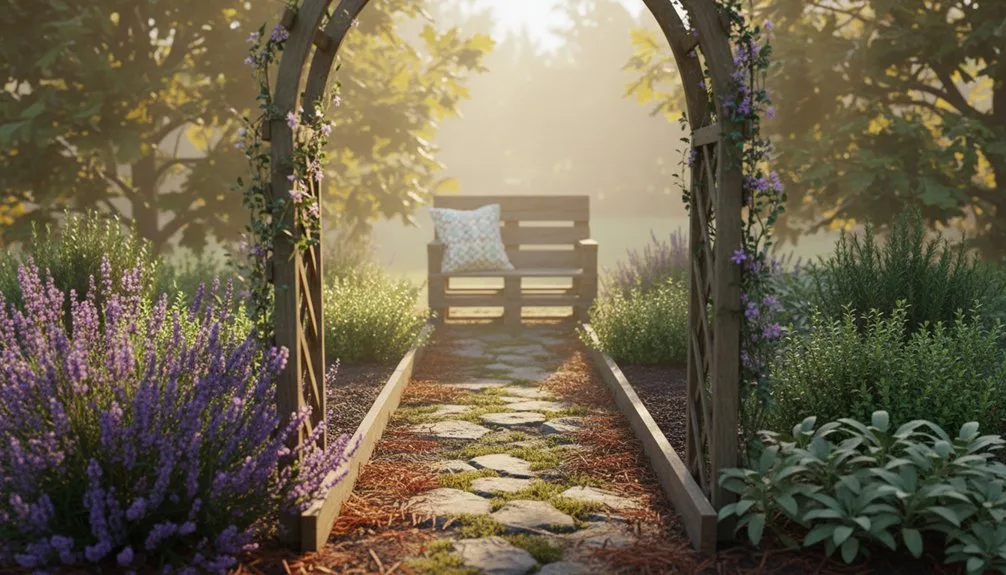
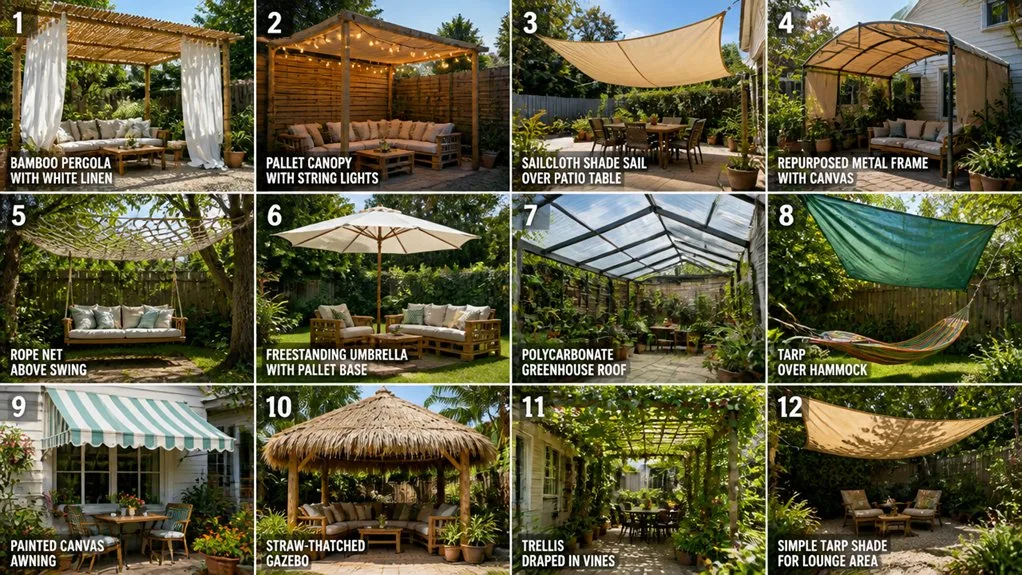
You can shield your garden affordably using umbrellas, pop-up canopies, and fabric coverings secured between posts or trees. Upcycle pallets, tarps, and reclaimed wood into vertical screens and simple pergolas. Hang shade cloth over patios in various densities to filter UV rays protecting seedlings. Layer fast-growing vines like clematis on trellises for natural cooling. Adjust seasonal coverage with retractable fabric for changing sun angles. Combine methods strategically—umbrellas for spots, permanent structures for focal points—creating microclimates where sun-sensitive plants flourish. Each technique builds on the last.
Key Takeaways
- Patio umbrellas and pop-up canopies provide instant, portable shade without installation, perfect for renters and seasonal adjustments.
- Hang weather-resistant fabric between trees or posts using rope and carabiners for affordable, adjustable shade cloth coverage.
- Stack pallets vertically or secure tarps between posts to create upcycled shade structures from repurposed materials.
- Plant fast-growing vines like clematis or ivy on pergolas to develop natural shade while filtering sunlight effectively.
- Inspect fabric anchors regularly, clean debris from surfaces, and remove panels during harsh weather for proper maintenance.
Instant Shade: Deploy Umbrellas and Pre-Made Canopies

When you’re racing against the sun’s intensity, umbrellas and pre-made canopies offer the quickest relief for your outdoor plants and seating areas. You’ll find patio umbrellas in various sizes, perfect for shielding tender seedlings and potted plants from harsh UV rays. Pre-made pop-up canopies provide larger coverage without installation hassles. Position them strategically to filter afternoon sun while allowing morning light. These solutions work well temporarily during heat waves or while you’re establishing permanent shade structures. They’re portable, adjustable, and require minimal effort, making them ideal for renters or those testing shade placement before committing to permanent installations.
Hang Fabric Canopies on a Budget
Because you’re looking for a more permanent shade solution without breaking the bank, fabric canopies offer an economical alternative to rigid structures. You’ll need basic materials: sturdy rope, carabiners, and weather-resistant fabric like canvas or shade cloth. Anchor the fabric between trees, fence posts, or ground stakes using tension lines. This method protects your plants from harsh midday sun while allowing filtered light to reach them. You can easily adjust the fabric seasonally or reposition it as your garden evolves. Choose neutral colors that won’t fade quickly, and inspect anchors regularly for wear and stability.
Upcycle Tarps, Pallets, and Reclaimed Wood
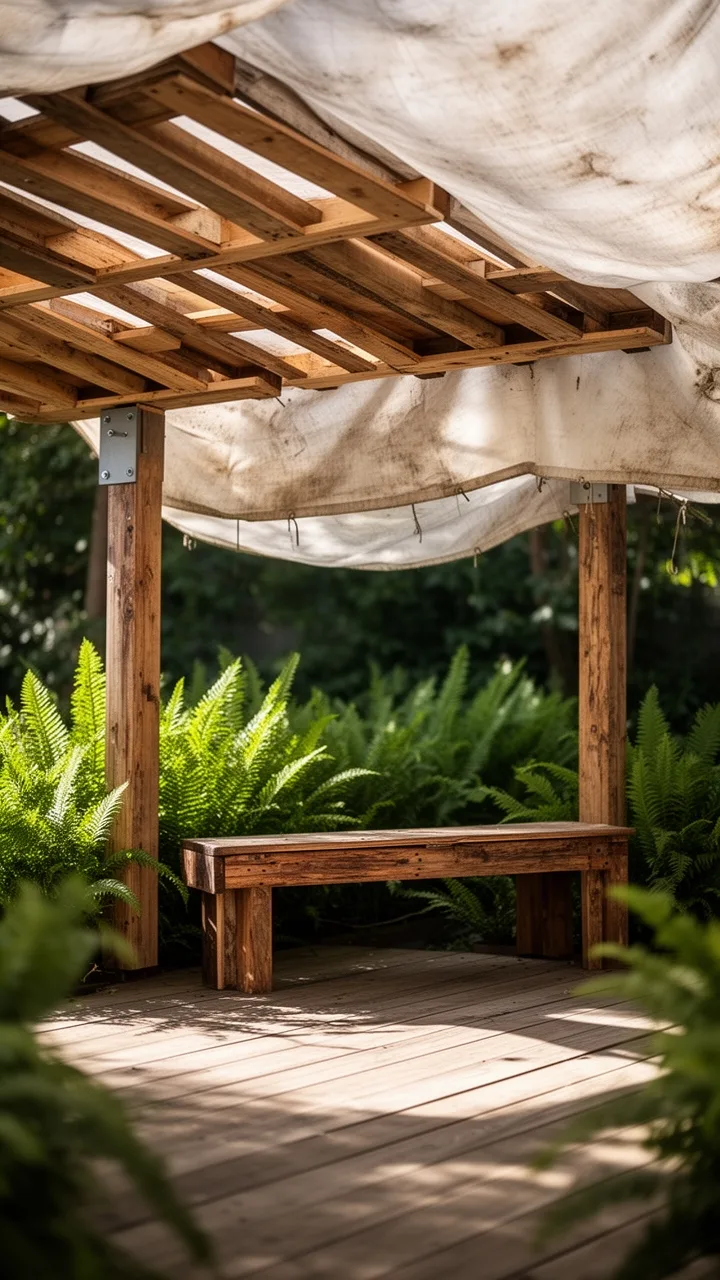
If you’ve got old tarps, wooden pallets, or reclaimed lumber lying around, you’re sitting on affordable shade-building materials that’ll serve your garden well. Stack pallets to create vertical screens that block harsh afternoon sun while letting plants breathe. Secure tarps between sturdy posts for adjustable coverage—roll them up on cooler days. Reclaimed wood builds lasting pergolas and arbors that support climbing vines like clematis or beans. These structures actually improve microclimates around sensitive plants. You’ll spend minimal money while repurposing materials destined for landfills. Your shade garden gets custom protection, and your plants thrive in dappled light conditions.
Hang Shade Cloth Over Patios and Decks
Shade cloth offers you a straightforward, cost-effective solution for tempering intense sun over patios and decks where you’re growing container plants or establishing a nursery area. You’ll find various densities available, each blocking different light percentages. Installation requires minimal tools—just hooks, cables, or a simple frame. Drape the fabric securely to prevent sagging and wind damage. You can adjust it seasonally based on your plants’ light requirements. This method works exceptionally well for shade-loving species like hostas, ferns, and begonias.
| Shade Density | Light Blocked | Best For | Installation | Cost |
|---|---|---|---|---|
| 30% | Low | Seedlings | Basic hooks | $15-25 |
| 50% | Moderate | Ferns, hostas | Cable system | $25-40 |
| 70% | Heavy | Delicate herbs | Frame mount | $35-60 |
| 90% | Maximum | Extreme heat | Permanent posts | $50-80 |
| Adjustable | Variable | Mixed gardens | Pulley system | $40-70 |
Build a Basic Wooden Pergola Frame

A wooden pergola provides a semi-permanent structure that filters sunlight while creating an attractive garden focal point. You’ll need four posts, crossbeams, and lattice strips for your basic frame. Start by setting posts in concrete footings, spacing them about eight feet apart. Attach horizontal beams between posts, then add perpendicular slats overhead for dappled shade. This configuration allows climbing vines like clematis, jasmine, or grapevines to flourish, enhancing both shade and aesthetics. You can complete a simple pergola in a weekend using standard lumber. The open design prevents wind damage while supporting vigorous plant growth for natural cooling.
Install Shade Sails: Coverage Without Complications
When you’re after quick, flexible shade that doesn’t require permanent installation, shade sails deliver efficiency that wooden structures can’t match. You’ll anchor them between posts, trees, or walls using heavy-duty hardware and high-tension cables. Choose UV-resistant fabric in neutral tones that won’t overwhelm delicate plantings beneath. Position sails to cast afternoon shadows where your vegetables or shade-loving perennials need protection most. The angled design promotes airflow, preventing heat buildup that stresses plants. Installation takes hours, not days, and you’ll adjust coverage seasonally without structural modifications.
Add Bamboo Screens for Privacy and Cooling
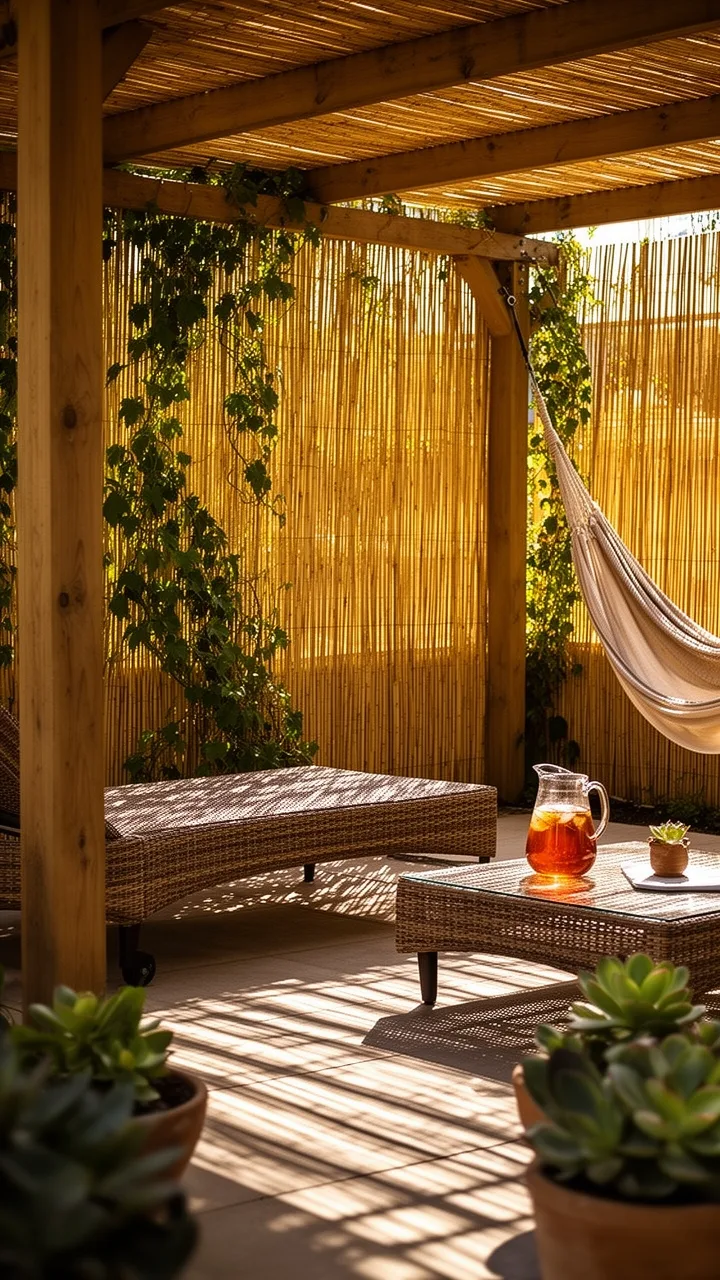
Because bamboo grows densely and reaches considerable heights quickly, it’ll create effective barriers that reduce wind exposure and lower surrounding temperatures through evaporative cooling. You can install bamboo screens along fence lines or create freestanding panels using bamboo stalks lashed together with twine. Position them strategically to filter harsh afternoon sun while maintaining airflow. Bamboo’s natural aesthetic complements most outdoor spaces. For maximum privacy and cooling efficiency, overlap panels slightly and space them six to twelve inches from walls. Maintain screens by occasionally rinsing away dust and inspecting ties for wear. Replace damaged stalks promptly to preserve structural integrity.
Plant Trees and Shrubs: Long-Term Shade Solutions
While bamboo screens provide immediate relief, trees and shrubs offer the most effective long-term shade strategy for your outdoor space. You’ll want to select fast-growing varieties like crepe myrtles, dogwoods, or butterfly bushes that mature within five to seven years. Plant them strategically on your property’s western and southern sides to block afternoon sun. Space trees fifteen to twenty feet apart, allowing room for canopy expansion. Shrubs work well along fence lines and patio edges, creating layered shade. Though requiring initial patience and minimal maintenance, this approach delivers lasting cooling benefits, reduces energy costs, and increases property value substantially.
Grow Fast Vines on Trellises and Pergolas
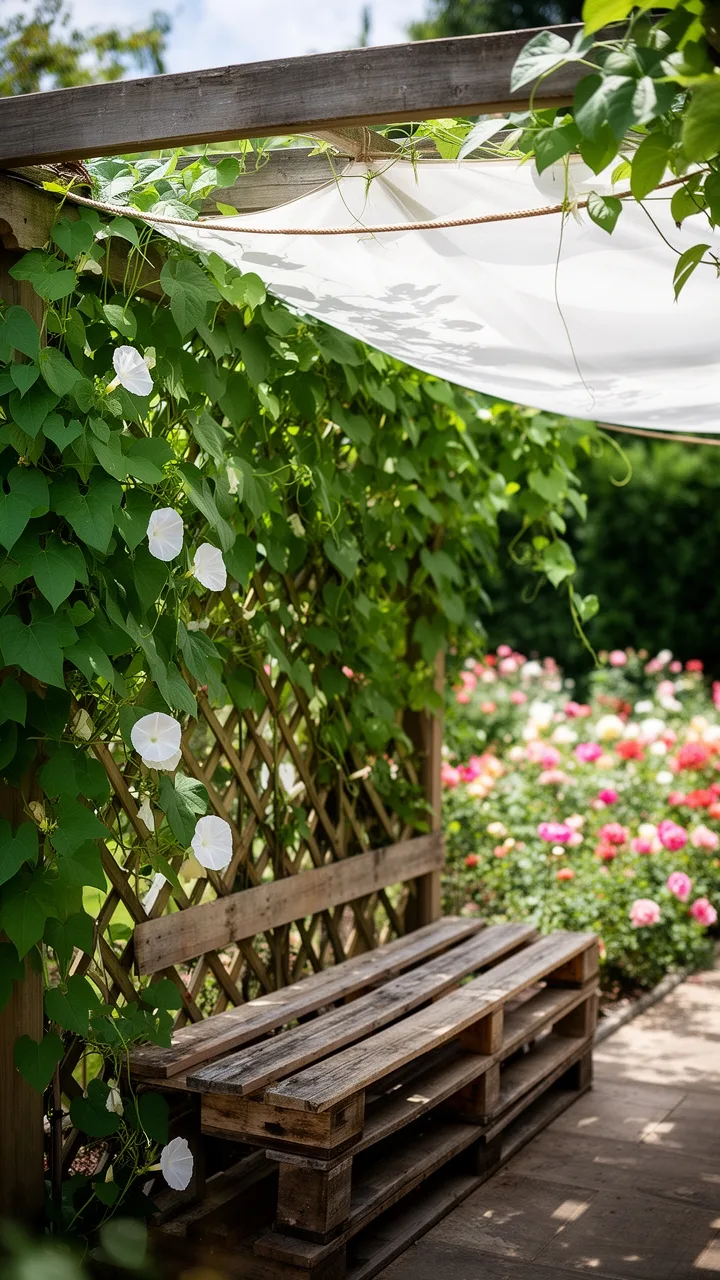
For quicker shade coverage than trees alone, fast-growing vines offer an excellent complement to your landscaping strategy. You’ll want to choose vigorous varieties like clematis, honeysuckle, or climbing hydrangea. Install sturdy trellises or pergolas first—they’ll support mature vine weight. Plant vines near structures’ bases where they’ll access soil moisture easily. Water consistently during establishment, roughly the first year. As vines climb, gently guide stems along supports. Prune annually to control growth and maintain shape. You’ll achieve substantial shade within two to three seasons, creating cool, leafy retreats without major expense or structural modifications.
Create Retractable Shade With Simple Mechanics
While vines deliver permanent leafy coverage, you’ll sometimes need shade you can adjust based on weather, time of day, or seasonal changes. Consider installing a simple manual retractable shade system using basic hardware and fabric. Attach a sturdy rod to your pergola or posts, then secure waterproof canvas or shade cloth using pulleys and rope. You’ll control the fabric’s extension and retraction easily by hand. For motorized options, add affordable solar-powered motors that operate at the flip of a switch. These systems require minimal carpentry skills and provide flexible protection without permanent installation headaches.
Combine Multiple Methods for Maximum Coverage
You’ll achieve superior shade coverage by layering vines, retractable fabrics, and structural elements together. This multi-method approach maximizes protection while maintaining flexibility.
| Method | Benefits |
|---|---|
| Climbing vines | Natural cooling, permanent structure |
| Retractable awnings | Adjustable coverage, seasonal control |
| Shade cloth | Durable filtering, easy installation |
| Pergolas with plants | Durable framework, aesthetic appeal |
Combine fast-growing clematis or ivy on pergolas with retractable fabric for seasonal adjustments. Add shade cloth during peak summer months. This hybrid system adapts to changing sun angles throughout the year while reducing heat reflection. You’ll create comfortable outdoor spaces without expensive permanent installations.
Winterize and Maintain Your DIY Shade Structures
Protecting your layered shade system through the off-season keeps your investment performing well for years. Before winter arrives, inspect all components for damage and clean debris from fabric surfaces. Trim back climbing vines and plants to prevent excessive weight on structures. If you’re using fabric panels, consider removing them during harsh weather to extend their lifespan. Check fasteners and supports for rust or deterioration, replacing them as needed. For permanent installations, apply protective sealant to wood elements. In spring, reassess your plants’ growth patterns and adjust shade density accordingly to maintain optimal coverage for your garden’s needs.
Conclusion
You’ve now explored numerous approaches to enhance your outdoor sanctuary’s comfort. By layering these methods—combining fabric solutions with botanical companions and structural elements—you’ll cultivate a naturally pleasant retreat. Remember that your green investments flourish best with seasonal adjustments and consistent care. Start with whichever strategy resonates most, then progressively expand your shaded oasis. Your outdoor space transforms into a flourishing haven when you thoughtfully blend these accessible techniques together.
The Only Tools You Need for a Thriving Garden 🌱
Whether you're a weekend gardener or growing daily — these hand-picked tools make every session faster, easier, and more satisfying.