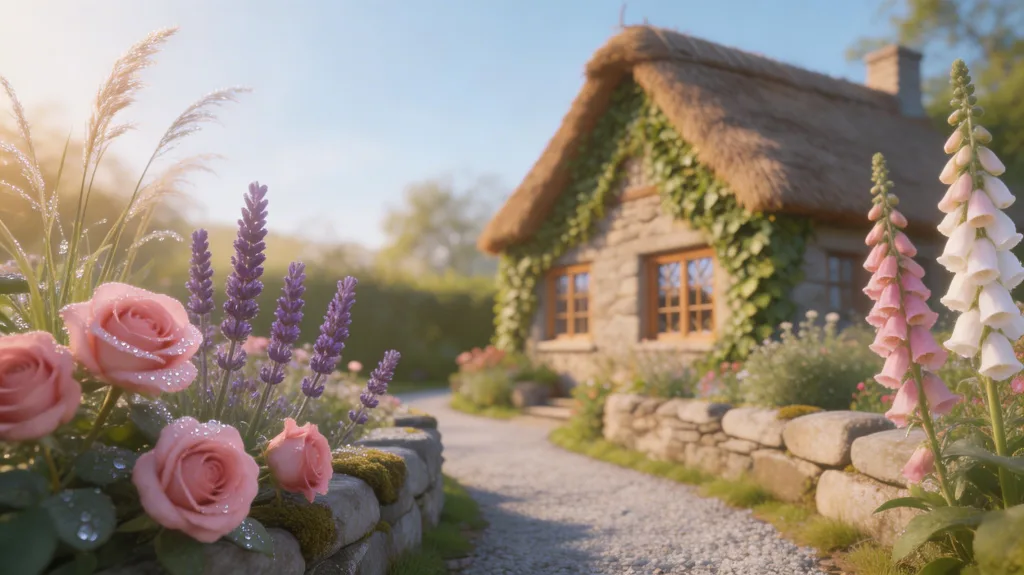
You might think a cottage garden is chaotic, but I’ve found it’s all about calculated layering. Start by choosing a few key plants you love, like roses and catmint, and repeat them for rhythm. Get this simple structure right and the rest—those winding paths and hidden benches—falls beautifully into place. Let me show you how to balance that lush, overflowing look so it feels charming, not messy.
Key Takeaways
- Embrace an informal layout with mingling plants and winding paths softened by creeping thyme or moss.
- Create vertical interest with climbers on arches and tall spires like foxgloves and delphiniums.
- Use a harmonious color palette of pastels, creams, and lavender blues, punctuated by sunny yellow accents.
- Integrate fragrant herbs and edible blooms like lavender, rosemary, and nasturtiums within the borders.
- Add charm with rustic vintage accents, seating alcoves, and plants spilling over benches or paths.
What Makes a Cottage Garden Feel So Charming?
The charm of a cottage garden lies in its delightful lack of formality; it’s a personal creation that invites you to meander and explore. You achieve that informal feel by letting plants mingle and spill over paths. You don’t plant in rigid rows but in relaxed, interlocking drifts.
You allow tall flowers like hollyhocks to stand behind lower-growing clusters of lavender and catmint, creating layers of texture. Your path can be simple gravel or aged brick, softened by creeping thyme or self-seeded violas. You welcome a bit of calculated chaos—let a rose scramble through a fence or allow some herbs to flower freely. It’s about creating a space that feels lived-in and loved, not manicured.
Choose Key Plants for Your Cottage Garden
Now that you’re aiming for that charming, informal look, you’ll want to select a few dependable plants that give your garden its character and structure. I always start with a classic cottage rose, like the prolific ‘Gertrude Jekyll’, as a fragrant anchor.
Then, I weave in tall, airy spires of foxgloves and delphiniums for vertical interest. Don’t forget the billowing filler plants; I’m never without catmint or hardy geraniums to soften edges and spill over paths.
For a long season of blooms, include reliable perennials like lavender, salvia, and coreopsis. These aren’t just a list; they’re a community. When you combine these key players, they create that lush, layered tapestry that feels wonderfully timeless and full of life.
Give Your Cottage Garden Plants the Right Light and Water
Once you’ve chosen your plants, you’ll need to match them to their ideal growing conditions because even the most classic cottage varieties won’t thrive without proper light and water. Check plant tags for sun requirements. Sun-lovers like lavender and roses demand a full six hours. Partial shade suits foxgloves and columbines.
I group plants with similar needs to make watering easier. Water deeply but infrequently to encourage strong roots, aiming for the soil, not the leaves, to prevent disease. Early morning is best. Always feel the soil first; if the top inch is dry, it’s time. Overwatering is a common mistake that can rot roots as quickly as drought can wilt them.
Design a Lush Cottage Garden Border
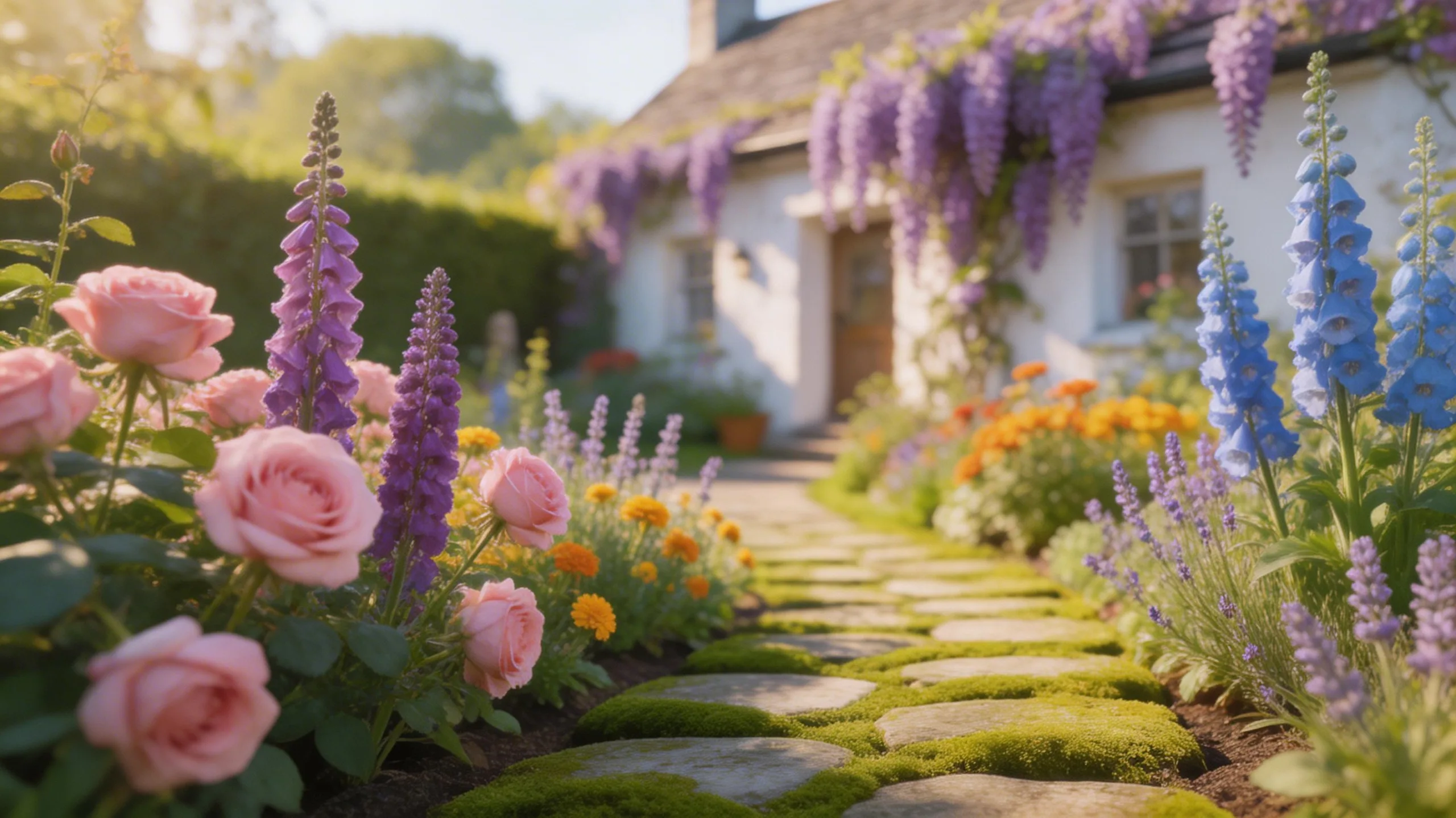
Create your lush border by layering plants in drifts, starting with tall, structural blooms like delphiniums or hollyhocks at the back.
I always tuck a few clumps of foxgloves in there, too.
Bring the midsection forward with billowy, medium-height perennials.
You can’t go wrong with hardy geraniums, peonies, and the fragrant spires of lavender.
For the front edge, plant low-growing, spreading beauties that soften the border line.
I rely on nepeta, sprawling roses like ‘The Fairy’, and mounds of alchemilla mollis.
Remember to repeat these drifts of plants throughout the border to create a cohesive, rhythmical feel.
Interplant everything closely, letting foliage mingle, and don’t forget to add self-seeding annuals like nigella for that essential, cheerful spontaneity.
Add Winding Paths and Relaxing Seating Areas

Beyond your lush borders, consider weaving a meandering gravel or flagstone path to invite exploration and frame your view.
I’ve learned gravel’s soft crunch enhances the garden’s sound, while flagstones let you tuck creeping thyme or Irish moss between cracks for extra charm.
Allow your path to curve gently around a focal point, perhaps a favorite shrub or small tree, creating a sense of mystery.
Where the path naturally pauses, place a rustic bench or a pair of chairs.
Tuck this seating into a slight alcove surrounded by fragrant plants like lavender or philadelphus.
You’ll have a perfect spot to relax and appreciate the details of your blooming paradise you’ve worked so hard to cultivate.
Incorporate Climbing Plants and Vertical Layers
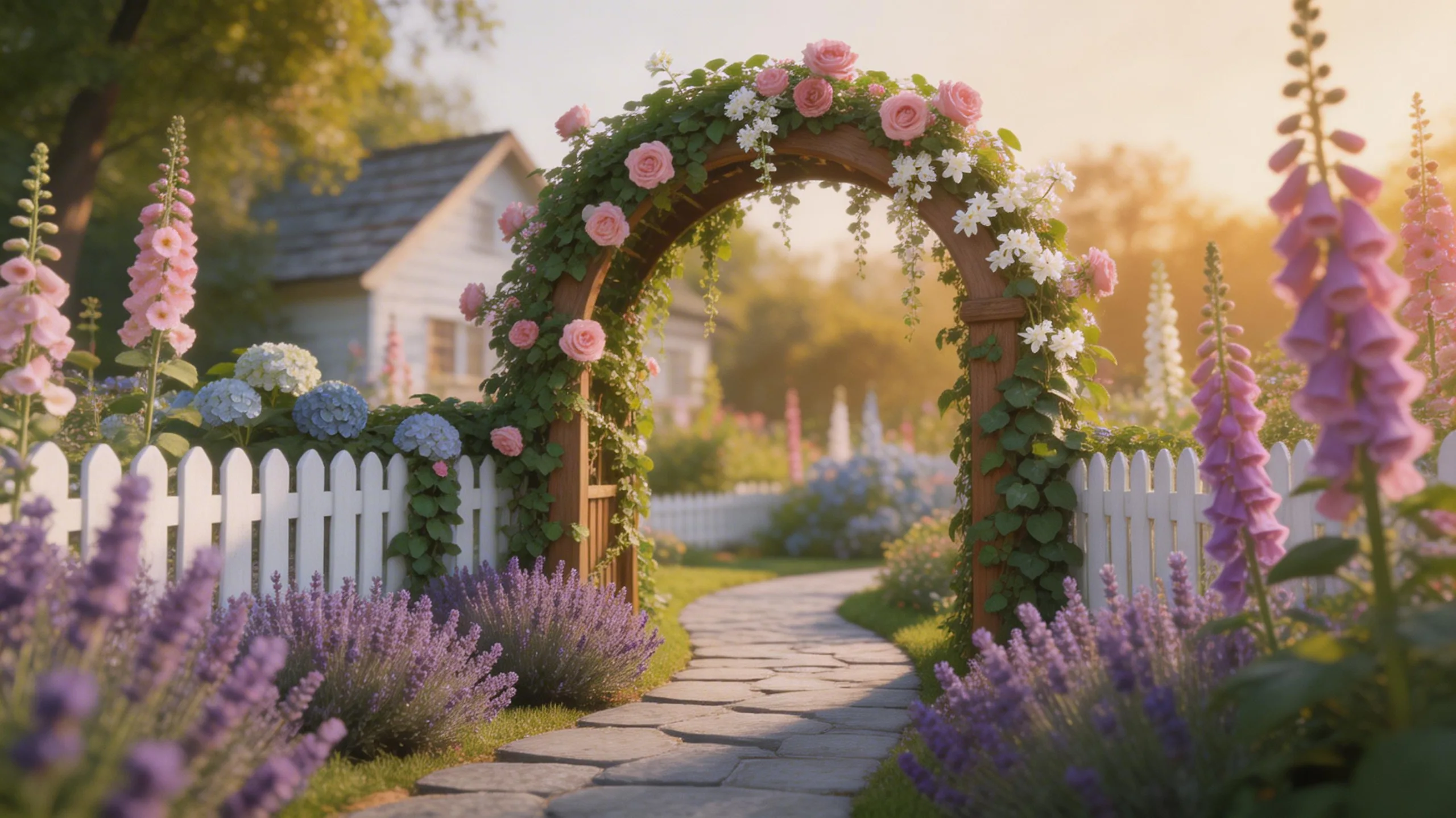
A winding path draws you in, but climbing plants add the vertical magic that makes a cottage garden feel enveloped. You’ll want to train them on trellises, arches, and even old garden structures. I’ve found that mixing different climbers creates a lush tapestry. For height and scent, you can’t beat roses and clematis growing together.
| Plant Choice | Best Support For | My Personal Tip |
|---|---|---|
| Sweet Pea | Simple twiggy sticks | Sow successively for months of scent. |
| Climbing Rose | Sturdy wooden arch | Choose a disease-resistant variety. |
| Honeysuckle | Fence or pergola | It’ll attract hummingbirds at dusk. |
Don’t forget taller perennials like delphiniums or foxgloves in your beds; they’re the essential middle layer that bridges the ground and your climbers.
Weave Fragrant Herbs and Edible Blooms Into Your Beds
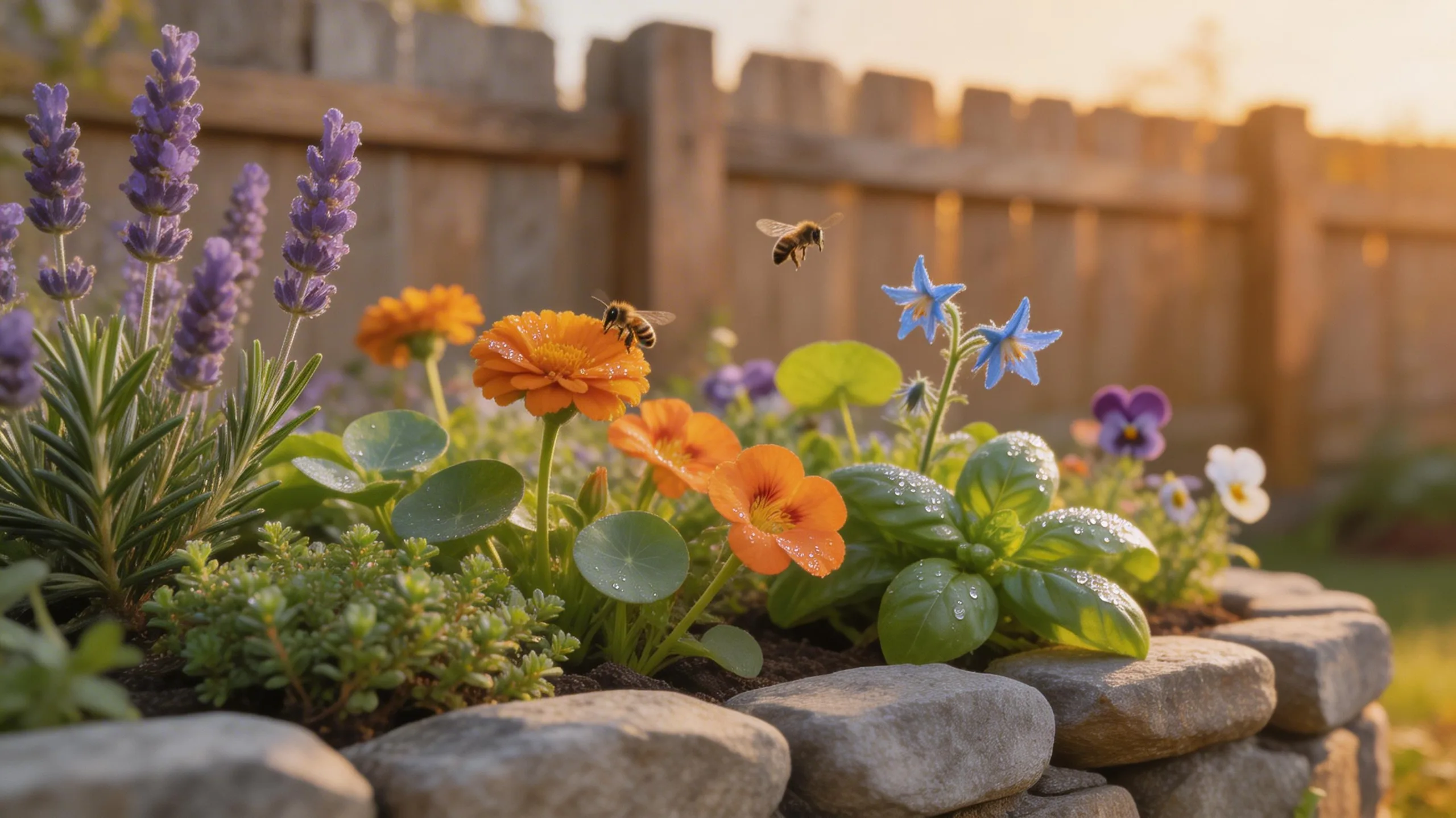
They often forget that some of the most delightful cottage garden plants are the ones you can also taste or crush between your fingers for scent. Start by planting fragrant herbs like lavender, rosemary, and thyme; they add structure and release scent with every brush.
I tuck edible blooms directly into my flower borders. Nasturtiums bring peppery leaves and bright flowers, while calendula petals are perfect for salads. Let chives bloom their purple pom-poms amongst your roses. You’ll find the bees love them, and you can snip the flowers for a garnish. Don’t isolate these plants in a separate plot—weaving them in creates a garden that’s truly immersive, beautiful to both your eyes and your senses.
Choose Vintage and Repurposed Garden Accents
Scour flea markets and salvage yards to find character-rich garden accents. You’ll discover weathered terracotta pots, wrought iron gates, and chipped enamelware that bring instant soul to your space.
I love nestling a rustic watering can amidst my lavender or using an old wooden ladder as a vertical frame for clematis. Let your plants interact with these finds; allow ivy to scramble over a stone bench or nasturtiums to spill from a galvanized bucket.
Their worn patina complements the soft, billowing shapes of cottage blooms perfectly. You’re not just decorating; you’re adding layers of history that make the garden uniquely yours. Remember, a single, well-placed vintage item often tells a better story than a dozen new ones.
Pruning and Care for a Lush, Not Messy, Look
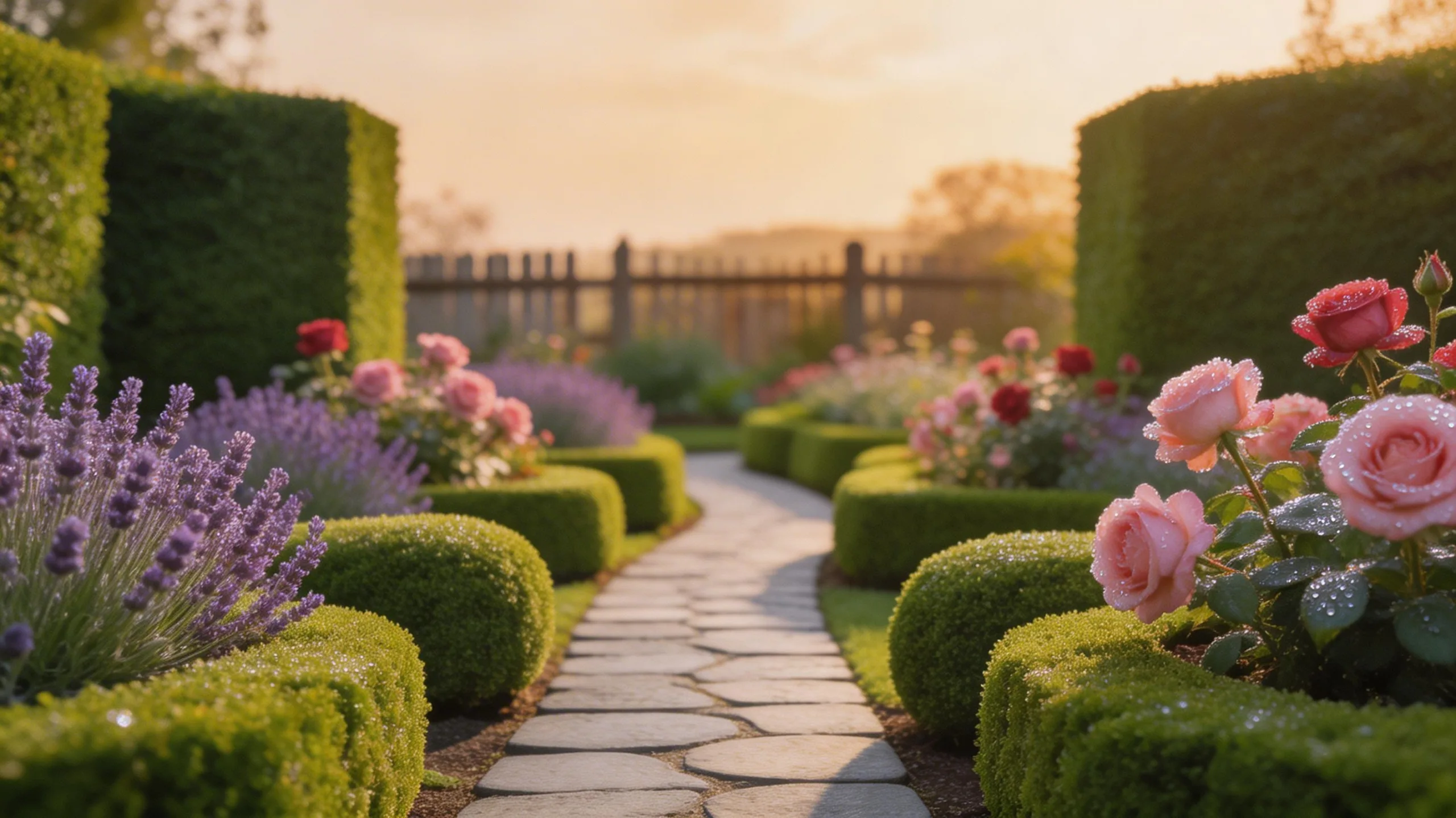
Crafting a cottage garden’s lush, relaxed charm requires regular pruning. Think of it as a tidy haircut rather than a drastic chop.
I deadhead spent roses and perennials weekly to encourage continuous blooms. For sprawling plants like catmint or hardy geraniums, I shear them back by a third after their first flowering; they’ll reward you with a fresh flush of foliage and flowers.
Thin out congested clumps of perennials in early spring to improve air flow and prevent disease. You’ll want to remove any dead, damaged, or overly aggressive stems that spoil the plant’s form. This selective care maintains the garden’s fullness while preventing a truly messy, overgrown look. Your goal is controlled abundance.
Adapt Cottage Garden Ideas for Small Spaces
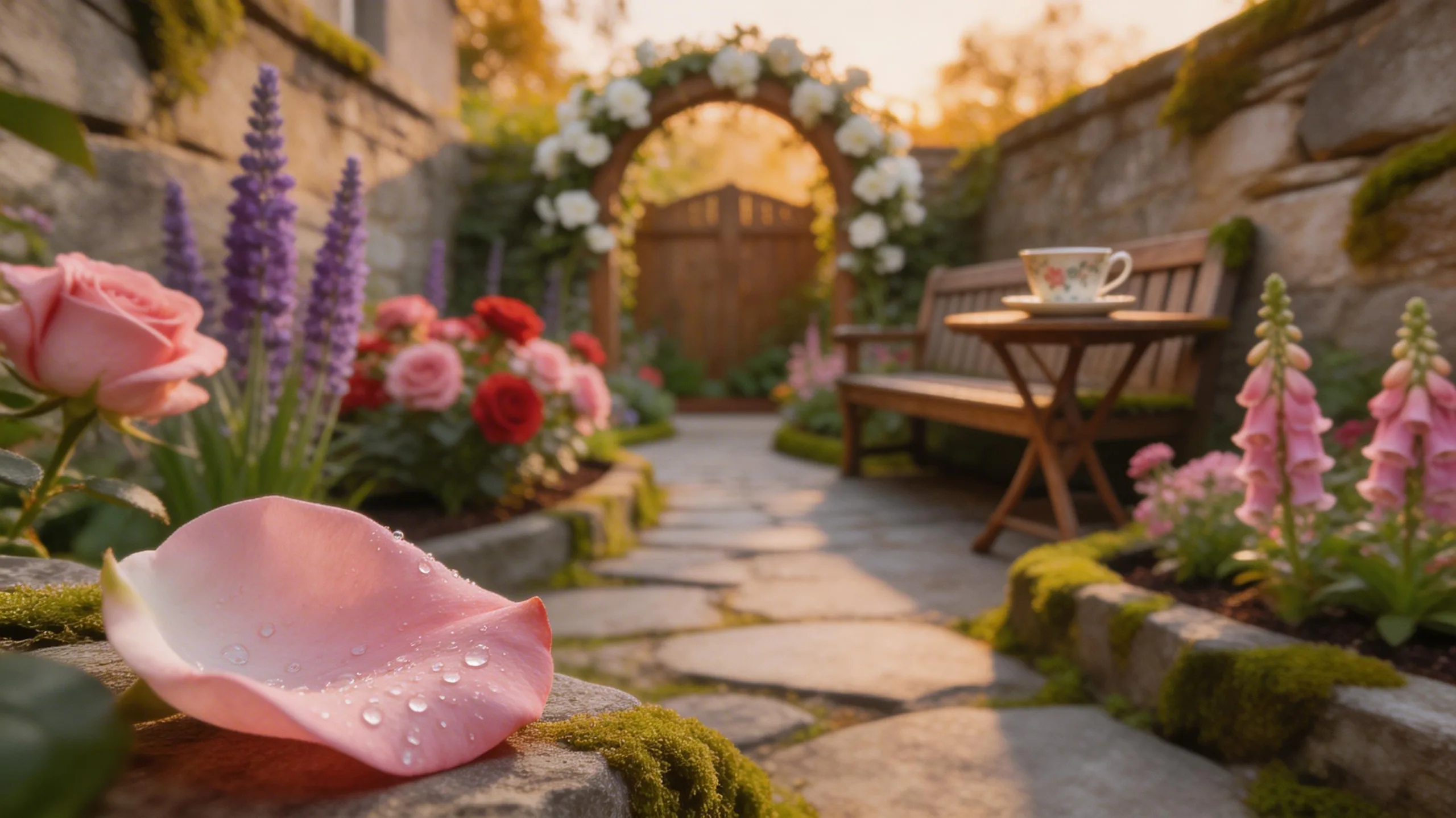
Even in a tiny urban courtyard or a narrow side yard, you can cultivate the cottage garden aesthetic by focusing on vertical layers and multi-seasonal plants. Train a climbing rose or clematis up a trellis; its vertical blooms add instant height.
I love using compact, repeat-blooming shrubs like ‘Suntastic’ dwarf sunflowers or ‘Lady in Red’ salvia as my anchor plants. Tuck in herbs such as thyme and lavender for scent and structure. In my own small space, I prioritize plants that earn their keep by offering long bloom times or edible harvests.
You’ll want to avoid large, sprawling varieties, opting instead for prolific self-seeders like nigella that fill gaps beautifully without overwhelming the footprint.
Find Inspiration From Classic Cottage Garden Color Palettes
To find your palette, start by looking at the soft whites, creams, and pastel pinks of old-fashioned favorites like roses, phlox, and cosmos.
I often add splashes of lavender, purple, and blue with catmint, salvia, and delphiniums for a cooler contrast.
Don’t forget the essential sunny yellows from coreopsis or rudbeckia; they really lift the whole scheme.
Your goal is a gentle harmony, not a stark contrast. Let colors blend and flow into one another by planting in generous drifts.
I’ve found that including plenty of green foliage from plants like lady’s mantle or lamb’s ear helps to soften and unite all these beautiful flower colors into one relaxing, cohesive picture.
Frequently Asked Questions
How Much Maintenance Does a Cottage Garden Need?
You’ll regularly deadhead and prune to keep it blooming, but you don’t need perfection. Choose self-seeding plants like foxgloves and poppies; they’ll fill spaces for you and reduce your workload over time.
Can a Cottage Garden Be Deer-Resistant?
Yes, you can create a deer-resistant cottage garden. Choose plants they dislike, like lavender, catmint, and salvia. Interplant these with your traditional favorites as a protective barrier; it’s a trick that works for me.
What Are Good Cottage Garden Plants for Hot Climates?
You’ll want sun-loving perennials like lavender, rosemary, and salvia; they thrive in heat and drought. You can add coreopsis and blanket flower for color. They all handle hot summers beautifully.
How Do I Stop Aggressive Plants From Taking Over?
You should use physical barriers like root-pruning pots. You can also try dividing or pulling them regularly to contain their spread. I always choose less invasive varieties if they’re available for your region.
Should I Amend My Soil Before Planting a Cottage Garden?
You absolutely should amend it. Rich, fertile soil supports dense, thriving cottage plants. I’d recommend adding compost before planting to improve drainage and nutrients; your flowers’ll thank you with better growth and blooms.
Conclusion
Now you have the recipe for your own enchanting, living tapestry. Remember, the real joy is in the doing—tuck in those last few plants, watch your chosen color scheme softly bloom, and let your paths lead you through your personal sanctuary. Embrace the relaxed rhythm; a cottage garden is never truly finished, and that’s the charm of it.
The Only Tools You Need for a Thriving Garden 🌱
Whether you're a weekend gardener or growing daily — these hand-picked tools make every session faster, easier, and more satisfying.