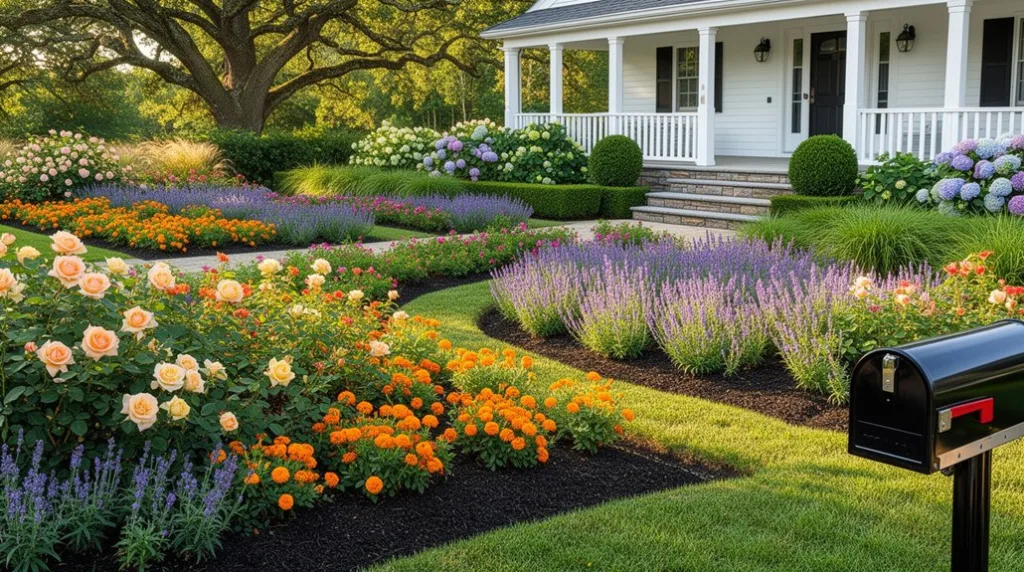
You’re standing at the edge of your front yard, wondering how to turn a plain strip of soil into a curb‑appealing showcase that works year‑round. Imagine layering tall delphiniums behind mid‑height hydrangeas, then filling the foreground with dwarf coneflowers, evergreen boxwood, and low‑growing thyme that suppresses weeds. Add a splash of native wildflowers for pollinators, a few drought‑tolerant succulents in sunny spots, and a drip‑irrigation system to keep maintenance low. The next step shows how each of the 18 ideas fits together for a polished, low‑maintenance look.
Key Takeaways
- Combine tall back‑row shrubs (e.g., Boxwood, Mountain Laurel) with mid‑height perennials and low groundcovers for layered depth and year‑round structure.
- Plant drought‑tolerant succulents and native wildflowers in well‑draining grit‑sand mix, mulched with lava rock, to reduce water use and maintenance.
- Use bright annuals (petunias, marigolds, impatiens) in alternating heights, spaced 6–12 inches apart, with consistent 1‑inch‑per‑week watering and regular deadheading.
- Incorporate spring bulbs (tulips, daffodils, crocuses) in late summer, planting 6‑8 inches deep and 3‑4 inches apart, then mulch with shredded bark for winter protection.
- Add fragrant or night‑blooming plants (lavender, Evening Primrose, Moonflower) for sensory appeal and pollinator attraction, ensuring appropriate soil pH and mulch for health.
Front‑Yard Flower Bed: Low‑Maintenance Succulents for Drought‑Proofing
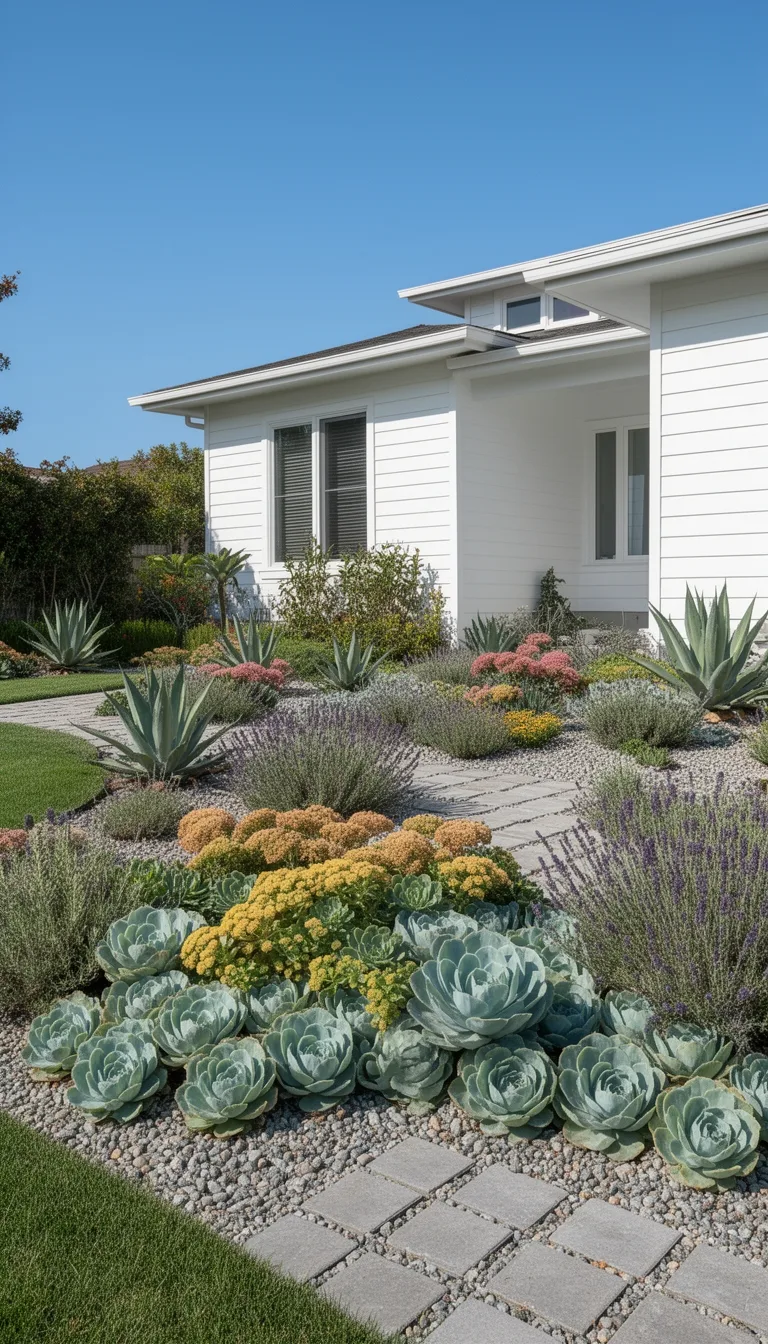
In the front yard, low‑maintenance succulents create a drought‑proof flower bed that thrives with minimal watering and care.
You’ll select species like Sedum ‘Dragon’s Blood’, Echeveria ‘Black Prince’, and Agave ‘Blue Glow’, each tolerating full sun and temperatures from 30 °F to 110 °F.
Plant them in well‑draining grit‑sand mix, spacing 12‑18 inches apart to allow airflow and reduce fungal risk.
Mulch with coarse lava rock to retain heat and suppress weeds, then install a drip‑irrigation timer set to 5 minutes twice weekly during spring, extending to monthly in fall.
Monitor leaf turgor; slight wrinkling signals a brief soak.
This system keeps the bed vibrant through summer heat, early frost, and occasional drought without intensive labor.
Front‑Yard Flower Bed: Bright Annuals That Pop All Spring

Usually you’ll start the spring bloom by selecting a mix of long‑lasting annuals that thrive in full sun and warm soil, such as petunias, marigolds, and impatiens, each offering vivid hues that stay vibrant from early March through May.
Choose a planting layout that alternates tall (12‑18 in) and low (6‑8 in) varieties to create depth; space petunias 10‑12 in apart, marigolds 8‑10 in, and impatiens 6‑8 in.
Amend soil with a 2‑inch layer of compost to improve drainage and nutrient retention.
Water consistently, aiming for 1 inch per week, and mulch to suppress weeds and retain moisture.
Deadhead spent flowers every 10‑14 days to stimulate repeat blooming.
Incorporate a slow‑release fertilizer at planting and a second dose after six weeks for sustained color intensity throughout spring.
Front‑Yard Flower Bed: Evergreen Shrubs That Frame Your Entryway Year‑Round
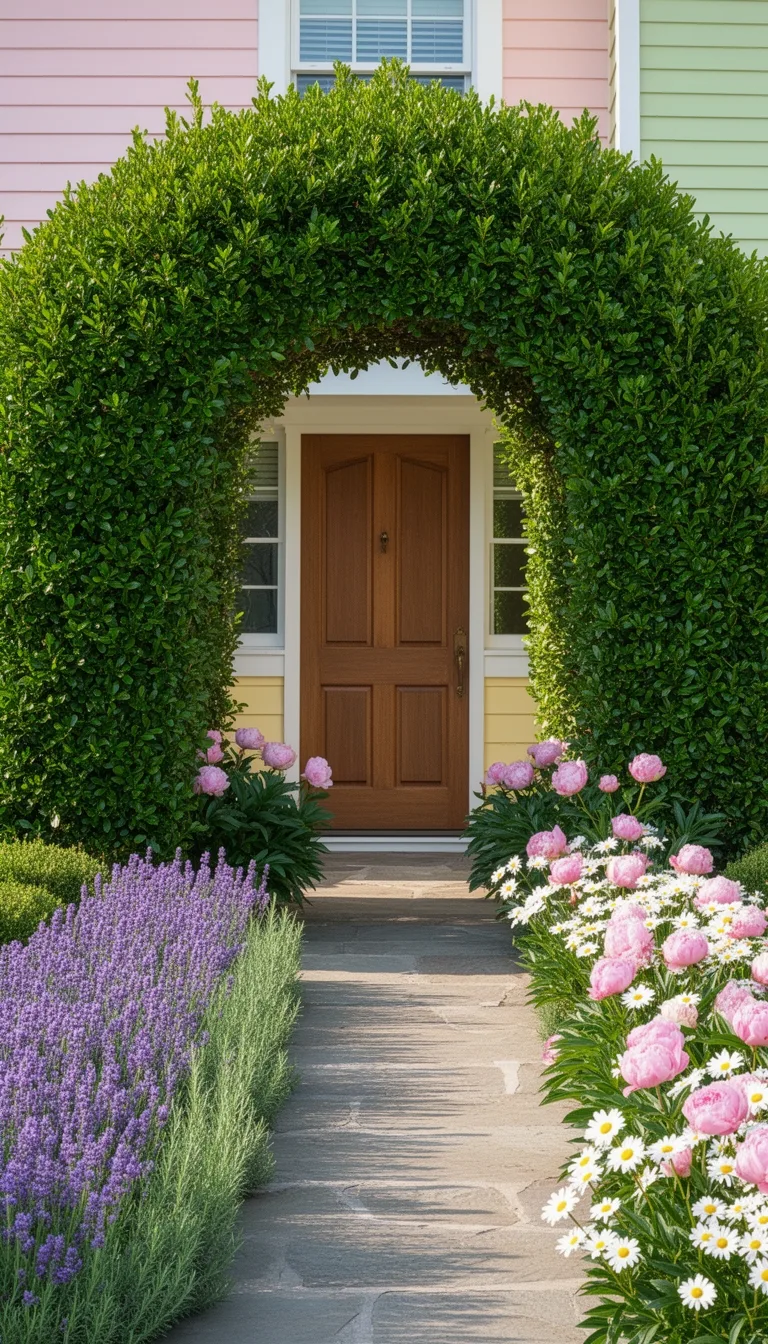
Even though spring brings a burst of color, evergreen shrubs give your front‑yard a year‑round frame that guides the eye to the entryway. Choose hardy species that tolerate local climate, prune for shape, and pair with mulch for moisture retention.
Pay attention to mature spread, foliage texture, and seasonal interest to keep the border crisp in winter and vibrant in summer.
- Boxwood (Buxus spp.) – dense, low‑maintenance, tolerates heavy pruning; ideal for formal hedges.
- Mountain Laurel (Kalmia latifolia) – glossy leaves, spring flowers, prefers acidic soil.
- Japanese Holly (Ilex crenata) – small leaf size, evergreen, disease‑resistant, works in tight spaces.
- Dwarf Alberta Spruce (Picea glauca ‘Conica’) – conical form, slow growth, adds structural contrast.
Install them in staggered heights, maintain a 12‑inch spacing, and water deeply during the first season to establish robust root systems.
Front‑Yard Flower Bed: Native Wildflowers That Attract Pollinators
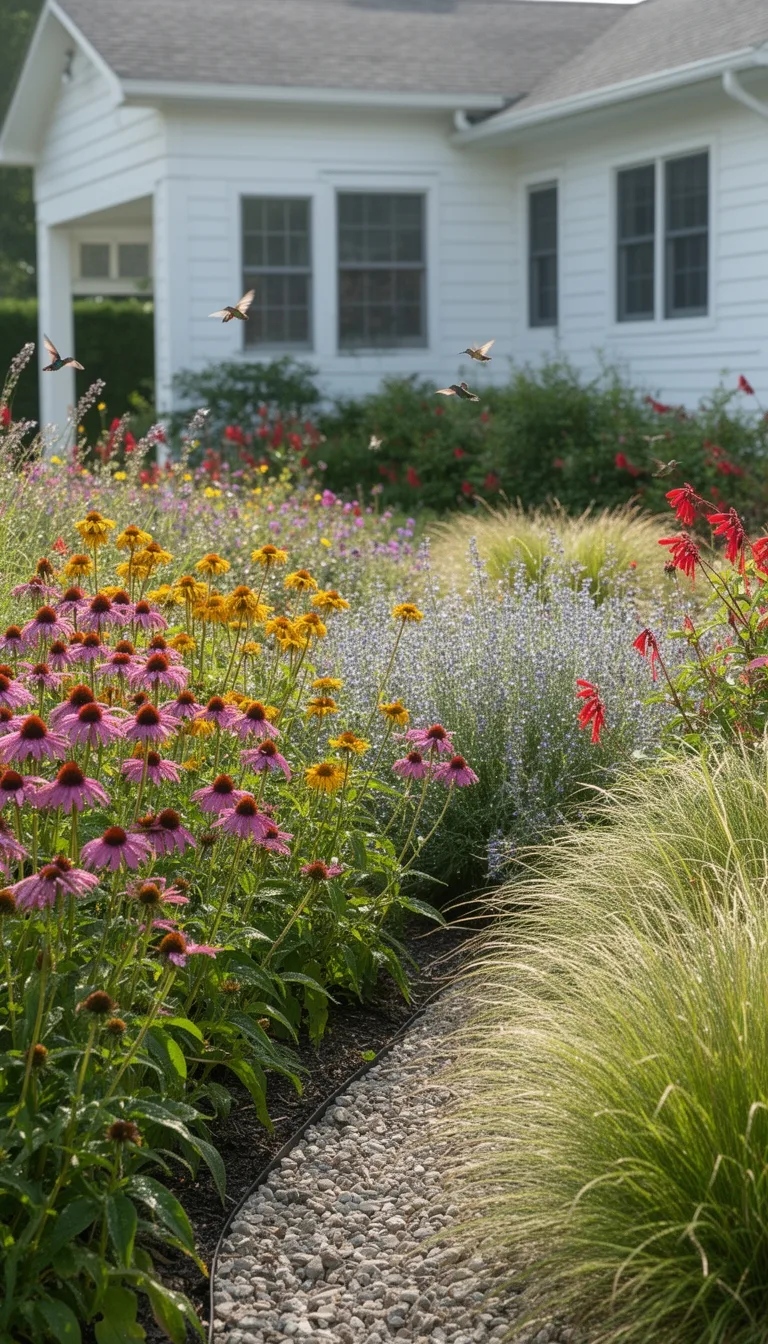
Evergreen shrubs give your entry a clean, year‑round frame, and now it’s time to fill the spaces between them with native wildflowers that keep pollinators busy all season.
Choose a mix of early‑spring, mid‑summer, and fall‑blooming species to sustain bees, butterflies, and hummingbirds from March through October.
Plant Black-eyed Susan (Rudbeckia hirta) for bright yellow heads in July, and Echinacea purpurea for deep purple cones that attract bumblebees in late summer.
Add Lupinus perennis for nitrogen‑fixing, tall spikes that draw mason bees in May.
Interplant Sedum sp. for drought‑tolerant, late‑season nectar.
Space plants 12‑18 in. apart, amend soil with compost, and water deeply until roots establish.
Mulch with shredded bark to retain moisture and suppress weeds while preserving habitat for ground‑nesting pollinators.
Front‑Yard Flower Bed: Low‑Growth Groundcovers That Suppress Weeds

Choosing low‑growth groundcovers that outcompete weeds is a smart way to keep your front‑yard flower bed tidy while conserving water and nutrients. You’ll want species that spread quickly, stay under 6 inches, and thrive in your climate zone.
Pick varieties that tolerate full sun to partial shade, and that can handle the seasonal temperature swings of spring, summer, and fall. Their dense mats block light, preventing weed germination and reducing the need for herbicides.
Regularly deadhead and trim the edges to maintain a uniform height and to encourage fresh growth.
- Creeping Thyme – aromatic, drought‑tolerant, blooms late spring.
- Sedum ‘Dragon’s Blood’ – succulent, bright red foliage, excellent in hot summer.
- Ajuga ‘Chocolate Chip’ – glossy leaves, purple spikes, thrives in spring moisture.
- Moss Phlox – low, mat‑forming, pink flowers, ideal for early summer.
Front‑Yard Flower Bed: Seasonal Bulbs for a Spring Burst (Fade in Summer)
Usually you’ll plant a mix of spring‑blooming bulbs in late summer to early fall so they can establish roots before the cold. Choose tulips, daffodils, and crocuses for a layered color palette; plant tulip bulbs 6‑8 inches deep, daffodils 4‑6 inches, and crocuses 2‑3 inches, spacing them 3‑4 inches apart.
Amend soil with compost to improve drainage and nutrient retention. Water thoroughly after planting, then let the ground dry to prevent rot. In early spring, fertilize with a balanced 10‑10‑10 granule to boost vigor.
Expect a vivid burst that peaks in April, then gradually fades as summer heat arrives. Replace spent bulbs annually or let natural offsets self‑seed for low‑maintenance continuity.
Front‑Yard Flower Bed: Ornamental Grasses That Add Texture and Movement
After the spring bulbs fade, ornamental grasses step in to keep the front yard lively through summer and into fall. You’ll notice their fine‑bladed foliage swaying in breezes, providing a moving backdrop that highlights perennials and shrubs.
Choose varieties with different heights, colors, and seed heads to create layered texture that changes with the seasons. Their low maintenance roots conserve water, while their clumping habit prevents invasive spread, making them ideal for defined front‑yard beds.
- Miscanthus sinensis ‘Morning Light’ – tall, arching plumes, golden foliage in late summer.
- Pennisetum alopecuroides ‘Hameln’ – compact, feathery tassels, pink‑purple seed heads.
- Festuca glauca ‘Elijah Blue’ – dwarf, blue‑gray tufts, excellent for edging.
- Calamagrostis x acutiflora ‘Karl Foerster’ – upright, stiff stems, copper‑toned plumes into persist into winter.
Front‑Yard Flower Bed: Container‑Style Designs for Renters or Small Spaces
Turn your front‑yard into a flexible showcase by arranging portable containers that can be moved, swapped, or stored as seasons change. Choose lightweight resin pots for spring bulbs, then replace them with drought‑tolerant succulents in summer.
Use tiered stackable planters to maximize vertical space; place a deep container at the back for root‑heavy perennials like coneflower, and shallow saucers in front for annuals such as petunias. Anchor each pot with a weighted base to prevent wind‑toppling, and line the bottom with biodegradable peat to improve drainage.
Rotate containers every six weeks to keep soil fresh, and swap color palettes—pastel pinks in spring, bold oranges in fall—to maintain visual interest while respecting rental restrictions. This modular approach delivers curb appeal without permanent landscaping.
Front‑Yard Flower Bed: Mixed‑Border Layouts That Balance Height, Color, and Form
Mix‑border layouts let you sculpt a front‑yard bed that feels cohesive yet dynamic, balancing tall back‑row perennials, mid‑height shrubs, and low‑lying groundcovers in a single, flowing composition.
Choose plants that thrive in your climate zone and stagger bloom times to keep color year‑round.
Use a measured spacing grid—12‑inch intervals for groundcovers, 24‑inch for mids, 36‑inch for tall species—to prevent overcrowding and ensure air flow, reducing disease risk.
Incorporate texture contrast with feathery foliage beside glossy leaves.
Keep a seasonal maintenance schedule: prune in early spring, deadhead weekly, and mulch in fall to retain moisture.
- Tall back‑row: Delphinium, Joe‑Pye weed
- Mid‑height shrub: Hydrangea, dwarf coneflower
- Low groundcover: Creeping thyme, Ajuga
- Accent spikes: Ornamental grasses, dwarf iris
Front‑Yard Flower Bed: Edible Plants That Bring Beauty + Kitchen Harvests
Planting edible beauties in your front‑yard flower bed lets you harvest fresh herbs and vegetables while keeping the space visually striking. Choose low‑grow thyme or creeping rosemary for ground cover; they tolerate foot traffic and release fragrant foliage when brushed.
Intermix compact cherry tomatoes in indeterminate varieties with ornamental peppers—both provide bright reds that contrast leafy greens. Add kale or ornamental cabbage for seasonal texture; they survive winter lows and offer edible leaves in spring and fall.
Space each plant 12–18 inches apart, amend soil with compost, and mulch to retain moisture. Water early, use drip irrigation to avoid wet foliage, and prune regularly to maintain shape and airflow. Harvest leaves and fruit as they mature, keeping the bed tidy and productive throughout the growing season.
Front‑Yard Flower Bed: Color‑Themed Palettes for Cohesive Curb Appeal
When you choose a color‑themed palette for a front‑yard flower bed, you create a visual anchor that ties the entire façade together while allowing seasonal adjustments. Pick a base hue—soft lavender, crisp white, or bold teal—and layer complementary shades to sustain interest from spring blooms to fall foliage.
Use plant height, foliage texture, and bloom timing to reinforce the theme, ensuring each month offers a fresh yet cohesive look. Pay attention to soil pH, sunlight exposure, and irrigation needs so the color scheme thrives without excessive maintenance.
- Monochrome Harmony – select varieties of the same hue in different tones and foliage types.
- Complementary Contrast – pair opposite colors on the color wheel for striking visual balance.
- Triadic Trio – choose three evenly spaced hues for a vibrant, balanced spectrum.
- Seasonal Gradient – transition from cool spring blues to warm autumn oranges within the same palette.
Front‑Yard Flower Bed: Water‑Wise Planting Schemes for Hot Climates
Designing a water‑wise front‑yard flower bed for hot climates means selecting drought‑tolerant species, grouping them by similar irrigation needs, and optimizing soil structure to retain moisture.
Start with a sandy‑loam mix amended with compost and a thin layer of mulch to reduce evaporation. Plant a core of Salvia and Agave for deep‑rooted resilience, then intersperse Lavender, Gazania, and Sedum for mid‑season color and low water demand.
Install a drip‑line that follows plant rows, delivering water directly to the root zone and allowing you to set a 2‑week cycle in summer. Add a few California poppy patches for seasonal bursts, and use a rain‑sensor valve to pause irrigation after storms.
This scheme balances aesthetic appeal with water conservation throughout the scorching months.
Front‑Yard Flower Bed: Night‑Blooming Varieties That Glow After Dark
After establishing a water‑wise foundation, you can enhance the front yard’s evening charm by selecting night‑blooming plants that release fragrance and color after sunset. Choose species that thrive in your climate zone, consider bloom timing, and pair them with low‑maintenance soil amendments.
Focus on plants that stay vibrant through late summer and early fall, ensuring a consistent nighttime display without extra watering.
- Moonflower (Ipomoea alba) – Fast‑growing vines, white blossoms open at dusk, emit a sweet scent, tolerates full sun and well‑drained soil.
- Evening Primrose (Oenothera biennis) – Yellow petals unfurl after dark, attracts pollinators, prefers sandy loam, drought‑tolerant once established.
- Four‑O’Clock (Mirabilis jalapa) – Pink to red blooms open at night, repeat blooming cycle, thrives in partial shade, needs occasional deep watering.
- Night Phlox (Zaluzianskya capensis) – Compact groundcover, star‑shaped white flowers emit citrus fragrance, ideal for borders, tolerates heat and poor soil.
Front‑Yard Flower Bed: Fragrant Blooms That Welcome Guests at the Front Door
Choosing fragrant plants for the front‑door flower bed instantly creates a welcoming atmosphere, guiding guests with scent as they approach the entrance. You’ll want a mix of early‑spring, midsummer, and fall bloomers so the aroma persists year‑round. Plant lavender and rosemary for dry, herbaceous notes that thrive in full sun and well‑drained soil. Add sweet peas for a delicate, cool‑season perfume, and gardenias for a rich, tropical evening scent. Pair these with low‑maintenance, disease‑resistant varieties like dwarf lilac and scented geraniums. Proper spacing—12‑18 inches apart—ensures airflow and reduces fungal risk. Mulch with pine needles to retain moisture and enhance the earthy fragrance.
| Plant | Seasonal Highlight |
|---|---|
| Lavender | Summer dry herb scent |
| Sweet Peas | Spring delicate perfume |
| Gardenia | Fall warm tropical aroma |
| Dwarf Lilac | Early spring sweet bloom |
Front‑Yard Flower Bed: Raised‑Bed Designs for Easy Maintenance and Clean Lines
Elevate your curb appeal by installing a raised‑bed system that keeps soil, weeds, and foot traffic separate from the lawn, delivering clean lines and low‑maintenance upkeep. Choose materials that resist rot, like cedar or composite, and size each bed 3‑4 ft wide so you can reach the center without stepping inside.
Incorporate a drip‑irrigation line to water uniformly and reduce evaporation, especially during summer heat. Add a breathable landscape fabric beneath the soil to block weeds while allowing drainage. Finally, select perennials that thrive in your climate zone, rotating them yearly for seasonal color variation.
- Material selection – cedar, stone, or recycled plastic.
- Depth and width – 12‑18 in deep, 3‑4 ft wide for easy access.
- Irrigation – drip lines with timer for consistent moisture.
- Plant palette – zone‑appropriate perennials and annuals for staggered bloom.
Front‑Yard Flower Bed: Pet‑Friendly Plant Selections for Households With Animals
Selecting pet‑friendly plants for your front‑yard flower bed means balancing aesthetics with safety, so you can enjoy vibrant blooms without worrying about toxic exposure for dogs or cats.
In spring, mix low‑maintenance marigolds, which deter pests and are non‑toxic, with hardy lavender that offers scent and drought resistance. Add summer‑season rosemary, a hardy herb that tolerates foot traffic and provides year‑round greenery.
For fall, plant ornamental grasses like feather reed reed, which stay soft for curious paws. Incorporate winter‑hardy sedum ‘Autumn Joy’, which stores water in its succulent leaves and resists nibbling.
Space each species 12–18 inches apart to prevent overcrowding, and mulch with pine bark to deter digging while retaining moisture. This palette keeps your curb appeal bright year‑round and safeguards your pets.
Front‑Yard Flower Bed: Budget‑Friendly DIY Ideas Using Reclaimed Materials
Start by gathering reclaimed pallets, old concrete pavers, and salvaged lumber from demolition sites; these low‑cost materials can be transformed into sturdy, weather‑resistant edging and raised‑bed frames for your front yard.
You’ll want to sand pallets, treat lumber with a weather‑proof sealant, and arrange pavers in a staggered pattern to improve drainage during spring rains and winter freeze‑thaw cycles.
- Pallet Bed Frame – Build a 2‑ft‑high box, line it with landscape fabric, fill with compost.
- Paver Edge – Lay pavers end‑to‑end, gap with sand for a clean border.
- Lumber Raised Bed – Stack 2×4s, secure with brackets, add a drip‑irrigation line.
- Recycled Bottle Drip System – Cut bottles, bury neck‑down, connect to hose for slow watering.
These steps keep costs low while delivering a durable, season‑ready front‑yard flower bed.
Front‑Yard Flower Bed: Year‑Round Maintenance Checklist to Keep It Fresh
When spring arrives, you’ll want to inspect the bed’s drainage, remove any winter‑dead foliage, and loosen the top inch of soil before adding a light layer of compost to jump‑start growth. Test soil pH, amend with lime or sulfur as needed, then mulch 2–3 inches to retain moisture and suppress weeds.
In early summer, deadhead spent blooms weekly, prune overgrown stems, and scout for pests; apply targeted insecticidal soap or neem oil when thresholds exceed 5 % leaf damage.
Mid‑summer watering should be deep, once every 5–7 days, adjusting for rainfall.
In fall, cut back perennials to ground level, rake leaves, and add a coarse organic mulch to protect roots from freeze‑thaw cycles.
Winter requires occasional snow removal to avoid compaction and a quick visual check for invasive weeds emerging under mulch.
Conclusion
By mixing tall perennials, mid‑height shrubs, low groundcovers, and drought‑tolerant succulents, you’ll create a layered, year‑round display that stays vibrant with minimal upkeep. Choose evergreen frames for winter structure, native wildflowers for pollinators, and bright annuals for seasonal pops. Install drip irrigation, mulch, and clean edging to lock in moisture and suppress weeds. Follow the seasonal checklist—prune, deadhead, and refresh mulch—to keep your front‑yard bed polished and inviting all year.
The Only Tools You Need for a Thriving Garden 🌱
Whether you're a weekend gardener or growing daily — these hand-picked tools make every session faster, easier, and more satisfying.