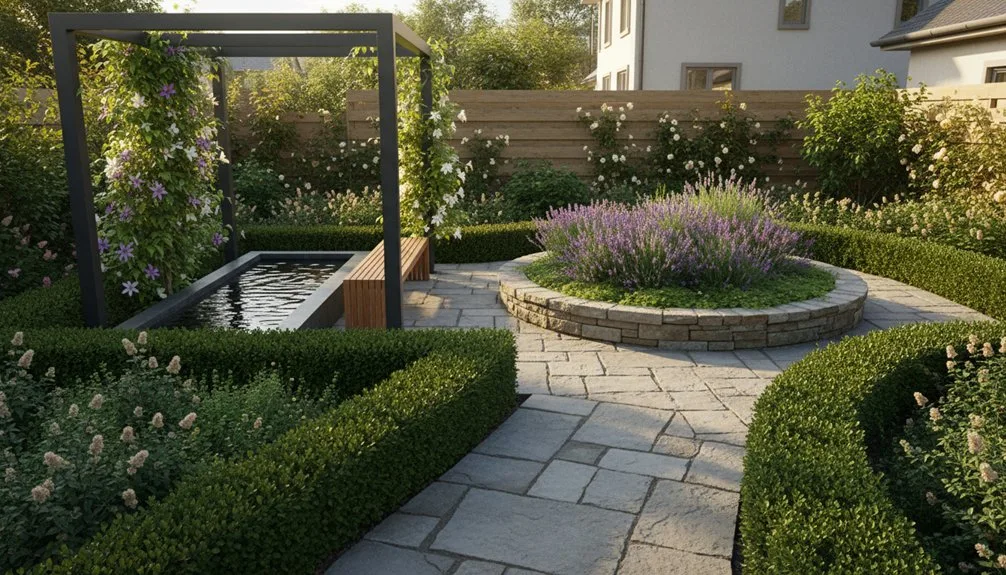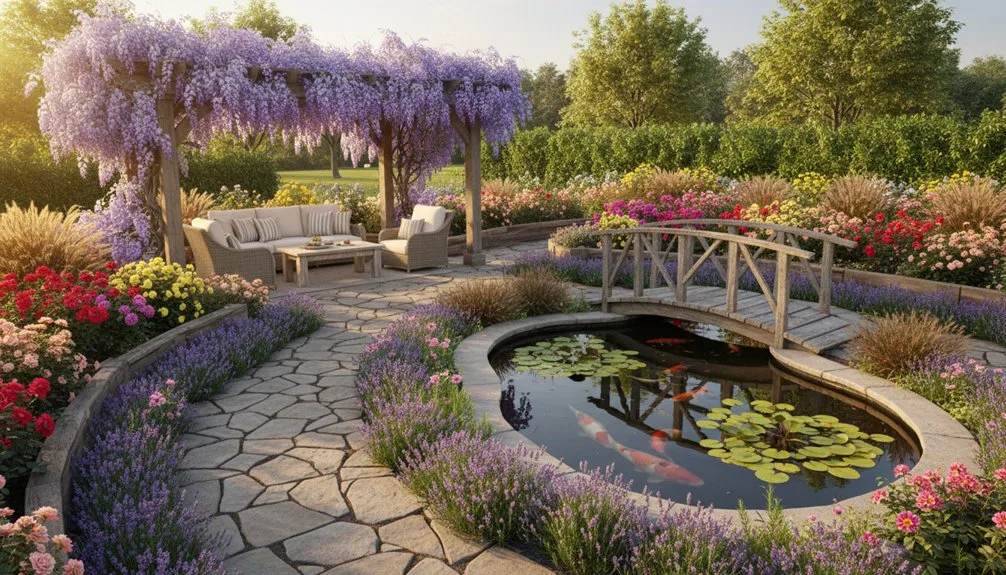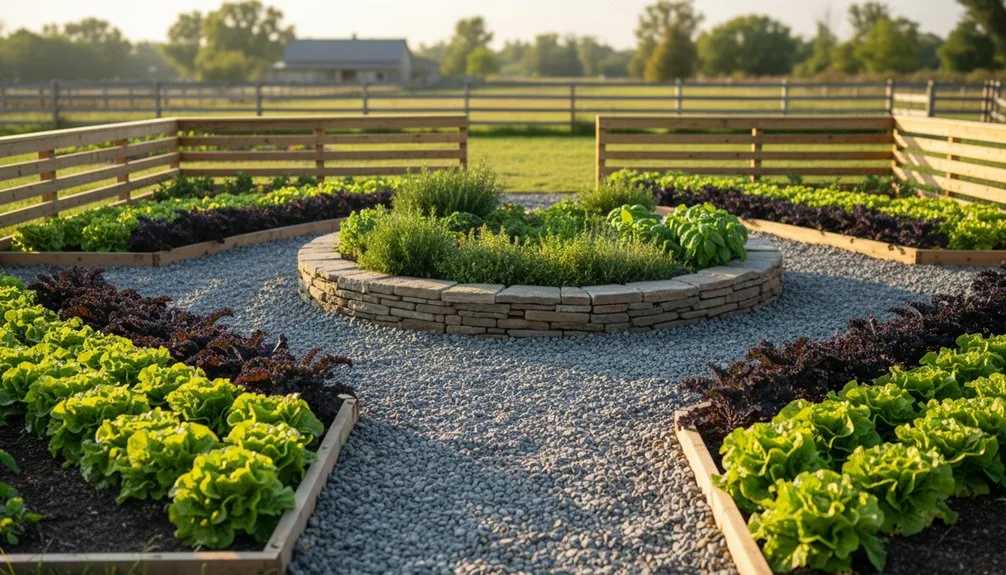
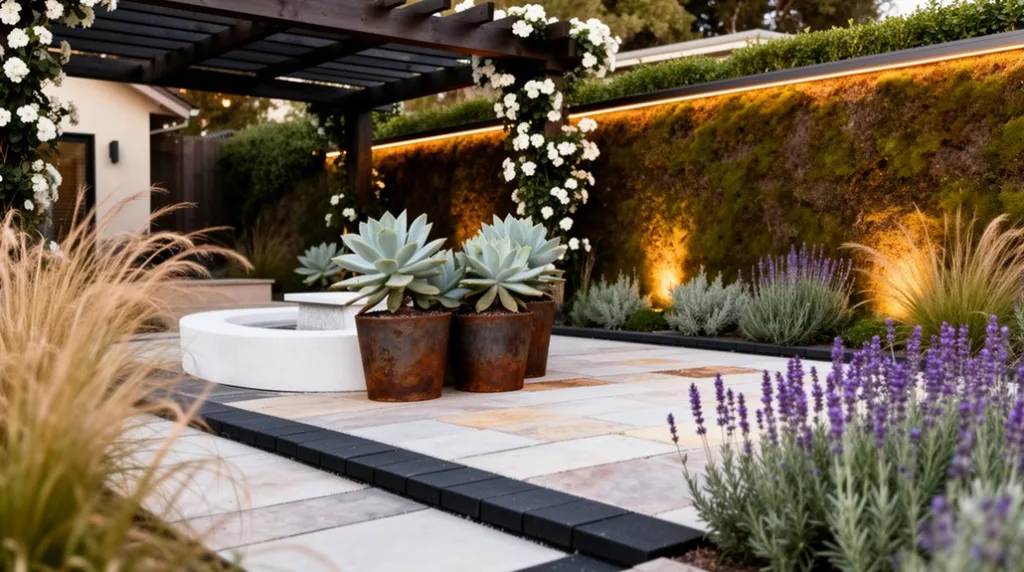
Start by defining your zones with simple paths and discreet edging to establish a clean structure. Then, you’ll build out with layered planting, using tall shrubs, mid-height perennials, and low groundcovers for depth. Selecting native, low-maintenance species reduces your long-term chores and supports local wildlife. But the real magic happens when you address the essential step many overlook before choosing a single plant—this foundation determines everything that follows.
Key Takeaways
- Define functional zones like dining or perennial borders with paths to connect them.
- Layer plants by height and choose low-maintenance natives suited to your sun conditions.
- Install a focal point, such as a statement tree, fire pit, or self-contained water feature.
- Solve drainage issues first and use proper grading to protect your investment.
- Use containers and vertical gardens to add flexible, seasonal interest and save space.
Start With a Clear Vision for Your Space
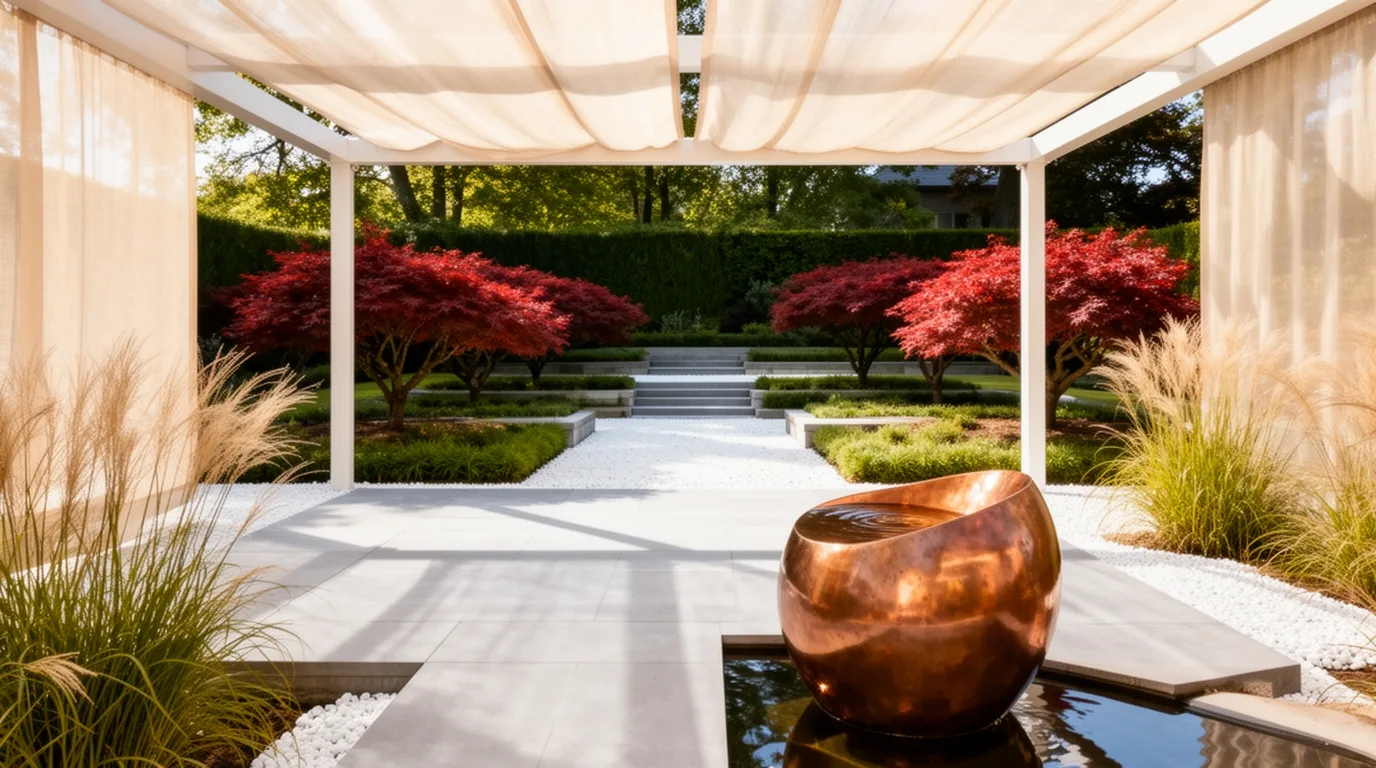
Before you pick up any tools, take a moment to walk through your yard and note what’s already there—identify existing plants, structures, and soil conditions, so you can design around them effectively.
Pay special attention to mature trees and shrubs; they’re valuable assets you’ll want to preserve.
Test your soil’s drainage by digging a small hole and filling it with water—if it drains in a few hours, you’re set for most plants.
Also, observe sun patterns throughout the day. Full-sun spots, which get six or more hours of direct light, are perfect for lavender or sedum.
Shady areas under trees are ideal for hostas or ferns.
Sketch a simple map, marking these microclimates and your favorite existing features to build upon.
Define Zones With Simple Stone or Gravel Paths

Once you have a clear vision for your space, you can start to organize it. Define distinct areas, like a perennial border or a vegetable patch, using simple stone or gravel paths.
First, outline each zone’s shape with a garden hose. For a gravel path, excavate three to four inches of soil, line the trench with landscape fabric to suppress weeds, and fill it with crushed stone. For stepping stones, place them directly on leveled soil, spacing them for a natural stride. Plant low-growing, creeping thyme or sedum between stones to soften edges and add greenery.
These paths guide movement, prevent soil compaction around plant roots, and create a cohesive, intentional layout that highlights your garden beds.
Install Edging for a Polished, Defined Look
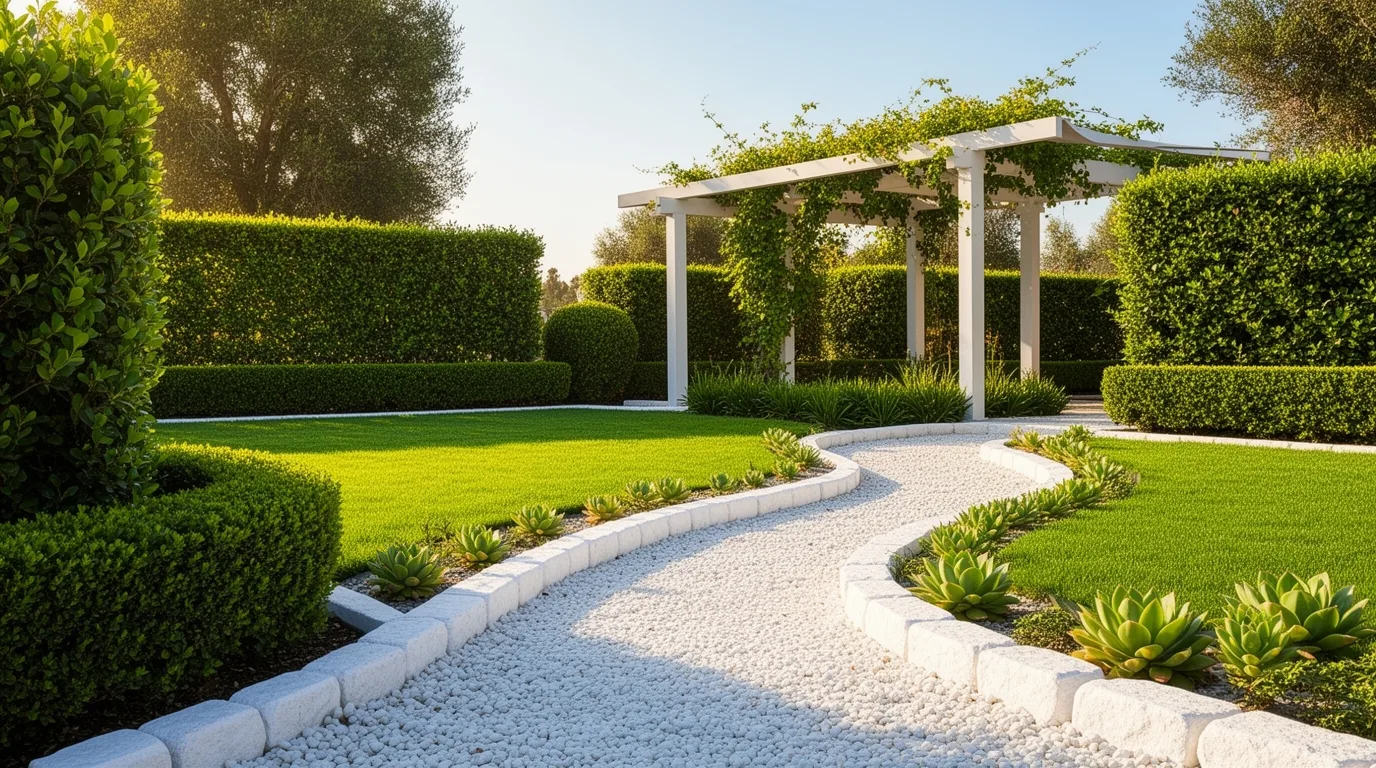
Install edging to give your garden zones a sharp, finished appearance while keeping materials like gravel or mulch neatly contained. It creates a clean line that showcases your plantings and prevents grass from creeping into beds. Choose a material that complements your plants and path. For a natural look, use stacked fieldstone beside ferns and hostas. For a modern edge, install steel or aluminum strips near architectural grasses and succulents. Bury at least half the edging’s height to ensure stability and a seamless look. Run a string line as a guide for straight sections, and use a garden hose to outline curves before you start digging your trench.
| Material | Best For Plant Types | Installation Tip |
|---|---|---|
| Brick | Traditional perennial borders | Set on a sand base for leveling. |
| Natural Stone | Woodland gardens, native shrubs | Fit pieces tightly; fill gaps with soil. |
| Recycled Plastic | Massed annuals, vegetable plots | Secure with stakes provided. |
| Steel | Contemporary gardens, ornamental grasses | Wear gloves to handle cut edges. |
| Paver Blocks | Formal hedges, rose beds | Use a rubber mallet to settle them. |
Use Mulch to Improve Soil and Curb Weeds
Edging keeps materials in place, and right inside that border, mulch is your next step for healthier plants and fewer weeds.
You’ll conserve moisture, regulate soil temperature, and suppress unwanted growth. Apply a two to three-inch layer around your plants, but keep it away from stems to prevent rot. Organic mulches like shredded bark or compost even improve soil fertility as they decompose.
- Choose Your Mulch: Pick organic types like wood chips for perennial beds or straw for vegetable gardens.
- Apply Correctly: Spread a 2-3 inch layer, avoiding direct contact with plant stems and trunks.
- Time It Right: Mulch in late spring after soil warms and plants establish.
- Maintain It: Refresh decomposed mulch annually to sustain benefits and appearance.
Choose Low-Maintenance Plants for Easy Upkeep
Often, the simplest way to reduce your gardening workload is to thoughtfully select plants suited to your conditions. First, note your yard’s sunlight and soil. Group plants with similar water needs together. You’ll spend less time watering and more time enjoying. Opt for native species; they’re already adapted to your local climate and pests. Consider shrubs that don’t require frequent pruning or perennials that return yearly.
| Plant Type | Key Benefit |
|---|---|
| Ornamental Grasses | Require minimal pruning, add movement. |
| Sedum (Stonecrop) | Drought-tolerant succulent, thrives in sun. |
| Liriope | Tough groundcover, handles shade or sun. |
| Boxwood Shrub | Maintains shape with one annual trim. |
| Coneflower (Echinacea) | Native perennial, attracts pollinators easily. |
Layer Your Planting for Depth and Interest
While a flat bed of plants can look tidy, you’ll create much more visual impact by arranging them in distinct layers. Think of your garden in three tiers. Start with tall structural plants like shrubs or ornamental grasses as your back layer. Place mid-height perennials, such as coneflowers or salvia, in front of them. Finally, edge the bed with a carpet of low-growing ground covers like creeping thyme or ajuga. This method fills space efficiently, hides bare stems, and provides year-round structure.
- Establish the Backbone: Plant evergreen shrubs or small trees as your tallest layer for permanent form.
- Add the Middle Ground: Use bushy perennials and grasses to create volume and seasonal color.
- Infill with Ground Cover: Let low, spreading plants fill gaps and suppress weeds at the front.
- Consider Bloom Times: Stagger flowering periods so each layer contributes interest across seasons.
Add Flexible Color With Container Gardening
Container gardening lets you easily move vibrant color wherever you want.
You can fill pots with bold annuals like petunias or geraniums for high-impact blooms.
Choose plants with similar sunlight and watering needs to simplify care.
Always use containers with drainage holes and a quality potting mix, not garden soil, to ensure healthy roots.
For a dynamic look, employ the thriller, filler, spiller technique: place a tall central plant (thriller), surround it with mid-height blooms (filler), and add trailing varieties (spiller) around the edges.
Water containers more frequently than beds, as they dry out faster.
Rotate pots seasonally, swapping summer flowers for autumn mums or ornamental kale to maintain year-round interest.
Create a Focal Point With a Statement Tree
Anchor your landscape by planting a statement tree. This single, well-chosen specimen draws the eye and gives your yard structure. Select a tree with multi-season interest for year-round impact. You’ll want to consider its mature size to ensure it fits the space without overwhelming it.
- Choose a multi-season performer like a Japanese maple, offering spring color, summer structure, brilliant fall foliage, and sculptural winter branches.
- Plant it correctly, digging a hole twice as wide as the root ball but no deeper, and position the trunk flare at ground level.
- Amend the native soil with compost to improve drainage and nutrients before backfilling the hole.
- Apply a wide mulch ring around the base, keeping it away from the trunk, to conserve moisture and protect roots.
Incorporate Vertical Gardens for Small Yards
Maximize your limited outdoor space by growing plants upward on walls, fences, or freestanding structures.
Install a simple trellis for climbing vines like clematis or morning glory. You can also mount a pocket-style planter directly on a wall; fill it with a lightweight soil mix and plant cascading herbs or colorful annuals such as petunias.
For a DIY option, repurpose a wooden pallet by lining its back with landscape fabric, filling the slats with soil, and planting succulents or strawberries. Always ensure your structure is securely anchored.
Choose plants with similar light and water needs for each vertical system. Water these gardens more frequently, as their soil dries out faster than ground-level beds.
Build a Cozy Seating Corner for Relaxation
Transform a quiet corner of your yard into a comfortable retreat by combining plush seating with soft, surrounding greenery. Choose weather-resistant furniture like a loveseat or deep armchairs and add outdoor cushions.
Then, layer in plants for privacy and texture. Follow these steps to create your sanctuary:
- Frame the Space with Shrubs: Plant evergreen shrubs like boxwood or fragrant daphne behind your seating to form a living wall.
- Add Softening Grasses: Ornamental grasses, such as fountain grass or blue fescue, placed beside chairs introduce gentle movement and sound.
- Include Fragrant Groundcover: Creeping thyme or chamomile between pavers releases scent when you step or sit nearby.
- Overhead with a Climber: Train a fast-growing, flowering vine like clematis or jasmine on a simple pergola for dappled shade.
Upgrade Your Outdoor Lighting for Evening Ambiance
While your seating corner offers a peaceful retreat by day, extending its comfort into the evening requires thoughtful lighting.
Start by installing a few solar-powered uplights around key shrubs to cast intriguing shadows. For soft, ambient glow, weave string lights through nearby tree branches or drape them along a pergola. Avoid harsh spotlights; opt for warm LED bulbs that mimic moonlight.
You can also nestle lantern-style fixtures among low-growing plants like hostas to illuminate pathways subtly. Place a durable, weatherproof table lamp on a side table for task lighting.
Always hide direct light sources to prevent glare, letting the light wash over foliage and seating surfaces instead. This layered approach creates depth and a magical atmosphere long after sunset.
Design an Outdoor Dining Area for Entertaining
Begin by selecting a level, well-drained spot near your kitchen to simplify serving. You’ll want a solid, flat surface for your table; consider laying a grid of pavers on a compacted gravel and sand base.
Frame your space with potted or in-ground plants that engage the senses and define the perimeter without crowding guests. Use these practical, plant-centric steps for a functional and inviting area:
- Install a sturdy floor using pavers, flagstone, or composite decking for stable furniture placement.
- Create fragrant barriers with boxwood hedges or large pots of rosemary and lavender to contain the space.
- Add overhead greenery by training a climbing jasmine or clematis over a pergola for dappled shade.
- Anchor with container gardens of ornamental grasses and herbs like mint for vibrant, low-maintenance borders.
Build a Simple Fire Pit for Year-Round Use
Extend your outdoor enjoyment into cooler evenings by building a simple, safe fire pit as a natural gathering spot.
First, select a location at least ten feet from structures and overhanging trees. Dig a circular trench about one foot deep and three feet wide.
Line the base with a few inches of gravel for drainage, then stack a double layer of solid concrete wall blocks or fire-rated bricks in a ring. Ensure they’re level.
For a plant-centric touch, plant low-growing, fire-resistant ground covers like woolly thyme or creeping juniper several feet away to soften the pit’s edge.
Always keep a bucket of sand or a garden hose nearby for safety. You’ll have a cozy, functional focal point for year-round use.
Add a Water Feature for Soothing Sounds
Incorporating a water feature can transform your garden’s ambiance with soothing sounds and visual interest. You can easily install a small pre-formed pond or a self-contained fountain to add a focal point without major excavation. Choose moisture-loving plants to soften the edges and integrate the feature into your landscape.
- Select a recirculating pump sized for your chosen basin to ensure consistent, gentle water flow and sound.
- Surround a pond with marginal plants like iris or papyrus in aquatic pots to frame the water naturally.
- Use creeping groundcovers such as baby’s tears or Corsican mint to cascade over fountain edges, softening hard lines.
- Plant ornamental grasses like miscanthus or carex nearby; their rustling leaves complement the sound of moving water.
Attract Wildlife With Bird Feeders and Native Plants
While you’re enhancing your garden’s soothing sounds, you can also invite vibrant life by setting up bird feeders and choosing native plants.
Start by selecting a few feeder types; tube feeders attract finches with nyjer seed, while platform feeders suit cardinals with sunflower hearts. Place them near shrubs for quick cover.
Your plant choices are crucial. Integrate native species like coneflower, bee balm, and serviceberry, which provide essential seeds, nectar, and berries. These plants support local insects, a vital food source for birds.
Group them in clusters for greater impact and ensure you have a water source nearby. You’ll create a sustainable habitat that nourishes wildlife throughout the seasons.
Add Privacy With Strategic Planting or Screens
You can also use plants to define your outdoor space and shield it from view.
For year-round coverage, choose fast-growing, dense evergreens like arborvitae or laurel. Plant them in a staggered row for a solid visual barrier.
- Assess your privacy needs: First, identify the exact sightlines you want to block from neighboring homes or streets.
- Select appropriate plants: For a tall screen, consider clumping bamboo (use root barriers) or columnar trees like ‘Sky Pencil’ holly.
- Create strategic layers: Layer plants by height. Place taller shrubs in back with mid-sized flowering bushes in front for depth and beauty.
- Maintain your green wall: Prune plants regularly to encourage dense, bushy growth from the ground up, not just at the top.
Repurpose Old Materials for Unique Garden Art
Turning old items into garden art is a creative way to personalize your space and reduce waste.
Start by scouting your shed for potential. An old ladder becomes a rustic vertical planter; secure it to a fence and fill its rungs with shallow-rooted succulents like sedum.
Drill drainage holes in chipped teacups, then plant trailing herbs like thyme to create a charming patio display.
You can transform a cracked terracotta pot into a whimsical “fairy house” by laying it on its side and planting a carpet of moss and small mondo grass at the entrance.
Always ensure your materials are clean and safe for plants, using non-toxic paints if you decorate them.
Maintain Your Landscape With a Simple Weekend Routine
Regularly dedicating a few weekend hours to basic upkeep keeps your landscape thriving and prevents overwhelming chores.
Focus on your plants’ immediate needs. This consistent care fosters healthy growth and allows you to spot small issues before they escalate.
- Check Soil Moisture: Probe the soil near your plants’ roots. Water only if the top few inches are dry, aiming for the root zone in the early morning.
- Deadhead Spent Blooms: Use pruners to snip off faded flowers just above the first set of healthy leaves. This encourages more blooms on annuals and perennials.
- Inspect for Pests & Disease: Examine the undersides of leaves and along stems. Remove any affected foliage and dispose of it away from your garden.
- Refresh Mulch: Add a thin layer of mulch around plants to suppress weeds and retain moisture, keeping it a few inches from stems to prevent rot.
Decide When to Hire a Professional or DIY
Weekends spent maintaining your landscape give you a clear sense of your garden’s needs and your own capabilities, which helps determine whether a project is best handled yourself or by a professional.
Choose DIY for planting perennials, laying mulch, or dividing overgrown hostas. You’ll find these tasks manageable with basic tools and guidance.
However, hire a pro for complex work like grading for drainage, installing irrigation to protect delicate root systems, or pruning large trees. Incorrect techniques can severely damage plants or create safety hazards.
For large-scale installations, such as a patio tree that requires specialized planting depth and soil amendments, a professional ensures its long-term health and saves you from costly mistakes.
Frequently Asked Questions
How Do I Create a Landscape Design Without a Large Budget?
Start with free mulch and compost from municipal sites. Propagate plants from friends’ cuttings and divisions. Focus your spending on a few key native perennials and use seeds for annual color.
What Are the Best Plants for a Yard With Poor Soil Quality?
Focus on native, drought-tolerant perennials. You can amend poor soil with compost first. Good choices include lavender, sedum, and ornamental grasses, as they’re resilient and thrive in tough conditions with minimal upkeep.
How Can I Prevent Weeds From Growing in Gravel Pathways?
You can smother weeds by laying a heavy-duty landscape fabric under your gravel. Keep pathways clear by spot-treating any sprouts with a vinegar-based spray, and you’ll need to maintain that gravel layer regularly.
What Is the Easiest Way to Create Privacy in a Small Yard?
Plant evergreen shrubs like boxwood or install tall grasses. You can also set up a simple trellis with fast-growing vines, which gives you a living screen that adds both beauty and privacy.
How Do I Maintain a Fire Pit Safely in Different Seasons?
Keep your fire pit area clear of plants. Regularly remove ash and debris. During wet seasons, cover it to prevent rust. Ensure your surrounding plants are fire-resistant and aren’t too close.
Conclusion
Now you’ve got a plan. Keep your native plants thriving with a regular weekend check—water deeply, prune spent blooms, and refresh mulch. Your layered planting will mature, offering year‑round structure and life. Stay on top of this simple routine, and your yard will remain a vibrant, low‑maintenance retreat that grows more beautiful each season.
The Only Tools You Need for a Thriving Garden 🌱
Whether you're a weekend gardener or growing daily — these hand-picked tools make every session faster, easier, and more satisfying.