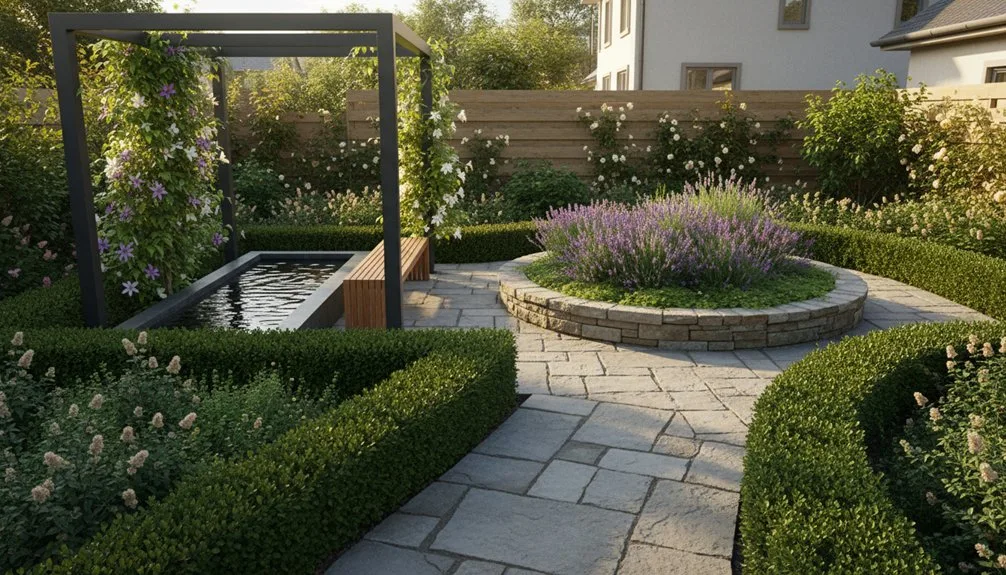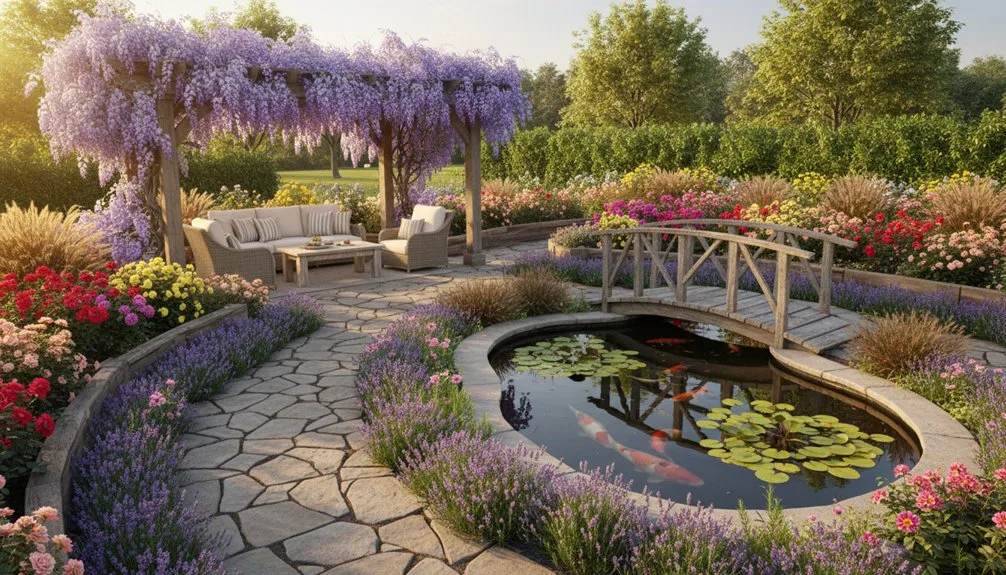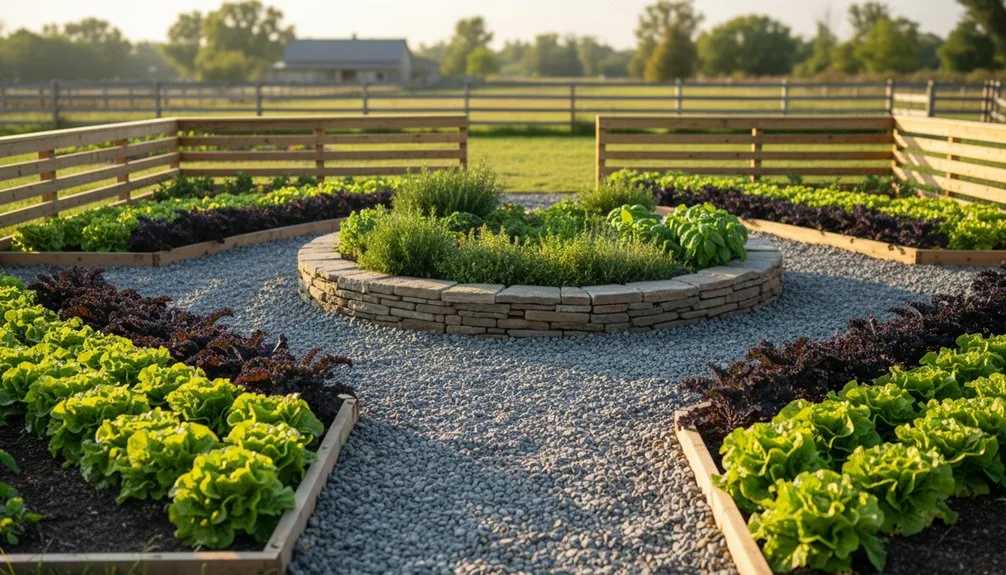

You might see your compact front yard as a limitation, but its small scale is actually your biggest design asset. With careful selection, you can create a layered, lush landscape where every plant earns its space. It requires a focus on specimen trees, dwarf cultivars, and repeating textures to build depth. Let’s explore how to translate these principles into a stunning, cohesive plan that makes a powerful impact from the curb.
Key Takeaways
- Design around a single focal point sized to complement your home’s facade.
- Select dwarf trees and compact shrubs for year-round structure without overwhelming space.
- Layer plantings by height to create depth and frame your house effectively.
- Use vertical elements like trellises and tall containers to maximize planting area.
- Choose long-blooming perennials and ornamental grasses for multi-season color and texture.
Why a Small Front Yard Is Your Biggest Advantage
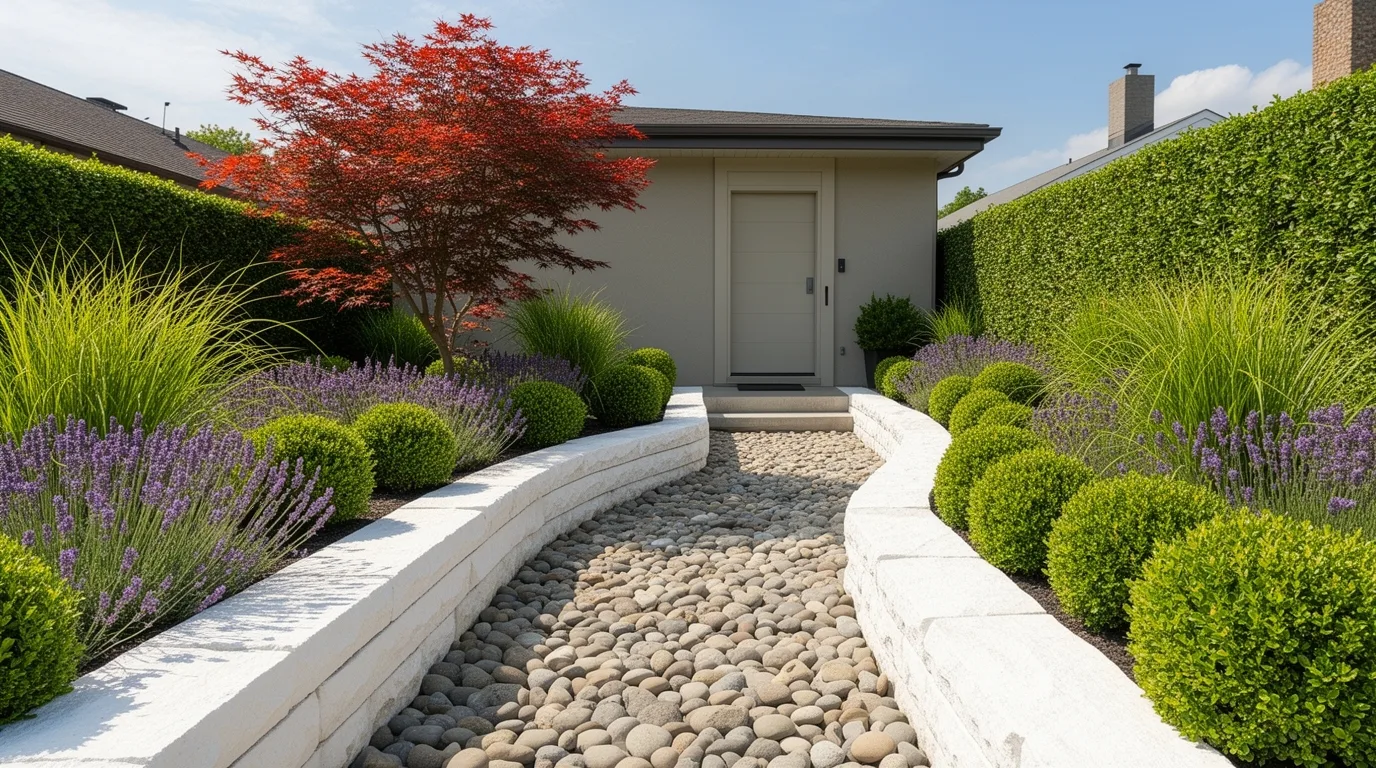
Often, the small front yard you view as a limitation is actually your greatest design opportunity. Its compact size means you can focus your resources on a few high-impact elements that create a cohesive, intentional look.
You don’t have to spread your budget thin; you can invest in a single, spectacular specimen tree, like a Japanese maple, or a curated collection of perennials and shrubs. This focus allows for meticulous layering—placing low-growing sedums at the front, mid-height heucheras behind them, and taller panicle hydrangeas as a backdrop.
Every plant choice matters more, so you’ll select varieties with exceptional foliage, texture, and seasonal interest to maximize visual impact in your confined space.
Start by Defining Your Landscape Style
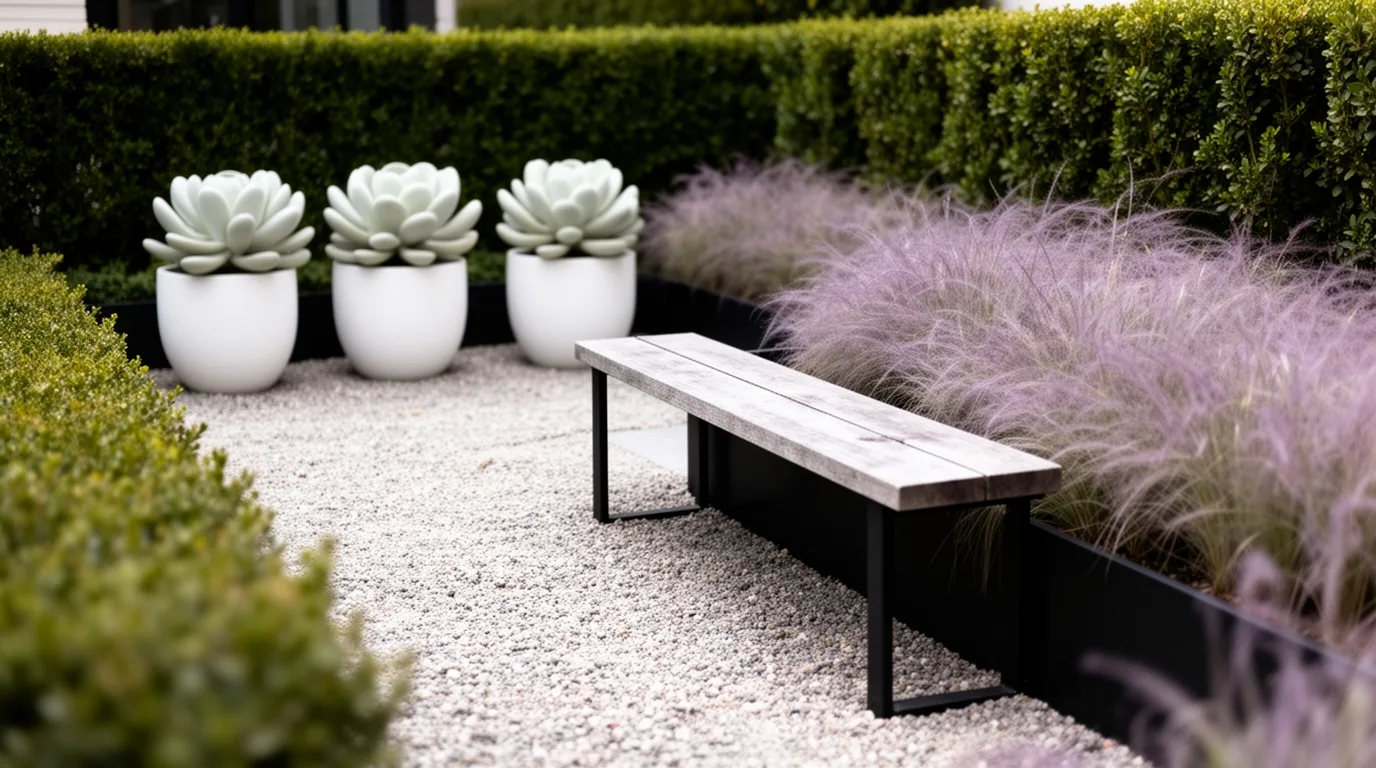
Before you choose plants or materials, you need to decide on a guiding design aesthetic for your space. This style dictates your plant palette and hardscape choices, creating a cohesive and intentional look. Your home’s architecture is a key starting point; a modern facade pairs with sculptural plants, while a cottage calls for billowing blooms. Consider these four distinct styles:
- Modern & Minimalist: Embrace clean lines with structural plants like ornamental grasses, boxwood spheres, and a restrained color palette of greens and grays.
- Cottage Garden: Aim for layered, abundant charm using perennials like lavender, catmint, and shasta daisies that spill over pathways.
- Coastal: Incorporate texture and movement with drought-tolerant, wind-resistant selections such as agave, blue fescue, and trailing rosemary.
- Xeriscape: Focus on water-wise beauty using succulents, native bunchgrasses, and gravel mulch to create a sustainable, low-maintenance tableau.
How to Choose Features That Fit Your Space
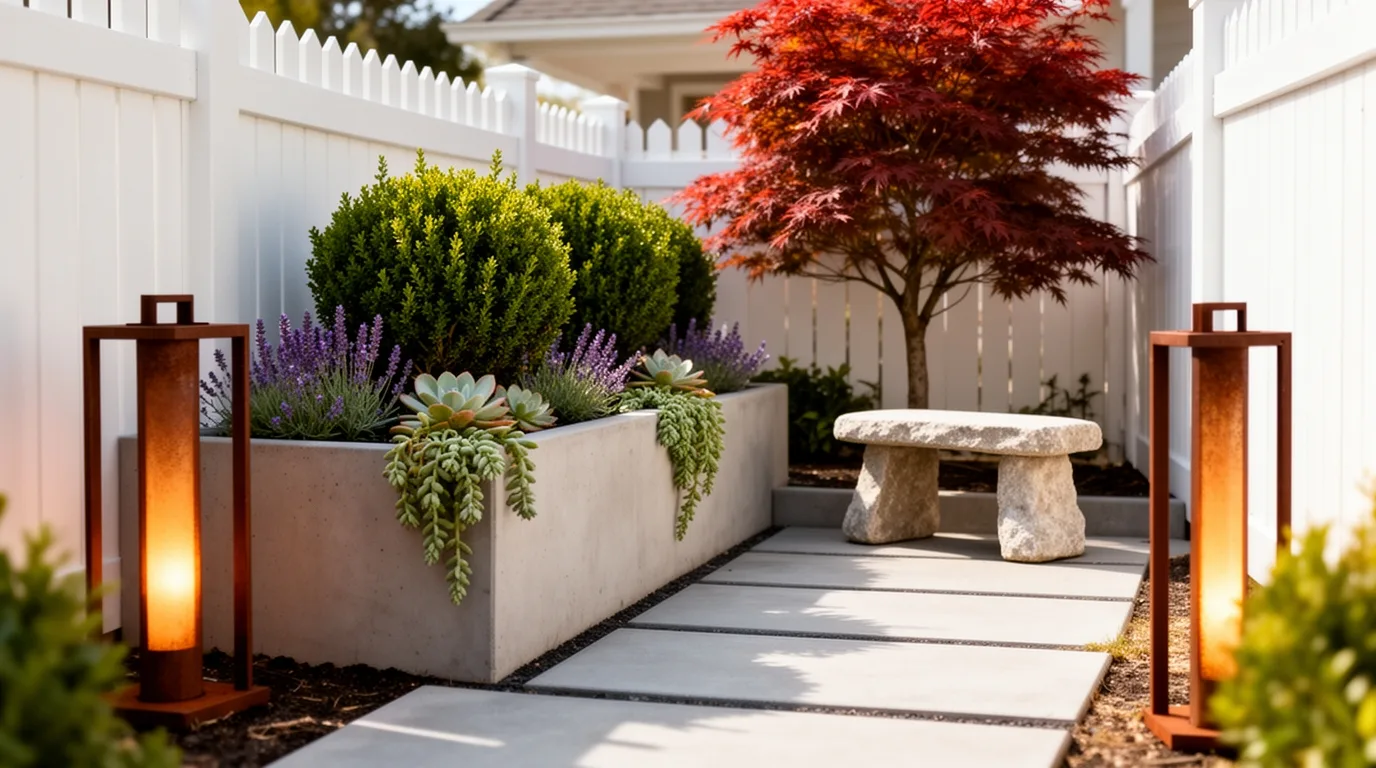
With your landscape style defined, it’s time to scale your chosen features—plants, paths, and focal points—to the specific proportions of your front yard. You must prioritize mature plant sizes. Choose compact cultivars, like ‘Little Lime’ hydrangea or dwarf boxwood, to avoid overwhelming the space. For vertical layers, underplant a small Japanese maple with spreading evergreen sedges. The width of a walkway shouldn’t exceed four feet; a three-foot path feels generous but proportionate. Select a single, impactful focal point, such as a slim water feature or ornamental grass cluster, and ensure its scale complements your home’s facade, not competes with it.
| Feature | Oversized Choice | Scaled-Down Alternative |
|---|---|---|
| Shrub | Full-size Arborvitae | ‘Emerald Green’ Arborvitae |
| Tree | Sugar Maple | Japanese Stewartia |
| Path | 6-foot gravel expanse | 3-foot stepping stone ribbon |
Measure relentlessly. A plant’s spread is as critical as its height. Tuck lower growers against the foundation and reserve the tallest elements for corners to frame the house without blocking sightlines.
Create a Welcoming Entry Path for Your Small Front Yard
From the public sidewalk to your front door, a thoughtfully designed entry path doesn’t just guide visitors—it frames their entire experience of your home, so focus on materials and plantings that enhance a sense of arrival. Let soft, mounding plants like boxwood or lavender gently spill over the path edges to create a natural, inviting border.
Keep your walkway a minimum of three feet wide for comfortable passage. Anchor the path’s beginning with a pair of matching ornamental grasses or dwarf shrubs to signal the entrance clearly.
- Choose durable, permeable materials like flagstone or brick, which allow rainwater to seep through and prevent puddling.
- Install low-voltage path lighting to illuminate steps and highlight flanking plants like hostas or liriope for nighttime safety and appeal.
- Flank the walkway with fragrant, compact plants such as thyme or creeping phlox; they release scent when brushed against.
- Maintain clear sightlines by keeping plants under thirty inches tall near the path, ensuring your front door remains the visual destination.
Design With a Focal Point
After establishing a welcoming entry path, you can build upon that foundation by introducing a strong focal point in your small front yard. This directs the eye and creates instant impact.
Choose a single, striking element like a specimen Japanese maple with vibrant foliage or a cluster of ornamental grasses, such as maiden grass, for dynamic texture. You could position a classic urn planter overflowing with cascading sweet potato vine and bold coleus right by your entry. Frame it with lower plantings to make it pop.
Always consider scale; a small yard needs a proportionate focal point. Place it where it’s naturally viewed, often aligned with your front door or path, to anchor the entire space visually.
Use Layered Planting to Create Depth
While a focal point anchors your design, you can create an immersive sense of depth through layered planting. Place taller shrubs or ornamental grasses at the rear of your planting bed, mid-height perennials like coneflowers or salvia in the center, and low-growing groundcovers like creeping thyme or sedum at the front edge.
This tiered structure draws the eye inward, making your small space feel larger.
- Establish a Backbone: Start with evergreen shrubs, such as compact boxwoods or dwarf hollies, at the very back. They provide year-round structure.
- Add Middleweight Texture: Fill the central layer with plants offering varied foliage, like the spiky leaves of iris or the soft plumes of astilbe.
- Define the Foreground: Use spreading perennials like ajuga or dwarf lamium to soften bed edges and prevent a stark, flat look.
- Intersperse Seasonal Color: Inject annuals like begonias or marigolds within the layers for vibrant, temporary pops that enhance the depth illusion.
Frame Your Doorway With Symmetry
Although layered plantings create depth, you can also use symmetry to create a powerful focal point by framing your front door. Use identical pots or matching architectural shrubs on either side of your entry to establish a balanced, welcoming feel. For evergreen structure, flank the door with compact, conical boxwoods or dwarf Alberta spruces. If you prefer flowering plants, select a pair of hydrangeas or formal rose standards. Ensure you’re measuring carefully from the door’s centerline to each plant’s trunk to guarantee perfect alignment. This simple, disciplined approach draws the eye directly to your home’s entrance.
| Plant Type | Specific Varieties for Symmetry |
|---|---|
| Evergreen Shrubs | *Buxus sempervirens* ‘Suffruticosa’, *Picea glauca* ‘Conica’ |
| Flowering Specimens | *Hydrangea macrophylla*, tree-form *Rosa* ‘Knock Out’ |
| Structural Grasses | *Miscanthus sinensis* ‘Little Kitten’, *Pennisetum alopecuroides* ‘Hameln’ |
Match Your Yard to Your Home’s Architecture
Your home’s architectural style is a blueprint for your plant choices, guiding you toward a landscape that feels inherently cohesive. You’ll reinforce your home’s character by selecting plants whose forms and textures complement its lines.
Consider these key alignments:
- For a modern farmhouse, use loose, soft textures like ornamental grasses and hydrangeas to soften clean siding and metal accents.
- With a Craftsman bungalow, repeat the structure’s horizontal lines with low, layered plantings of azaleas and ferns beneath a canopy tree.
- For a mid-century modern home, emphasize strong geometry with sculptural specimens like agaves or Japanese maples in clean, mulched beds.
- On a traditional colonial, mirror the symmetry with balanced boxwood parterres or paired yews flanking the entry path.
Choose the Right Plants for a Small Front Yard
Scale down your plant choices to fit your yard’s dimensions, selecting compact varieties and multi-season performers that deliver major impact without overwhelming the space.
Prioritize dwarf shrubs like ‘Little Henry’ sweetspire, which offers white flowers, summer color, and brilliant fall foliage in a three-foot mound.
Use vertical layers: low carpeting sedums for groundcover, mid-height boxwood globes for structure, and tall, slender ‘Sky Pencil’ hollies to draw the eye upward without spreading out.
Favor long-blooming perennials such as coreopsis and salvia, which provide months of color from a single plant.
Incorporate ornamental grasses like ‘Blue Fescue’ for fine texture and year-round interest, ensuring every selection earns its space through multiple seasons of appeal.
Add Structure With Dwarf Trees
To build on your foundation of well-chosen plants, consider dwarf trees to define your garden’s structure. They’re permanent anchors that provide scale and year-round form without overwhelming your compact space. Carefully select specimens for their mature size, shape, and multi-season interest to create focal points and frame your entryway.
- Select for Scale: Prioritize true dwarfs like the ‘Blue Star’ juniper, which stays under 3 feet, or a ‘Coralburst’ crabapple, maturing at 12 feet tall, ensuring they won’t outgrow their placement.
- Prioritize Multi-Season Interest: Choose trees such as a Japanese maple for vibrant fall color or a ‘Stella’ dwarf cherry tree for spring blossoms and summer fruit.
- Employ Strategic Placement: Frame your front door with a symmetrical pair or use a single specimen as a striking focal point from the street.
- Ensure Proper Planting: Dig a hole twice as wide as the root ball, plant at the same depth it grew in the nursery, and water deeply to establish strong roots.
Use Vertical Space With Trellises and Climbers
Maximize your small front yard’s footprint by growing plants upward with trellises and climbing vines. You’ll add lush, vertical layers without sacrificing precious ground space. Choose a sturdy structure—like an obelisk, arched panel, or wall-mounted lattice—and plant fast-growing climbers such as clematis or star jasmine to cover it quickly. This strategy also creates a beautiful, living screen for privacy. Select plants that match your light conditions and provide multi-season interest.
| Plant Selection | Support Type | Key Consideration |
|---|---|---|
| Clematis | Obelisk or Trellis | Needs cool roots; mulch the base. |
| Climbing Roses | Sturdy Arch | Requires annual pruning for shape. |
| Sweet Peas | Simple Teepee | Plant in cool seasons for spring blooms. |
Secure vines with soft ties, and water the base thoroughly to establish deep roots.
Build a Tiered or Vertical Garden
Another way to incorporate upward growth is by building a tiered planter or a dedicated vertical garden structure. This approach dramatically increases your planting area without expanding your footprint, perfect for showcasing a curated collection of plants.
You can construct simple wooden shelves, repurpose ladders, or install modular planting panels on a fence. Focus on selecting plants that thrive in the specific light conditions and soil depth each tier provides.
- Plant cascading specimens like creeping thyme or trailing lobelia on upper levels to soften edges.
- Fill middle tiers with compact herbs such as oregano and thyme for fragrance and utility.
- Reserve the deepest bottom tier for anchor plants like dwarf ornamental grasses or compact hydrangeas.
- Incorporate vertical pockets with succulents like sedum or colorful annuals like pansies for intricate texture.
Incorporate Textures for Year-Round Interest
While you’re layering plants for height, don’t forget to weave in a diverse mix of textures to keep your small front yard engaging through every season.
Combine the spiky, architectural fronds of a dwarf yucca or a small ornamental grass with the soft, mounding form of a blue fescue.
Introduce broad, glossy leaves from a compact hydrangea next to the feathery, fine texture of a threadleaf coreopsis or an astilbe.
Evergreens like a boxwood provide a solid, structural form, while the peeling bark of a dwarf paperbark maple adds winter interest.
This thoughtful contrast makes the space feel dynamic and full, capturing light differently throughout the day and year.
Use Color to Make Your Space Feel Larger
Since color can visually expand a small area, you’ll want to choose a cohesive palette that recedes. Cool-toned blues, purples, and whites in plants like lavender, Russian sage, and white-flowering phlox push boundaries outward, while warm reds or oranges pull them inward. Prioritize a monochromatic scheme using varying shades of one color, like a gradient of blue hydrangeas backed by silvery-blue junipers. You can implement this strategy through deliberate plant selection.
- Anchor with Cool Greens: Start with foliage plants like hostas or ferns whose green leaves form a calm, receding base layer.
- Layer in Receding Blooms: Interplant with cool-colored flowers, such as catmint or *Agapanthus* ‘Blue Heaven’, for mid-height visual expansion.
- Use Light Colors at Boundaries: Place the palest elements, like variegated ivy or white astilbe, along fences or edges to blur hard lines.
- Repeat Key Colors: Echo your chosen cool hue in several spots, using plants like blue oat grass, to create a unified, flowing vista.
Replace Your Lawn With Ground Covers
Building on a color scheme that expands space, consider swapping thirsty turf for low-growing ground covers that create a cohesive, textured carpet. You’ll save water and gain visual interest.
Choose creeping thyme for fragrant, pollinator-friendly blooms or sedum for drought-tolerant, evergreen coverage. For shady spots, plant ajuga with its metallic-purple leaves or sweet woodruff’s delicate white flowers.
These plants knit together, suppressing weeds and eliminating mowing. Prepare your soil by removing grass, amending with compost, and ensuring drainage.
Plant plugs closely, following spacing guidelines, and water thoroughly until established. A dense mat of ground cover gives your small yard a lush, finished look without the maintenance burden of a traditional lawn.
Select Hardscape for Your Compact Landscape
Once you’ve established your living ground cover, you can define your small yard’s layout and add year-round structure with intentional hardscape choices.
Select materials that complement your plants’ textures and colors, ensuring every element works together. A thoughtfully placed path guides movement while framing your thyme or sedum beds.
Consider these four key elements:
- Narrow Pathways: Install a simple gravel or flagstone walkway, just wide enough for single-foot traffic, to minimize material use and preserve planting space for creeping phlox.
- Strategic Stepping Stones: Use large, flat stones as a dry path through a patch of moss or between clusters of low-growing shrubs like dwarf boxwood.
- Defining Edging: Lay brick or metal edging to crisply separate your ajuga ground cover from a pea gravel patio, preventing root encroachment.
- A Compact Patio: Pour a small concrete pad or build a deck from reclaimed wood to create a stable base for potted succulents or a bench nestled under a tree.
Integrate Decorative Pots and Containers
Decorative pots and containers instantly add layers, color, and flexibility to your small yard’s design.
You can cluster a group of varied ceramic pots by your entryway, planting a thriller like a dwarf Japanese maple, filler such as coral bells, and trailing ivy as a spiller. Opt for lightweight, weather-resistant materials like fiberglass or resin for larger statement pieces you might need to move.
Use tall, slender containers to draw the eye upward, creating vertical interest without taking up precious square footage.
You’re not limited by soil quality, so you can grow finicky plants like acidic-loving hydrangeas in one pot and drought-tolerant lavender in another, tailoring each to its perfect conditions.
Add a Cozy Seating Nook to Your Small Front Yard
Often, the key to enjoying a compact space is carving out a dedicated spot to sit, turning your small front yard from a passageway into a destination.
You can anchor your nook with a simple, slender bench or a pair of weatherproof armchairs. Surrounding the seating with lush, multi-layered plantings creates an intimate, enveloping feel and maximizes your greenery.
- Frame the space with two tall, slender evergreens like ‘Sky Pencil’ hollies or arborvitae to define the area and add vertical interest without excessive width.
- Plant fragrant, compact shrubs like dwarf gardenias or ‘Sweet Tea’ heliotrope nearby to engage the senses from your seat.
- Add a textural carpet of groundcover, such as creeping thyme or blue star creeper, softening the edges and tying the composition together.
- Incorporate a small side table fashioned from a tree stump or a stone slab to hold a morning coffee cup while you admire your garden.
Light Up Your Yard for Evening Appeal
After you’ve established a cozy seating area for daytime use, consider how lighting extends its function into the evening, allowing you to appreciate your plantings after sunset.
Install low-voltage, downward-facing path lights to guide visitors and cast intriguing shadows from ornamental grasses like Japanese forest grass.
For drama, uplight a small tree, such as a Japanese maple, to silhouette its sculptural branches.
Use warm-toned LED spotlights to graze textured walls of creeping fig or star jasmine, highlighting their forms.
Strategically place solar-powered lanterns near fragrant night-bloomers like moonflowers or flowering tobacco.
This layered approach creates depth, extends your garden’s visual interest, and safely frames your entryway, making your small yard inviting long after dark.
Implement Smart Drainage Solutions
Since a small yard’s charm can quickly wash away, tackling water management early is key. You’ll integrate drainage solutions seamlessly into your planting beds, turning a functional need into a design feature. Focus on plants that thrive in moist conditions, using them to stabilize soil and manage flow. Begin by observing your yard’s natural drainage patterns after a rainstorm.
- Install a subtle French drain by trenching a gravel-lined channel, disguising it with overplanting of moisture-loving Siberian irises or ornamental grasses.
- Build a gently sloped rain garden basin, filling it with layered plantings like river birch, ferns, and sedges to absorb runoff.
- Replace impermeable surfaces with permeable paving and direct water into adjacent thirsty groundcover beds of creeping thyme.
- Use strategically placed bog plants like pitcher plants or swamp milkweed in low spots to create a beautiful, water-absorbing focal point.
Design for Safety: Maintaining Clear Sightlines
From your front door to the curb, maintaining clear sightlines keeps your small yard feeling open and secure.
You’ll want to prune any tree branches or dense shrubs that block your view of the sidewalk and street, especially near the driveway and entry path.
Opt for low-growing, airy plants like lavender, catmint, or ornamental grasses for foundational beds; they provide beauty without creating a visual barrier.
You’re ensuring you can see visitors approaching and that drivers can spot you, which enhances security for everyone.
Keep planting within the two-to-three-foot height range directly in front of windows and along key pathways to maintain that crucial transparency while still enjoying lush greenery.
Landscape a Sloped Small Front Yard
While a sloped yard adds visual interest, tackling the grade effectively can maximize its potential. Your primary goals are managing erosion and creating usable, layered planting spaces. You’ll achieve this by building into the slope with structured elements and choosing plants that anchor the soil.
- Install low, dry-stacked retaining walls from natural stone or timber to create level planting terraces, which also add valuable flat areas for feature shrubs.
- Plant deep-rooted, spreading groundcovers like creeping juniper, woolly thyme, or ‘Blue Star’ creeper between stones and on banks to bind the soil seamlessly.
- Incorporate ornamental grasses, such as blue fescue or fountain grass, whose fibrous root systems combat erosion while adding texture and movement.
- Use a cascading plant palette with spillers like ivy, sedum, or trailing rosemary to soften hardscape edges and visually connect the different levels.
Design a Low-Maintenance Small Front Yard
Creating a beautiful, low-maintenance small front yard means swapping high-effort elements for smart design and resilient plants.
First, replace a thirsty lawn with a permeable gravel or decomposed granite base. Interplant this with tough, spreading perennials like sedum ‘Angelina’ or creeping thyme for vibrant, weed-suppressing mats of color.
Choose drought-tolerant native shrubs, such as dwarf manzanita or Russian sage, which thrive with minimal watering once established.
For structure, install a few ornamental grasses like blue fescue; they require no pruning and offer year-round texture.
Use a generous layer of mulch to retain moisture and prevent weeds.
This plant-centric approach creates a lush, cohesive look that largely cares for itself.
Budget-Friendly Updates for Immediate Impact
Several quick, cost-effective swaps can dramatically refresh your small front yard without a major investment. Focus on high-impact, plant-centric changes that deliver instant curb appeal. You can often source affordable perennials and shrubs from local plant swaps or end-of-season sales.
- Replace struggling lawn patches with a dense, low-growing ground cover like creeping thyme or sedum, which adds texture and color while suppressing weeds.
- Swap out a single generic shrub for a statement plant, such as a compact hydrangea or an ornamental grass like blue fescue, for immediate focal point.
- Refresh your entryway by planting symmetrical, fragrant lavender or boxwood shrubs in matching containers on either side of your door.
- Define your garden edges with a crisp border of inexpensive liriope or dwarf mondo grass, which creates a polished look with minimal upkeep.
How to Phase Your Project: A Step-by-Step Approach
Because a small front yard project can feel overwhelming, phasing your work into logical steps helps you manage costs, effort, and seasonal timing effectively. Start with structural ‘bones’ like defining edges with a durable, dwarf boxwood hedge or installing a simple flagstone path. Next, tackle soil amendments and plant your foundational woody specimens, perhaps a compact Japanese maple for autumn color. The third phase focuses on infilling with perennial layers; consider drought-tolerant lavender for scent and silvery Russian sage for texture. Finally, add seasonal accents like annuals in decorative containers.
| Project Phase | Key Plant & Material Focus |
|---|---|
| 1. Structure | Edging hedges, hardscape paths |
| 2. Foundation | Trees, shrubs, soil improvement |
| 3. Infill Layers | Perennials, ground covers |
| 4. Seasonal Accents | Annuals, container plants |
Frequently Asked Questions
How Do I Handle Utility Line Conflicts?
First, call 811 to mark utility lines. Then, choose shallow-rooted perennials and shrubs for safe planting. You’ll install small plants well away from marked areas to ensure you don’t disrupt vital services.
What Are the Legal Permit Requirements?
You’ll need a permit for structural changes. Always contact utility providers first for line locations, then check local ordinances, as requirements for fences, retaining walls, and major hardscaping vary significantly by municipality.
Can I Repurpose Existing Materials Effectively?
Yes, you absolutely can. Use old bricks for a herb spiral or broken pots to create a succulent wall. Reclaimed wood makes rustic planters for native perennials and shrubs, saving you money while adding unique character.
How to Prevent Damage From Pets or Wildlife?
Protect your plants by installing sturdy, buried barriers or using raised beds. Choose sturdy shrubs like boxwood and avoid delicate blooms. You can also apply natural repellents around vulnerable areas to deter digging or browsing.
Does Landscaping Affect My Home’s Resale Value?
Yes, excellent landscaping boosts your home’s value significantly. You can recoup much of your investment by choosing mature, native plants, adding structured pathways, and ensuring your design creates an inviting first impression from the curb.
Conclusion
Start by choosing your showpiece—a single specimen tree or a symmetrical pair. Layer compact evergreens, mid-height perennials, and creeping groundcovers to build depth. Add a narrow, permeable path with soft lighting and a vertical accent, like a trellis. Repeat your chosen colors and textures throughout. By focusing on dwarf cultivars and intentional contrasts, you’ll create a cohesive, stunning garden where every plant earns its space.
The Only Tools You Need for a Thriving Garden 🌱
Whether you're a weekend gardener or growing daily — these hand-picked tools make every session faster, easier, and more satisfying.