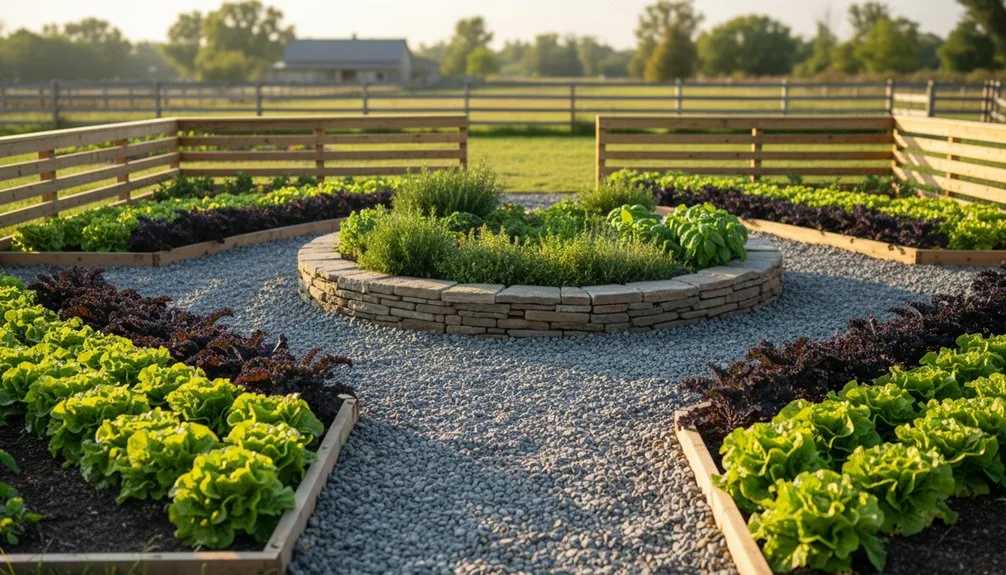

Start by sketching your beds, zoning them for sun and water needs. Arrange tall sunflowers in back, with mid-height zinnias and low nasturtiums for easy access and visual flow. Space plants to their mature size, leaving room for paths. But the real secret to a season-long show lies in the timing of your plantings and a few simple structural supports.
Key Takeaways
- Plan your layout in distinct sun and water zones to simplify care and maximize plant health.
- Use succession planting and staggered sowing dates to ensure continuous blooms from spring to fall.
- Arrange plants by height with tall varieties at the back and wide access paths for easy cutting.
- Combine reliable perennials as anchors with high-productivity annuals that bloom more when cut frequently.
- Integrate structural supports like stakes at planting time to protect tall blooms and prevent damage.
Define Your Color and Season Goals First
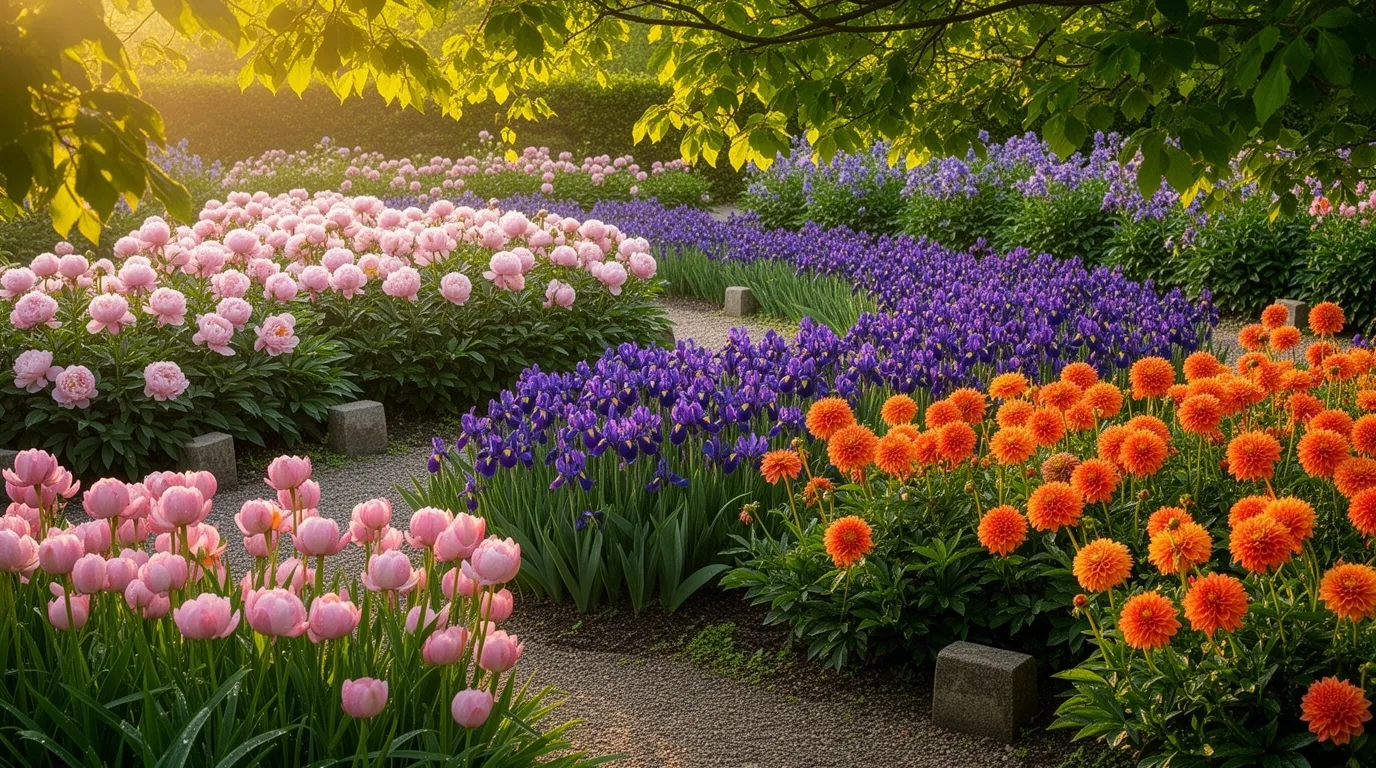
Before you turn a single spade of soil, spend some time dreaming about the colors you want to see and when you want your garden to bloom. Think about your vases indoors. Do you crave soft pastels for a bedroom or vibrant reds and oranges for the kitchen table?
Next, map out your season. You’ll want flowers from spring through fall, so plan for a succession of blooms. Maybe you start with tulips and peonies, transition to zinnias and cosmos in summer’s heat, and finish with dahlias and asters in autumn.
Jot these color palettes and seasonal targets in a notebook. This vision becomes your blueprint, ensuring every plant you choose has a purpose in your cutting garden.
Choose the Right Mix of Annuals and Perennials
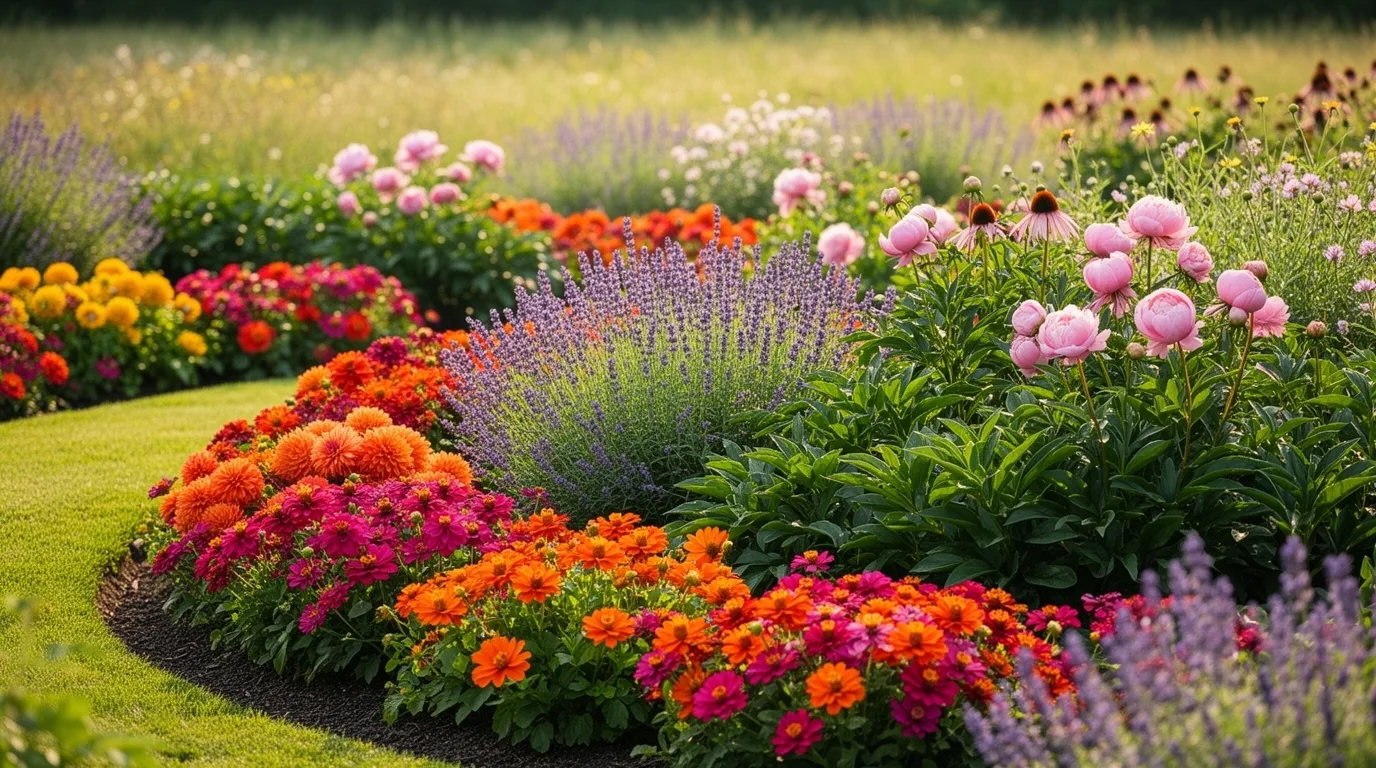
Selecting the right balance of annuals and perennials creates the dynamic, long-lasting backbone of your cutting garden. Think of perennials like peonies and echinacea as your reliable anchors, returning each year to provide stunning, seasonal structure.
You’ll fill in the glorious gaps with vibrant annuals. Zinnias, cosmos, and sunflowers are your workhorses, pumping out a continuous show of blooms from early summer until frost.
Since you cut them frequently, they’ll respond by producing even more flowers. This strategic mix ensures you always have something beautiful to harvest.
You get the exciting, rapid payoff of annuals layered with the dependable, deepening beauty of established perennial clumps, guaranteeing a generous and evolving supply of stems for your vases.
Group Plants by Their Sun and Water Needs
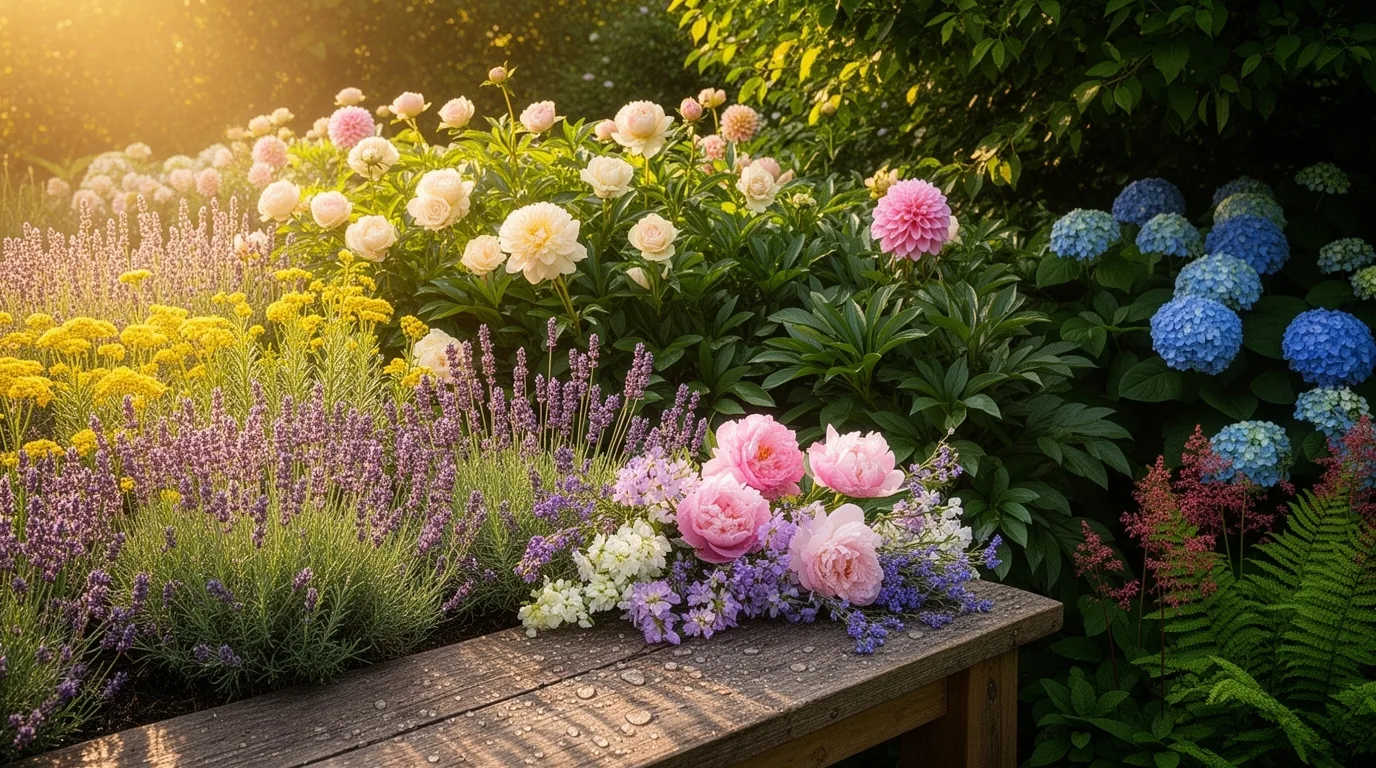
Though you’ve carefully chosen your flowers, their success hinges on placing them where they’ll thrive by grouping plants with similar sun and water needs together.
This practical step simplifies your care routine and ensures every plant gets exactly what it needs to flourish.
You’ll create distinct zones in your garden layout, like a sunny, well-drained bed for zinnias and cosmos, and a partly shaded, moist area for foxgloves and impatiens.
This targeted approach prevents under-watering sun lovers or overwatering shade dwellers, leading to stronger plants and more abundant blooms.
- Create a “Full Sun” Zone for drought-tolerant blooms like sunflowers and marigolds.
- Design a “Partial Shade” Section for flowers such as begonias that prefer cooler, moist soil.
- Map a “Low Water” Area for resilient succulents or native plants that thrive on minimal irrigation.
- Establish a “Consistent Moisture” Patch for thirsty cut flowers like dahlias that demand regular watering.
Layout Plants by Height for a Layered Look
Once you’ve arranged plants by their needs, arranging them by height shapes your garden’s visual impact. You’ll create a stunning, layered look that maximizes curb appeal and bloom visibility. Place your tallest varieties, like sunflowers or hollyhocks, at the back of your beds. Mid-height flowers such as zinnias, cosmos, and dahlias form the lush middle layer. Finally, use low-growing edgers like sweet alyssum or dwarf marigolds in front. This thoughtful tiering ensures every plant gets its moment in the sun, literally and figuratively, creating a full, professional display from every viewing angle.
| Height Tier | Example Plants | Design Purpose |
|---|---|---|
| Tall (Back) | Sunflowers, Delphiniums | Create a dramatic backdrop |
| Medium (Mid) | Zinnias, Foxgloves | Provide abundant, main-stage blooms |
| Short (Front) | Alyssum, Nasturtiums | Frame the bed & hide bare stems |
| Variable Fillers | Snapdragons, Salvia | Add vertical interest throughout |
| Spillers | Sweet Potato Vine | Soften edges with cascading foliage |
Space Your Rows for Easy Cutting and Weeding
While your layered beds are beautiful, they also need to be practical. You’ll harvest more stems with less strain by providing clear paths for yourself.
Plan walking rows between your planting rows; eighteen to twenty-four inches is an ideal width. This space lets you kneel comfortably to cut flowers and pull weeds without compacting the soil around your plants.
- Create defined access paths wide enough for a kneeling pad and basket.
- Allow for plant sprawl by leaving room for mature widths, preventing a tangled jungle.
- Orient rows north to south so sunlight reaches all plants evenly throughout the day.
- Leave a central main aisle for a cart or wheelbarrow to simplify cleanup and hauling harvests
Plan Dedicated Cutting Rows Versus Mixed Borders
Planning dedicated cutting rows versus designing mixed borders means making a core choice about the function and feel of your garden.
For pure productivity, dedicate straight rows solely to your best cut-and-come-again blooms like zinnias and cosmos. You’ll plant in efficient blocks, making harvesting and maintenance a straightforward task. This creates a highly functional, almost farm-like aesthetic.
Conversely, mixing flowers into perennial borders blends cutting material with shrubs and foliage plants for a more ornamental, cottage-garden look. You’ll tuck your snapdragons behind daylilies, letting their spires add vertical interest even when not in your vase.
While slightly less convenient for mass harvesting, this approach yields a lush, multi-season display that beautifies your yard as it fills your home.
Schedule Succession Planting for Nonstop Blooms
To consistently fill your vases, you’ll need a detailed succession planting schedule that replaces harvested flowers with new seedlings throughout the season. Think of your garden as a production line, with new plants always maturing to replace those you cut. This method ensures you never face a bare patch and your supply remains constant from spring through fall.
By planning your sowings in intervals, you’ll master the timing for each variety’s bloom cycle.
- Map your sowing dates: Create a calendar noting when to start seeds indoors and direct sow outdoors for each flower type.
- Stagger quick growers: Plant fast-blooming varieties like zinnias or cosmos every two to three weeks in small batches.
- Pair early and late varieties: Follow harvested tulips with a sowing of dahlias in the same space.
- Keep seedling reserves: Maintain a small nursery area or pots for ready-to-transplant backups.
Add Stakes and Windbreaks to Prevent Damage
Secure your tallest blooms against summer storms with sturdy stakes and clever windbreaks, transforming potential disaster into mere inconvenience.
You’ll anchor delphiniums, hollyhocks, and dinnerplate dahlias early, placing stakes as you plant to avoid root damage. Use bamboo, steel rods, or even pruned branches, securing stems with soft ties in a figure-eight loop.
For broader protection, create living windbreaks with a dense row of shorter, sturdy plants like zinnias or sunflowers at your garden’s windward edge. Alternatively, install a temporary lattice or burlap screen.
This proactive support keeps stems straight and unbroken, ensuring every flower you’ve nurtured reaches its full, glorious potential in your vase, not flattened on the ground.
Adapt the Layout for Small Spaces and Containers
Even with limited room, you can still cultivate a vibrant cutting garden by focusing on vertical layers and strategic container choices. Prioritize compact, prolific bloomers like dwarf zinnias, petunias, and marigolds. Select deep pots for plants with extensive root systems, ensuring they’ve ample drainage. Your layout’s success hinges on maximizing every inch through clever stacking and multi-purpose containers.
- Employ tiered plant stands to create vertical displays, letting shorter plants nest beneath taller ones like snapdragons.
- Train climbing vines like sweet peas or nasturtiums up a small trellis or balcony railing for height.
- Use large, rectangular planters to group several compatible flower varieties together in a single “garden bed.”
- Mix edible flowers like pansies with herbs in pots; you’ll get beautiful cuts and useful garnishes.
Frequently Asked Questions
How Do I Revive Wilted Cut Flowers Quickly?
Trim stems, remove lower leaves, and plunge them into a deep vase of very warm water. Let them sit in a cool, dark place for an hour. They’ll often perk up beautifully.
What Are the Best Vase Solutions for Cut Flowers?
Opt for a meticulously clean vase, ensuring it’s proportionate to your stems. You can use a tall vessel for support or a shallow dish for compact arrangements. Always fill it with fresh, room-temperature water.
How Often Should I Change the Water for Cut Flowers?
Change your vase water every two days to keep it fresh. You should also recut the stems at an angle each time you do this, as it helps maximize your flowers’ water intake and longevity.
Which Common Garden Pests Target Cut Flower Plants?
You’ll find aphids, Japanese beetles, and slugs target your blooms. You can combat them by inspecting plants regularly. Use a strong water spray, hand-pick pests, or try insecticidal soap to protect your flowers.
What Tools Are Essential for Harvesting Cut Flowers?
You’ll need sharp, clean bypass pruners, a bucket of cool water, and maybe gloves. Harvest early with long stems, and strip any foliage that’ll be submerged to keep your bouquets fresh and vibrant.
Conclusion
Your final step is to watch your plan come alive. You’ve built a thriving, efficient garden by zoning for sun, layering heights, and planning your sequence. Now, with your tools and water close by, you can easily tend and harvest armfuls of blooms. Stay on top of your sowing schedule, and you’ll enjoy continuous, dazzling color from spring through fall.
The Only Tools You Need for a Thriving Garden 🌱
Whether you're a weekend gardener or growing daily — these hand-picked tools make every session faster, easier, and more satisfying.