Picture your garden with clipped boxwood and lavender in geometric beds. You’ll start by establishing a strong central axis, then frame it with gravel paths and classic parterres. Imagine adding pleached allées for vertical rhythm and a stone fountain as your focal point. You can achieve this timeless elegance, but your choice of structural plants is crucial for its authentic character.
Key Takeaways
- Establish a central axis from your main viewpoint to anchor symmetrical, orderly layouts.
- Define geometric garden rooms with tightly clipped boxwood or yew hedges.
- Use a restrained color palette of greens, whites, and soft lavenders for elegant cohesion.
- Create focal points with stone fountains, urns, or topiary at axis intersections.
- Incorporate structured elements like pleached tree allées and parterre patterns.
What Makes a French Garden Design So Distinctive?

Several key principles create the distinct, orderly beauty of a French garden. You’ll rely heavily on form over function, using nature as a building material. You’re not cultivating a wild meadow; you’re imposing an architectural vision. This means selecting plants primarily for their sculptural qualities. You’ll choose dense, slow-growing boxwood to carve into crisp, low hedges and parterres. You’ll employ tall, uniform hornbeam or lime trees, lining them up in strict allées to create dramatic, shaded vistas.
Even your flowers serve a structural purpose. You’ll plant them in solid blocks of single-color annuals like ageratum or salvias, creating living ribbons of color that reinforce geometric patterns rather than softening them. Every element is controlled and deliberate.
Start With Symmetry and Structural Planning

Before you place a single plant, you need to lay out your garden’s architectural bones with a symmetrical plan. This precise structure creates the formal elegance that defines a French garden.
Your plants will later fill these ordered spaces. Establish strong axes and use geometric shapes like squares and circles to define your beds and pathways. This framework dictates where your trees, hedges, and flower beds will grow.
- Establish a Central Axis: Define a straight, dominant path from your main viewpoint, like a door or terrace. This will anchor your entire layout.
- Create Enclosed Rooms: Use tightly clipped boxwood or yew hedges to form green walls, outlining symmetrical garden rooms or parterres.
- Define Geometric Beds: Shape planting beds as perfect squares, rectangles, or circles, ensuring they mirror each other across your central axis.
- Plan for Allées: Design straight walkways lined with evenly spaced, pleached trees or tall shrubs to create grand, verdant corridors.
Choose Plants for an Authentic French Garden Palette

With your garden’s symmetrical framework established, you can select plants that contribute to a restrained and elegant palette. You’ll focus on form and foliage, using clipped boxwood for low hedges and structural topiaries.
Lavender borders add fragrant, silvery mounds and soft purple spires, while ‘Grosso’ is a classic, hardy choice. Incorporate roses, particularly pale floribundas or climbers like ‘New Dawn,’ for delicate color.
For seasonal structure, plant standard bay laurels in pots. Limit your color scheme to greens, whites, silvers, and soft lavenders or blues.
Use gravel or pale stone for pathways to complement this muted scheme, and repeat key plants to reinforce the garden’s orderly rhythm.
Incorporate Classic French Garden Design Elements
- Craft *parterres* using clipped santolina or lavender for silvery foliage within boxwood frames.
- Plant fragrant, low *broderie* patterns with alternating green and gray woolly thyme.
- Establish shady *allées* with pleached fruit trees, such as apples or pears.
- Design a formal *potager* with geometric beds of red cabbage and chives surrounded by rosemary hedges.
Create Focal Points and a Grand Central Pathway
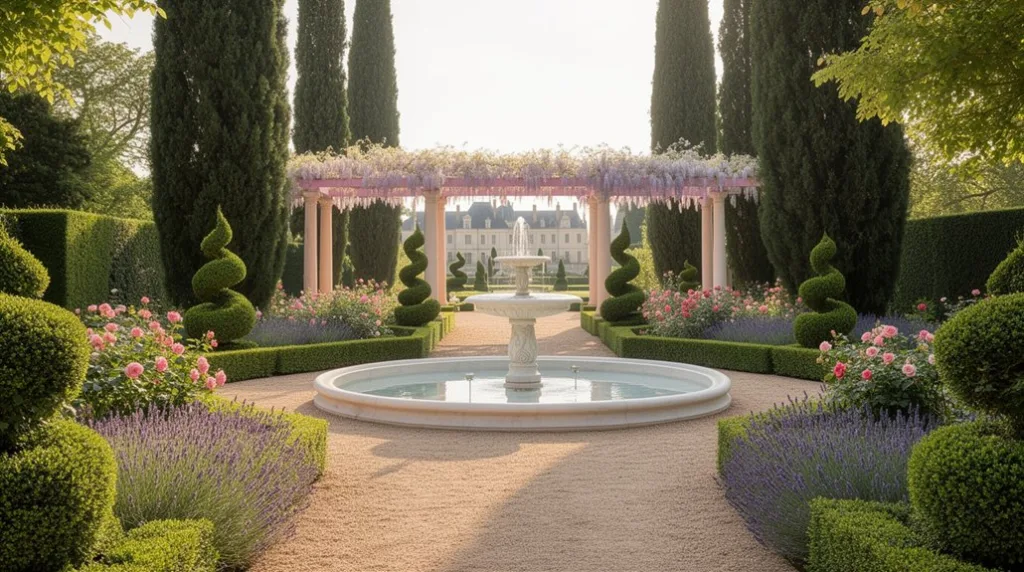
While you’ve established the bones of your garden with classic elements, you’ll now want to build upon that framework by creating focal points and laying out a grand central pathway. This central allée, straight and geometrically precise, anchors the design. Pave it with gravel or stone and flank it with low, dense boxwood parterres or orderly rows of pleached hornbeams to channel the view toward a terminus. Your focal point could be a stately fountain, a classical stone urn overflowing with lavender, or a sculptural specimen like a topiary cone. Place these elements where axes intersect to command attention.
| Focal Element | Planting Companion |
|---|---|
| Stone Fountain | Surround with clipped *Buxus sempervirens* and white *Rosa ‘Iceberg’*. |
| Ornamental Urn | Plant with cascading *Helichrysum petiolare* and silvery *Santolina chamaecyparissus*. |
| Topiary Specimen | Underplant with a carpet of fragrant *Thymus serpyllum* (creeping thyme). |
Select Elegant Accents and Refined Furnishings
Once your garden’s focal points are established, you can enhance its lived-in elegance by selecting refined furnishings and decorative accents that complement the formal planting.
Choose pieces crafted from timeless materials like wrought iron, aged stone, or weathered wood. Position a classic bench beneath the shade of a pleached hornbeam to create a secluded reading nook, or place a simple stone urn overflowing with lavender beside your boxwood parterre. These elements should never overwhelm your plants but instead act as subtle, supportive frames for the living design.
- Use a weathered iron bench under a canopy of clipped trees to offer a shaded retreat.
- Place a stone obelisk or urn planted with rosemary as a focal point amidst low hedges.
- Select a simple, wooden console table to display pots of flowering geraniums.
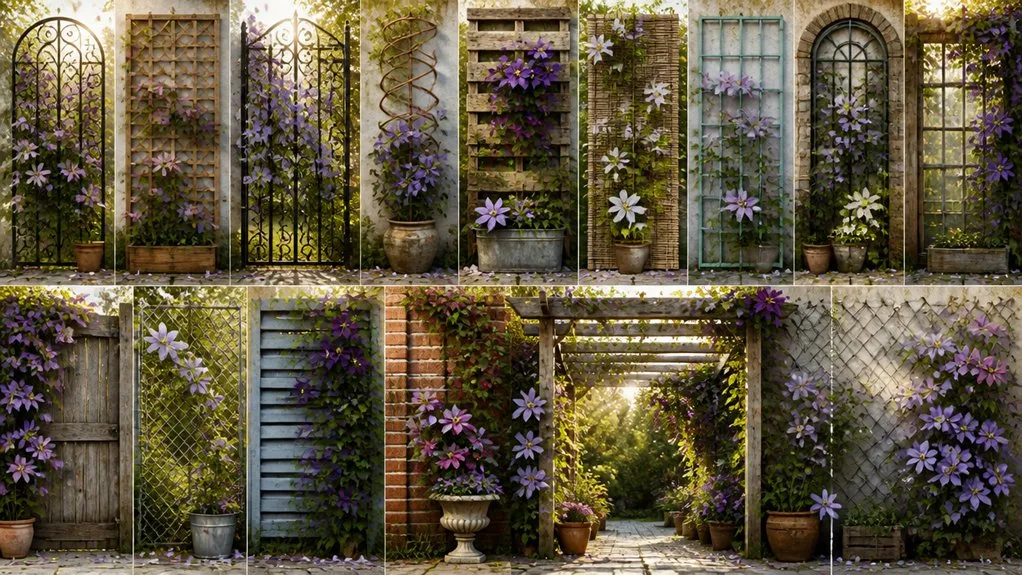
- Install delicate, wrought-iron trellises to support climbing roses or clematis.
Scale Your French Garden Design to Any Yard Size
The formality of a French garden isn’t reserved for vast estates; its principles of symmetry and structure can be adapted to fit even a compact courtyard. Focus on creating a single, strong axis as your backbone.
Use low boxwood hedges to define parterre beds, keeping patterns simple. Plant with repetition: line pathways with clipped lavender or rows of dwarf iris for rhythm.
Espalier a fruit tree against a wall to add vertical structure without width. Choose one statement piece, like a classic urn or small fountain, as a focal point.
You’ll achieve grandeur through disciplined plant choices and clear geometry, making every square foot feel intentional and elegantly composed.
Frequently Asked Questions
Is a French Garden Design High Maintenance?
Generally, yes. You’ll dedicate significant time to pruning geometric hedges, deadheading parterres, and maintaining gravel paths to keep their crisp, elegant lines looking perfect.
Can I Incorporate a Vegetable Garden?
You can incorporate a vegetable plot. Use symmetrical, raised beds or potager squares. Plant herbs like lavender with vegetables for structure. You’ll achieve elegance through orderly rows of culinary plants framed by geometric paths.
How Do I Manage a French Garden in Winter?
You’ll focus on dormant pruning, protect boxwood with burlap wraps, tidy gravel paths, and plant seasonal bulbs. Mulch dormant beds heavily for insulation, and maintain structural symmetry by trimming bare hedges.
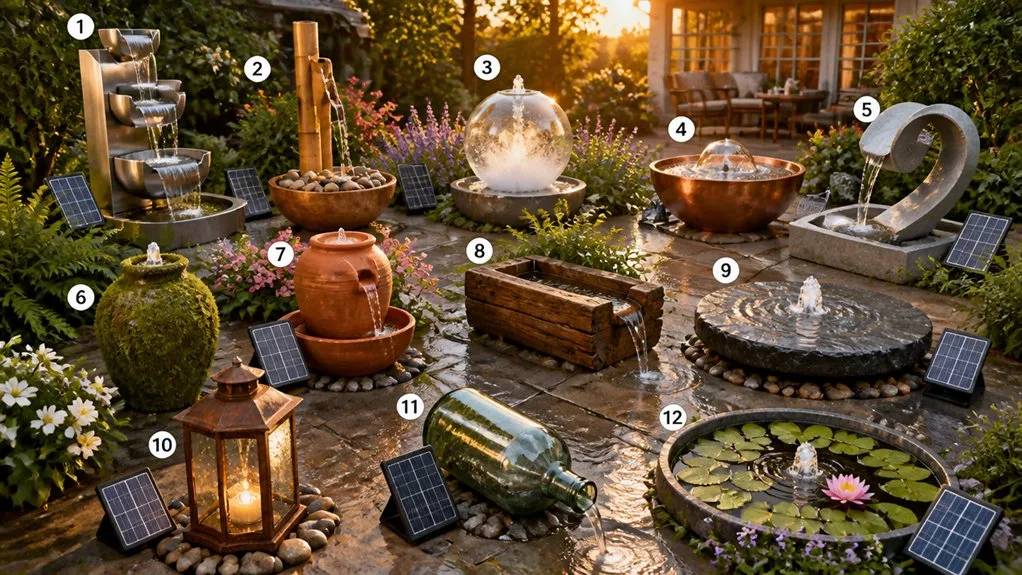
Are Water Features Difficult to Install and Maintain?
They’re moderately difficult. You’ll plan around symmetry and consider winter drainage. Choose hardy aquatic plants and you’ll find maintenance manageable with regular cleaning to keep the water clear and healthy for your garden’s life.
What’s a Good Replacement for Manicured Boxwood Hedges?
You can plant rosemary or germander. They provide neat, aromatic hedging that’s less prone to disease. Lavender makes a lower border; it offers structure and fragrance without boxwood’s high-maintenance needs.
Conclusion
Lavender, santolina, and boxwood will define your beds with fragrant, textured blocks. Maintain that crisp, symmetrical structure; your clipped hedges and stone focal points ensure timeless elegance. Remember, it’s your refined restraint—single-color plantings, a grand axis, and understated ironwork—that creates this classic sanctuary. Keep the palette simple, the lines sharp, and let your chosen greenery provide the scent and softness within the formal frame.
The Only Tools You Need for a Thriving Garden 🌱
Whether you're a weekend gardener or growing daily — these hand-picked tools make every session faster, easier, and more satisfying.