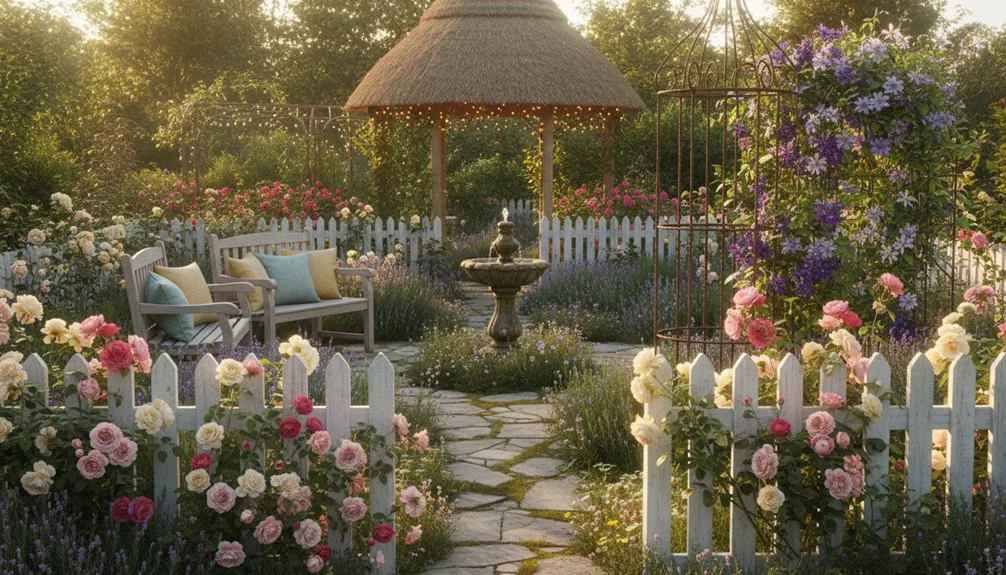
You’ll transform your backyard into a charming rustic cottage garden by layering abundant, informal plantings—vegetables, herbs, and pollinator-friendly flowers—arranged by height from front to back. Install salvaged hardscaping like dry-stacked stone walls and curved flagstone paths edged with wildflowers to guide movement naturally. Choose perimeter options: picket fences, lavender hedges, or reclaimed masonry walls. Dense planting with self-sowing flowers and trailing sedums creates authentic cottage character. Discover how strategic plant groupings and vintage accents elevate your design further.
Key Takeaways
- Embrace abundant, informal plantings with dense layering of perennials, annuals, herbs, and flowers for authentic cottage charm.
- Install rustic hardscaping using dry-stacked stone walls, reclaimed wood arches, and curved brick pathways for character and texture.
- Create visual interest with height-layered plantings: tall plants backing borders, mid-height centers, shortest plants edging pathways.
- Select fragrant, pollinator-friendly species in soft pastels with vibrant accents; include self-sowing flowers like cosmos and coneflowers.
- Frame entrances with white-painted picket fences, salvaged cedar archways, and twining honeysuckle vines for dramatic cottage appeal.
Five Principles That Define Cottage Gardens
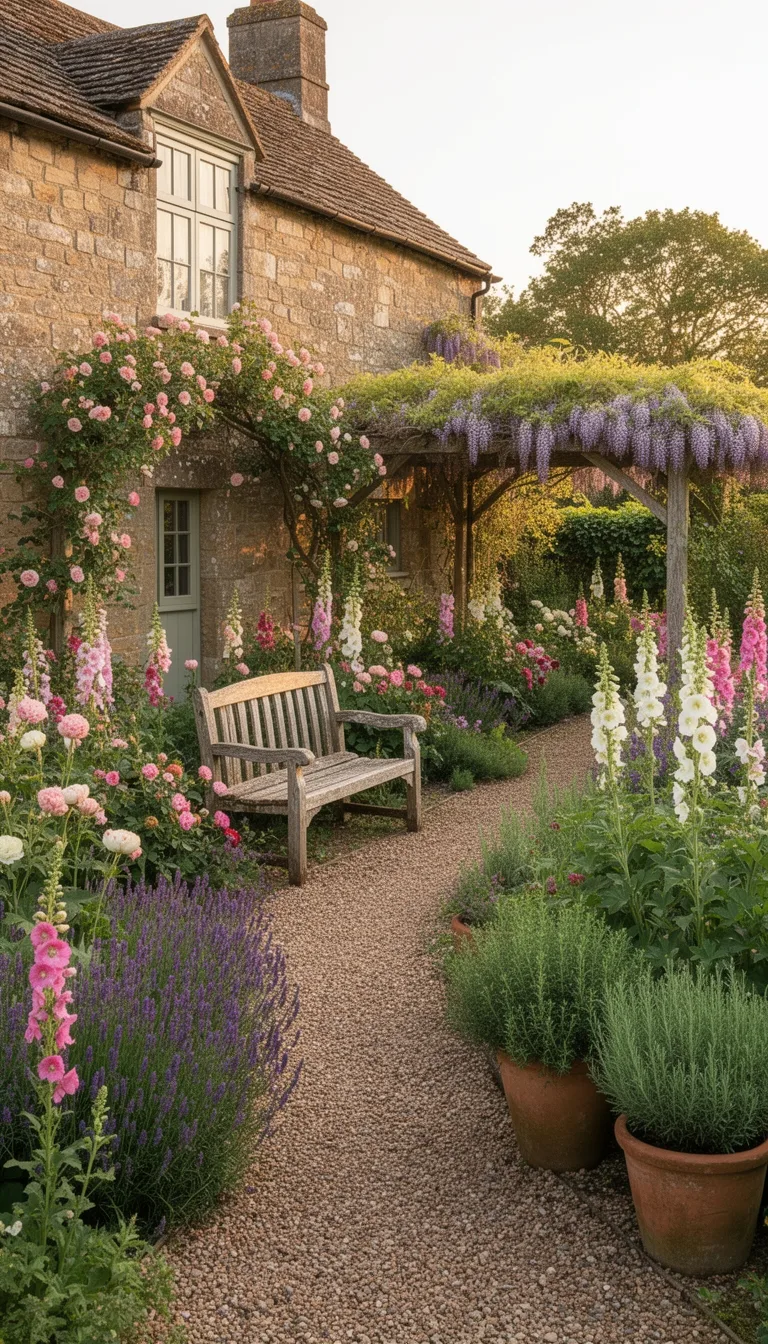
Five core principles distinguish cottage gardens from conventional landscape designs.
First, you’ll prioritize abundant plantings—layering vegetables, herbs, flowers, and shrubs informally across compact spaces, typically quarter-acre or less.
Second, embrace an unstructured style that deliberately ignores tidy lawns and formal perimeter borders, allowing plants to spill naturally over paths and soften edges.
Third, arrange plants by height and texture, positioning taller specimens toward the back while shorter varieties and groundcovers progress forward, occasionally breaking this rule for visual interest.
Fourth, you’ll select a soft pastel palette accented with vibrant pops, incorporating fragrant flowers and herbs that attract pollinators. Native plants adapted to your region will thrive with minimal soil amendment and irrigation while maintaining the cottage aesthetic.
Finally, emphasize self-sufficiency by integrating berry plants, vegetables, and fruit trees within your compact garden design using natural indigenous hardscape materials like stone pathways and wooden trellises.
Choose Your Garden Perimeter: Fence, Hedge, or Wall
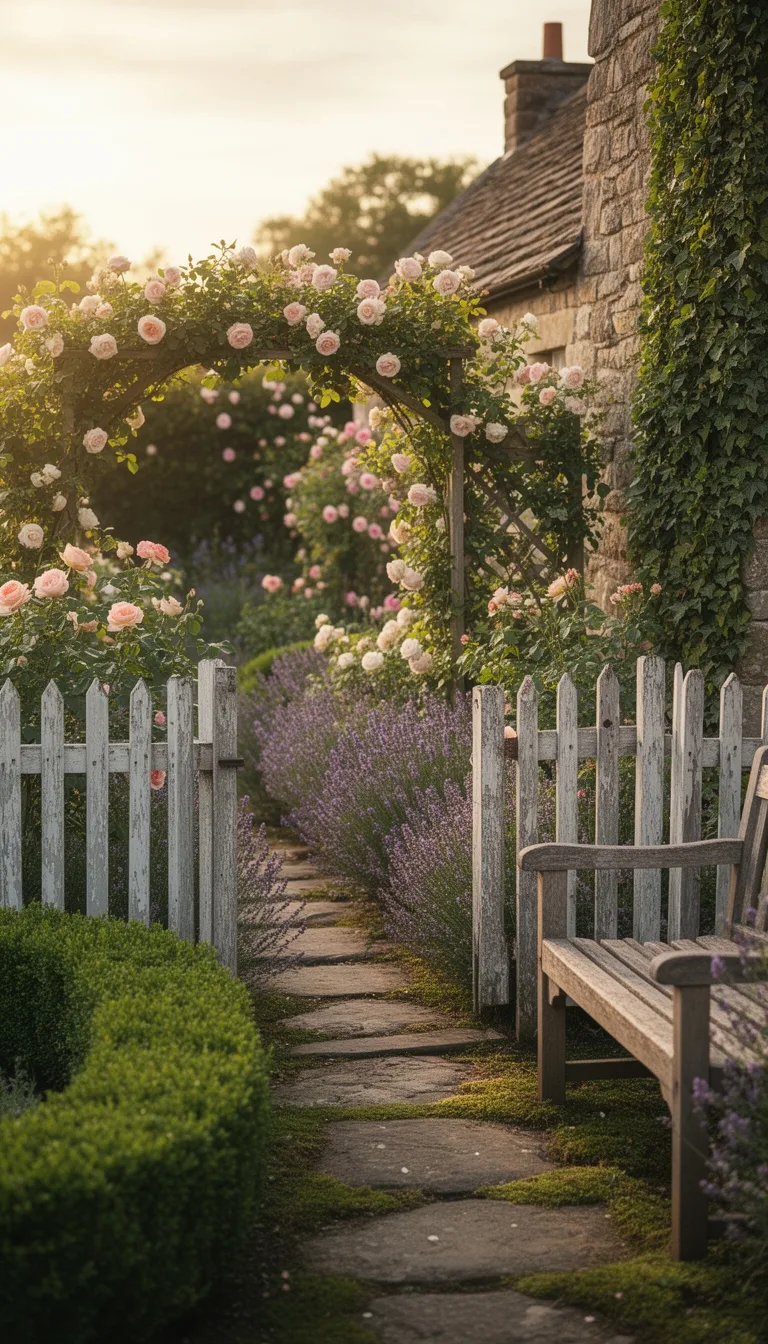
Once you’ve established your cottage garden’s layout and plantings, defining your garden’s perimeter completes the framework that contains your design while creating visual boundaries.
You can choose from three primary options: fences, hedges, or walls, each offering distinct aesthetic and functional advantages.
Fences like saw-toothed brick edging or bamboo screening provide quick installation and weed prevention. Landscape edging acts as a barrier against grass and weed intrusion, dramatically reducing long-term maintenance demands.
Hedges—including lavender, boxwood, or hardy geraniums—soften edges while adding fragrance and seasonal color.
Walls constructed from dry-stacked stone, stacked fieldstone, or reclaimed urbanite deliver rustic permanence.
When selecting materials, consider your cottage style’s requirements.
Position bricks above ground for mini walls, use string lines for alignment, and plant hedges in groupings of three or five.
Finish installations by adding mulch or rocks to the bed side while maintaining crisp lawn edges for professional contrast.
Build Classic Borders With Picket Fences and Stone
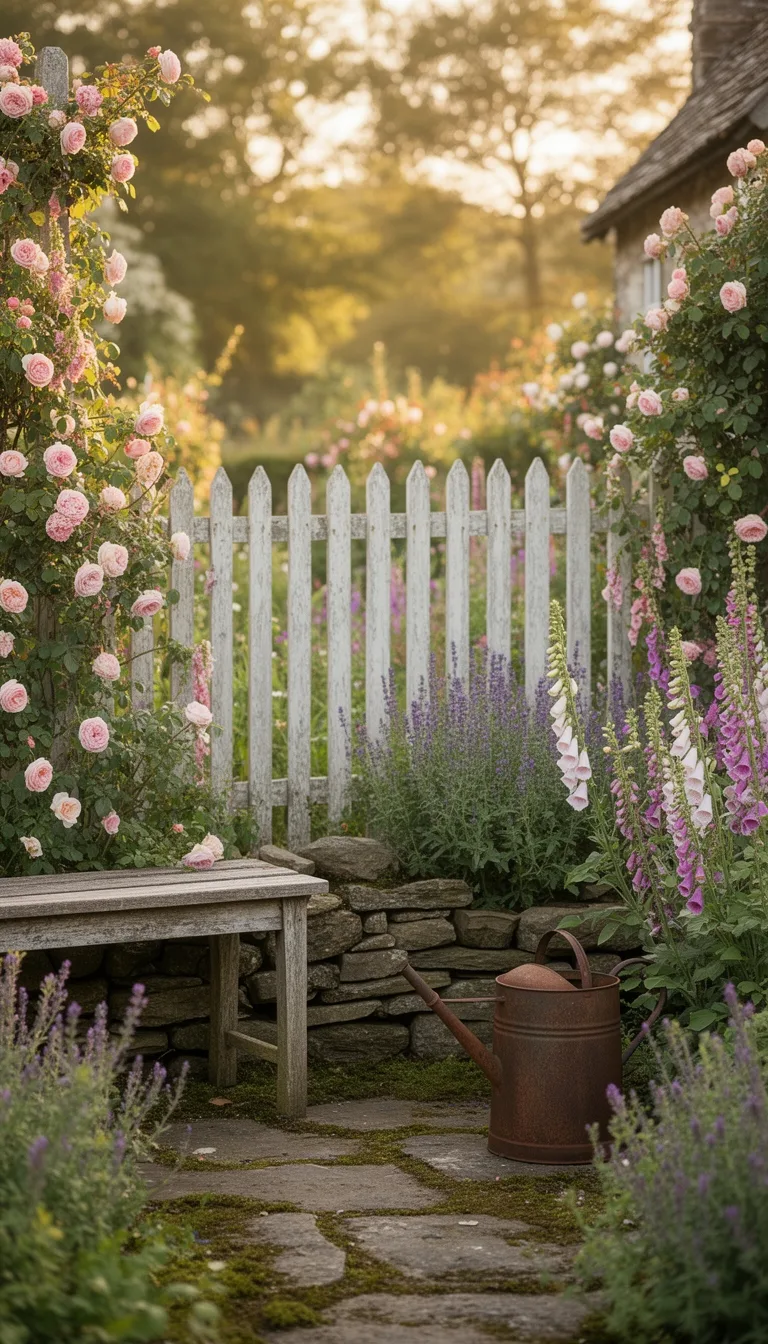
How do you establish a cottage garden’s defining edge?
You’ll combine picket fences with stone borders for both structure and charm.
Install pressure-treated cedar or pine pickets—spaced 2-4 inches apart—nailed to horizontal rails, then set posts 6-8 feet apart in concrete foundations buried 2 feet deep.
Back these fences with dry-stacked stone walls using local fieldstones or limestone, keeping them 1-2 feet high.
This mortarless construction settles naturally over time, mimicking aged cottage aesthetics.
For hybrid stability in soft soil, embed fence posts directly into stone bases.
Layer plants strategically: tall Campanula lactiflora (0.8m) at fence backs draws pollinators, mid-height Achillea contrasts textures, and hardy geraniums spread across edges. To maximize pollinator appeal and extend blooms throughout summer, ensure adequate sunlight, soil fertility, and moisture for each height zone.
Plant in groups of three or five for visual impact, allowing roots to weave through jagged stone edges naturally.
Plan Pathways That Guide Movement and Define Space
Within your cottage garden’s layout, pathways serve as the connective tissue that guides visitors through distinct spaces while creating rhythm and flow.
You’ll want to incorporate curved bluestone or brick paths that meander naturally through your landscape, inviting exploration without rigid structure.
Wide enough for comfortable navigation yet narrow enough to frame flower beds, these walkways encourage bloom appreciation from multiple angles.
Strategic focal points anchor your pathways—benches, fountains, or arbor-framed sections transform routes into destinations.
You can edge paths with wildflowers, dry stone walls, or log stepping stones arranged in curves for rustic definition.
Consider mixing materials like gravel and pavers or reclaimed bricks in eclectic patterns.
Decomposed granite offers soft, permeable surfaces that complement your cottage aesthetic while maintaining functional accessibility. Year-round seasonal plantings along path edges ensure your garden maintains visual interest and vibrant color throughout every season.
Construct Winding Paths With Flagstone and Gravel
Among the most rewarding cottage garden improvements you’ll undertake, a well-constructed flagstone and gravel path combines rustic charm with functional durability.
You’ll excavate 8-10 inches deep, hand-tamp native soil, and ensure level trenches with optional drainage slope. Remove all sod, roots, and debris before installation.
Build your foundation with these essential layers:
- Compact a 4-inch base of 3/4-inch crushed stone, which provides superior drainage and structural support compared to rounded pea gravel
- Install landscape fabric over compacted soil with 4-inch overlapping seams to block weeds while maintaining permeability
- Apply 1-2 inches of masonry sand as your setting bed, lightly tamping to create uniform support without over-compaction
Space flagstones consistently, checking level individually. Fill joints with masonry sand, polymeric sand, or decomposed granite, working material deep between stones. Proper compaction and drainage prevent settling and erosion, ensuring decades of walkway longevity. Your finished path will deliver a naturally slip-resistant surface that enhances safety throughout all seasons.
Layer Plants Tall to Short for Depth and Drama
Once your pathways establish the garden’s bones, you’ll shift focus upward to create visual depth through strategic plant layering.
Position smallest plants along pathway edges as your foreground layer, allowing medium-height specimens to occupy the middle-ground zone.
Tallest plants form the background boundary, creating visual screens that prevent taller vegetation from obscuring shorter plantings.
This height progression produces visual drama and enables viewers to see multiple vegetation layers from different garden angles.
Stagger your arrangement across landscape zones, mixing borders casually throughout.
Varied elevation across beds enhances the layering effect significantly.
Understanding how plants grow and change through seasons ensures your layering strategy remains effective year-round.
For woody shrubs and vines, consider vegetative propagation through layering to develop new plants while maintaining your established garden structure.
This three-dimensional approach transforms your cottage garden into a sophisticated space with compelling visual interest and purposeful structure.
Mix Perennials, Annuals, and Herbs Densely
How do you transform a sparse cottage garden bed into a lush, abundant display?
You’ll strategically layer perennials, annuals, and herbs to create immediate fullness and sustained structure.
- Position annuals at bed edges for easy seasonal rotation and compost amendments without disturbing established perennials
- Interplant vigorous mint-family herbs like lemon balm and oregano alongside echinacea and bee balm for rapid density and pollinator attraction
- Combine edible and medicinal plants such as basil, sage, and calendula with complementary flowers like nasturtiums and cosmos for continuous harvests and visual interest
This approach fills gaps quickly while perennials establish deep roots. Perennials contribute to soil erosion control and provide long-term structural support as annuals cycle through seasonal changes.
Your dense planting maximizes pollinators, medicinal yields, and culinary harvests in full sun.
Contain invasive spreaders in planters to maintain design control while achieving that abundant, natural cottage aesthetic.
Encourage Self-Sowing Flowers for Effortless Charm
While dense planting creates immediate structure, you’ll find that self-sowing flowers deliver lasting abundance with minimal effort.
Coneflower, Black-Eyed Susan, cosmos, and foxglove naturally reseed, filling gaps year after year without replanting costs.
To manage self-seeding successfully, deadhead most spent blooms while leaving select seed heads for dispersal.
Thin emerging seedlings in spring to prevent overcrowding.
Avoid heavy mulching—bare soil enables germination.
Instead, apply thin gravel or grit layers to retain moisture and support seed establishment.
Position self-sowers in lean, well-drained soil within full sun areas and gravel paths.
They’ll colonize cracks between pavers and low-competition bare spots, creating natural cottage charm through wind and water dispersal.
Native perennials like bee balm and coneflower attract beneficial pollinators while establishing themselves reliably across seasons.
This organic approach maintains garden interest while dramatically reducing your workload.
Source Cottage Garden Plants: Nurseries and Seeds
Now that you’ve planned your garden’s structure and know which self-sowers’ll anchor your beds, sourcing authentic cottage plants becomes your next priority.
You’ll find specialized nurseries offer curated selections specifically bred for informal garden styles.
Consider these reliable sources:
- Online retailers like Plant Delights Nursery and Rare Roots provide extensive perennial catalogs with heritage varieties, often featuring bee-and-butterfly-attracting cultivars priced between $14–$19 per specimen
- Regional growers such as Cottage Creek Gardens focus on native, deer-resistant perennials suited to your climate zone
- Direct shippers including Cottage Farms deliver both perennials and annuals directly from propagation, ensuring plant vigor
You’ll maximize success by matching regional natives—asters, echinacea, rudbeckia—with traditional English selections like digitalis and aquilegia. Many cottage garden specialists also stock hardy varieties such as Abutilon and Acanthus perennials that thrive in zones 6a through 10b, offering long bloom seasons and distinctive foliage for layered garden interest.
This combination creates authentic cottage character while establishing resilience in your specific growing conditions.
Use Stone and Hardscape to Structure Beds
Stone and hardscape materials form the structural skeleton of your cottage garden, creating definition while anchoring informal plantings.
Dry stone walls excel in sloped areas, retaining soil while adding rustic authenticity without mortar.
Layered planting around their bases softens hard edges and reinforces the vintage aesthetic.
Gravel paths define garden routes with a 2-inch crusher-run base preventing settling.
Position stepping stones at soil level for safety and easy maintenance, using reclaimed or natural stones for character.
Space them evenly to emphasize scale and airiness.
For permanent structures, consider flagstones like Yorkstone for Cotswolds charm or Henslate for Welsh cottage styles.
Blend smooth slabs with rougher cobbles for textural contrast.
Use consistent stone types across paths, patios, and walls for visual cohesion.
Top edges with trailing Sedum for a warm, finished appearance.
Select Traditional Materials: Wrought Iron and Wood
Wrought iron and wood complement the stone framework you’ve established, introducing vertical elements and softer textures that soften garden boundaries while providing functional support for climbing plants.
These traditional materials enhance your cottage aesthetic through purposeful design integration.
- Install wrought iron picket fences (under 4 feet) painted white to create rustic borders that frame dense plantings without overwhelming scale, while low iron gates serve as charming entry points.
- Use reclaimed wood for fence panels or hazel poles for arches, securing poles deeply in soil for stability and longevity without requiring concrete foundations.
- Combine materials strategically—position wood benches near iron accents in seating areas and edge wood chip paths with metal to contain material and reduce maintenance demands.
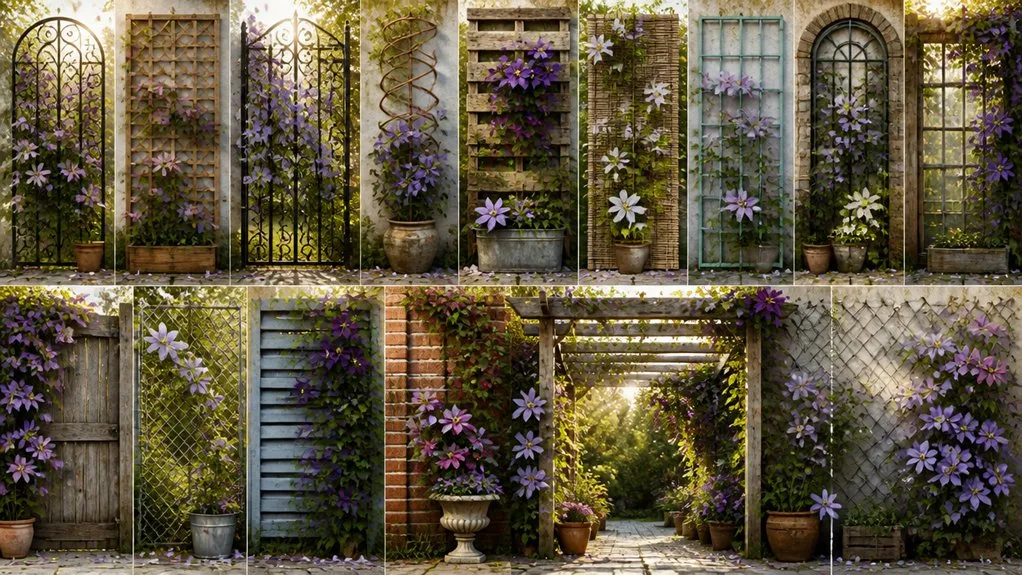
Plant Climbing Vines on Trellises and Arches
How can you transform bare wooden arches and iron structures into lush, flower-covered focal points?
Select vines matching your garden’s light conditions and trellis capacity.
Honeysuckle ranks easiest—it grows steadily without assistance and blooms spring through fall.
For quicker coverage, hyacinth bean vines establish fastest from seed starts once soil warms.
Climbing hydrangea excels in part shade, offering delicate lacecap flowers with cottage appeal.
Consider your vine’s climbing mechanism.
Twining varieties like honeysuckle wrap stems naturally around supports.
Tendril climbers such as clematis grasp mesh or cords effectively.
Aerial rootlets in ivy adhere directly to surfaces, requiring minimal training.
Match native options like trumpet honeysuckle or American wisteria to attract pollinators while supporting your region’s ecosystem.
Ensure your trellis structure handles the vine’s mature weight for lasting success.
Build Dramatic Entrances With Archway Gates
Where does your cottage garden’s personality truly shine?
Through dramatic entrances that welcome visitors into your outdoor sanctuary.
You’ll want to consider these compelling options:
- Reclaimed Materials: Combine weathered cedar beams with split-rail wood paired against stacked stone columns, blending rustic authenticity with refined elegance.
- Repurposed Elements: Source salvaged vintage iron gates from local salvage yards or construct pallet arches using weathered planks for affordable, hand-built character.
- Living Structures: Plant bent willow or birch saplings that gradually mature into magical passageways, transforming your entrance into an evolving natural sculpture.
You’ll strengthen your garden’s visual impact by selecting gates featuring heart-shaped cutouts, Gothic arches, or French-style ornate scrollwork.
These designs anchor your pathway while establishing the aesthetic tone for your entire cottage garden sanctuary.
Mix Tall Spikes, Round Mounds, and Feathery Blooms
What transforms a flat cottage garden bed into a dynamic, layered landscape? You’ll combine three complementary plant forms using the rule of threes—odd numbers create instant visual texture.
| Plant Form | Function | Examples |
|---|---|---|
| Spikes | Vertical height, 2-6 feet | Delphinium, foxglove, blazing star |
| Mounds | Low-growing base structure | Echinacea, sage, rosemary |
| Feathery blooms | Airy softness, depth | Cosmos, rudbeckia, meadow plants |
Layer spires for height, mounds for foundation, and frothy elements for softness. Avoid clustering similar shapes—don’t plant multiple foxgloves together. Instead, position spikes behind mounds, then weave feathery textures throughout. This stratified approach creates balanced composition with year-round architectural interest. Your cottage border transforms from monotonous to multidimensional through deliberate shape mixing.
Integrate Edible Plants Into Your Garden Design
Why shouldn’t your cottage garden produce food alongside ornamental beauty?
You can strategically blend edibles into your existing design framework by following these principles:
- Select plants for dual purpose: Choose thyme, sage, lavender, and rosemary for year-round foliage, or incorporate Swiss chard varieties and eggplants as striking focal points that deliver both visual interest and harvests.
- Use culinary herbs as borders: Plant basil, parsley, and fennel along garden edges where they’re accessible for harvesting while contributing texture and structure to your layout.
- Position specimen fruit trees: Integrate dwarf apple, cherry, or citrus trees as anchor plants that provide vertical emphasis, seasonal interest, and productive yields.
Group edibles by design pattern rather than formal rows, allowing strategic placement to create fuller, more natural garden appearance while maintaining ornamental qualities.
Pack Plants Densely for a Lush, Overflowing Look
Now that you’ve strategically placed your edibles and ornamentals, you’ll want to densely pack your plants to achieve that signature cottage garden fullness.
Space specimens closer than their mature width initially—for instance, position ‘Cat’s Pajamas’ nepeta closer than its 18-20 inch recommendation.
This tight arrangement creates an immediate fill-in effect while plants establish.
Combine plants with similar water and sunlight requirements to streamline maintenance.
Arrange smallest plants along pathway edges, progressing to medium heights outward, with tallest specimens anchoring the perimeter.
Layer a 3-4 inch mulch blanket to retain moisture and suppress weeds.
Plan for division every 3-5 years.
Dense planting reduces air circulation issues when monitored carefully, prevents overcrowding, and attracts pollinators through mass flowering drifts.
Add Rustic Seating in Garden Rooms
Strategically placed seating transforms your densely planted cottage garden into distinct outdoor rooms where you can pause and absorb the lush surroundings.
You’ll anchor these spaces with rustic materials that complement natural textures.
- Wooden crates and pallets arranged in compact circles create stable seating that echoes organic soil tones and pairs seamlessly with gravel pathways.
- Tree stumps and log stools (12-18 inches diameter, 18 inches tall) mimic campfire rings when clustered around low tables, with bark stripped to deter pests while preserving rustic appeal.
- Cinder block benches with wooden planks or stone-and-timber combinations fit tight corners, using boulders as supports secured with masonry screws.
Test all seating for sturdiness.
Dig legs into ground or shim with rocks to eliminate wobble.
Gravel flooring with stone or wood borders defines these garden rooms cohesively.
Incorporate Fire Pits and Focal Point Features
How can you elevate your cottage garden beyond lush plantings alone?
Fire pits serve as compelling focal points that anchor your outdoor spaces while providing functional warmth.
You’ll want to select materials that complement your design—matte black metal contrasts beautifully with greenery, while gray concrete melds seamlessly into modern layouts.
Consider integrated seating options like curved stone benches topped with cushions, which define gathering zones naturally.
Deep fire pit bowls with mesh grates allow flames to shine through dramatically.
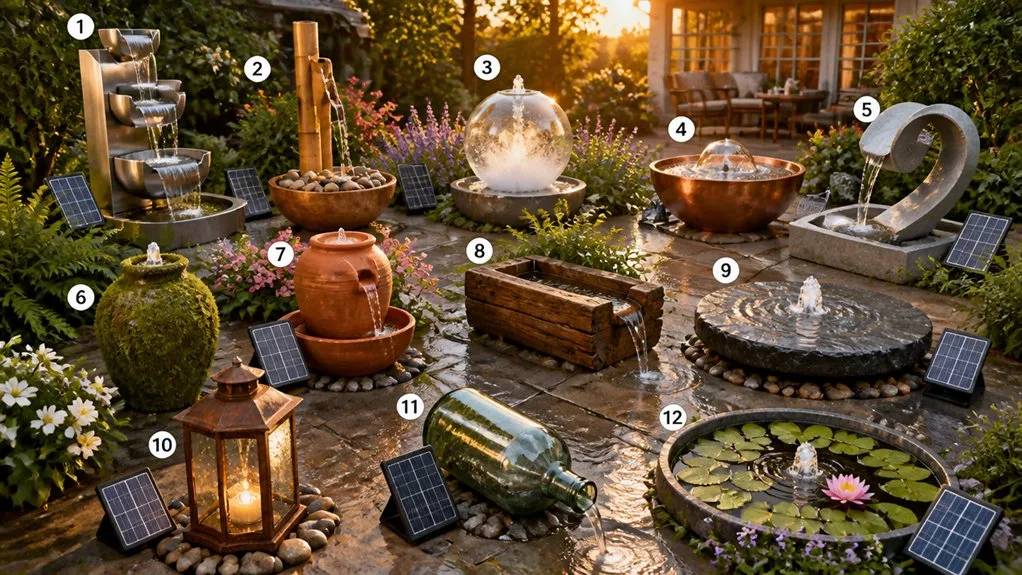
Enhance the atmosphere with overhead string lights or flickering lanterns that mimic campfire warmth.
Pair your pit with herringbone brick carpeting and potted grasses to soften the hardscape.
Gas burners eliminate ash cleanup while maintaining authentic ambiance.
These focal features transform your cottage garden into a welcoming retreat.
Use Rambling Plants to Climb Structures
While fire pits create intimate gathering spaces at ground level, climbing plants elevate your cottage garden’s visual interest by drawing the eye upward and softening vertical surfaces.
You’ll transform bare walls and fences into living tapestries by selecting appropriate structures and plants.
Choose your support system based on your space:
- Pergolas and arbors provide framework for twining plants like wisteria, offering partial overhead coverage while maintaining light penetration
- Trellises offer versatile options in wood, metal, or recycled materials that attach to walls or function as standalone dividers
- Custom timber structures create rustic archways accommodating native vines with architectural appeal
Select sun-loving clematis for pergolas, honeysuckle for nectar-rich blooms, or deciduous vines that provide summer privacy while allowing winter light.
Match your climbing plants’ requirements to your wall’s orientation—south-facing surfaces suit heat-loving fruit varieties, while north-facing areas accommodate self-clinging Boston ivy.
Decorate With Vintage and Salvaged Accents
Where do you source the character that transforms a cottage garden from merely planted to genuinely lived‑in? Vintage and salvaged accents provide authentic charm through intentional repurposing.
You’ll find weathered garden statues and concrete animals at estate sales—strategically place them along pathways to create visual narrative.
Transform old containers into functional art: drill holes in galvanized washtubs for planters, convert vintage cans into fountain bases, or display flowers in thrifted coffee pots.
Incorporate vertical elements like salvaged bedsprings, ladders, and windmills for dimensional interest.
Wrought iron benches and wooden rocking chairs establish gathering spaces.
Rusty garden tools, vintage sprinklers, and copper vessels become decorative focal points.
These collected pieces create layered authenticity that new garden décor simply can’t achieve, establishing your garden’s distinctive personality.
Plant for Pollinators: Nectar and Seed Flowers
Your cottage garden thrives when you cultivate plants that sustain pollinators throughout the growing season.
You’ll establish continuous nectar availability by strategically selecting blooms across seasons.
- Spring through summer: Plant swamp milkweed, butterfly weed, bee balm, and summer phlox to provide nectar from June through September while supporting monarch larvae on milkweed foliage.
- Fall resources: Incorporate narrow-leaf sunflower, sweet goldenrod, and prairie sunflower to extend pollinator sustenance from August through October.
- Supplementary options: Add non-native choices like salvia, lavender, zinnias, and lantana for reliable nectar production and pollen diversity.
You’ll maximize pollinator support by combining native perennials with annuals, ensuring your garden functions as a functional habitat rather than ornamental space alone.
Install Lighting for Evening Ambiance
As daylight fades, thoughtful lighting design extends your cottage garden’s usability and beauty into evening hours.
You’ll want to layer your lighting strategically: use wall sconces on entryways and patios, pendant lights above doorways, and ground‑stake path lights along walkways to illuminate steps and potential hazards.
Position uplighting to highlight specimen trees and flower beds, creating depth and visual interest.
Choose fixtures featuring farmhouse aesthetics—wrought iron, aged bronze, and wood materials blend seamlessly with your cottage setting.
Consider energy‑efficient LED or solar‑powered options that require minimal wiring on uneven terrain.
Motion sensors enhance security while preserving the night sky.
Warm Edison bulbs or incandescent fixtures cast tender, inviting glows that tie your landscaping and architecture together, transforming your garden into an enchanting evening retreat.
Design Planting on Walls and Outbuildings
When you transform bare walls and utilitarian outbuildings into living tapestries of color and texture, you’ll elevate your cottage garden from pleasant to truly memorable.
Strategic planting conceals architectural eyesores while establishing garden cohesion.
Consider these approaches:
- Climbing roses and clematis combinations – Layer rambling roses with clematis to create profusely flowering displays that densely cover vertical surfaces while filling air with fragrance.
- Espaliered fruit structures – Train fruit against warm walls using climbing plant frameworks, merging ornamental appeal with edible production.
- Ground-level foundation plantings – Position creeping thyme, wall germander, and lamium varieties at wall bases to anchor vertical elements while preventing exposed soil visibility.
Dense clustering techniques ensure plants twine together naturally, obscuring structural elements while maintaining authentic cottage garden informality throughout your space.
Conclusion
You’ll find that cottage gardens work like a well-orchestrated symphony—each element plays its part, yet the whole creates something greater. Consider how a gardener in Devon planted just three perennials; within two seasons, pollinators transformed her quarter-acre into a thriving ecosystem. Your garden’s success hinges on layering: strategic fencing establishes boundaries, pathways create flow, vintage accents add character, and native plantings sustain wildlife. You’re not simply decorating; you’re constructing a functional, beautiful sanctuary.
The Only Tools You Need for a Thriving Garden 🌱
Whether you're a weekend gardener or growing daily — these hand-picked tools make every session faster, easier, and more satisfying.