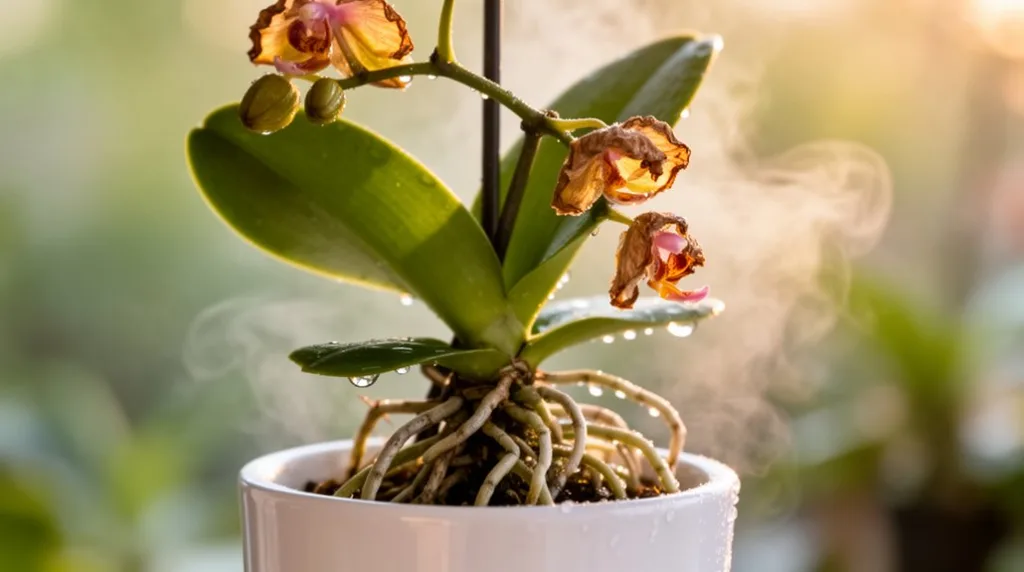
Your orchid looks hopeless, but you can likely save it. Start by gently removing it from its pot to assess the roots. Trim away anything mushy or papery with sterilized scissors. This crucial first step reveals the plant’s true condition and sets the stage for recovery. What you do next with the roots and fresh potting medium determines everything.
Key Takeaways
- Assess and trim all dead or mushy roots with sterilized tools to stop rot.
- Repot in fresh orchid medium like bark for drainage in a pot with holes.
- Water only when medium is almost dry, then soak the pot base for 15 minutes.
- Provide bright, indirect light and monitor leaf color to avoid sun scorch.
- Encourage reblooming with a nightly 10–15°F temperature drop while reducing water slightly.
Assess and Clean Up Your Orchid to Start Revival
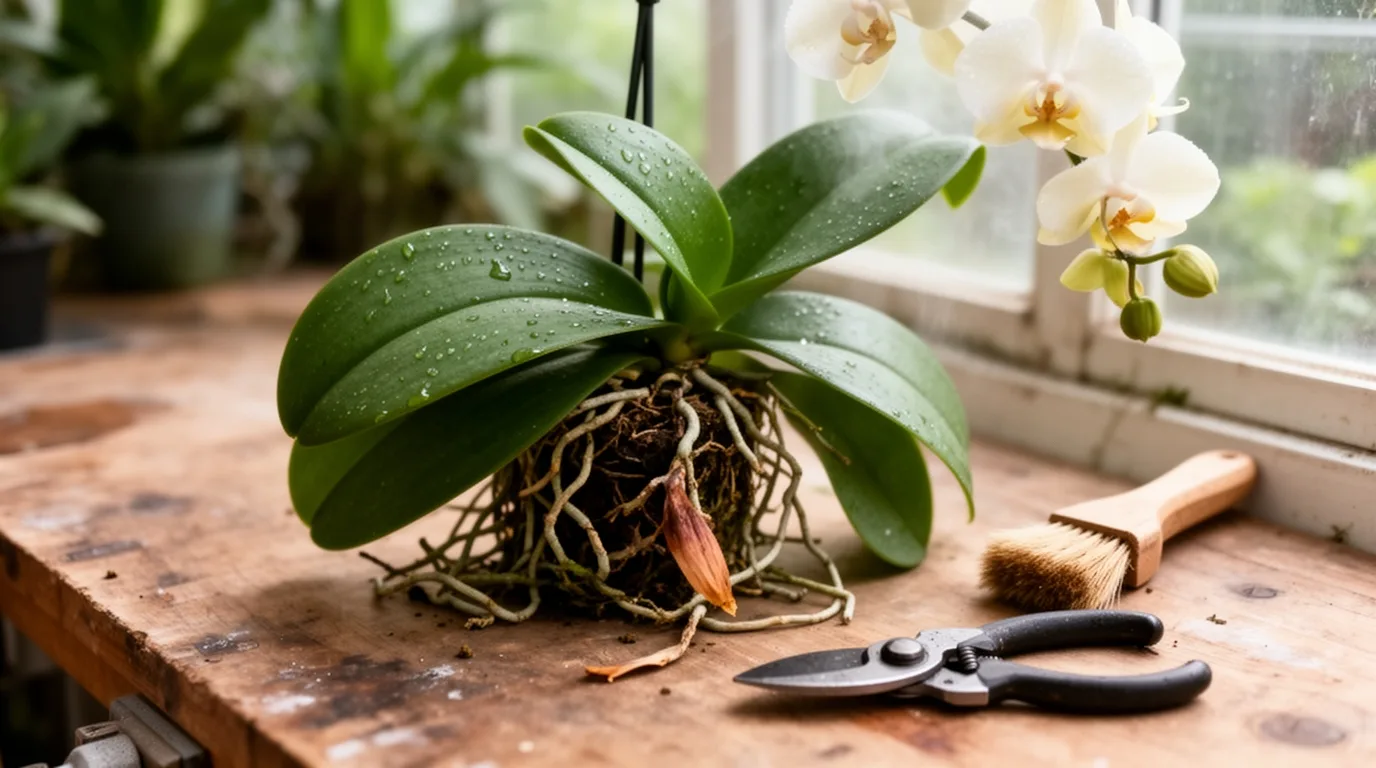
First, carefully remove your orchid from its pot and brush off the old potting media to get a clear view of the roots.
You’ll now assess their health.
Healthy roots are firm and silvery-green when dry, turning green after watering.
Gently rinse them with lukewarm water to see their true color.
You must remove all dead material.
Use sterilized scissors to cut away any mushy, brown, or papery roots.
Don’t worry—this helps the plant focus energy on new growth.
Also, trim any yellow or dead leaves at their base.
After this cleanup, let the orchid air-dry on a paper towel for a few hours before proceeding.
You’re giving it a fresh, healthy foundation.
Repot Your Orchid in Fresh, Suitable Medium
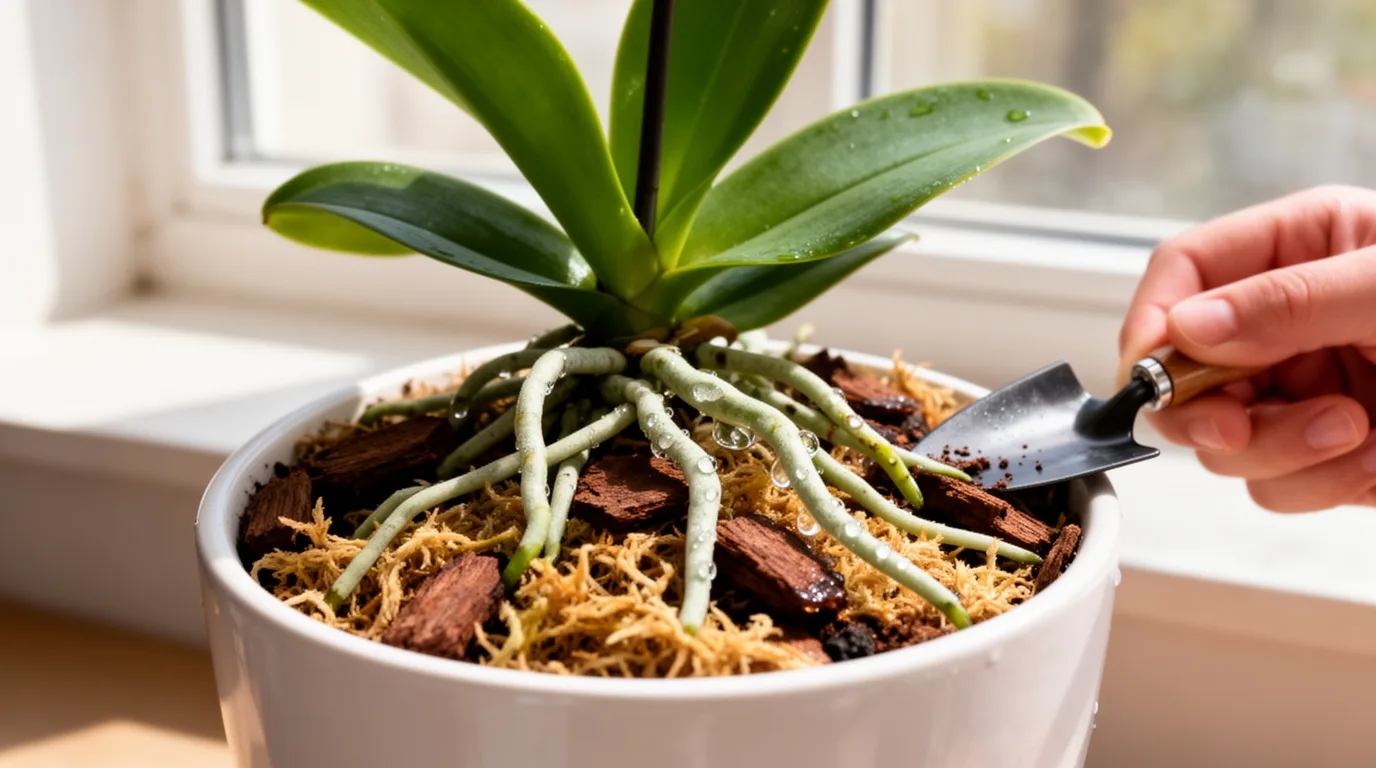
Now that your orchid is clean and dry, you’ll repot it using a fresh medium suited for orchids, such as bark chips or moss. Select a pot with ample drainage holes, just large enough to hold the roots. Place some medium in the pot’s base, then position your orchid inside, gently spreading its roots. Fill in around the roots with more medium, tapping the pot to settle it. Don’t bury the crown or aerial roots. The right medium provides crucial air flow and moisture control.
| Medium Type | Best For | Key Characteristic |
|---|---|---|
| Fir Bark | Most common orchids | Excellent drainage & aeration |
| Sphagnum Moss | Orchids needing more moisture | High water retention |
| Lava Rock | Excellent air flow needs | Inorganic, doesn’t decompose |
Your orchid now has a clean, supportive home for its recovery.
Optimize Watering and Light for Recovery
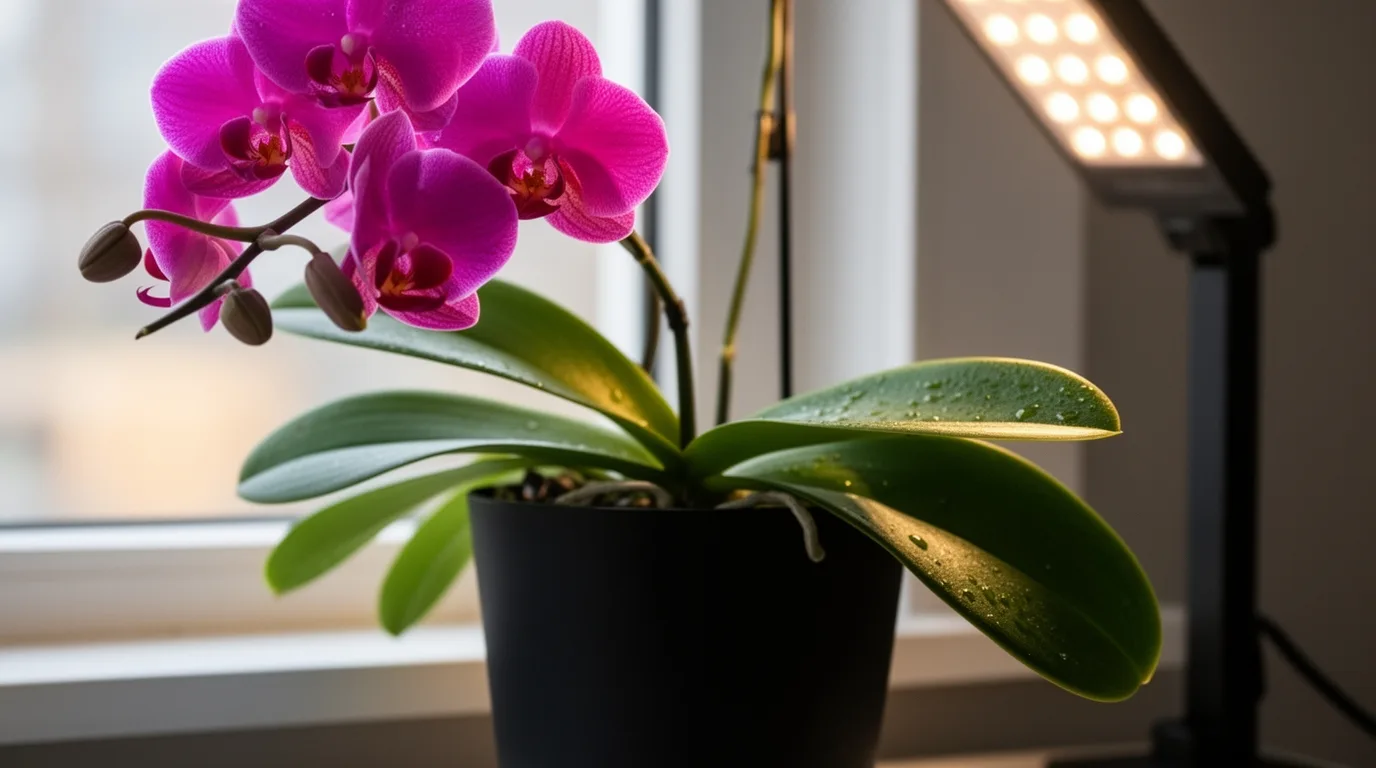
With your orchid freshly repotted, providing the right balance of water and light is essential to encourage new growth.
First, water thoroughly by soaking the pot’s base in room-temperature water for about 15 minutes, then let it drain completely. Do this only when the potting medium is nearly dry—stick your finger an inch in to check.
Next, find a bright spot with indirect sunlight, like an east-facing window. Avoid direct sun, which can scorch the leaves.
Your orchid needs this gentle, consistent light to photosynthesize effectively. This careful approach prevents stress on the recovering roots and gives your plant the energy it needs to produce new roots and leaves.
Be patient; recovery takes time.
Monitor and Adjust Care for Ongoing Health
Since your orchid’s settled into its new pot, you’ll want to keep a close eye on it to ensure it continues to thrive.
First, check the leaves weekly. They should be firm and a vibrant green; soft, wrinkled, or yellowing leaves signal a need to adjust your watering.
Next, inspect the roots during your watering routine. Healthy roots in a bark mix will be silvery-white when dry and turn green after watering. Rot appears brown and mushy. If you see root issues, trim the affected areas.
Finally, assess the light. Leaves that are dark green might need more indirect sunlight, while reddish-tinged leaves could be getting too much. Make small, gradual changes based on these observations.
Trigger Your Orchid’s Next Bloom Cycle
Once your orchid has regained its strength through consistent care, you can encourage it to rebloom by providing a slight environmental change.
Most orchids, like phalaenopsis, need a temperature drop at night to initiate flowering. For several weeks, move your plant to a spot that’s about 10-15 degrees Fahrenheit cooler at night, ideally around 55-65°F.
Ensure it still receives bright, indirect light during the day.
Simultaneously, you can slightly reduce watering frequency, but don’t let the roots dry out completely.
Be patient, as it may take a month or two for a new flower spike to emerge. When you see a spike, resume your normal, consistent care routine and support it with a stake as it grows.
Frequently Asked Questions
Can I Cut off Aerial Roots on My Orchid?
Yes, you can cut them, but avoid it if they’re healthy. Only prune roots that are shriveled, mushy, or dry. Use sterilized shears and cut cleanly, as aerial roots help absorb moisture and nutrients.
Is It Safe to Use Ice Cubes to Water Orchids?
Don’t use ice cubes; they can shock your orchid’s roots. Instead, water it with room-temperature water. You’ll avoid cold damage and ensure your plant gets the hydration it needs to thrive.
Do I Need to Fertilize an Orchid in Distress?
No, you shouldn’t fertilize a distressed orchid. Focus on its basics like light and water first. Only add weak fertilizer once it’s actively growing again, so you don’t overwhelm its fragile roots.
Why Are My Orchid’s Leaves Wrinkled and Leathery?
Your orchid’s wrinkled leaves signal dehydration. Check your roots; if they’re dry or dead, you should repot and water correctly. Soak the pot weekly, but let it drain fully to avoid rot.
Can I Use Regular Potting Soil for My Orchid?
No, don’t use regular potting soil. It holds too much water and suffocates the roots. Instead, use a special orchid mix with bark. This lets air reach the roots and prevents rot.
Conclusion
Keep following these steps. With consistent care, your orchid will strengthen. Stay patient and adjust based on its response—new roots or leaves mean you’re succeeding. To encourage blooming, provide that slight nighttime temperature drop. Your revived orchid will reward your efforts with beautiful, lasting flowers. Enjoy the journey of bringing it back to vibrant life.
The Only Tools You Need for a Thriving Garden 🌱
Whether you're a weekend gardener or growing daily — these hand-picked tools make every session faster, easier, and more satisfying.