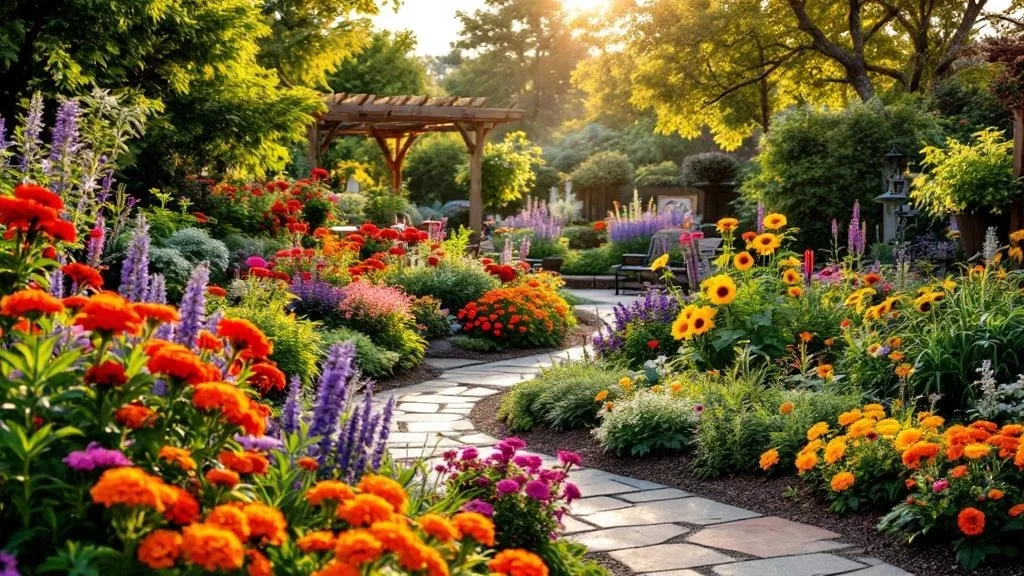
Transform your garden with strategic color palettes. You’ll plant drifts of coreopsis and salvias, then add long-blooming perennials like Salvia ‘Caradonna’. Consider maintenance when you include summer annuals for quick impact and groups of containers for flexible structure. These practical ideas build a vibrant, season-long display, but defining your outdoor space fully requires integrating elements like pollinator habitats and nighttime lighting to create a truly cohesive retreat.
Key Takeaways
- Use drifts of long-blooming perennials like salvia for continuous seasonal color.
- Plant vibrant summer annuals like zinnias to quickly fill gaps with immediate color.
- Create a cutting garden with blocks of cosmos and coneflowers for fresh bouquets.
- Design butterfly areas with sunny drifts of nectar-rich plants like echinacea and lantana.
- Incorporate bold foliage plants and ornamental grasses for dramatic texture and structure.
Start With a Summer Garden Color Scheme
Before you buy your first plant, consider how colors interact because your garden’s palette influences its overall mood and visual impact.
Limit your main scheme to two or three hues for cohesion. Cool tones like blues and purples from salvias and lavender create a serene retreat, while hot reds, oranges, and yellows from zinnias and daylilies deliver vibrant energy.
Explore analogous colors (neighbors on the color wheel) for harmony, or use complementary pairs like purple and yellow for striking contrast.
Remember foliage! Silver-leaved plants like dusty miller or burgundy heuchera provide year-round color anchors.
Factor in each plant’s bloom time and sun requirements to ensure staggered, continuous displays without overwhelming maintenance demands.
Select Long-Blooming Perennials for Reliable Color
Choose long-blooming perennials as the backbone of your garden to ensure vibrant color from late spring into fall.
You’ll want core plants like Salvia nemorosa ‘Caradonna’, with its spiky purple blooms, and hardy geraniums such as ‘Rozanne’, known for their continuous floral display.
Incorporate repeat-blooming daylilies and shrub roses for structure.
Focus on perennials’ bloom times, checking plant tags for phrases like “long-blooming” or specific season ranges.
You must deadhead many varieties, removing spent flowers to encourage new buds.
Provide adequate water during establishment and apply a balanced, slow-release fertilizer in early spring to support their extended performance.
These low-maintenance choices form a reliable framework you’ll build upon in subsequent seasons.
Fill Gaps With Instant-Color Summer Annuals
To plug gaps in your perennial border, you’ll turn to vibrant summer annuals for an immediate, season-long show.
Choose quick-fillers like profuse zinnias, sprawling petunias, or upright salvias. Consider the mature height and spread to ensure a cohesive look.
You’ll need to prepare the soil with compost and plant after the last frost. Pinch back seedlings to encourage bushier growth.
Deadhead spent blooms religiously to promote continuous flowering; this is essential for marigolds and cosmos.
For sustained performance, apply a balanced, water-soluble fertilizer every two to three weeks, as annuals are heavy feeders.
Consistent watering is crucial, especially during dry spells, to prevent stress and wilting.
Create a Pollinator-Friendly Flower Border
Now that your borders are filled with color, you can make that display work for the ecosystem by planting for bees, butterflies, and other beneficial insects.
Focus on single-flowered, nectar-rich varieties over highly hybridized doubles, as pollinators can’t access their complex blooms. Incorporate plants with differing flowering times to provide a continuous food source.
Good choices include echinacea, monarda, and salvias, which offer ample nectar and have sturdy landing platforms.
You’ll also want to leave some bare soil patches and avoid pesticides to protect nesting sites and insect health.
Deadheading spent flowers encourages more blooms, but let some seed heads remain in autumn to provide habitat and food for overwintering species.
Attract Butterflies With Their Favorite Blooms
While you’re designing a pollinator-friendly border, you can specifically cater to butterflies by incorporating their host plants, like milkweed for monarchs, alongside nectar-rich blooms such as verbena and lantana. Plant in large, sunny drifts to create an easy-to-find target.
Focus on continuous blooms by deadheading spent flowers regularly and stagger plantings of annuals like zinnias. Avoid all pesticides, as they’re harmful to caterpillars and adults.
- Plant Native Nectar Sources: Choose flat-topped blooms like coneflower (*Echinacea*) and phlox for easy butterfly landing.
- Include Host Plants: Dedicate space for parsley for black swallowtails or fennel for anise swallowtails.
- Provide Sunning Stones: Place flat, light-colored rocks in sunny spots for butterflies to bask and warm their wings.
- Offer a Puddling Area: Keep a shallow dish filled with moist sand and a pinch of salt for essential minerals.
Grow a Cutting Garden for Homegrown Bouquets
Transform part of your landscape into a dedicated cutting garden for a season-long supply of fresh flowers.
Choose a sunny spot with well-drained soil and plant a succession of reliable bloomers.
Focus on long-stemmed annuals like zinnias, cosmos, and snapdragons, which thrive on regular harvesting.
Integrate perennials such as coneflowers, shasta daisies, and yarrow for structure.
When you plant, group by variety in blocks for easier cutting and maintenance.
You’ll encourage more blooms by deadheading spent flowers and performing consistent, deep watering.
Fertilize every few weeks with a balanced formula to support vigorous growth.
Remember to cut stems in the morning, use sharp pruners, and immediately place them in water.
Design a Colorful and Useful Herb Garden
Craft a vibrant and practical herb garden by selecting plants for both visual appeal and culinary use. Choose herbs with varied foliage and flowering habits to create texture and year-round interest. Your design can be decorative while still providing fresh ingredients.
- Plant purple basil for its deep, burgundy leaves that contrast beautifully with green varieties like sweet Genovese.
- Incorporate golden oregano, a low-growing spreader with chartreuse foliage perfect for edges and container spilling.
- Add upright rosemary ‘Blue Spire’ for its structural form, aromatic blue-green needles, and drought-tolerant nature.
- Include pineapple mint, whose variegated leaves offer visual punch; contain it in pots to prevent aggressive spreading.
Regularly pinch back flowering tips to encourage bushier growth and maximize your harvest.
Plant a Low-Maintenance Summer Meadow
Now move from the contained structure of an herb garden to the naturalistic feel of a flowering meadow. Choose a sunny spot and sow a pre-mixed seed blend containing native perennials and annuals like cosmos, coreopsis, and echinacea.
Scatter seeds in early spring after roughing up the soil; you don’t need perfect tilth. Once established, this planting requires minimal intervention. You’ll primarily mow it down once in late winter to allow for self-seeding and to clear old growth. Its deep roots make it drought-tolerant, so you’ll rarely need supplemental watering.
This approach celebrates a more relaxed aesthetic, where plants gently sway and reseed themselves, providing season-long color and vital habitat for pollinators with very little ongoing work from you.
Choose the Best Plants for Hot, Sunny Spots
Several heat-loving plants thrive where the sun is most intense. You should select drought-tolerant perennials and shrubs that have adapted to these conditions, conserving your water and effort. Ensure you amend the soil with compost for good drainage, as waterlogged roots are a primary cause of failure in sunny beds.
Once established, these selections will demand minimal care beyond occasional deadheading to encourage more blooms.
- Lantana: This woody perennial offers clustered, multi-colored flowers from spring until frost and attracts pollinators with its high nectar production.
- Russian Sage: Its airy, lavender-blue spires and aromatic, silvery foliage provide structure and a long bloom period with very little water.
- Sedum ‘Autumn Joy’: A succulent with fleshy leaves and broccoli-like flower heads that change color from pink to copper, thriving in poor, dry soil.
- Blanket Flower (Gaillardia): Its vibrant, daisy-like red and yellow flowers tolerate intense heat and bloom repeatedly if you regularly remove spent flowers.
Brighten Shady Corners With Shade-Loving Blooms
You often have shaded areas in your garden that can seem challenging, but they’re perfect for a host of beautiful blooms that thrive with less light.
Focus on woodland plants like Astilbe, which offers feathery plumes, and the classic heart-shaped foliage of Hosta paired with its lily-like flowers.
For continuous color, plant long-blooming selections such as impatiens or fuchsia.
Ensure success by amending your soil with plenty of organic matter to retain moisture, as many shade-loving species prefer consistent dampness.
You should deadhead spent flowers on plants like bleeding heart to encourage more blooms and maintain a tidy appearance.
Their elegant forms and varied textures will transform those dark spots into captivating garden features.
Add Impact With Bold Foliage Plants
Beyond shady blooms, garden structure and visual weight can be dramatically defined with plants known for their substantial leaves. You can use these bold forms to anchor planting schemes, create focal points, and add a lush, tropical feel. Focus on contrasting leaf shapes, sizes, and colors for maximum effect.
- Plant giant rhubarb (Gunnera manicata) for architectural drama with its massive, textured leaves; ensure it’s in constantly moist soil and provide winter protection.
- Add a Japanese fiber banana (Musa basjoo) for a fast-growing tropical canopy; mulch its roots heavily before the first frost.
- Incorporate elephant’s ears (Colocasia), selecting sun-tolerant cultivars for their striking, heart-shaped foliage; they thrive with consistent moisture.
- Use variegated shell ginger (Alpinia zerumbet) to illuminate part-shade areas with its bold, striped leaves; it requires well-draining soil and appreciates shelter from wind.
Incorporate Ornamental Grasses for Movement
Incorporating ornamental grasses introduces dynamic rhythm to your garden, as their swaying stems catch both breezes and light.
Plant clump-forming varieties like Miscanthus sinensis or shorter Festuca glauca for structure that won’t spread aggressively. You can use tall Calamagrostis as a dramatic screen or low Hakonechloa as a flowing groundcover. Choose a mix of textures and plumes, selecting species for their summer color, such as the burgundy blades of Japanese blood grass.
Most grasses need full sun and well-drained soil. They’re low-maintenance; simply cut back dead foliage in late winter before new growth emerges. This single task revitalizes them, ensuring their graceful movement defines your summer garden.
Build a Fragrant Garden for the Senses
While ornamental grasses provide visual rhythm, a garden also comes alive with scent. Plan for a succession of aromas by selecting plants with varied bloom times.
Focus on positioning fragrant specimens where you’ll enjoy them most—near seating areas, gates, or along pathways where their perfume releases with a gentle brush. Remember that warmth often intensifies fragrance, so choose sunny, sheltered spots.
- Plant night-scented flowers like Nicotiana alata or evening stock to enjoy your garden after sunset.
- Include aromatic foliage such as lavender, rosemary, or scented geraniums; lightly brush the leaves to release their oils.
- Don’t overlook climbers; a star jasmine or honeysuckle vine can perfume an entire corner.
- Practice deadheading on repeat bloomers like roses and dianthus to encourage more fragrant flowers throughout the season.
Maximize Impact by Grouping Plants in Drifts
Grouping plants in repeating clusters, known as drifts, creates a more natural and visually powerful garden. Avoid single specimens scattered about; instead, plant odd-numbered groups of three, five, or seven of the same perennial or annual. You’ll achieve greater color impact and simplify maintenance by weeding and deadheading larger, contiguous areas. Use drifts to guide the eye, perhaps with a sweep of purple salvias leading toward a focal point. Consider each plant’s mature spread to prevent overcrowding.
| Plant for Drifting | Key Consideration |
|---|---|
| Coreopsis ‘Moonbeam’ | Deadhead regularly to promote prolific flowering through summer. |
| Nepeta ‘Walker’s Low’ | Shear back by half after initial bloom for a tidy, re-blooming mound. |
| Panicum virgatum | Ensure ample space for its upright, airy form to avoid shading smaller neighbors. |
Create a Vibrant Container Garden for Small Spaces
To make the most of limited space, you can pack a visual punch with a vibrant container garden. Choose large, eye-catching pots with good drainage and fill them with a quality potting mix.
For high-impact combinations, remember the “thriller, filler, spiller” formula.
- Select a Color Palette: Stick to two or three colors for a cohesive look, like pairing purple heliotrope with white bacopa and silver dusty miller.
- Prioritize Long Bloomers: Opt for sun-loving, heat-tolerant annuals such as lantana, million bells (Calibrachoa), and zinnias that flower from summer into fall.
- Ensure Proper Drainage: Always use pots with holes and avoid letting plants sit in saucers of water to prevent root rot.
- Maintain with Deadheading: Regularly pinch off spent blooms to encourage continuous flowering and keep plants looking tidy.
Grow Upwards With a Flowering Trellis
Maximize your vertical garden space by training flowering vines up a trellis, which adds height and visual interest.
Choose climbing annuals like morning glory or black-eyed Susan vine for rapid summer coverage, or select perennial options such as clematis or climbing roses for lasting structure.
Secure young stems loosely with soft ties, encouraging them to weave through the trellis grid.
You’ll need to monitor growth, directing tendrils and pruning any errant shoots to maintain your desired shape.
Ensure your trellis is anchored securely to support the mature plant’s weight.
This vertical approach maximizes bloom display in tight areas, creating a lush, living screen that enhances your garden’s depth and color without consuming valuable ground space.
Use Potted Plants to Define Outdoor Rooms
After exploring vertical spaces, consider how container groupings can shape your garden’s layout. Potted plants are perfect for creating distinct zones, like a dining area or a quiet reading nook, without permanent structures. You can easily rearrange them as needed.
- Create Living Walls: Use tall, structural plants like canna lilies or ornamental grasses in large pots to form a soft, green boundary between spaces.
- Anchor Corners: Place substantial containers with small trees, such as a Japanese maple, at the corners of a patio to visually define its edges.
- Mark Pathways: Line a walkway with a series of identical pots filled with boxwood or lavender to guide movement through the garden.
- Manage Light Needs: Group pots with similar sun exposure and water requirements together to simplify your watering routine and keep plants healthy.
Keep Your Garden Blooming With Simple Maintenance
Regularly dedicating just a few minutes to simple tasks can keep your summer garden vibrant.
Deadhead your spent blooms, like those on marigolds and geraniums, to encourage new flowers instead of seed production.
Pinch back leggy stems on herbs and coleus to promote bushier growth.
Check your plants for pests like aphids and treat them promptly with a strong water spray or insecticidal soap.
Water deeply and early in the morning to minimize evaporation and prevent fungal diseases.
Ensure you’re providing adequate nutrition with a balanced, water-soluble fertilizer for annuals or a bloom booster for flowering plants.
Lastly, keep up with weeding to prevent competition for water and nutrients.
Add Personality With Garden Art and Decor
Give your garden a unique flair by thoughtfully integrating art and functional decor. Choose pieces that complement your plantings’ scale, texture, and color palette, creating focal points among your perennials and shrubs.
Select durable, weather-resistant materials like powder-coated steel, treated wood, or stone for longevity, ensuring they can withstand summer sun and rain. Position sculptures to peek through foliage, and use decorative stakes to support climbing plants like clematis.
- Place a statement sculpture amid ornamental grasses like Panicum virgatum to add winter structure.
- Use colorful, glazed pots for citrus trees or succulents, checking their drainage holes regularly.
- Install a decorative obelisk in a border of climbing roses, securing canes with soft ties.
- Add mosaic stepping stones through ground cover like creeping thyme, keeping the path clear of debris.
Illuminate Your Garden for Nighttime Beauty
Extending your garden’s enjoyment into the evening involves installing lighting that highlights key features and provides safe passage.
Place low-voltage path lights along walkways and use uplighting to accentuate a specimen tree’s trunk or a sculptural yucca’s form. Consider weatherproof LED fixtures for their longevity and energy efficiency.
You can install subtle spotlights to backlight the delicate fronds of a Japanese maple or use downward-facing fixtures to softly wash a stone wall.
Remember to angle lights away from seating areas to prevent glare. For maintenance, regularly check connections for corrosion and prune back any encroaching foliage like fast-growing ivy to keep your illumination clear and effective.
Frequently Asked Questions
How Can I Keep Pests Away From My Garden?
Plant marigolds or chives to repel insects. You can handpick pests or use a soapy water spray. Keep your garden tidy by removing dead leaves and debris to eliminate their hiding spots.
What Are Ways to Conserve Water While Gardening?
You can conserve water by mulching heavily, choosing drought-tolerant natives, and watering at dawn. Group plants with similar hydration needs. Install a soaker hose or drip irrigation system to target roots and reduce evaporation.
How Do I Prepare My Garden for Winter?
Clear beds of dead plants and add mulch. Prune your perennials but leave ornamental grasses. Plant spring bulbs like tulips before the ground freezes. You should protect delicate shrubs with burlap covers.
Can I Use Household Items as Fertilizers?
Yes, you can. Use coffee grounds for acid-loving plants or eggshells for calcium. Dilute banana peel water for potassium. Don’t overapply these homemade solutions and compost other kitchen scraps for long-term soil health.
What Garden Tools Are Essential for Beginners?
You’ll need a trowel for planting, pruners for deadheading flowers, and a watering can for regular hydration. Include a garden fork for weeding and a sturdy pair of gloves to protect your hands from thorns.
Conclusion
Wrap up your season by deadheading spent blooms on your salvias and cosmos to encourage more flowers. Keep your container ‘thrillers’ like panicum well-watered during dry spells. Let your milkweed and echinacea stand through fall to support pollinators. Finally, adjust your low-voltage LED lights to highlight your favorite garden art as the evenings grow longer.
The Only Tools You Need for a Thriving Garden 🌱
Whether you're a weekend gardener or growing daily — these hand-picked tools make every session faster, easier, and more satisfying.