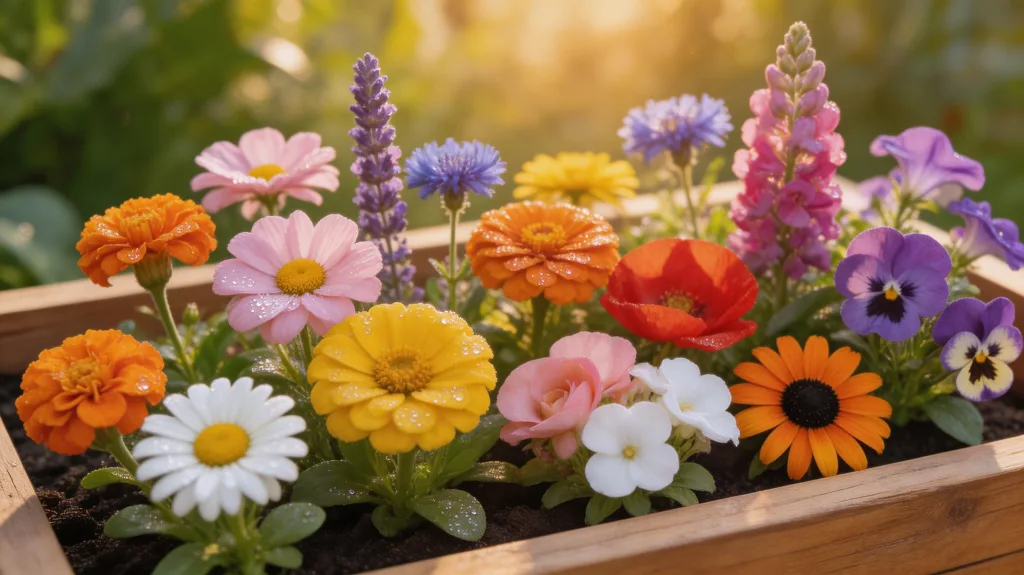
Your dream of a colorful garden doesn’t have to be complicated. We’ve curated a list of 15 easy flowers that offer you guaranteed success with minimal fuss. You’ll discover varieties for every spot, from sunny borders to shady pots. Consider this your simple roadmap to build confidence and enjoy those first blooms. Your path to a thriving garden, even as a total beginner, is right ahead.
Key Takeaways
- Plant hardy marigolds and zinnias for reliable color with minimal fuss.
- Choose resilient cosmos and drought-tolerant daylilies for easy, repeating blooms.
- Sow large seeds like nasturtiums and cosmos directly after the last frost.
- Water at the soil level to keep foliage dry and prevent disease.
- Ensure containers have drainage and use fresh potting mix for success.
How to Choose Your First Easy Flowers
When you’re starting out, pick flowers known for being tough and forgiving—like marigolds, zinnias, or sunflowers.
Always check your plant’s tag or seed packet. You’ll see terms like “direct sow” or “full sun,” which tell you exactly what it needs. Match these needs to the conditions in your own space. If your balcony only gets four hours of sun, don’t choose a flower that demands eight.
Also, consider your goal. Do you want quick color from annuals that bloom all summer, or are you investing in perennials that return each year?
Starting with plants suited to your specific spot builds confidence and avoids early frustration, setting you up for that first satisfying bloom.
5 No-Fail Flowers for Instant Gardening Wins
For truly instant gratification, you can’t beat fast-growing, resilient annuals like nasturtiums and cosmos.
Just scatter their large seeds directly onto prepared soil after your last frost, barely cover them, and keep them moist.
You’ll see seedlings in days and blooms in weeks.
Nasturtiums thrive even in poor soil, and their peppery leaves and flowers are edible.
Cosmos are practically carefree; they bounce back from dry spells and bloom non-stop.
You can also sow quick-sprouting zinnia seeds for sturdy, colorful flowers that butterflies love.
The key is to plant these directly outdoors where they’ll grow—they dislike transplanting.
Your main jobs are simple: thin the seedlings if they’re crowded and enjoy the show.
Sun-Loving Flowers for Beginners
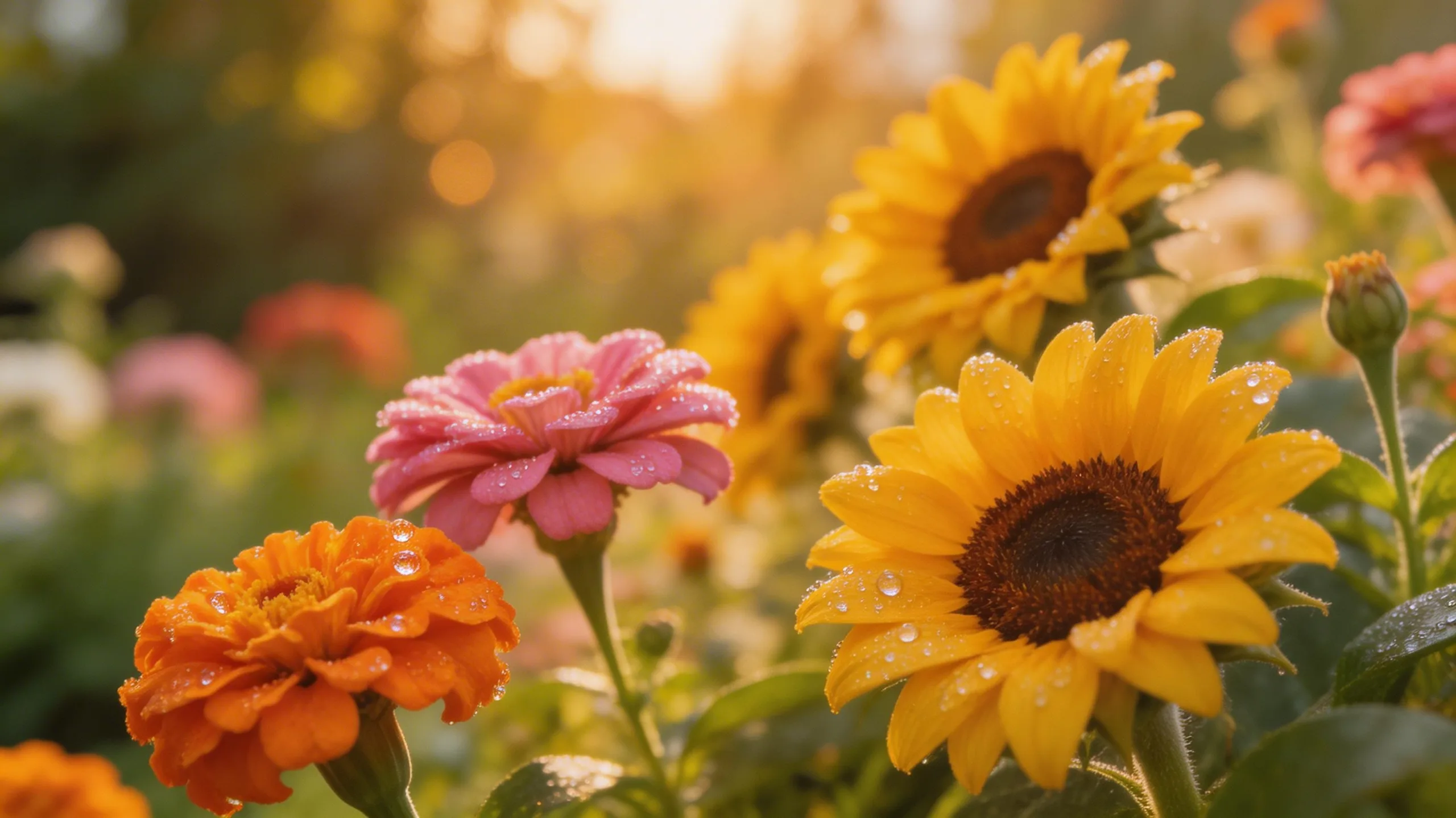
Begin by choosing sun-loving flowers that can handle the heat with minimal fuss. Marigolds are a fantastic pick; they’re tough, bloom all season, and pests often avoid them.
Zinnias are another winner—just sow seeds directly in the ground after frost, and they’ll shoot up with cheerful, colorful blooms.
For something that comes back yearly, try daylilies or coreopsis. These perennials are incredibly resilient once established.
You’ll want a spot that gets at least six hours of direct sun. When you plant, mix some compost into the soil to give them a good start.
Water them regularly after planting, but once they’re settled, they’ll be quite drought-tolerant. Just remember, more sun usually means more flowers for you to enjoy!
Easy Flowers for Pots and Small Spaces

Don’t have a big garden? Your small balcony or sunny windowsill is a perfect place to start. Choose compact flower varieties that thrive in containers. Ensure your pots have drainage holes and use fresh, high-quality potting mix. Water your plants regularly, but let the top soil dry slightly between waterings to prevent root rot.
This table highlights some top picks for your container garden:
| Flower | Key Benefit | Quick Tip |
|---|---|---|
| Petunias | Long-lasting, colorful blooms | Pinch off dead flowers for more blooms |
| Marigolds | Pest-repellent properties | They love full sun all day |
| Nasturtiums | Edible flowers and leaves | Don’t over-fertilize; let them thrive |
| Geraniums | Drought tolerant once established | Water at the soil, not the leaves |
| Pansies | Cool-weather champions | Perfect for spring and fall color |
Remember to feed them with a liquid fertilizer every few weeks during the growing season.
Best Beginner Flowers for Shady Spots

Even if your garden gets more shade than sun, you can still enjoy beautiful blooms.
For dry shade, like under trees, try tough, spreading perennials like hardy geraniums or hostas, which offer fabulous foliage.
In moist, rich soil, you can’t beat impatiens for constant summer color; just keep them watered.
For early spring interest, plant cheerful violas or pansies—they’ll handle the chill and light shade beautifully.
Coleus is a fantastic choice for its vibrant, patterned leaves; it thrives without direct sun.
Remember, “shade” often means bright, indirect light, not total darkness.
Check plant tags for terms like “partial shade” or “full shade” to match them to your specific spot.
You’ll be surprised by the colorful options you have.
Grow Sunflowers for Dramatic, Easy Height

If you’re looking to add a bold statement to your garden, few plants deliver drama and simplicity like sunflowers. Their towering stems and giant, cheerful faces grow astonishingly fast.
Start them by sowing seeds directly into a sunny spot after your last frost. Push each seed about an inch into well-drained soil and water it well. They need minimal fuss once established.
Choose a variety that suits your space, from compact types to giants reaching over ten feet. You’ll get the best results if you thin seedlings to about a foot apart so each plant gets ample sun and nutrients. Soon, you’ll have a stunning display that’s incredibly rewarding to grow.
Plant Marigolds for Pest Control and Nonstop Color

While you’re enjoying your towering sunflowers, you can effortlessly plant marigolds to defend your garden and fill it with constant color. These tough, cheerful flowers are incredibly beginner-friendly. They thrive in full sun and aren’t fussy about soil. Start seeds indoors a few weeks before your last frost or sow them directly into the garden. Their secret superpower is a natural compound that repels many pests, like nematodes and some beetles, making them great companions for vegetables. Deadhead spent blooms to keep them flowering nonstop from spring until fall.
| Marigold Benefit | How to Maximize It |
|---|---|
| Pest Deterrence | Plant near tomatoes, peppers, and potatoes. |
| Continuous Blooms | Regularly pinch off dead flower heads. |
| Easy Growth | Choose well-drained soil and full sun. |
| Long Season | Start seeds early for the longest show. |
| Companion Planting | Use to create a protective border. |
How to Grow Zinnias for a Summer of Blooms

Zinnias reliably create a vibrant summer garden with very little effort.
You can sow seeds directly in a sunny spot after the last frost, as they love heat.
For continuous blooms, just follow a few simple steps.
- Plant in Full Sun: Choose a location that gets at least 6-8 hours of direct sunlight daily for the strongest stems and most flowers.
- Space Them Out: Give plants room for air circulation, usually about 6-12 inches apart depending on the variety, to prevent mildew.
- Water at the Roots: Water the soil, not the leaves, to keep foliage dry and healthy. They’re somewhat drought-tolerant once established.
- Deadhead Frequently: Regularly snip off spent flowers; this simple task tricks the plant into producing more blooms all season long.
Grow Fragrant Sweet Peas From Seed

Now for a flower that offers both stunning blooms and wonderful fragrance, sweet peas are a classic choice for beginner gardeners starting from seed.
You’ll need to plant them early, as they love cool weather. Soak your seeds overnight to soften their tough coats before sowing them directly in a sunny spot about an inch deep.
You must give them a strong support structure like a trellis or twine to climb immediately. Keep the soil consistently moist.
For the best display and longest bloom period, you should pick the flowers regularly to encourage more to form. Don’t be afraid to bring some inside; their scent is absolutely worth it.
Add Edible Beauty With Easy Nasturtiums

Often bringing a cheerful splash of color to the garden, nasturtiums are wonderfully easy flowers that also offer you a peppery, edible treat.
You can eat the vibrant flowers and round leaves, adding a spicy kick to salads. They thrive with simple care, often preferring poorer soil and loving the sun. Try these tips for success:
- Sow directly in a sunny spot after the last frost; they germinate quickly.
- Don’t over-fertilize, as rich soil produces more leaves than flowers.
- Let them climb or trail; train vining types on a trellis or let bush types spill from containers.
- Harvest regularly; picking blossoms encourages more to form all season.
Cool-Weather Color With Hardy Pansies
For a reliable show of color even when temperatures drop, you can count on hardy pansies. These cheerful faces thrive in the cool conditions of spring and fall, often blooming when other plants can’t.
You can plant them early in the season, as soon as you can work the soil. Choose a spot with full sun to partial shade and well-drained soil. Space plants about six to eight inches apart so they’ve room to fill in. Water them regularly, especially just after planting, but let the soil dry slightly between waterings. You don’t need to be an expert—just pinch off the spent flowers, a practice called deadheading, to encourage more blooms for weeks.
Plant Cosmos for Effortless Airy Blooms
Fill your garden with effortless, airy blooms by planting cosmos. These hardy annuals practically grow themselves, rewarding you with delicate, daisy-like flowers on slender stems from early summer to frost.
You’ll love their carefree nature.
- Sow seeds directly in a sunny spot after the last frost; they germinate quickly and don’t like being transplanted.
- Choose your variety; ‘Sensation’ offers tall, classic pinks and whites, while ‘Cupcakes’ have unique, ruffled blooms.
- Water seedlings regularly, but established plants are drought-tolerant and thrive with minimal fuss.
- For more flowers, simply snip off spent blooms; this deadheading encourages continuous new buds all season.
They’re perfect for filling spaces with graceful color and attracting pollinators.
Foolproof Care for Hardy Geraniums
Moving from the airy cosmos, hardy geraniums offer another low-maintenance option that delivers reliable color year after year.
You can plant them in full sun to part shade, but they thrive best with morning light. They’re not picky about soil as long as it drains well; just avoid soggy spots. You only need to water them deeply during long dry spells, as they’re quite drought-tolerant once established.
A light trim after the first big bloom encourages a fresh flush of flowers and keeps plants tidy. You don’t have to fuss with deadheading individual spent blooms.
They’ll spread gracefully to fill space, and dividing clumps every few years in spring or fall keeps them vigorous.
Grow Bountiful Petunias in Sun
Pour your gardening energy into sunny spaces with colorful petunias. They thrive with at least six hours of direct sun, rewarding you with prolific blooms from spring to frost. You’ll find growing them is wonderfully straightforward.
To ensure your success, follow these key tips:
- Plant in well-draining soil after the last frost, amending it with compost for a nutrient boost.
- Water regularly, allowing the top inch of soil to dry between thorough soakings.
- Fertilize every two weeks with a balanced, water-soluble formula to fuel constant flowering.
- Pinch back leggy stems and remove spent flowers weekly to encourage bushier growth and more blooms.
Stick with this simple routine, and you’ll be surrounded by vibrant, long-lasting color.
Low-Maintenance Color With Daylilies
For low-maintenance color that returns reliably every year, you can’t beat daylilies.
Their name comes from each bloom lasting just a day, but each stalk produces many buds for weeks of continuous summer color.
You simply plant their fleshy roots, called tubers, in a sunny spot with decent drainage.
Water them well during their first season to establish roots; after that, they’re incredibly drought-tolerant.
They don’t need fancy fertilizers or constant deadheading to thrive.
Every few years, you can dig up and divide the clumps in early spring or fall to make more plants for free.
You’ll get a dependable, colorful show with very little effort.
Frequently Asked Questions
Can I Grow Flowers if I Have No Garden Space?
Yes, you can! Use pots, window boxes, or even old containers on a balcony or sunny windowsill. Choose easy flowers like marigolds or pansies. You’ll succeed with just water, sun, and a little care.
Do Flowers Need Special Soil to Grow Successfully?
You don’t need special soil; many flowers thrive in regular, well-draining garden soil. You’ll just enrich it with compost or potting mix for containers. Check your plant’s tag for any specific needs it might have.
How Often Should I Water My Beginner-Friendly Flowers?
Water them when the soil feels dry about an inch down. You’ll likely need to do it once or twice a week. Don’t overwater; it’s easier to fix a dry plant than a soggy one.
What if My Flowers Don’t Bloom the First Year?
That’s common with some perennials or bulbs. Don’t worry, they’re likely building strong roots. Keep up your care—proper sunlight, water, and fertilizing. They’ll often reward you with great blooms next season.
Are There Flowers That Bloom All Year for Beginners?
You’ll find many easy annuals like marigolds that bloom for months. In warm climates, try perennials like lantana; they’ll flower nearly all year with just sun and occasional watering. You can enjoy color constantly!
Conclusion
So, you’ve got your list of easy flowers. Now just pick a few that fit your sunny pot or shady corner and give them a try. Sow those big seeds, water the soil, and snip off the old flowers. That’s really it. Start small, enjoy the simple steps, and you’ll be amazed at the color you can grow. Happy gardening!
The Only Tools You Need for a Thriving Garden 🌱
Whether you're a weekend gardener or growing daily — these hand-picked tools make every session faster, easier, and more satisfying.