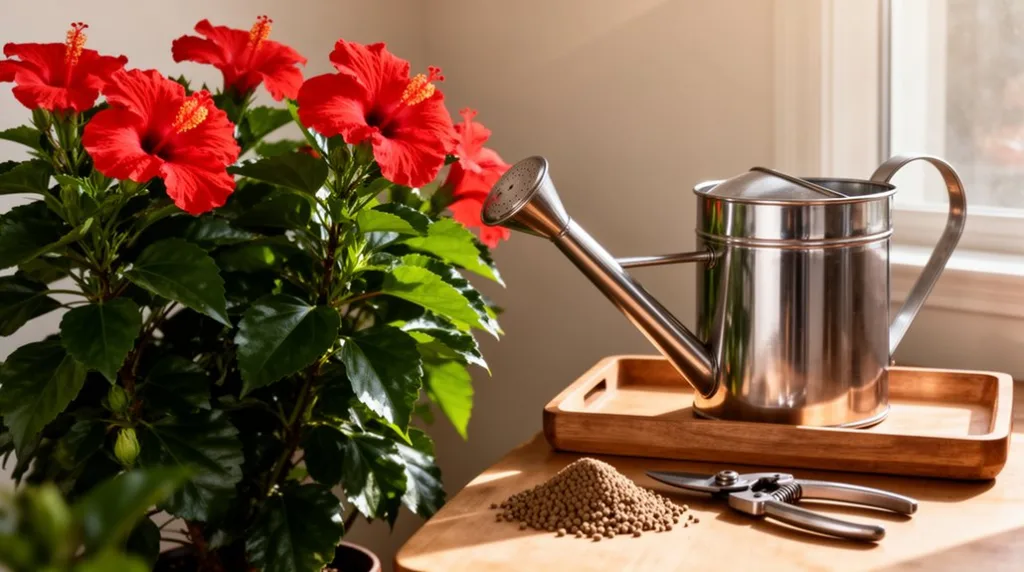
You’ll transform your hibiscus into a consistent bloomer by mastering seven essential practices. Start with well-draining soil and proper spacing. Water consistently—ground plants need 3–4 times weekly, containers every 2 days. Provide 6–8 hours of direct sunlight daily for maximum flowers. Feed with high-potassium fertilizer every 2 weeks during growing season. Prune strategically in early spring, removing one-third of growth at a time. Combat pests like aphids and mealybugs with neem oil and water sprays. Plan ahead for seasonal transitions, especially moving tropical varieties indoors. Each technique builds on the others for remarkable results.
Key Takeaways
- Provide 6–8 hours of direct sunlight daily to maximize flowering and prevent sparse blooms or stretched stems.
- Water established ground hibiscus 3–4 times weekly; container plants every 2 days, adjusting for temperature and rainfall.
- Apply high-potassium fertilizer every 2 weeks spring/summer; reduce frequency to monthly during fall/winter months.
- Prune in early spring, removing no more than one-third of plant per session with 30-day intervals.
- Combat pests like aphids with weekly water sprays and mealybugs with neem oil applied early morning or late afternoon.
Plant Hibiscus Right: Soil Prep and Planting Basics
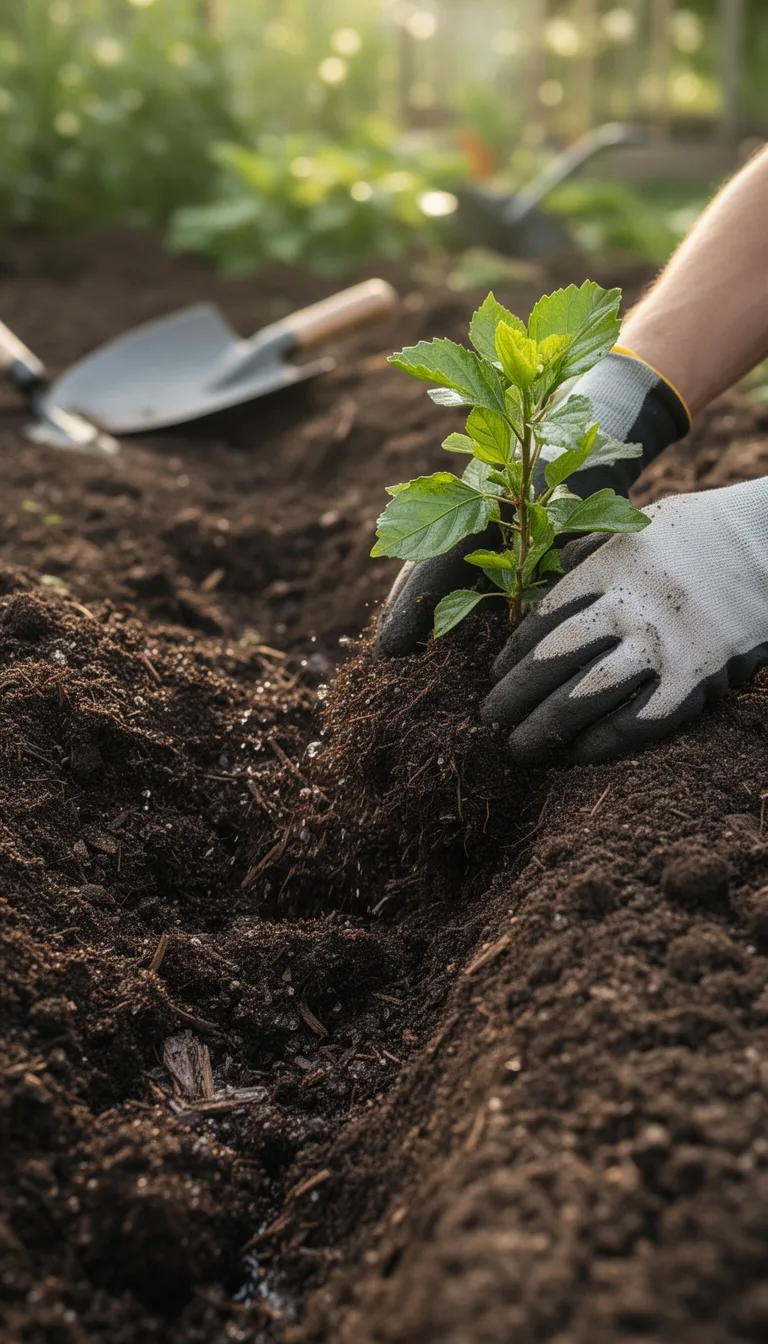
Since hibiscus thrives in specific soil conditions, you’ll want to start with proper preparation before planting. First, test your soil’s drainage by filling a hole with water; if moisture reaches 8-10 inches down, you’ve got good permeability.
Amend poor soil with organic matter like compost, peat moss, or coco coir to improve both drainage and nutrients. Add perlite or vermiculite for extra drainage support, and incorporate earthworm castings for microbial benefits. For heavy clay soils, consider planting in a raised bed to prevent water buildup.
When planting, dig a hole at least double your pot’s width—wider if your soil’s poor. Break up the surrounding ground to encourage deeper root growth. Plant at the appropriate depth: deeper in dry climates, shallower in soggy areas. Backfill halfway, water to settle, then complete filling.
Space tropical hibiscus 5 feet apart, hardy varieties 3-4 feet apart.
Water Consistently: Moisture Without Waterlogging
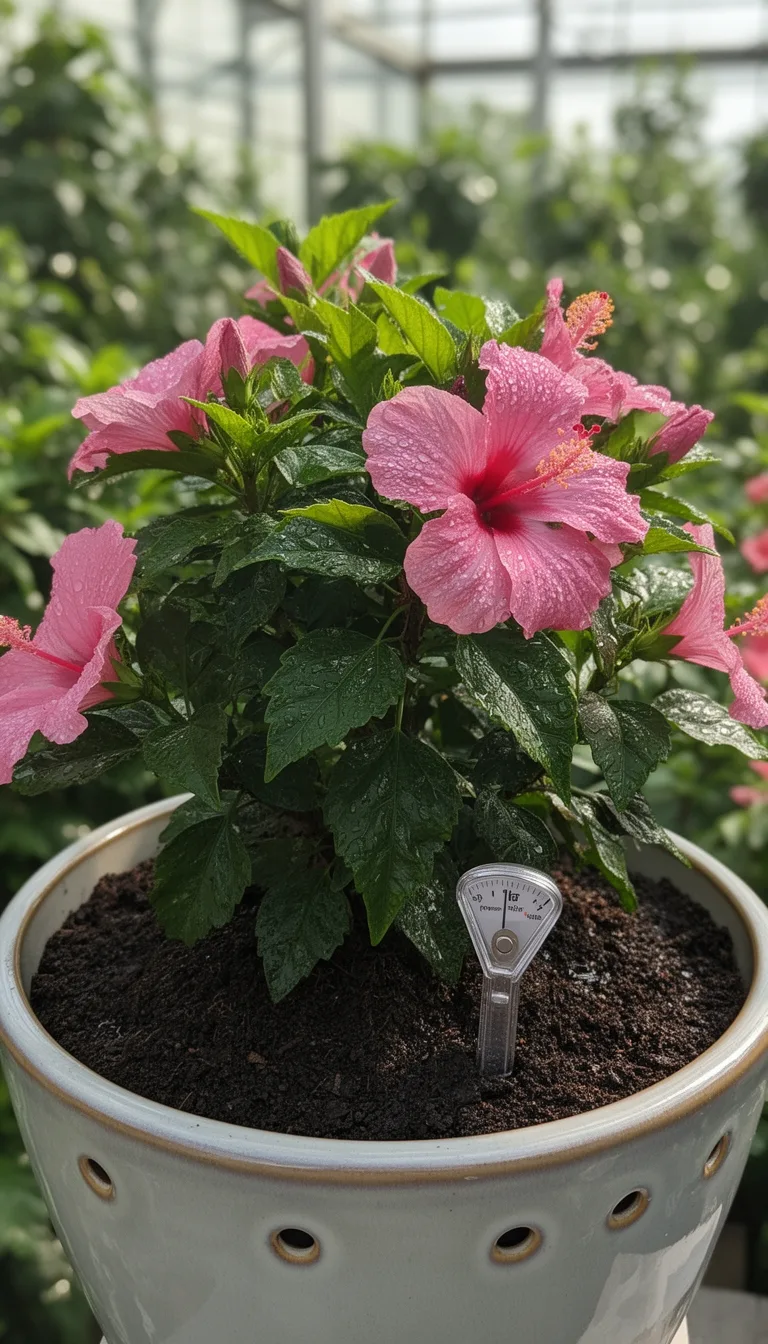
How often should you water your hibiscus? It depends on your plant’s environment.
Established ground hibiscus needs watering 3-4 times weekly, while container plants require every 2 days due to faster soil drying.
During summer temperatures in the 70s-80s, water daily; increase to twice daily when temperatures reach upper 80s-90s.
Check soil moisture by inserting your finger 1-3 inches deep. Water only when the soil feels dry or slightly damp. If it’s wet, skip watering to prevent root rot.
When you do water, saturate the soil thoroughly until it’s completely drenched. Avoid letting soil completely dry out between waterings, as hibiscus have high water demands.
Apply water directly to the soil, not foliage, to prevent mildew.
Water early morning for optimal absorption before peak heat.
Adjust frequency based on rainfall, humidity, and wind conditions.
Light Your Hibiscus for Maximum Blooms: 6–8 Hours Daily
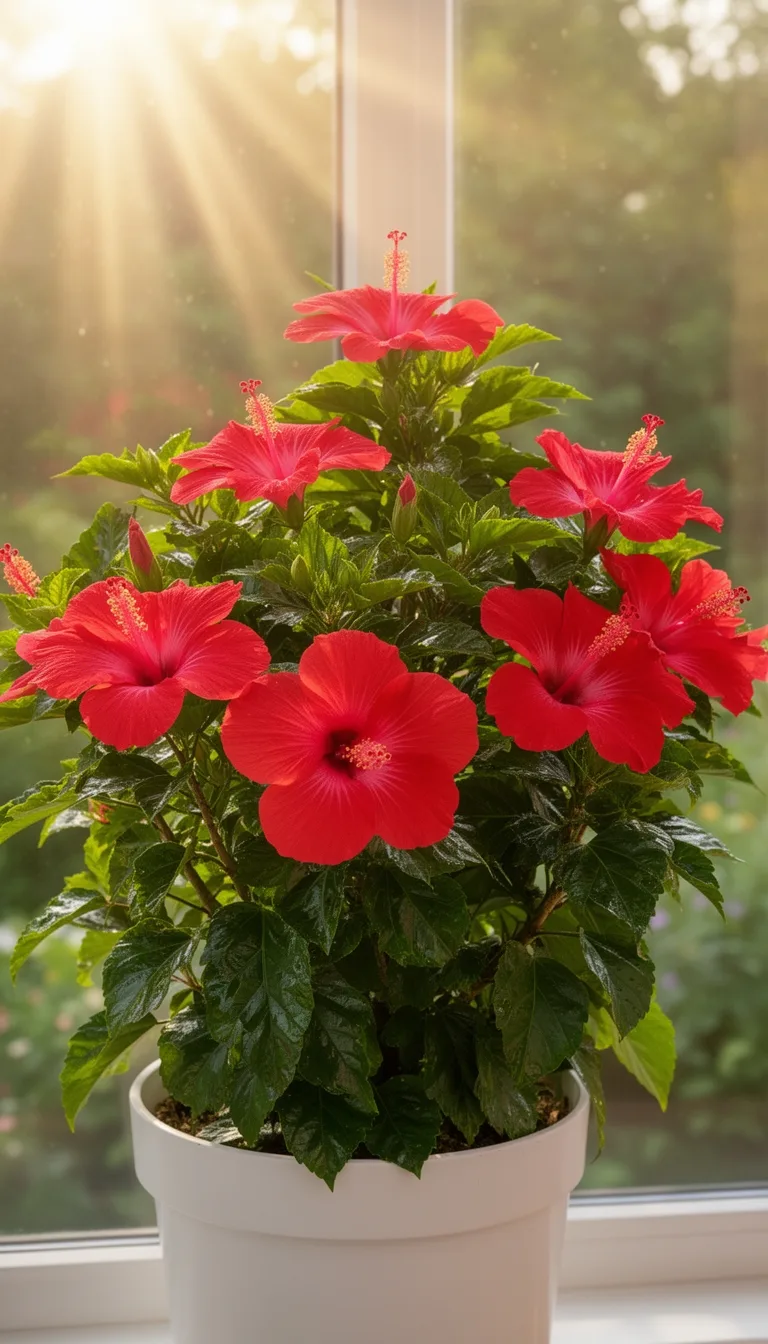
To unlock your hibiscus’s full flowering potential, you’ll need to provide 6 hours of direct, intense sunlight daily—ideally 6–8 hours to match the conditions of its native tropical habitat. More light yields better blooms, but partial shade reduces flower fullness significantly.
| Light Condition | Result |
|---|---|
| 6–8 hours direct sun | Maximum flowering |
| Partial shade | Fewer, smaller flowers |
| Light shade | Sparse blooms, stretched stems |
| North-facing window | Insufficient intensity |
| South-facing window | Optimal indoor placement |
Indoor growers face challenges: standard household lighting lacks the spectrum for flower production, and winter south-facing windows provide only 20–30% of needed light. Consider full-spectrum grow lights positioned 12–18 inches above foliage during flowering stages. Essential red wavelengths 600–700 nm trigger bud formation and are critical for flower initiation when natural sunlight is insufficient. Use timers to maintain consistent 12–14 hour schedules. In hot climates, filtered sunlight prevents leaf scorch while preserving blooms.
Fertilize for Flowers: Feed Through the Growing Season
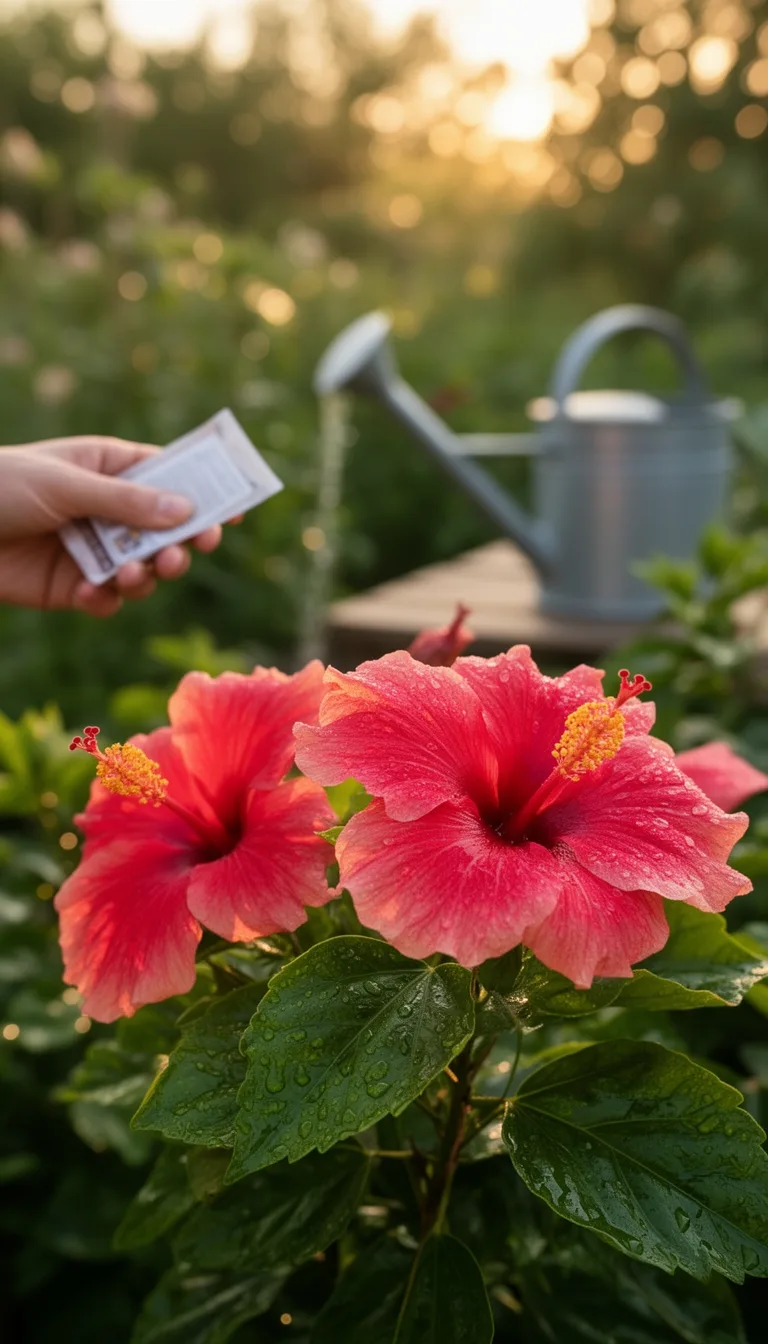
What separates hibiscus plants that bloom prolifically from those that flower sparsely? Consistent fertilization during the growing season.
You’ll want to apply water-soluble fertilizer every two weeks in spring and summer, shifting to once monthly during fall and winter.
For potted hibiscus, reduce rates by half but increase frequency to every two or three weeks since potting mix depletes quickly.
Choose high-potassium formulas like 12-4-18 or 17-5-24, where potassium levels are two to three times higher than nitrogen.
Standard 10-10-10 fertilizers work adequately, though they won’t deliver superior blooming results. Balanced formulas like these provide equal nitrogen, phosphorus, and potassium ratios for general plant health.
Always fertilize moist soil at your plant’s canopy edges, never the trunk base.
Above 95°F, reduce dosage by 25% per five-degree increase.
At 105°F or higher, use water only—no fertilizer.
Prune Strategically to Shape and Encourage New Growth
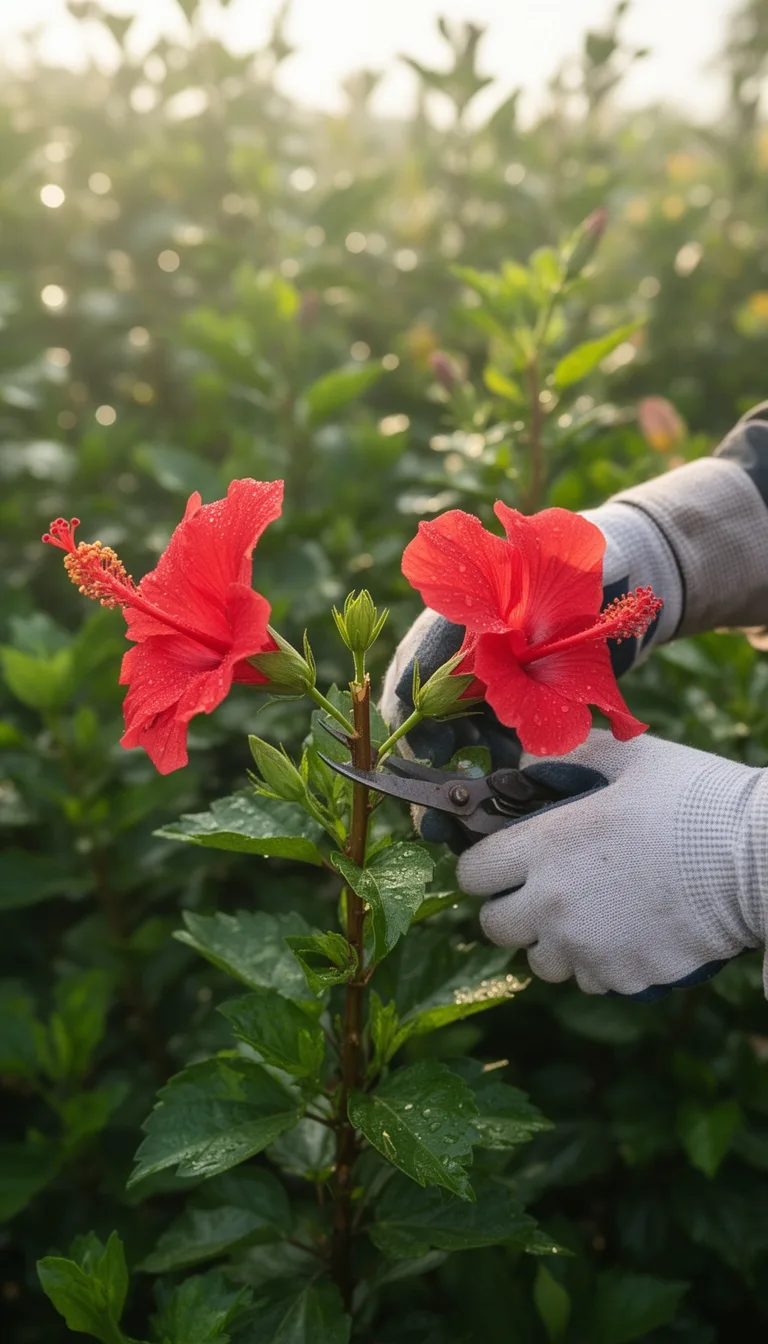
While consistent fertilization fuels blooms, strategic pruning shapes your hibiscus into a fuller, more floriferous plant.
You’ll achieve the best results by timing your cuts correctly and following a measured approach.
Prune during early spring (February or March) for heavy cuts, and avoid late fall or winter pruning.
For maintenance, you can remove dead or diseased wood anytime.
When cutting, follow these key practices:
- Cut right above outward-facing nodes to direct new growth away from the center
- Remove dead blooms, diseased foliage, crossing branches, and weak growth
- Never prune more than one-third of the plant per session
- Wait 30 days between pruning successive thirds
This deliberate strategy encourages bushier growth while maintaining your hibiscus’s health and flowering potential. After heavy pruning sessions, fertilize your plant to support rapid recovery and vigorous regrowth.
Spot and Stop Hibiscus Pests: Aphids, Mealybugs, and Beetles
Even the healthiest hibiscus can fall victim to common garden pests that’ll compromise your plant’s vigor and flowering potential.
Aphids cluster on leaf undersides, causing yellowing and distorted growth.
Mealybugs form cottony colonies on stems and new growth, stunting development.
Japanese beetles skeletonize foliage during daylight hours, while hibiscus bud weevils target buds, causing flower loss.
Combat aphids by spraying forcefully with water weekly and encouraging natural predators like lady beetles.
For mealybugs, prune infested parts immediately and apply neem oil in early morning or late afternoon. Spider mites produce whitish webbing on leaf undersides that can lead to yellowing and dieback if left untreated.
Hand-pick Japanese beetles daily and use pheromone traps away from plants.
Employ insecticidal soaps cautiously to protect beneficial insects.
Maintain garden sanitation and improve air circulation to prevent infestations before they establish.
Winter Hibiscus Care: Moving Tropical Plants Indoors
When temperatures start dropping toward 50°F (10°C), you’ll need to move your tropical hibiscus indoors before cold stress damages or kills your plant. Act quickly in northern climates where winter arrives fast.
Prepare your hibiscus before relocating:
- Trim up to 25% of new growth to minimize transplant shock and leaf drop
- Wash plants weekly for 2-3 weeks, applying horticultural oil on the final wash
- Use pots at least 10-12 inches across for easy handling and mobility
- Acclimatize your plant in an outdoor shady spot before full indoor relocation
Position your hibiscus in a bright location with strong morning or afternoon sunlight. Abundant light is essential for healthy winter growth and will help prevent stress-related issues indoors.
Maintain temperatures above 40°F (5°C), prioritizing warmth over light.
Water weekly when soil dries, using less water than summer amounts.
Expect some yellow leaves and bud drop—this normal indoor stress response typically subsides as your plant adjusts.
Conclusion
You’ve got this. Think of your hibiscus like an athlete in training—you wouldn’t expect peak performance without proper conditioning. One gardener watched her plant flourish after she committed to the seven-step routine; it bloomed 40% more flowers that season. You’re not just following care tips; you’re building a relationship with your plant. Stick with consistency, and you’ll witness the dramatic transformation that makes hibiscus gardening deeply rewarding.
The Only Tools You Need for a Thriving Garden 🌱
Whether you're a weekend gardener or growing daily — these hand-picked tools make every session faster, easier, and more satisfying.