
You’ll find twelve precise tulip arrangements that balance form and function, each paired with specific vase selections, stem‑trimming techniques, and lighting conditions. The guide outlines minimalist single‑stem displays, classic Dutch mixed bunches, cascading spirals, and low‑profile Ikebana compositions, while also covering rustic mason‑jar setups and monochrome metal vases. By following the detailed steps, you can achieve professional‑grade spring décor that maintains freshness and visual clarity. The next section explains how to choose the optimal container for each style.
Key Takeaways
- Use a narrow clear‑glass vase (2–3 cm diameter) for a single‑stem minimalist tulip arrangement, emphasizing vertical elegance.
- Create a geometric bowl centerpiece with radial placement: 10 cm stems, 120° spacing, and a 1:1.5 height‑to‑diameter ratio for balanced visual impact.
- Assemble a cascading tulip bouquet in a tall cylindrical vase (12 in tall) using a spiral pattern with 6 cm offset and 4 cm vertical rise for dynamic flow.
- Design a rustic mason‑jar arrangement with trimmed 8‑in stems, 4 in water depth, and a twine rim accent for a relaxed, spring‑time feel.
- Build a wreath by weaving stainless‑steel hinge‑mounted wire mesh into a circular base, inserting 8‑10 cm tulip stems evenly spaced for a festive spring décor.
Minimalist Single‑Stem Vase for a Clean Look
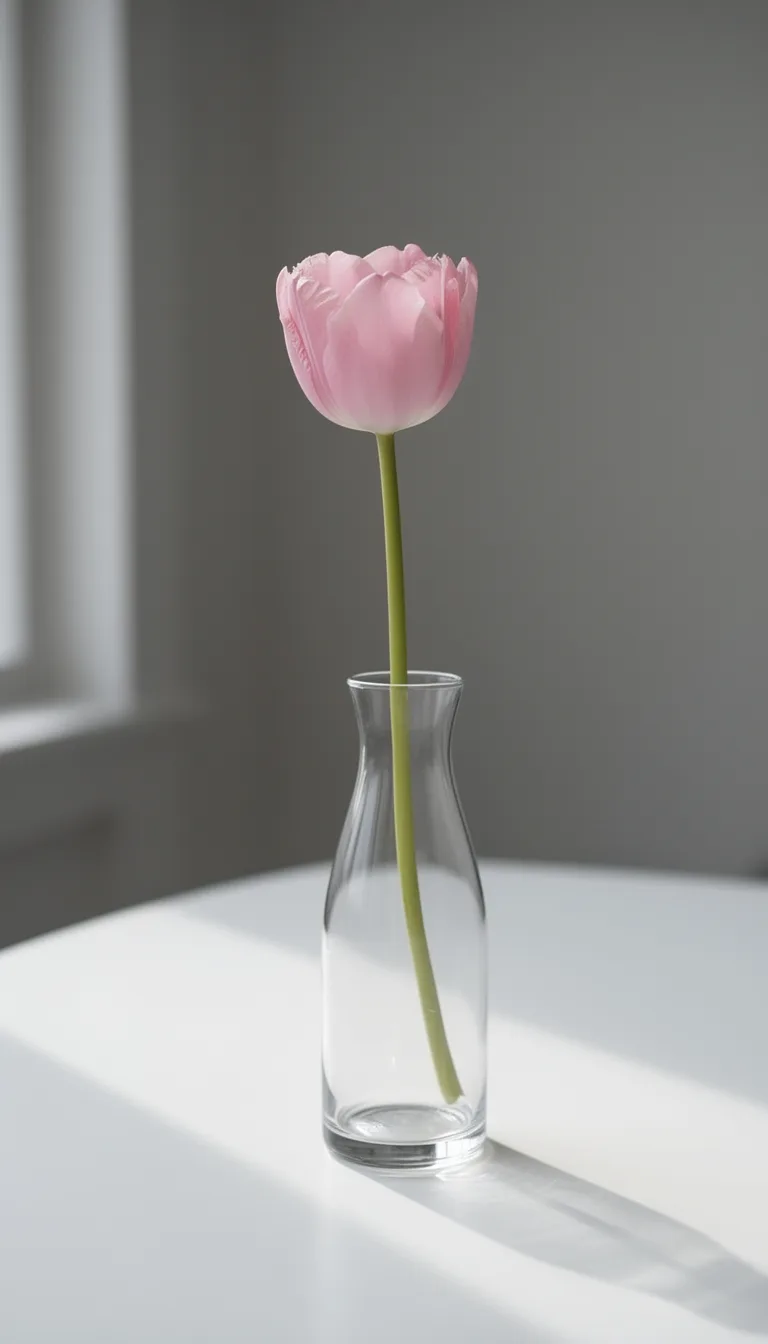
While you’re aiming for a streamlined aesthetic, a single‑stem tulip placed in a narrow, clear‑glass vase delivers a clean, minimalist look.
You should select a vase with a diameter of 2–3 cm to ensure proportional balance; the slender profile emphasizes vertical line tension.
Use a hydroponic solution calibrated to a pH of 6.0–6.5 and an EC of 0.5–0.8 dS m⁻¹ to maintain optimal nutrient uptake.
Trim the stem at a 45° angle to maximize water absorption and reduce air pockets.
Position the vase on a stable, level surface to prevent wobble, and keep the arrangement away from direct sunlight to avoid photobleaching.
Monitor water level daily, refilling with de‑ionized water to avoid mineral buildup, which could compromise stem integrity.
Choosing the Right Vase for Your Tulip Arrangement
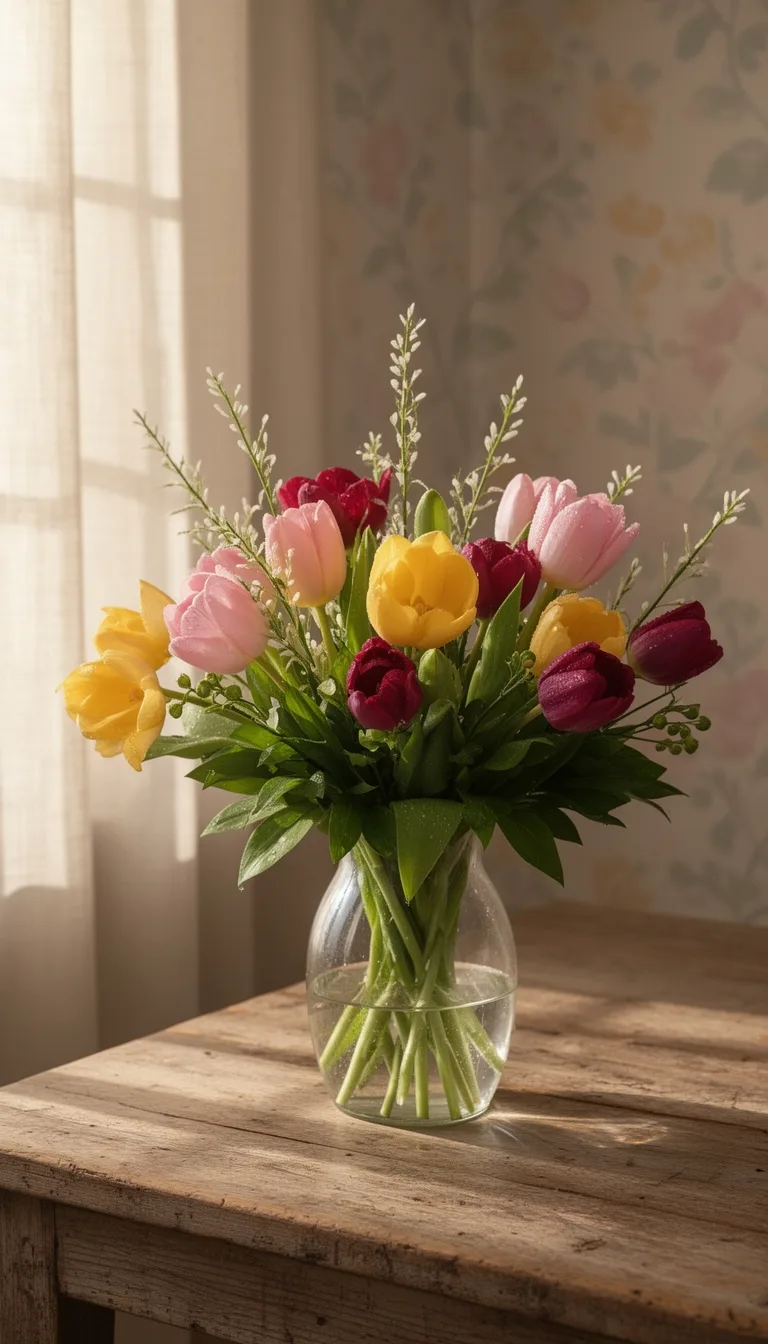
Choosing the right vase hinges on matching its dimensions, material, and geometry to the tulip’s stem thickness and desired visual impact. You must assess stem diameter, bloom height, and spacing requirements before selecting a container.
A narrow, tall cylinder supports slender stems and emphasizes verticality, while a broader, shallow bowl accommodates multiple stems and creates a fuller silhouette. Material choice influences temperature regulation and weight distribution; glass offers transparency for visual depth, whereas ceramic provides stability and insulation. Geometry dictates water flow and root support—angled rims reduce splashing, and tapered walls guide stems into optimal angles. Align these parameters with your design intent to achieve structural integrity and aesthetic harmony.
- Cylindrical glass vase – 12 in tall, 3 in diameter
- Wide‑mouth ceramic bowl – 8 in diameter, 4 in depth
- Tapered stone pitcher – 10 in height, 5 in base
These options illustrate dimension‑material‑geometry synergy for tulip arrangements.
Classic Dutch‑Style Mixed Tulip Bunch
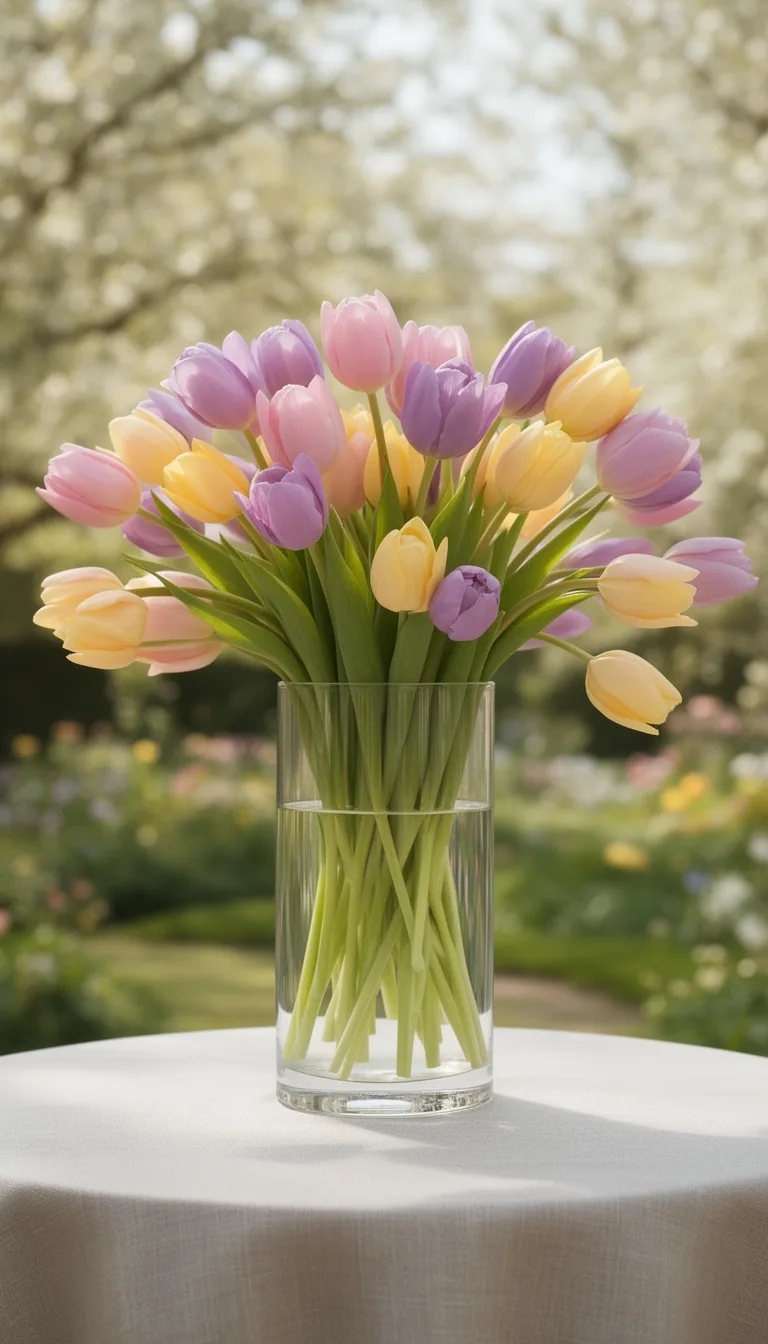
A classic Dutch‑style mixed tulip bunch combines slender, pastel‑colored stems with a few bold, variegated varieties to create a balanced, tiered composition.
You’ll select 12‑15 stems, spacing them 2 cm apart, and arrange them in a shallow, wide‑mouth vase to promote horizontal spread.
Begin with a base layer of pastel cultivars such as ‘Queen of Night’ and ‘Angelique’, positioning them at a 30° angle to the vase rim.
Add a middle tier of medium‑height variegated tulips, e.g., ‘Red Emperor’, inserting each stem 3 cm higher than the previous layer.
Finish with a top tier of tall, slender stems like ‘Parrot’, ensuring the apex reaches 15 cm above the vase lip.
Secure the arrangement with a 2‑cm water line and a floral preservative, then rotate the vase 90° every 2 hours to maintain uniform hydration.
Cascading Tulip Bouquet in a Tall Glass Cylinder
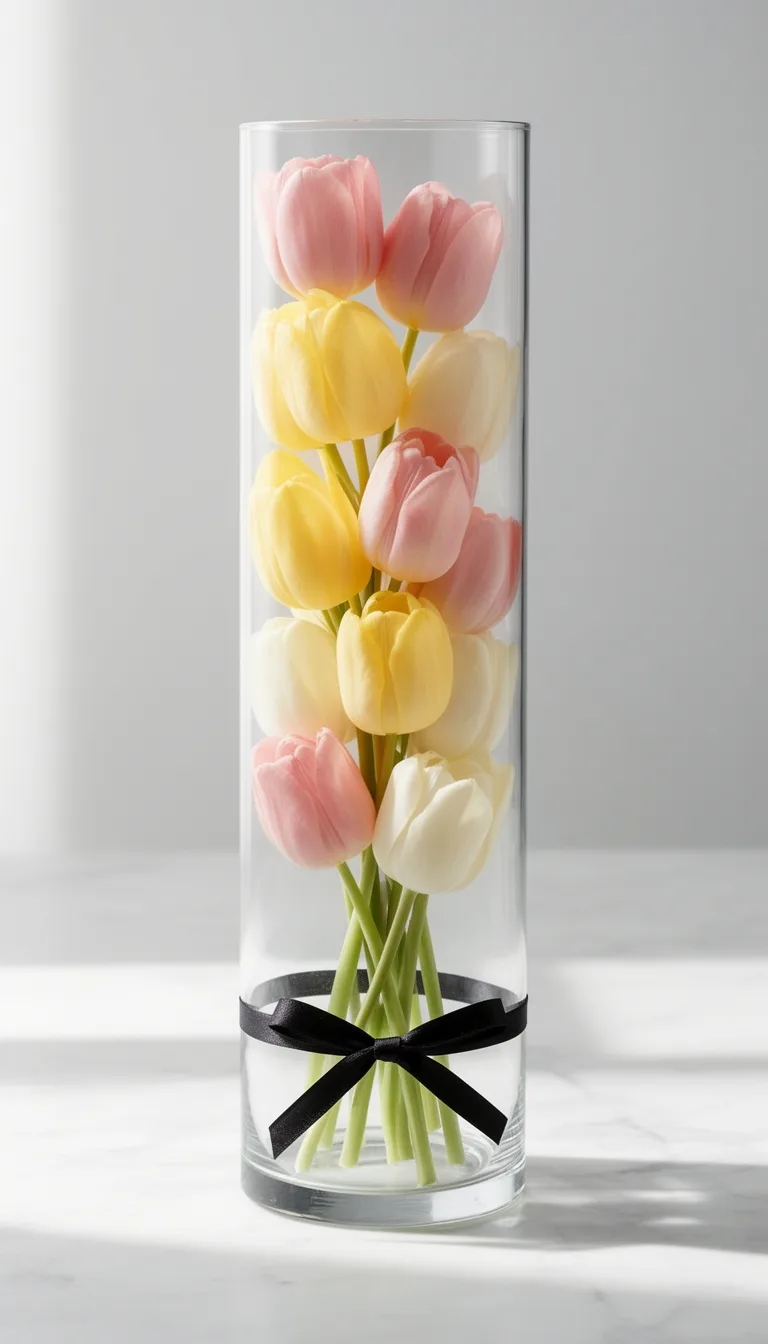
Create a cascading tulip bouquet in a tall glass cylinder by first selecting 18–20 stems of varying heights and colors, then trimming each to a uniform length of 30 cm. Arrange the stems in a spiral, anchoring the base in a water‑filled vase insert to maintain hydration. Use a clear, weight‑balanced cylinder to showcase the vertical flow and prevent tipping. Optimize spacing by alternating hue groups, ensuring each tier displays a distinct color gradient. Incorporate a thin, transparent support rod if necessary to sustain structural integrity under gravity.
- Spiral arrangement – 6 cm offset per layer, 3 cm vertical rise.
- Color grading – pastel to vivid progression every 4 stems.
- Support system – silicone base with 2 mm reinforcement rod.
Rustic Mason‑Jar Tulip Arrangement With Twine Accents
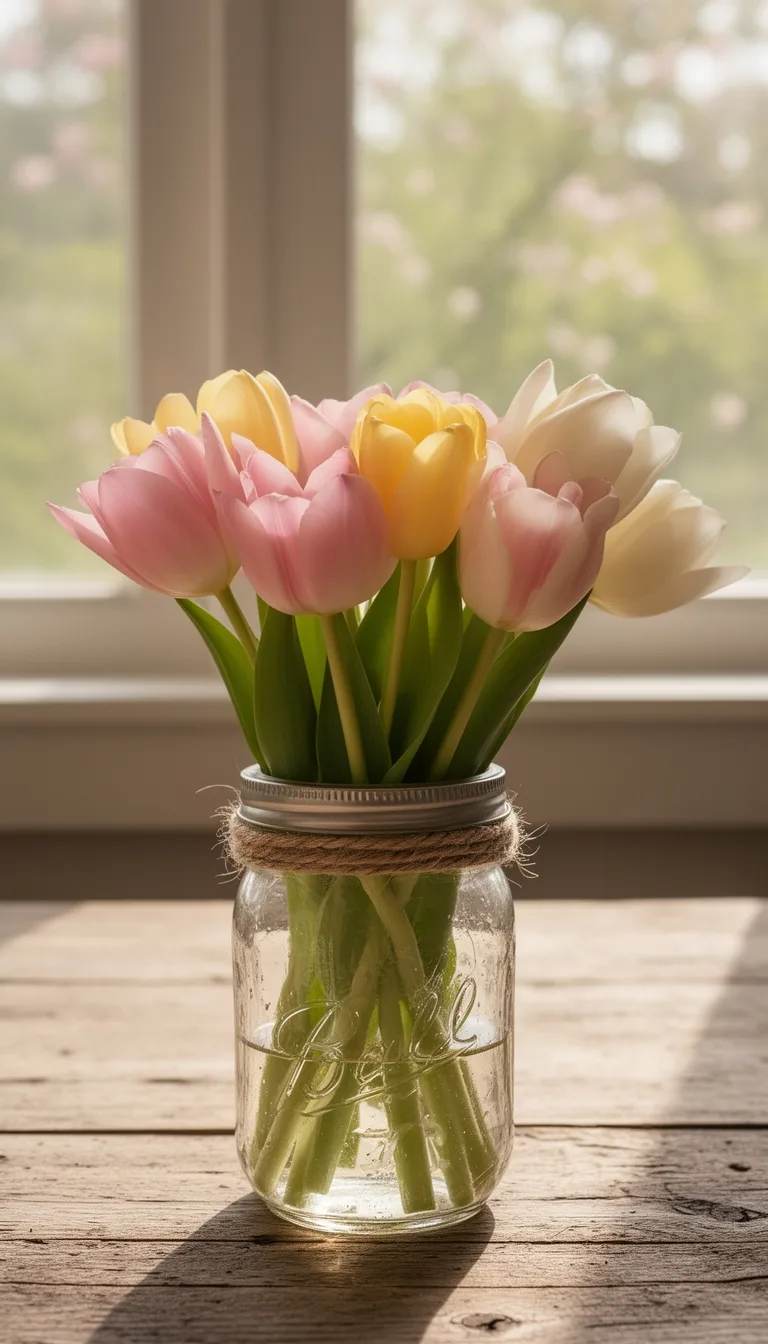
Rustic charm meets functional design when you place a handful of trimmed tulip stems into a mason‑jar, then bind the rim with natural twine.
First, select a clear, wide‑mouth jar with a 6‑inch diameter; this maximizes stem stability and water capacity.
Cut tulips to 8‑inch lengths, removing lower leaves to prevent rot.
Fill the jar with lukewarm water to a depth of 4 inches, add a tablespoon of floral preservative, and gently submerge stems, ensuring at least three buds protrude.
Wrap ¼‑inch twine tightly around the jar’s lip, knotting securely to create a rustic accent that also reinforces the rim.
Position the arrangement on a flat surface, avoiding direct sunlight to prolong vase life.
This configuration delivers a balanced, low‑maintenance centerpiece.
Modern Geometric Bowl Filled With Color‑Coordinated Tulips
Moving from the tactile twine-wrapped jar to a sleek, angular vessel, you’ll place a geometric bowl on a stable surface and fill it with water at a depth of 5 cm. Select tulip varieties whose hues follow a predetermined palette—e.g., complementary reds and greens or analogous blues and purples. Trim stems to 10 cm, ensuring uniform length for balanced density. Arrange stems radially, rotating the bowl 45° between each quadrant to achieve even distribution and prevent clustering. Use a calibrated pH meter to maintain water acidity between 6.0 and 6.5, optimizing petal longevity. Replace water every 48 hours and monitor temperature, keeping it below 22 °C to inhibit wilting.
- Radial placement with 120° spacing
- Uniform stem length of 10 cm
- Water pH 6.0‑6.5 maintenance
Elegant White Tulip Centerpiece for Formal Tables
Arrange a sleek, low‑profile vase on the table and fill it with filtered water at a depth of 4 cm; then trim white tulip stems to 12 cm, removing any lower leaves to prevent bacterial growth. Position the vase centrally, ensuring the rim aligns with the table’s edge to maintain a balanced visual axis. Use a scale to verify water volume remains at 250 ml, replenishing daily to sustain turgor pressure. Apply a preservative solution at 0.5 % concentration to inhibit ethylene synthesis. Align stems in a radial pattern, spacing each 15° apart to achieve uniform density. Monitor temperature, keeping ambient conditions between 18–22 °C, and avoid direct sunlight to preserve pigment integrity. Replace wilted buds promptly to uphold a crisp, formal aesthetic.
Bright Sun‑Kissed Tulip Cluster for Kitchen Counters
Capture the sunny vibe of your kitchen by placing a compact cluster of bright tulips in a shallow, transparent container that fits comfortably on the countertop.
Choose a container with a 5‑inch diameter and 2‑inch depth to maintain stability and allow light transmission. Fill the base with distilled water, add a measured 0.5 % floral preservative, and trim stems to 4 inches for optimal balance.
Position the arrangement near a north‑facing window to maximize indirect illumination while preventing heat stress. Rotate the container weekly to ensure even nutrient distribution and prevent phototropism.
- Container material: clear glass, UV‑resistant coating.
- Tulip color palette: vivid yellow, orange, and red.
- Maintenance schedule: water change every 48 hours, stem trim every 7 days.
Soft Pastel Tulip Arrangement in a Ceramic Teacup
After the bright, sun‑kissed cluster, switch to a softer palette by placing pastel tulips in a small ceramic teacup. You’ll select a teacup with a 4 cm diameter, fill it with 30 ml of cool water, and trim stems to 6 cm length. Insert stems at a 45° angle to maximize visual spread while preserving stem integrity. Use a balanced mix of pink, lavender, and ivory tulips; each hue contributes to a low‑contrast chromatic gradient that enhances ambient lighting. Ensure the water temperature stays between 12–15 °C to prolong turgor pressure and prevent premature wilting. Monitor pH at 6.5 ± 0.2 for optimal nutrient uptake.
| Parameter | Value | Reason |
|---|---|---|
| Cup size | 4 cm | Fits standard stems |
| Water volume | 30 ml | Prevents overflow |
| Stem length | 6 cm | Controls height |
| pH | 6.5 ± 0.2 | Maximizes absorption |
| Temperature | 12–15 °C | Maintains turgor |
| Color mix | pink, lavender, ivory | Low‑contrast gradient |
| Angle | 45° | Maximizes spread |
| Maintenance | replace water every 48 h | Extends freshness |
Monochrome Tulip Arrangement in a Black Metal Vase
If you want a striking, minimalist display, place a single‑hue cluster of tulips in a matte black metal vase, using a 6 cm‑diameter opening and 40 ml of water kept at 10–12 °C.
Choose a monochrome palette—pure white, deep red, or muted gray—to maximize contrast against the dark vessel.
Trim stems to 12 cm, ensuring uniform length for a clean silhouette.
Position the vase on a leveled surface; avoid drafts to preserve temperature stability.
Replace water every 48 hours, adding a preservative solution at a 1:200 ratio to extend vase life.
Monitor petal wilting; remove any compromised flowers to maintain aesthetic integrity.
- Stem length uniformity – cut all stems to identical length.
- Color consistency – select tulips of a single hue.
- Temperature control – keep water at 10–12 °C.
Seasonal Outdoor Tulip Wreath for Doorways
Seasonal transitions dictate the choice of materials and construction methods for an outdoor tulip wreath, ensuring durability and visual impact on doorways. You’ll select weather‑resistant wire mesh, galvanized hooks, and UV‑stable floral foam to anchor stems.
Cut tulip stems to 8‑10 cm, trim leaves, and treat cut ends with preservative solution to prolong freshness. Assemble the wreath by weaving mesh into a circular base, spacing stems evenly to avoid gaps.
Secure each stem with a small floral pin, maintaining a consistent curvature for aerodynamic stability against wind. Finish with a waterproof sealant spray to repel moisture.
Attach a stainless‑steel hinge for easy removal and storage. This construction yields a resilient, aesthetically balanced wreath that withstands temperature swings and precipitation.
Minimalist Ikebana‑Style Tulip Arrangement
When you design a minimalist Ikebana‑style tulip arrangement, you start by selecting a single, straight‑stem tulip and a low, shallow vase that emphasizes negative space.
You then evaluate stem curvature, leaf geometry, and vase proportion using a 1:1.5 height‑to‑diameter ratio to maintain visual balance.
Position the tulip at the vase’s geometric center, aligning the stem with the vertical axis to create a focal line.
Adjust water level to 2 cm below the vase rim, preventing stem immersion while preserving moisture.
Finally, apply a subtle weight at the base to stabilize the stem and avoid drift.
- Stem curvature analysis
- Vase proportion calculation
- Water level calibration
Conclusion
By applying precise stem cuts, optimal vase geometry, and controlled lighting, you’ve maximized tulip longevity and visual impact. The varied configurations—from minimalist single‑stem to Ikebana‑style negative space—demonstrate how systematic placement and environmental management yield consistent, elegant spring décor. Implement these protocols across settings to sustain fresh, refined displays with minimal maintenance.
The Only Tools You Need for a Thriving Garden 🌱
Whether you're a weekend gardener or growing daily — these hand-picked tools make every session faster, easier, and more satisfying.